Optimizing Value to the Enterprise with Integrated Enterprise Architecture Brian James Director of Product Management Metastorm
Agenda Introduction Building Enterprise Architecture Using Enterprise Architecture Getting Started
What is Enterprise Architecture? “ In a large modern enterprise, a rigorously defined framework is necessary to be able to capture a vision of the ‘ entire system’  in all its dimensions and complexity.  Enterprise Architecture  (EA) is a framework which is able to coordinate the many facets that make up the fundamental essence of an enterprise. It is the master plan which ‘ acts as an integrating force’  between aspects of  business planning  such as goals, visions, strategies and governance principles; aspects of  business operations  such as business terms, organisation structures, processes and data; aspects of  automation  such as application systems and databases; and the enabling  technological infrastructure  of the business such as computers, operating systems and networks.” Dennis A. Stevenson, Senior Editor, IS World Research
Building Enterprise Architecture
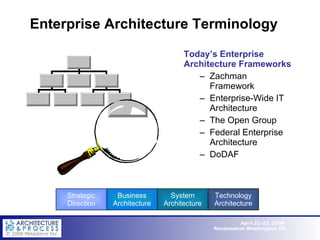
Enterprise Architecture Terminology Today’s Enterprise Architecture Frameworks Zachman Framework Enterprise-Wide IT Architecture The Open Group Federal Enterprise Architecture DoDAF Strategic Direction Business Architecture System Architecture Technology Architecture
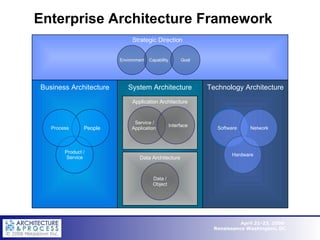
Enterprise Architecture Framework Strategic Direction Business Architecture System Architecture Technology Architecture Data / Object Product / Service People Process  Service /    Application  Software  Hardware Interface Network Data Architecture Capability Environment Goal Application Architecture
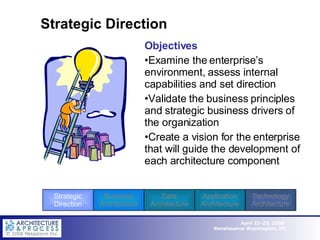
Strategic Direction Objectives Examine the enterprise’s environment, assess internal capabilities and set direction Validate the business principles and strategic business drivers of the organization Create a vision for the enterprise that will guide the development of each architecture component Strategic Direction Business Architecture Data Architecture Application Architecture Technology Architecture
Business Interaction Model Strategic Direction Business Architecture Data Architecture Application Architecture Technology Architecture
Strategy Model Strategic Direction Business Architecture Data Architecture Application Architecture Technology Architecture
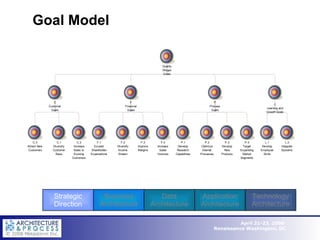
Goal Model Strategic Direction Business Architecture Data Architecture Application Architecture Technology Architecture
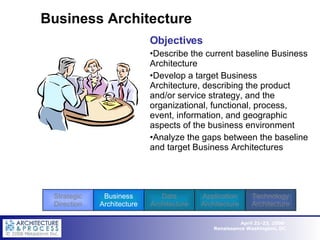
Business Architecture Objectives Describe the current baseline Business Architecture Develop a target Business Architecture, describing the product and/or service strategy, and the organizational, functional, process, event, information, and geographic aspects of the business environment Analyze the gaps between the baseline and target Business Architectures Strategic Direction Business Architecture Data Architecture Application Architecture Technology Architecture
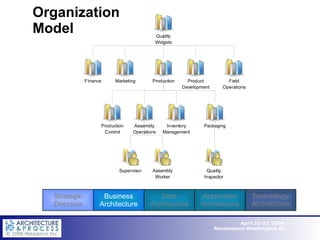
Organization Model Strategic Direction Business Architecture Data Architecture Application Architecture Technology Architecture
Workflow Model Strategic Direction Business Architecture Data Architecture Application Architecture Technology Architecture
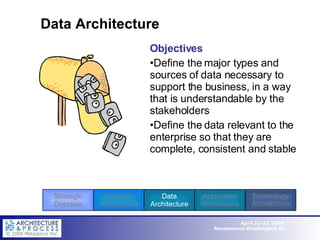
Data Architecture Objectives Define the major types and sources of data necessary to support the business, in a way that is understandable by the stakeholders Define the data relevant to the enterprise so that they are complete, consistent and stable Strategic Direction Business Architecture Data Architecture Application Architecture Technology Architecture
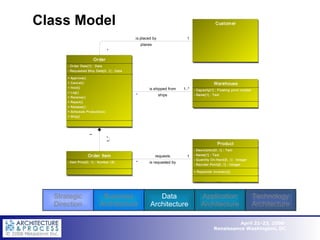
Class Model Strategic Direction Business Architecture Data Architecture Application Architecture Technology Architecture
Application Architecture Objectives Define what kinds of application systems are relevant to the enterprise, and what those applications need to do in order to manage data and present information to the system users Describe the applications as logical groups of capabilities that manage data in the Data Architecture and support the business functions in the Business Architecture Strategic Direction Business Architecture Data Architecture Application Architecture Technology Architecture
System Model Strategic Direction Business Architecture Data Architecture Application Architecture Technology Architecture
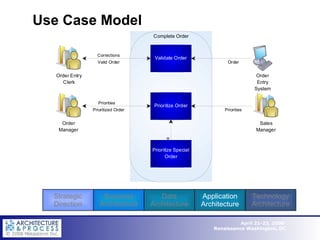
Use Case Model Business Architecture Strategic Direction Data Architecture Application Architecture Technology Architecture
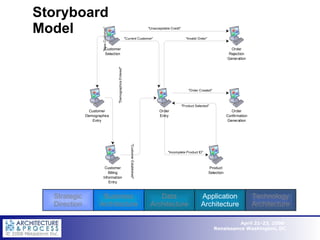
Storyboard Model Strategic Direction Business Architecture Data Architecture Application Architecture Technology Architecture
Technology Architecture Objectives Define the major kinds of technologies needed to provide an environment for the System Architecture Identify technology principles and platforms Define the technology platforms and the distribution of data and applications Establish a justification for the technology platforms by relating them to the business functions that will utilize them Support future growth Strategic Direction Business Architecture Data Architecture Application Architecture Technology Architecture
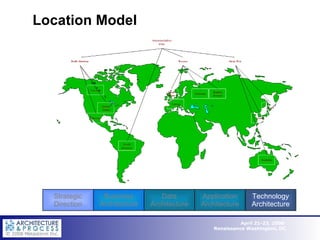
Location Model Strategic Direction Business Architecture Data Architecture Application Architecture Technology Architecture
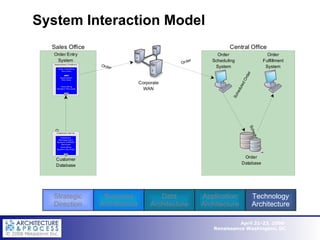
System Interaction Model Strategic Direction Business Architecture Data Architecture Application Architecture Technology Architecture
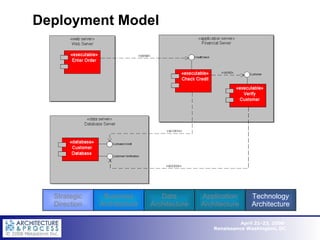
Deployment Model Strategic Direction Business Architecture Data Architecture Application Architecture Technology Architecture
Using Enterprise Architecture
A Pile of Documents does not Make an Enterprise Architecture “ An Enterprise Architecture is a tool to help executives think about the organization as a whole. An Enterprise Architecture captures a wide variety of information, establishes relationships among the various documents and diagrams and stores all of the information together in a single repository, so that  managers can then see the relationships, ask questions, identify problems, or run simulations to help make decisions about changes they are considering .” Developing an Enterprise Architecture Paul Harmon, Business Process Trends
The Value of Enterprise Architecture is in the Relationships Enterprise Architecture is more than a collection of the constituent architectures (Business, Application, Technology, and Information). The  interrelationships among these architectures , and their  joint properties , are essential to the Enterprise Architecture. Enterprise-Wide IT Architecture (EWITA)
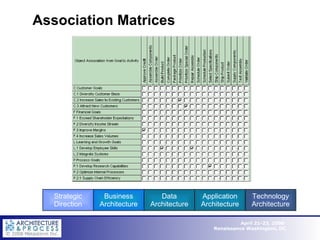
Association Matrices Strategic Direction Business Architecture Data Architecture Application Architecture Technology Architecture
Navigator Strategic Direction Business Architecture Data Architecture Application Architecture Technology Architecture Strategic Direction Business Architecture Data Architecture Application Architecture Technology Architecture
Enterprise Architecture Provides Many Possibilities Strategy Model Goal Model Business Interaction Model Location Model Corporate Strategy Application Architecture State Chart Use Case Model Operation Model Storyboard Model System Model Communication Model Software Development Tools Organization Model Data Architecture Deliverable Model Logical Data Model Physical Data Model Data Modeling Tools XMI Interface Technology Architecture Technical Architecture Model Deployment Model Infrastructure Management Tools XML Interface Strategic Direction Business Architecture Systems Architecture Technology Architecture Technical Tools EA Associations Process Validation by Simulation Process Architecture Business Process Management Tools Process Hierarchy Workflow Model Business Rules XMI Interface The model relationships to be analyzed depend upon your specific objectives.  BPEL Interface
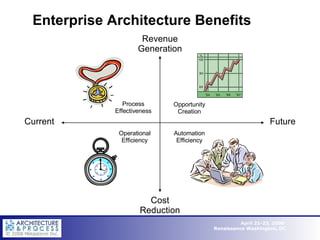
Enterprise Architecture Benefits Process Effectiveness Operational Efficiency Opportunity Creation Automation Efficiency Current Future Revenue Generation Cost Reduction
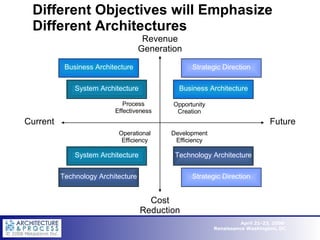
Different Objectives will Emphasize Different Architectures Process Effectiveness Operational Efficiency Opportunity Creation Development Efficiency Current Future Revenue Generation Cost Reduction Strategic Direction Business Architecture System Architecture Technology Architecture System Architecture Business Architecture Technology Architecture Strategic Direction
Getting Started
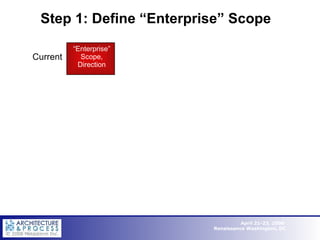
Steps to Enterprise Architecture Step 1: Define “Enterprise” Scope “ Enterprise” Scope, Direction Current
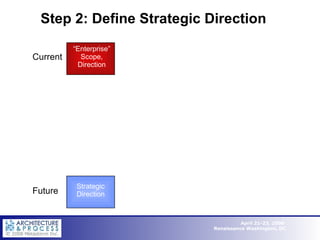
Step 2: Define Strategic Direction Strategic Direction Future “ Enterprise” Scope, Direction Current
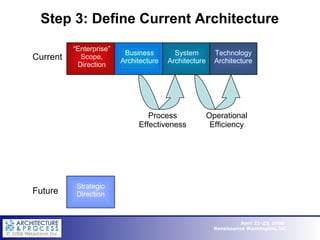
Step 3: Define Current Architecture Business Architecture System Architecture Technology Architecture Process Effectiveness Operational Efficiency Strategic Direction Future “ Enterprise” Scope, Direction Current
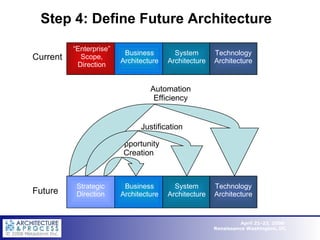
Step 4: Define Future Architecture Future System Architecture Business Architecture Technology Architecture Strategic Direction Business Architecture System Architecture Technology Architecture Opportunity Creation Automation Efficiency Justification “ Enterprise” Scope, Direction Current
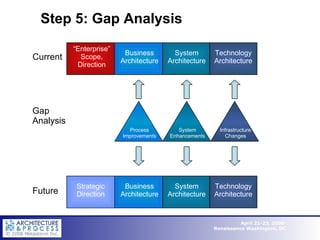
Step 5: Gap Analysis Gap Analysis Future ? ? ? System Architecture Business Architecture Technology Architecture Strategic Direction Business Architecture System Architecture Technology Architecture Process Improvements System Enhancements Infrastructure Changes “ Enterprise” Scope, Direction Current
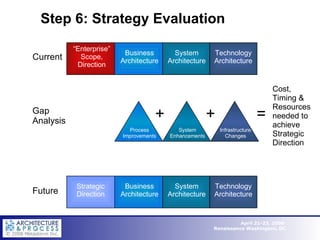
Step 6: Strategy Evaluation Gap Analysis Future Process Improvements System Enhancements Infrastructure Changes System Architecture Business Architecture Technology Architecture Strategic Direction Business Architecture System Architecture Technology Architecture + + Cost, Timing & Resources needed to achieve Strategic Direction = “ Enterprise” Scope, Direction Current
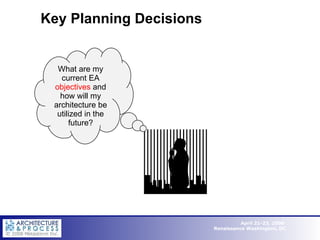
Key Planning Decisions What are my current EA  objectives  and how will my architecture be utilized in the future?
Different Objectives Emphasize Different Architectures Process Effectiveness Operational Efficiency Opportunity Creation Development Efficiency Current Future Strategic Direction Business Architecture System Architecture Technology Architecture System Architecture Business Architecture Technology Architecture Strategic Direction Revenue Generation Cost Reduction
Key Planning Decisions What are my current EA  objectives  and how will my architecture be utilized in the future? How much  organizational commitment  is required for success?
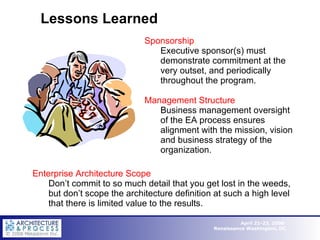
Lessons Learned Sponsorship Executive sponsor(s) must demonstrate commitment at the very outset, and periodically throughout the program. Management Structure Business management oversight of the EA process ensures alignment with the mission, vision and business strategy of the organization. Enterprise Architecture Scope Don’t commit to so much detail that you get lost in the weeds, but don’t scope the architecture definition at such a high level that there is limited value to the results.
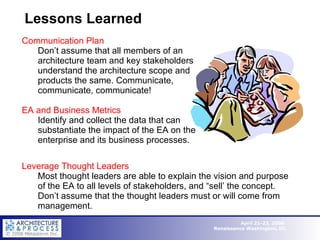
Lessons Learned Communication Plan Don’t assume that all members of an architecture team and key stakeholders understand the architecture scope and products the same. Communicate, communicate, communicate! EA and Business Metrics Identify and collect the data that can substantiate the impact of the EA on the enterprise and its business processes. Leverage Thought Leaders Most thought leaders are able to explain the vision and purpose of the EA to all levels of stakeholders, and “sell’ the concept. Don’t assume that the thought leaders must or will come from management.
Thank  You! Brian James Director of Product Management Metastorm [email_address]

Optimizing Value to the Enterprise with Integrated Enterprise Architecture

  • 1.
    Optimizing Value tothe Enterprise with Integrated Enterprise Architecture Brian James Director of Product Management Metastorm
  • 2.
    Agenda Introduction BuildingEnterprise Architecture Using Enterprise Architecture Getting Started
  • 3.
    What is EnterpriseArchitecture? “ In a large modern enterprise, a rigorously defined framework is necessary to be able to capture a vision of the ‘ entire system’ in all its dimensions and complexity. Enterprise Architecture (EA) is a framework which is able to coordinate the many facets that make up the fundamental essence of an enterprise. It is the master plan which ‘ acts as an integrating force’ between aspects of business planning such as goals, visions, strategies and governance principles; aspects of business operations such as business terms, organisation structures, processes and data; aspects of automation such as application systems and databases; and the enabling technological infrastructure of the business such as computers, operating systems and networks.” Dennis A. Stevenson, Senior Editor, IS World Research
  • 4.
  • 5.
    Enterprise Architecture TerminologyToday’s Enterprise Architecture Frameworks Zachman Framework Enterprise-Wide IT Architecture The Open Group Federal Enterprise Architecture DoDAF Strategic Direction Business Architecture System Architecture Technology Architecture
  • 6.
    Enterprise Architecture FrameworkStrategic Direction Business Architecture System Architecture Technology Architecture Data / Object Product / Service People Process Service / Application Software Hardware Interface Network Data Architecture Capability Environment Goal Application Architecture
  • 7.
    Strategic Direction ObjectivesExamine the enterprise’s environment, assess internal capabilities and set direction Validate the business principles and strategic business drivers of the organization Create a vision for the enterprise that will guide the development of each architecture component Strategic Direction Business Architecture Data Architecture Application Architecture Technology Architecture
  • 8.
    Business Interaction ModelStrategic Direction Business Architecture Data Architecture Application Architecture Technology Architecture
  • 9.
    Strategy Model StrategicDirection Business Architecture Data Architecture Application Architecture Technology Architecture
  • 10.
    Goal Model StrategicDirection Business Architecture Data Architecture Application Architecture Technology Architecture
  • 11.
    Business Architecture ObjectivesDescribe the current baseline Business Architecture Develop a target Business Architecture, describing the product and/or service strategy, and the organizational, functional, process, event, information, and geographic aspects of the business environment Analyze the gaps between the baseline and target Business Architectures Strategic Direction Business Architecture Data Architecture Application Architecture Technology Architecture
  • 12.
    Organization Model StrategicDirection Business Architecture Data Architecture Application Architecture Technology Architecture
  • 13.
    Workflow Model StrategicDirection Business Architecture Data Architecture Application Architecture Technology Architecture
  • 14.
    Data Architecture ObjectivesDefine the major types and sources of data necessary to support the business, in a way that is understandable by the stakeholders Define the data relevant to the enterprise so that they are complete, consistent and stable Strategic Direction Business Architecture Data Architecture Application Architecture Technology Architecture
  • 15.
    Class Model StrategicDirection Business Architecture Data Architecture Application Architecture Technology Architecture
  • 16.
    Application Architecture ObjectivesDefine what kinds of application systems are relevant to the enterprise, and what those applications need to do in order to manage data and present information to the system users Describe the applications as logical groups of capabilities that manage data in the Data Architecture and support the business functions in the Business Architecture Strategic Direction Business Architecture Data Architecture Application Architecture Technology Architecture
  • 17.
    System Model StrategicDirection Business Architecture Data Architecture Application Architecture Technology Architecture
  • 18.
    Use Case ModelBusiness Architecture Strategic Direction Data Architecture Application Architecture Technology Architecture
  • 19.
    Storyboard Model StrategicDirection Business Architecture Data Architecture Application Architecture Technology Architecture
  • 20.
    Technology Architecture ObjectivesDefine the major kinds of technologies needed to provide an environment for the System Architecture Identify technology principles and platforms Define the technology platforms and the distribution of data and applications Establish a justification for the technology platforms by relating them to the business functions that will utilize them Support future growth Strategic Direction Business Architecture Data Architecture Application Architecture Technology Architecture
  • 21.
    Location Model StrategicDirection Business Architecture Data Architecture Application Architecture Technology Architecture
  • 22.
    System Interaction ModelStrategic Direction Business Architecture Data Architecture Application Architecture Technology Architecture
  • 23.
    Deployment Model StrategicDirection Business Architecture Data Architecture Application Architecture Technology Architecture
  • 24.
  • 25.
    A Pile ofDocuments does not Make an Enterprise Architecture “ An Enterprise Architecture is a tool to help executives think about the organization as a whole. An Enterprise Architecture captures a wide variety of information, establishes relationships among the various documents and diagrams and stores all of the information together in a single repository, so that managers can then see the relationships, ask questions, identify problems, or run simulations to help make decisions about changes they are considering .” Developing an Enterprise Architecture Paul Harmon, Business Process Trends
  • 26.
    The Value ofEnterprise Architecture is in the Relationships Enterprise Architecture is more than a collection of the constituent architectures (Business, Application, Technology, and Information). The interrelationships among these architectures , and their joint properties , are essential to the Enterprise Architecture. Enterprise-Wide IT Architecture (EWITA)
  • 27.
    Association Matrices StrategicDirection Business Architecture Data Architecture Application Architecture Technology Architecture
  • 28.
    Navigator Strategic DirectionBusiness Architecture Data Architecture Application Architecture Technology Architecture Strategic Direction Business Architecture Data Architecture Application Architecture Technology Architecture
  • 29.
    Enterprise Architecture ProvidesMany Possibilities Strategy Model Goal Model Business Interaction Model Location Model Corporate Strategy Application Architecture State Chart Use Case Model Operation Model Storyboard Model System Model Communication Model Software Development Tools Organization Model Data Architecture Deliverable Model Logical Data Model Physical Data Model Data Modeling Tools XMI Interface Technology Architecture Technical Architecture Model Deployment Model Infrastructure Management Tools XML Interface Strategic Direction Business Architecture Systems Architecture Technology Architecture Technical Tools EA Associations Process Validation by Simulation Process Architecture Business Process Management Tools Process Hierarchy Workflow Model Business Rules XMI Interface The model relationships to be analyzed depend upon your specific objectives. BPEL Interface
  • 30.
    Enterprise Architecture BenefitsProcess Effectiveness Operational Efficiency Opportunity Creation Automation Efficiency Current Future Revenue Generation Cost Reduction
  • 31.
    Different Objectives willEmphasize Different Architectures Process Effectiveness Operational Efficiency Opportunity Creation Development Efficiency Current Future Revenue Generation Cost Reduction Strategic Direction Business Architecture System Architecture Technology Architecture System Architecture Business Architecture Technology Architecture Strategic Direction
  • 32.
  • 33.
    Steps to EnterpriseArchitecture Step 1: Define “Enterprise” Scope “ Enterprise” Scope, Direction Current
  • 34.
    Step 2: DefineStrategic Direction Strategic Direction Future “ Enterprise” Scope, Direction Current
  • 35.
    Step 3: DefineCurrent Architecture Business Architecture System Architecture Technology Architecture Process Effectiveness Operational Efficiency Strategic Direction Future “ Enterprise” Scope, Direction Current
  • 36.
    Step 4: DefineFuture Architecture Future System Architecture Business Architecture Technology Architecture Strategic Direction Business Architecture System Architecture Technology Architecture Opportunity Creation Automation Efficiency Justification “ Enterprise” Scope, Direction Current
  • 37.
    Step 5: GapAnalysis Gap Analysis Future ? ? ? System Architecture Business Architecture Technology Architecture Strategic Direction Business Architecture System Architecture Technology Architecture Process Improvements System Enhancements Infrastructure Changes “ Enterprise” Scope, Direction Current
  • 38.
    Step 6: StrategyEvaluation Gap Analysis Future Process Improvements System Enhancements Infrastructure Changes System Architecture Business Architecture Technology Architecture Strategic Direction Business Architecture System Architecture Technology Architecture + + Cost, Timing & Resources needed to achieve Strategic Direction = “ Enterprise” Scope, Direction Current
  • 39.
    Key Planning DecisionsWhat are my current EA objectives and how will my architecture be utilized in the future?
  • 40.
    Different Objectives EmphasizeDifferent Architectures Process Effectiveness Operational Efficiency Opportunity Creation Development Efficiency Current Future Strategic Direction Business Architecture System Architecture Technology Architecture System Architecture Business Architecture Technology Architecture Strategic Direction Revenue Generation Cost Reduction
  • 41.
    Key Planning DecisionsWhat are my current EA objectives and how will my architecture be utilized in the future? How much organizational commitment is required for success?
  • 42.
    Lessons Learned SponsorshipExecutive sponsor(s) must demonstrate commitment at the very outset, and periodically throughout the program. Management Structure Business management oversight of the EA process ensures alignment with the mission, vision and business strategy of the organization. Enterprise Architecture Scope Don’t commit to so much detail that you get lost in the weeds, but don’t scope the architecture definition at such a high level that there is limited value to the results.
  • 43.
    Lessons Learned CommunicationPlan Don’t assume that all members of an architecture team and key stakeholders understand the architecture scope and products the same. Communicate, communicate, communicate! EA and Business Metrics Identify and collect the data that can substantiate the impact of the EA on the enterprise and its business processes. Leverage Thought Leaders Most thought leaders are able to explain the vision and purpose of the EA to all levels of stakeholders, and “sell’ the concept. Don’t assume that the thought leaders must or will come from management.
  • 44.
    Thank You!Brian James Director of Product Management Metastorm [email_address]