

Sarmad M.N. Ibrahim IT Strategy Manager Dubai Airports Dubai, United Arab Emirates Enterprise Architecture
Enterprise Architecture Vision For E.A section “  IT Will use E.A. Enterprise Architecture as a central capability to align   strategy and execution , implement   operational excellence , and   drive purpose-oriented   innovation ”
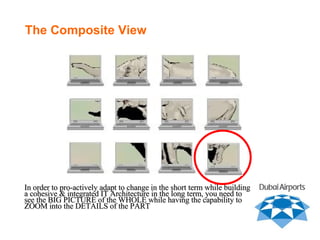
The Composite View In order to pro-actively adapt to change in the short term while building a cohesive & integrated IT Architecture in the long term, you need to see the BIG PICTURE of the WHOLE while having the capability to ZOOM into the DETAILS of the PART
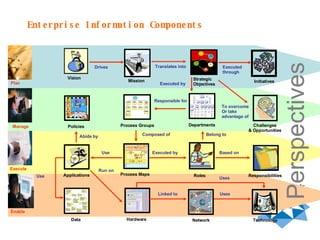
Enterprise Information Components Perspectives Vision Strategic Objectives Initiatives Process Groups Process Maps Challenges & Opportunities Policies Technology Departments Roles Responsibilities Network Data Applications Hardware Drives Mission Translates into Executed through To overcome Or take  advantage of Executed by Responsible for Composed of Executed by Based on Belong to Use Run on Use Linked to Abide by Uses Plan Execute Manage Enable Uses
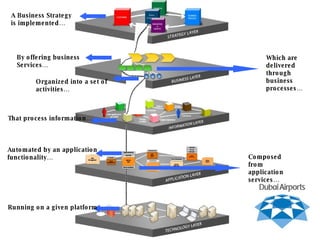
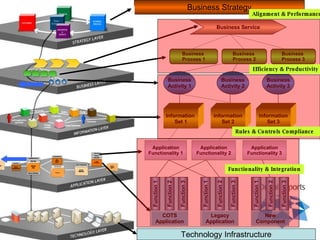
A Business Strategy is implemented… By offering business  Services… Which are delivered through business processes… Organized into a set of activities… That process information… Automated by an application functionality… Composed from application services… Running on a given platform
Application Functionality 1 Application Functionality 2 Application Functionality 3 Business Strategy COTS Application Function 1 Function 2 Function 3 Legacy Application Function 1 Function 2 Function 3 New Component Function 1 Function 2 Function 3 Technology Infrastructure Business Service Business  Process 1 Business  Process 2 Business  Process 3 Information  Set 1 Information Set 2 Information Set 3 Business Activity 1 Business Activity 2 Business Activity 3 Efficiency & Productivity Rules & Controls Compliance Functionality & Integration Alignment & Performance
EA is  an emerging practice devoted to improving the performance of the enterprises  by enabling them to see themselves in terms of the holistic and integrated view. EA is a  strategy and business-driven activity that supports management planning and decision making  by providing coordinated views of an entire enterprise. EA is about  maximizing the benefit through the strategic use business, technology and human resources. By developing current and future versions of its integrated views,  organizations can better manage change and the transition  to the target operating environment. Enterprise Architecture Definition
EA is the  explicit description and documentation of the current and desired relationships among business processes, information, Applications & technology.  EA is the  blueprint of an organization to analyze and plan changes .  EA is a  strategic asset repository  which defines the current and target architecture environments. EA helps in identifying the  relationship between strategic initiatives and their supporting technology components. EA  reflects the structure of (Enterprise) components, relationships, and principles and guidelines  governing their evolution over time. EA helps  identifying overlapping requirements  and thus assist in eliminating redundant functionality. Enterprise Architecture Definition
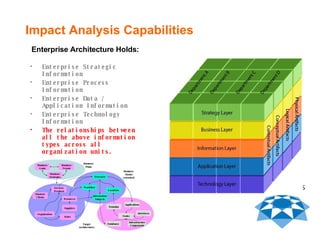
Enterprise Strategic Information Enterprise Process Information Enterprise Data / Application Information Enterprise Technology Information The relationships between all the above information types across all organization units. Impact Analysis Capabilities Enterprise Architecture Holds:
Enterprise Connected View
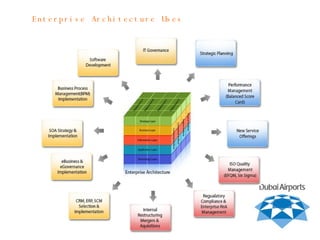
Enterprise Architecture Uses
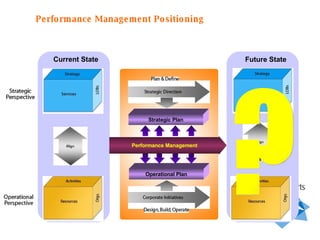
Performance Management Positioning Strategic Plan Operational Plan Performance Management Current State Future State ?
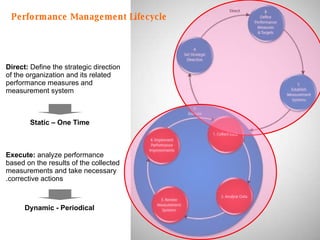
Performance Management Lifecycle Direct:  Define the strategic direction of the organization and its related performance measures and measurement system Execute:  analyze performance based on the results of the collected measurements and take necessary corrective actions. Static – One Time Dynamic - Periodical
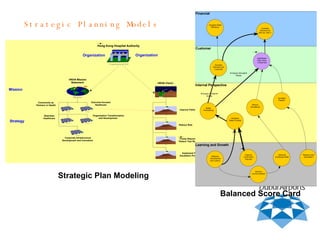
Strategic Plan Modeling Strategic Planning Models Balanced Score Card
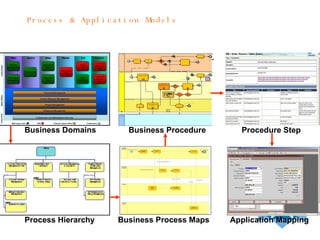
Business Domains Process & Application Models Process Hierarchy Business Process Maps Business Procedure Procedure Step Application Mapping
Enterprise Business Model & Process Hierarchy Business Flow Business Process & Information Lifecycle Use Case & Use Case Realization
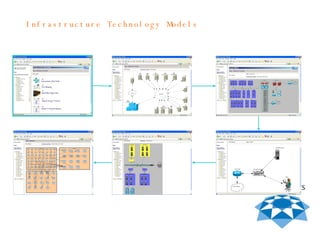
Infrastructure Technology Models
Thank you

E.A Sarmad2

  • 1.
    Sarmad M.N. IbrahimIT Strategy Manager Dubai Airports Dubai, United Arab Emirates Enterprise Architecture
  • 2.
    Enterprise Architecture VisionFor E.A section “ IT Will use E.A. Enterprise Architecture as a central capability to align strategy and execution , implement operational excellence , and drive purpose-oriented innovation ”
  • 3.
    The Composite ViewIn order to pro-actively adapt to change in the short term while building a cohesive & integrated IT Architecture in the long term, you need to see the BIG PICTURE of the WHOLE while having the capability to ZOOM into the DETAILS of the PART
  • 4.
    Enterprise Information ComponentsPerspectives Vision Strategic Objectives Initiatives Process Groups Process Maps Challenges & Opportunities Policies Technology Departments Roles Responsibilities Network Data Applications Hardware Drives Mission Translates into Executed through To overcome Or take advantage of Executed by Responsible for Composed of Executed by Based on Belong to Use Run on Use Linked to Abide by Uses Plan Execute Manage Enable Uses
  • 5.
    A Business Strategyis implemented… By offering business Services… Which are delivered through business processes… Organized into a set of activities… That process information… Automated by an application functionality… Composed from application services… Running on a given platform
  • 6.
    Application Functionality 1Application Functionality 2 Application Functionality 3 Business Strategy COTS Application Function 1 Function 2 Function 3 Legacy Application Function 1 Function 2 Function 3 New Component Function 1 Function 2 Function 3 Technology Infrastructure Business Service Business Process 1 Business Process 2 Business Process 3 Information Set 1 Information Set 2 Information Set 3 Business Activity 1 Business Activity 2 Business Activity 3 Efficiency & Productivity Rules & Controls Compliance Functionality & Integration Alignment & Performance
  • 7.
    EA is an emerging practice devoted to improving the performance of the enterprises by enabling them to see themselves in terms of the holistic and integrated view. EA is a strategy and business-driven activity that supports management planning and decision making by providing coordinated views of an entire enterprise. EA is about maximizing the benefit through the strategic use business, technology and human resources. By developing current and future versions of its integrated views, organizations can better manage change and the transition to the target operating environment. Enterprise Architecture Definition
  • 8.
    EA is the explicit description and documentation of the current and desired relationships among business processes, information, Applications & technology. EA is the blueprint of an organization to analyze and plan changes . EA is a strategic asset repository which defines the current and target architecture environments. EA helps in identifying the relationship between strategic initiatives and their supporting technology components. EA reflects the structure of (Enterprise) components, relationships, and principles and guidelines governing their evolution over time. EA helps identifying overlapping requirements and thus assist in eliminating redundant functionality. Enterprise Architecture Definition
  • 9.
    Enterprise Strategic InformationEnterprise Process Information Enterprise Data / Application Information Enterprise Technology Information The relationships between all the above information types across all organization units. Impact Analysis Capabilities Enterprise Architecture Holds:
  • 10.
  • 11.
  • 12.
    Performance Management PositioningStrategic Plan Operational Plan Performance Management Current State Future State ?
  • 13.
    Performance Management LifecycleDirect: Define the strategic direction of the organization and its related performance measures and measurement system Execute: analyze performance based on the results of the collected measurements and take necessary corrective actions. Static – One Time Dynamic - Periodical
  • 14.
    Strategic Plan ModelingStrategic Planning Models Balanced Score Card
  • 15.
    Business Domains Process& Application Models Process Hierarchy Business Process Maps Business Procedure Procedure Step Application Mapping
  • 16.
    Enterprise Business Model& Process Hierarchy Business Flow Business Process & Information Lifecycle Use Case & Use Case Realization
  • 17.
  • 18.