Optimization in
Refrigeration Systems
P.L.Dhar
I.I.T. Delhi
Synopsis
The design Process
Need for Optimization
How
Energy Conservation – innovative concepts
The Design Process
Traditional approach
Design of a window air-conditioner

What is the basis of choosing ?
Condenser Temperature
Evaporator temperature
No. of Rows
Tube diameter
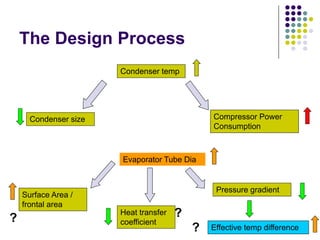
The Design Process
Condenser temp

Compressor Power
Consumption

Condenser size

Evaporator Tube Dia

Pressure gradient

Surface Area /
frontal area

?

Heat transfer
coefficient

?
?

Effective temp difference
Why Optimization ?
Increasing Competition
Increasing energy costs
Stringent energy standards
Ecological considerations

Availability of computational tools
Formulation of an Optimization
Problem
Three basic steps :
Objective function
Variables
Constraints

Special features of thermal system
Optimization
Nature of variables—discrete +
continuous
We may want to optimize only some
equipment NOT the whole system
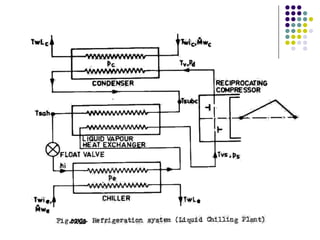
Optimum Design of a Refrigeration
System -- problem formulation
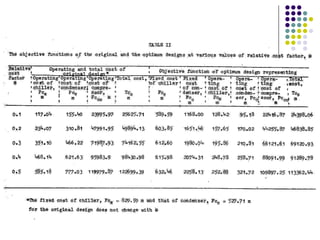
Min TCs = FCe + FCc + RCe + RCc +Rcco
TCs= ΣNte(i) Lte Cct +Σ Ntc(i) Ltc Cct + [K Mwe PDe +
K Mwc PDc + 0.746 (BHP) ] Ckw Lh

Variables : Lte , Nte( 1,2) ; Ltc , Ntc (1,7)
No of passes, Fin design, tube layout, etc
Constraints: :

Qe = Qer

; Mwe = Mwer, Twic = Twicr ; Qc = Qcr
Max Vel of water < Vr; Tube lengths within bounds
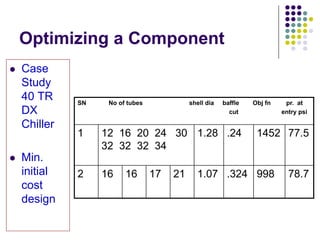
Optimizing a Component
Case
Study
40 TR
DX
Chiller
Min.
initial
cost
design

SN

No of tubes

shell dia

baffle
cut

1

12 16 20 24 30 1.28 .24
32 32 32 34

2

16

16

17

21

Obj fn

pr. at
entry psi

1452 77.5

1.07 .324 998

78.7
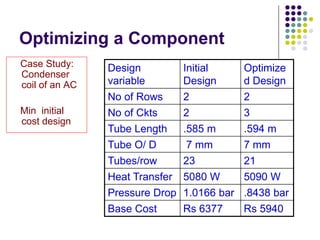
Optimizing a Component
Case Study:
Condenser
coil of an AC
Min initial
cost design

Design
variable
No of Rows
No of Ckts
Tube Length
Tube O/ D
Tubes/row
Heat Transfer
Pressure Drop
Base Cost

Initial
Design
2
2
.585 m
7 mm
23
5080 W
1.0166 bar
Rs 6377

Optimize
d Design
2
3
.594 m
7 mm
21
5090 W
.8438 bar
Rs 5940
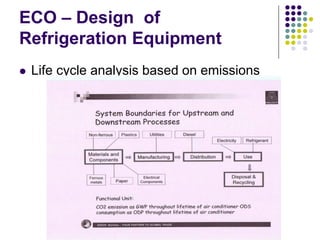
ECO – Design of
Refrigeration Equipment
Life cycle analysis based on emissions
Reducing Energy Consumption
What should be the thermostat settings of a
Window AC ?
Do we need to maintain 24oC indoors ?
Experience of Air conditioned trains .
Comfort research shows PPD for 24oC is the
same as for 27.2oC.
Impact of high outdoor temperatures and
short duration of occupancy on “optimal”
indoor temperatures
Reduce Energy Consumption
through Innovative Concepts
Using stratification to reduce cooling load
Window AC + Table fan

Regenerative evaporative cooling for “hotdry” climates : “Green AC”
Regenerative Evaporative cooling based cool
chests for vegetable & fruit retail outlets
Desiccant based cooling
Reduce Energy Consumption
through innovative concepts
Combining multiple uses -- Customized A/C
Solutions e.g. for kitchens, hostels,
restaurants
Air conditioning, cold water, hot water

Multiple indoor and outdoor unit split AC
Fuzzy Control + variable speed control for
energy saving
Variable dead-band thermostats
Personal AC
Reduce Energy Consumption
through innovative concepts
LPG based AC / refrigerator
Bio-mass/Bio-gas energized cold chests for
rural areas
Low cost Domestic refrigerator without
freezer

Consumer education
Thank you !

Optimization in refrigeration systems

  • 1.
  • 2.
    Synopsis The design Process Needfor Optimization How Energy Conservation – innovative concepts
  • 3.
    The Design Process Traditionalapproach Design of a window air-conditioner What is the basis of choosing ? Condenser Temperature Evaporator temperature No. of Rows Tube diameter
  • 4.
    The Design Process Condensertemp Compressor Power Consumption Condenser size Evaporator Tube Dia Pressure gradient Surface Area / frontal area ? Heat transfer coefficient ? ? Effective temp difference
  • 5.
    Why Optimization ? IncreasingCompetition Increasing energy costs Stringent energy standards Ecological considerations Availability of computational tools
  • 6.
    Formulation of anOptimization Problem Three basic steps : Objective function Variables Constraints Special features of thermal system Optimization Nature of variables—discrete + continuous We may want to optimize only some equipment NOT the whole system
  • 8.
    Optimum Design ofa Refrigeration System -- problem formulation Min TCs = FCe + FCc + RCe + RCc +Rcco TCs= ΣNte(i) Lte Cct +Σ Ntc(i) Ltc Cct + [K Mwe PDe + K Mwc PDc + 0.746 (BHP) ] Ckw Lh Variables : Lte , Nte( 1,2) ; Ltc , Ntc (1,7) No of passes, Fin design, tube layout, etc Constraints: : Qe = Qer ; Mwe = Mwer, Twic = Twicr ; Qc = Qcr Max Vel of water < Vr; Tube lengths within bounds
  • 12.
    Optimizing a Component Case Study 40TR DX Chiller Min. initial cost design SN No of tubes shell dia baffle cut 1 12 16 20 24 30 1.28 .24 32 32 32 34 2 16 16 17 21 Obj fn pr. at entry psi 1452 77.5 1.07 .324 998 78.7
  • 13.
    Optimizing a Component CaseStudy: Condenser coil of an AC Min initial cost design Design variable No of Rows No of Ckts Tube Length Tube O/ D Tubes/row Heat Transfer Pressure Drop Base Cost Initial Design 2 2 .585 m 7 mm 23 5080 W 1.0166 bar Rs 6377 Optimize d Design 2 3 .594 m 7 mm 21 5090 W .8438 bar Rs 5940
  • 14.
    ECO – Designof Refrigeration Equipment Life cycle analysis based on emissions
  • 15.
    Reducing Energy Consumption Whatshould be the thermostat settings of a Window AC ? Do we need to maintain 24oC indoors ? Experience of Air conditioned trains . Comfort research shows PPD for 24oC is the same as for 27.2oC. Impact of high outdoor temperatures and short duration of occupancy on “optimal” indoor temperatures
  • 16.
    Reduce Energy Consumption throughInnovative Concepts Using stratification to reduce cooling load Window AC + Table fan Regenerative evaporative cooling for “hotdry” climates : “Green AC” Regenerative Evaporative cooling based cool chests for vegetable & fruit retail outlets Desiccant based cooling
  • 17.
    Reduce Energy Consumption throughinnovative concepts Combining multiple uses -- Customized A/C Solutions e.g. for kitchens, hostels, restaurants Air conditioning, cold water, hot water Multiple indoor and outdoor unit split AC Fuzzy Control + variable speed control for energy saving Variable dead-band thermostats Personal AC
  • 18.
    Reduce Energy Consumption throughinnovative concepts LPG based AC / refrigerator Bio-mass/Bio-gas energized cold chests for rural areas Low cost Domestic refrigerator without freezer Consumer education
  • 19.