“How do I successfully monitor my services
            end-to-end with OpsMgr 2012”


Walter Eikenboom
Principal consultant INOVATIV
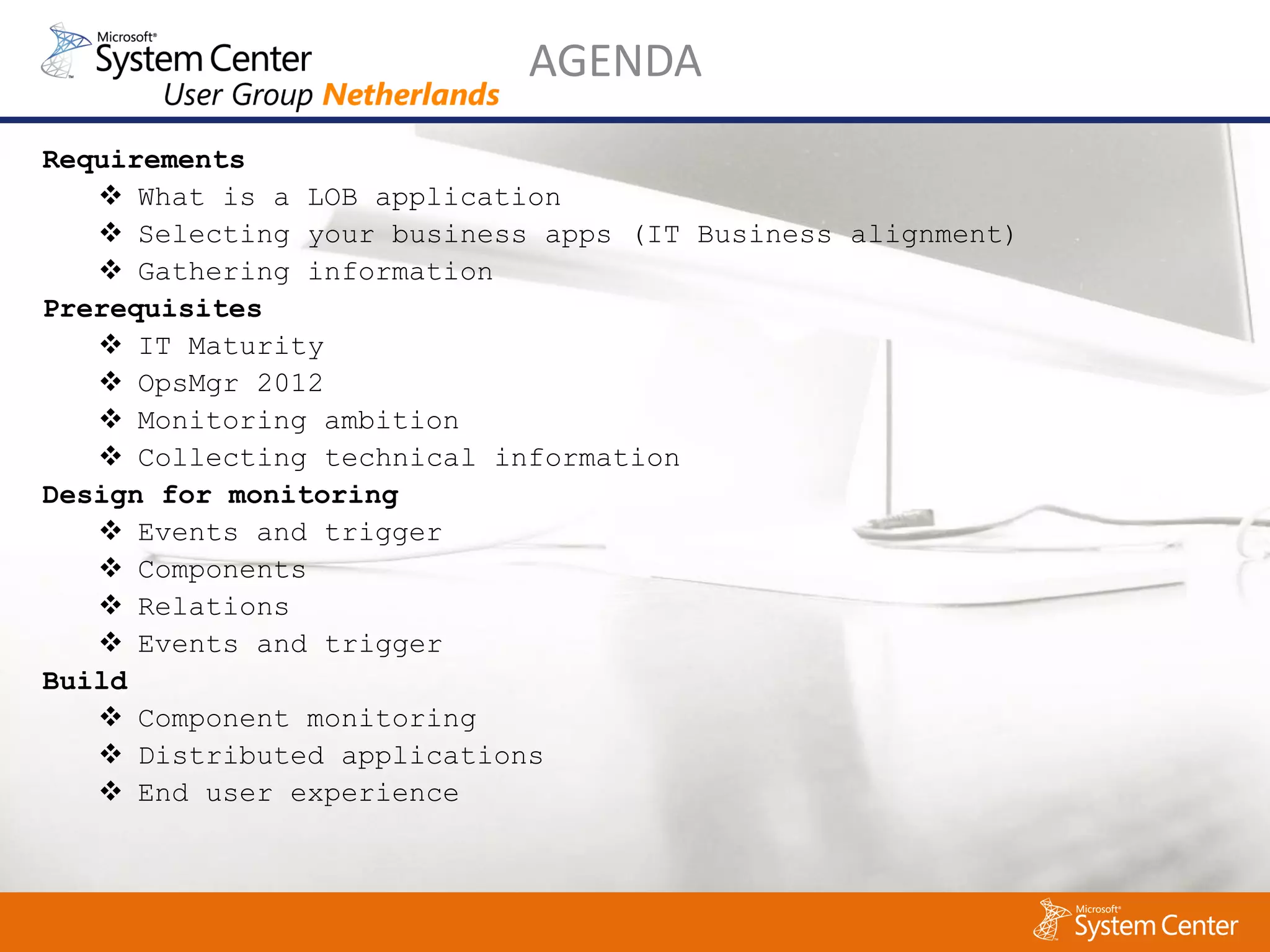
AGENDA
Requirements
    What is a LOB application
    Selecting your business apps (IT Business alignment)
    Gathering information
Prerequisites
    IT Maturity
    Operational processes (PPT)
    Collecting technical information
Design for monitoring
    Components
    Relations
    Events and trigger
Build
    Component monitoring
    Distributed applications
    End user experience
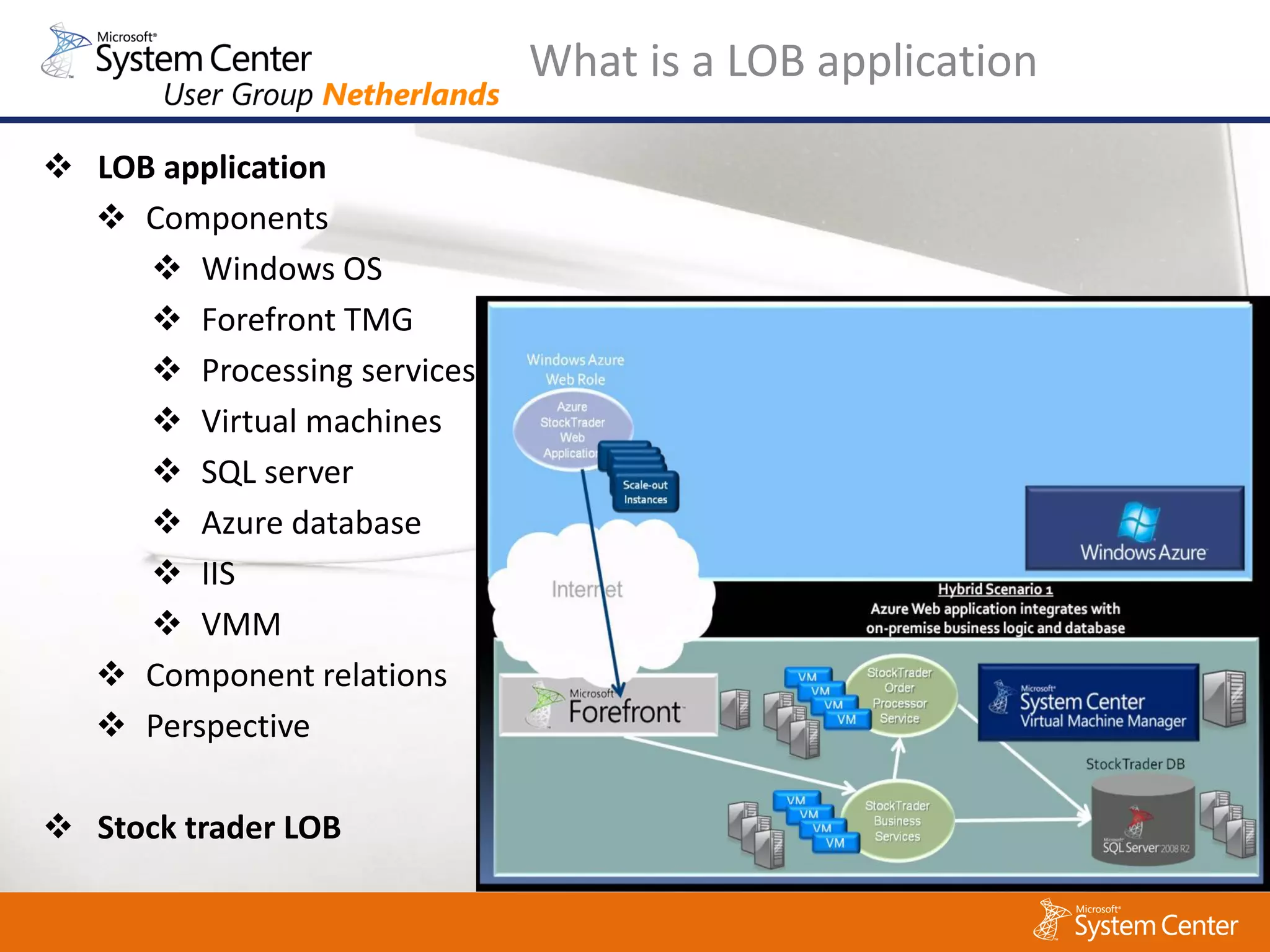
What is a LOB application

 LOB application
   Components
      Windows OS
      Forefront TMG
      Processing services
      Virtual machines
      SQL server
      Azure database
      IIS
      VMM
   Component relations
   Perspective

 Stock trader LOB
Selecting your business apps

All Applications in the IT service catalog!
          Why:
          A LOB application in the service map is mapped to:
                    Business processes
                    Business functions
                    Business capabilities
And that’s why they provide value to your business!

The Business/IT Alignment focuses on the following processes:
     Define an IT service strategy
     Identify and map services
     Identify IT service demand and manage business requests
     Develop and evaluate the IT service portfolio
     Manage service levels
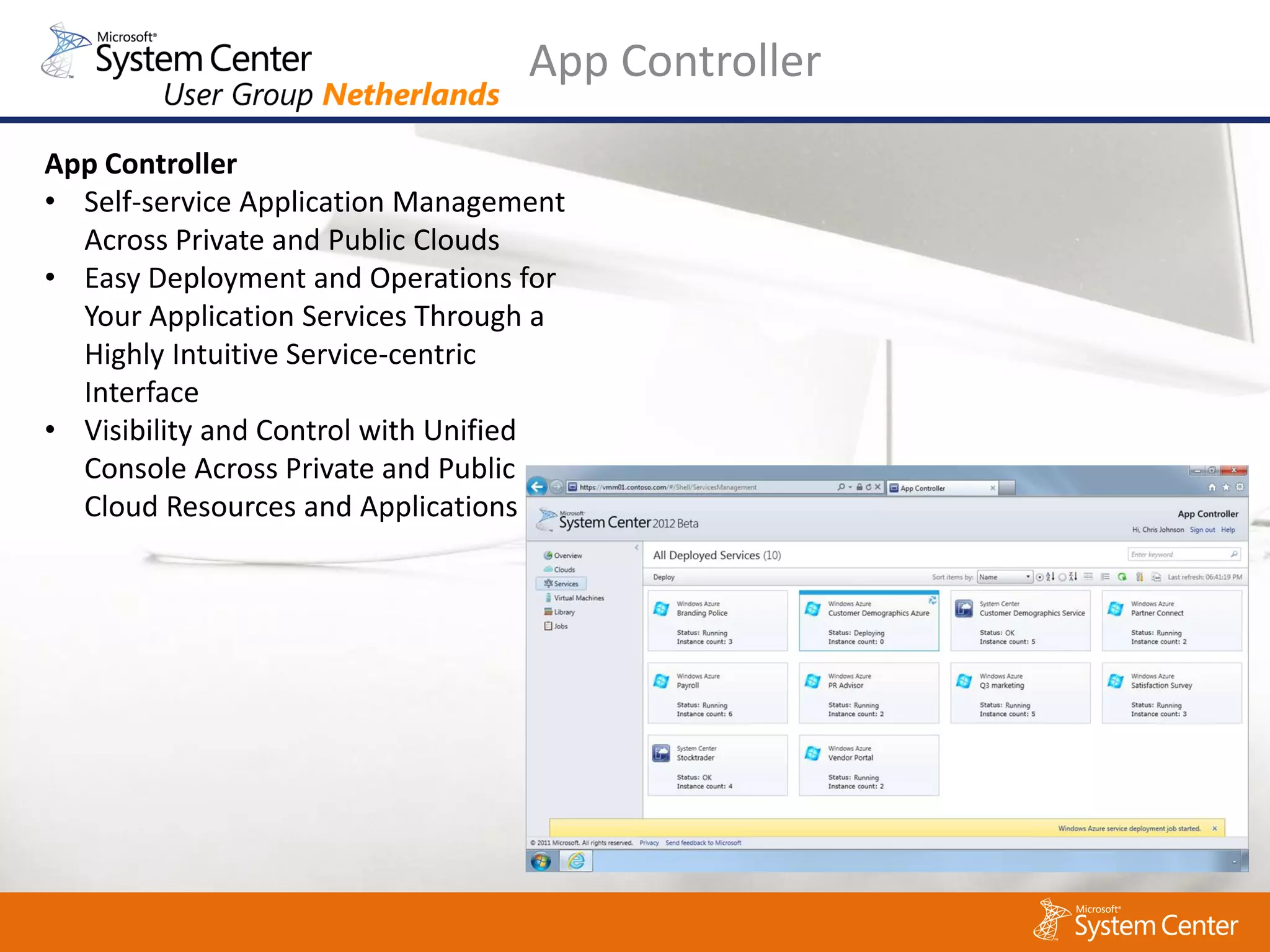
App Controller
App Controller
• Self-service Application Management
  Across Private and Public Clouds
• Easy Deployment and Operations for
  Your Application Services Through a
  Highly Intuitive Service-centric
  Interface
• Visibility and Control with Unified
  Console Across Private and Public
  Cloud Resources and Applications
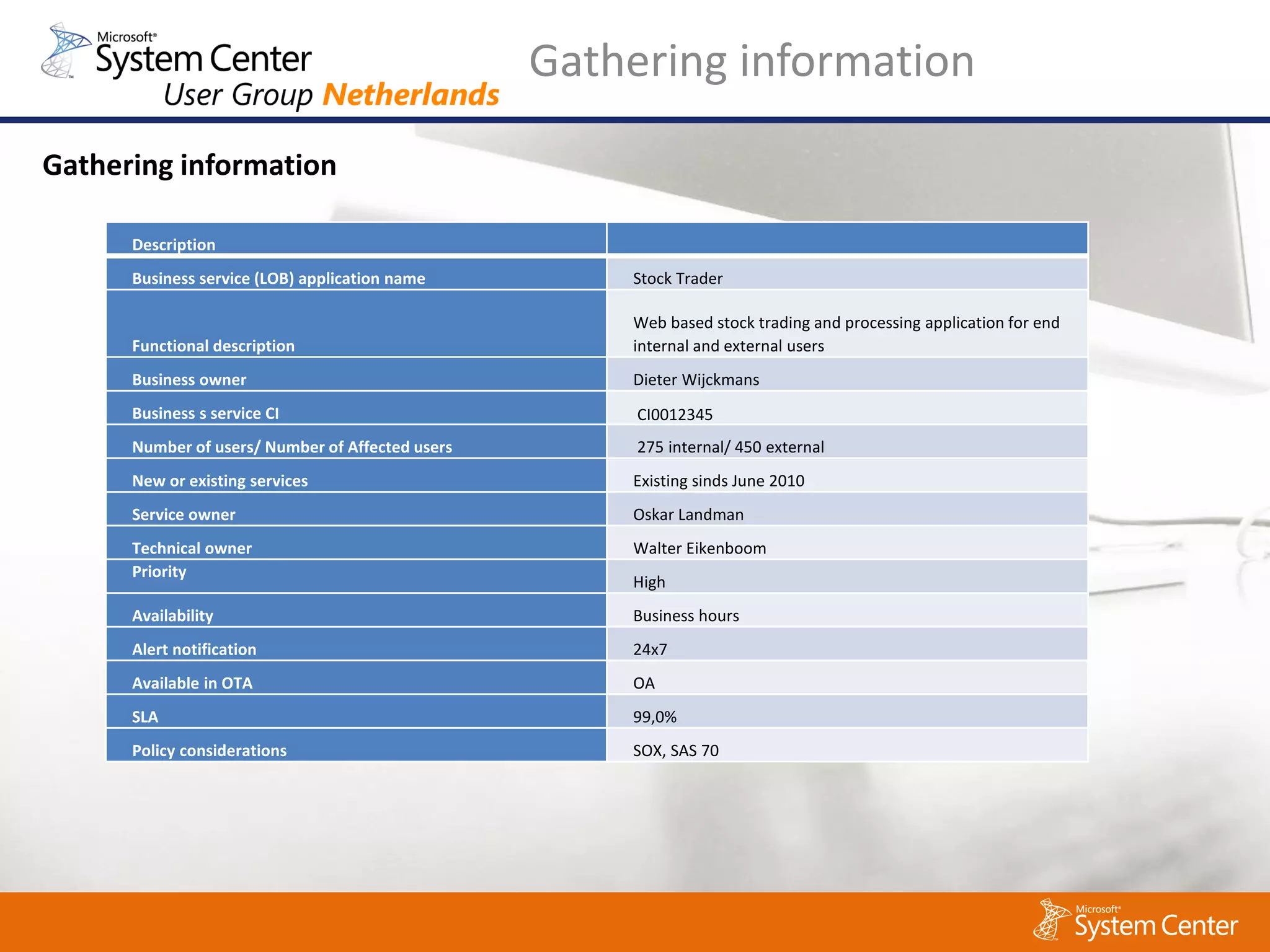
Gathering information

Gathering information

      Description
      Business service (LOB) application name         Stock Trader

                                                      Web based stock trading and processing application for end
      Functional description                          internal and external users
      Business owner                                  Dieter Wijckmans
      Business s service CI                            CI0012345
      Number of users/ Number of Affected users        275 internal/ 450 external
      New or existing services                        Existing sinds June 2010
      Service owner                                   Oskar Landman
      Technical owner                                 Walter Eikenboom
      Priority
                                                      High
      Availability                                    Business hours
      Alert notification                              24x7
      Available in OTA                                OA
      SLA                                             99,0%
      Policy considerations                           SOX, SAS 70
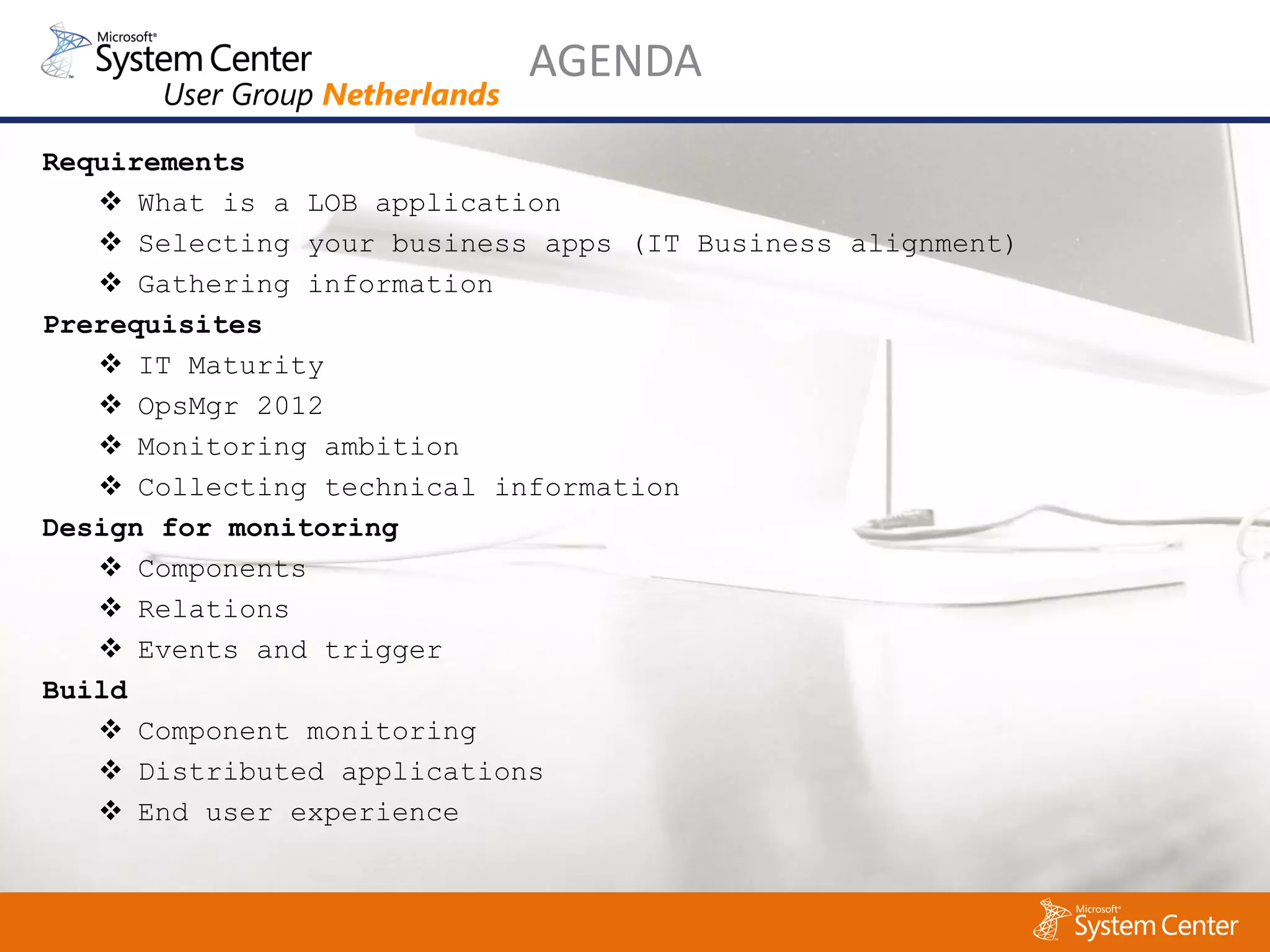
AGENDA
Requirements
    What is a LOB application
    Selecting your business apps (IT Business alignment)
    Gathering information
Prerequisites
    IT Maturity
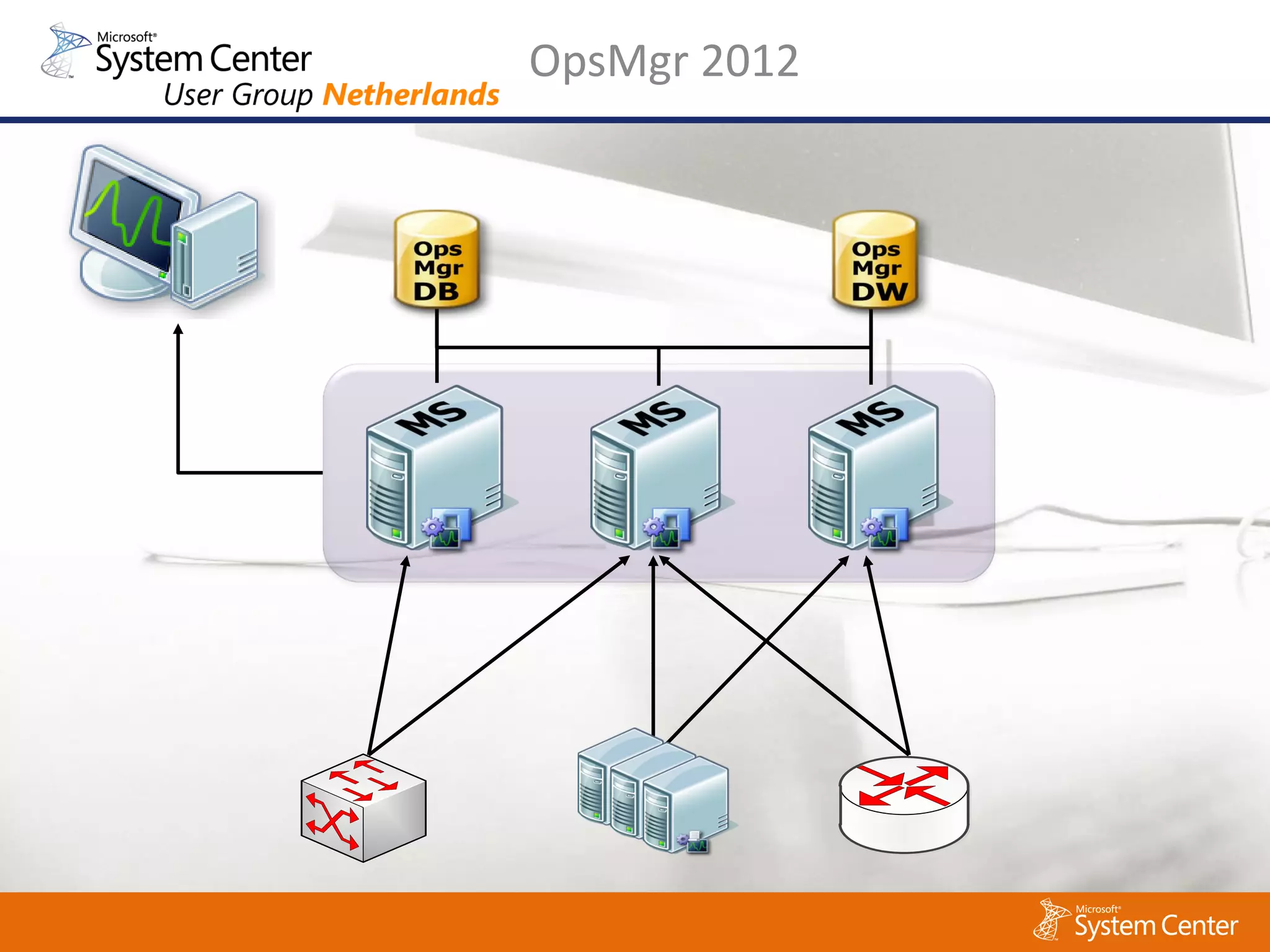
    OpsMgr 2012
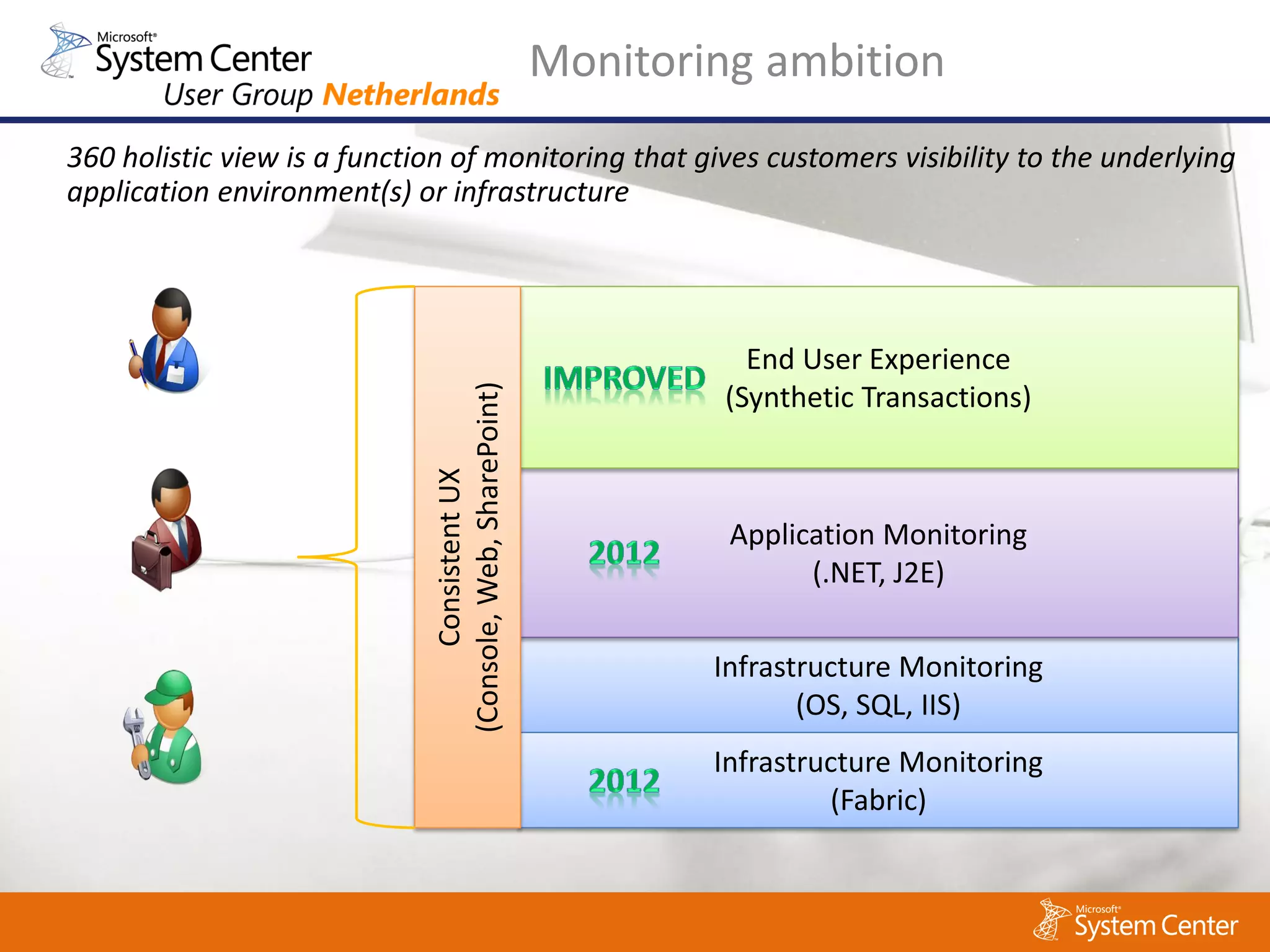
    Monitoring ambition
    Collecting technical information
Design for monitoring
    Components
    Relations
    Events and trigger
Build
    Component monitoring
    Distributed applications
    End user experience
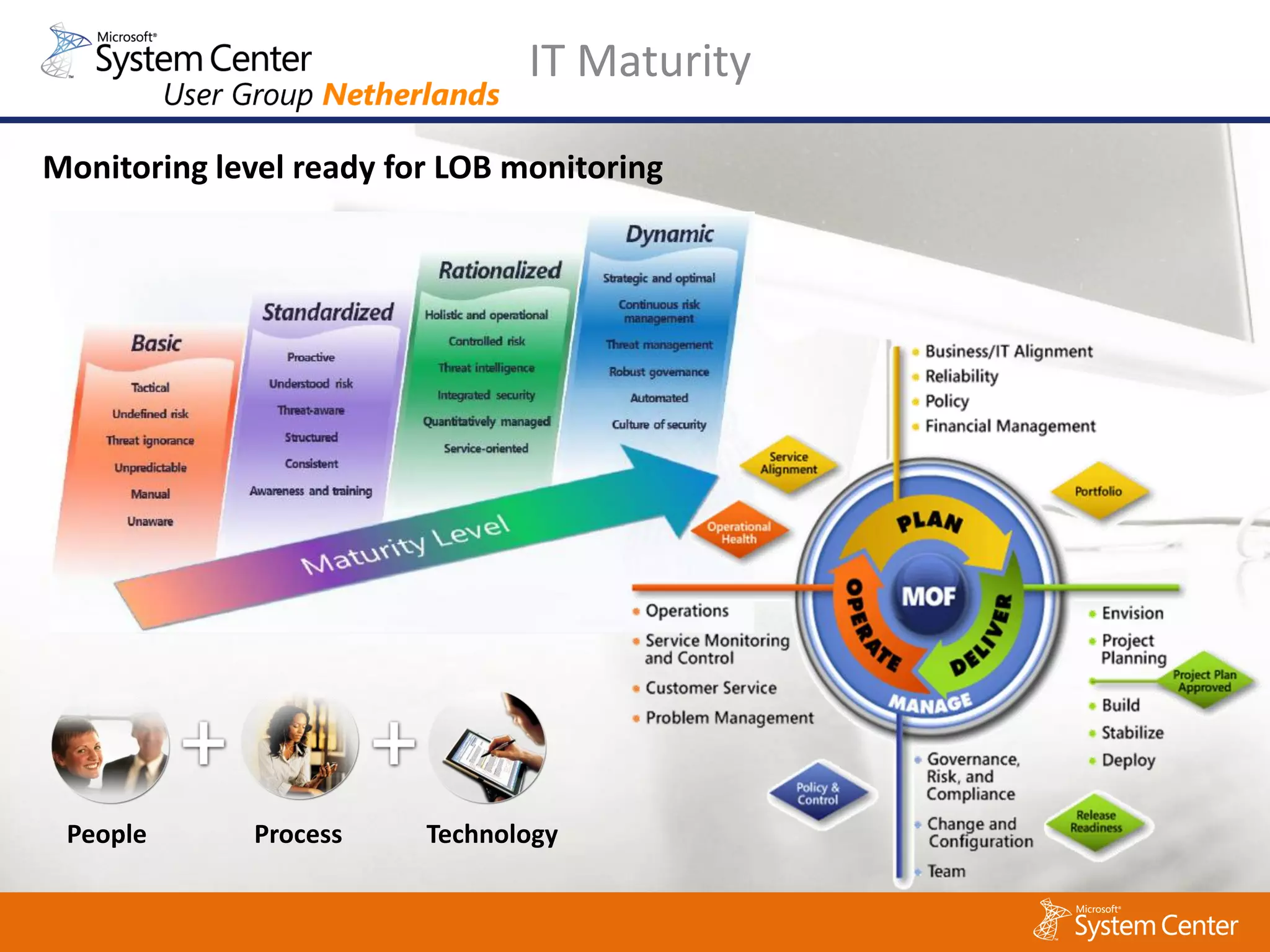
IT Maturity

Monitoring level ready for LOB monitoring


 People      Process     Technology
OpsMgr 2012
Monitoring ambition


                                       End User Experience


(Console, Web, SharePoint)
                                     (Synthetic Transactions)
      Consistent UX

                                      Application Monitoring
                                            (.NET, J2E)

                                     Infrastructure Monitoring
                                            (OS, SQL, IIS)
                                     Infrastructure Monitoring
                                              (Fabric)
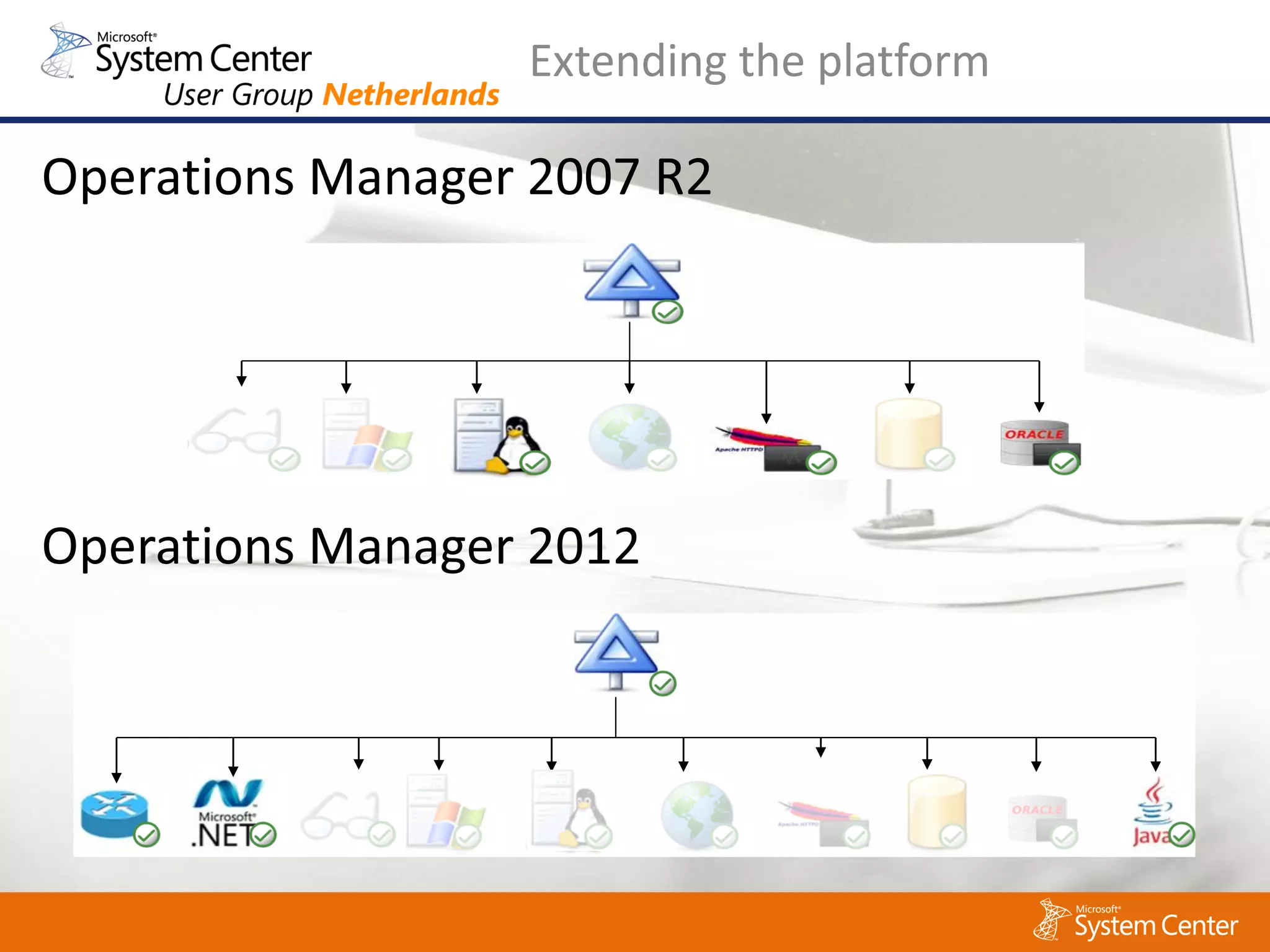
Extending the platform
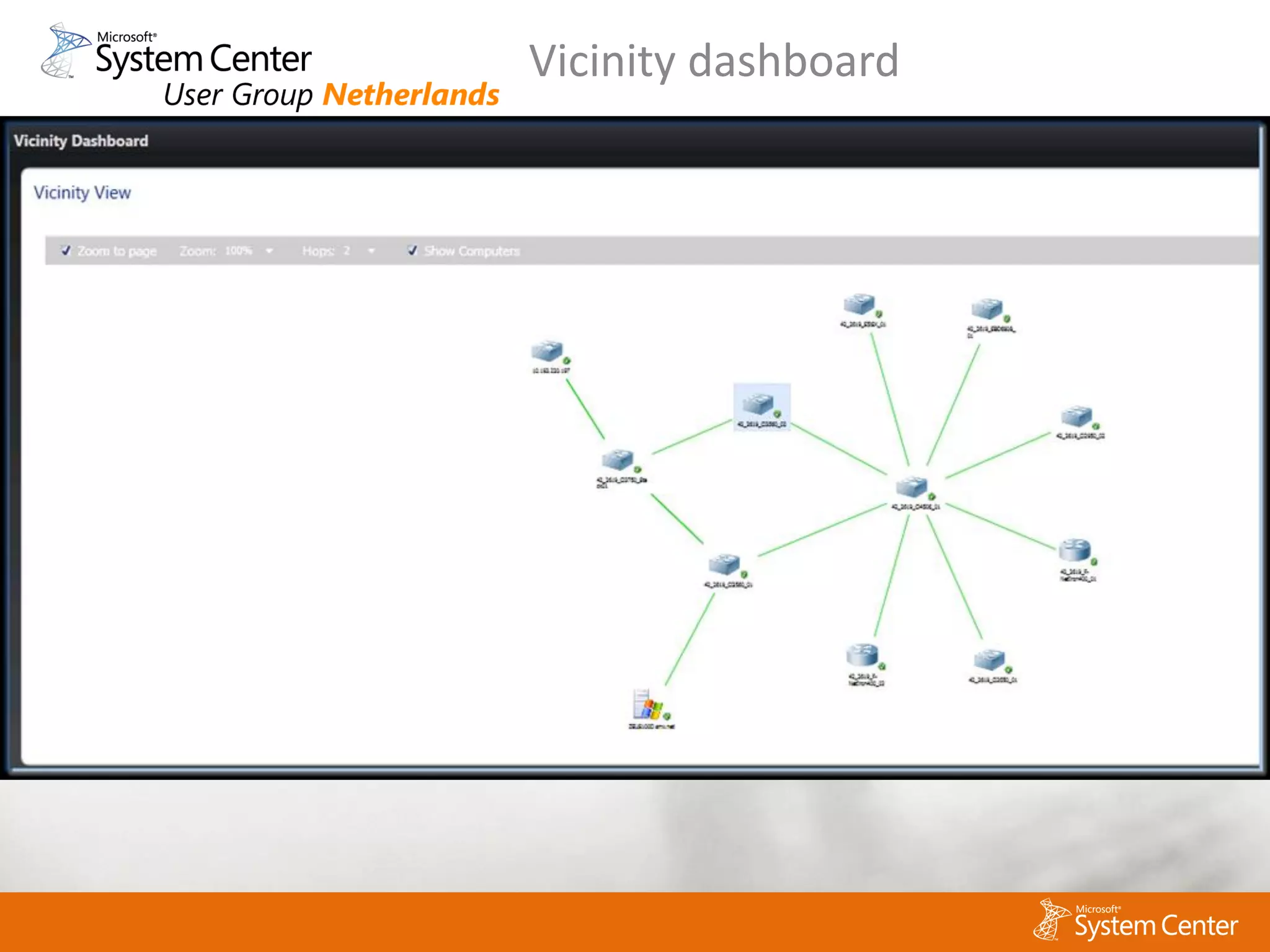
Vicinity dashboard
AGENDA
Requirements
    What is a LOB application
    Selecting your business apps (IT Business alignment)
    Gathering information
Prerequisites
    IT Maturity
    OpsMgr 2012
    Monitoring ambition
    Collecting technical information
Design for monitoring
    Events and trigger
    Components
    Relations
    Events and trigger
Build
    Component monitoring
    Distributed applications
    End user experience
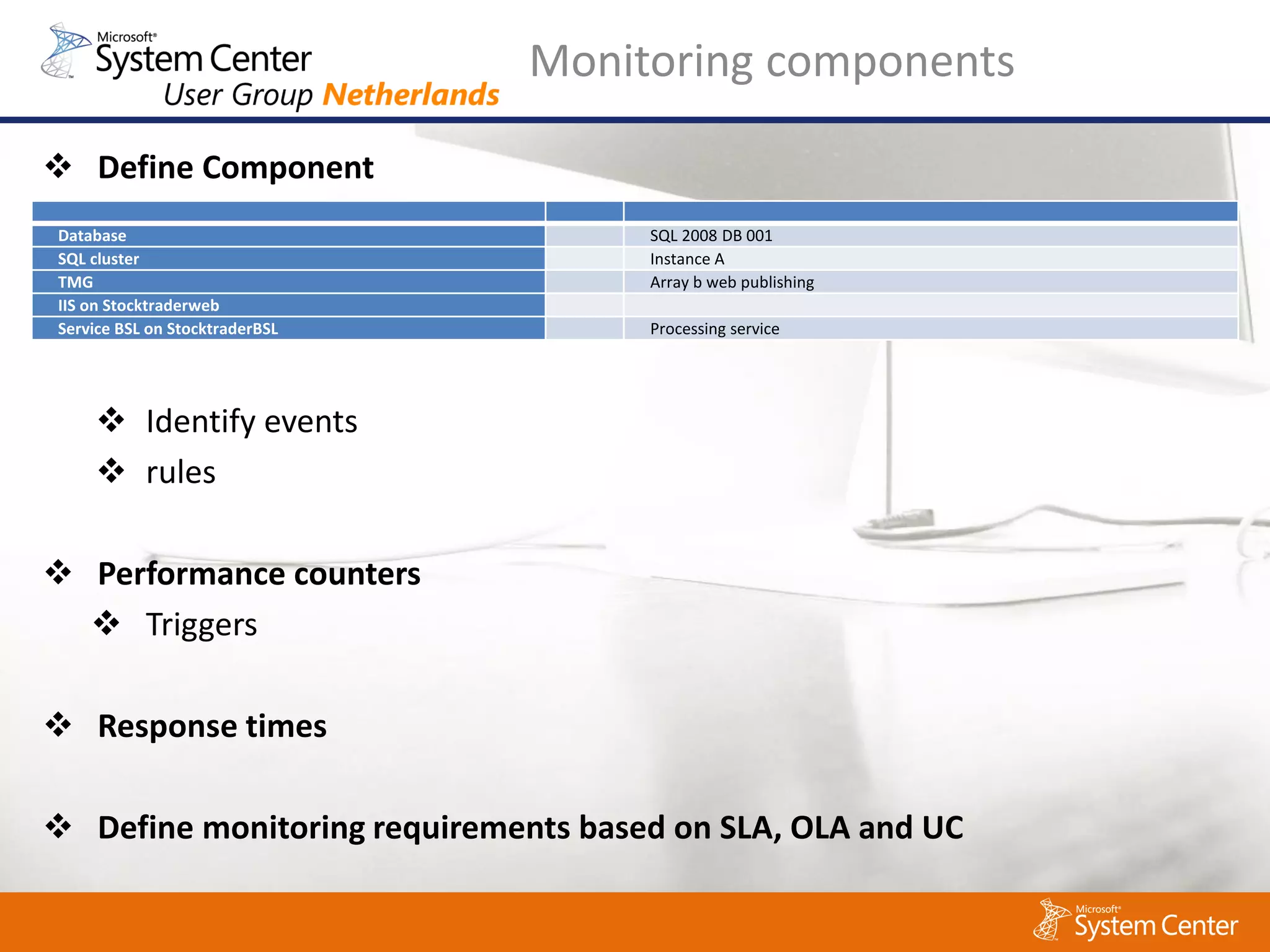
Monitoring components

 Define Component
Database                             SQL 2008 DB 001
SQL cluster                          Instance A
TMG                                  Array b web publishing
IIS on Stocktraderweb
Service BSL on StocktraderBSL        Processing service


     Identify events
     rules

 Performance counters
   Triggers

 Response times

 Define monitoring requirements based on SLA, OLA and UC
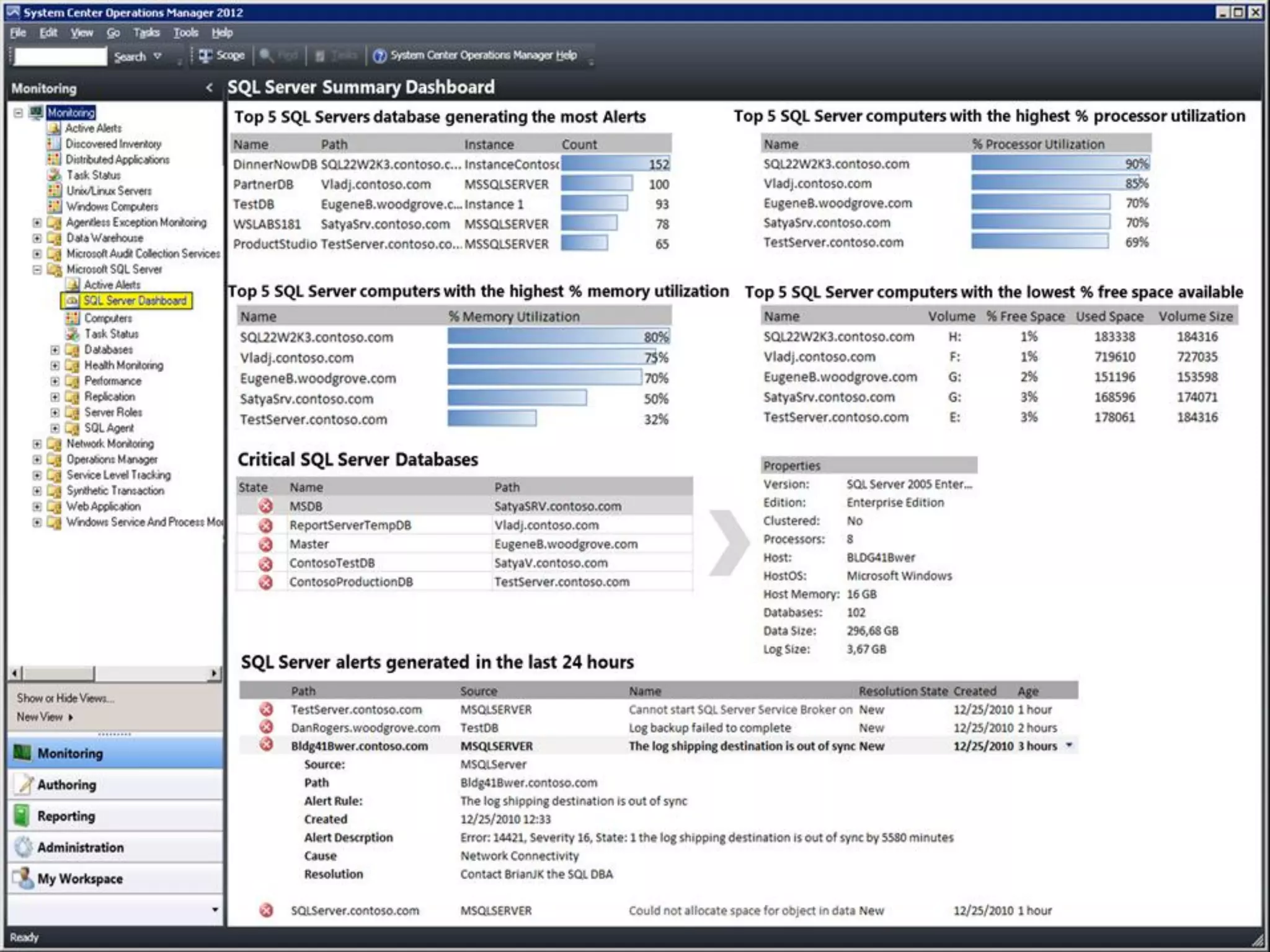
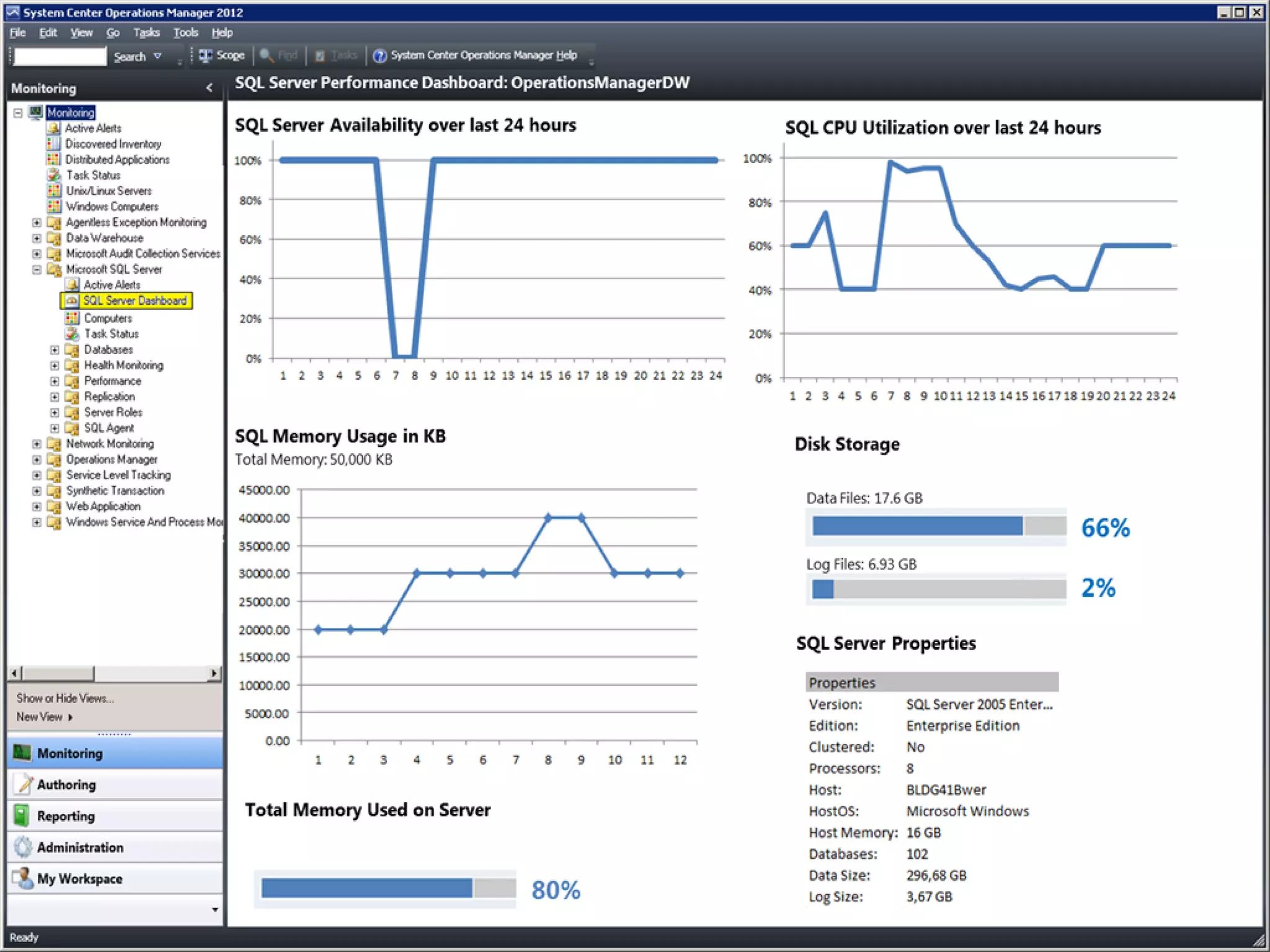
Demo
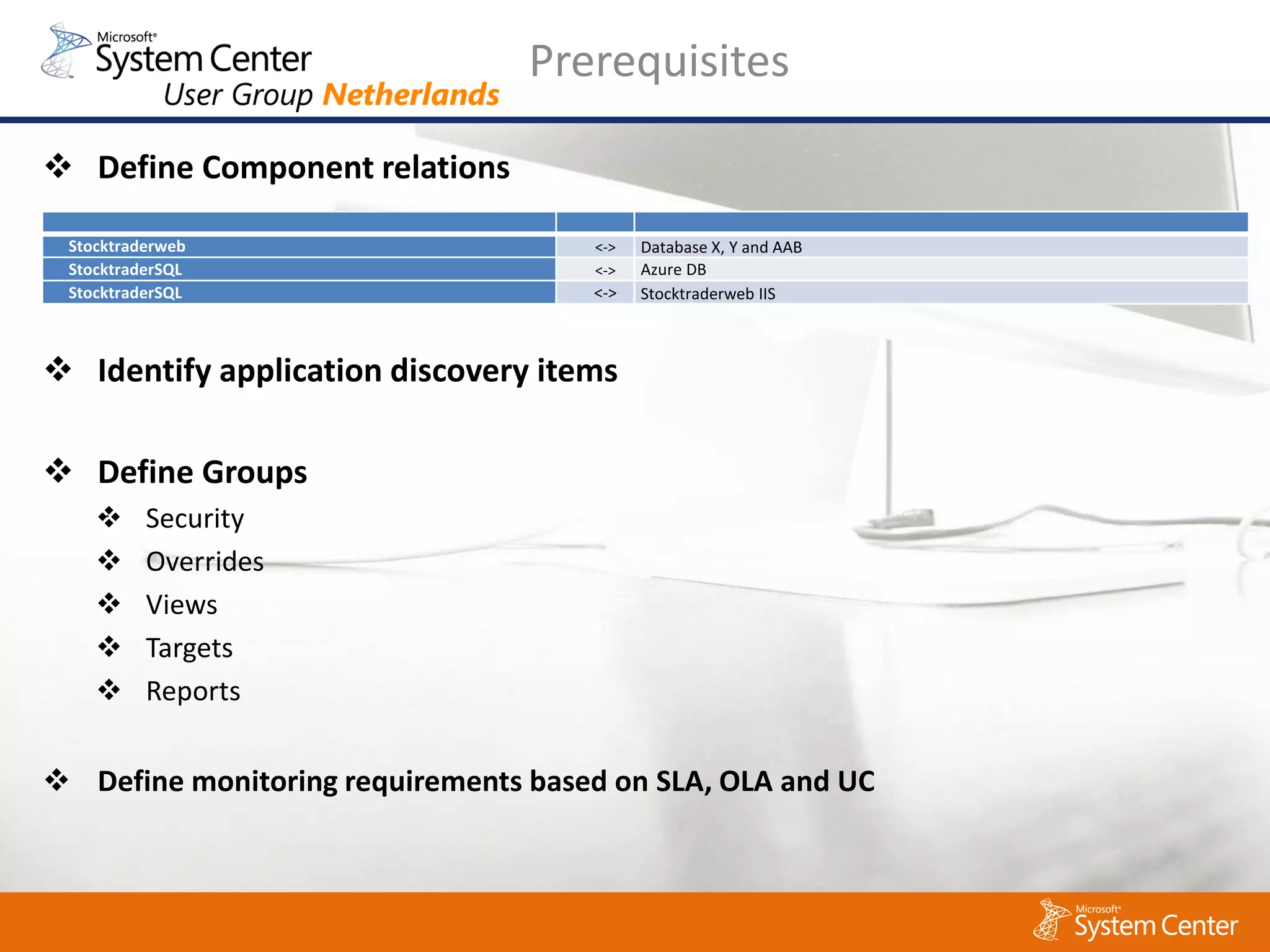
Prerequisites

 Define Component relations

 Stocktraderweb                      <->   Database X, Y and AAB
 StocktraderSQL                      <->   Azure DB
 StocktraderSQL                      <->   Stocktraderweb IIS


 Identify application discovery items

 Define Groups
    
    .
          Security
         Overrides
         Views
         Targets
         Reports


 Define monitoring requirements based on SLA, OLA and UC
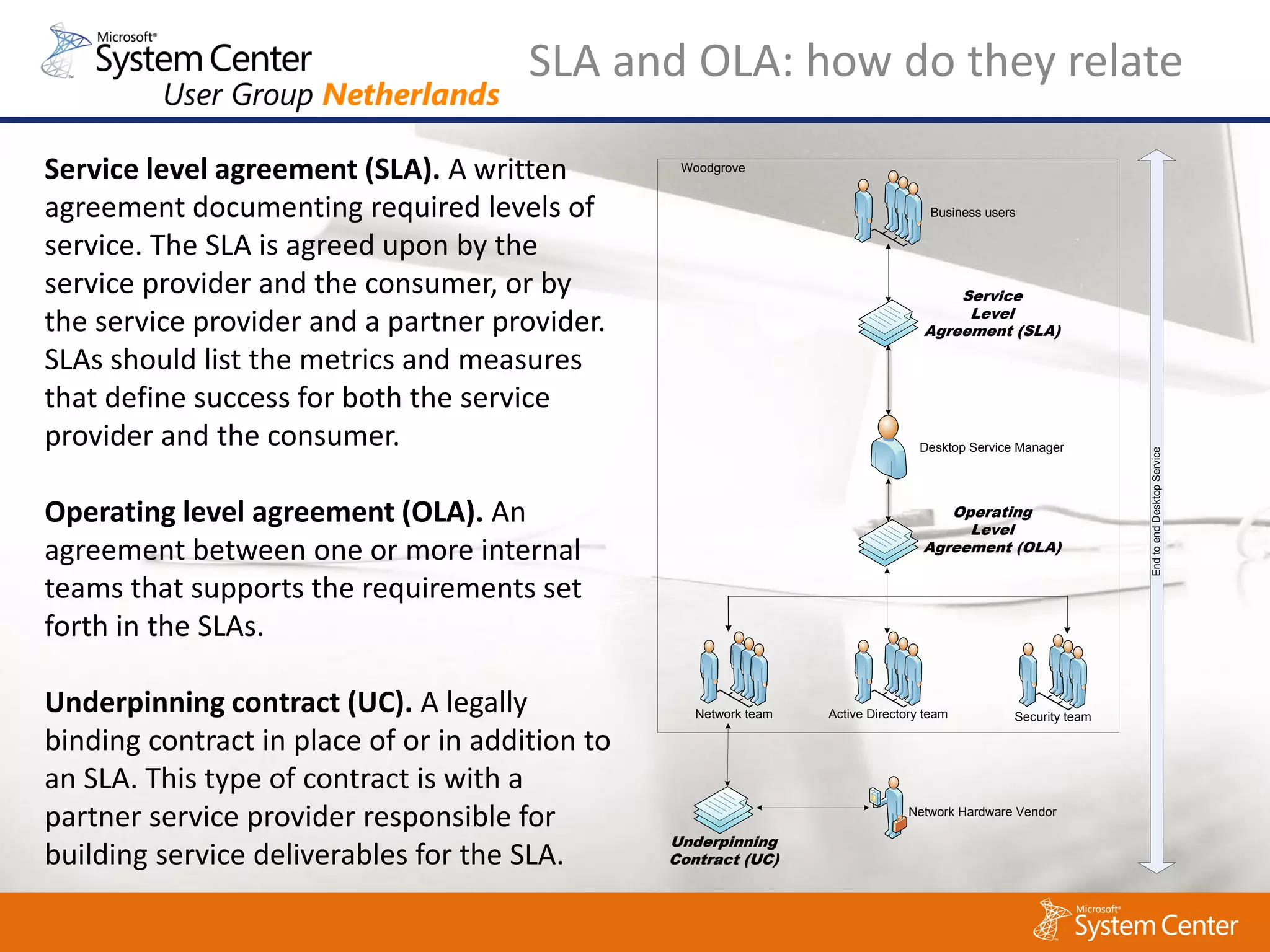
SLA and OLA: how do they relate

Service level agreement (SLA). A written          Woodgrove


agreement documenting required levels of                                            Business users


service. The SLA is agreed upon by the
service provider and the consumer, or by                                               Service
                                                                                        Level
the service provider and a partner provider.                                       Agreement (SLA)

SLAs should list the metrics and measures
that define success for both the service
provider and the consumer.                                                         Desktop Service Manager


                                                                                                                  End to end Desktop Service
Operating level agreement (OLA). An                                                   Operating
                                                                                        Level
agreement between one or more internal                                             Agreement (OLA)

teams that supports the requirements set
forth in the SLAs.

Underpinning contract (UC). A legally               Network team   Active Directory team          Security team

binding contract in place of or in addition to
an SLA. This type of contract is with a
partner service provider responsible for                                         Network Hardware Vendor

                                                 Underpinning
building service deliverables for the SLA.       Contract (UC)
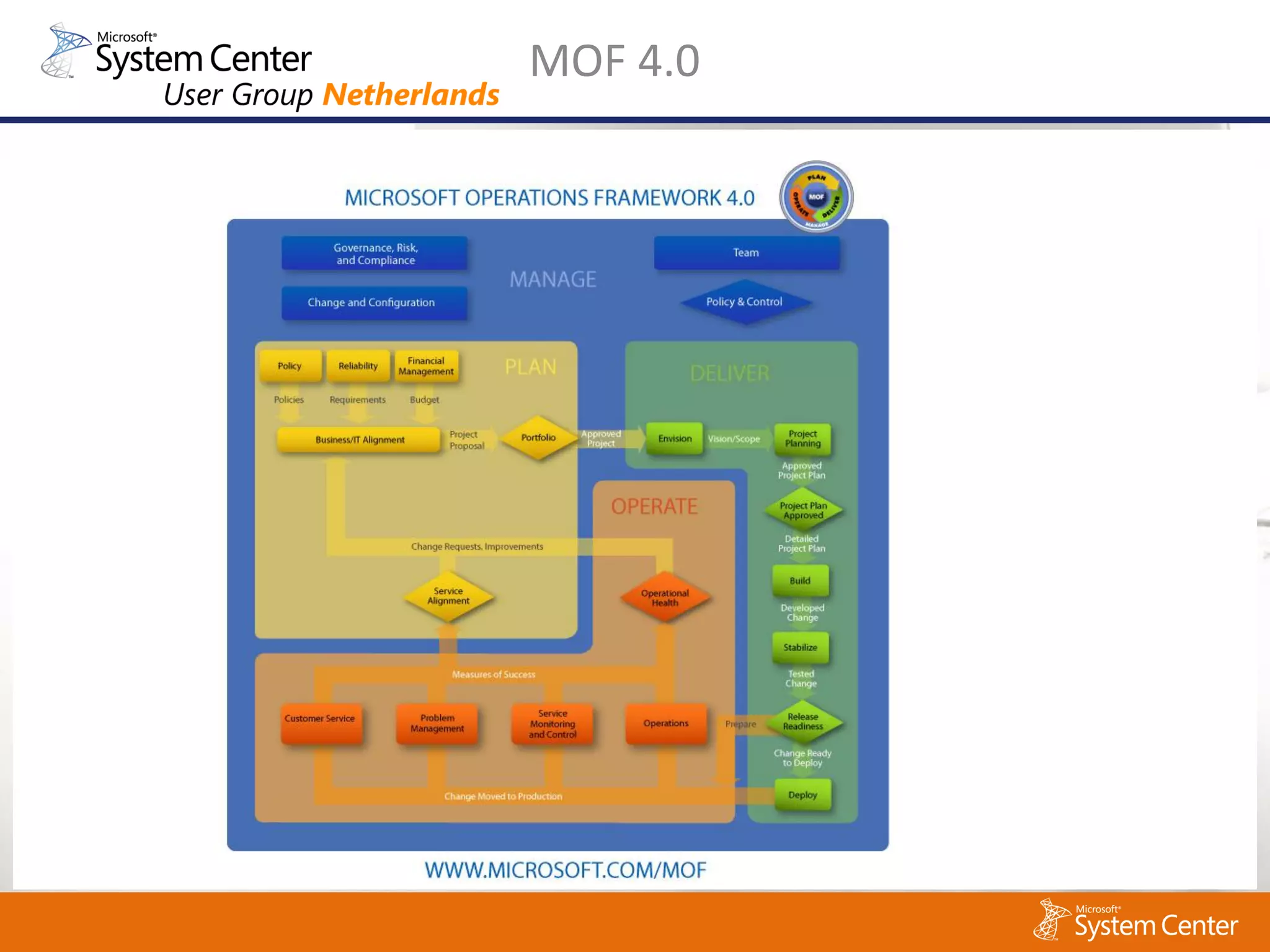
MOF 4.0
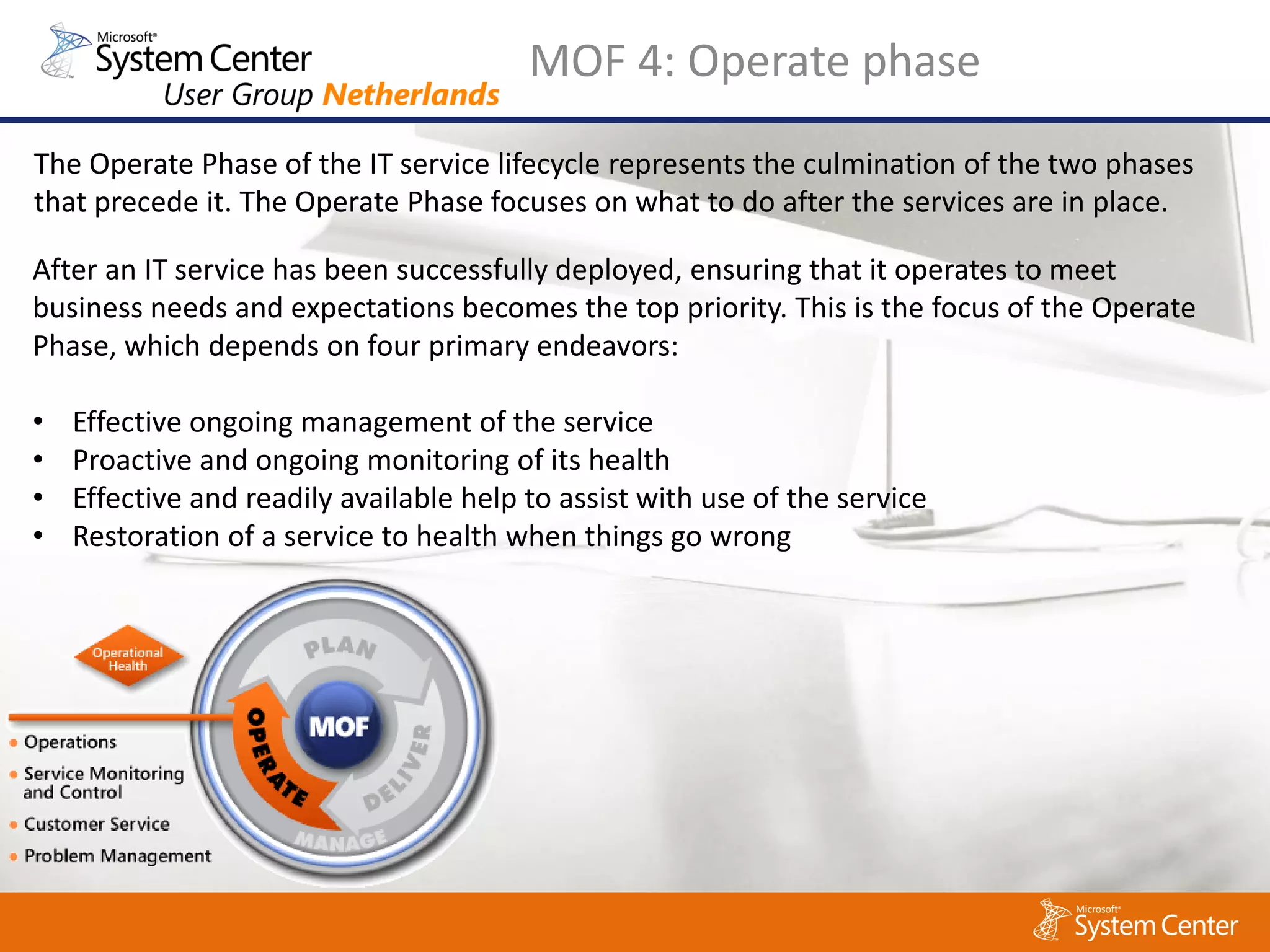
MOF 4: Operate phase
The Operate Phase of the IT service lifecycle represents the culmination of the two phases
that precede it. The Operate Phase focuses on what to do after the services are in place.

After an IT service has been successfully deployed, ensuring that it operates to meet
business needs and expectations becomes the top priority. This is the focus of the Operate
Phase, which depends on four primary endeavors:

•   Effective ongoing management of the service
•   Proactive and ongoing monitoring of its health
•   Effective and readily available help to assist with use of the service
•   Restoration of a service to health when things go wrong
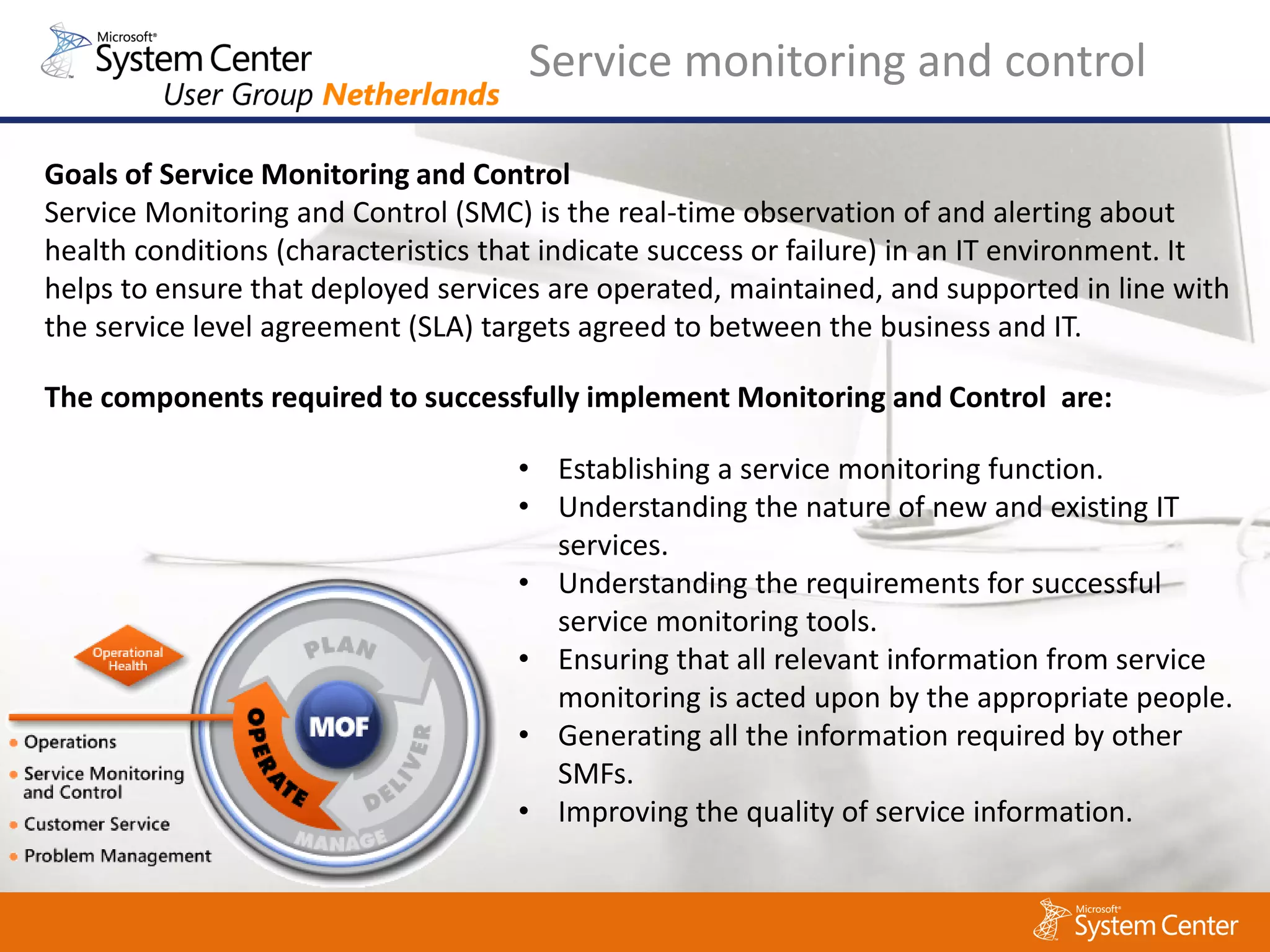
Service monitoring and control

Goals of Service Monitoring and Control
Service Monitoring and Control (SMC) is the real-time observation of and alerting about
health conditions (characteristics that indicate success or failure) in an IT environment. It
helps to ensure that deployed services are operated, maintained, and supported in line with
the service level agreement (SLA) targets agreed to between the business and IT.

The components required to successfully implement Monitoring and Control are:

                                     • Establishing a service monitoring function.
                                     • Understanding the nature of new and existing IT
                                       services.
                                     • Understanding the requirements for successful
                                       service monitoring tools.
                                     • Ensuring that all relevant information from service
                                       monitoring is acted upon by the appropriate people.
                                     • Generating all the information required by other
                                       SMFs.
                                     • Improving the quality of service information.
DEMO
Thanks!
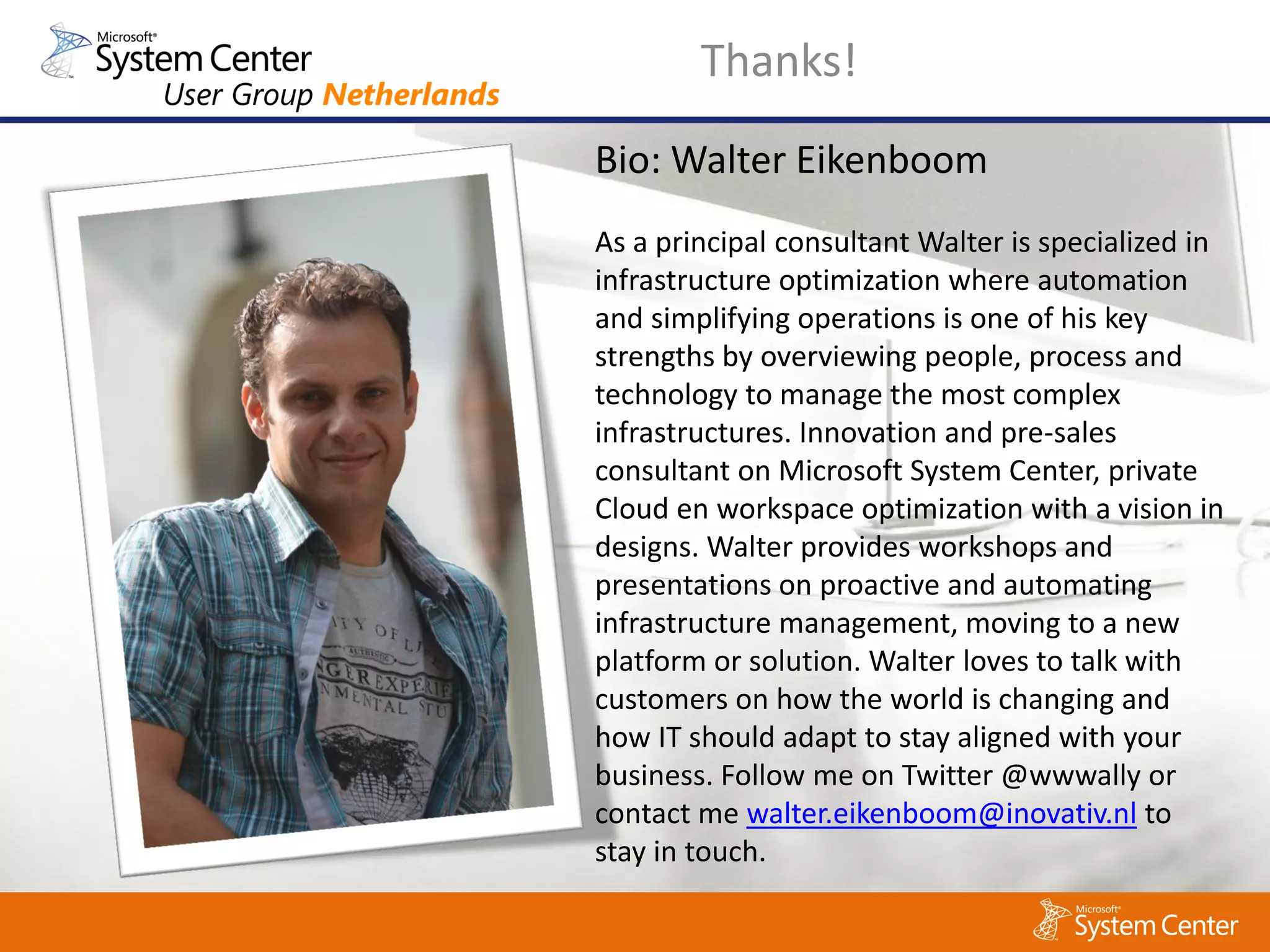
Bio: Walter Eikenboom
As a principal consultant Walter is specialized in
infrastructure optimization where automation
and simplifying operations is one of his key
strengths by overviewing people, process and
technology to manage the most complex
infrastructures. Innovation and pre-sales
consultant on Microsoft System Center, private
Cloud en workspace optimization with a vision in
designs. Walter provides workshops and
presentations on proactive and automating
infrastructure management, moving to a new
platform or solution. Walter loves to talk with
customers on how the world is changing and
how IT should adapt to stay aligned with your
business. Follow me on Twitter @wwwally or
contact me walter.eikenboom@inovativ.nl to
stay in touch.

OpsMgr 2012 end-to-end monitoring

  • 1.
    “How do Isuccessfully monitor my services end-to-end with OpsMgr 2012” Walter Eikenboom Principal consultant INOVATIV
  • 2.
    AGENDA Requirements  What is a LOB application  Selecting your business apps (IT Business alignment)  Gathering information Prerequisites  IT Maturity  Operational processes (PPT)  Collecting technical information Design for monitoring  Components  Relations  Events and trigger Build  Component monitoring  Distributed applications  End user experience
  • 3.
    What is aLOB application  LOB application  Components  Windows OS  Forefront TMG  Processing services  Virtual machines  SQL server  Azure database  IIS  VMM  Component relations  Perspective  Stock trader LOB
  • 4.
    Selecting your businessapps All Applications in the IT service catalog! Why: A LOB application in the service map is mapped to:  Business processes  Business functions  Business capabilities And that’s why they provide value to your business! The Business/IT Alignment focuses on the following processes:  Define an IT service strategy  Identify and map services  Identify IT service demand and manage business requests  Develop and evaluate the IT service portfolio  Manage service levels
  • 5.
    App Controller App Controller •Self-service Application Management Across Private and Public Clouds • Easy Deployment and Operations for Your Application Services Through a Highly Intuitive Service-centric Interface • Visibility and Control with Unified Console Across Private and Public Cloud Resources and Applications
  • 6.
    Gathering information Gathering information Description Business service (LOB) application name Stock Trader Web based stock trading and processing application for end Functional description internal and external users Business owner Dieter Wijckmans Business s service CI CI0012345 Number of users/ Number of Affected users 275 internal/ 450 external New or existing services Existing sinds June 2010 Service owner Oskar Landman Technical owner Walter Eikenboom Priority High Availability Business hours Alert notification 24x7 Available in OTA OA SLA 99,0% Policy considerations SOX, SAS 70
  • 7.
    AGENDA Requirements  What is a LOB application  Selecting your business apps (IT Business alignment)  Gathering information Prerequisites  IT Maturity  OpsMgr 2012  Monitoring ambition  Collecting technical information Design for monitoring  Components  Relations  Events and trigger Build  Component monitoring  Distributed applications  End user experience
  • 8.
    IT Maturity Monitoring levelready for LOB monitoring People Process Technology
  • 9.
  • 10.
    Monitoring ambition End User Experience (Console, Web, SharePoint) (Synthetic Transactions) Consistent UX Application Monitoring (.NET, J2E) Infrastructure Monitoring (OS, SQL, IIS) Infrastructure Monitoring (Fabric)
  • 11.
  • 12.
  • 13.
    AGENDA Requirements  What is a LOB application  Selecting your business apps (IT Business alignment)  Gathering information Prerequisites  IT Maturity  OpsMgr 2012  Monitoring ambition  Collecting technical information Design for monitoring  Events and trigger  Components  Relations  Events and trigger Build  Component monitoring  Distributed applications  End user experience
  • 14.
    Monitoring components  DefineComponent Database SQL 2008 DB 001 SQL cluster Instance A TMG Array b web publishing IIS on Stocktraderweb Service BSL on StocktraderBSL Processing service  Identify events  rules  Performance counters  Triggers  Response times  Define monitoring requirements based on SLA, OLA and UC
  • 15.
  • 16.
    Prerequisites  Define Componentrelations Stocktraderweb <-> Database X, Y and AAB StocktraderSQL <-> Azure DB StocktraderSQL <-> Stocktraderweb IIS  Identify application discovery items  Define Groups  . Security  Overrides  Views  Targets  Reports  Define monitoring requirements based on SLA, OLA and UC
  • 17.
    SLA and OLA:how do they relate Service level agreement (SLA). A written Woodgrove agreement documenting required levels of Business users service. The SLA is agreed upon by the service provider and the consumer, or by Service Level the service provider and a partner provider. Agreement (SLA) SLAs should list the metrics and measures that define success for both the service provider and the consumer. Desktop Service Manager End to end Desktop Service Operating level agreement (OLA). An Operating Level agreement between one or more internal Agreement (OLA) teams that supports the requirements set forth in the SLAs. Underpinning contract (UC). A legally Network team Active Directory team Security team binding contract in place of or in addition to an SLA. This type of contract is with a partner service provider responsible for Network Hardware Vendor Underpinning building service deliverables for the SLA. Contract (UC)
  • 18.
  • 19.
    MOF 4: Operatephase The Operate Phase of the IT service lifecycle represents the culmination of the two phases that precede it. The Operate Phase focuses on what to do after the services are in place. After an IT service has been successfully deployed, ensuring that it operates to meet business needs and expectations becomes the top priority. This is the focus of the Operate Phase, which depends on four primary endeavors: • Effective ongoing management of the service • Proactive and ongoing monitoring of its health • Effective and readily available help to assist with use of the service • Restoration of a service to health when things go wrong
  • 20.
    Service monitoring andcontrol Goals of Service Monitoring and Control Service Monitoring and Control (SMC) is the real-time observation of and alerting about health conditions (characteristics that indicate success or failure) in an IT environment. It helps to ensure that deployed services are operated, maintained, and supported in line with the service level agreement (SLA) targets agreed to between the business and IT. The components required to successfully implement Monitoring and Control are: • Establishing a service monitoring function. • Understanding the nature of new and existing IT services. • Understanding the requirements for successful service monitoring tools. • Ensuring that all relevant information from service monitoring is acted upon by the appropriate people. • Generating all the information required by other SMFs. • Improving the quality of service information.
  • 21.
  • 24.
    Thanks! Bio: Walter Eikenboom Asa principal consultant Walter is specialized in infrastructure optimization where automation and simplifying operations is one of his key strengths by overviewing people, process and technology to manage the most complex infrastructures. Innovation and pre-sales consultant on Microsoft System Center, private Cloud en workspace optimization with a vision in designs. Walter provides workshops and presentations on proactive and automating infrastructure management, moving to a new platform or solution. Walter loves to talk with customers on how the world is changing and how IT should adapt to stay aligned with your business. Follow me on Twitter @wwwally or contact me walter.eikenboom@inovativ.nl to stay in touch.