Operations Management
for Competitive Advantage
What is Operations?
• Operations is the
management of the
business processes and
systems that make
products and services.
• Operations is about
making these processes
and systems both
effective and efficient.
Getting Things Done
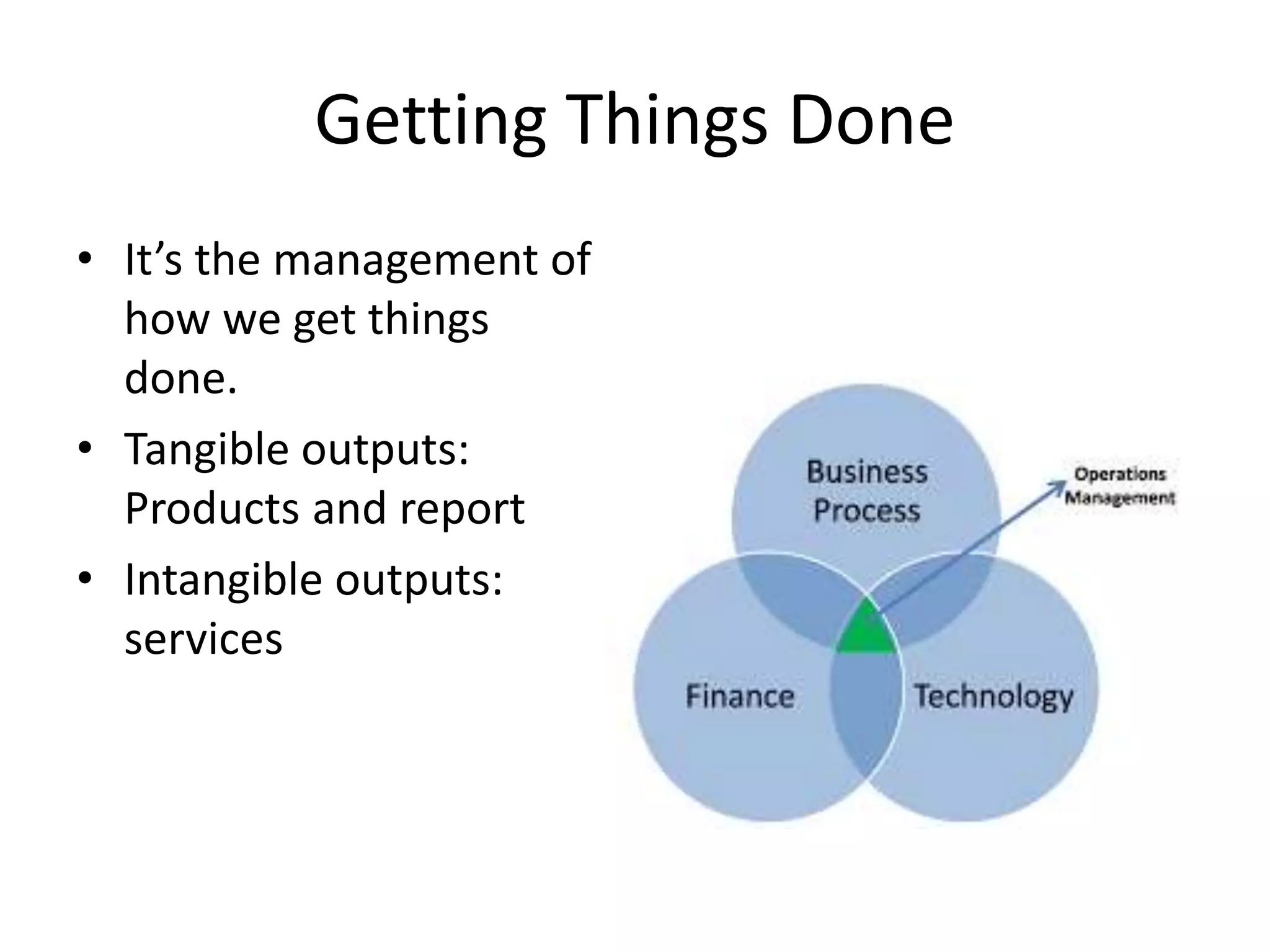
• It’s the management of
how we get things
done.
• Tangible outputs:
Products and reports
• Intangible outputs:
services
Operations Management
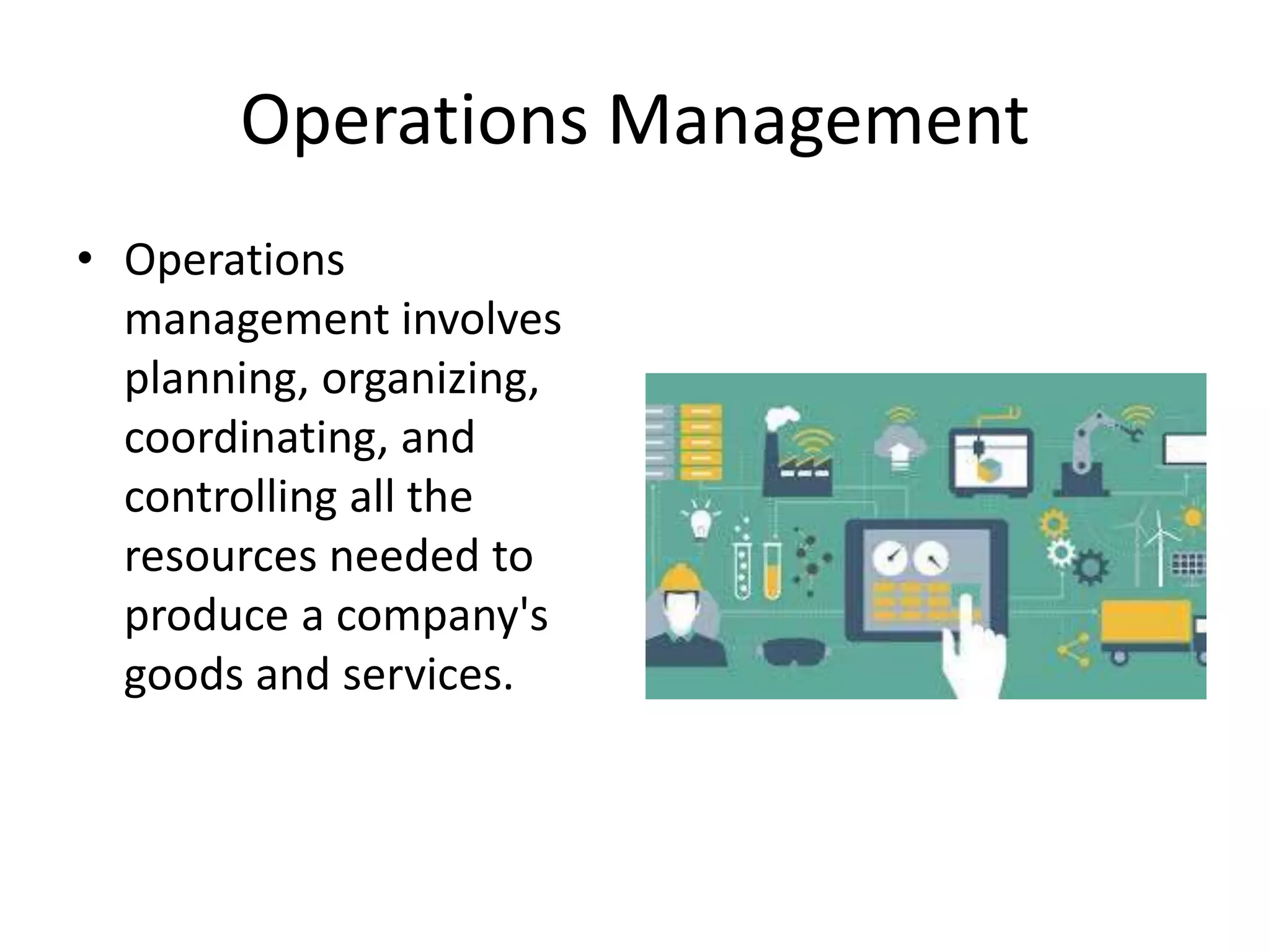
• Operations
management involves
planning, organizing,
coordinating, and
controlling all the
resources needed to
produce a company's
goods and services.
Operations is about
getting more done in less
time, with less effort, and
using fewer
resources. And not
compromising quality
• Saving time, money,
and getting
consistent, positive
results, means that we
have more time to get
other things done.
Make Products Better
• Make them in less time,
with fewer materials
• Deliver shipments, on
time, damage-free
• Provide better service
with less effort
Efficiency
• Managing time, people,
materials, quality, and
movement.
• Taylorism
• Digital Taylorism
Operations
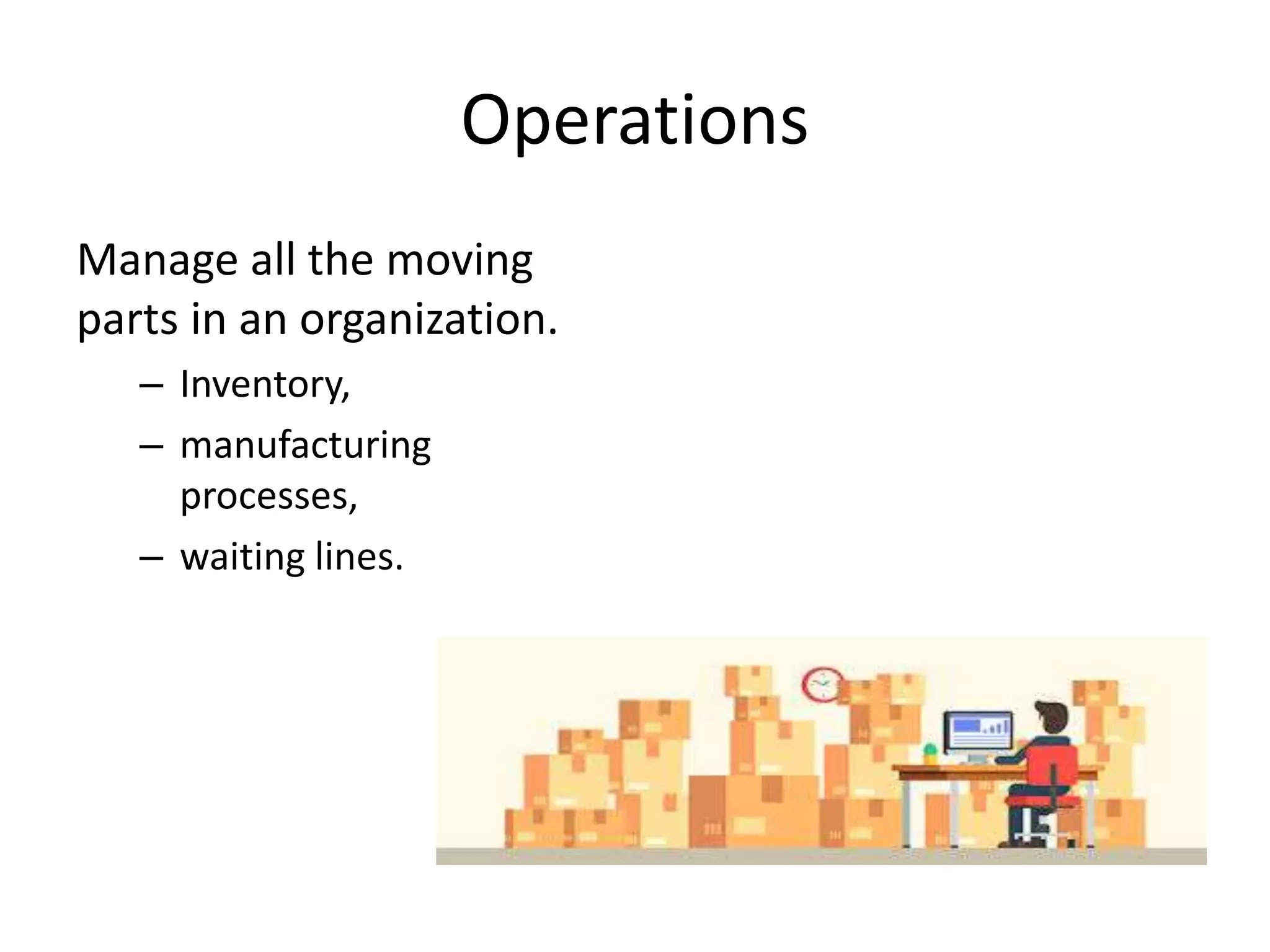
Manage all the moving
parts in an organization.
– Inventory,
– manufacturing
processes,
– waiting lines.
Understanding Operations
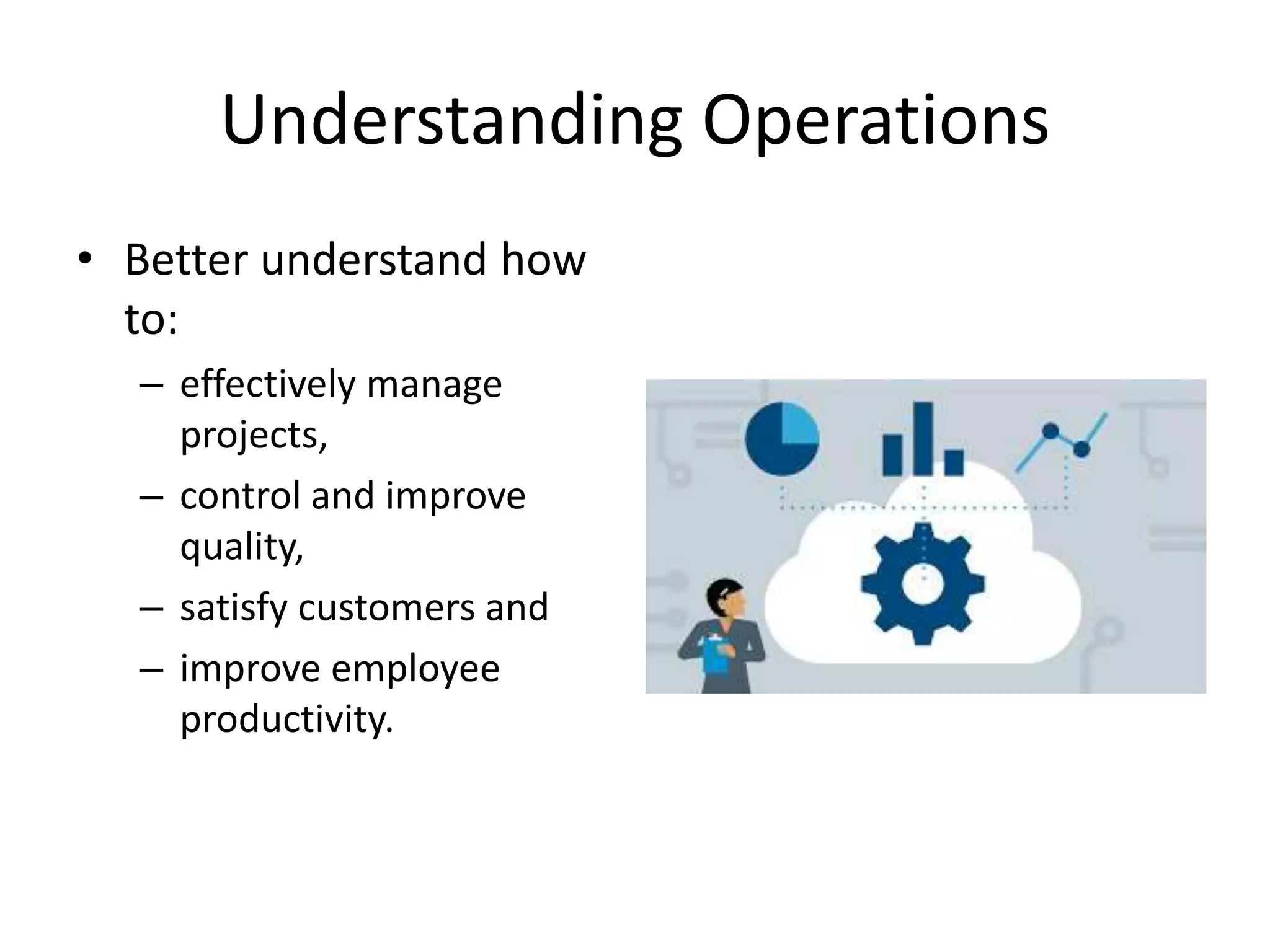
• Better understand how
to:
– effectively manage
projects,
– control and improve
quality,
– satisfy customers and
– improve employee
productivity.
Value
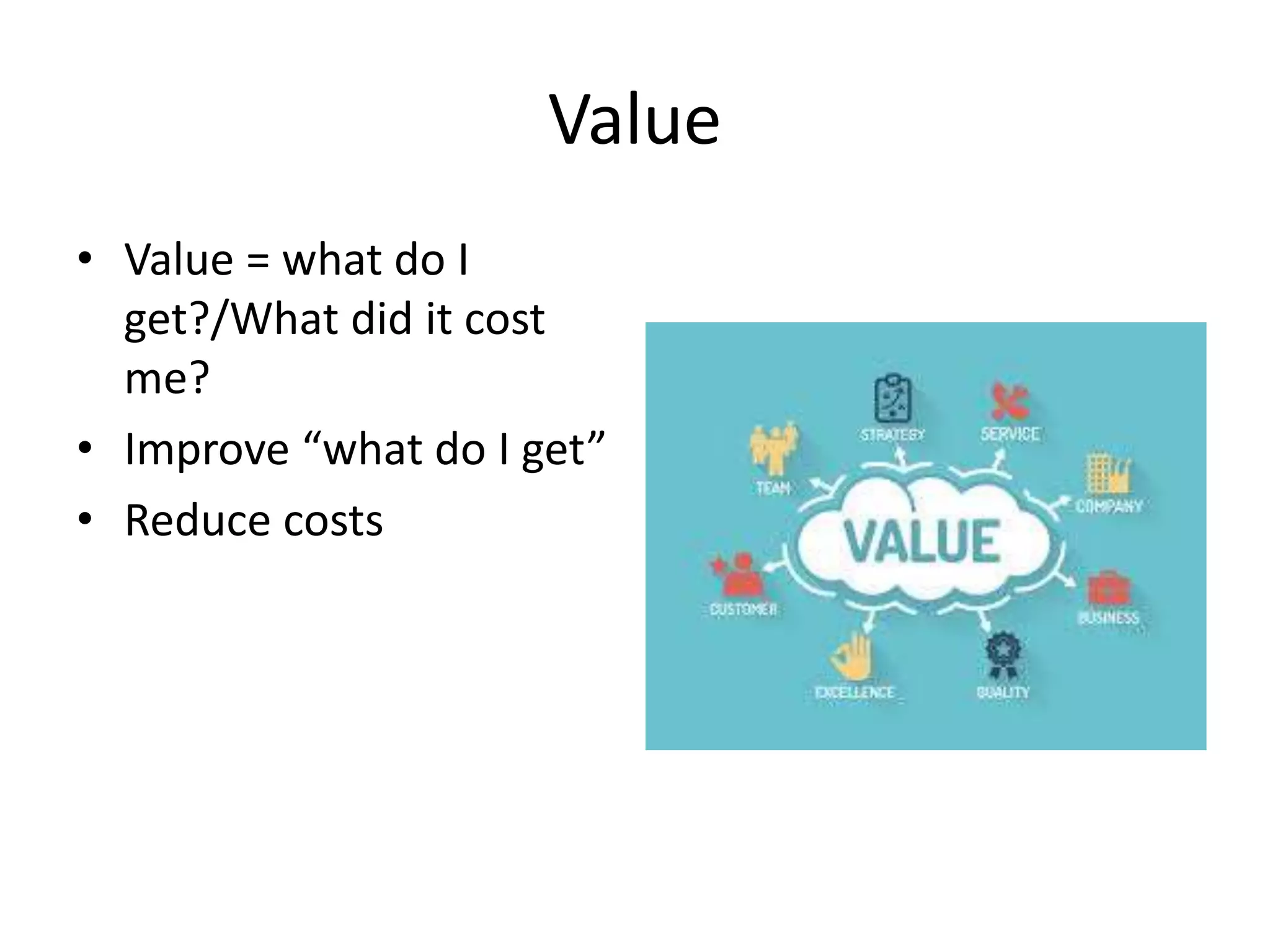
• Value = what do I
get?/What did it cost
me?
• Improve “what do I get”
• Reduce costs
Productivity
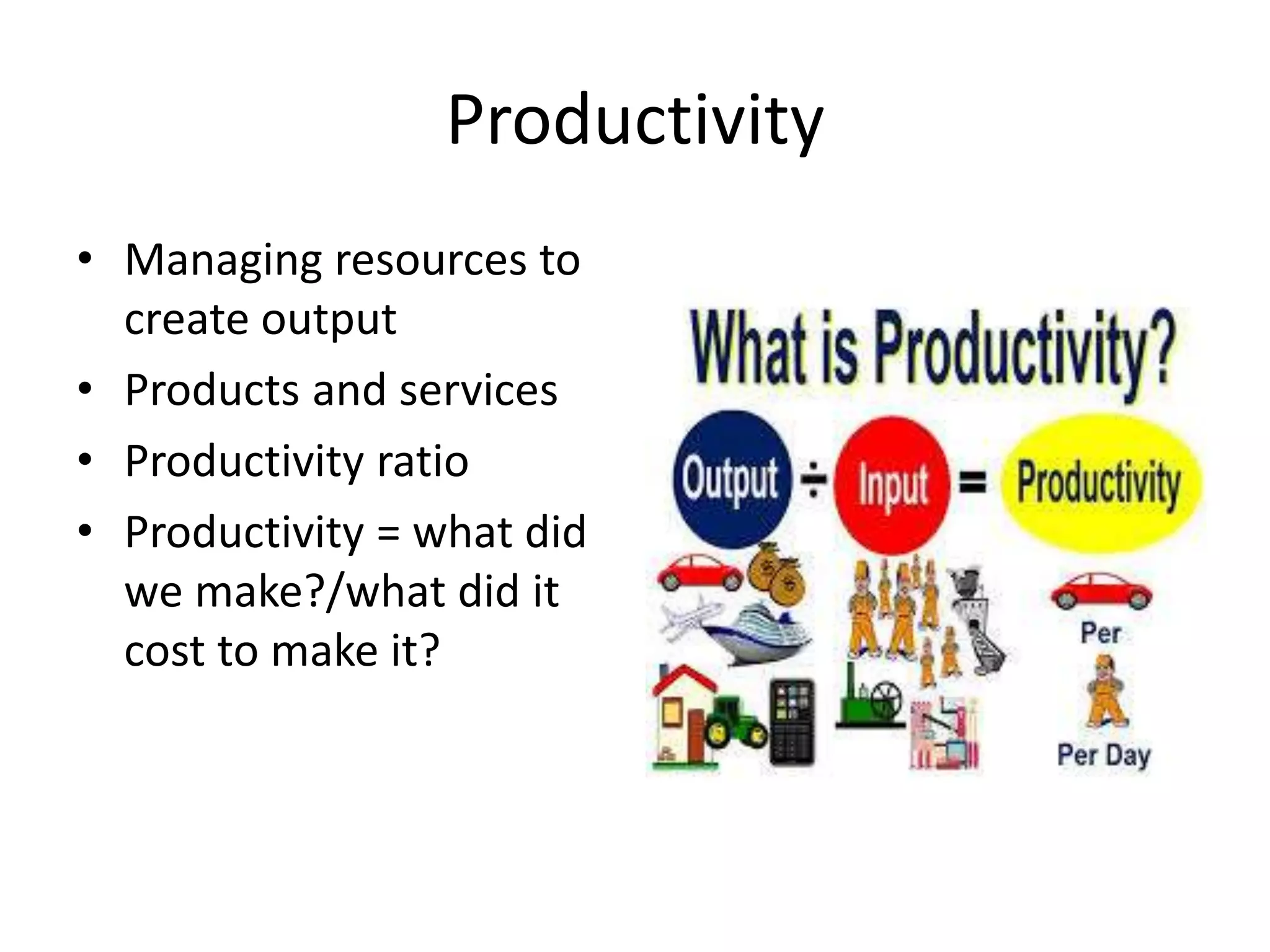
• Managing resources to
create output
• Products and services
• Productivity ratio
• Productivity = what did
we make?/what did it
cost to make it?
Cost of Inputs
• Value of all the items produced/Cost of Inputs
– Labor
– Materials
– Time
– Energy
– Waste and defects
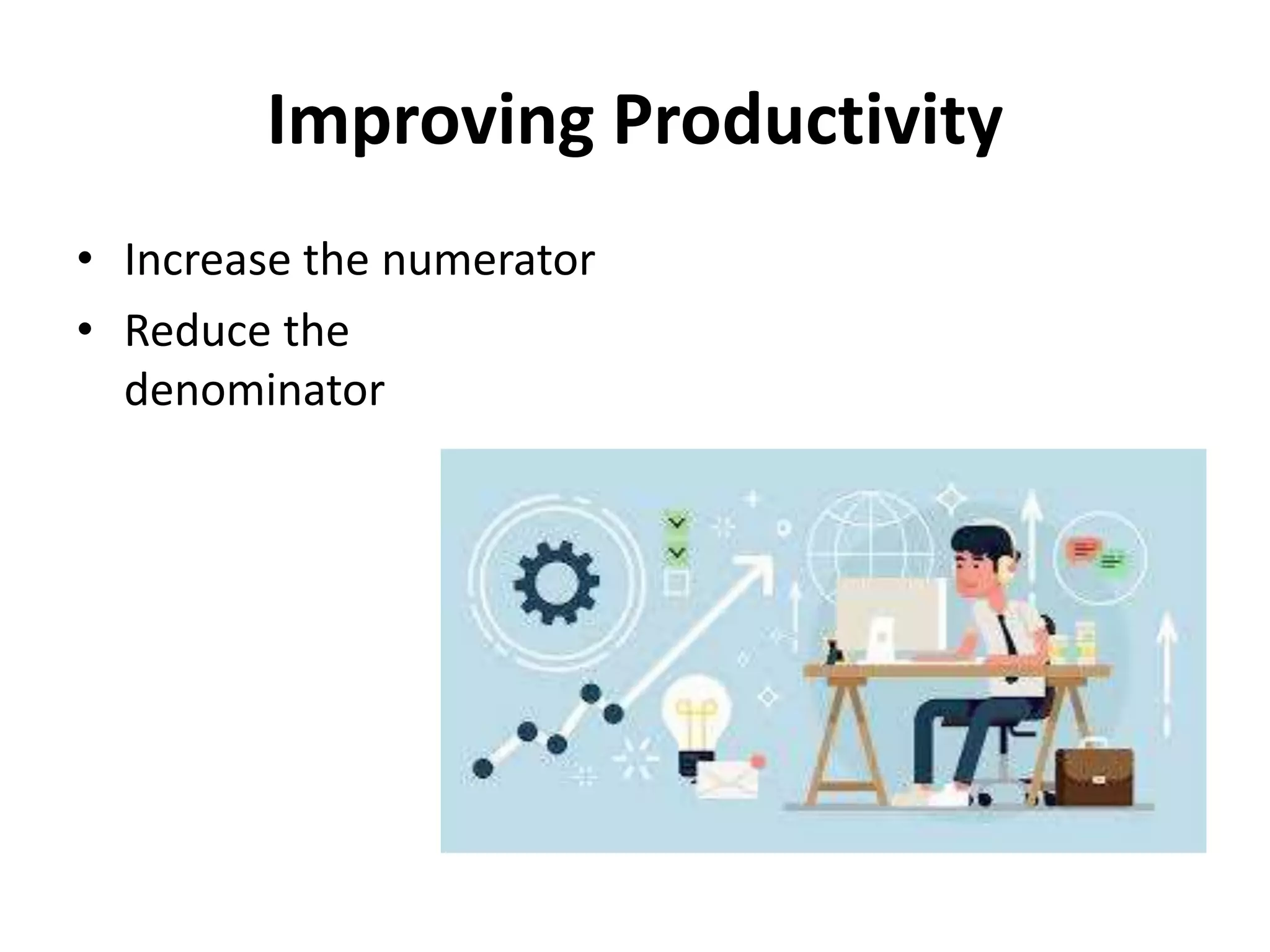
Improving Productivity
• Increase the numerator
• Reduce the
denominator
Increase the numerator
• Increase the numerator
• Create a better output:
• Make more products for the same cost
• Make better products that can sell for a higher
price
• Create a better service or user experience
• Make item more convenient to purchase
• Deliver the item faster
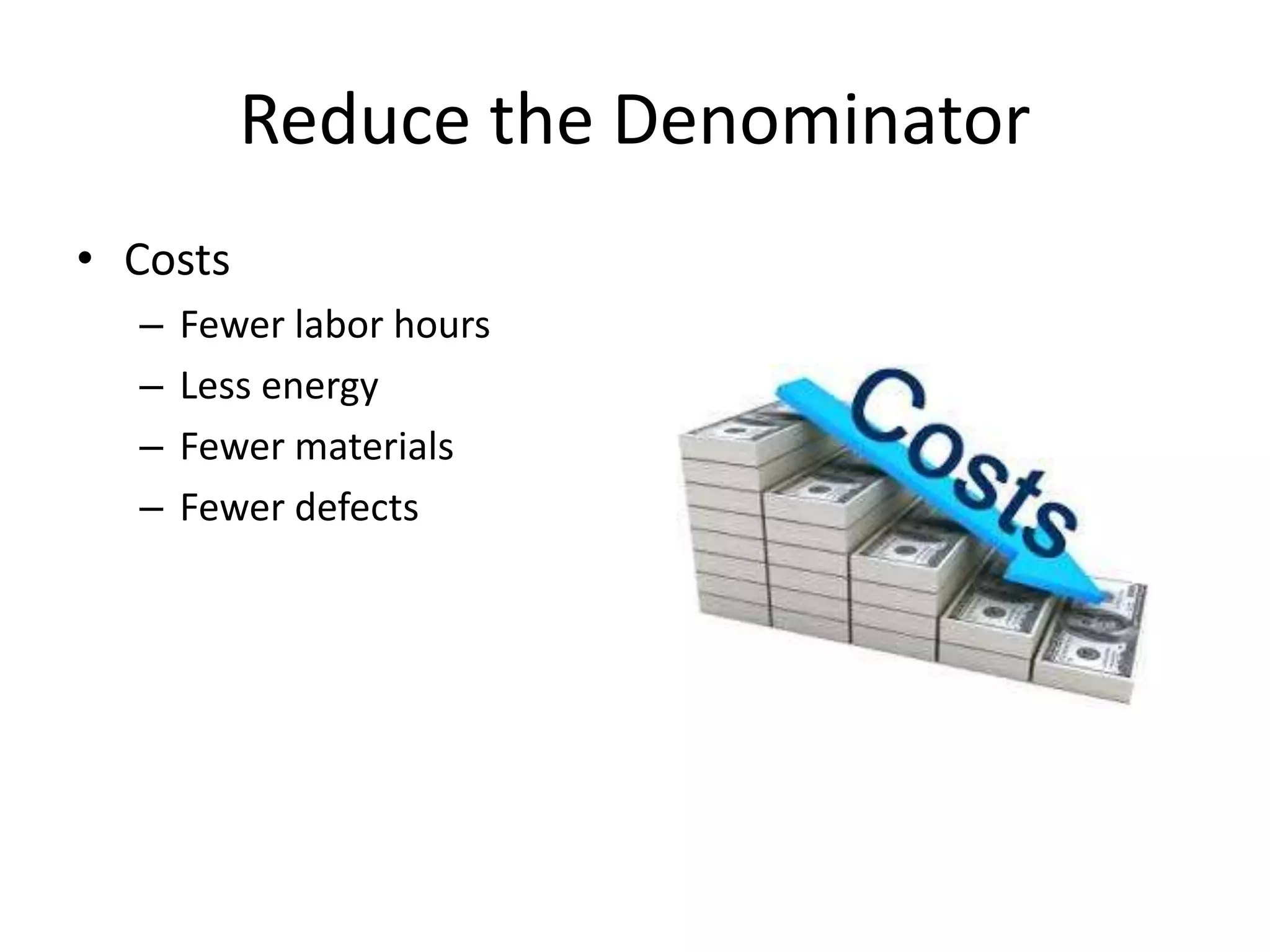
Reduce the Denominator
• Costs
– Fewer labor hours
– Less energy
– Fewer materials
– Fewer defects
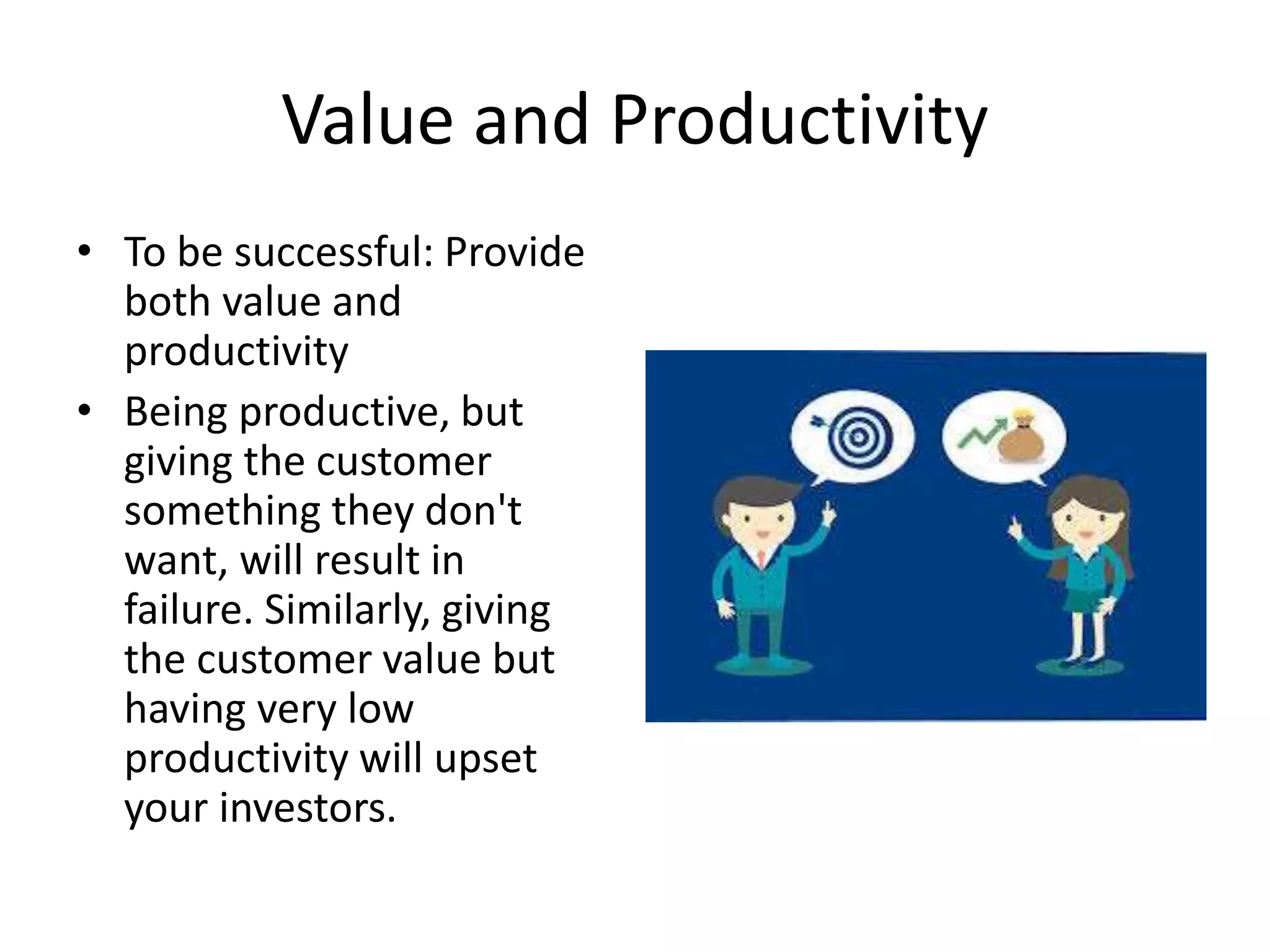
Value and Productivity
• To be successful: Provide
both value and
productivity
• Being productive, but
giving the customer
something they don't
want, will result in
failure. Similarly, giving
the customer value but
having very low
productivity will upset
your investors.
Productivity and your daily life
Most of the things we do every day at work and
at in our life are repetitive. Review your recent
activity:
• What did you accomplish?
• How long did each of those
accomplishments take you to complete?
• Did you waste any time or materials in the
process?
Look for ways to make your productivity go up.
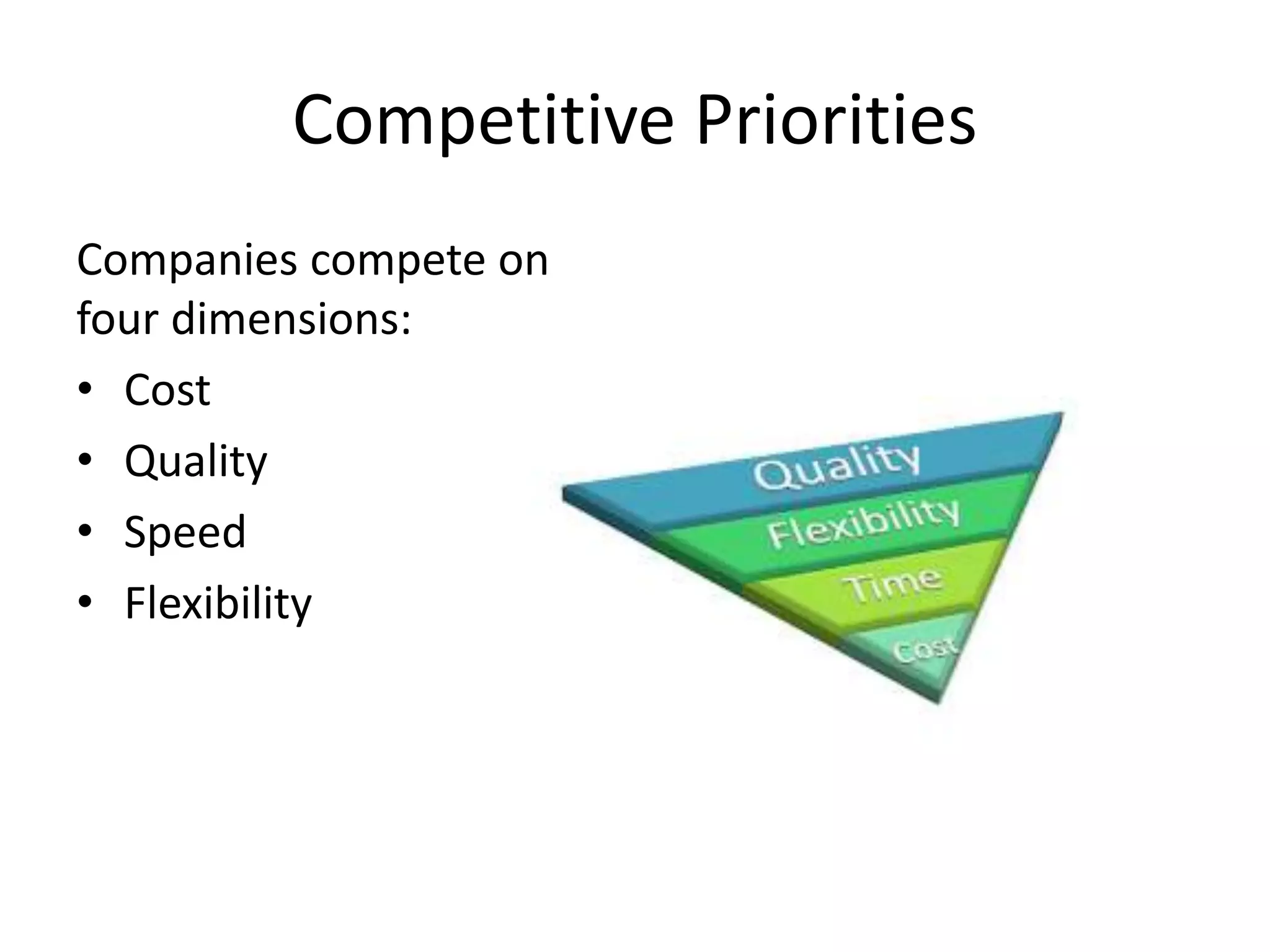
Competitive Priorities
Companies compete on
four dimensions:
• Cost
• Quality
• Speed
• Flexibility
4 Dimensions
• Innovation: falls under
both Quality and
Speed.
• Delivery: falls under
Speed and Quality.
• Inventory Management:
Cost and Speed.
• Reliability: Quality.
Competitive Priorities
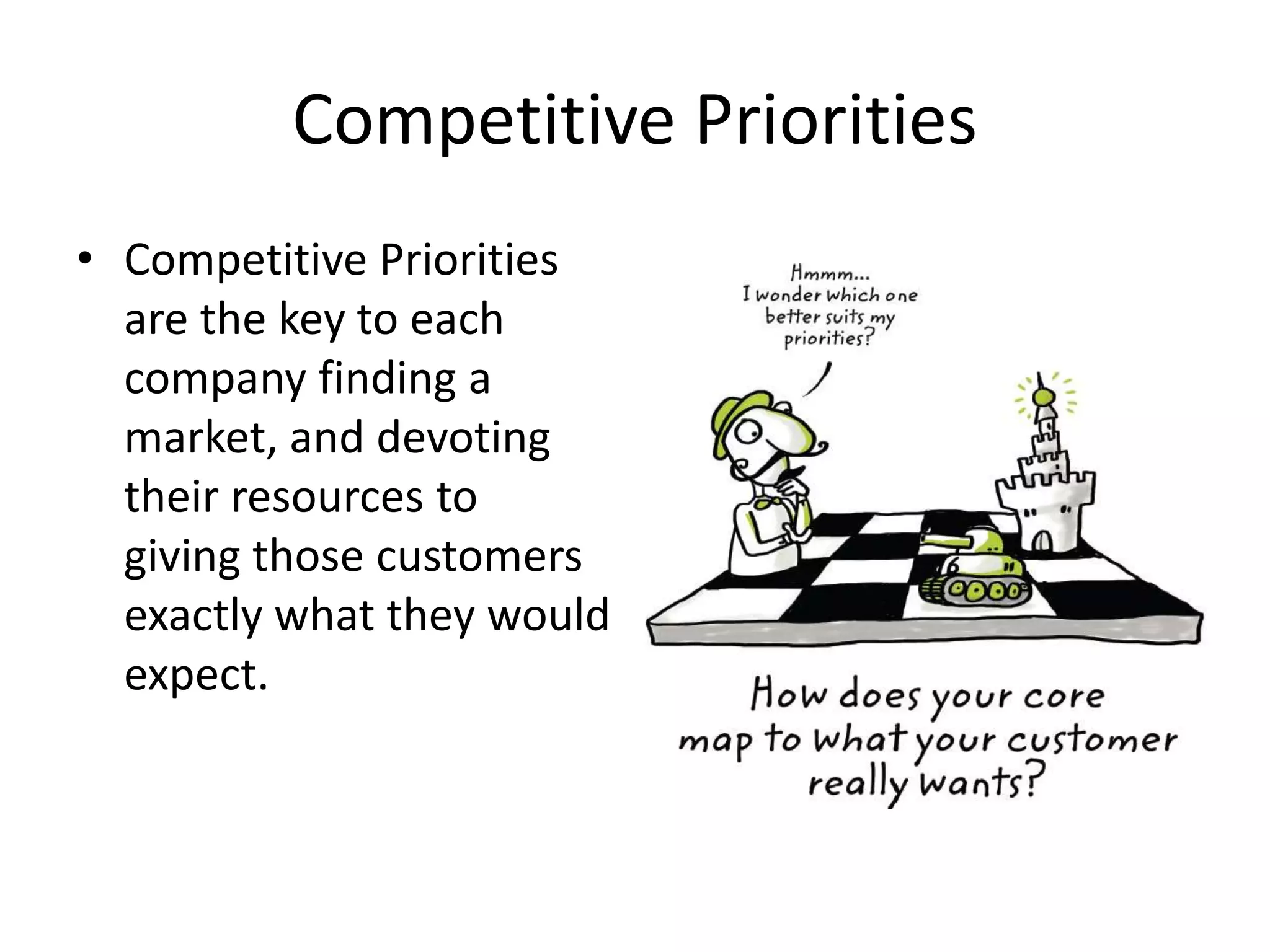
• Competitive Priorities
are the key to each
company finding a
market, and devoting
their resources to
giving those customers
exactly what they would
expect.
Define the Market
• McDonald's and Five Guys. Which provides the
customer with a lower cost? McDonald's. Which
company provides a burger that is a higher
quality burger? Five Guys.
• Which company delivers the burger to their
customer faster? McDonald's. And which
company offers their customers more types of
burgers and a larger selection of toppings? Five
Guys.
• Each company has defined its market.
Competitive Priorities
Define the Market
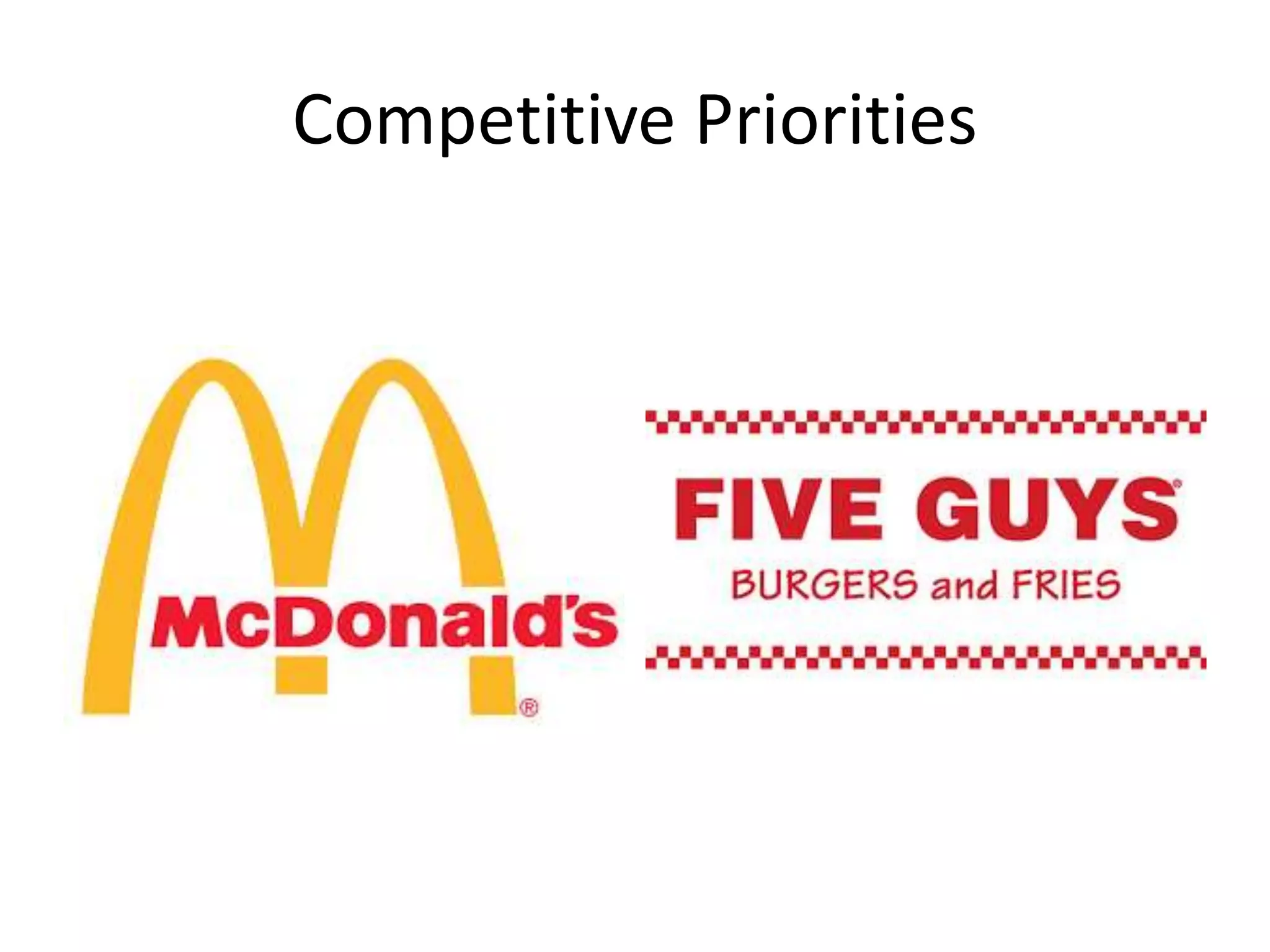
• Competitive Priorities
• You can grab a
McDouble for a buck
over at the Golden
Arches almost as fast as
you can order it. On
average, customers at
Five Guys wait 5 to 10
minutes for their
double burger, which
costs around $4.50.
Customer Experience
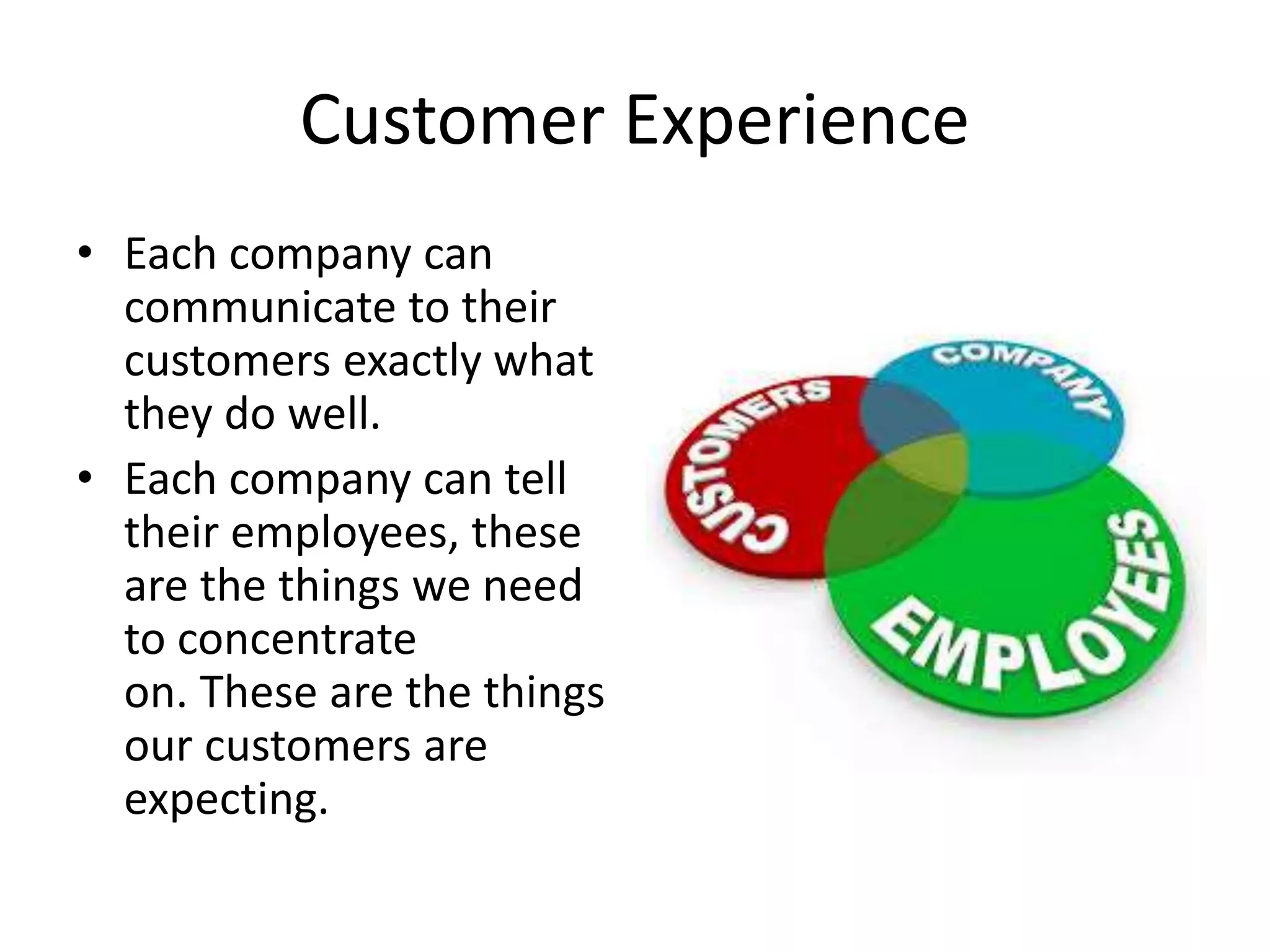
• Each company can
communicate to their
customers exactly what
they do well.
• Each company can tell
their employees, these
are the things we need
to concentrate
on. These are the things
our customers are
expecting.
The mix and trade offs
• Companies don’t only choose one or two
Competitive Priorities to focus on.
• Both companies care about Cost, Quality,
Speed and Flexibility.
• McDonald's isn’t saying they want to deliver
low-quality burgers and Five Guys goal isn’t to
make expensive burgers that are cooked
slowly. The product value proposition is
derived from a customer focus.
Target Market
• Each company simply defines Cost, Quality,
Speed and Flexibility in a different way.
• A company can't be everything to everyone
• It needs to find the mix of Cost, Quality, Speed
and Flexibility they want to deliver to their
target market.
Think about your Company and its
Competitors
• How does your primary customer define Cost,
Quality, Speed and Flexibility?
• Does your company's primary activities focus
on meeting Cost, Quality, Speed and Flexibility
expectations?
• Is it being as efficient and productive as
possible?
Customer Focus
• When a customer goes to McDonald's they
know what to expect.
• Low cost meals
• Consistent quality
• Delivered quickly.
• McDonald's is successful because they know
their customer and focus their resources
on making that type of customer happy.
Competitive Priority Mix
• Do customers understand how your
company's particular Competitive Priority
mix differs from other companies in your
industry?
• Do customers know exactly what to expect
from you in each of the four categories?
McDonald's has identified
a target market and they
do an excellent job
communicating with
customers and managing
their expectations.
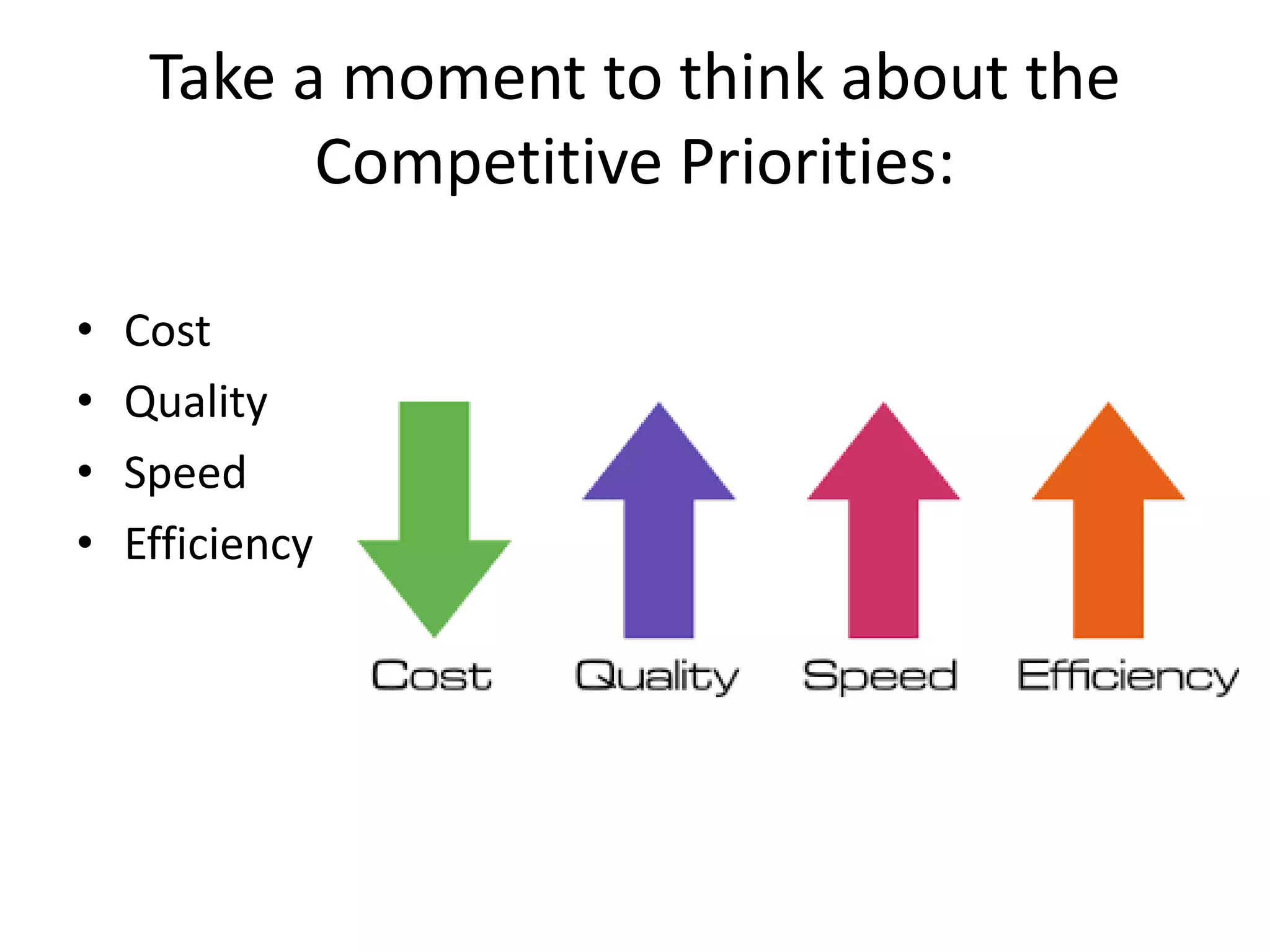
Take a moment to think about the
Competitive Priorities:
• Cost
• Quality
• Speed
• Efficiency
Use the Competitive Priorities to keep your
company focused and stay ahead of the competition
• What do they mean relative to your target market.
• Where you stand versus your toughest competitors.
• Who's winning in providing the customer the quality they
expect?
• Who's offering more speed?
• Not just delivery speed, but, who brings innovative
products to market faster? Idea to revenues.
• Are you providing your customer the options they
desire? How about your competitor?
• Who is best able to give the customer a great value by
providing them excellent Quality, Speed and Flexibility at a
great price?
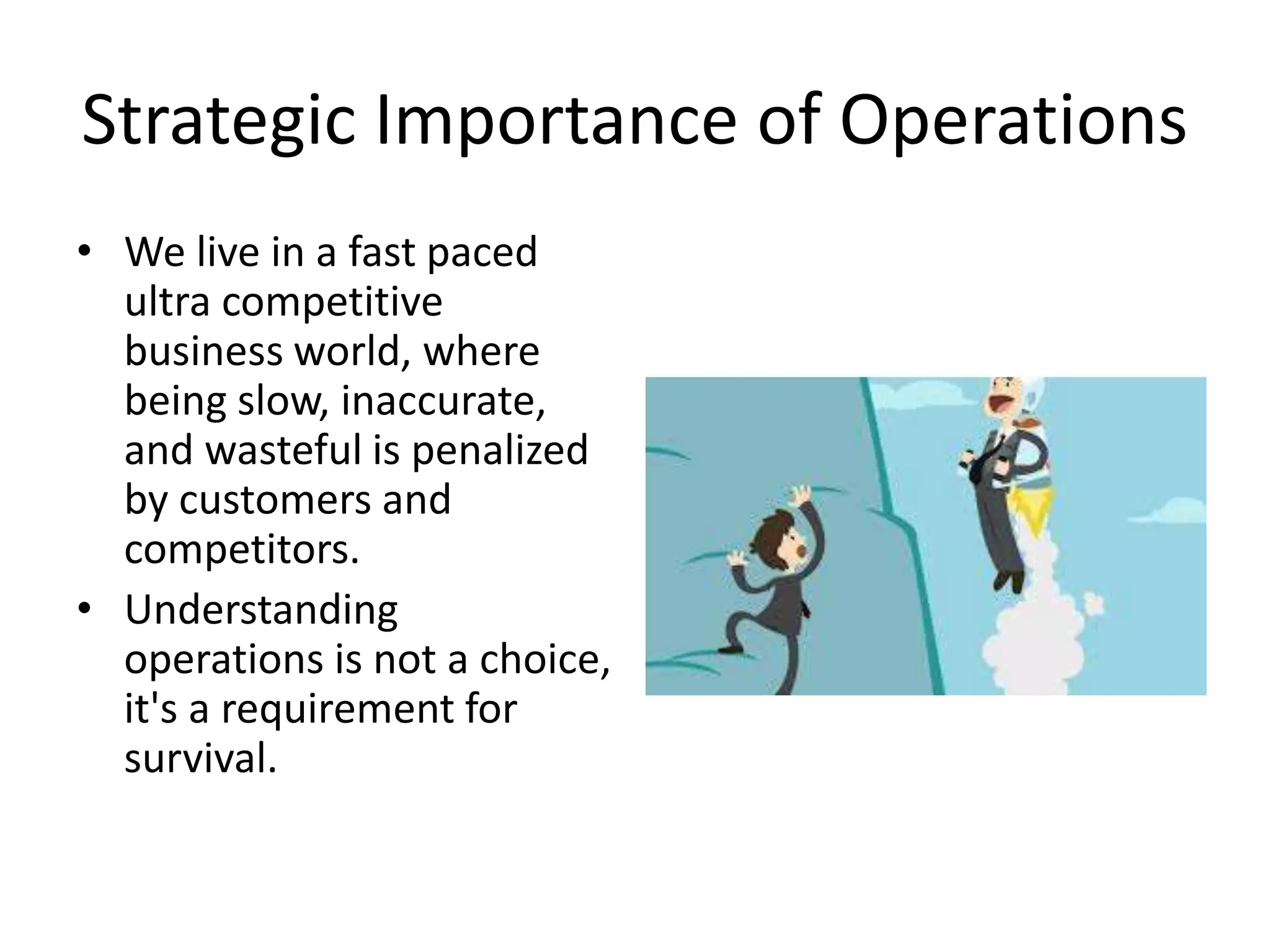
Strategic Importance of Operations
• We live in a fast paced
ultra competitive
business world, where
being slow, inaccurate,
and wasteful is penalized
by customers and
competitors.
• Understanding
operations is not a choice,
it's a requirement for
survival.
Operations Management for Competitive Advantage

Operations Management for Competitive Advantage

  • 1.
  • 2.
    What is Operations? •Operations is the management of the business processes and systems that make products and services. • Operations is about making these processes and systems both effective and efficient.
  • 3.
    Getting Things Done •It’s the management of how we get things done. • Tangible outputs: Products and reports • Intangible outputs: services
  • 4.
    Operations Management • Operations managementinvolves planning, organizing, coordinating, and controlling all the resources needed to produce a company's goods and services.
  • 5.
    Operations is about gettingmore done in less time, with less effort, and using fewer resources. And not compromising quality
  • 6.
    • Saving time,money, and getting consistent, positive results, means that we have more time to get other things done.
  • 7.
    Make Products Better •Make them in less time, with fewer materials • Deliver shipments, on time, damage-free • Provide better service with less effort
  • 8.
    Efficiency • Managing time,people, materials, quality, and movement. • Taylorism • Digital Taylorism
  • 9.
    Operations Manage all themoving parts in an organization. – Inventory, – manufacturing processes, – waiting lines.
  • 10.
    Understanding Operations • Betterunderstand how to: – effectively manage projects, – control and improve quality, – satisfy customers and – improve employee productivity.
  • 11.
    Value • Value =what do I get?/What did it cost me? • Improve “what do I get” • Reduce costs
  • 12.
    Productivity • Managing resourcesto create output • Products and services • Productivity ratio • Productivity = what did we make?/what did it cost to make it?
  • 13.
    Cost of Inputs •Value of all the items produced/Cost of Inputs – Labor – Materials – Time – Energy – Waste and defects
  • 14.
    Improving Productivity • Increasethe numerator • Reduce the denominator
  • 15.
    Increase the numerator •Increase the numerator • Create a better output: • Make more products for the same cost • Make better products that can sell for a higher price • Create a better service or user experience • Make item more convenient to purchase • Deliver the item faster
  • 16.
    Reduce the Denominator •Costs – Fewer labor hours – Less energy – Fewer materials – Fewer defects
  • 17.
    Value and Productivity •To be successful: Provide both value and productivity • Being productive, but giving the customer something they don't want, will result in failure. Similarly, giving the customer value but having very low productivity will upset your investors.
  • 18.
    Productivity and yourdaily life Most of the things we do every day at work and at in our life are repetitive. Review your recent activity: • What did you accomplish? • How long did each of those accomplishments take you to complete? • Did you waste any time or materials in the process? Look for ways to make your productivity go up.
  • 19.
    Competitive Priorities Companies competeon four dimensions: • Cost • Quality • Speed • Flexibility
  • 20.
    4 Dimensions • Innovation:falls under both Quality and Speed. • Delivery: falls under Speed and Quality. • Inventory Management: Cost and Speed. • Reliability: Quality.
  • 21.
    Competitive Priorities • CompetitivePriorities are the key to each company finding a market, and devoting their resources to giving those customers exactly what they would expect.
  • 22.
    Define the Market •McDonald's and Five Guys. Which provides the customer with a lower cost? McDonald's. Which company provides a burger that is a higher quality burger? Five Guys. • Which company delivers the burger to their customer faster? McDonald's. And which company offers their customers more types of burgers and a larger selection of toppings? Five Guys. • Each company has defined its market.
  • 23.
  • 24.
    Define the Market •Competitive Priorities • You can grab a McDouble for a buck over at the Golden Arches almost as fast as you can order it. On average, customers at Five Guys wait 5 to 10 minutes for their double burger, which costs around $4.50.
  • 25.
    Customer Experience • Eachcompany can communicate to their customers exactly what they do well. • Each company can tell their employees, these are the things we need to concentrate on. These are the things our customers are expecting.
  • 26.
    The mix andtrade offs • Companies don’t only choose one or two Competitive Priorities to focus on. • Both companies care about Cost, Quality, Speed and Flexibility. • McDonald's isn’t saying they want to deliver low-quality burgers and Five Guys goal isn’t to make expensive burgers that are cooked slowly. The product value proposition is derived from a customer focus.
  • 27.
    Target Market • Eachcompany simply defines Cost, Quality, Speed and Flexibility in a different way. • A company can't be everything to everyone • It needs to find the mix of Cost, Quality, Speed and Flexibility they want to deliver to their target market.
  • 28.
    Think about yourCompany and its Competitors • How does your primary customer define Cost, Quality, Speed and Flexibility? • Does your company's primary activities focus on meeting Cost, Quality, Speed and Flexibility expectations? • Is it being as efficient and productive as possible?
  • 29.
    Customer Focus • Whena customer goes to McDonald's they know what to expect. • Low cost meals • Consistent quality • Delivered quickly. • McDonald's is successful because they know their customer and focus their resources on making that type of customer happy.
  • 30.
    Competitive Priority Mix •Do customers understand how your company's particular Competitive Priority mix differs from other companies in your industry? • Do customers know exactly what to expect from you in each of the four categories?
  • 31.
    McDonald's has identified atarget market and they do an excellent job communicating with customers and managing their expectations.
  • 32.
    Take a momentto think about the Competitive Priorities: • Cost • Quality • Speed • Efficiency
  • 33.
    Use the CompetitivePriorities to keep your company focused and stay ahead of the competition • What do they mean relative to your target market. • Where you stand versus your toughest competitors. • Who's winning in providing the customer the quality they expect? • Who's offering more speed? • Not just delivery speed, but, who brings innovative products to market faster? Idea to revenues. • Are you providing your customer the options they desire? How about your competitor? • Who is best able to give the customer a great value by providing them excellent Quality, Speed and Flexibility at a great price?
  • 34.
    Strategic Importance ofOperations • We live in a fast paced ultra competitive business world, where being slow, inaccurate, and wasteful is penalized by customers and competitors. • Understanding operations is not a choice, it's a requirement for survival.