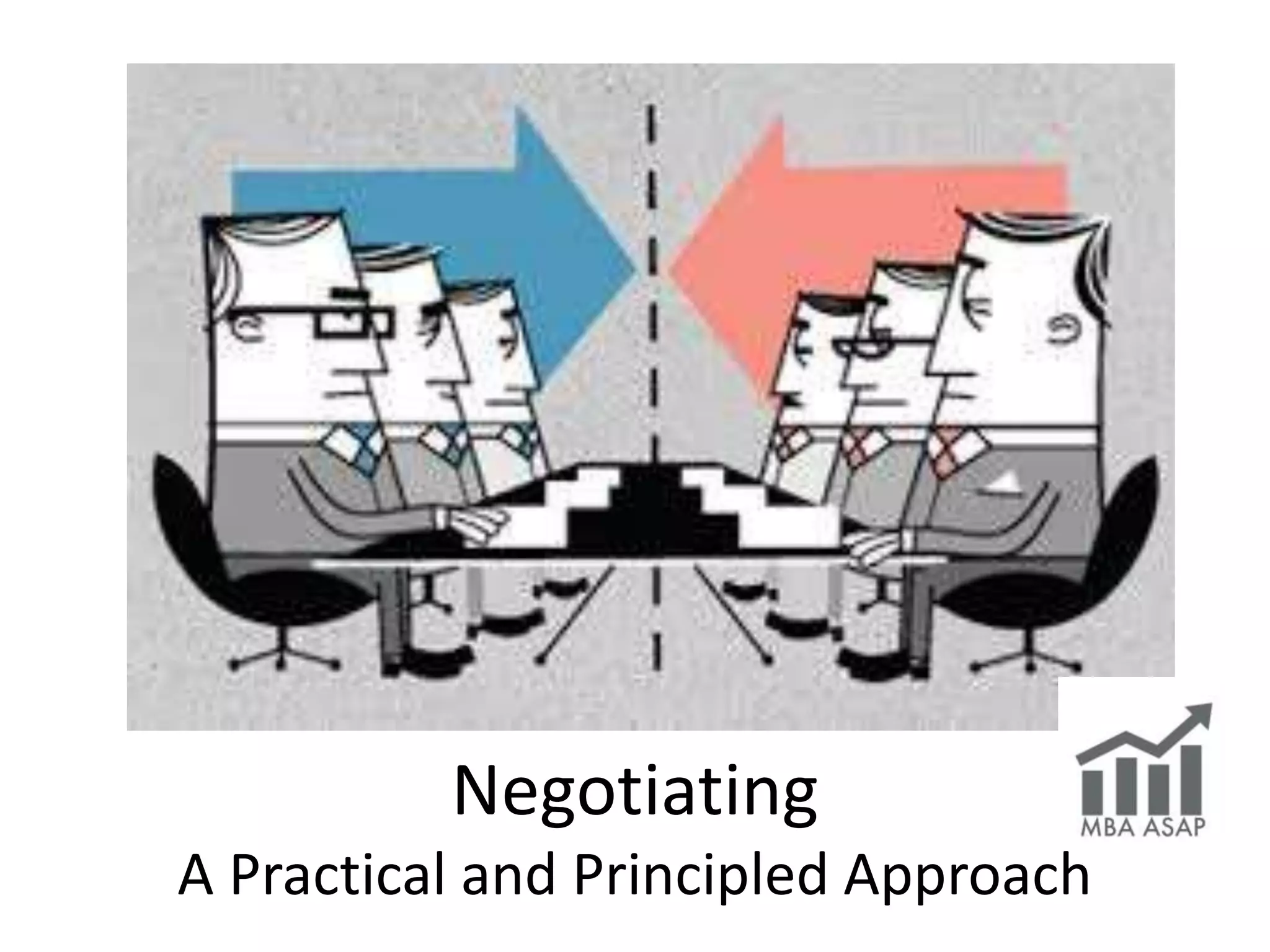



Negotiating
A Practical and Principled Approach
What is Negotiation?
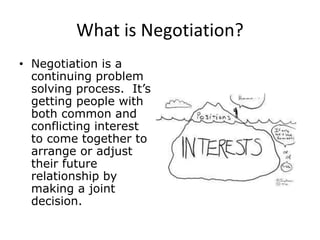
• Negotiation is a
continuing problem
solving process. It’s
getting people with
both common and
conflicting interest
to come together to
arrange or adjust
their future
relationship by
making a joint
decision.
Stereotype
• Tough
• Super skillful
• Secret techniques
• Ruthless
• Winner take all mindset
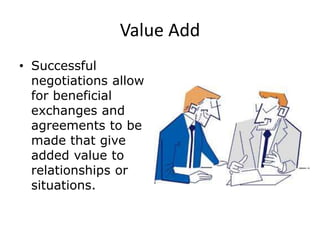
Value Add
• Successful
negotiations allow
for beneficial
exchanges and
agreements to be
made that give
added value to
relationships or
situations.
To be an effective
negotiator
• Develop and use
people skills.
• Effective
negotiation
involves 20%
Technical skills and
80% people skills.
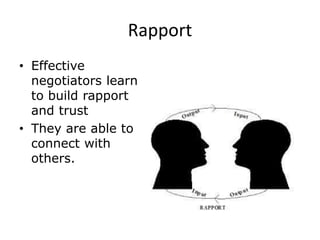
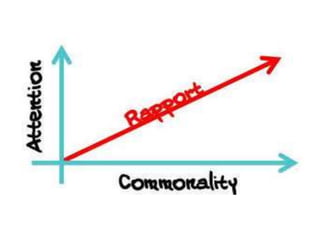
Rapport
• Effective
negotiators learn
to build rapport
and trust
• They are able to
connect with
others.
Communication
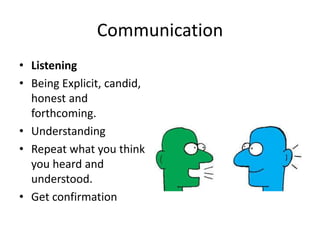
• Listening
• Being Explicit, candid,
honest and
forthcoming.
• Understanding
• Repeat what you think
you heard and
understood.
• Get confirmation
Communication
• “The problem
with
communication is
the
illusion that it has
occurred.”
– George Bernard
Shaw
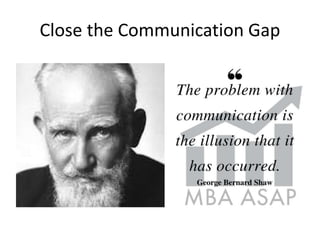
Close the Communication Gap
Empathy
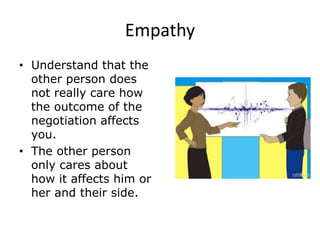
• Understand that the
other person does
not really care how
the outcome of the
negotiation affects
you.
• The other person
only cares about
how it affects him or
her and their side.
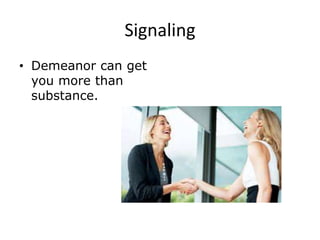
Signaling
• Demeanor can get
you more than
substance.
Be Kind
• Be kind to people
and hard on
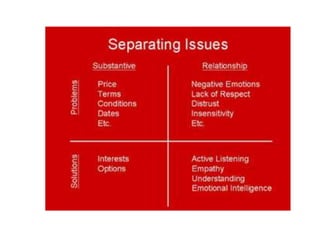
issues. Separate
people from the
problems and
solutions.
• There’s only one
rule I know of: you
have to be kind.
– Kurt Vonegut
• Ad Hominem
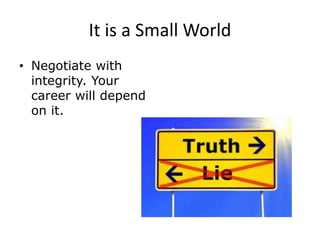
It is a Small World
• Negotiate with
integrity. Your
career will depend
on it.
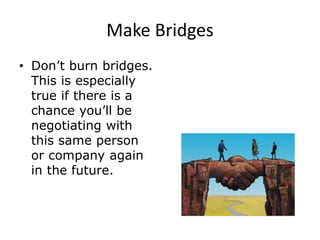
Make Bridges
• Don’t burn bridges.
This is especially
true if there is a
chance you’ll be
negotiating with
this same person
or company again
in the future.
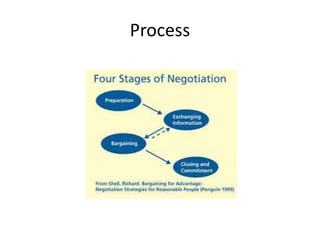
Process
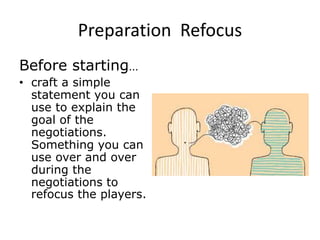
Preparation Refocus
Before starting…
• craft a simple
statement you can
use to explain the
goal of the
negotiations.
Something you can
use over and over
during the
negotiations to
refocus the players.
Example
• Something like,
“My client is
interested in
buying the house
and your clients
are interested in
selling the house.
What can we do to
get this deal
done?”
What is your bottom line?
Before starting, know…
• your ultimate goal
• what you can waive or
modify
• what you can give away
without any issues.
• What is unacceptable
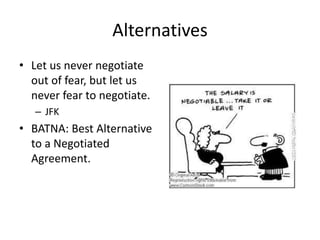
Alternatives
• Let us never negotiate
out of fear, but let us
never fear to negotiate.
– JFK
• BATNA: Best Alternative
to a Negotiated
Agreement.
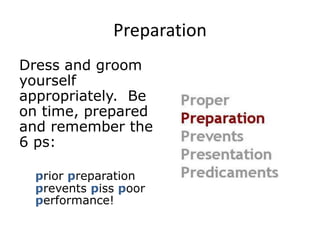
Preparation
Dress and groom
yourself
appropriately. Be
on time, prepared
and remember the
6 ps:
prior preparation
prevents piss poor
performance!
Start
• Start your
negotiation with a
point on which you
both agree:
• Mutual benefit of a
successful
negotiation (both
want a resolution)
and
• Things or issues you
each have in
common.
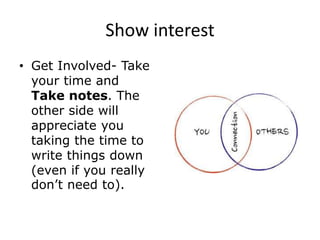
Show interest
• Get Involved- Take
your time and
Take notes. The
other side will
appreciate you
taking the time to
write things down
(even if you really
don’t need to).
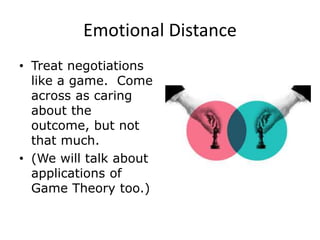
Emotional Distance
• Treat negotiations
like a game. Come
across as caring
about the
outcome, but not
that much.
• (We will talk about
applications of
Game Theory too.)
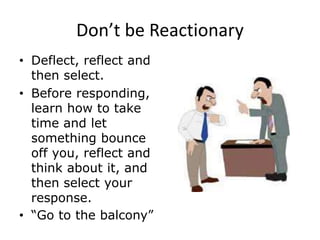
Don’t be Reactionary
• Deflect, reflect and
then select.
• Before responding,
learn how to take
time and let
something bounce
off you, reflect and
think about it, and
then select your
response.
• “Go to the balcony”
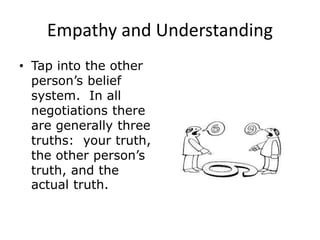
Empathy and Understanding
• Tap into the other
person’s belief
system. In all
negotiations there
are generally three
truths: your truth,
the other person’s
truth, and the
actual truth.
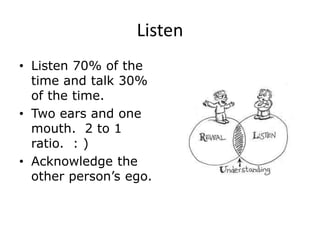
Listen
• Listen 70% of the
time and talk 30%
of the time.
• Two ears and one
mouth. 2 to 1
ratio. : )
• Acknowledge the
other person’s ego.
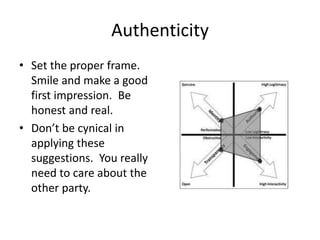
Authenticity
• Set the proper frame.
Smile and make a good
first impression. Be
honest and real.
• Don’t be cynical in
applying these
suggestions. You really
need to care about the
other party.
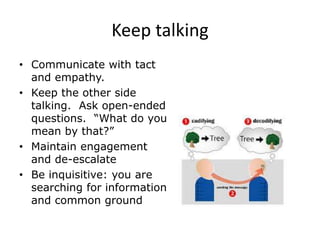
Keep talking
• Communicate with tact
and empathy.
• Keep the other side
talking. Ask open-ended
questions. “What do you
mean by that?”
• Maintain engagement
and de-escalate
• Be inquisitive: you are
searching for information
and common ground
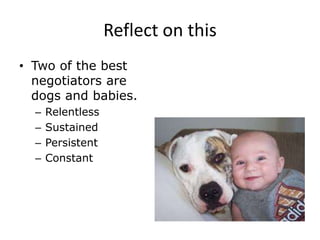
Reflect on this
• Two of the best
negotiators are
dogs and babies.
– Relentless
– Sustained
– Persistent
– Constant
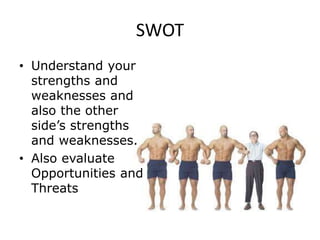
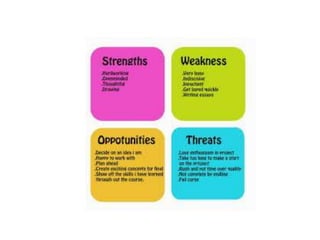
SWOT
• Understand your
strengths and
weaknesses and
also the other
side’s strengths
and weaknesses.
• Also evaluate
Opportunities and
Threats
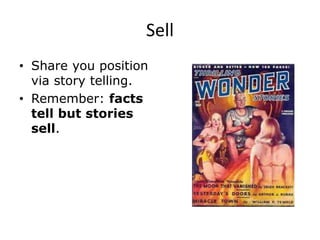
Sell
• Share you position
via story telling.
• Remember: facts
tell but stories
sell.
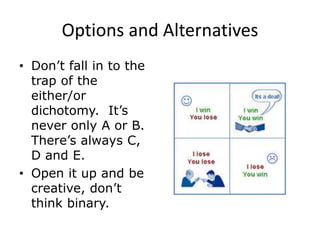
Options and Alternatives
• Don’t fall in to the
trap of the
either/or
dichotomy. It’s
never only A or B.
There’s always C,
D and E.
• Open it up and be
creative, don’t
think binary.
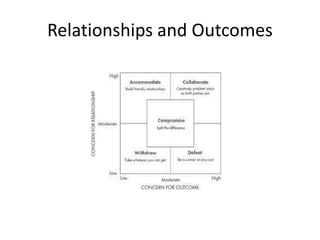
Relationships and Outcomes
Eye to Eye
• Negotiate in person
when possible. Over
the phone is OK. In
most instances,
Avoid negotiating by
email.
• 70% of all
communication
comes from body
language,
expressions and eye
contact.
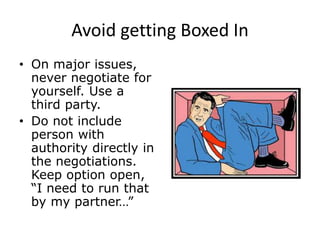
Avoid getting Boxed In
• On major issues,
never negotiate for
yourself. Use a
third party.
• Do not include
person with
authority directly in
the negotiations.
Keep option open,
“I need to run that
by my partner…”
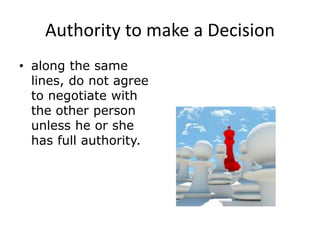
Authority to make a Decision
• along the same
lines, do not agree
to negotiate with
the other person
unless he or she
has full authority.
Acknowledge, Empathize, Redirect
• Never tell the other
side they are
wrong. Instead
use this, “I know
how you feel. I
use to feel the
same way. But
then I found out
about AAA and
now I feel BBB.”
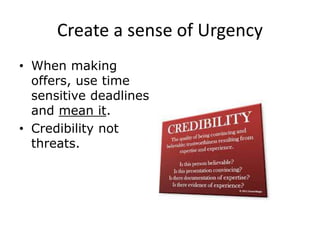
Create a sense of Urgency
• When making
offers, use time
sensitive deadlines
and mean it.
• Credibility not
threats.
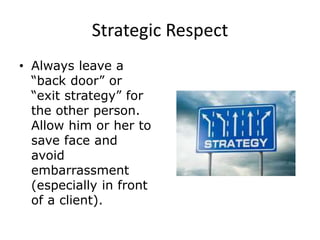
Strategic Respect
• Always leave a
“back door” or
“exit strategy” for
the other person.
Allow him or her to
save face and
avoid
embarrassment
(especially in front
of a client).
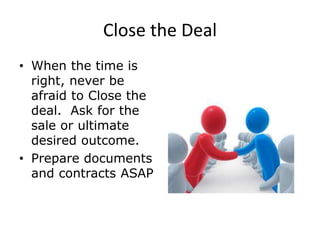
Close the Deal
• When the time is
right, never be
afraid to Close the
deal. Ask for the
sale or ultimate
desired outcome.
• Prepare documents
and contracts ASAP
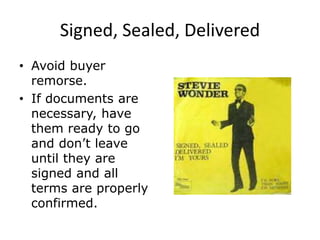
Signed, Sealed, Delivered
• Avoid buyer
remorse.
• If documents are
necessary, have
them ready to go
and don’t leave
until they are
signed and all
terms are properly
confirmed.
Success
• Both parties relatively
satisfied.
• Leave some on the
table.
• Don’t crush the other
side. You may need
information or a follow
on favor.
www.mba-asap.com

Negotiating | A Practical and Principled Approach

  • 1.
    Negotiating A Practical andPrincipled Approach
  • 2.
    What is Negotiation? •Negotiation is a continuing problem solving process. It’s getting people with both common and conflicting interest to come together to arrange or adjust their future relationship by making a joint decision.
  • 3.
    Stereotype • Tough • Superskillful • Secret techniques • Ruthless • Winner take all mindset
  • 4.
    Value Add • Successful negotiationsallow for beneficial exchanges and agreements to be made that give added value to relationships or situations.
  • 5.
    To be aneffective negotiator • Develop and use people skills. • Effective negotiation involves 20% Technical skills and 80% people skills.
  • 6.
    Rapport • Effective negotiators learn tobuild rapport and trust • They are able to connect with others.
  • 8.
    Communication • Listening • BeingExplicit, candid, honest and forthcoming. • Understanding • Repeat what you think you heard and understood. • Get confirmation
  • 9.
    Communication • “The problem with communicationis the illusion that it has occurred.” – George Bernard Shaw
  • 10.
  • 11.
    Empathy • Understand thatthe other person does not really care how the outcome of the negotiation affects you. • The other person only cares about how it affects him or her and their side.
  • 12.
    Signaling • Demeanor canget you more than substance.
  • 13.
    Be Kind • Bekind to people and hard on issues. Separate people from the problems and solutions. • There’s only one rule I know of: you have to be kind. – Kurt Vonegut • Ad Hominem
  • 14.
    It is aSmall World • Negotiate with integrity. Your career will depend on it.
  • 15.
    Make Bridges • Don’tburn bridges. This is especially true if there is a chance you’ll be negotiating with this same person or company again in the future.
  • 17.
  • 18.
    Preparation Refocus Before starting… •craft a simple statement you can use to explain the goal of the negotiations. Something you can use over and over during the negotiations to refocus the players.
  • 19.
    Example • Something like, “Myclient is interested in buying the house and your clients are interested in selling the house. What can we do to get this deal done?”
  • 20.
    What is yourbottom line? Before starting, know… • your ultimate goal • what you can waive or modify • what you can give away without any issues. • What is unacceptable
  • 21.
    Alternatives • Let usnever negotiate out of fear, but let us never fear to negotiate. – JFK • BATNA: Best Alternative to a Negotiated Agreement.
  • 22.
    Preparation Dress and groom yourself appropriately.Be on time, prepared and remember the 6 ps: prior preparation prevents piss poor performance!
  • 23.
    Start • Start your negotiationwith a point on which you both agree: • Mutual benefit of a successful negotiation (both want a resolution) and • Things or issues you each have in common.
  • 24.
    Show interest • GetInvolved- Take your time and Take notes. The other side will appreciate you taking the time to write things down (even if you really don’t need to).
  • 25.
    Emotional Distance • Treatnegotiations like a game. Come across as caring about the outcome, but not that much. • (We will talk about applications of Game Theory too.)
  • 26.
    Don’t be Reactionary •Deflect, reflect and then select. • Before responding, learn how to take time and let something bounce off you, reflect and think about it, and then select your response. • “Go to the balcony”
  • 27.
    Empathy and Understanding •Tap into the other person’s belief system. In all negotiations there are generally three truths: your truth, the other person’s truth, and the actual truth.
  • 28.
    Listen • Listen 70%of the time and talk 30% of the time. • Two ears and one mouth. 2 to 1 ratio. : ) • Acknowledge the other person’s ego.
  • 29.
    Authenticity • Set theproper frame. Smile and make a good first impression. Be honest and real. • Don’t be cynical in applying these suggestions. You really need to care about the other party.
  • 31.
    Keep talking • Communicatewith tact and empathy. • Keep the other side talking. Ask open-ended questions. “What do you mean by that?” • Maintain engagement and de-escalate • Be inquisitive: you are searching for information and common ground
  • 33.
    Reflect on this •Two of the best negotiators are dogs and babies. – Relentless – Sustained – Persistent – Constant
  • 34.
    SWOT • Understand your strengthsand weaknesses and also the other side’s strengths and weaknesses. • Also evaluate Opportunities and Threats
  • 37.
    Sell • Share youposition via story telling. • Remember: facts tell but stories sell.
  • 38.
    Options and Alternatives •Don’t fall in to the trap of the either/or dichotomy. It’s never only A or B. There’s always C, D and E. • Open it up and be creative, don’t think binary.
  • 39.
  • 40.
    Eye to Eye •Negotiate in person when possible. Over the phone is OK. In most instances, Avoid negotiating by email. • 70% of all communication comes from body language, expressions and eye contact.
  • 41.
    Avoid getting BoxedIn • On major issues, never negotiate for yourself. Use a third party. • Do not include person with authority directly in the negotiations. Keep option open, “I need to run that by my partner…”
  • 42.
    Authority to makea Decision • along the same lines, do not agree to negotiate with the other person unless he or she has full authority.
  • 43.
    Acknowledge, Empathize, Redirect •Never tell the other side they are wrong. Instead use this, “I know how you feel. I use to feel the same way. But then I found out about AAA and now I feel BBB.”
  • 44.
    Create a senseof Urgency • When making offers, use time sensitive deadlines and mean it. • Credibility not threats.
  • 45.
    Strategic Respect • Alwaysleave a “back door” or “exit strategy” for the other person. Allow him or her to save face and avoid embarrassment (especially in front of a client).
  • 46.
    Close the Deal •When the time is right, never be afraid to Close the deal. Ask for the sale or ultimate desired outcome. • Prepare documents and contracts ASAP
  • 47.
    Signed, Sealed, Delivered •Avoid buyer remorse. • If documents are necessary, have them ready to go and don’t leave until they are signed and all terms are properly confirmed.
  • 48.
    Success • Both partiesrelatively satisfied. • Leave some on the table. • Don’t crush the other side. You may need information or a follow on favor.
  • 49.