Strategic Thinking
Strategic Thinking
• Leaders, similar to great
athletes, must
simultaneously play the
game and observe it as
a whole.
• Keep perspective and
see the big picture –
not get lost in the
action.
• Vision and a sense of
the future
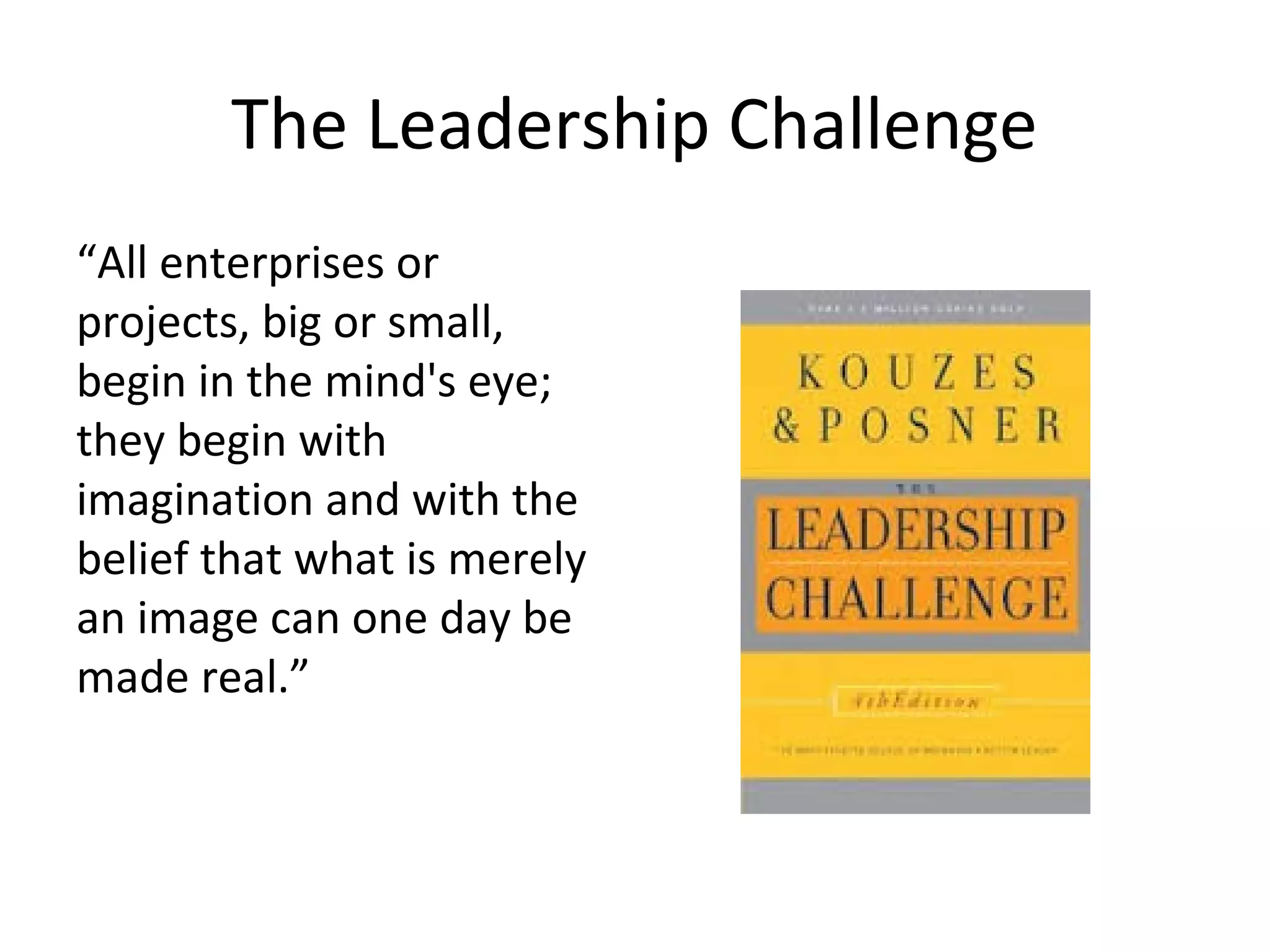
The Leadership Challenge
“All enterprises or
projects, big or small,
begin in the mind's eye;
they begin with
imagination and with the
belief that what is merely
an image can one day be
made real.”
Mindset
Strategic thinking requires a
mindset – a way of thinking
or intellectual process that
•accepts change,
•analyzes the causes and
outcomes of change,
•attempts to direct an
organization's future to
capitalize on the changes.
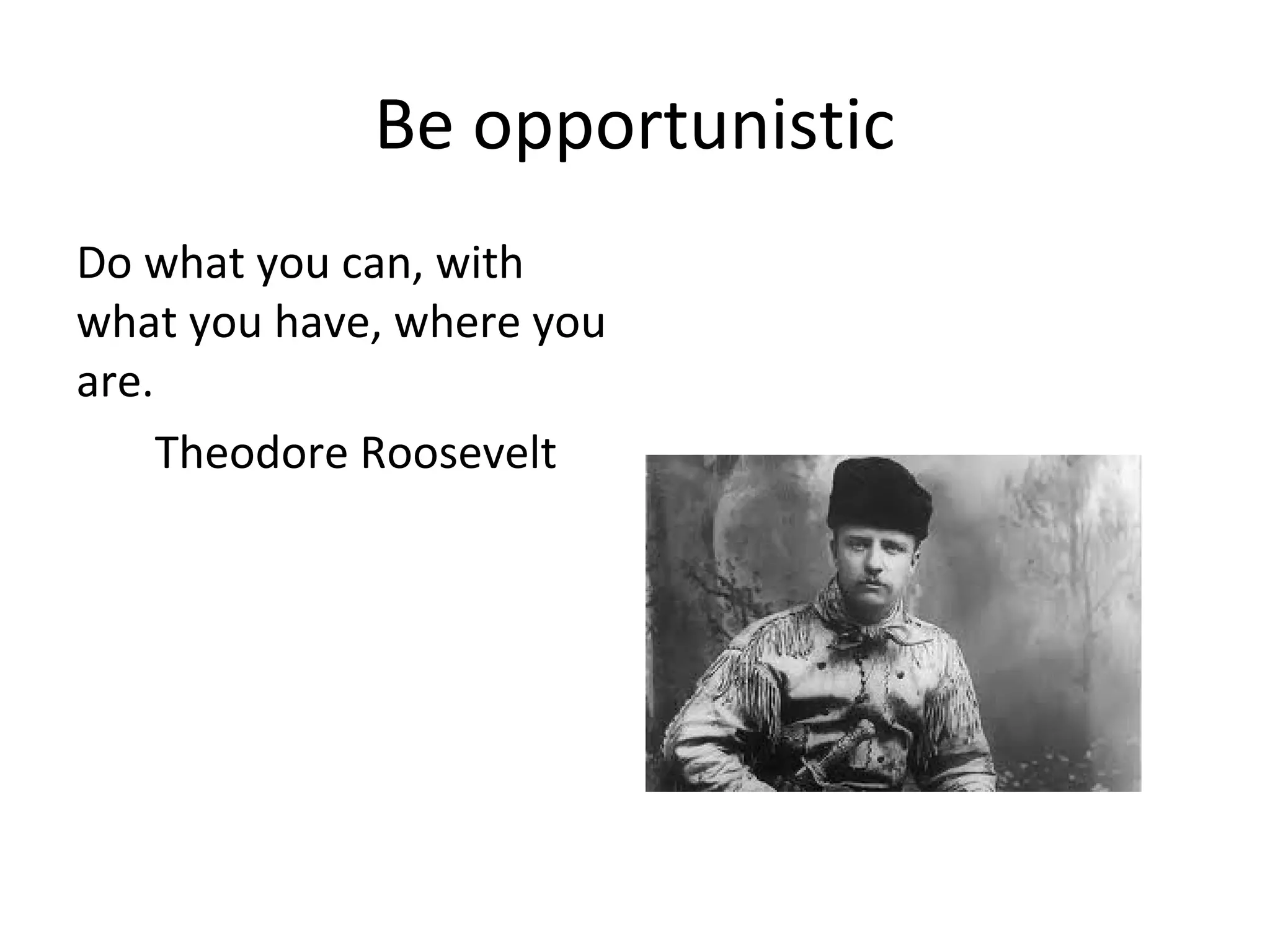
Be opportunistic
Do what you can, with
what you have, where you
are.
Theodore Roosevelt
Strategic Thinking
• acknowledges the reality of
change,
• questions current
assumptions and activities,
• builds on an understanding
of systems,
• envisions possible futures,
• generates new ideas,
• considers the organizational
fit with the external
environment
Translational Thinking
Entrepreneurship is the pursuit of
opportunity without regard for resources
currently controlled.
Bismarck defined statesmanship as the
art of the possible.
TS Elliot: Between the idea and the act
lies the shadow. The Hollow Men.
Crossing the Chasm book. Geoffrey
Moore
Wayne Gretzky "Skate where the puck is
going, not where it's been"
Timing. The early bird gets the worm, but
the second mouse gets the cheese!
Assessing Change
• Strategic thinking
assesses the changing
needs of the
organization's
stakeholders and the
changing technological,
social and demographic,
economic,
legislative/political, and
competitive demands of
its world.
Strategic thinkers are always questioning:
• “What are we doing now
that we should stop
doing?”
• “What are we not doing
now, but should start
doing?”
• “What are we doing now
that we should continue
to do but perhaps in a
fundamentally different
way?”
These questions are applicable to
everything the organization does
• products and services,
• internal processes,
• policies and procedures,
• strategies
Penetrating Vision
• examine assumptions,
• understand systems
and their
interrelationships,
• develop alternative
scenarios of the future
Forecast
• external technological,
social and demographic
changes, as well as
• critical changes in the
legislative and political
arenas
Strategic Thinking vs. SMEs
• Strategic thinking is very much a
leadership activity and quite
different from what subject
matter experts do.
• Strategic thinkers specialize in
relationships and context
whereas expert thinkers
specialize in well-defined
disciplines and functions.
• Strategic thinkers act on intuition
and “gut feel” when data is
incomplete – focus on action and
moving forward where as experts
pay rigorous attention to
knowledge, evidence, and data –
focus on understanding.
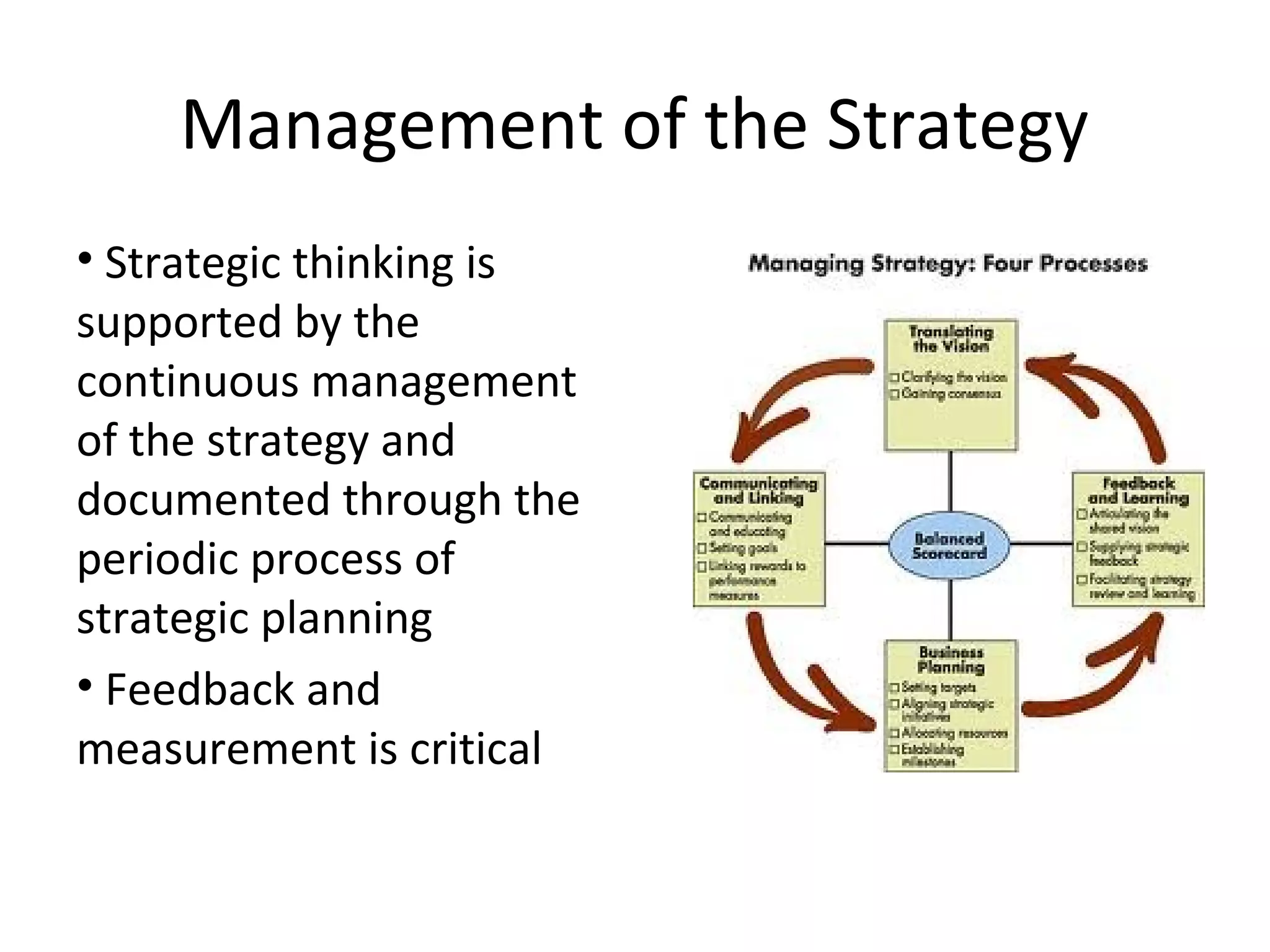
Management of the Strategy
• Strategic thinking is
supported by the
continuous management
of the strategy and
documented through the
periodic process of
strategic planning
• Feedback and
measurement is critical
Strategic Thinking

Strategic Thinking for Competitive Advantage

  • 1.
  • 2.
    Strategic Thinking • Leaders,similar to great athletes, must simultaneously play the game and observe it as a whole. • Keep perspective and see the big picture – not get lost in the action. • Vision and a sense of the future
  • 3.
    The Leadership Challenge “Allenterprises or projects, big or small, begin in the mind's eye; they begin with imagination and with the belief that what is merely an image can one day be made real.”
  • 4.
    Mindset Strategic thinking requiresa mindset – a way of thinking or intellectual process that •accepts change, •analyzes the causes and outcomes of change, •attempts to direct an organization's future to capitalize on the changes.
  • 5.
    Be opportunistic Do whatyou can, with what you have, where you are. Theodore Roosevelt
  • 6.
    Strategic Thinking • acknowledgesthe reality of change, • questions current assumptions and activities, • builds on an understanding of systems, • envisions possible futures, • generates new ideas, • considers the organizational fit with the external environment
  • 7.
    Translational Thinking Entrepreneurship isthe pursuit of opportunity without regard for resources currently controlled. Bismarck defined statesmanship as the art of the possible. TS Elliot: Between the idea and the act lies the shadow. The Hollow Men. Crossing the Chasm book. Geoffrey Moore Wayne Gretzky "Skate where the puck is going, not where it's been" Timing. The early bird gets the worm, but the second mouse gets the cheese!
  • 8.
    Assessing Change • Strategicthinking assesses the changing needs of the organization's stakeholders and the changing technological, social and demographic, economic, legislative/political, and competitive demands of its world.
  • 9.
    Strategic thinkers arealways questioning: • “What are we doing now that we should stop doing?” • “What are we not doing now, but should start doing?” • “What are we doing now that we should continue to do but perhaps in a fundamentally different way?”
  • 10.
    These questions areapplicable to everything the organization does • products and services, • internal processes, • policies and procedures, • strategies
  • 11.
    Penetrating Vision • examineassumptions, • understand systems and their interrelationships, • develop alternative scenarios of the future
  • 12.
    Forecast • external technological, socialand demographic changes, as well as • critical changes in the legislative and political arenas
  • 13.
    Strategic Thinking vs.SMEs • Strategic thinking is very much a leadership activity and quite different from what subject matter experts do. • Strategic thinkers specialize in relationships and context whereas expert thinkers specialize in well-defined disciplines and functions. • Strategic thinkers act on intuition and “gut feel” when data is incomplete – focus on action and moving forward where as experts pay rigorous attention to knowledge, evidence, and data – focus on understanding.
  • 14.
    Management of theStrategy • Strategic thinking is supported by the continuous management of the strategy and documented through the periodic process of strategic planning • Feedback and measurement is critical
  • 15.