Openness?
Availability of content
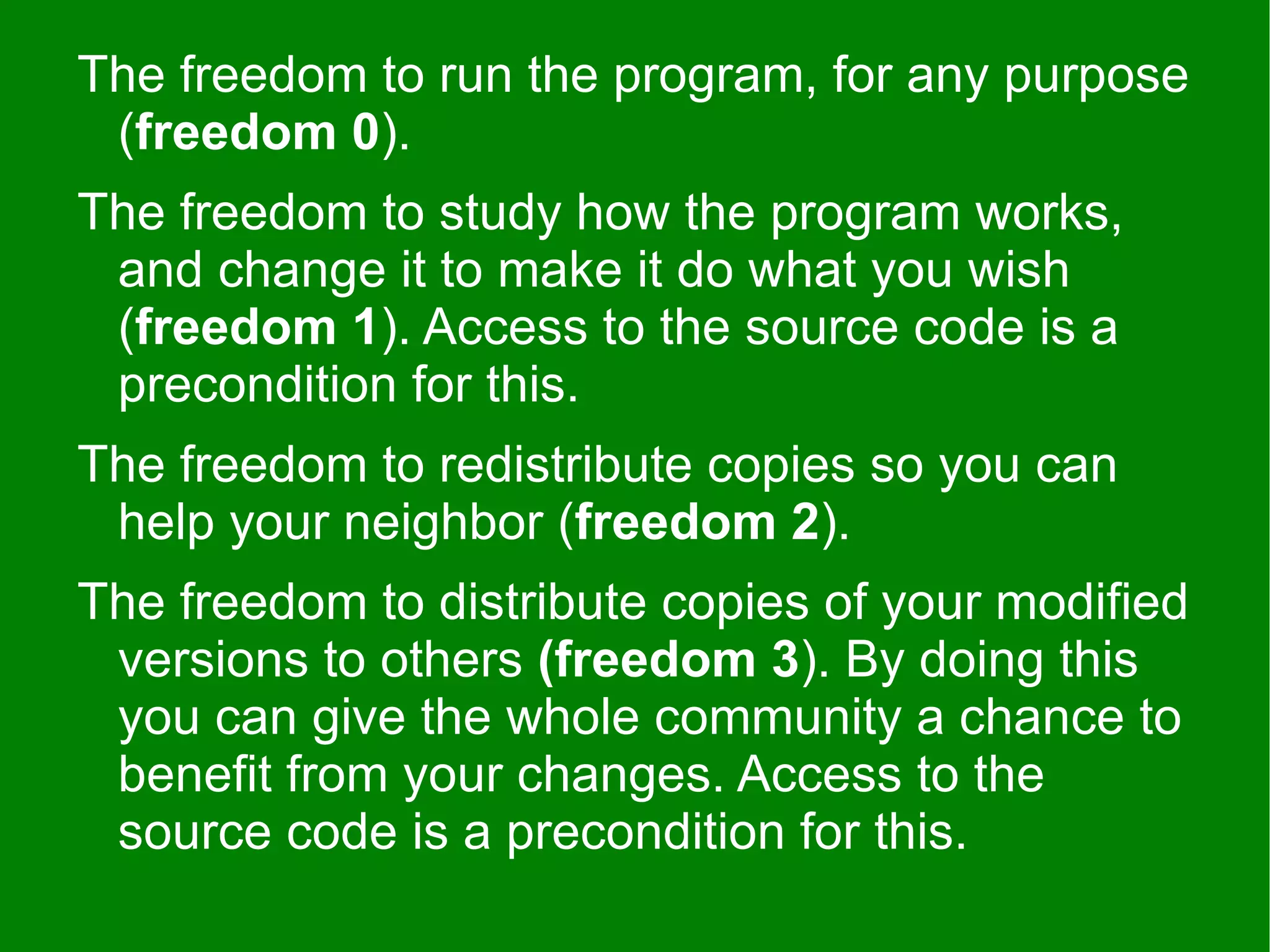
User freedoms
(with the help of digital technologies)
 
Remix culture
Read My Lips
Mash-ups
The President's Plane Tracker
Access to knowledge, information, culture


„ Traditional” regulation •  made to fit the needs of analog times: a limited number of authors, works, distribution channels and copying possibilities
„ Traditional” regulation • anachronistic in digital times: many and multiple authors, works, channels; unlimited copying
„ All rights reserved”
vs.
„ Some rights reserved”
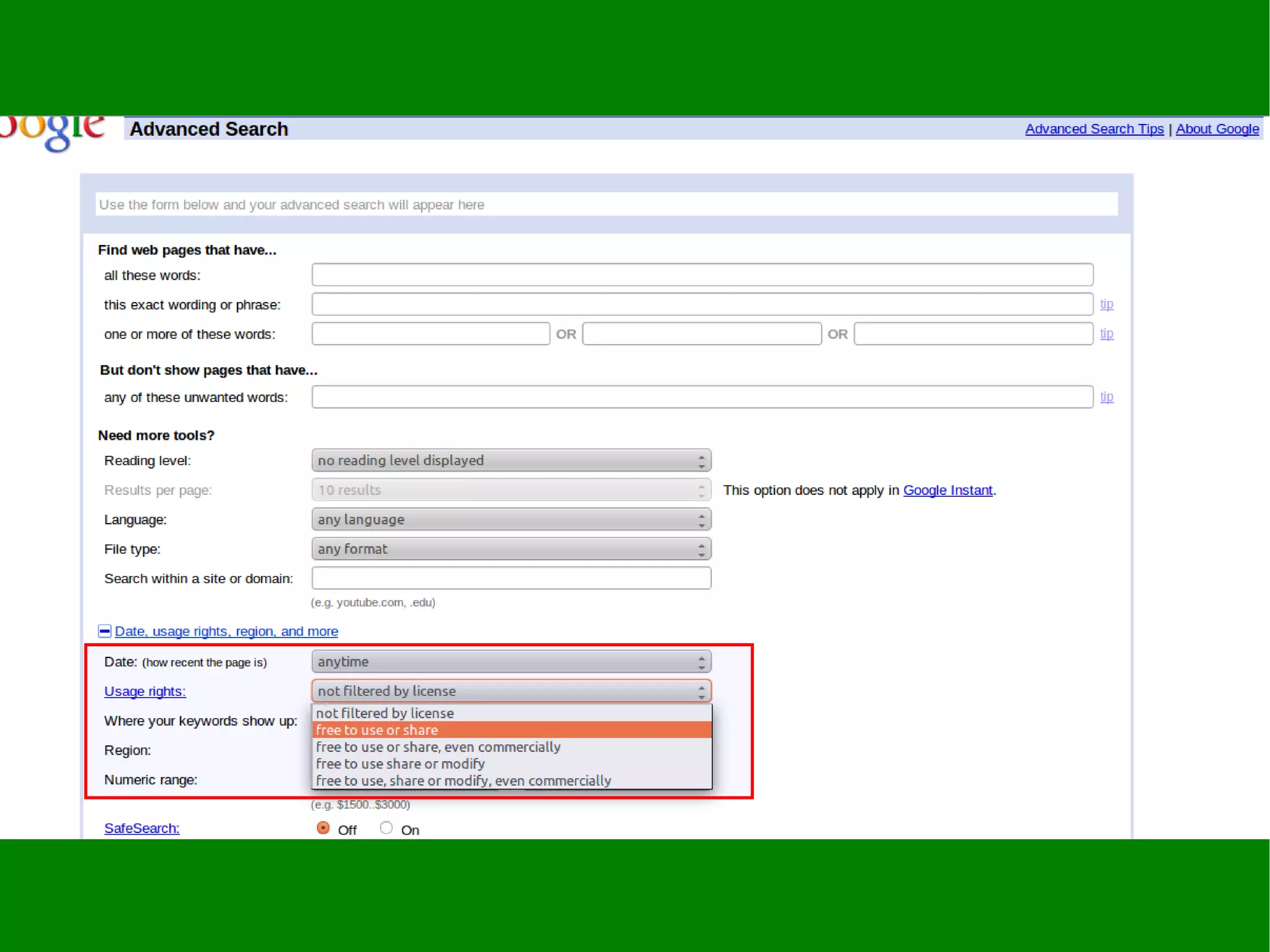
Aspects of openness •  economic openness  – available for free •  technical openness  – accessible to humans and machine readable („if it's not online, it does not exist”) •  legal openness – freedom to use, reduced intellectual property rights protection
 
Some rights reserved
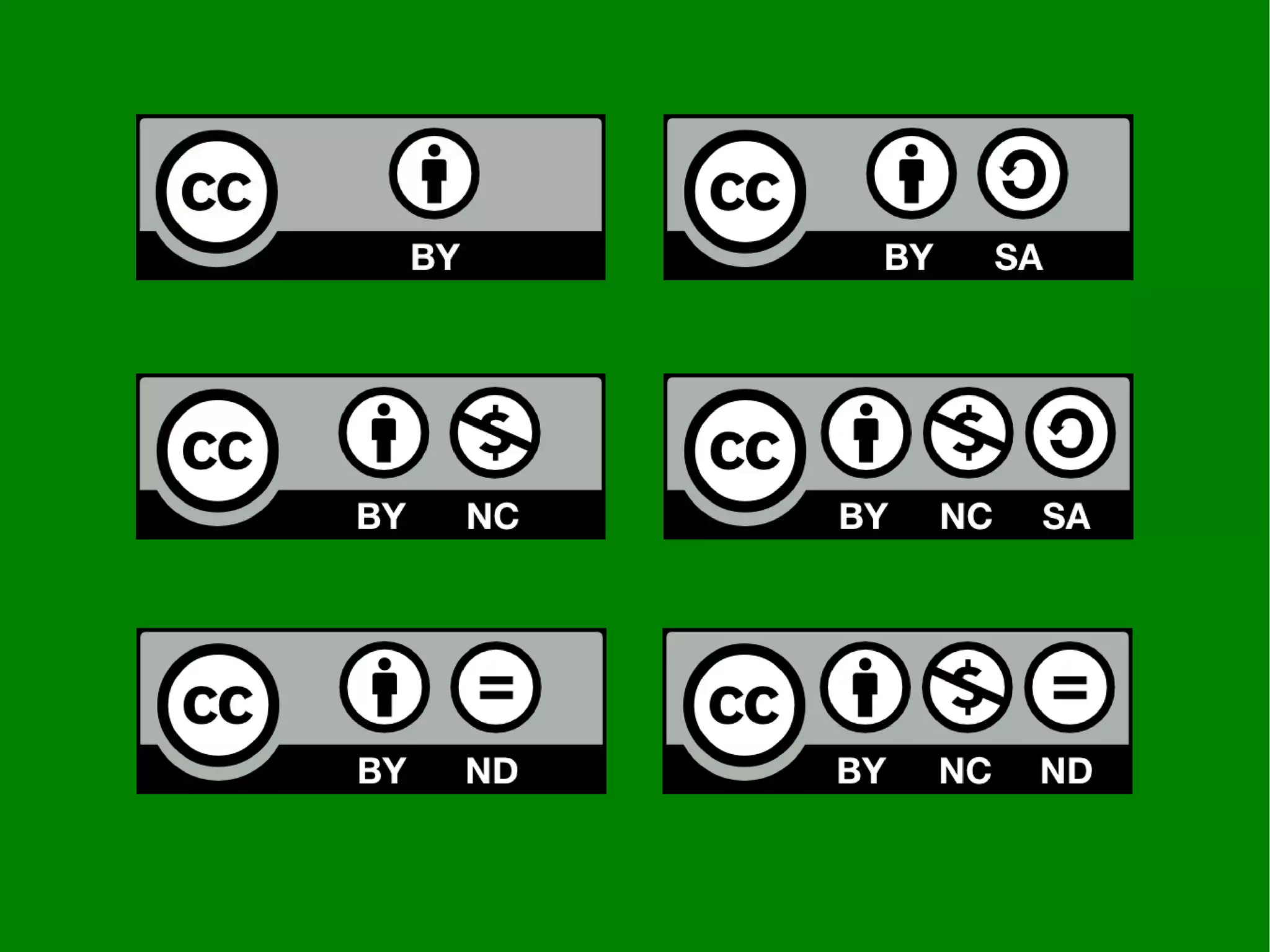
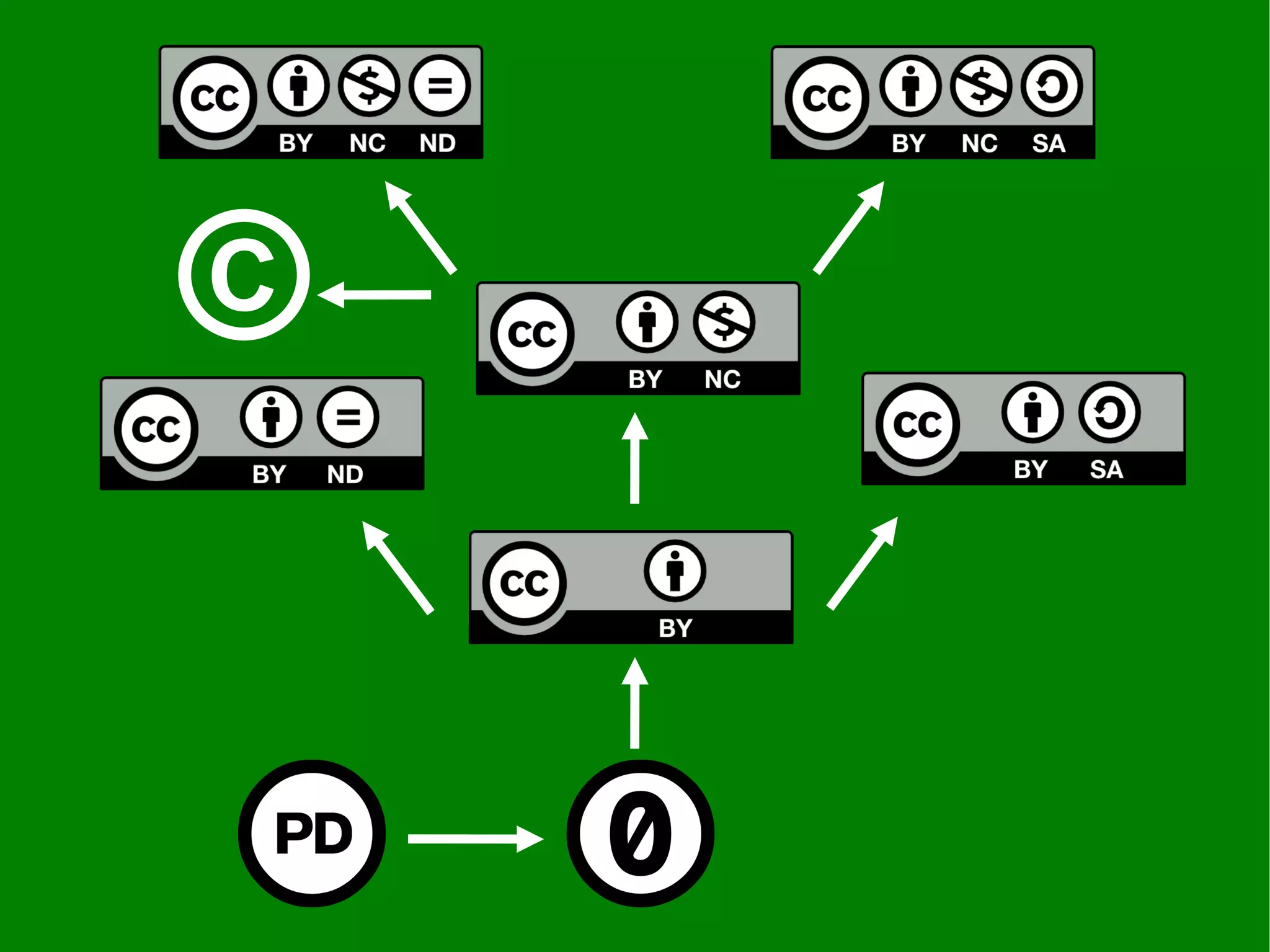
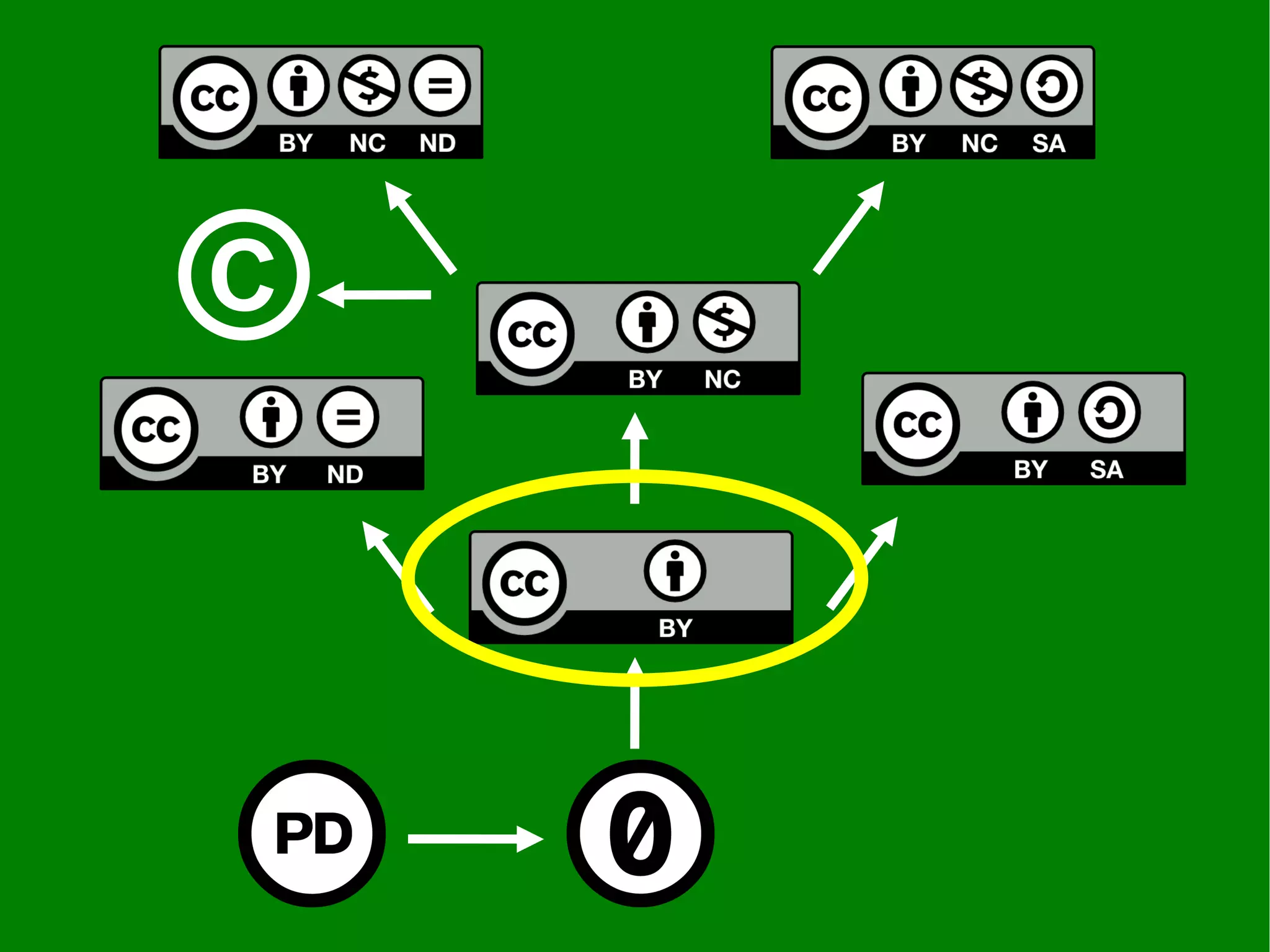
Creative Commons licenses free
standard
varied
internationally compatible
Attribution
NonCommercial
No Derivatives
ShareAlike
 
©
©
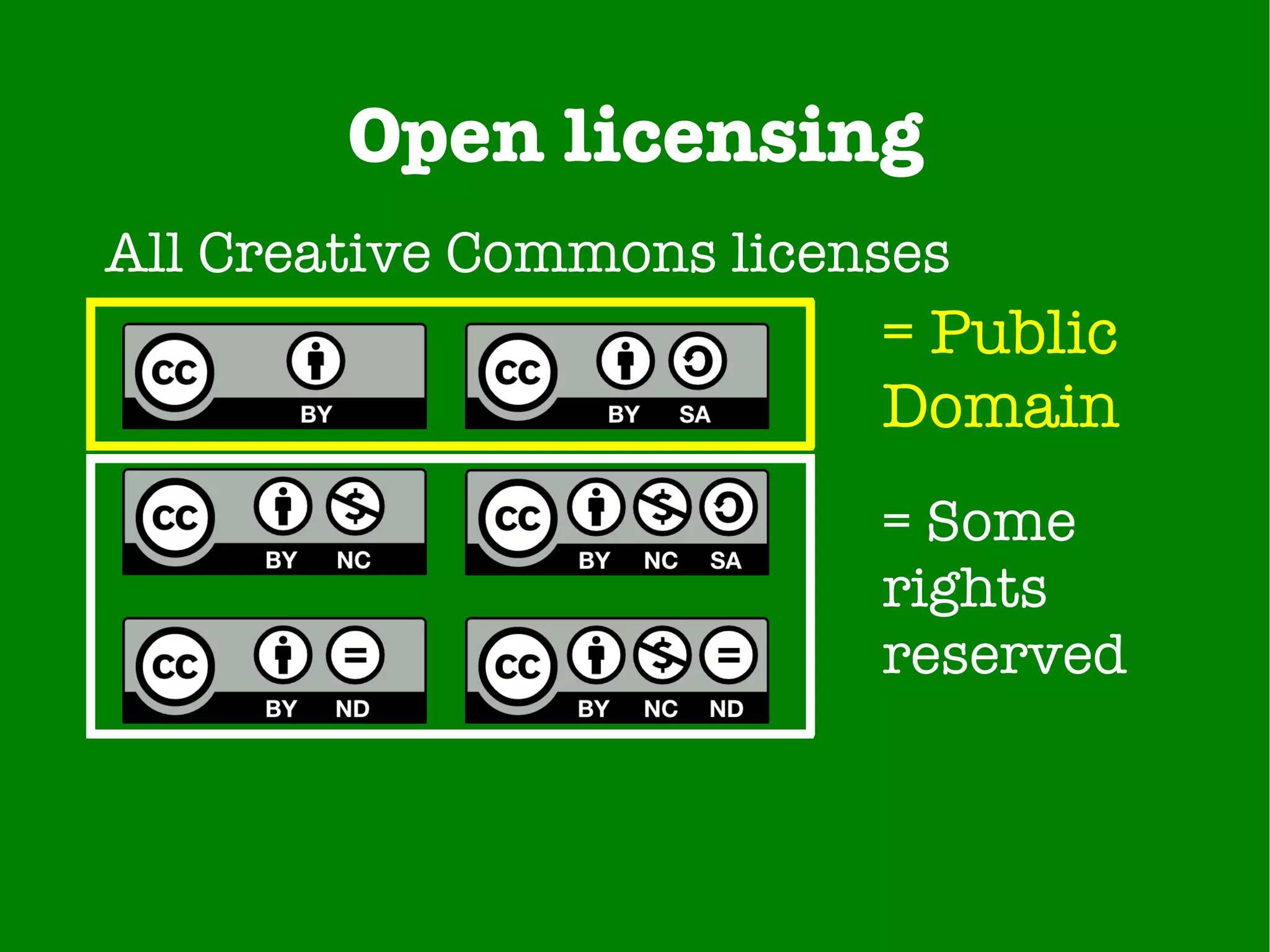
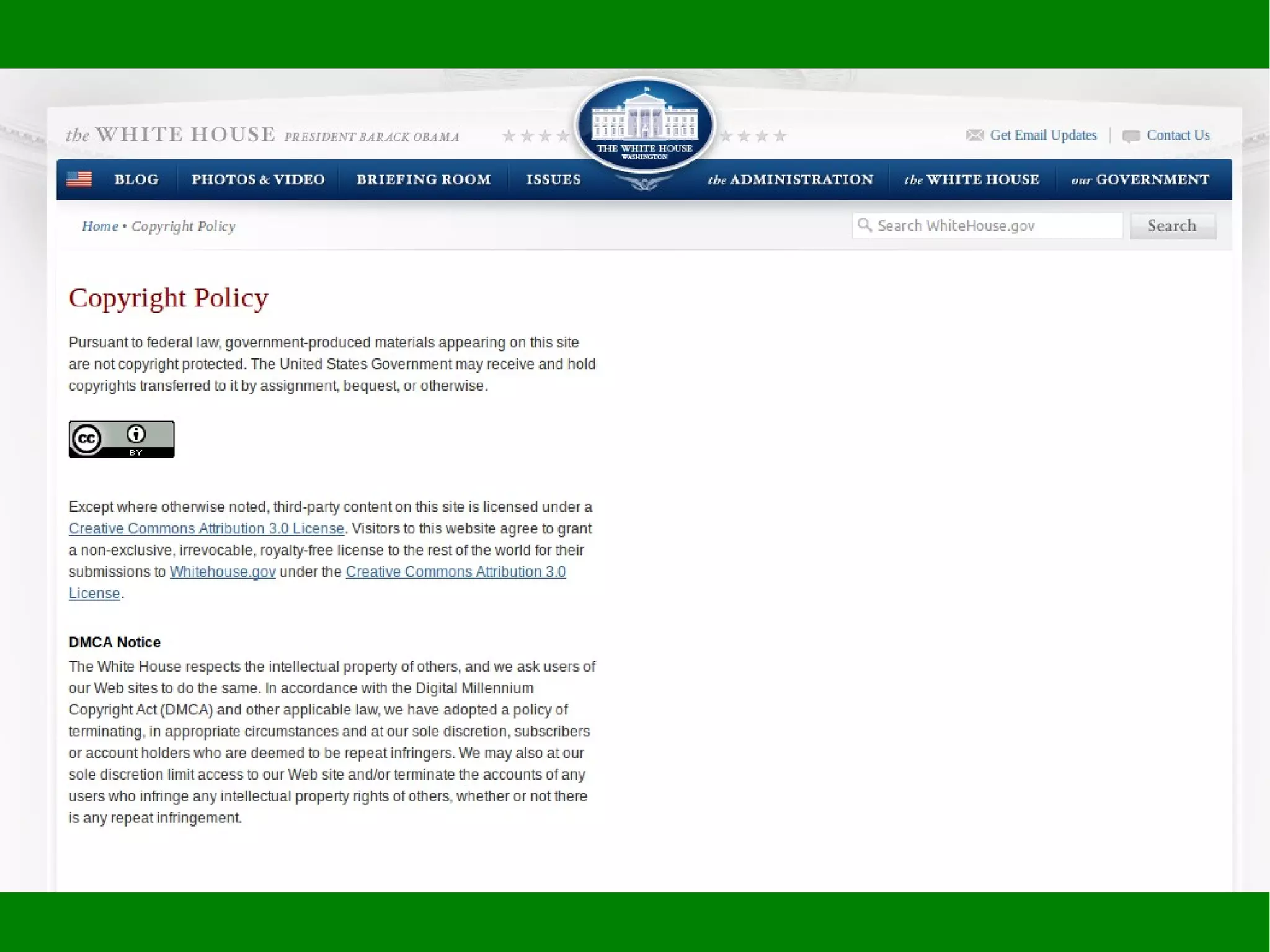
Open licensing All Creative Commons licenses = Public Domain = Some rights reserved
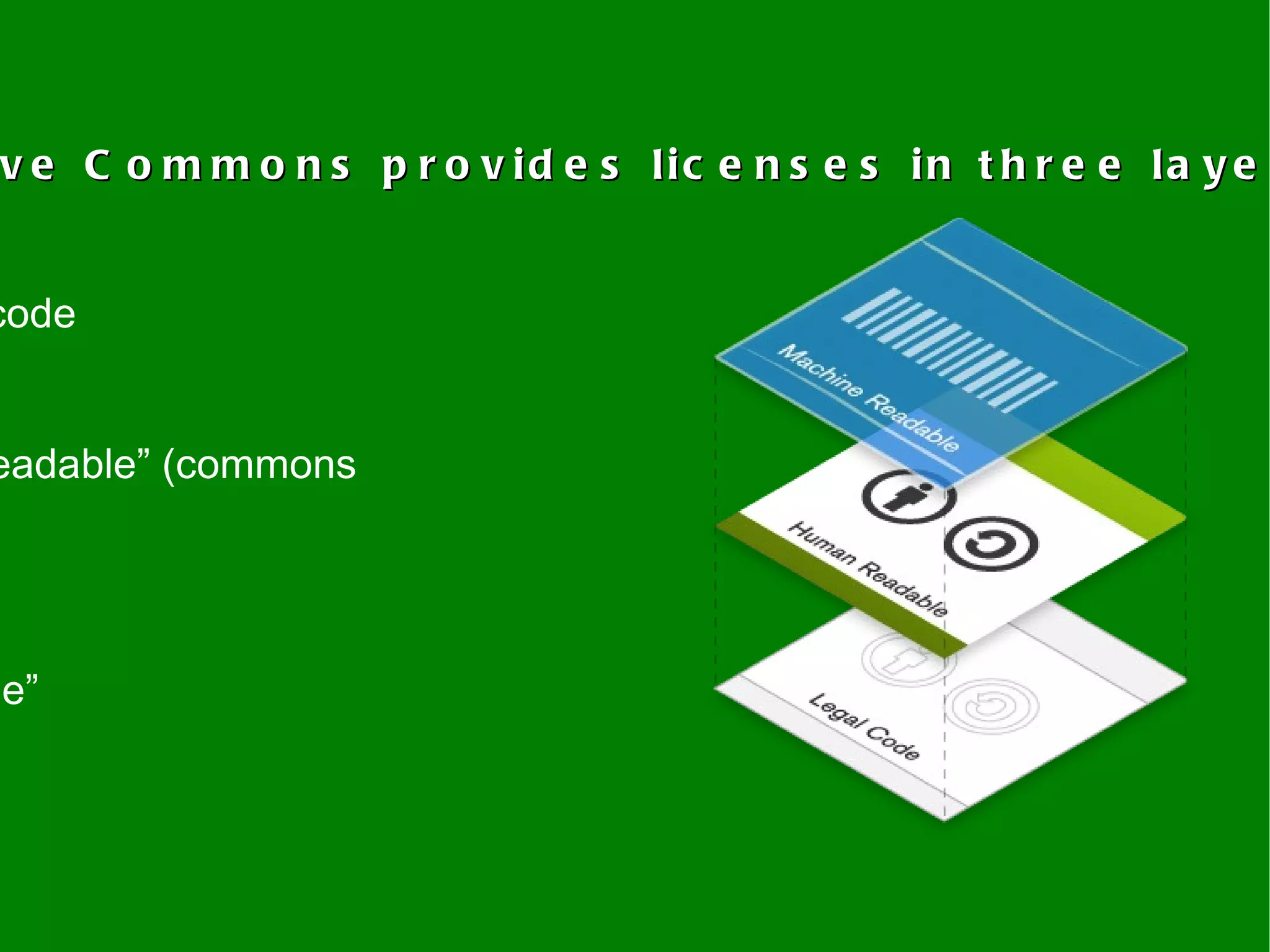
Creative Commons provides licenses in three layers XHTML code „ human readable” (commons deed) „ legal code”
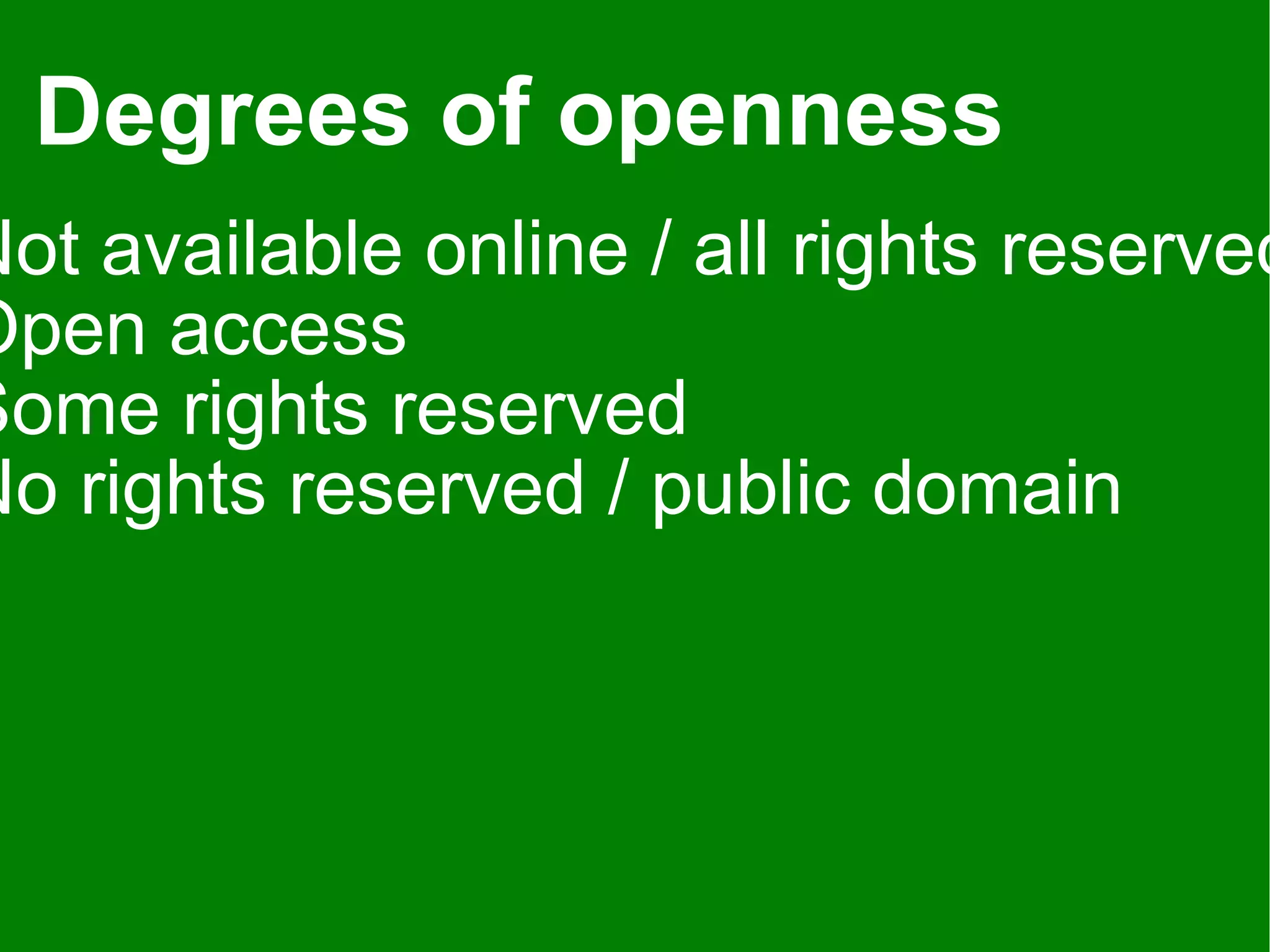
Degrees of openness •  Not available online / all rights reserved •  Open access •  Some rights reserved •  No rights reserved / public domain


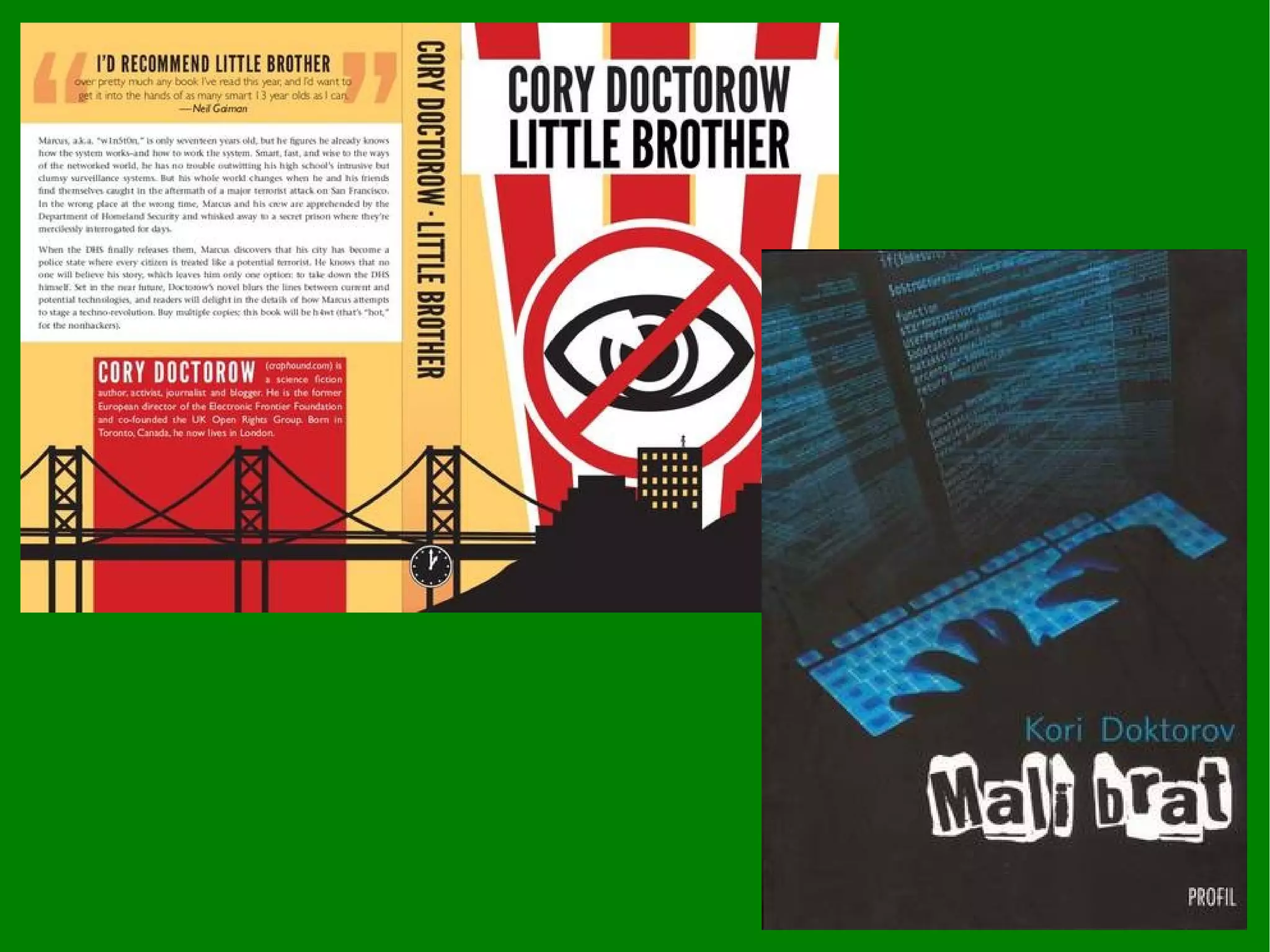
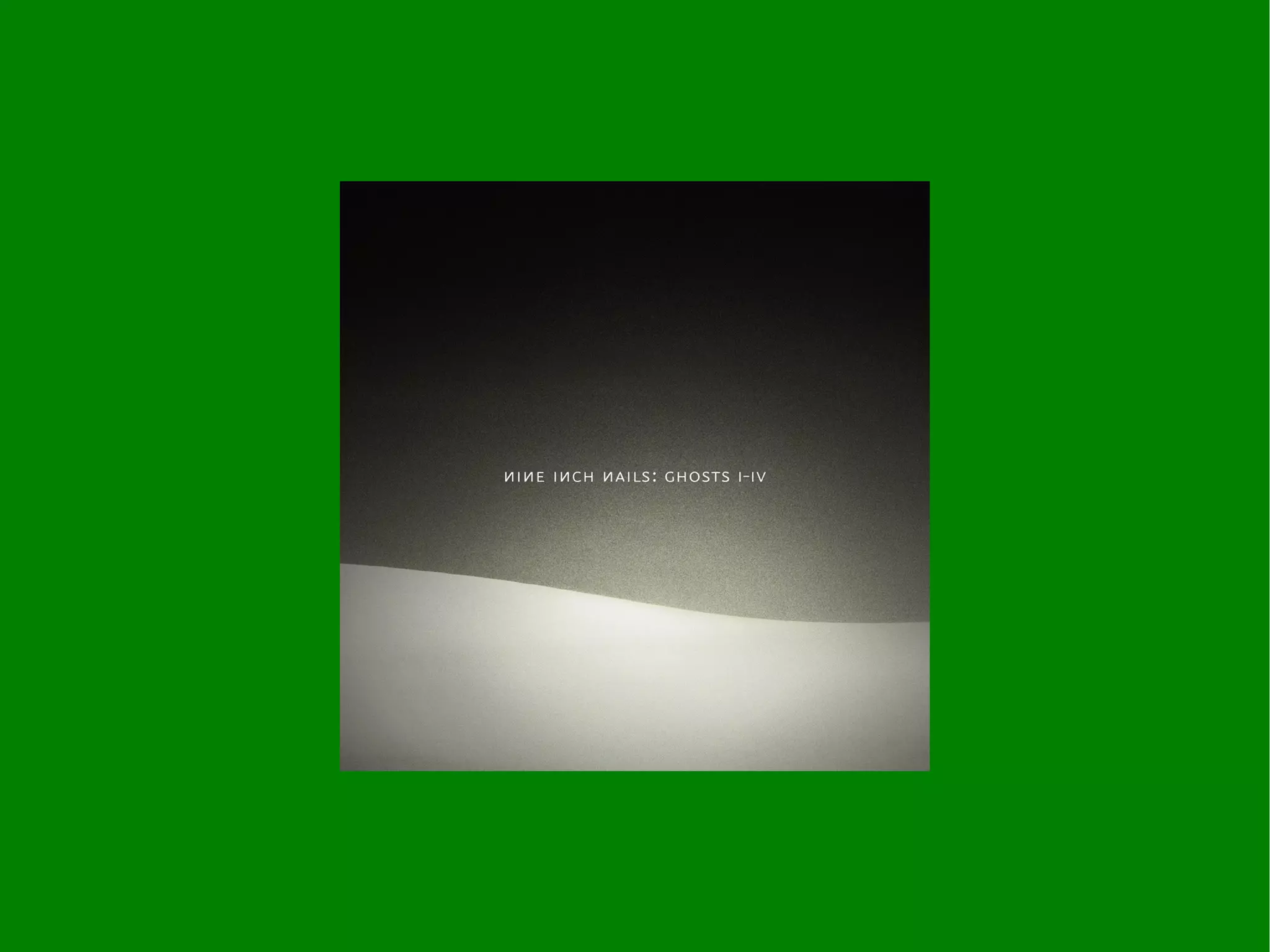
Fun facts #1 Doctorow  - two books on the bestseller list New York Times, published in over 60 countries Nine Inch Nails  - Ghosts album is available  for free with CC license, in 2009 was also the best selling album in MP3 format at Amazon.com
 
Open Resources accessibility flexibility durability low costs of creating
Open Source... Term open source describes practices in production and development that promote access to the end product's source materials (not only in programing)...
Open source Not just programming tools and code
Rules and cooperation mechanisms, Non-market incentives
Specificity of digital production: public good, marginal copying and distribution costs

Open licensing