New communication
protocols
Applications & Implementation
Contents
 Why such protocols ?
 General view
 DNP3
 C37.118
 OPC
 IEC 61850
 IRIG-B
Why such protocols ?
 Traditionally
 Power generated by small number of large power stations
 Flows on distribution network are one way : from producer to consumer
 Smart grids
 Decentralizing energy generation (renewable)
 Optimizing distribution (capacity, efficiency)
 Offering better consumer service (reliability)
Add ICT (Information and Communications Technologies) to the network, in order
to allow the communication between « smart » devices
Why such protocols ?
 Cost effective infrastructure
 Communication buses instead of point to point connections
 Interoperability
 Bigger amount of data
 Easier data exchange betweed IEDs
 Data exchange between manufacturers
 Configuration & flexibility
 Data can be centralized or scattered
 IEDs can be reconfigured without affecting infrastructure
 Long term
 Future evolutions made easier
 Follow improvements in communication protocols technology and customers
requirements
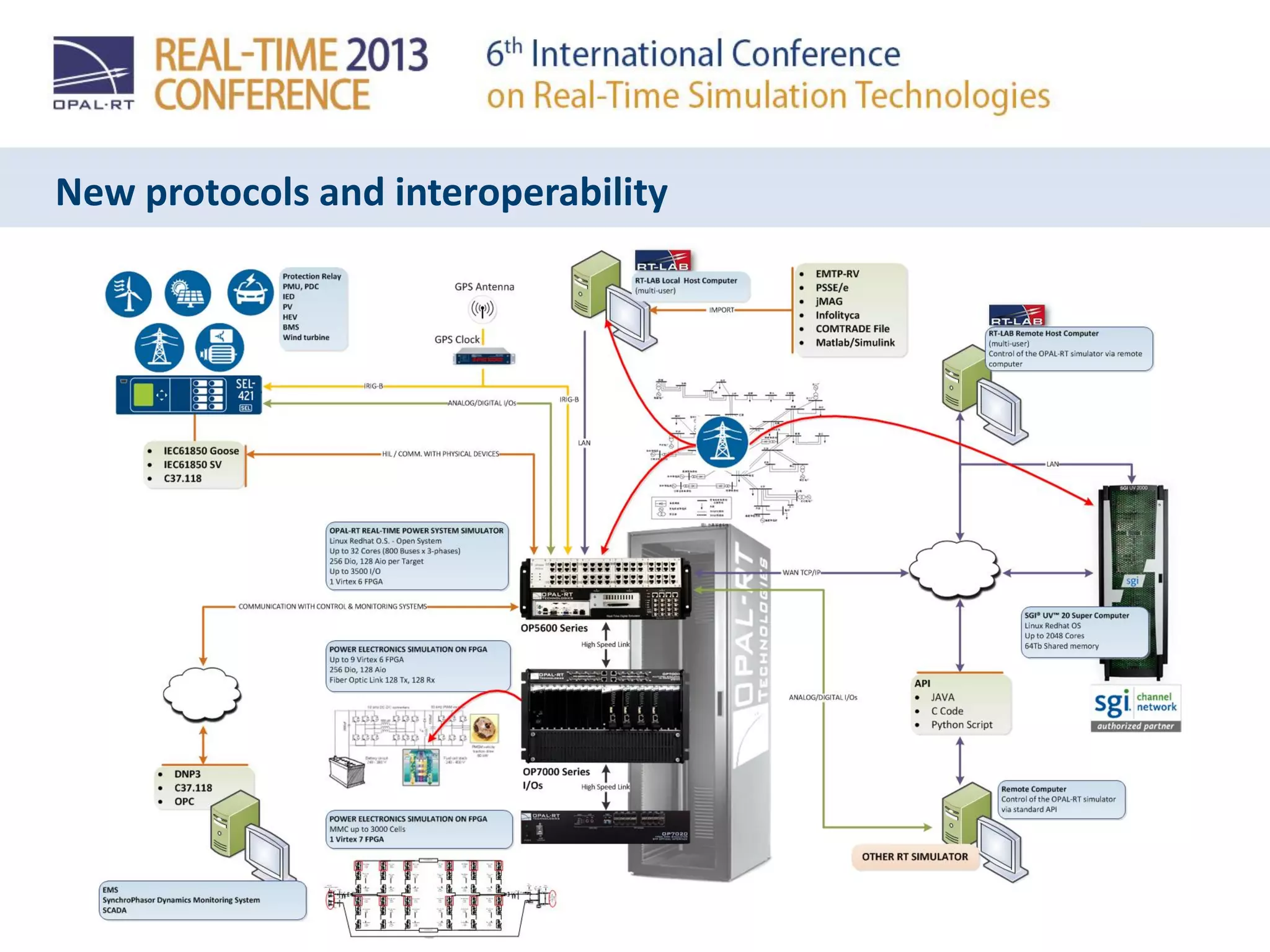
New protocols and interoperability
DNP3
Overview
 IEEE Standard for Electric Power Systems Communications:
Distributed Network Protocol (IEEE Std 1815TM-2012)
 Achieve interoperability between substations and master
stations for the electric utility, water, transportation and gas
industries
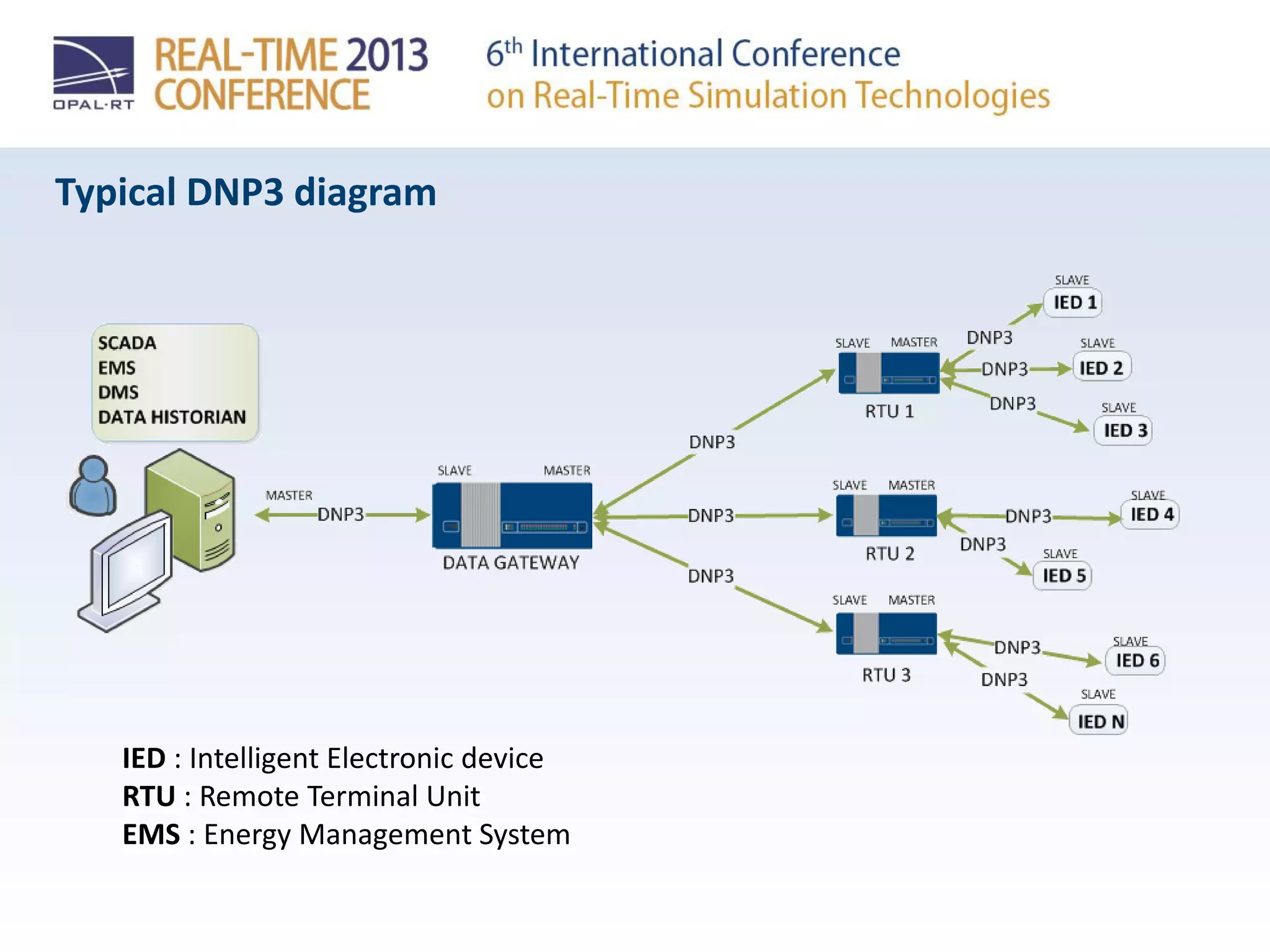
Typical DNP3 diagram
IED : Intelligent Electronic device
RTU : Remote Terminal Unit
EMS : Energy Management System
DNP3 applications
 Intelligent Electronic Devices (IEDs)
 Can report measurements and status from the electrical
network
 May be responsible for controlling devices on the electrical
network
 SCADA systems and Control Centers, DMS and EMS systems
 End user can monitor the network and take required actions
DNP3 features
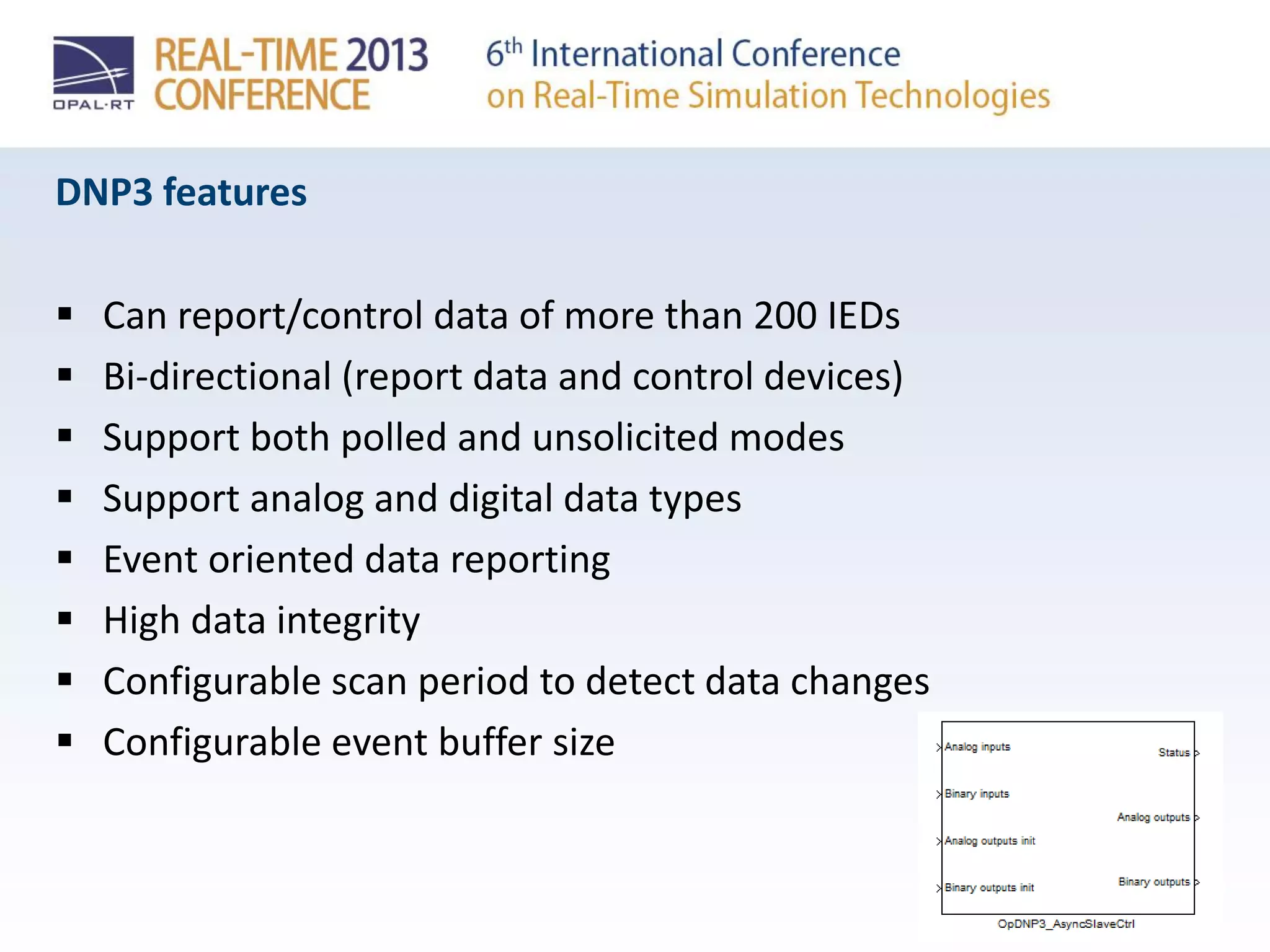
 Can report/control data of more than 200 IEDs
 Bi-directional (report data and control devices)
 Support both polled and unsolicited modes
 Support analog and digital data types
 Event oriented data reporting
 High data integrity
 Configurable scan period to detect data changes
 Configurable event buffer size
C37.118
Overview
 IEEE Standard for Synchrophasors for Power Systems:
C37.118 (IEEE C37.118TM-2005)
 Covers synchronized phasor measurements used in electric
power systems
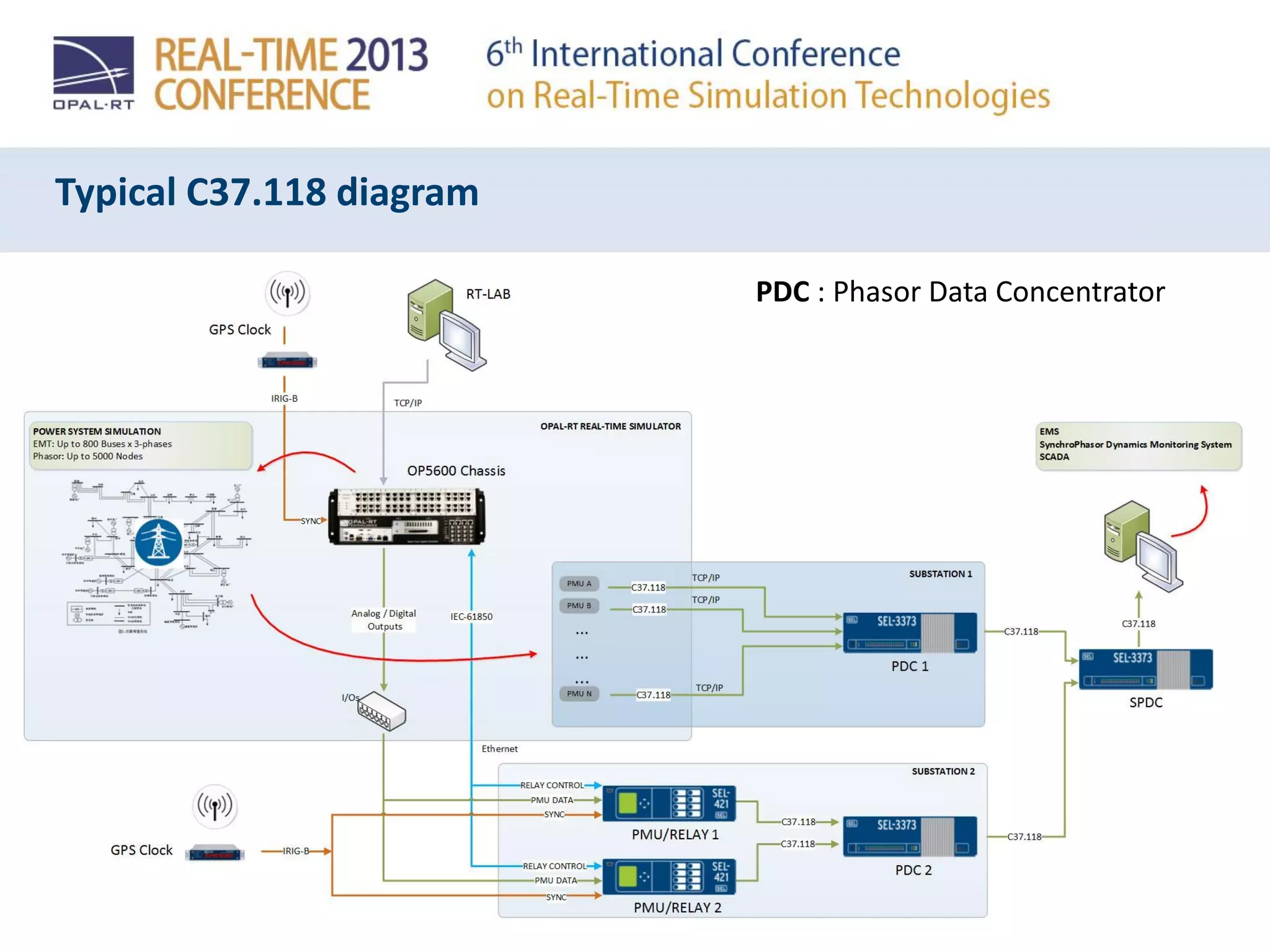
Typical C37.118 diagram
PDC : Phasor Data Concentrator
C37.118 / PMU applications
 Phasor Measurement Unit simulation for wide area
measurement and control.
 Data acquisition for Power System Automation
 Power system automation, as in smart grids
 Load shedding and other load control techniques as demand
response mechanisms
 Increase reliability of the grid by detecting faults
 Prevention of power outages
 Analysis and correction of sources of degradation
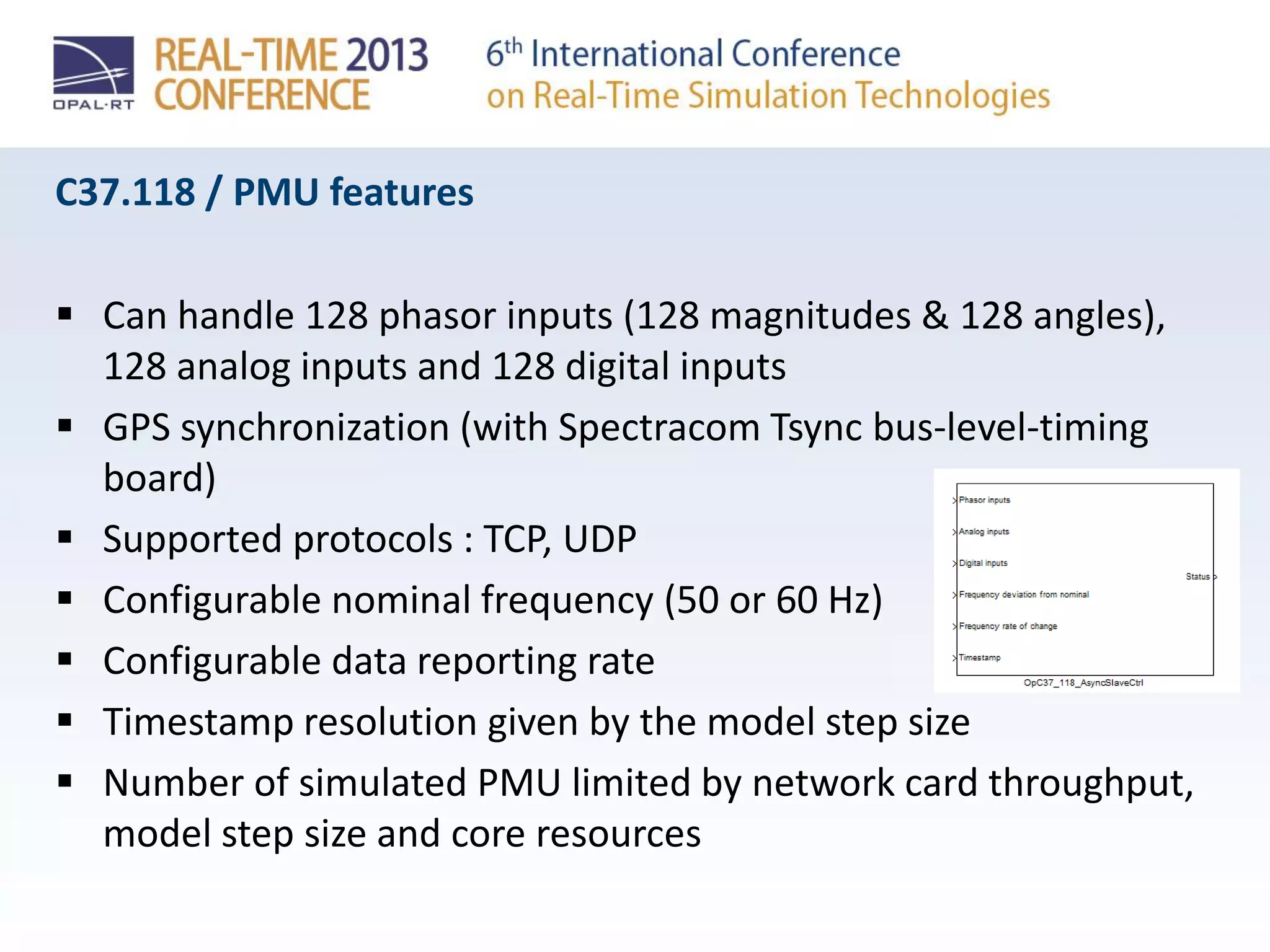
C37.118 / PMU features
 Can handle 128 phasor inputs (128 magnitudes & 128 angles),
128 analog inputs and 128 digital inputs
 GPS synchronization (with Spectracom Tsync bus-level-timing
board)
 Supported protocols : TCP, UDP
 Configurable nominal frequency (50 or 60 Hz)
 Configurable data reporting rate
 Timestamp resolution given by the model step size
 Number of simulated PMU limited by network card throughput,
model step size and core resources
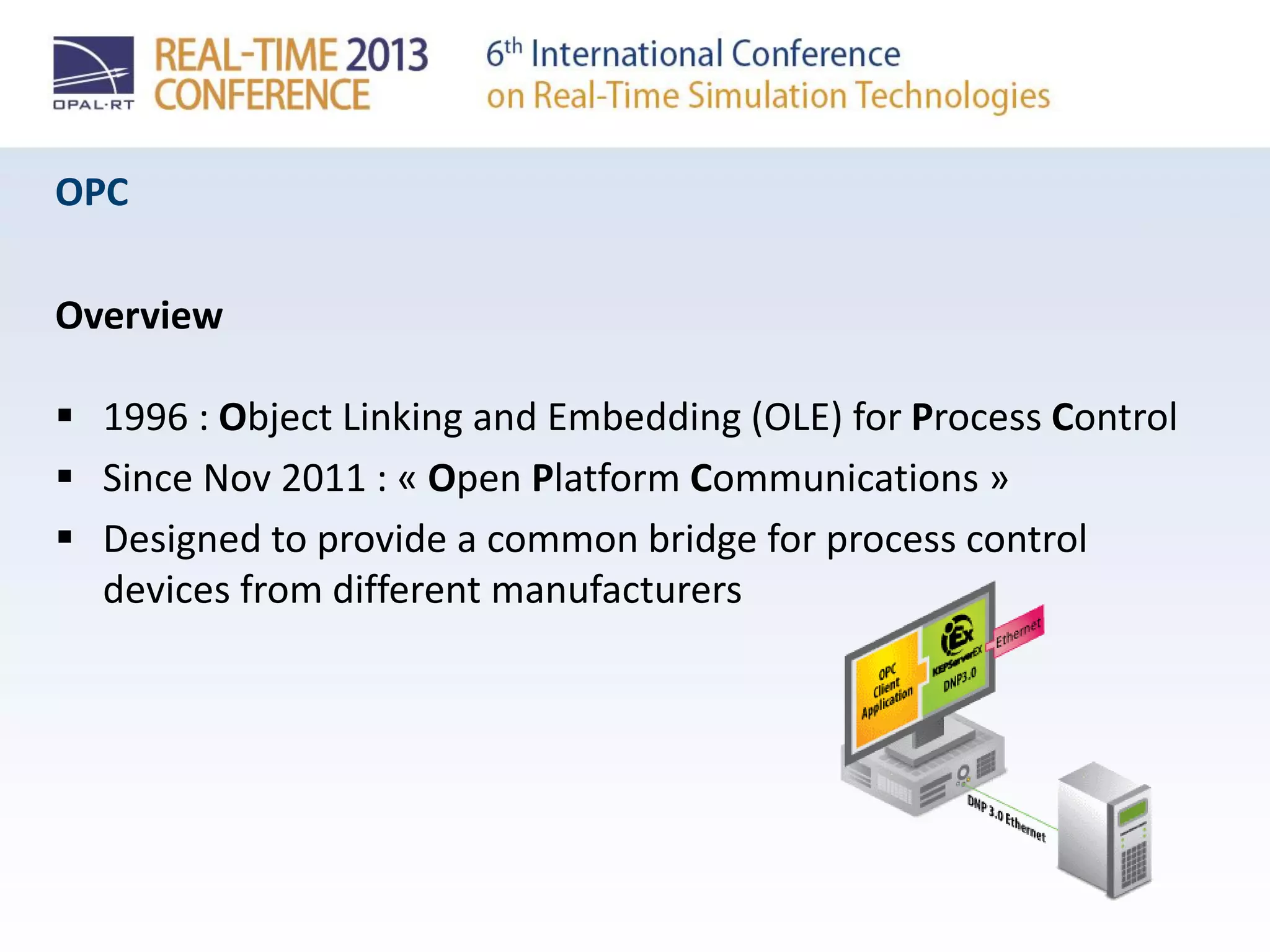
OPC
Overview
 1996 : Object Linking and Embedding (OLE) for Process Control
 Since Nov 2011 : « Open Platform Communications »
 Designed to provide a common bridge for process control
devices from different manufacturers
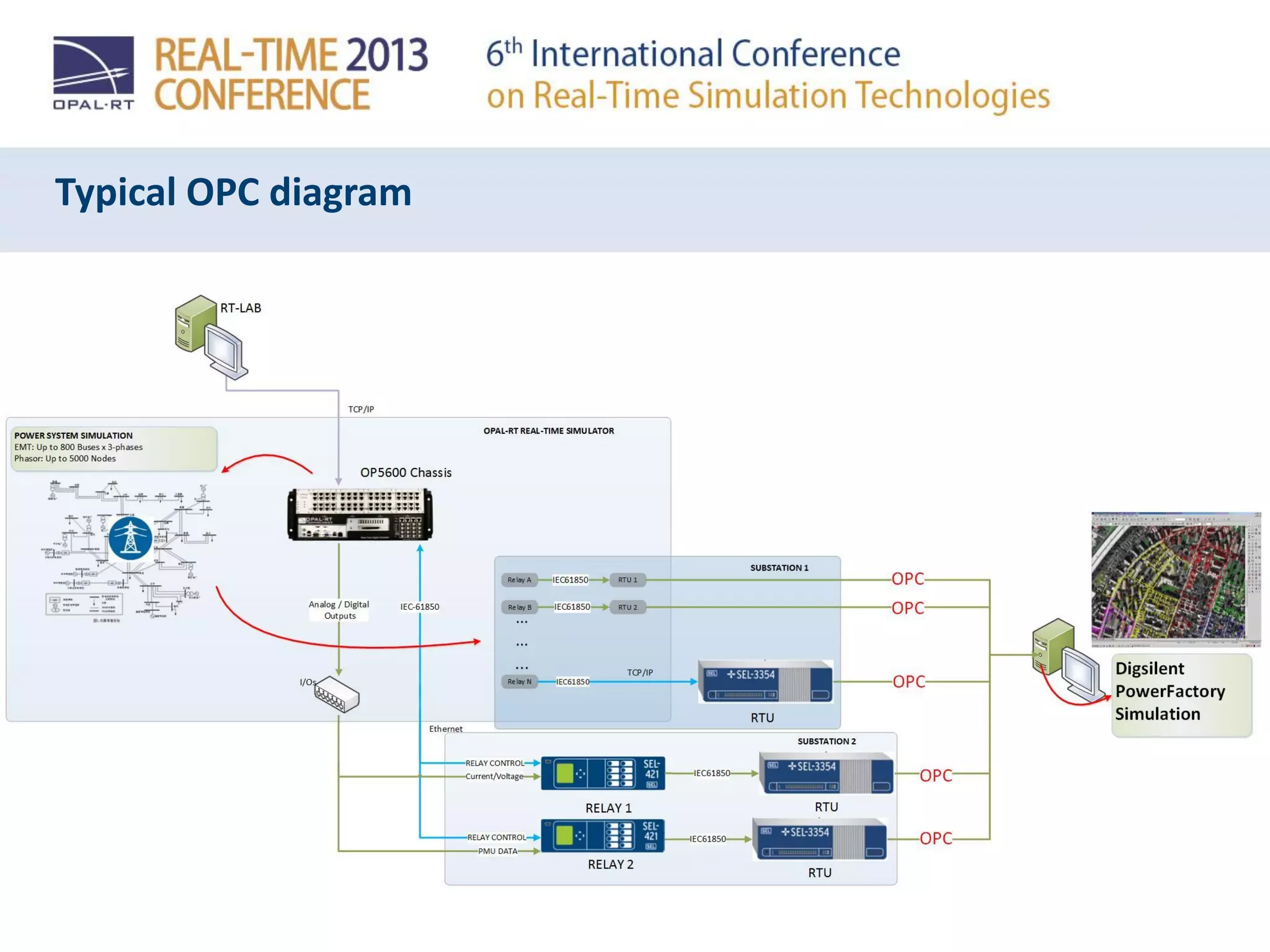
Typical OPC diagram
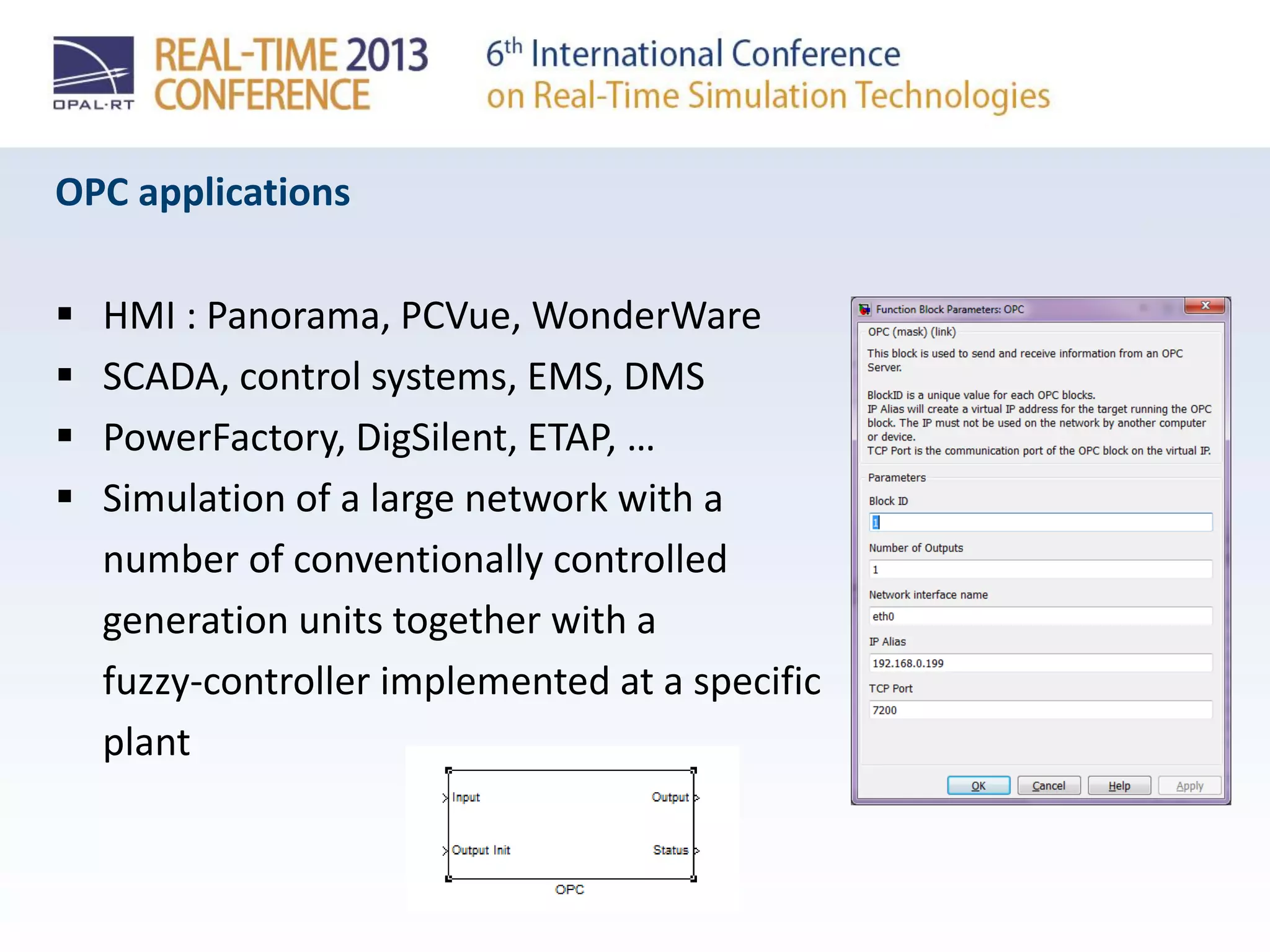
OPC applications
 HMI : Panorama, PCVue, WonderWare
 SCADA, control systems, EMS, DMS
 PowerFactory, DigSilent, ETAP, …
 Simulation of a large network with a
number of conventionally controlled
generation units together with a
fuzzy-controller implemented at a specific
plant
IEC 61850
Overview
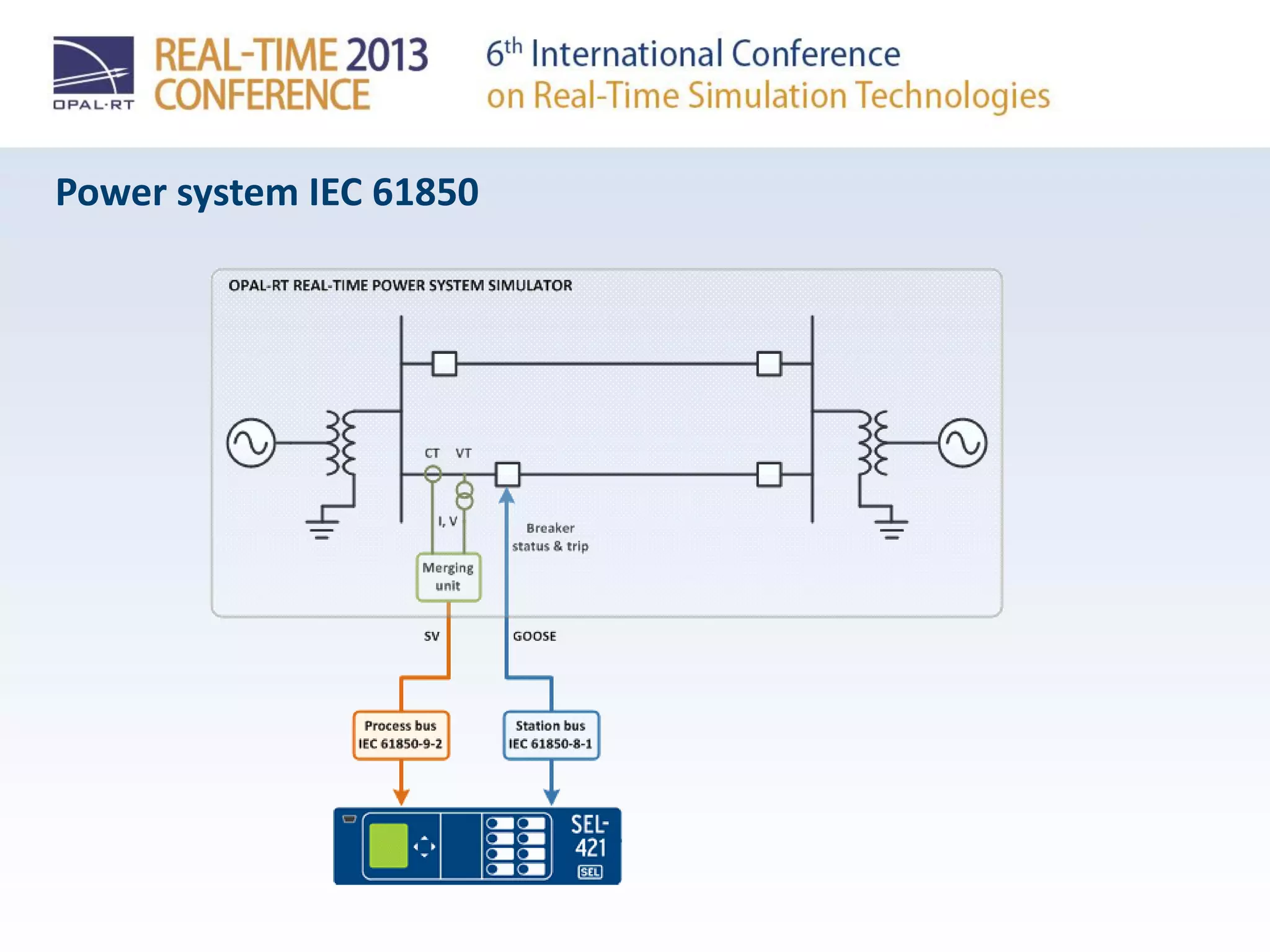
 Sampled Values (IEC61850-9.2-LE): digital communication
interface implementation to non conventional instrument
transformers
 GOOSE provides a fast and reliable mechanism of transferring
event data over entire substation networks
Power system IEC 61850
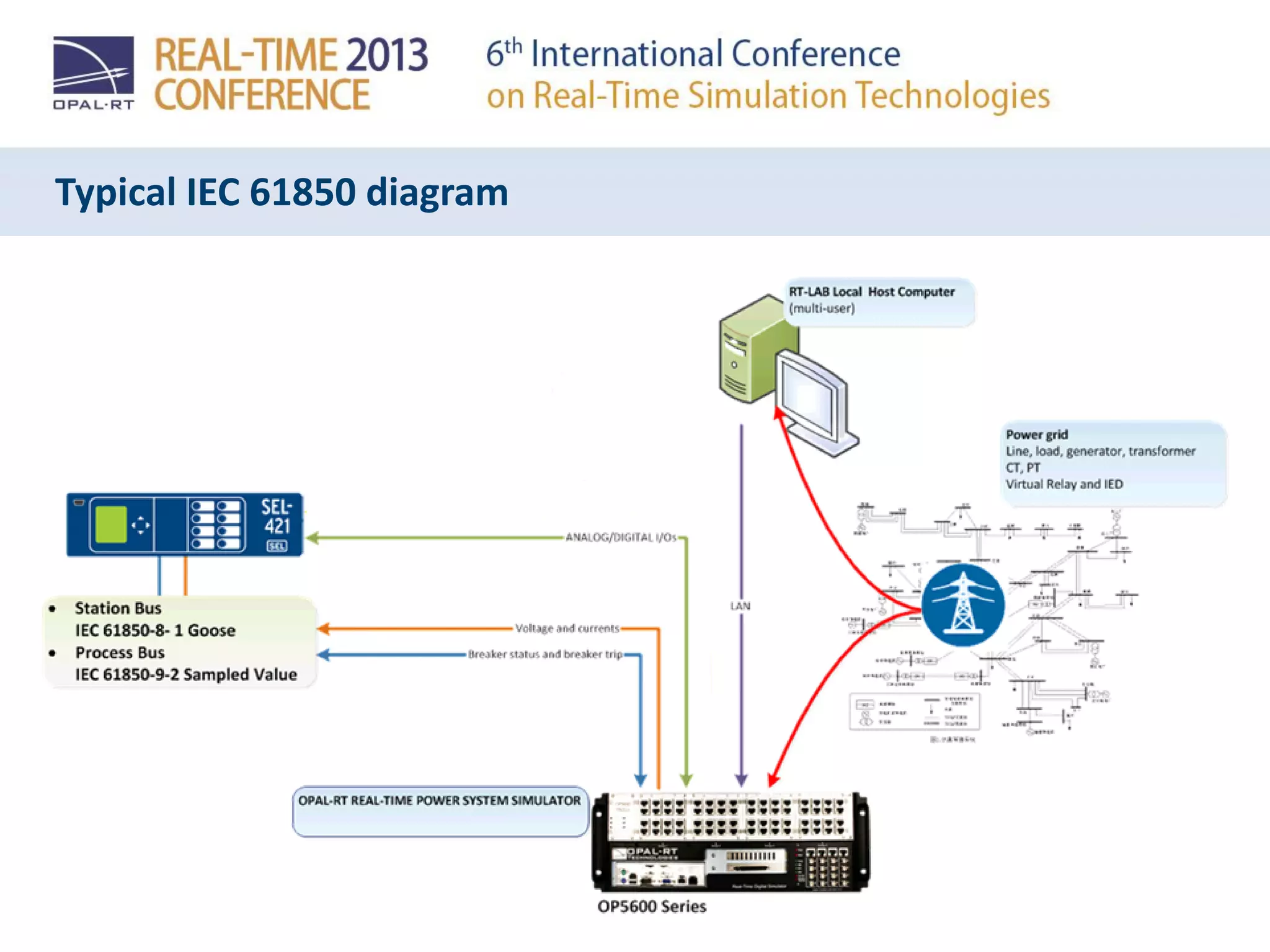
Typical IEC 61850 diagram
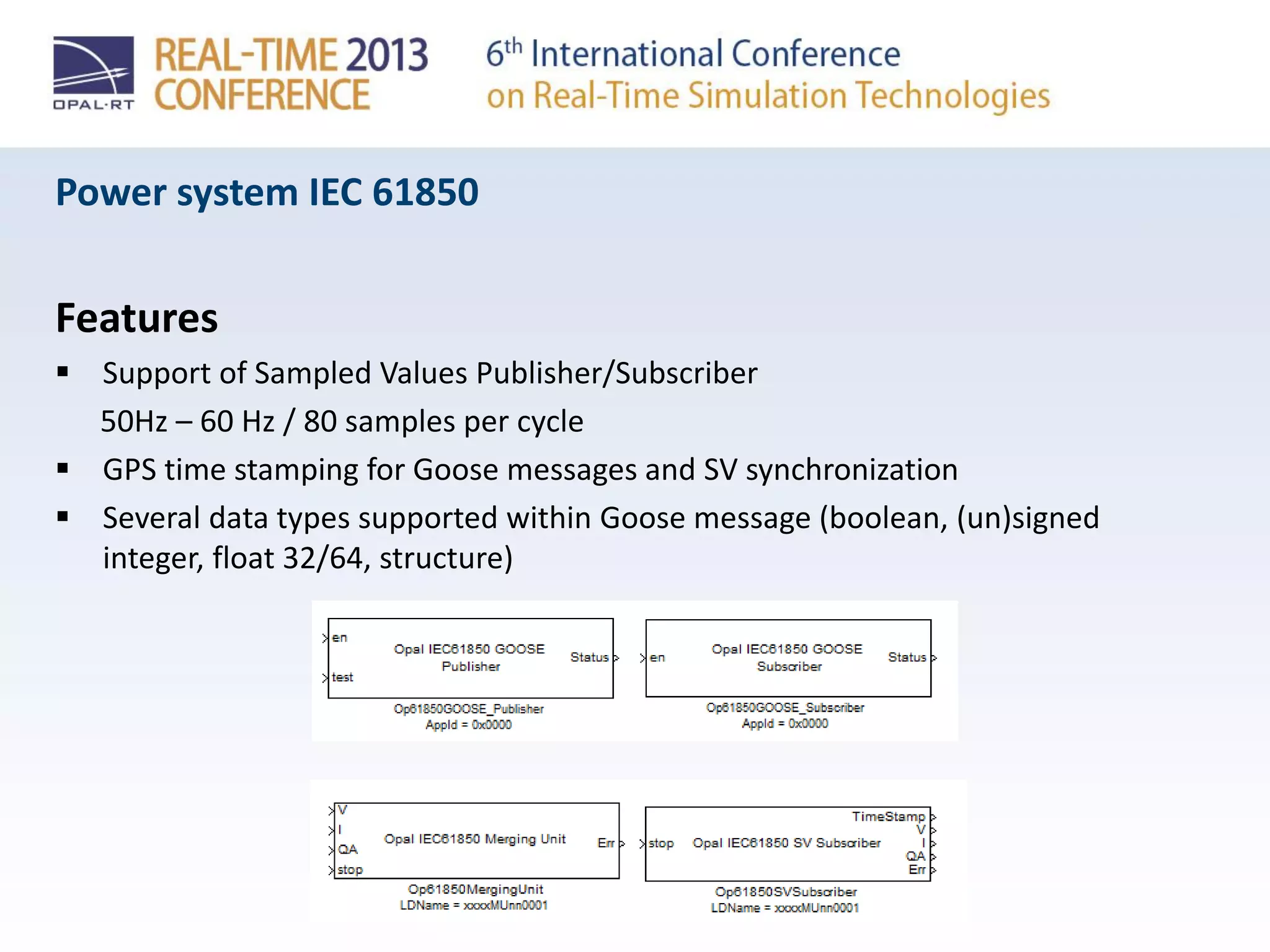
Power system IEC 61850
Features
 Support of Sampled Values Publisher/Subscriber
50Hz – 60 Hz / 80 samples per cycle
 GPS time stamping for Goose messages and SV synchronization
 Several data types supported within Goose message (boolean, (un)signed
integer, float 32/64, structure)
IRIG-B
Overview
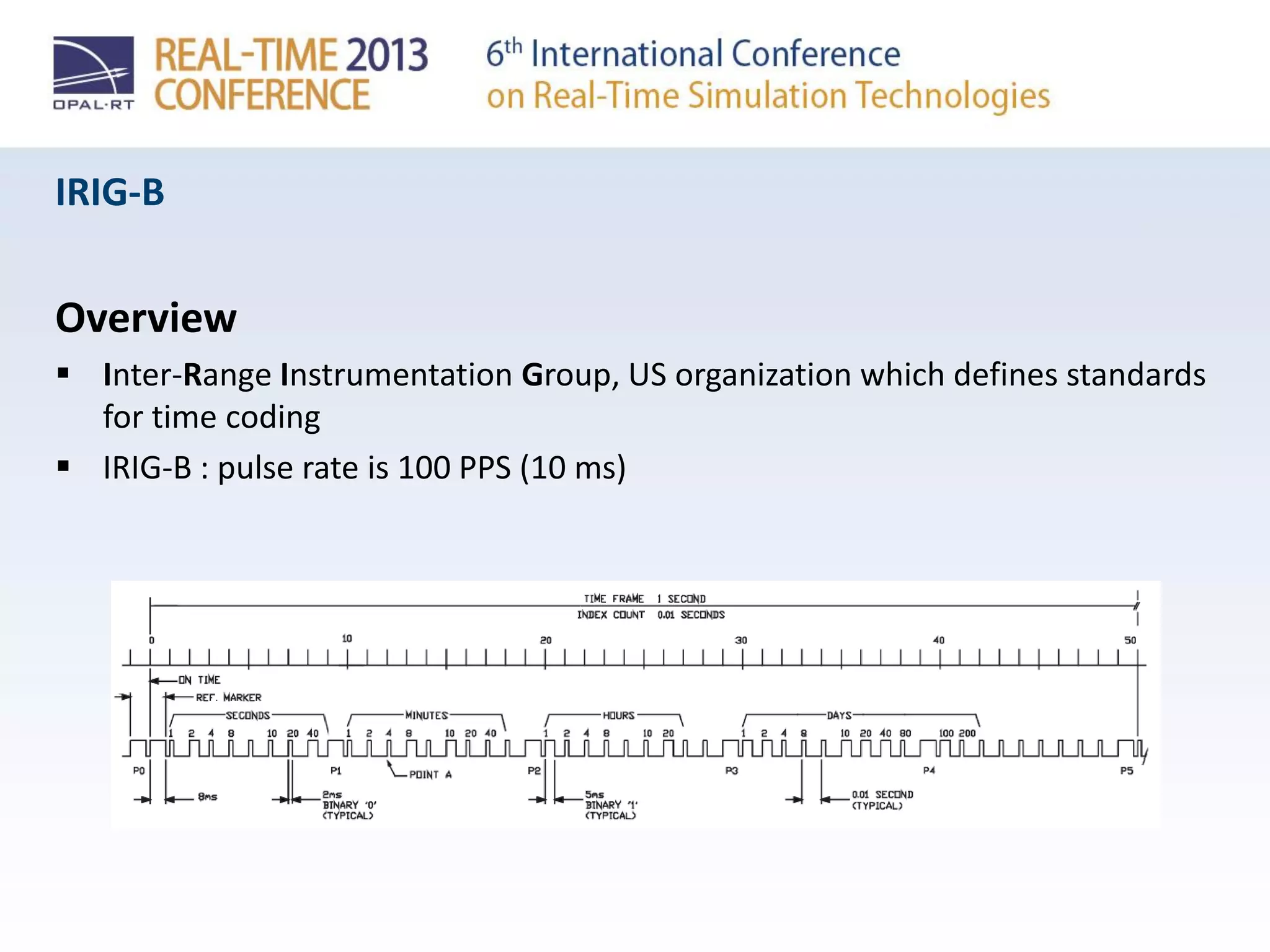
 Inter-Range Instrumentation Group, US organization which defines standards
for time coding
 IRIG-B : pulse rate is 100 PPS (10 ms)
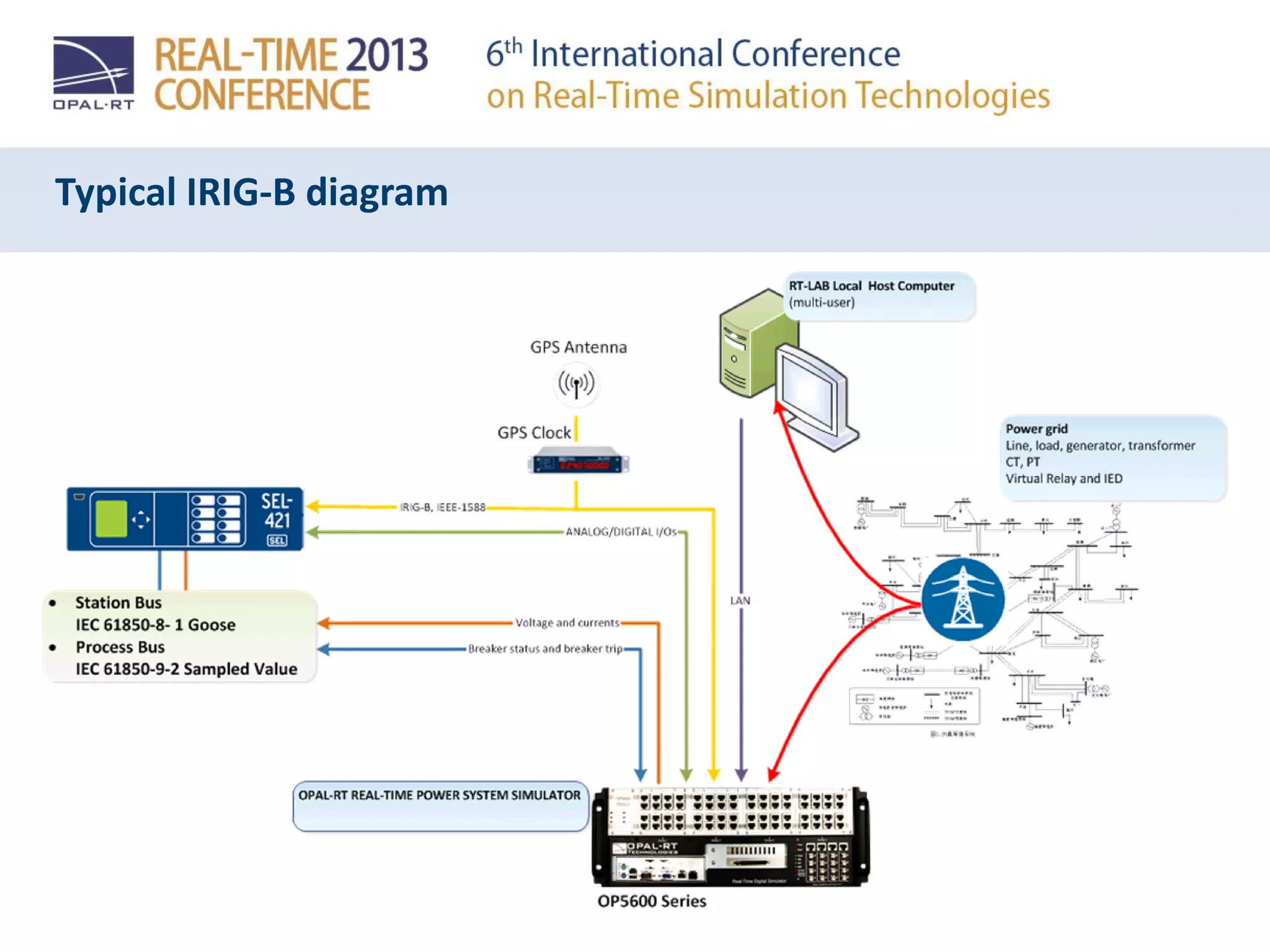
Typical IRIG-B diagram
Features
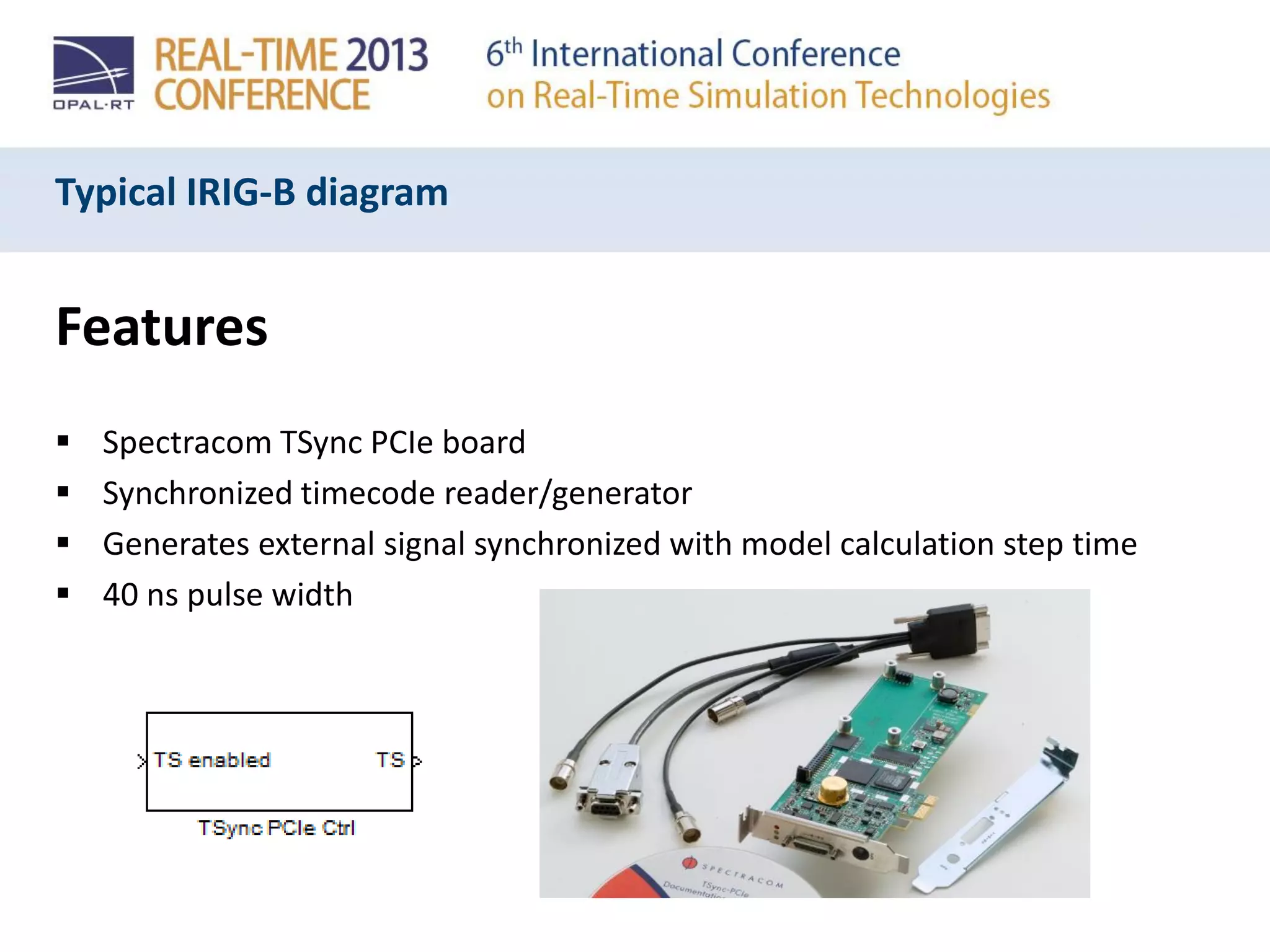
 Spectracom TSync PCIe board
 Synchronized timecode reader/generator
 Generates external signal synchronized with model calculation step time
 40 ns pulse width
Other specific communication protocols available
 CanOpen communication protocol for Woodward valve controller simulation
 Foundation Fieldbus H1 communication protocol for sensor simulation
(Temperature, Pressure sensors …)
 Reflective Memory (RFM) using Dolphin high-speed communication boards
 FlexRay to govern on-board automotive computing. Faster and more reliable
than CAN (Controller Area Network)
Next …
 AFDX - data network for safety-critical avionic applications
 Ethercat - open high performance Ethernet-based fieldbus system
 Gateway protocol converter (IEC101-104, IEC61850-MMS, …)
Thank you !
Questions ?

OPAL-RT RT13 Conference: New communication protocols

  • 1.
  • 2.
    Contents  Why suchprotocols ?  General view  DNP3  C37.118  OPC  IEC 61850  IRIG-B
  • 3.
    Why such protocols?  Traditionally  Power generated by small number of large power stations  Flows on distribution network are one way : from producer to consumer  Smart grids  Decentralizing energy generation (renewable)  Optimizing distribution (capacity, efficiency)  Offering better consumer service (reliability) Add ICT (Information and Communications Technologies) to the network, in order to allow the communication between « smart » devices
  • 4.
    Why such protocols?  Cost effective infrastructure  Communication buses instead of point to point connections  Interoperability  Bigger amount of data  Easier data exchange betweed IEDs  Data exchange between manufacturers  Configuration & flexibility  Data can be centralized or scattered  IEDs can be reconfigured without affecting infrastructure  Long term  Future evolutions made easier  Follow improvements in communication protocols technology and customers requirements
  • 5.
    New protocols andinteroperability
  • 6.
    DNP3 Overview  IEEE Standardfor Electric Power Systems Communications: Distributed Network Protocol (IEEE Std 1815TM-2012)  Achieve interoperability between substations and master stations for the electric utility, water, transportation and gas industries
  • 7.
    Typical DNP3 diagram IED: Intelligent Electronic device RTU : Remote Terminal Unit EMS : Energy Management System
  • 8.
    DNP3 applications  IntelligentElectronic Devices (IEDs)  Can report measurements and status from the electrical network  May be responsible for controlling devices on the electrical network  SCADA systems and Control Centers, DMS and EMS systems  End user can monitor the network and take required actions
  • 9.
    DNP3 features  Canreport/control data of more than 200 IEDs  Bi-directional (report data and control devices)  Support both polled and unsolicited modes  Support analog and digital data types  Event oriented data reporting  High data integrity  Configurable scan period to detect data changes  Configurable event buffer size
  • 10.
    C37.118 Overview  IEEE Standardfor Synchrophasors for Power Systems: C37.118 (IEEE C37.118TM-2005)  Covers synchronized phasor measurements used in electric power systems
  • 11.
    Typical C37.118 diagram PDC: Phasor Data Concentrator
  • 12.
    C37.118 / PMUapplications  Phasor Measurement Unit simulation for wide area measurement and control.  Data acquisition for Power System Automation  Power system automation, as in smart grids  Load shedding and other load control techniques as demand response mechanisms  Increase reliability of the grid by detecting faults  Prevention of power outages  Analysis and correction of sources of degradation
  • 13.
    C37.118 / PMUfeatures  Can handle 128 phasor inputs (128 magnitudes & 128 angles), 128 analog inputs and 128 digital inputs  GPS synchronization (with Spectracom Tsync bus-level-timing board)  Supported protocols : TCP, UDP  Configurable nominal frequency (50 or 60 Hz)  Configurable data reporting rate  Timestamp resolution given by the model step size  Number of simulated PMU limited by network card throughput, model step size and core resources
  • 14.
    OPC Overview  1996 :Object Linking and Embedding (OLE) for Process Control  Since Nov 2011 : « Open Platform Communications »  Designed to provide a common bridge for process control devices from different manufacturers
  • 15.
  • 16.
    OPC applications  HMI: Panorama, PCVue, WonderWare  SCADA, control systems, EMS, DMS  PowerFactory, DigSilent, ETAP, …  Simulation of a large network with a number of conventionally controlled generation units together with a fuzzy-controller implemented at a specific plant
  • 17.
    IEC 61850 Overview  SampledValues (IEC61850-9.2-LE): digital communication interface implementation to non conventional instrument transformers  GOOSE provides a fast and reliable mechanism of transferring event data over entire substation networks
  • 18.
  • 19.
  • 20.
    Power system IEC61850 Features  Support of Sampled Values Publisher/Subscriber 50Hz – 60 Hz / 80 samples per cycle  GPS time stamping for Goose messages and SV synchronization  Several data types supported within Goose message (boolean, (un)signed integer, float 32/64, structure)
  • 21.
    IRIG-B Overview  Inter-Range InstrumentationGroup, US organization which defines standards for time coding  IRIG-B : pulse rate is 100 PPS (10 ms)
  • 22.
  • 23.
    Typical IRIG-B diagram Features Spectracom TSync PCIe board  Synchronized timecode reader/generator  Generates external signal synchronized with model calculation step time  40 ns pulse width
  • 24.
    Other specific communicationprotocols available  CanOpen communication protocol for Woodward valve controller simulation  Foundation Fieldbus H1 communication protocol for sensor simulation (Temperature, Pressure sensors …)  Reflective Memory (RFM) using Dolphin high-speed communication boards  FlexRay to govern on-board automotive computing. Faster and more reliable than CAN (Controller Area Network) Next …  AFDX - data network for safety-critical avionic applications  Ethercat - open high performance Ethernet-based fieldbus system  Gateway protocol converter (IEC101-104, IEC61850-MMS, …)
  • 25.