Chandrashekhar Biradar, PhD
Principal Scientist (Agro-Ecosystems)
Head-Geoinformatics Unit
c.biradar@cgiar.org
Biradar, C., Singh, R., Geli, Z., Xiao, X., Sarker,
A., Dong, J., Singh, M., Atassi, L., Omary, J.,
Khaled, E., Saharawat, Y., and Noble, A.
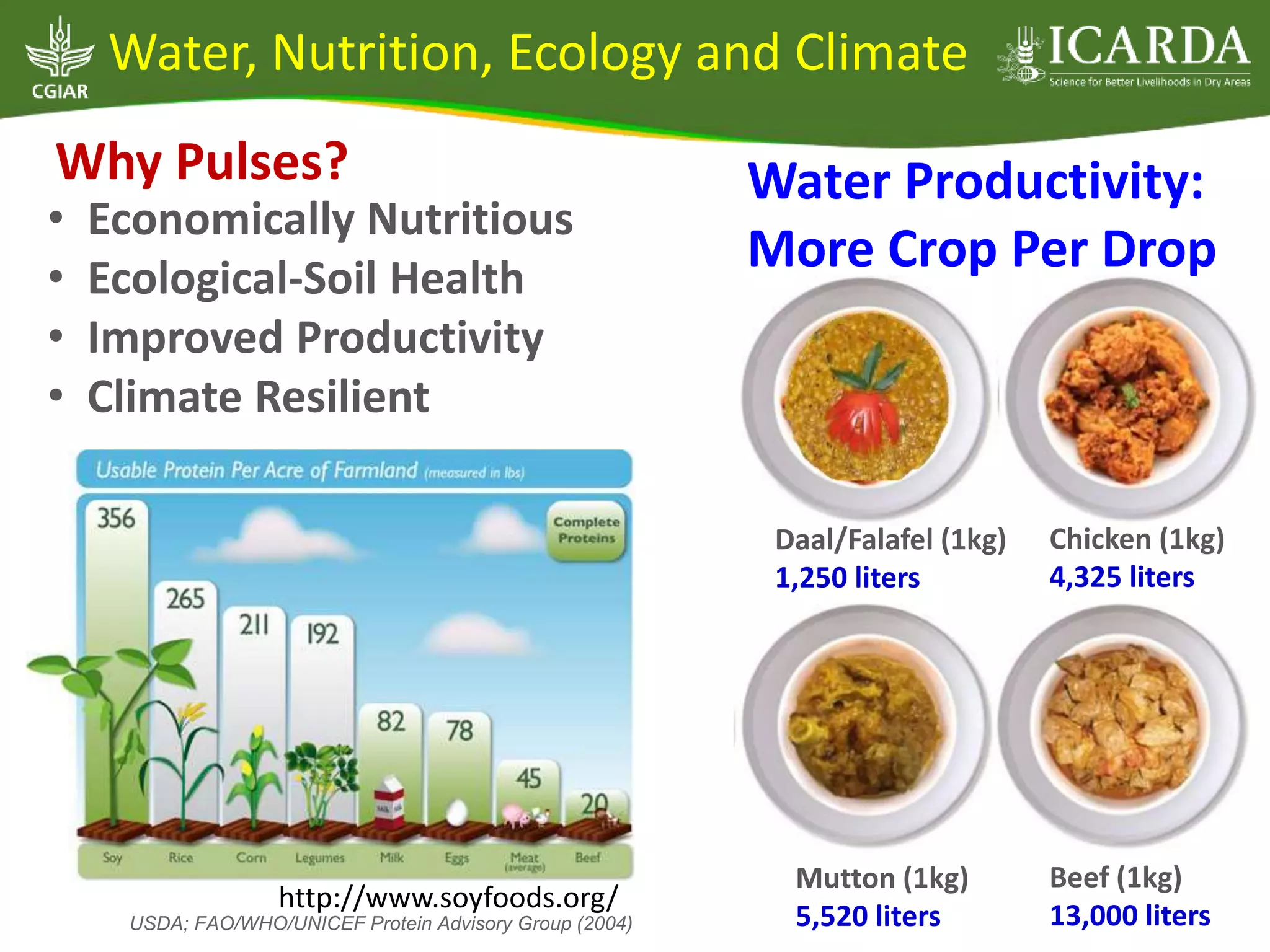
Daal/Falafel (1kg)
1,250 liters
Chicken (1kg)
4,325 liters
Mutton (1kg)
5,520 liters
Beef (1kg)
13,000 liters
Water, Nutrition, Ecology and Climate
• Economically Nutritious
• Ecological-Soil Health
• Improved Productivity
• Climate Resilient
Why Pulses?
http://www.soyfoods.org/
USDA; FAO/WHO/UNICEF Protein Advisory Group (2004)
Water Productivity:
More Crop Per Drop
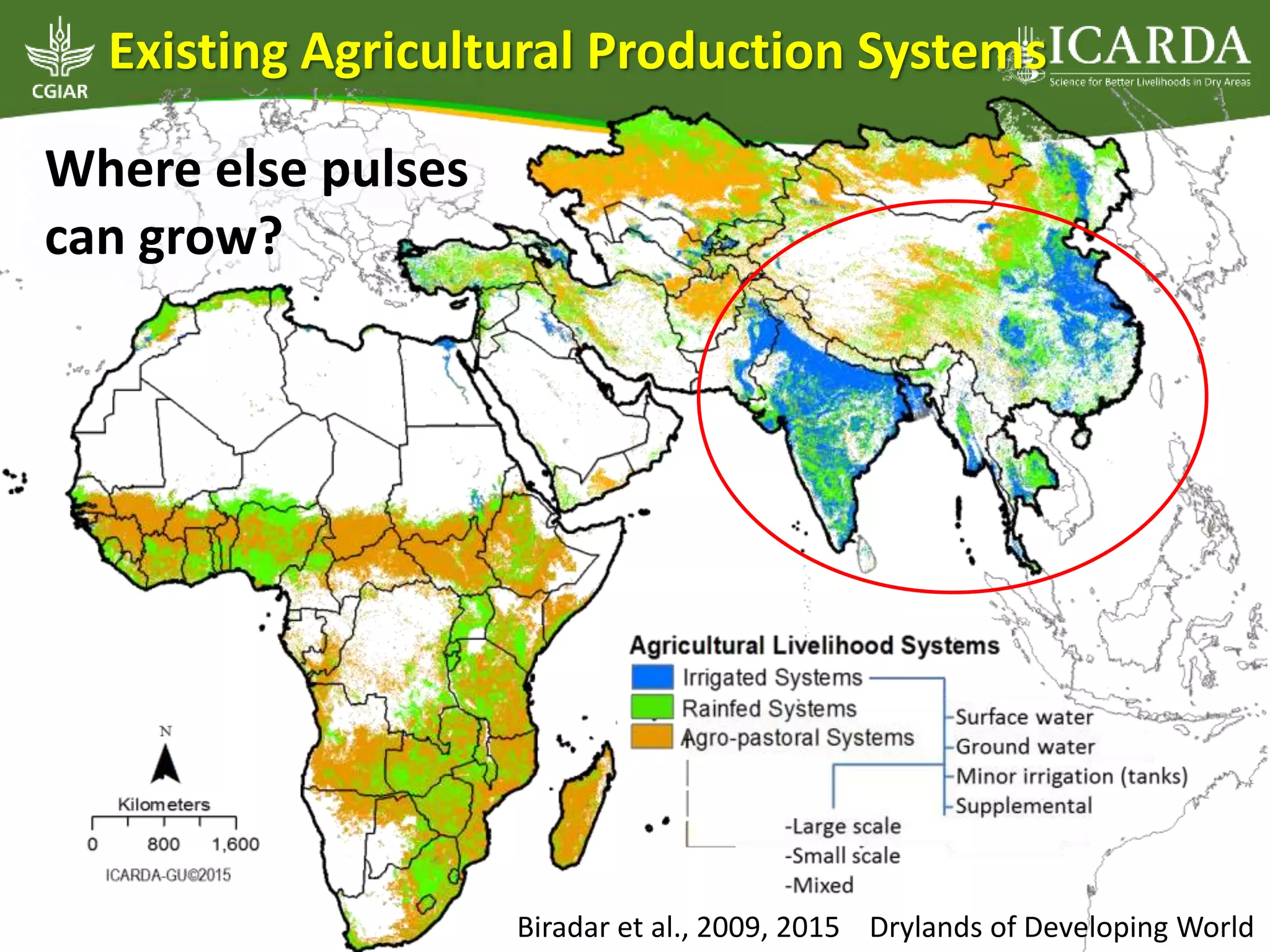
Existing Agricultural Production Systems
Drylands of Developing World
Where else pulses
can grow?
Biradar et al., 2009, 2015
#/km2
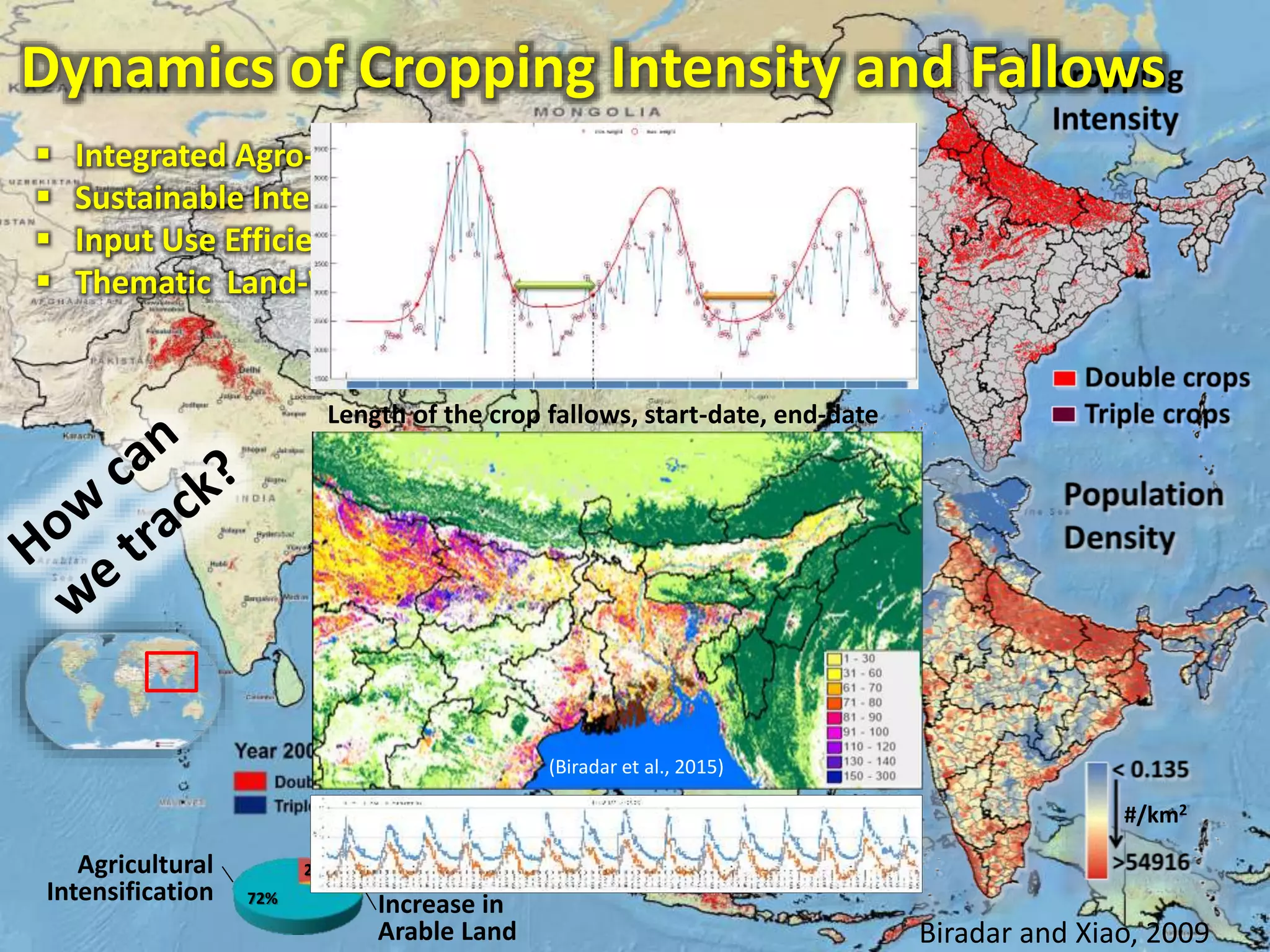
Dynamics of Cropping Intensity and Fallows
 Integrated Agro-Ecosystems
 Sustainable Intensification and Diversification
 Input Use Efficiency-Conservation Agriculture
 Thematic Land-Water-Climate Resilience
Agricultural
Intensification
Cropping
Intensity
Increase in
Arable Land
72%
21%
7%
Biradar and Xiao, 2009
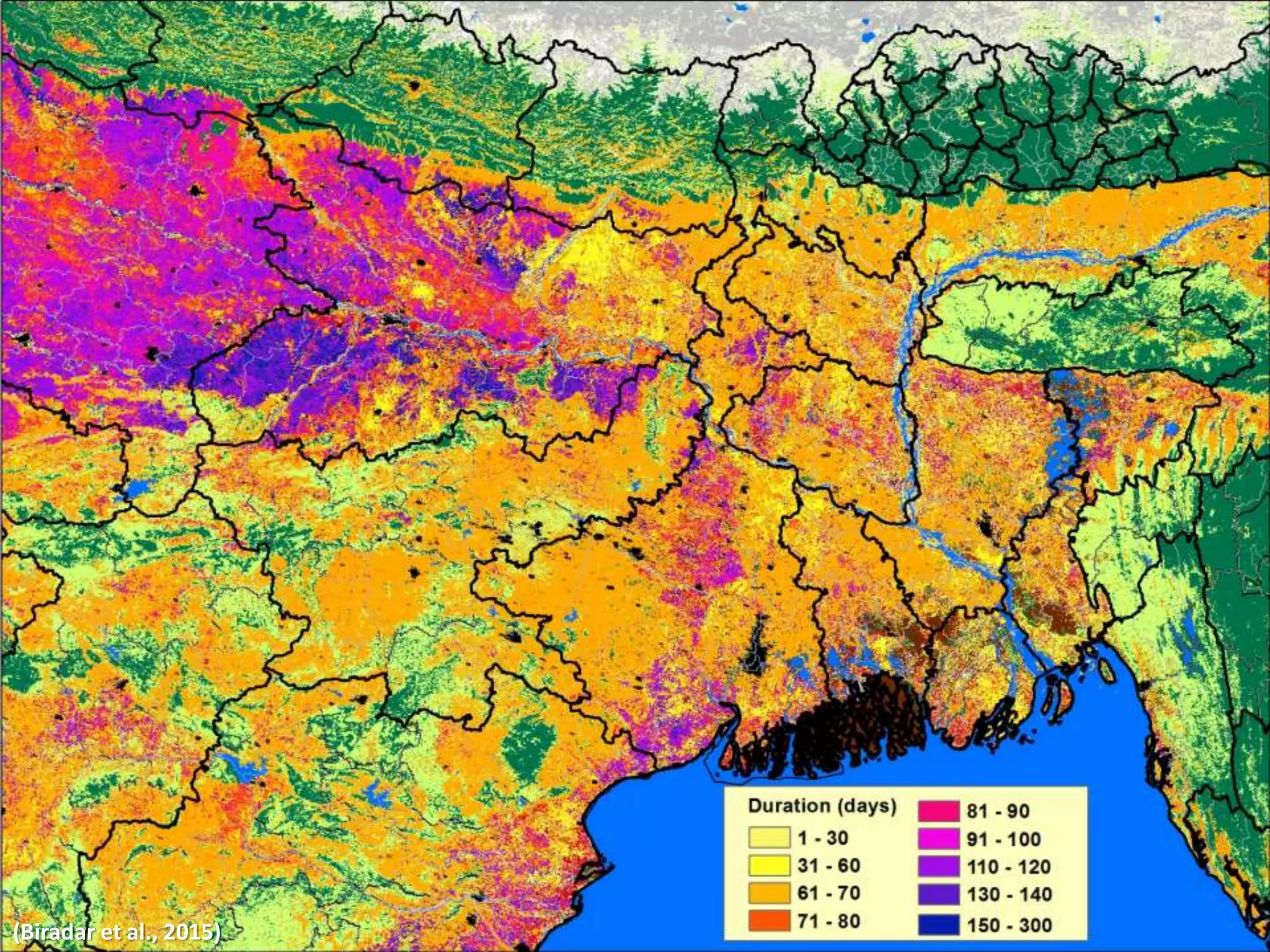
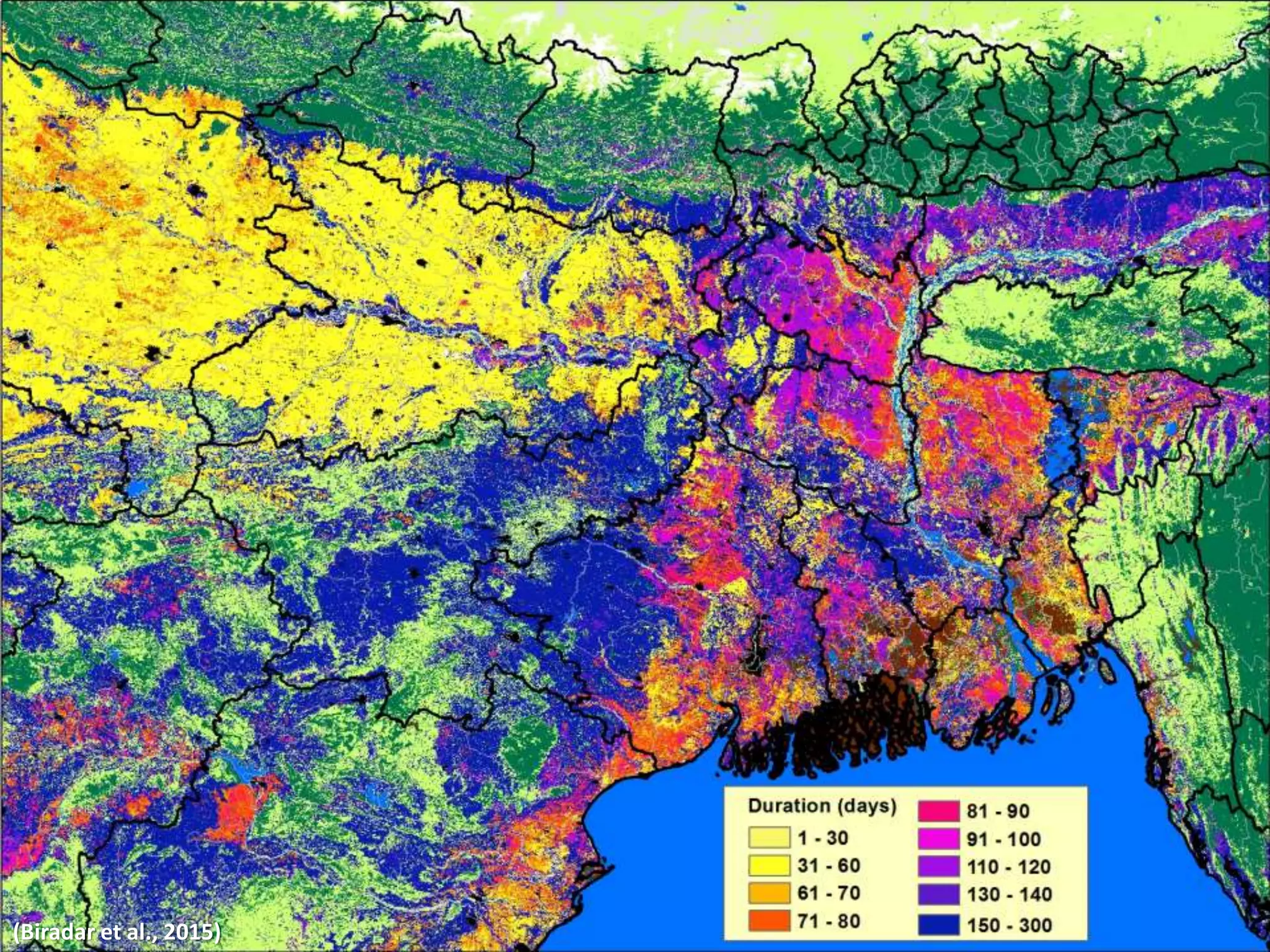
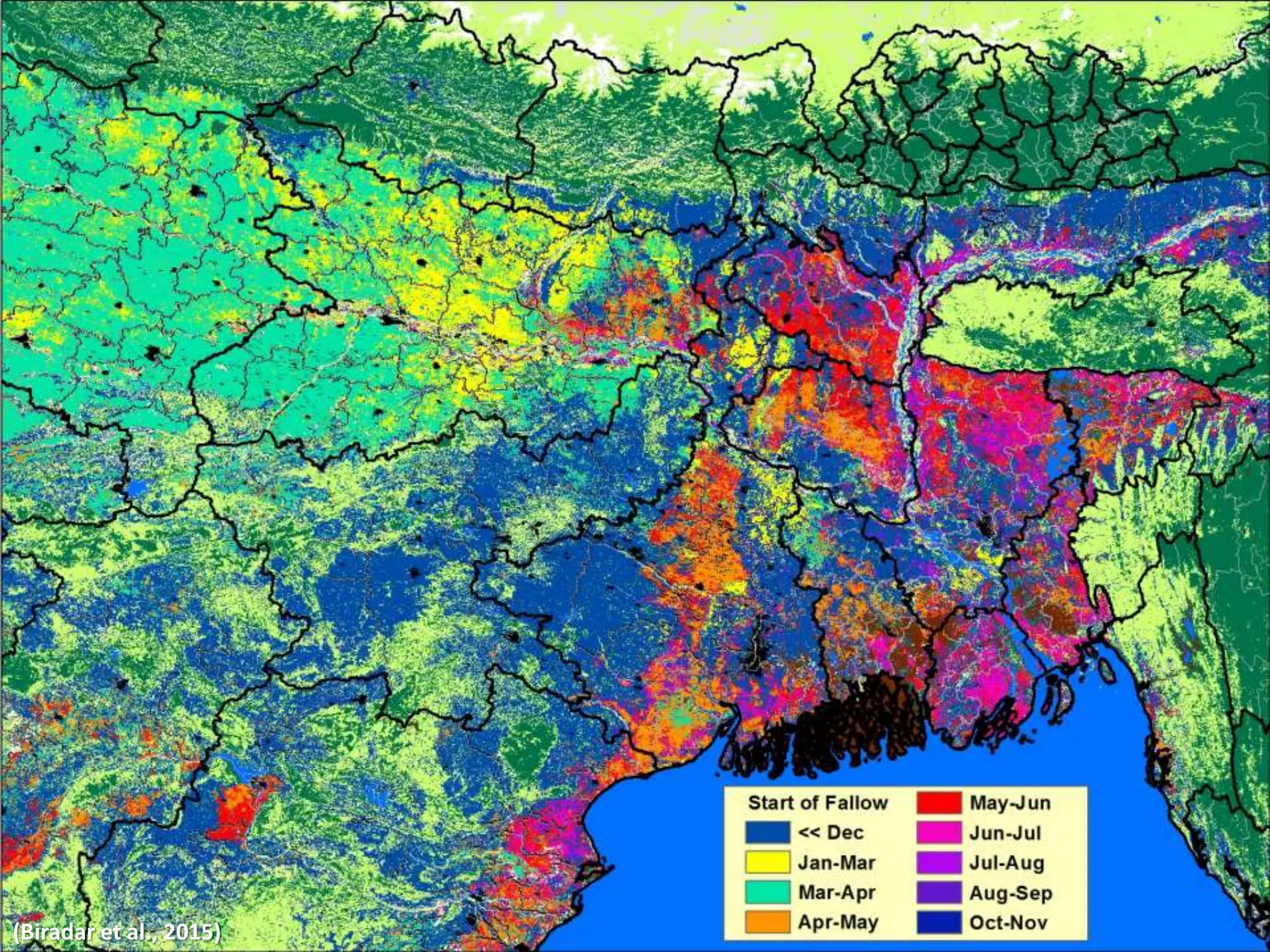
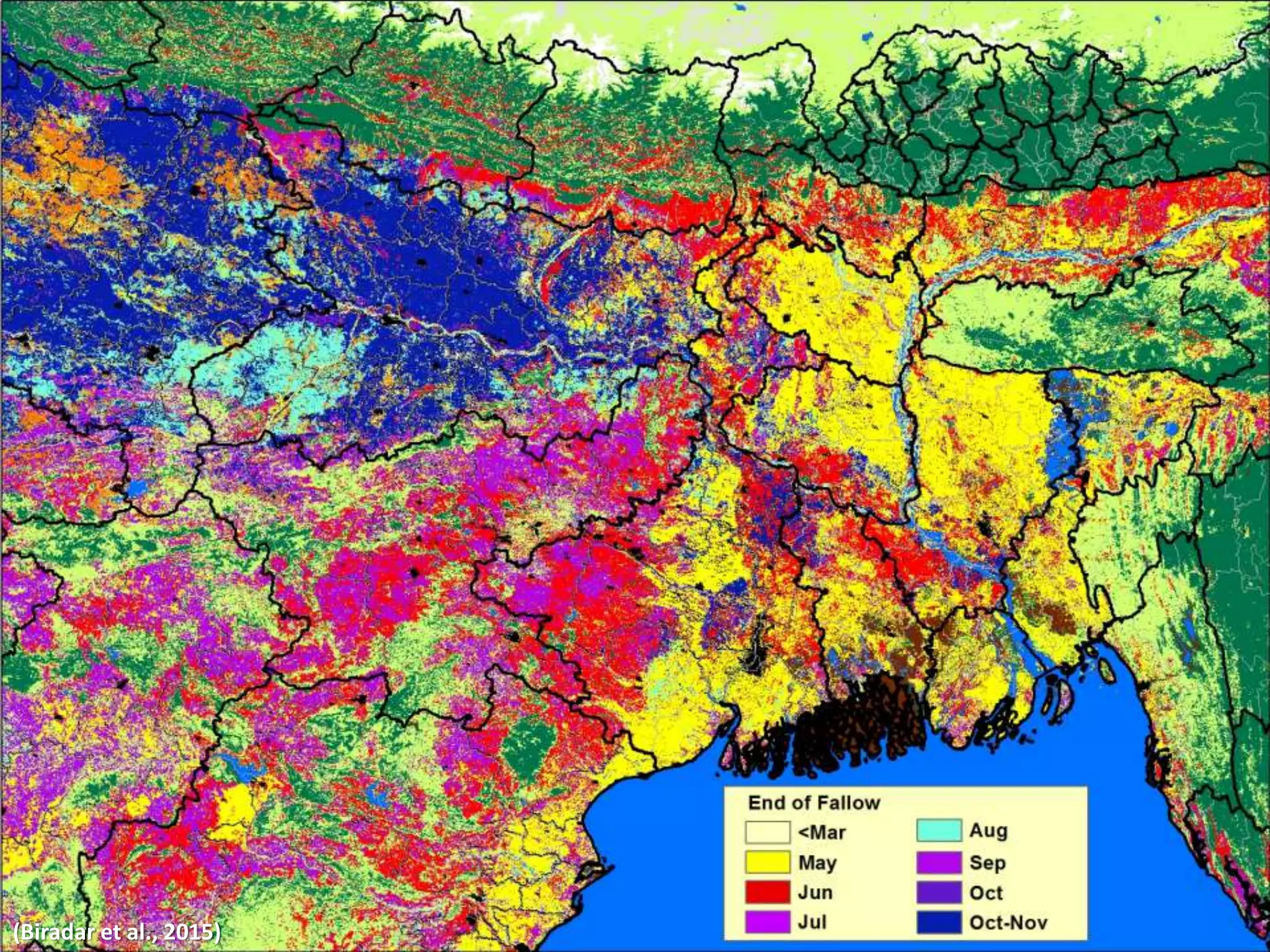
Length of the crop fallows, start-date, end-date
(Biradar et al., 2015)
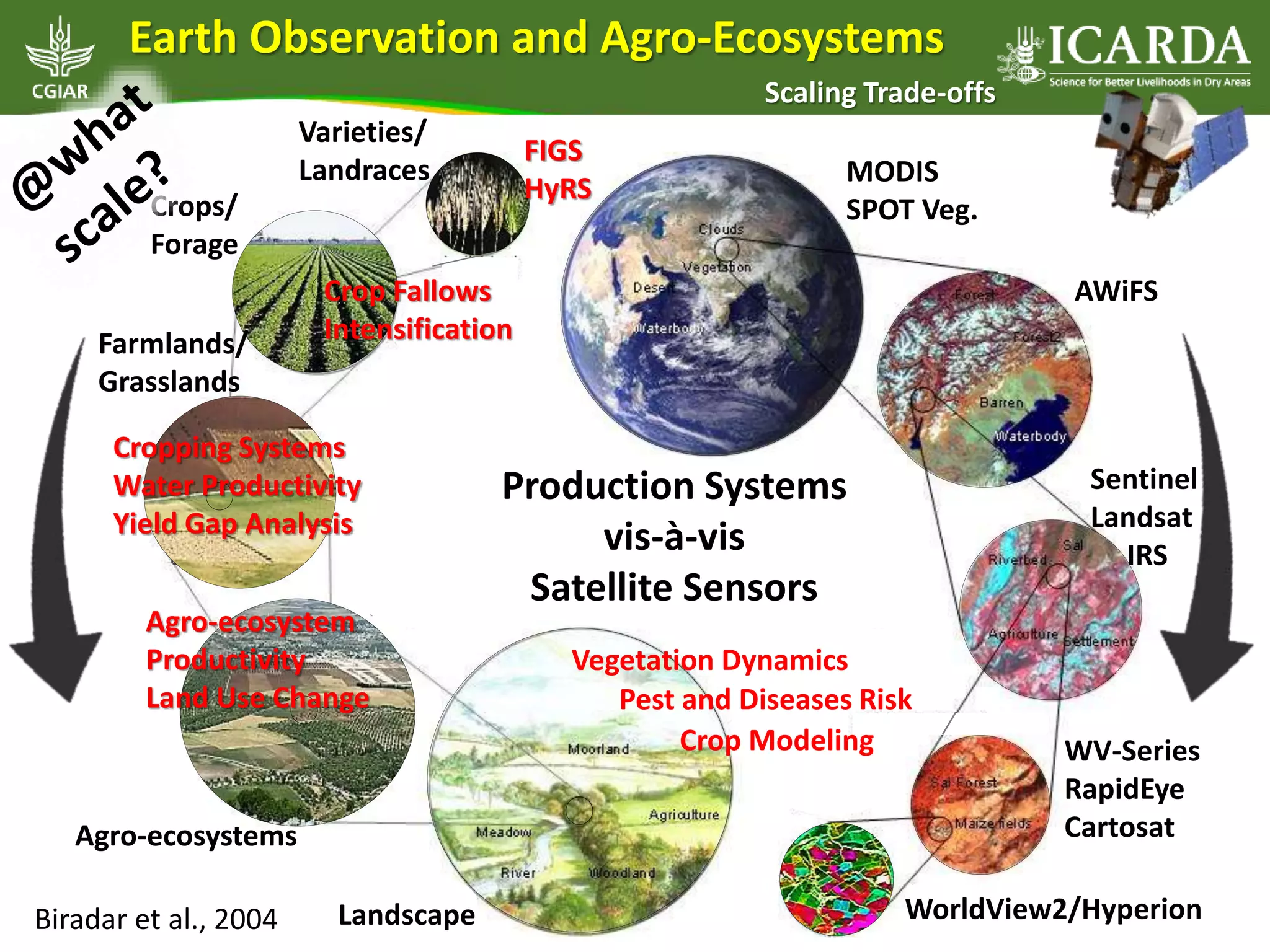
Agro-Ecosystems
vis-à-vis
Satellite Sensors
MODIS
SPOT Veg.
AWiFS
Sentinel
Landsat
IRS
WV-Series
RapidEye
Cartosat
WorldView2/HyperionLandscape
Agro-ecosystems
Farmlands/
Grasslands
Crops/
Forage
Varieties/
Landraces
Production Systems
vis-à-vis
Satellite Sensors
Earth Observation and Agro-Ecosystems
Scaling Trade-offs
FIGS
HyRS
Vegetation Dynamics
Agro-ecosystem
Productivity
Land Use Change
Cropping Systems
Water Productivity
Yield Gap Analysis
Crop Fallows
Intensification
Pest and Diseases Risk
Crop Modeling
Biradar et al., 2004
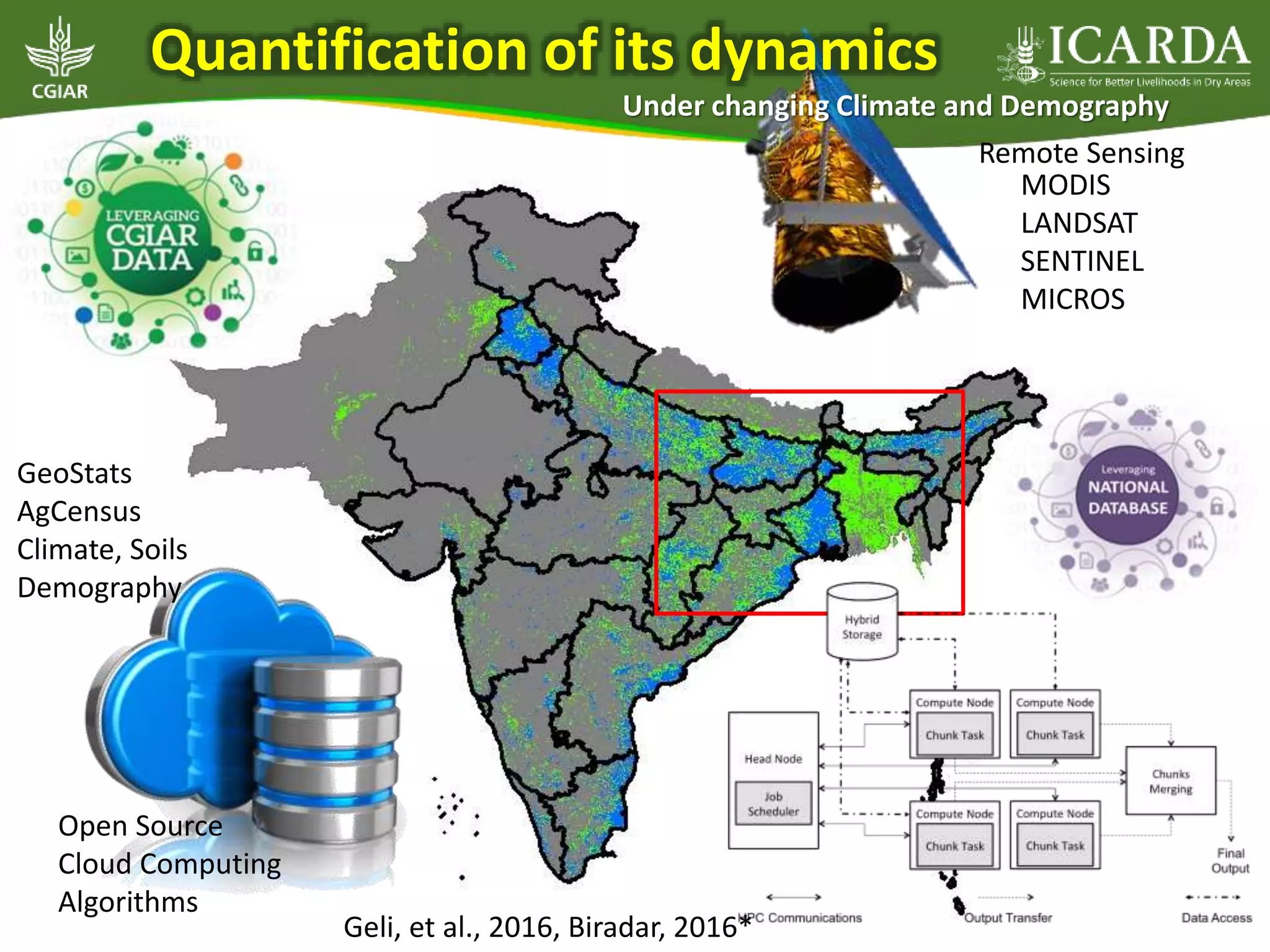
MODIS
LANDSAT
SENTINEL
MICROS
GeoStats
AgCensus
Climate, Soils
Demography
Remote Sensing
Open Source
Cloud Computing
Algorithms
Geli, et al., 2016, Biradar, 2016*
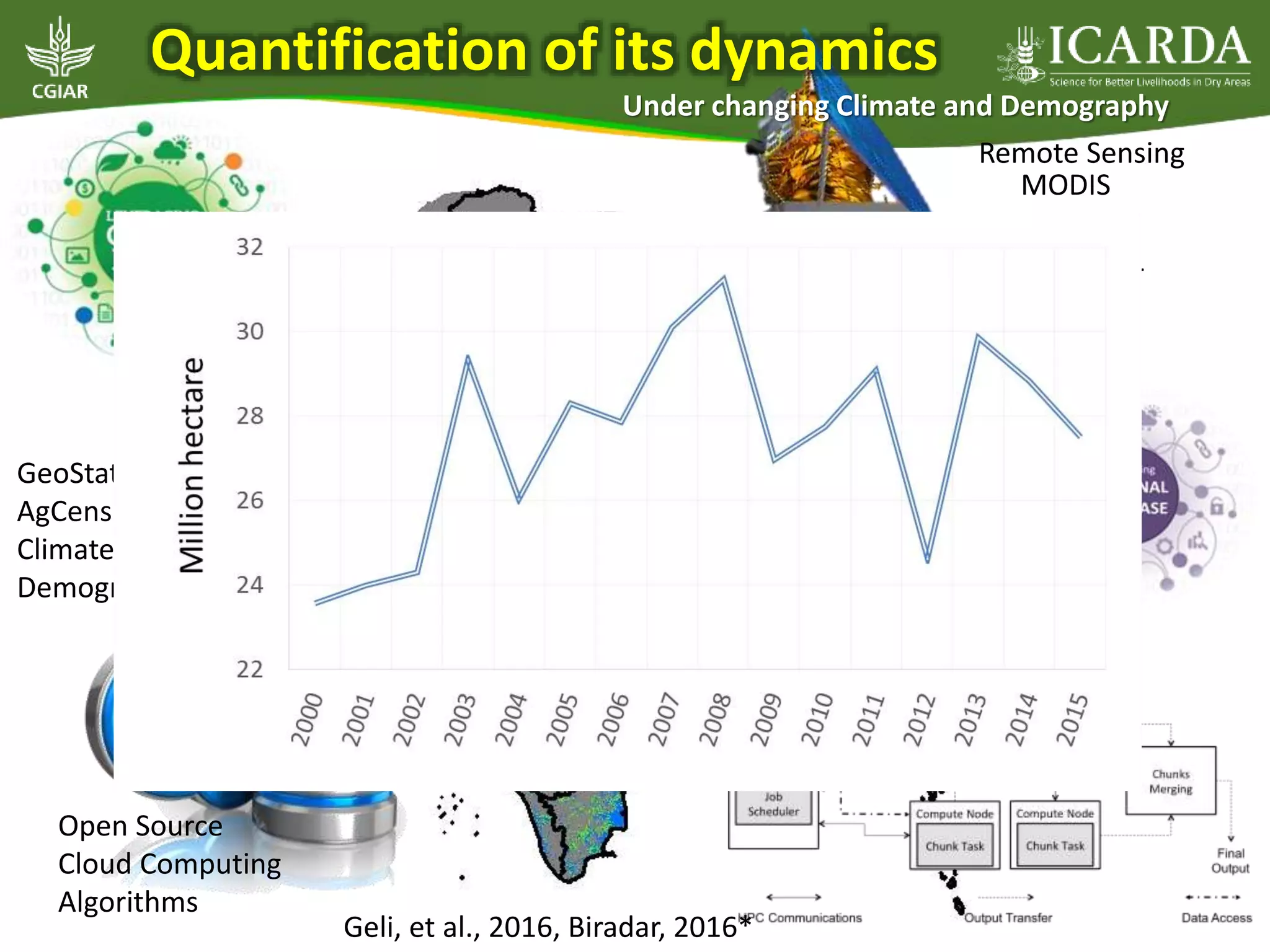
Quantification of its dynamics
Under changing Climate and Demography
MODIS
LANDSAT
SENTINEL
MICROS
GeoStats
AgCensus
Climate, Soils
Demography
Remote Sensing
Open Source
Cloud Computing
Algorithms
Geli, et al., 2016, Biradar, 2016*
Quantification of its dynamics
Under changing Climate and Demography
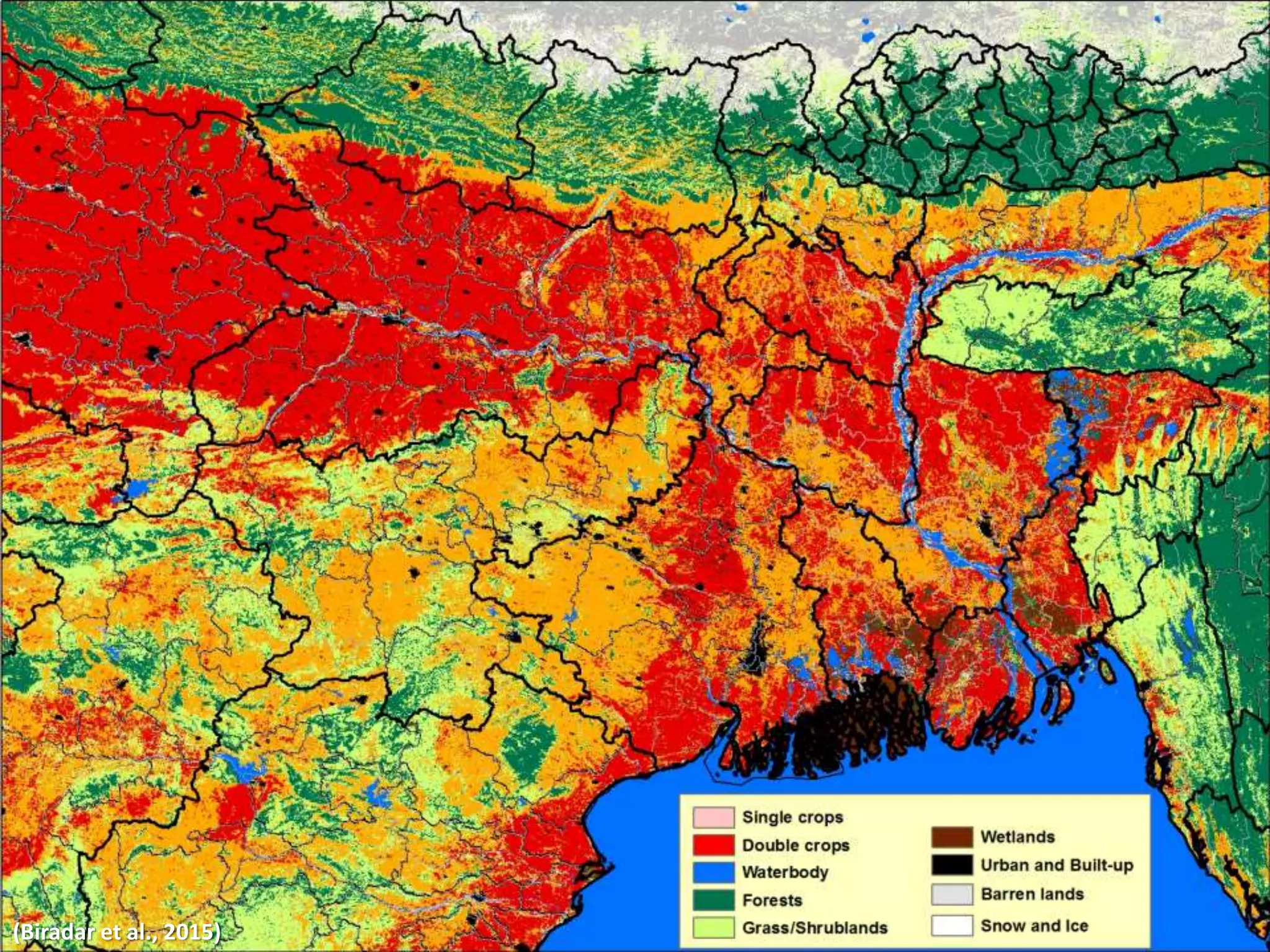
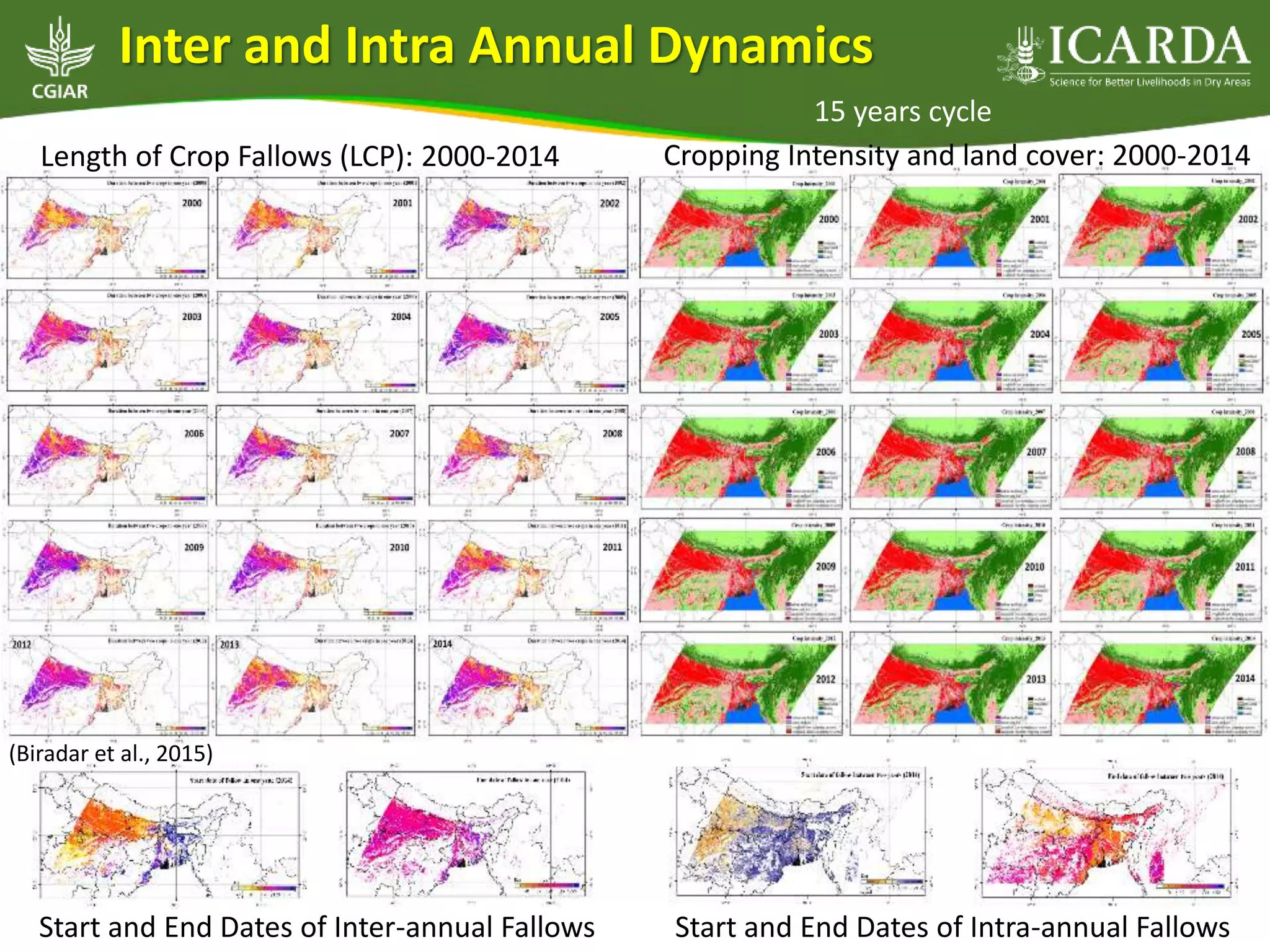
(Biradar et al., 2015)
Start and End Dates of Inter-annual Fallows Start and End Dates of Intra-annual Fallows
Length of Crop Fallows (LCP): 2000-2014 Cropping Intensity and land cover: 2000-2014
Inter and Intra Annual Dynamics
15 years cycle
(Biradar et al., 2015)
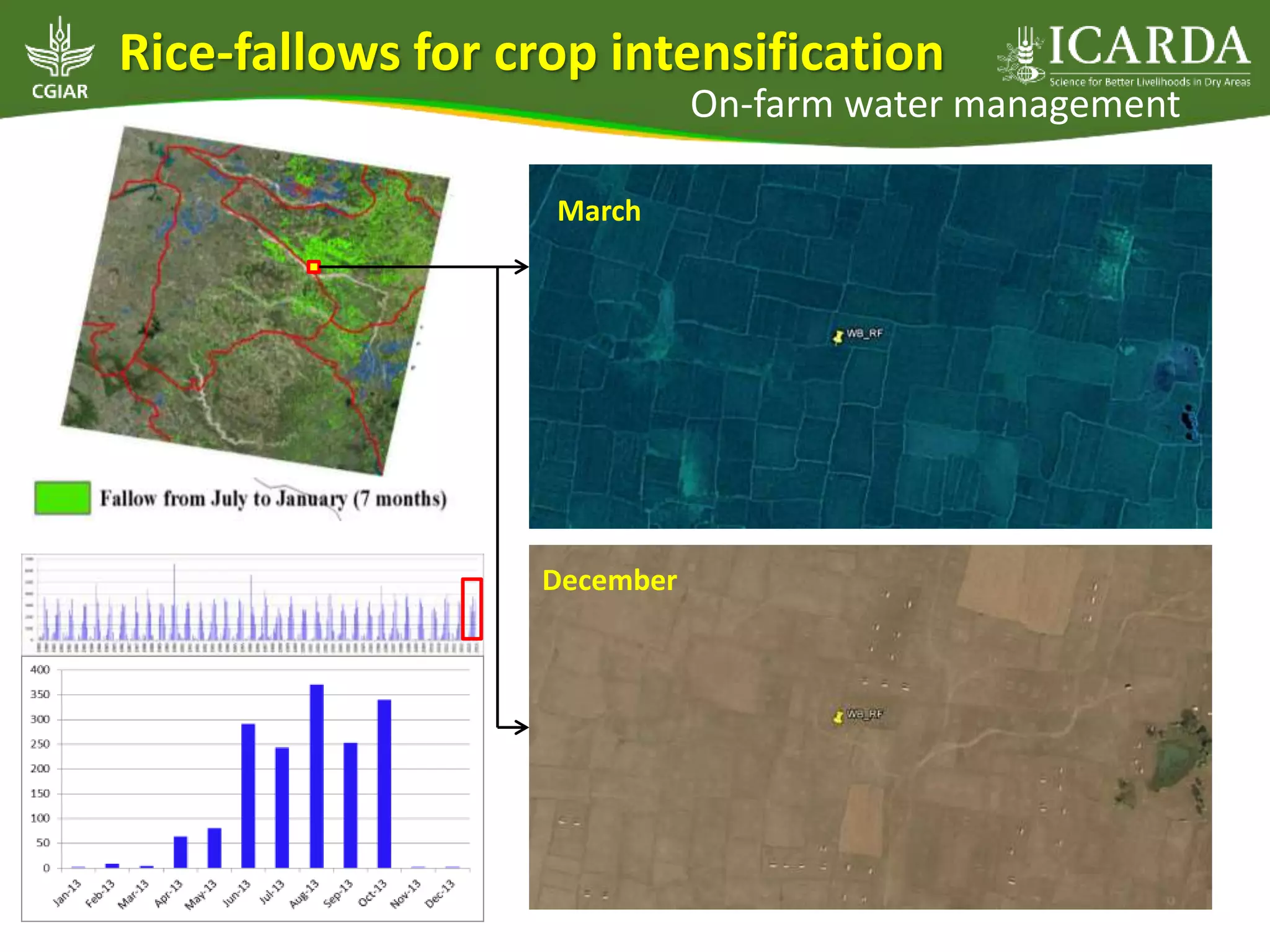
March
December
On-farm water management
Rice-fallows for crop intensification
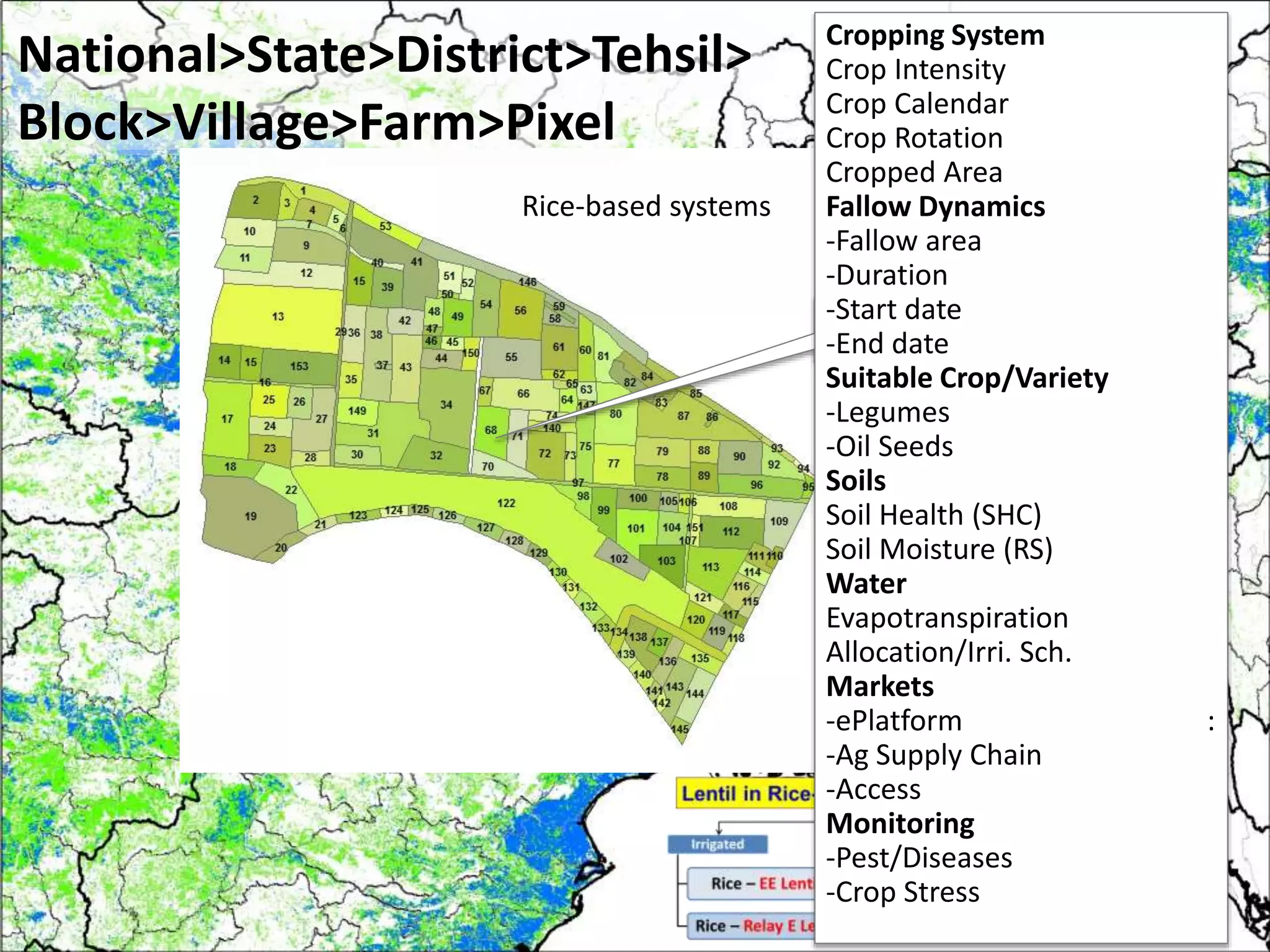
Farm Level
(Cadastral/Khasra)
Rice-based systems
Cropping System
Crop Intensity
Crop Calendar
Crop Rotation
Cropped Area
Fallow Dynamics
-Fallow area
-Duration
-Start date
-End date
Suitable Crop/Variety
-Legumes
-Oil Seeds
Soils
Soil Health (SHC)
Soil Moisture (RS)
Water
Evapotranspiration
Allocation/Irri. Sch.
Markets
-ePlatform :
-Ag Supply Chain
-Access
Monitoring
-Pest/Diseases
-Crop Stress
National>State>District>Tehsil>
Block>Village>Farm>Pixel
Key developments and automation
1. Improved algorithms for mapping
crop fallows and cropping intensity
and crop calendar using earth
observation data from 2000-present
2. Historical to current land use and
land cover dynamics
3. Crop fallows, length of the crop
fallows, start date and end date of
the crop fallows and crop
intensification from last 15 years
4. Development of the cropping-
season-wise vegetation analysis
• Kharif season
• Rabi season
• Zaid-kharif and
• Zaid-rabi seasons
5. Development of open access
data/products visualization and
validation tool (beta)
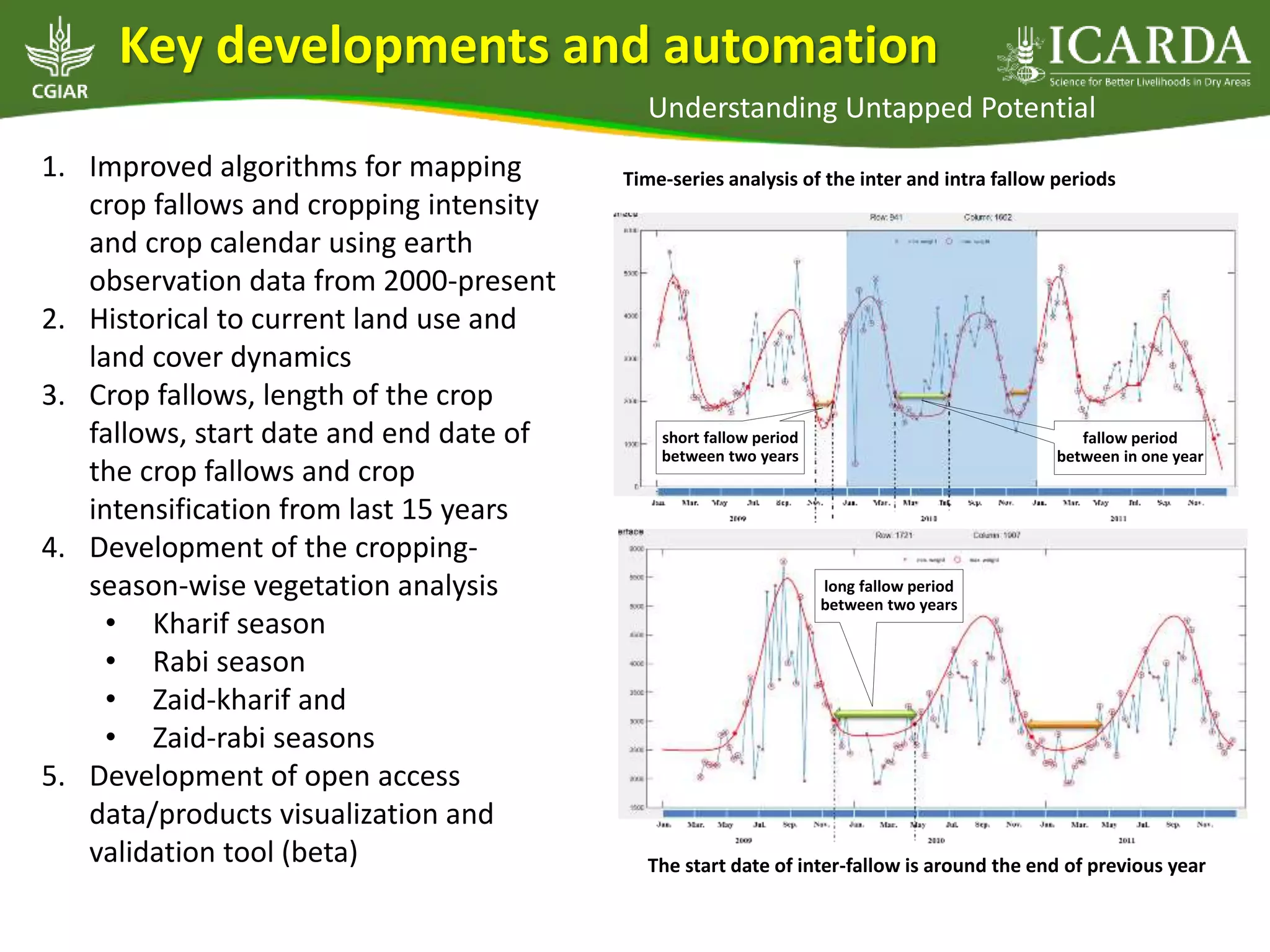
short fallow period
between two years
fallow period
between in one year
The start date of inter-fallow is around the end of previous year
long fallow period
between two years
Time-series analysis of the inter and intra fallow periods
Understanding Untapped Potential
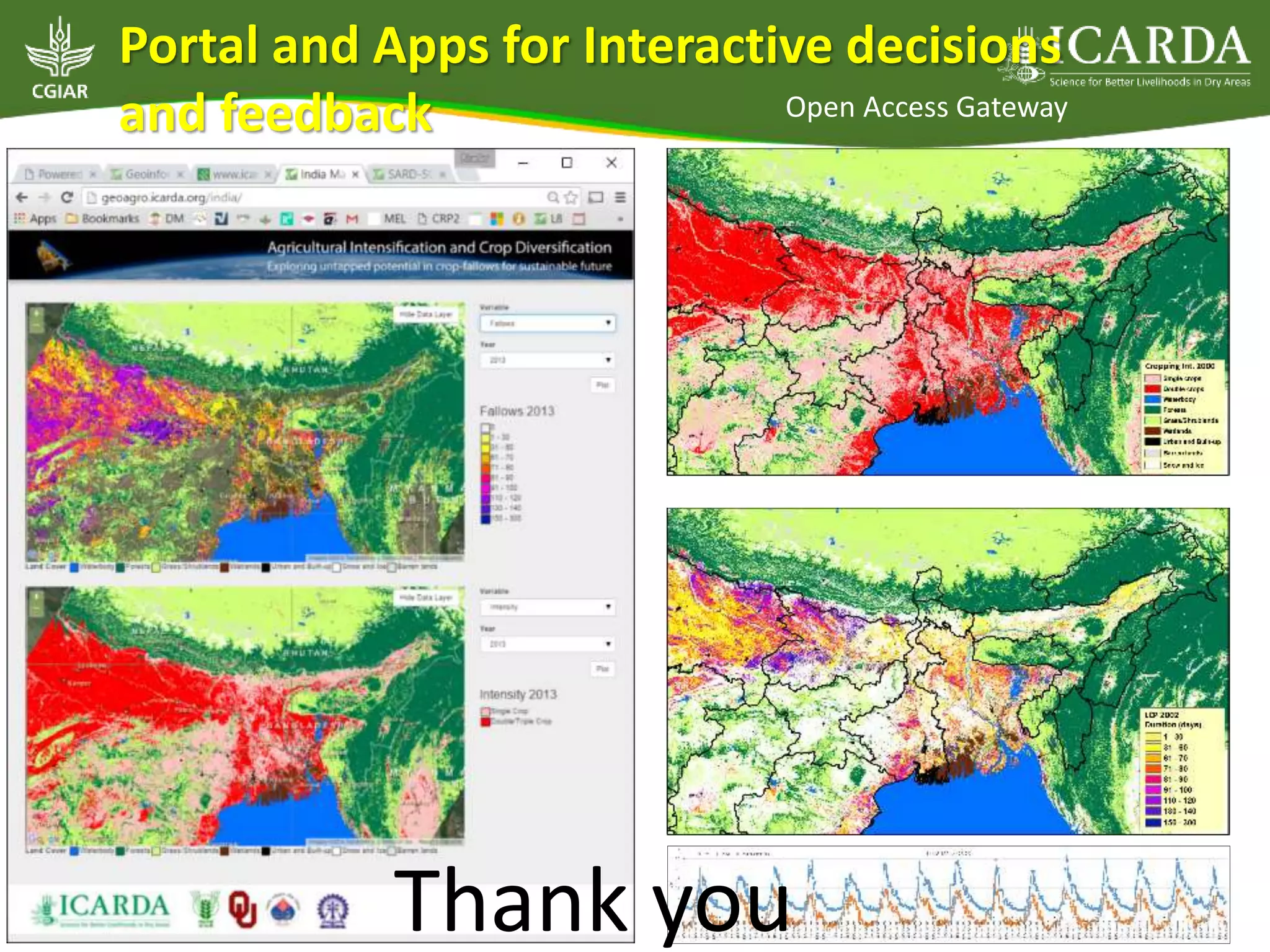
Portal and Apps for Interactive decisions
and feedback Open Access Gateway
Thank you

Spatial Big Data Analytics for Intensification of Pulses: Exploring untapped potential in crop-fallows for sustainable intensification and diversification

  • 1.
    Chandrashekhar Biradar, PhD PrincipalScientist (Agro-Ecosystems) Head-Geoinformatics Unit c.biradar@cgiar.org Biradar, C., Singh, R., Geli, Z., Xiao, X., Sarker, A., Dong, J., Singh, M., Atassi, L., Omary, J., Khaled, E., Saharawat, Y., and Noble, A.
  • 2.
    Daal/Falafel (1kg) 1,250 liters Chicken(1kg) 4,325 liters Mutton (1kg) 5,520 liters Beef (1kg) 13,000 liters Water, Nutrition, Ecology and Climate • Economically Nutritious • Ecological-Soil Health • Improved Productivity • Climate Resilient Why Pulses? http://www.soyfoods.org/ USDA; FAO/WHO/UNICEF Protein Advisory Group (2004) Water Productivity: More Crop Per Drop
  • 3.
    Existing Agricultural ProductionSystems Drylands of Developing World Where else pulses can grow? Biradar et al., 2009, 2015
  • 4.
    #/km2 Dynamics of CroppingIntensity and Fallows  Integrated Agro-Ecosystems  Sustainable Intensification and Diversification  Input Use Efficiency-Conservation Agriculture  Thematic Land-Water-Climate Resilience Agricultural Intensification Cropping Intensity Increase in Arable Land 72% 21% 7% Biradar and Xiao, 2009 Length of the crop fallows, start-date, end-date (Biradar et al., 2015)
  • 5.
    Agro-Ecosystems vis-à-vis Satellite Sensors MODIS SPOT Veg. AWiFS Sentinel Landsat IRS WV-Series RapidEye Cartosat WorldView2/HyperionLandscape Agro-ecosystems Farmlands/ Grasslands Crops/ Forage Varieties/ Landraces ProductionSystems vis-à-vis Satellite Sensors Earth Observation and Agro-Ecosystems Scaling Trade-offs FIGS HyRS Vegetation Dynamics Agro-ecosystem Productivity Land Use Change Cropping Systems Water Productivity Yield Gap Analysis Crop Fallows Intensification Pest and Diseases Risk Crop Modeling Biradar et al., 2004
  • 6.
    MODIS LANDSAT SENTINEL MICROS GeoStats AgCensus Climate, Soils Demography Remote Sensing OpenSource Cloud Computing Algorithms Geli, et al., 2016, Biradar, 2016* Quantification of its dynamics Under changing Climate and Demography
  • 7.
    MODIS LANDSAT SENTINEL MICROS GeoStats AgCensus Climate, Soils Demography Remote Sensing OpenSource Cloud Computing Algorithms Geli, et al., 2016, Biradar, 2016* Quantification of its dynamics Under changing Climate and Demography
  • 8.
  • 9.
  • 10.
  • 11.
  • 12.
  • 13.
    Start and EndDates of Inter-annual Fallows Start and End Dates of Intra-annual Fallows Length of Crop Fallows (LCP): 2000-2014 Cropping Intensity and land cover: 2000-2014 Inter and Intra Annual Dynamics 15 years cycle (Biradar et al., 2015)
  • 14.
  • 15.
    Farm Level (Cadastral/Khasra) Rice-based systems CroppingSystem Crop Intensity Crop Calendar Crop Rotation Cropped Area Fallow Dynamics -Fallow area -Duration -Start date -End date Suitable Crop/Variety -Legumes -Oil Seeds Soils Soil Health (SHC) Soil Moisture (RS) Water Evapotranspiration Allocation/Irri. Sch. Markets -ePlatform : -Ag Supply Chain -Access Monitoring -Pest/Diseases -Crop Stress National>State>District>Tehsil> Block>Village>Farm>Pixel
  • 16.
    Key developments andautomation 1. Improved algorithms for mapping crop fallows and cropping intensity and crop calendar using earth observation data from 2000-present 2. Historical to current land use and land cover dynamics 3. Crop fallows, length of the crop fallows, start date and end date of the crop fallows and crop intensification from last 15 years 4. Development of the cropping- season-wise vegetation analysis • Kharif season • Rabi season • Zaid-kharif and • Zaid-rabi seasons 5. Development of open access data/products visualization and validation tool (beta) short fallow period between two years fallow period between in one year The start date of inter-fallow is around the end of previous year long fallow period between two years Time-series analysis of the inter and intra fallow periods Understanding Untapped Potential
  • 17.
    Portal and Appsfor Interactive decisions and feedback Open Access Gateway Thank you

Editor's Notes

  • #5 Cropping Intensity is another promising area to increase the agricultural production… eco-intensification, increased land and water productivity