Enhancing Global Food Resources:
CGIAR Strategy and its future Portfolio of
Programs 2017–2030
presented to the
Second International Forum on Global Food Resources,
5-6 October 2016, Hokkaido University
by Peter Gardiner, CGIAR System Management Office, France
What is CGIAR?
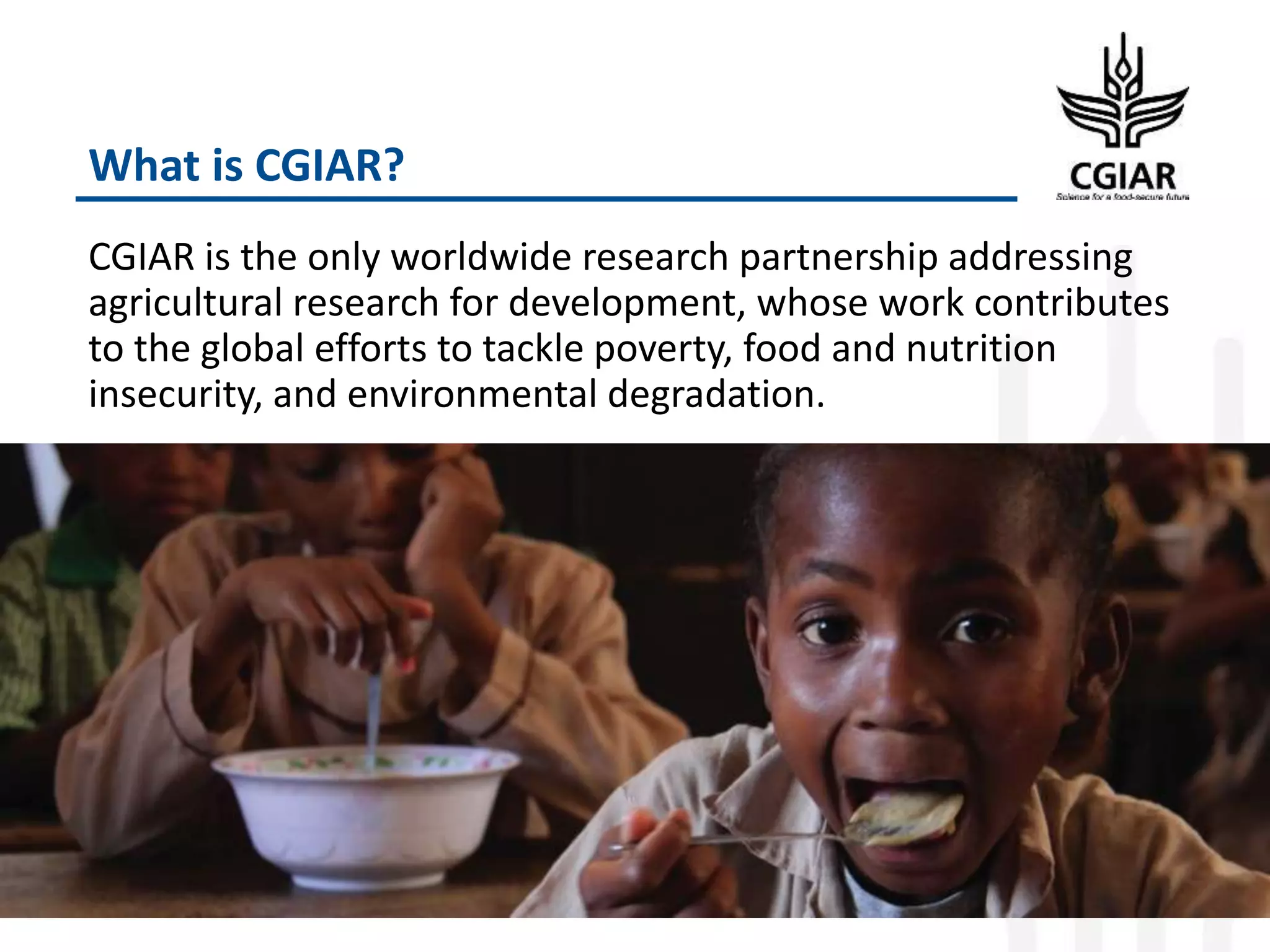
CGIAR is the only worldwide research partnership addressing
agricultural research for development, whose work contributes
to the global efforts to tackle poverty, food and nutrition
insecurity, and environmental degradation.
1
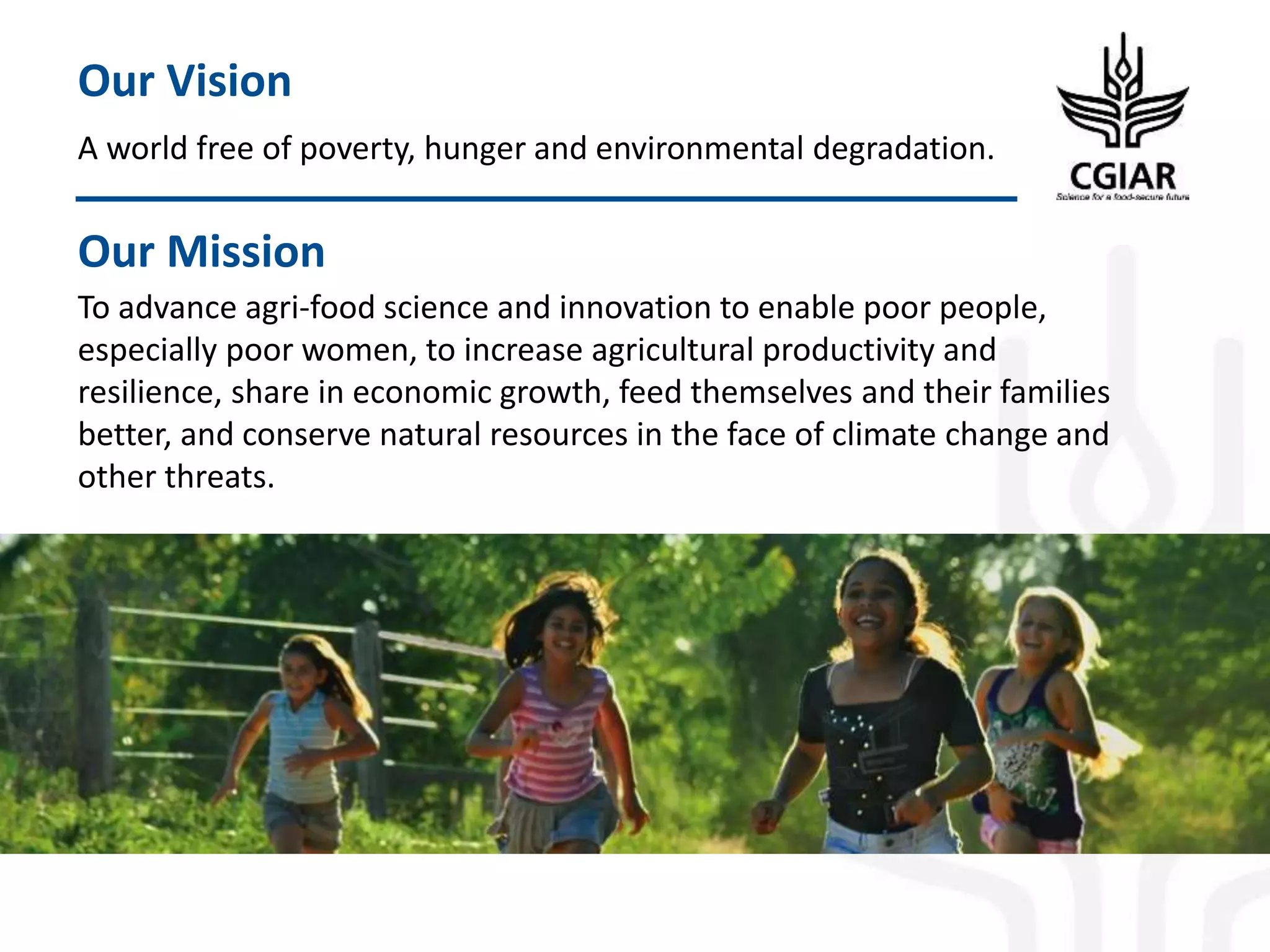
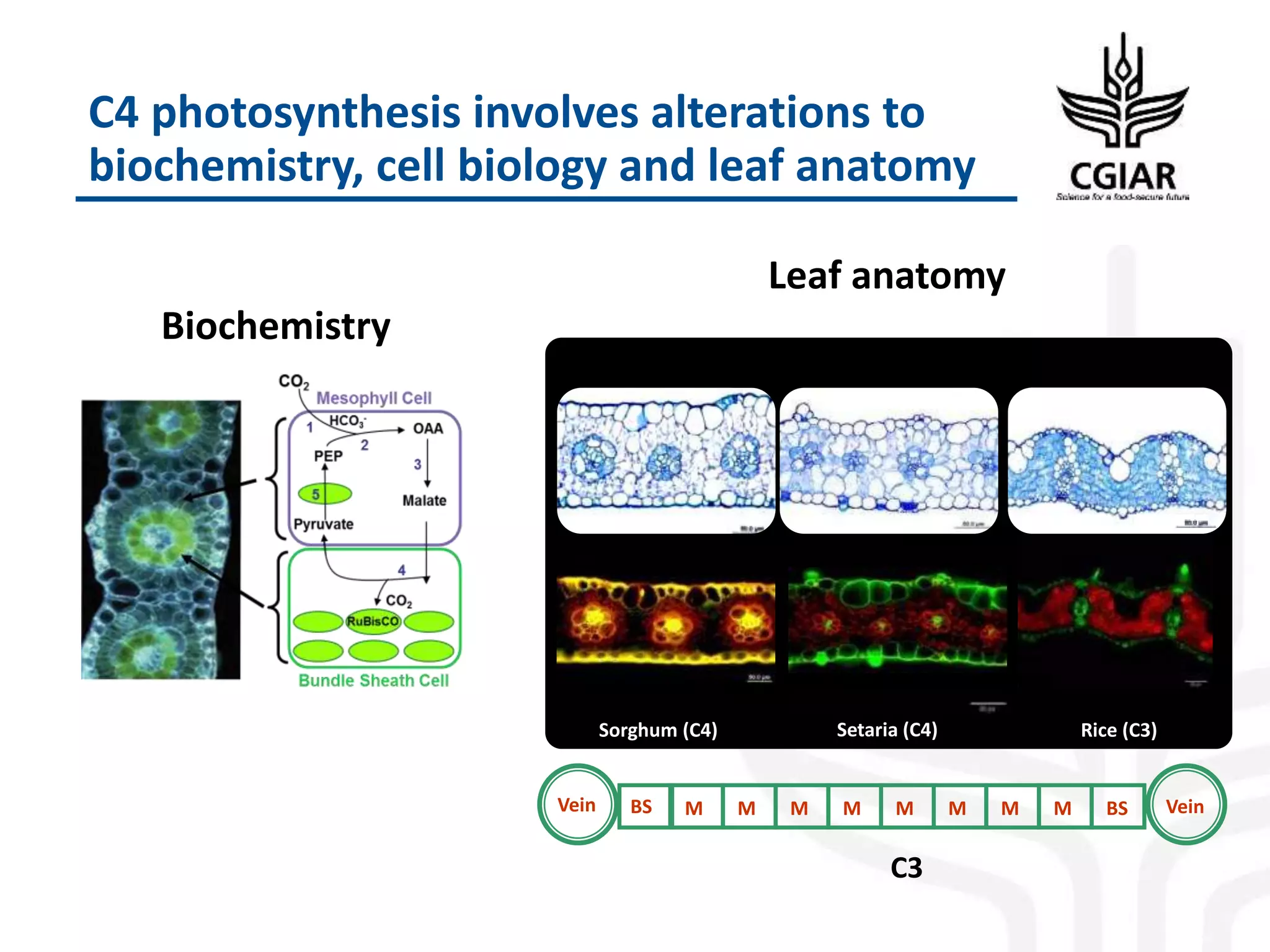
A world free of poverty, hunger and environmental degradation.
Our Vision
To advance agri-food science and innovation to enable poor people,
especially poor women, to increase agricultural productivity and
resilience, share in economic growth, feed themselves and their families
better, and conserve natural resources in the face of climate change and
other threats.
Our Mission
CGIAR key facts:
3
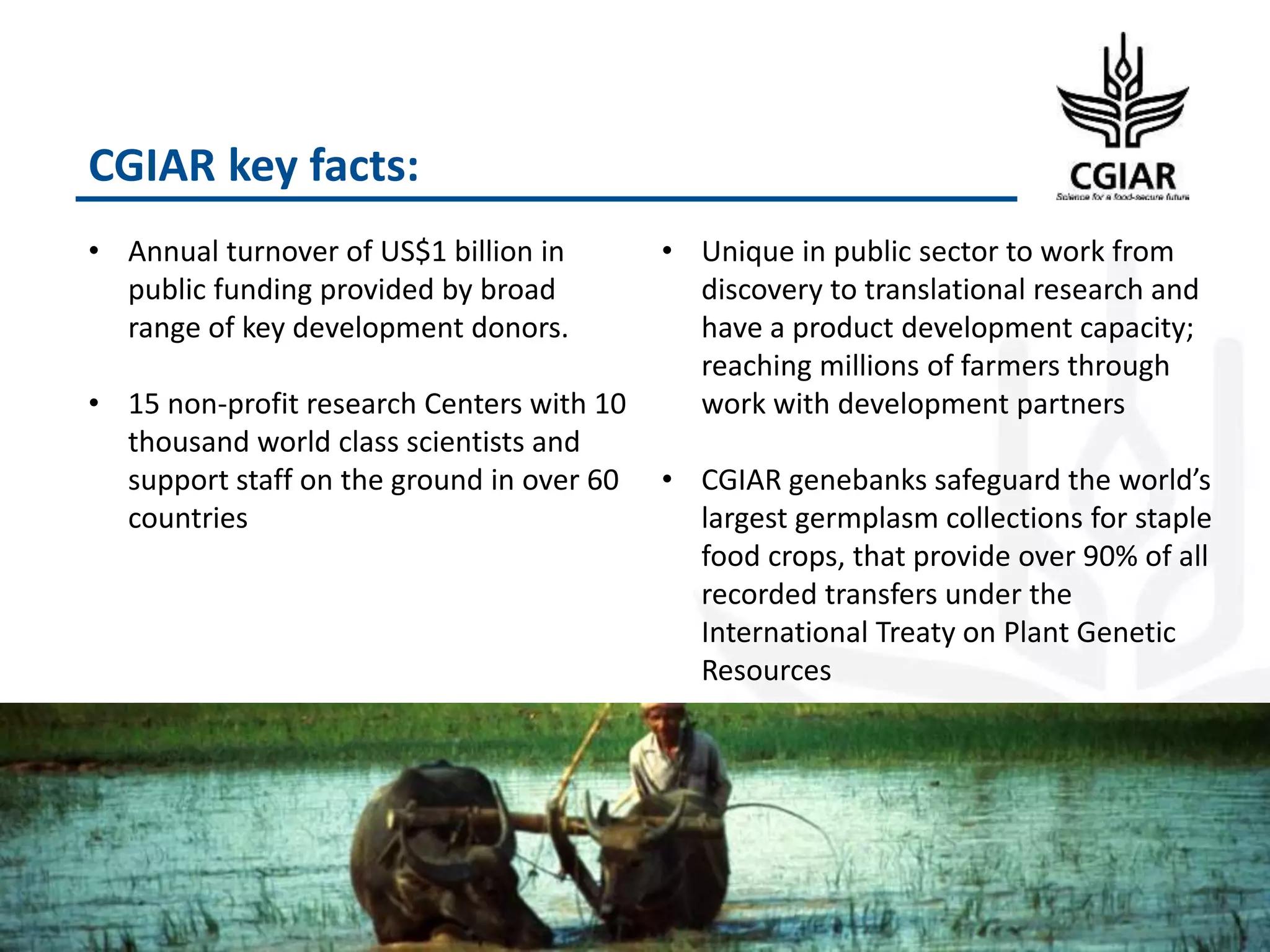
• Annual turnover of US$1 billion in
public funding provided by broad
range of key development donors.
• 15 non-profit research Centers with 10
thousand world class scientists and
support staff on the ground in over 60
countries
• Unique in public sector to work from
discovery to translational research and
have a product development capacity;
reaching millions of farmers through
work with development partners
• CGIAR genebanks safeguard the world’s
largest germplasm collections for staple
food crops, that provide over 90% of all
recorded transfers under the
International Treaty on Plant Genetic
Resources
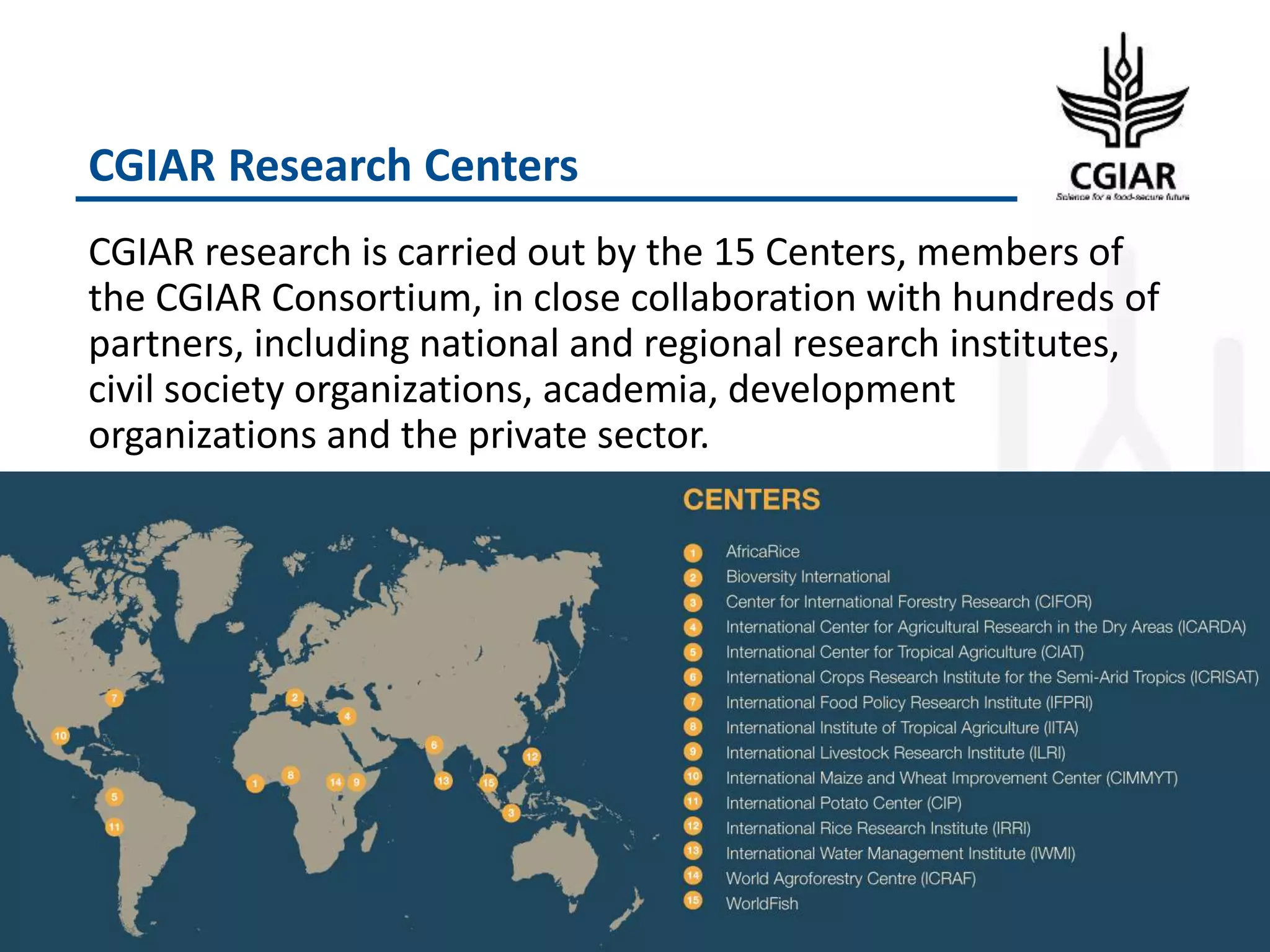
CGIAR Research Centers
CGIAR research is carried out by the 15 Centers, members of
the CGIAR Consortium, in close collaboration with hundreds of
partners, including national and regional research institutes,
civil society organizations, academia, development
organizations and the private sector.
4
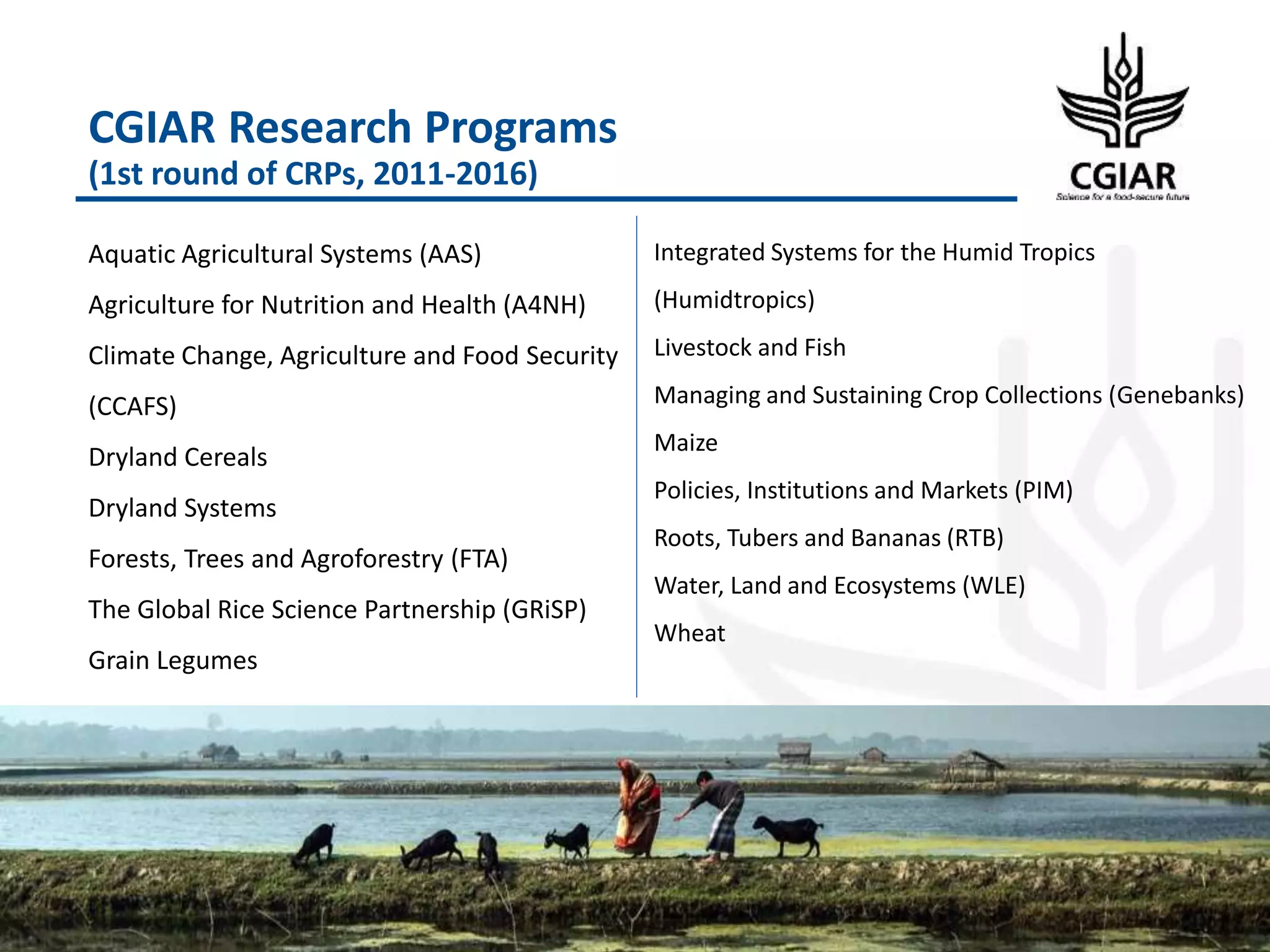
CGIAR Research Programs
(1st round of CRPs, 2011-2016)
5
Aquatic Agricultural Systems (AAS)
Agriculture for Nutrition and Health (A4NH)
Climate Change, Agriculture and Food Security
(CCAFS)
Dryland Cereals
Dryland Systems
Forests, Trees and Agroforestry (FTA)
The Global Rice Science Partnership (GRiSP)
Grain Legumes
Integrated Systems for the Humid Tropics
(Humidtropics)
Livestock and Fish
Managing and Sustaining Crop Collections (Genebanks)
Maize
Policies, Institutions and Markets (PIM)
Roots, Tubers and Bananas (RTB)
Water, Land and Ecosystems (WLE)
Wheat
New CGIAR technologies already in the field:
• Scuba rice, which can survive under water for two weeks, is protecting the harvests, incomes, and food
security more than 5 million farmers in Asia.
• New high-yielding, and more nutritious – biofortified - varieties of foods such as maize, cassava,
beans, pearl millet, rice, beans and orange sweet potato are targeted to reach 50 million consumers by
2018.
• AFLASAFE reduces aflatoxin contamination in African farmers fields by up to 90% - a product that has 4
atoxigenic strains of the fungus developed by CGIAR with USDA.
• Index-based crop and livestock drought insurance and seasonal weather forecasts now benefit millions
of poor rural households in Africa and Asia.
• Wheat stem rust -Ug99- resistant varieties have been made available, preventing disaster at a scale
affecting many millions of people. Maize lethal necrosis resistant varieties have been developed
through rapid cycling (4 years).
• Agroforestry: unfertilized maize yields under Faidherbia trees average 4.1 tonnes per hectare,
compared to 1.3 tonnes; in Niger, more than 1.2 million households have regenerated 200 million
fertilizer trees on their sorghum and millet fields across 5 million hectares.
• Brachiaria forages with Biological Nitrification Inhibition capacity have reduced greenhouse gas
emissions and improved nitrogen efficiency on 500 thousand hectares.
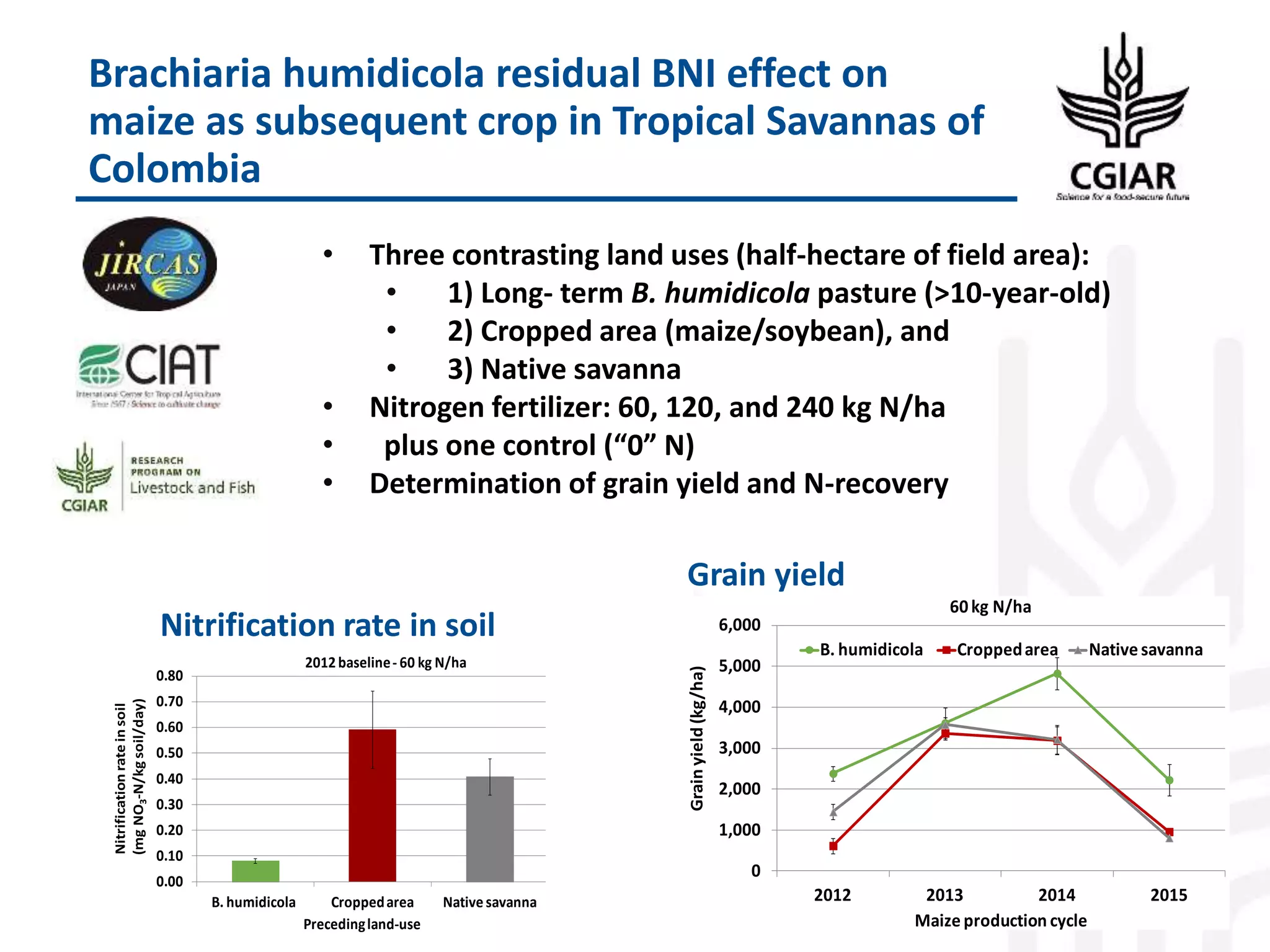
Brachiaria humidicola residual BNI effect on
maize as subsequent crop in Tropical Savannas of
Colombia
• Three contrasting land uses (half-hectare of field area):
• 1) Long- term B. humidicola pasture (>10-year-old)
• 2) Cropped area (maize/soybean), and
• 3) Native savanna
• Nitrogen fertilizer: 60, 120, and 240 kg N/ha
• plus one control (“0” N)
• Determination of grain yield and N-recovery
Grain yield
0
1,000
2,000
3,000
4,000
5,000
6,000
2012 2013 2014 2015
Grainyield(kg/ha)
Maize production cycle
60 kg N/ha
B. humidicola Croppedarea Native savanna
0.00
0.10
0.20
0.30
0.40
0.50
0.60
0.70
0.80
B. humidicola Croppedarea Native savanna
Nitrificationrateinsoil
(mgNO3-N/kgsoil/day)
Precedingland-use
2012baseline- 60 kg N/ha
Nitrification rate in soil
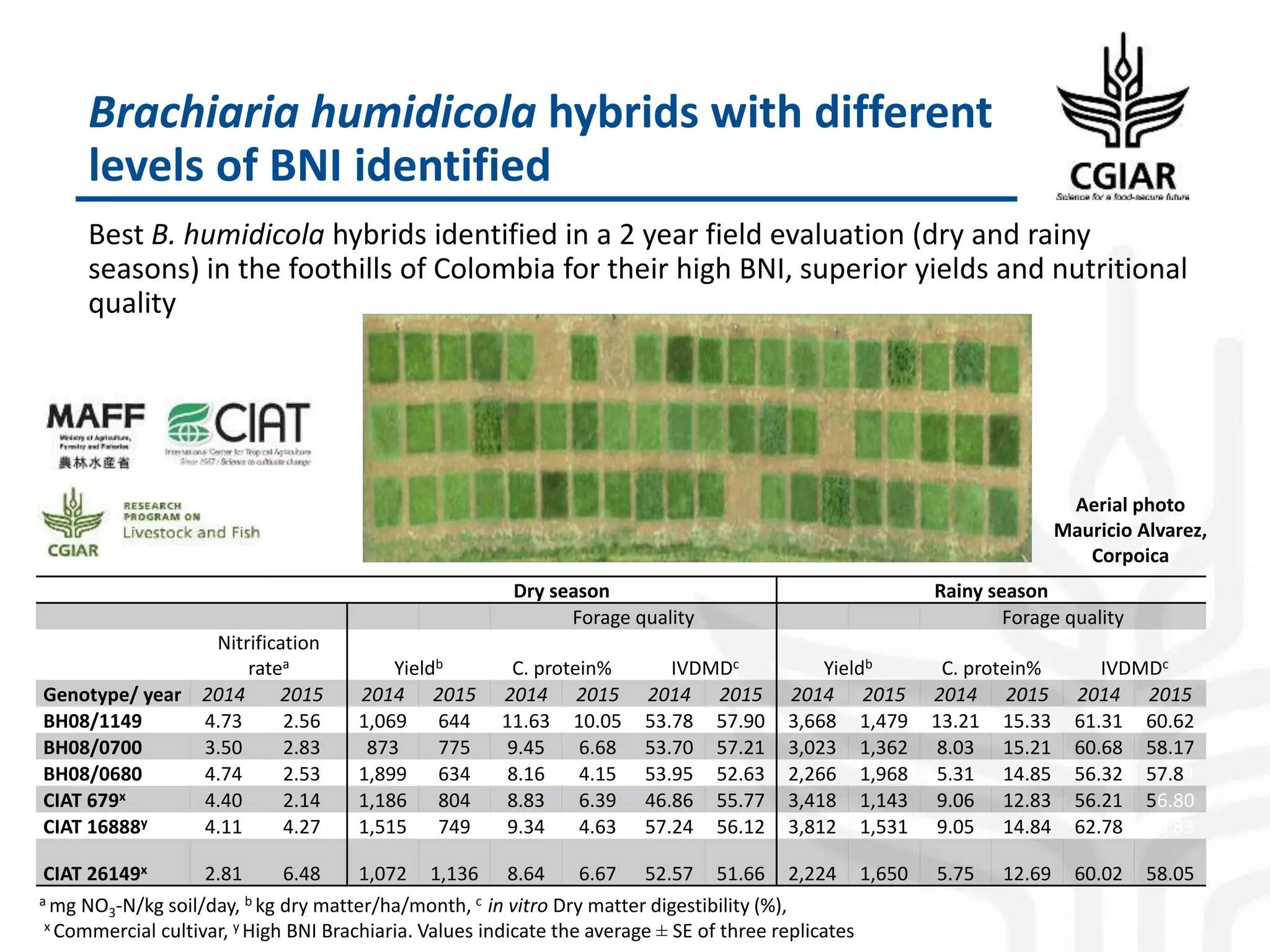
Brachiaria humidicola hybrids with different
levels of BNI identified
Best B. humidicola hybrids identified in a 2 year field evaluation (dry and rainy
seasons) in the foothills of Colombia for their high BNI, superior yields and nutritional
quality
Dry season Rainy season
Forage quality Forage quality
Nitrification
ratea Yieldb C. protein% IVDMDc Yieldb C. protein% IVDMDc
Genotype/ year 2014 2015 2014 2015 2014 2015 2014 2015 2014 2015 2014 2015 2014 2015
BH08/1149 4.73 2.56 1,069 644 11.63 10.05 53.78 57.90 3,668 1,479 13.21 15.33 61.31 60.62
BH08/0700 3.50 2.83 873 775 9.45 6.68 53.70 57.21 3,023 1,362 8.03 15.21 60.68 58.17
BH08/0680 4.74 2.53 1,899 634 8.16 4.15 53.95 52.63 2,266 1,968 5.31 14.85 56.32 57.84
CIAT 679x 4.40 2.14 1,186 804 8.83 6.39 46.86 55.77 3,418 1,143 9.06 12.83 56.21 56.80
CIAT 16888y 4.11 4.27 1,515 749 9.34 4.63 57.24 56.12 3,812 1,531 9.05 14.84 62.78 60.83
CIAT 26149x 2.81 6.48 1,072 1,136 8.64 6.67 52.57 51.66 2,224 1,650 5.75 12.69 60.02 58.05
Aerial photo
Mauricio Alvarez,
Corpoica
a mg NO3-N/kg soil/day, b kg dry matter/ha/month, c in vitro Dry matter digestibility (%),
x Commercial cultivar, y High BNI Brachiaria. Values indicate the average ± SE of three replicates
What are the challenges going forward?
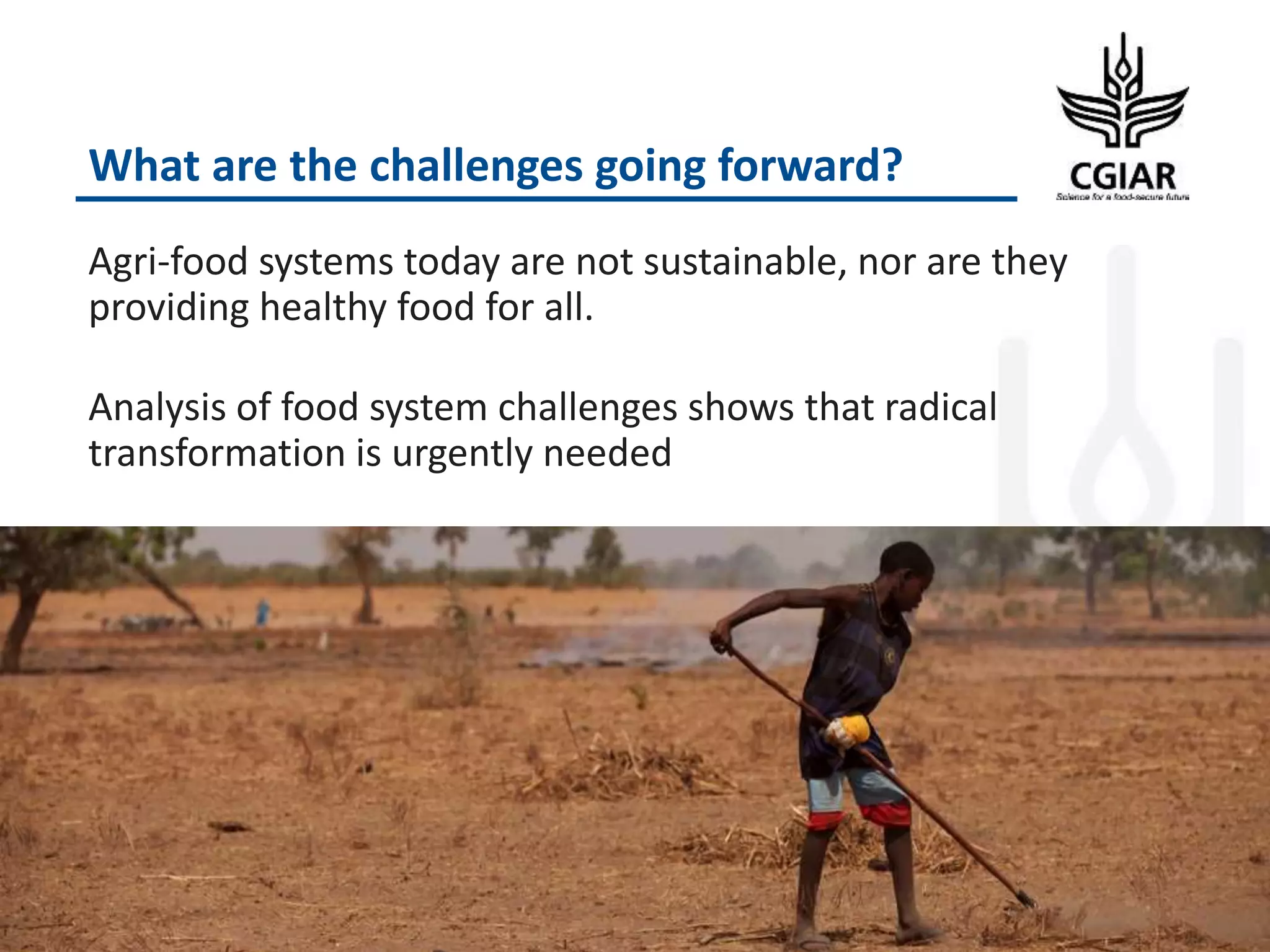
Agri-food systems today are not sustainable, nor are they
providing healthy food for all.
Analysis of food system challenges shows that radical
transformation is urgently needed
Top 3 challenges:
• Poor diets are now the #1 cause of ill health globally, overtaking smoking,
with 800 million hungry people, 2 billion malnourished people, 159 million
stunted children and 2 billion people overweight or obese, causing rapid
increases in diabetes in India and heart disease in China. Three quarters of
all overweight children live in Africa and Asia.
• Planetary ill health. The food system is the primary driver, and responsible
for soil degradation on 25% of cropped land, deforestation and loss of
biodiversity, water scarcity, pollution of lakes and seas, and circa 25% of all
greenhouse gas emissions
• Massive un(der)employment for young people in rural areas, with
employment in the agri-food system, on farms or in the food value chain, as
the only realistic option for 60% of African next generation youth, requiring
over 200 million jobs
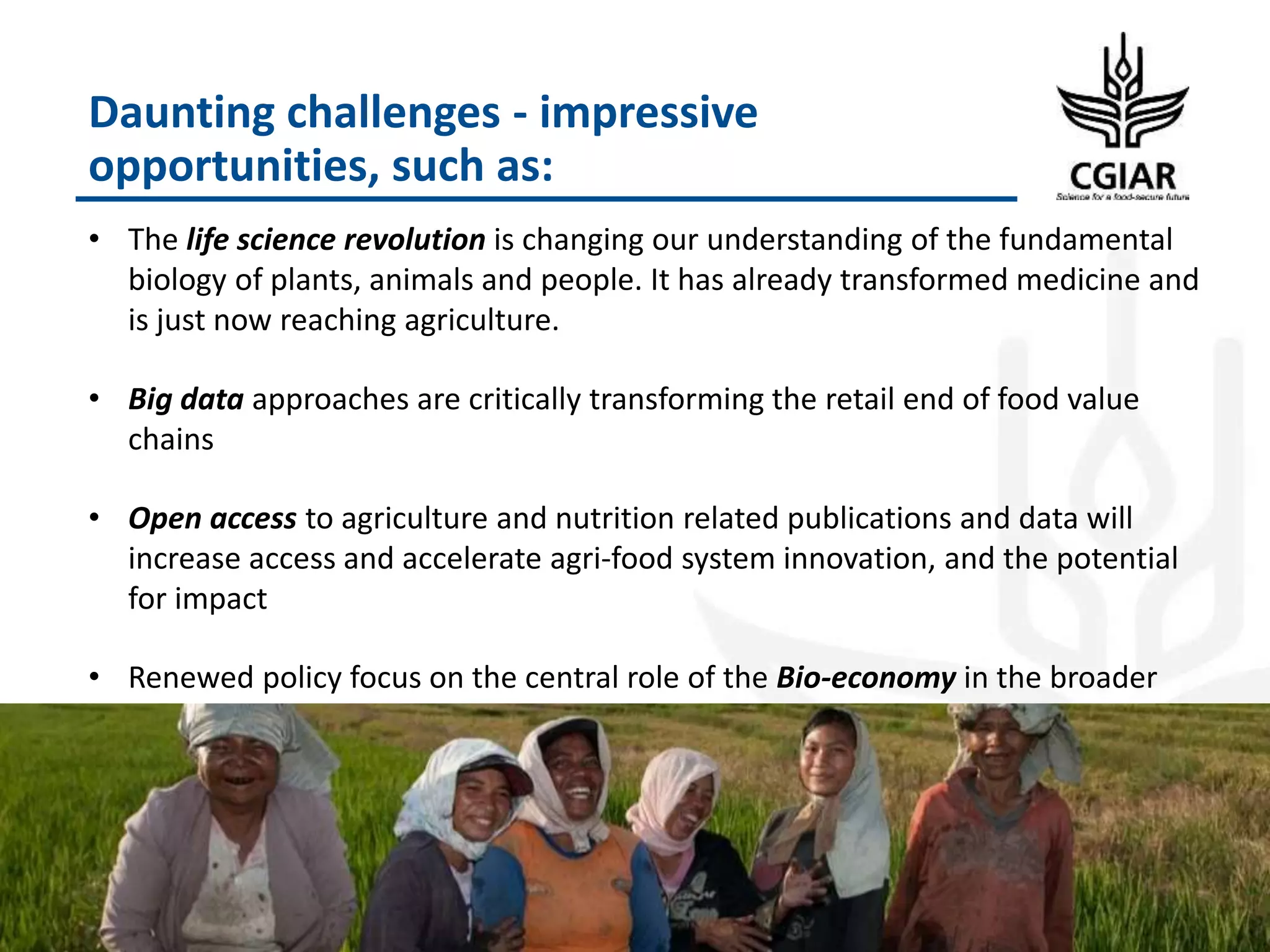
Daunting challenges - impressive
opportunities, such as:
• The life science revolution is changing our understanding of the fundamental
biology of plants, animals and people. It has already transformed medicine and
is just now reaching agriculture.
• Big data approaches are critically transforming the retail end of food value
chains
• Open access to agriculture and nutrition related publications and data will
increase access and accelerate agri-food system innovation, and the potential
for impact
• Renewed policy focus on the central role of the Bio-economy in the broader
sense
11
CGIAR discovery research now in the lab:
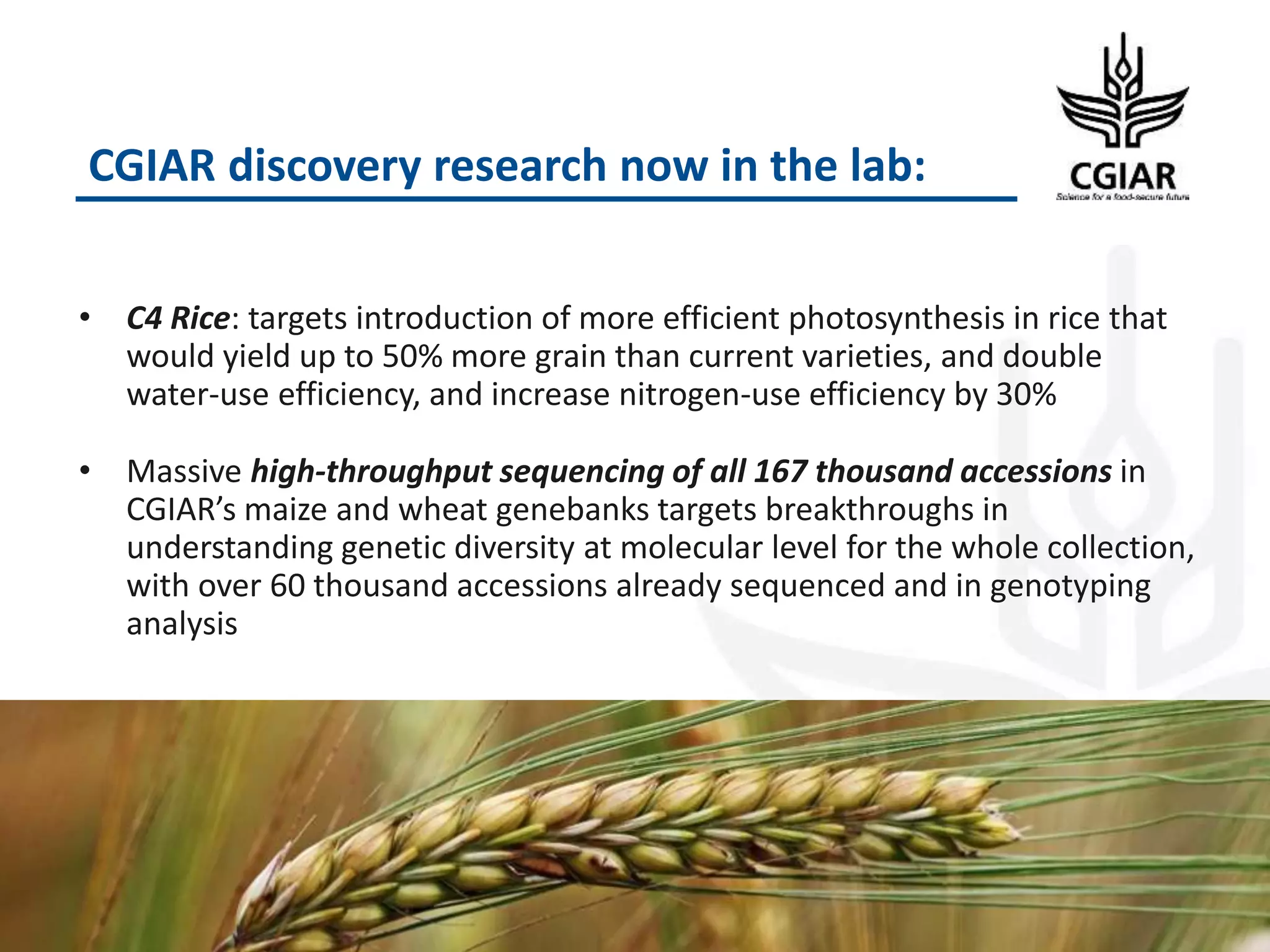
• C4 Rice: targets introduction of more efficient photosynthesis in rice that
would yield up to 50% more grain than current varieties, and double
water-use efficiency, and increase nitrogen-use efficiency by 30%
• Massive high-throughput sequencing of all 167 thousand accessions in
CGIAR’s maize and wheat genebanks targets breakthroughs in
understanding genetic diversity at molecular level for the whole collection,
with over 60 thousand accessions already sequenced and in genotyping
analysis
12
C4 photosynthesis involves alterations to
biochemistry, cell biology and leaf anatomy
Vein VeinBS BSM M M MM MM M
C3
Rice (C3)Sorghum (C4) Setaria (C4)
Leaf anatomy
Biochemistry
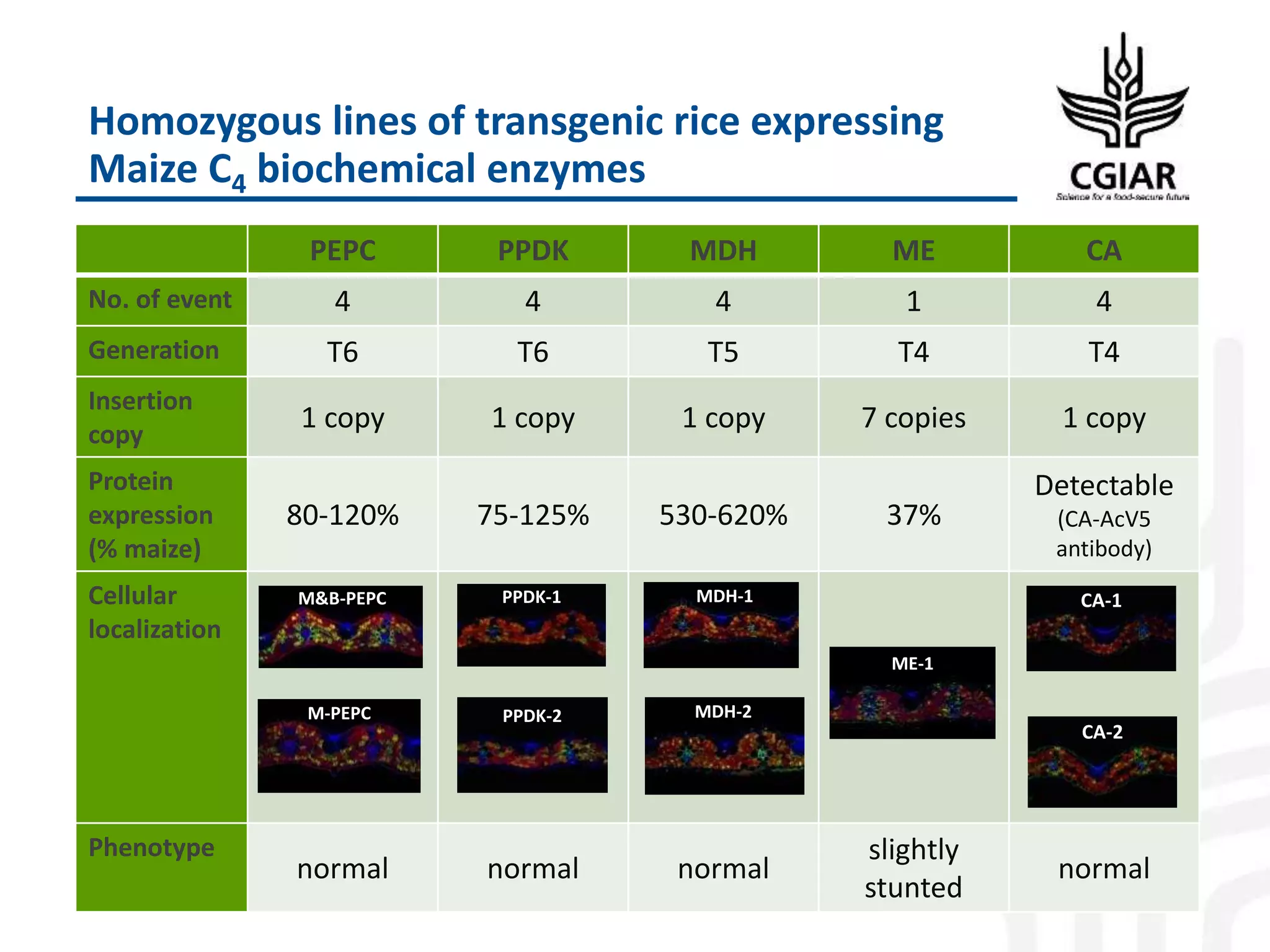
Homozygous lines of transgenic rice expressing
Maize C4 biochemical enzymes
PEPC PPDK MDH ME CA
No. of event 4 4 4 1 4
Generation T6 T6 T5 T4 T4
Insertion
copy
1 copy 1 copy 1 copy 7 copies 1 copy
Protein
expression
(% maize)
80-120% 75-125% 530-620% 37%
Detectable
(CA-AcV5
antibody)
Cellular
localization
Phenotype
normal normal normal
slightly
stunted
normal
M-PEPC
M&B-PEPC PPDK-1
PPDK-2
CA-1
CA-2
MDH-1
MDH-2
ME-1
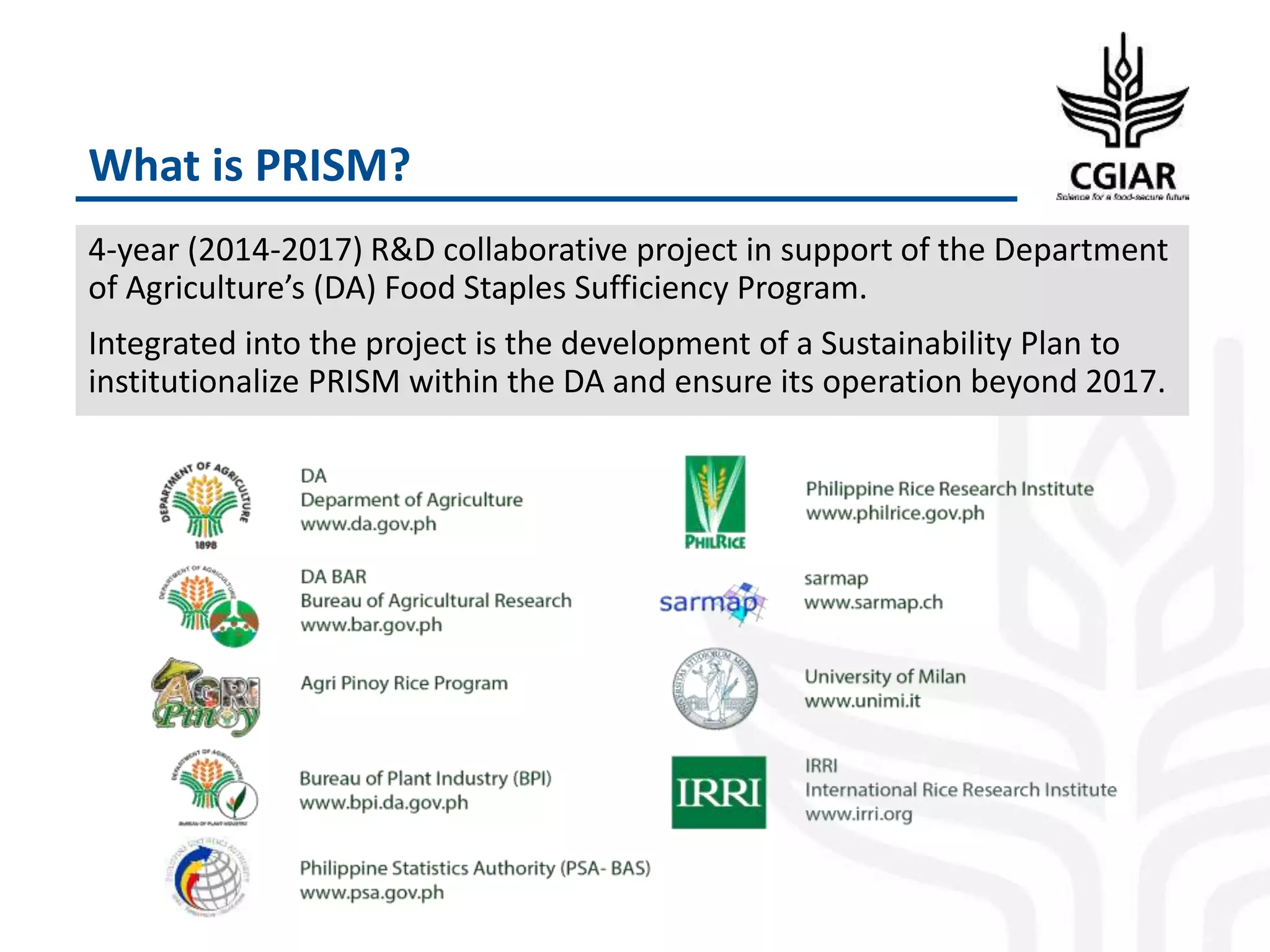
What is PRISM?
4-year (2014-2017) R&D collaborative project in support of the Department
of Agriculture’s (DA) Food Staples Sufficiency Program.
Integrated into the project is the development of a Sustainability Plan to
institutionalize PRISM within the DA and ensure its operation beyond 2017.
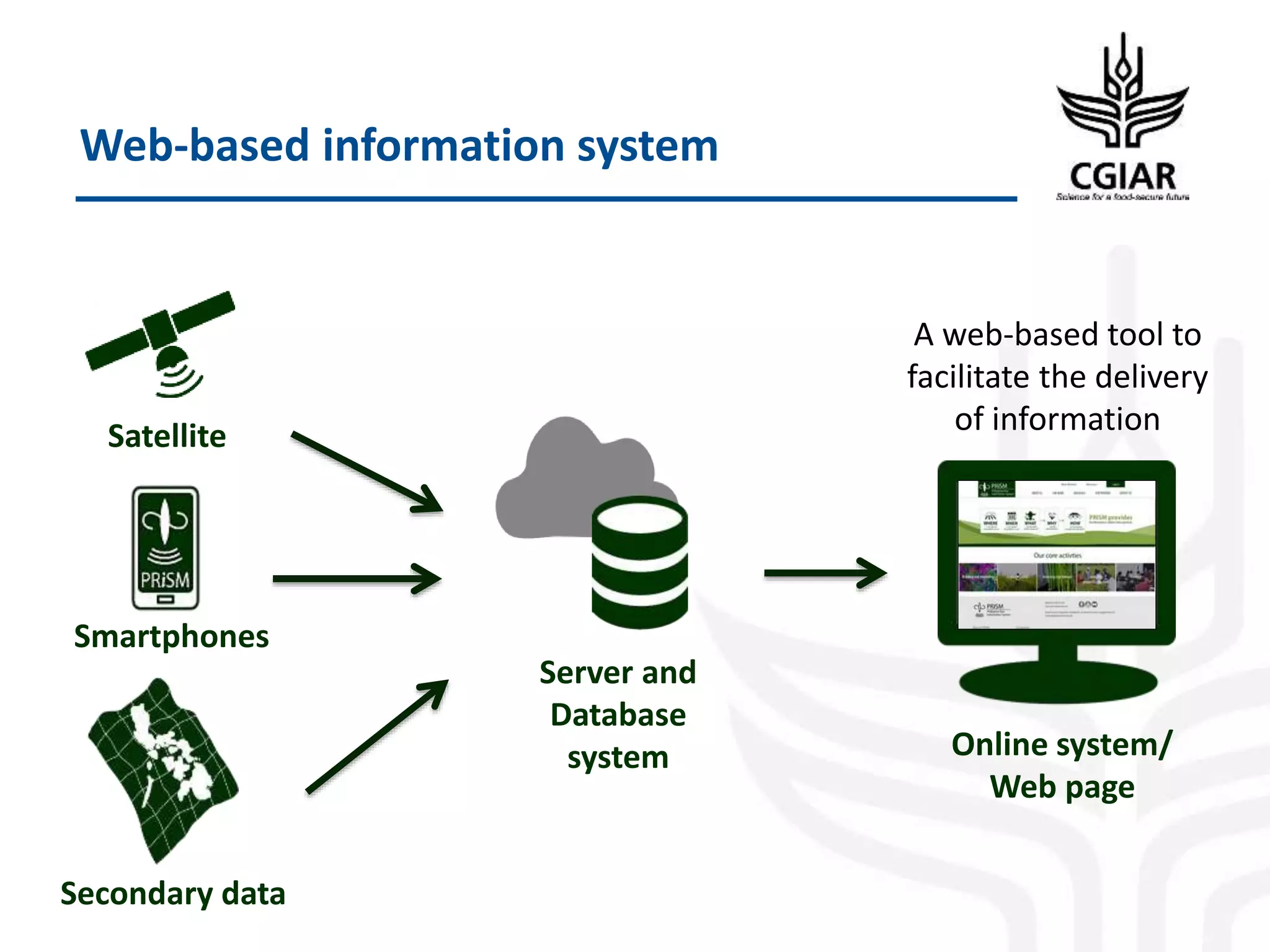
Web-based information system
Server and
Database
system
Secondary data
Smartphones
Satellite
Online system/
Web page
A web-based tool to
facilitate the delivery
of information
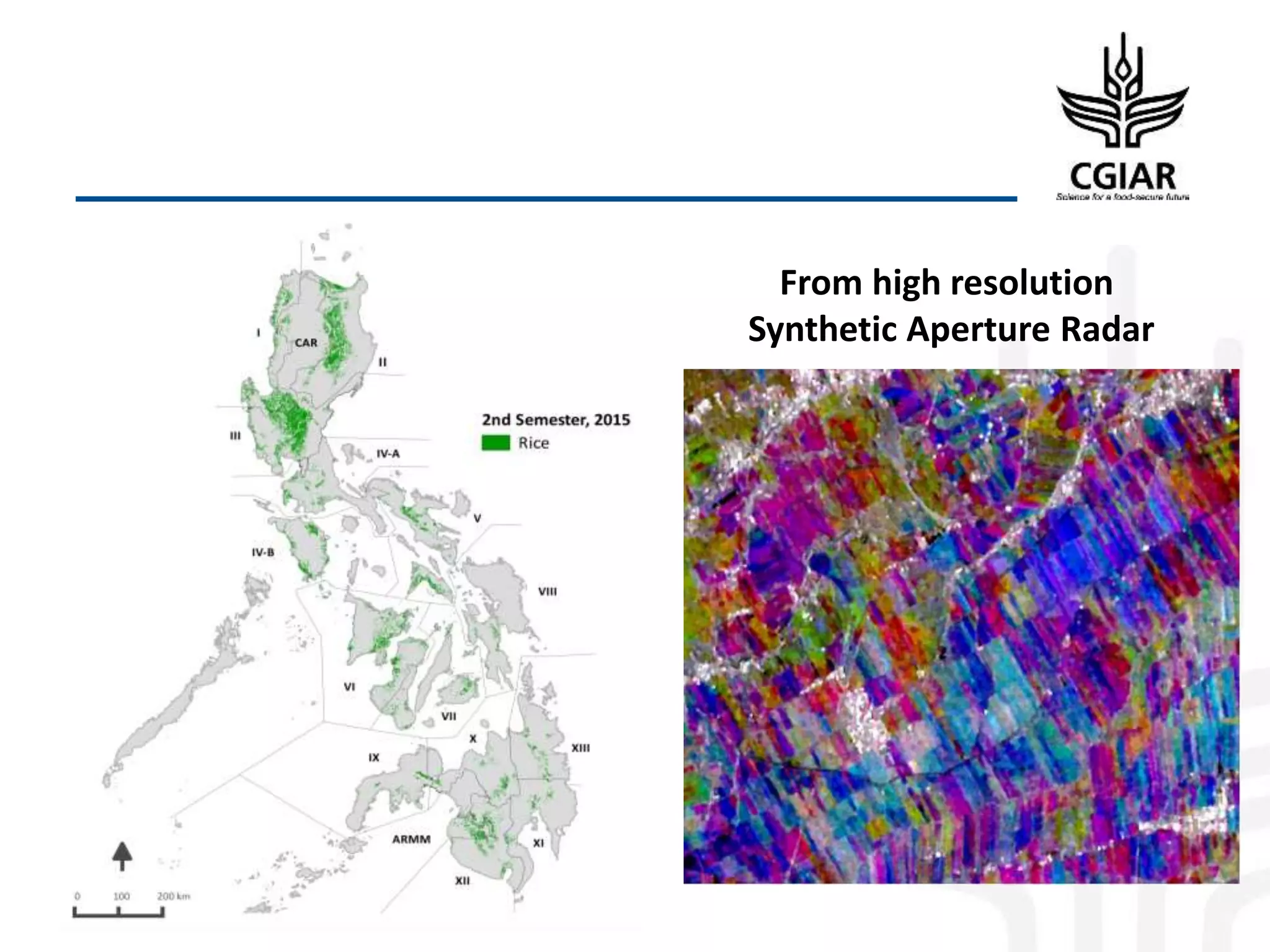
From high resolution
Synthetic Aperture Radar
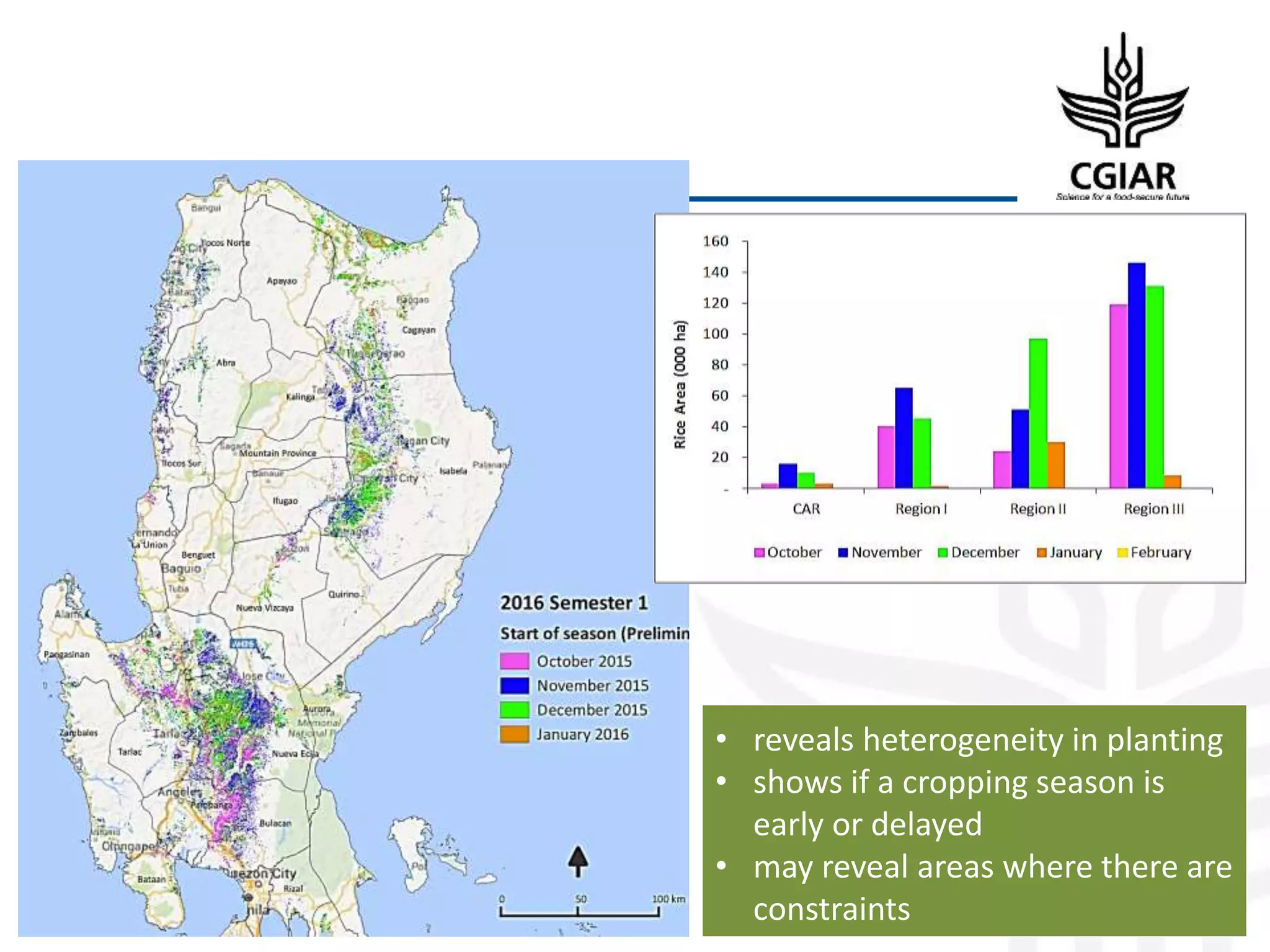
• reveals heterogeneity in planting
• shows if a cropping season is
early or delayed
• may reveal areas where there are
constraints
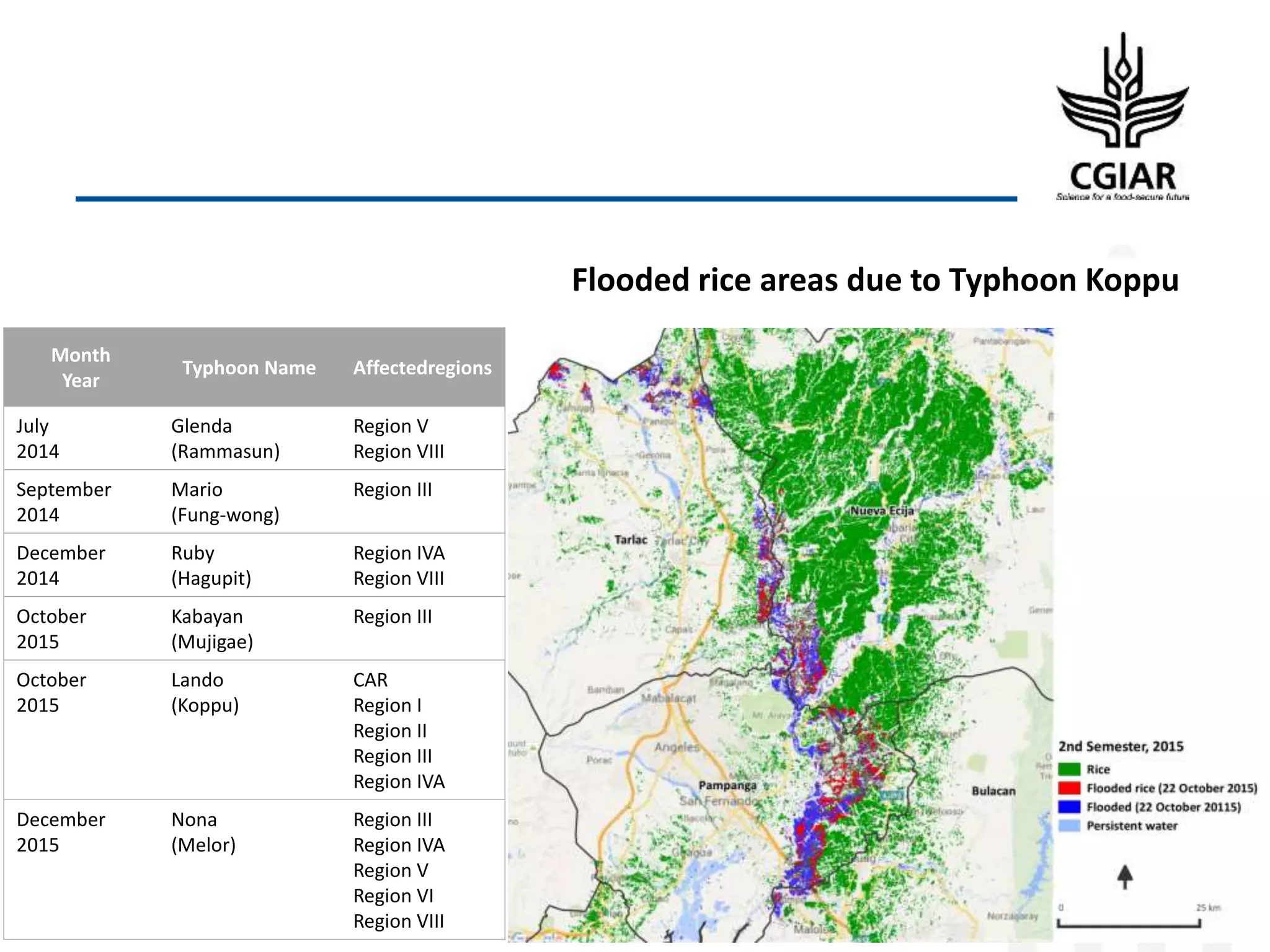
Flooded rice areas due to Typhoon Koppu
Month
Year
Typhoon Name Affectedregions
July
2014
Glenda
(Rammasun)
Region V
Region VIII
September
2014
Mario
(Fung-wong)
Region III
December
2014
Ruby
(Hagupit)
Region IVA
Region VIII
October
2015
Kabayan
(Mujigae)
Region III
October
2015
Lando
(Koppu)
CAR
Region I
Region II
Region III
Region IVA
December
2015
Nona
(Melor)
Region III
Region IVA
Region V
Region VI
Region VIII
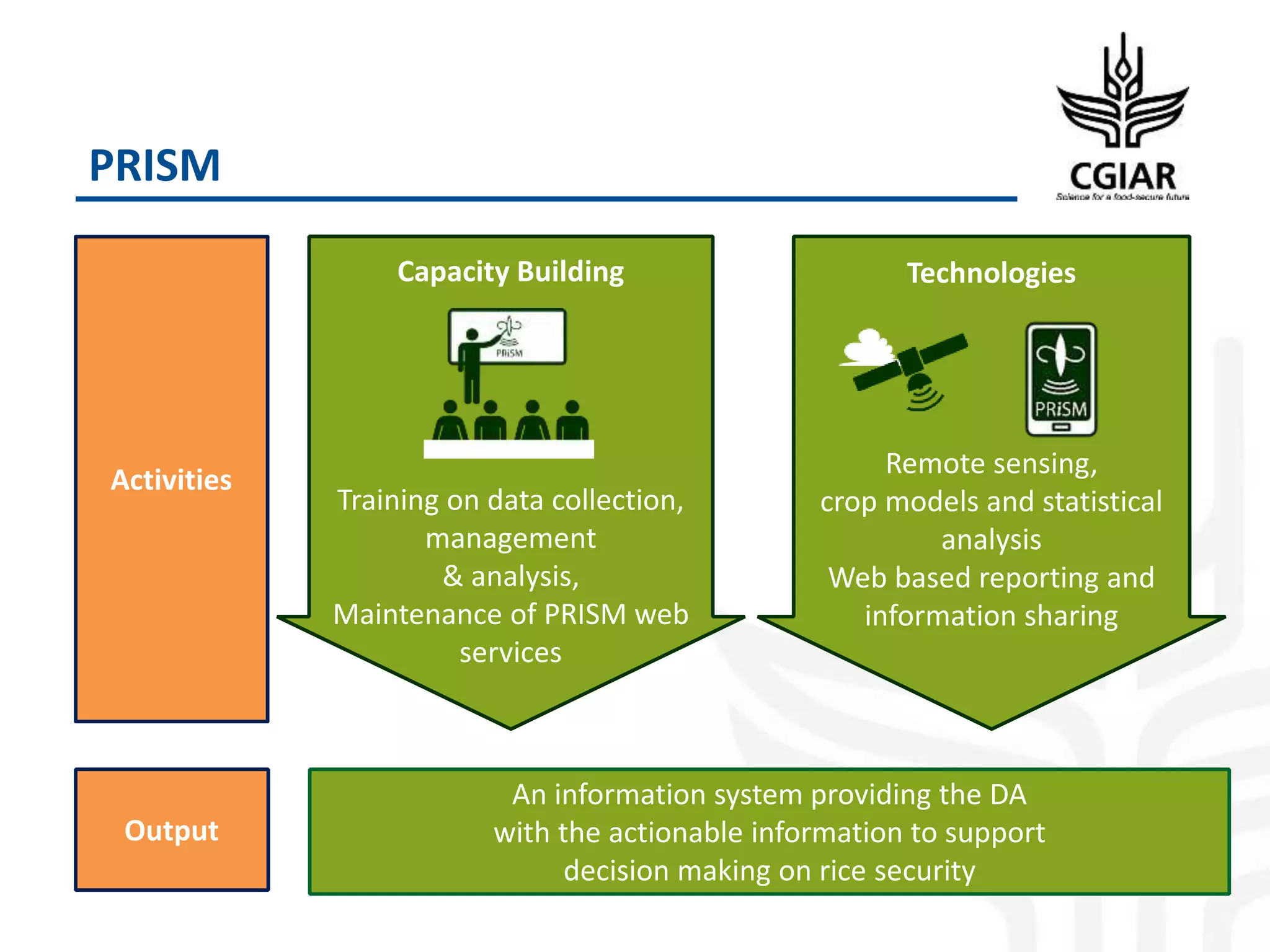
PRISM
An information system providing the DA
with the actionable information to support
decision making on rice security
Output
Activities
Capacity Building
Training on data collection,
management
& analysis,
Maintenance of PRISM web
services
Technologies
Remote sensing,
crop models and statistical
analysis
Web based reporting and
information sharing
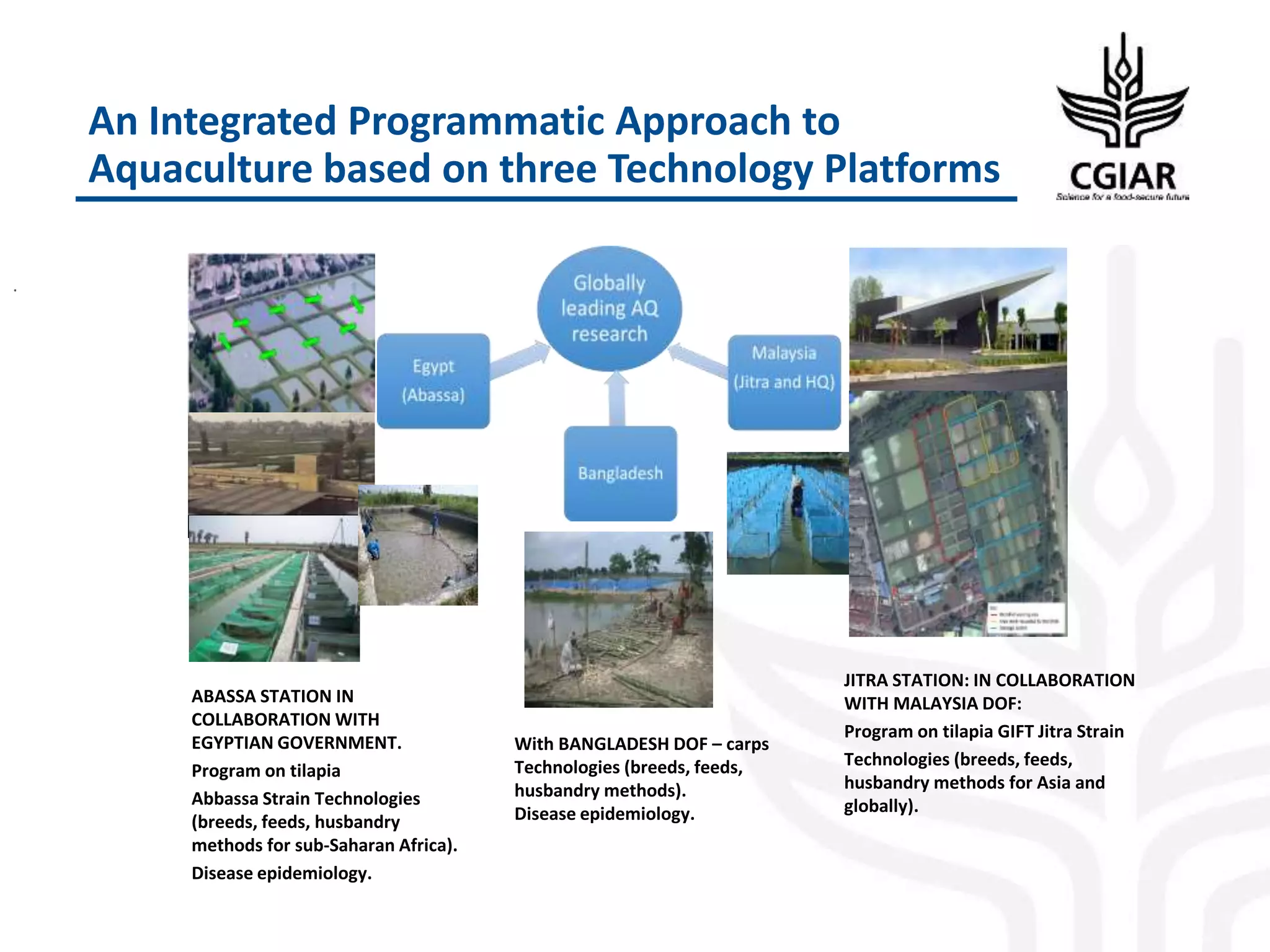
An Integrated Programmatic Approach to
Aquaculture based on three Technology Platforms
.
ABASSA STATION IN
COLLABORATION WITH
EGYPTIAN GOVERNMENT.
Program on tilapia
Abbassa Strain Technologies
(breeds, feeds, husbandry
methods for sub-Saharan Africa).
Disease epidemiology.
JITRA STATION: IN COLLABORATION
WITH MALAYSIA DOF:
Program on tilapia GIFT Jitra Strain
Technologies (breeds, feeds,
husbandry methods for Asia and
globally).
With BANGLADESH DOF – carps
Technologies (breeds, feeds,
husbandry methods).
Disease epidemiology.
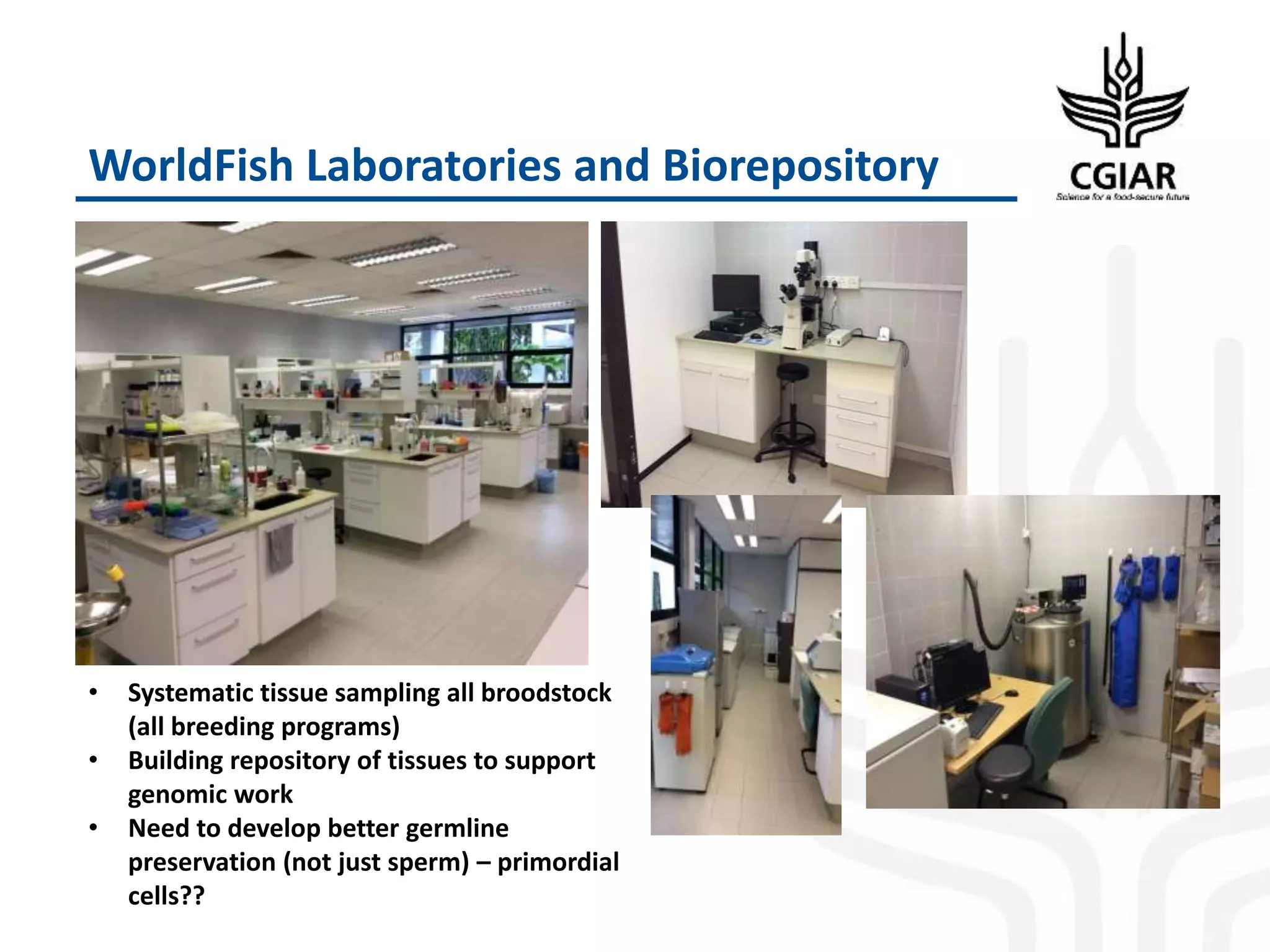
WorldFish Laboratories and Biorepository
• Systematic tissue sampling all broodstock
(all breeding programs)
• Building repository of tissues to support
genomic work
• Need to develop better germline
preservation (not just sperm) – primordial
cells??
www.cgiar.org
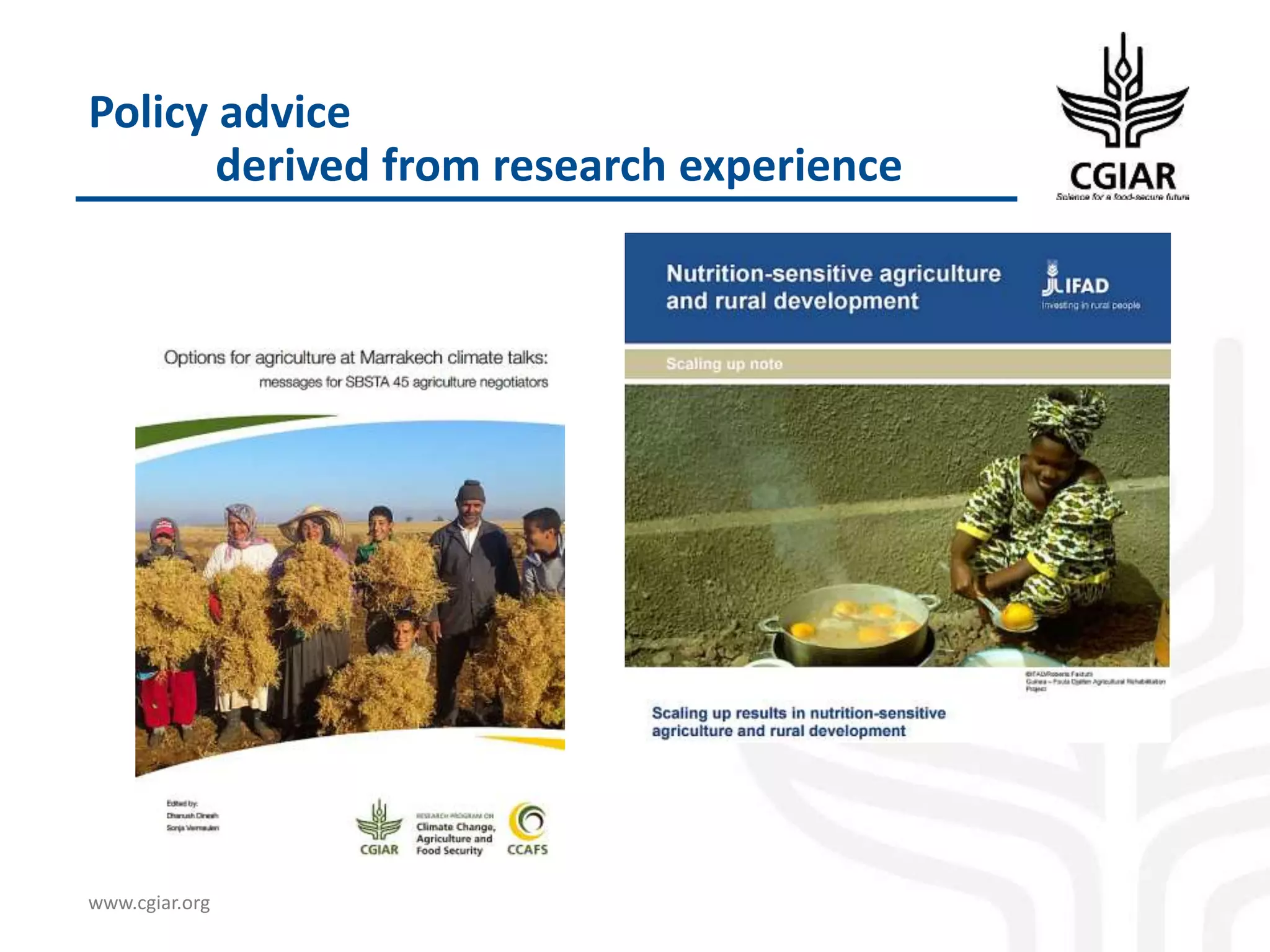
Policy advice
derived from research experience
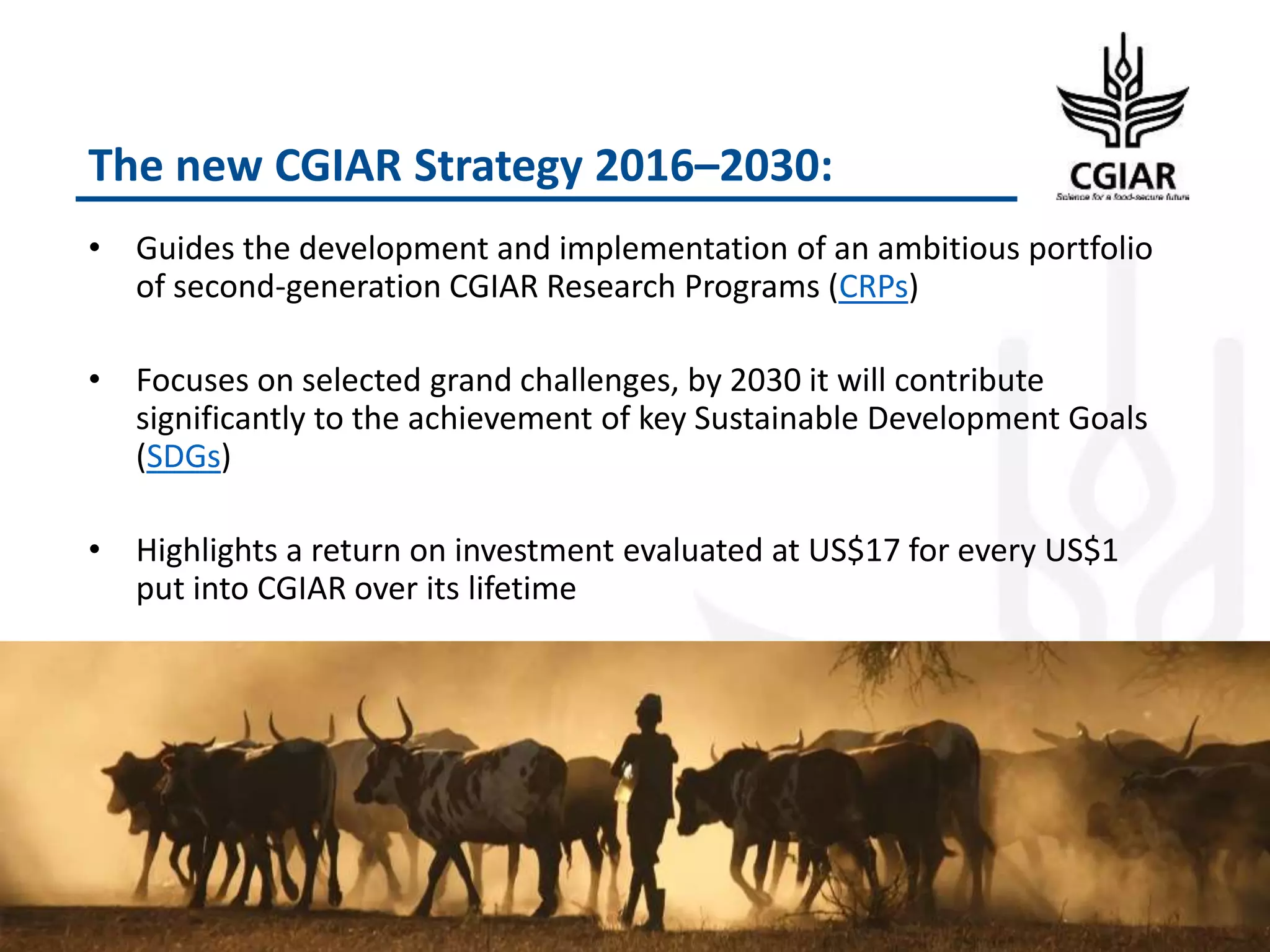
The new CGIAR Strategy 2016–2030:
• Guides the development and implementation of an ambitious portfolio
of second-generation CGIAR Research Programs (CRPs)
• Focuses on selected grand challenges, by 2030 it will contribute
significantly to the achievement of key Sustainable Development Goals
(SDGs)
• Highlights a return on investment evaluated at US$17 for every US$1
put into CGIAR over its lifetime
24
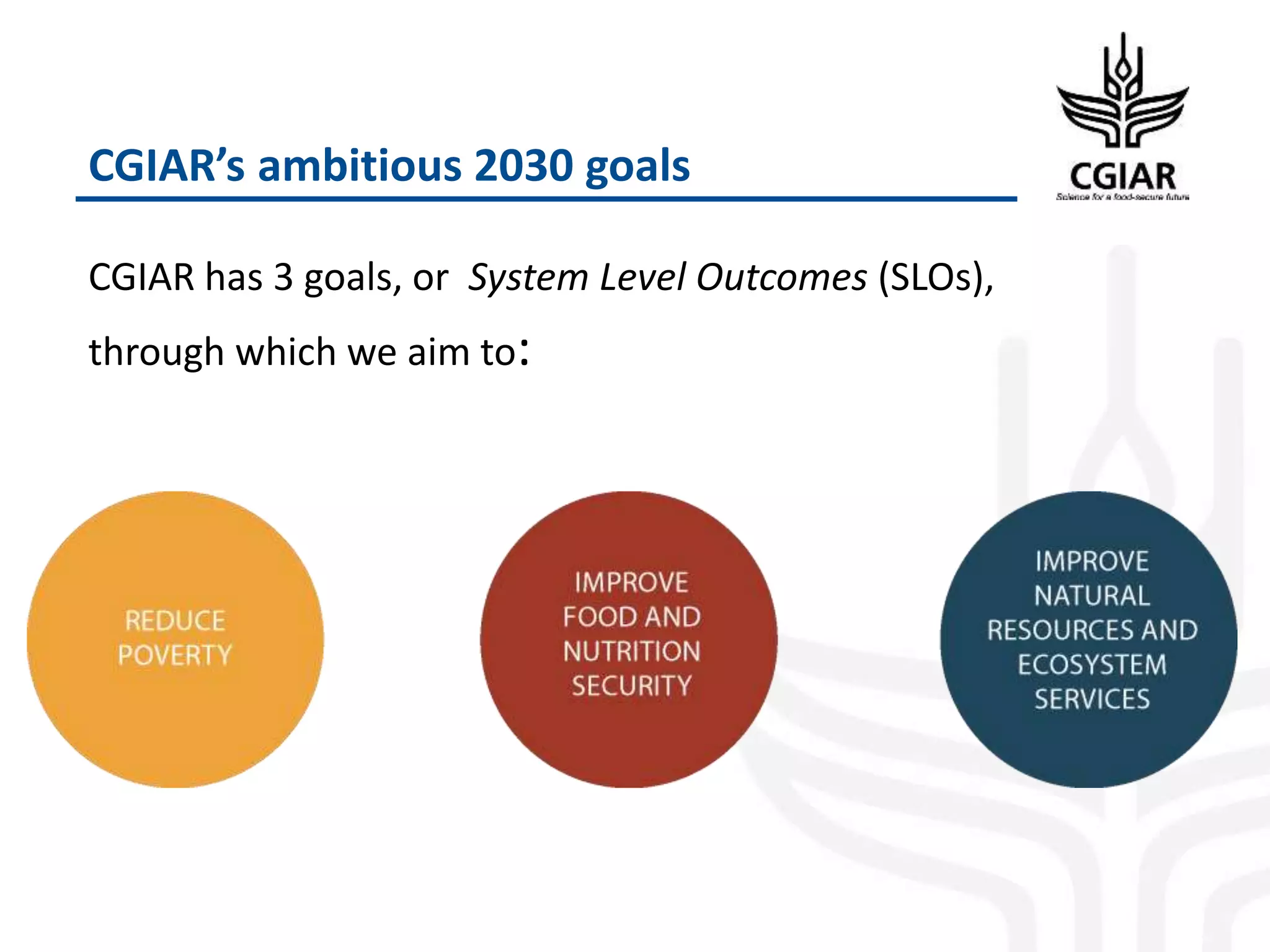
CGIAR’s ambitious 2030 goals
CGIAR has 3 goals, or System Level Outcomes (SLOs),
through which we aim to:
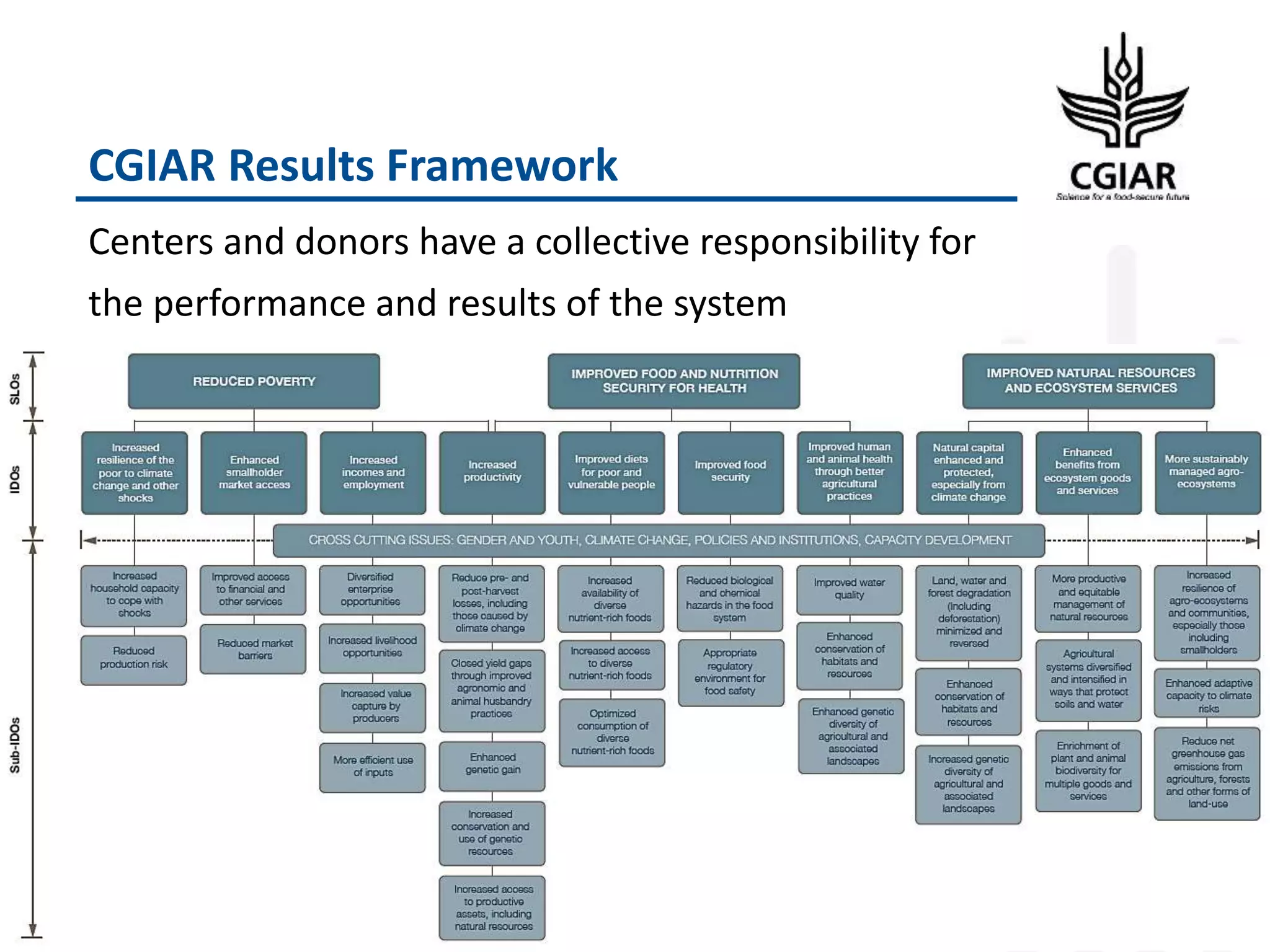
CGIAR Results Framework
Centers and donors have a collective responsibility for
the performance and results of the system
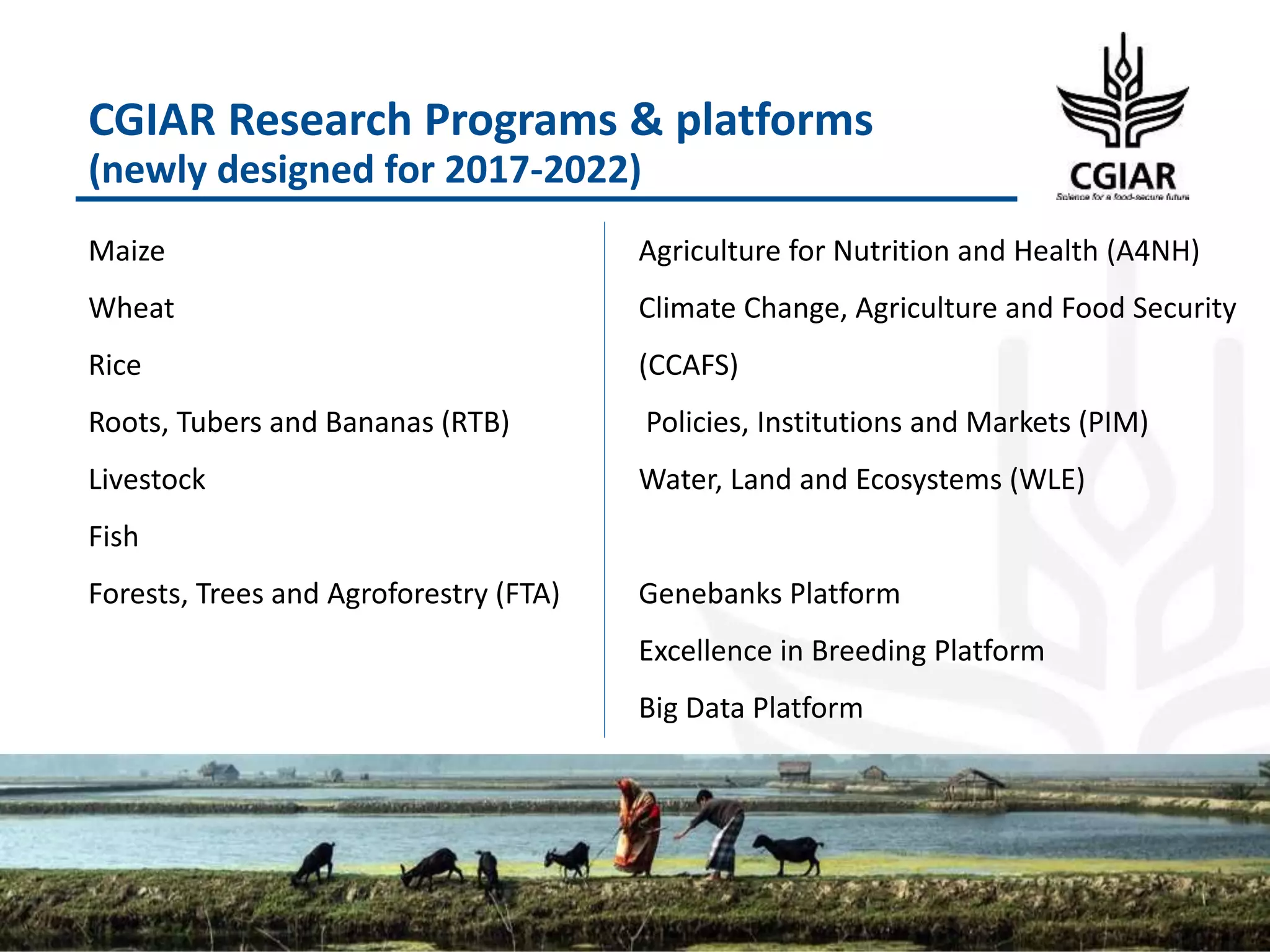
CGIAR Research Programs & platforms
(newly designed for 2017-2022)
27
Maize
Wheat
Rice
Roots, Tubers and Bananas (RTB)
Livestock
Fish
Forests, Trees and Agroforestry (FTA)
Agriculture for Nutrition and Health (A4NH)
Climate Change, Agriculture and Food Security
(CCAFS)
Policies, Institutions and Markets (PIM)
Water, Land and Ecosystems (WLE)
Genebanks Platform
Excellence in Breeding Platform
Big Data Platform
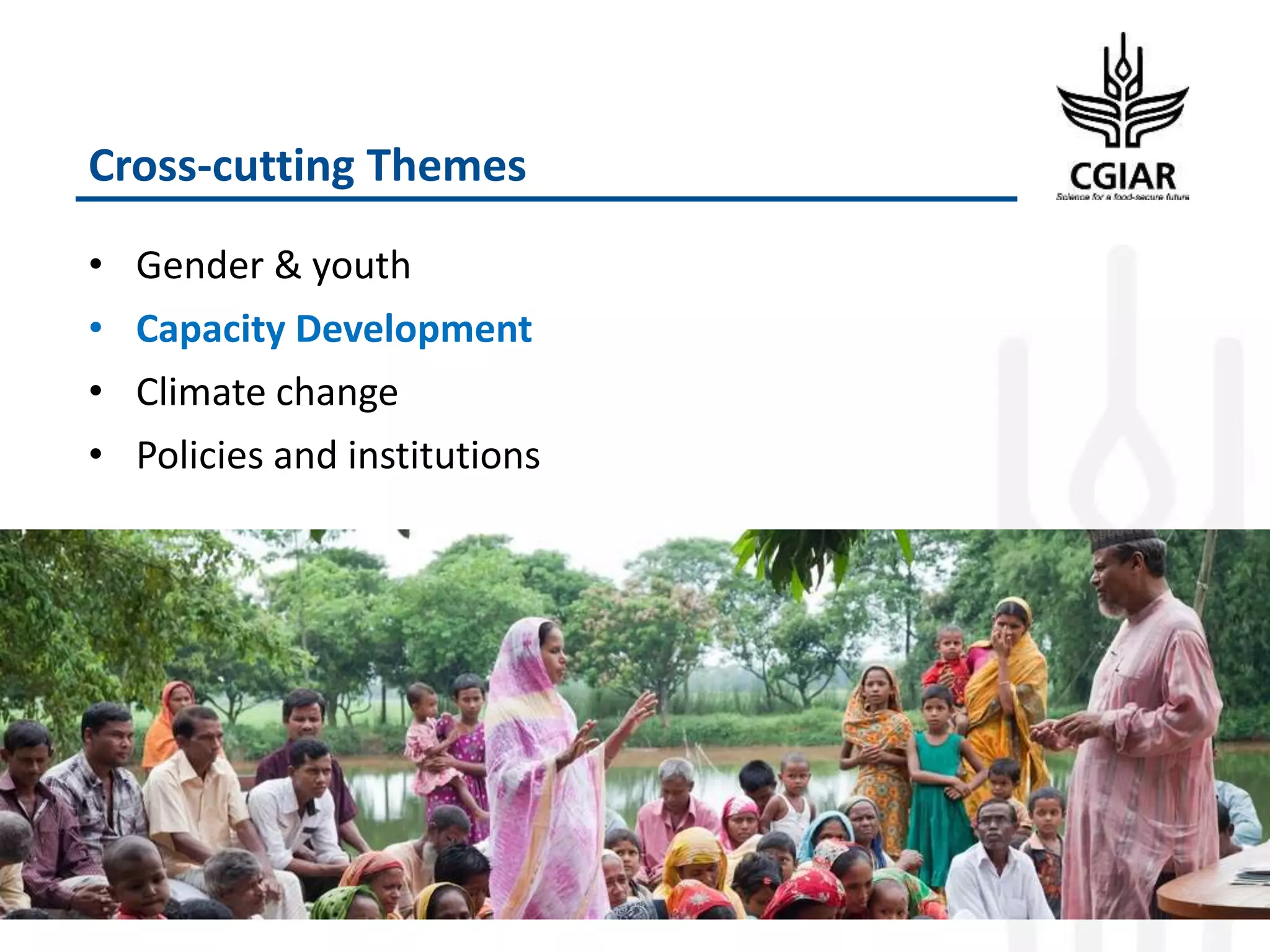
Cross-cutting Themes
• Gender & youth
• Capacity Development
• Climate change
• Policies and institutions
Capacity Development and CGIAR
• Capacity Development(CapDev) is considered to be a strategic enabler of impact for
CGIAR, particularly through building and sustaining capacity in national systems
• CapDev activities contribute to the achievement of four key intermediate
development outcomes:
• Enhanced institutional capacity of partner research organisations
• Enhanced individual capacity in partner research organisations through
training and exchange
• Increased capacity for innovation in partner research organisations
• Increased capacity for innovation in partner development organisations, and
in poor and vulnerable communities
• CGIAR CapDev goes beyond the transfer of knowledge and skills through training.
• CapDev by CGIAR cuts across multiple levels: individual, community, organisation
and system
• CapDev in the CGIAR Research programs is guided by a CapDev Framework
www.cgiar.org
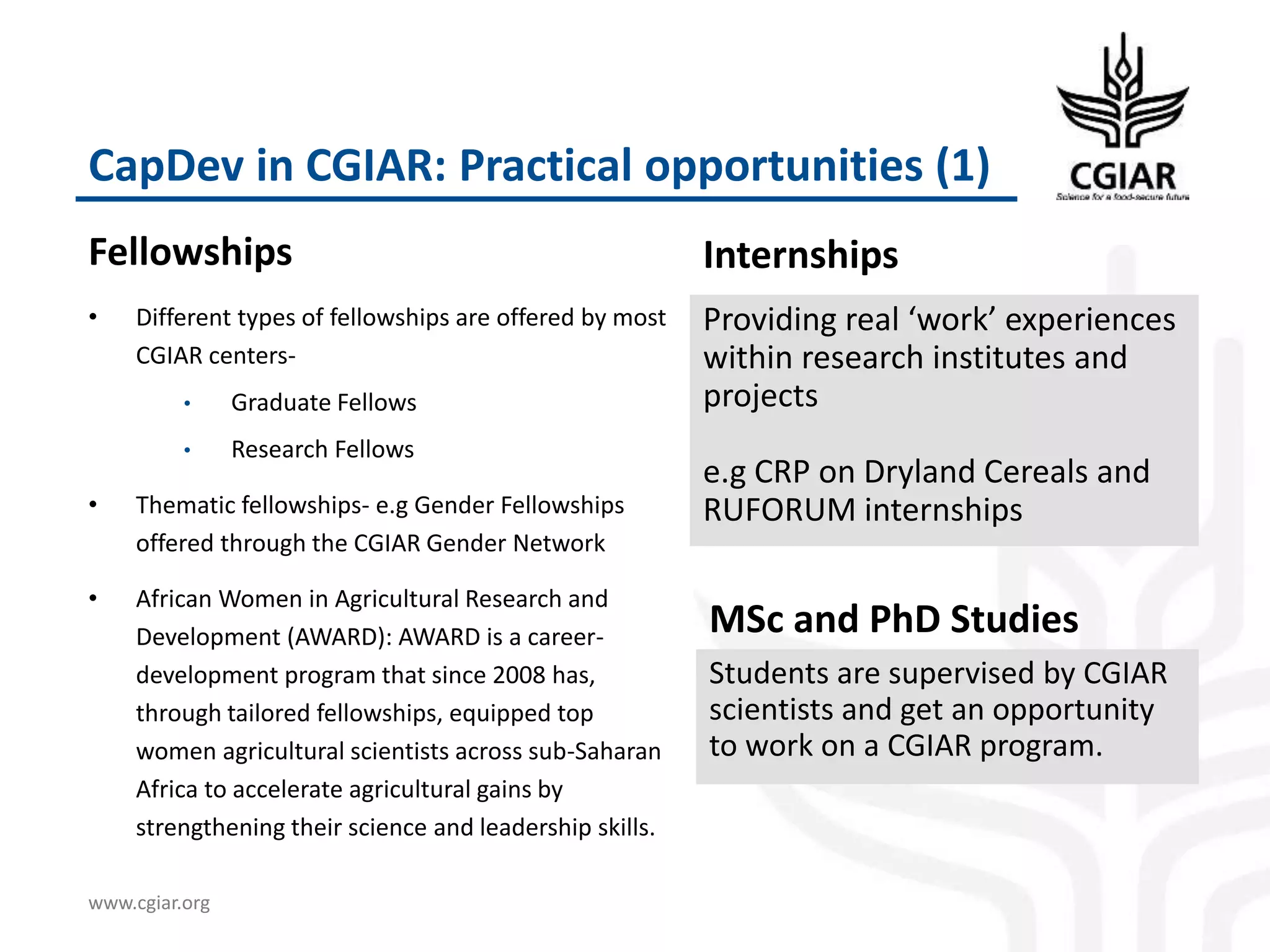
CapDev in CGIAR: Practical opportunities (1)
Fellowships Internships
Providing real ‘work’ experiences
within research institutes and
projects
e.g CRP on Dryland Cereals and
RUFORUM internships
• Different types of fellowships are offered by most
CGIAR centers-
• Graduate Fellows
• Research Fellows
• Thematic fellowships- e.g Gender Fellowships
offered through the CGIAR Gender Network
• African Women in Agricultural Research and
Development (AWARD): AWARD is a career-
development program that since 2008 has,
through tailored fellowships, equipped top
women agricultural scientists across sub-Saharan
Africa to accelerate agricultural gains by
strengthening their science and leadership skills.
MSc and PhD Studies
Students are supervised by CGIAR
scientists and get an opportunity
to work on a CGIAR program.
www.cgiar.org
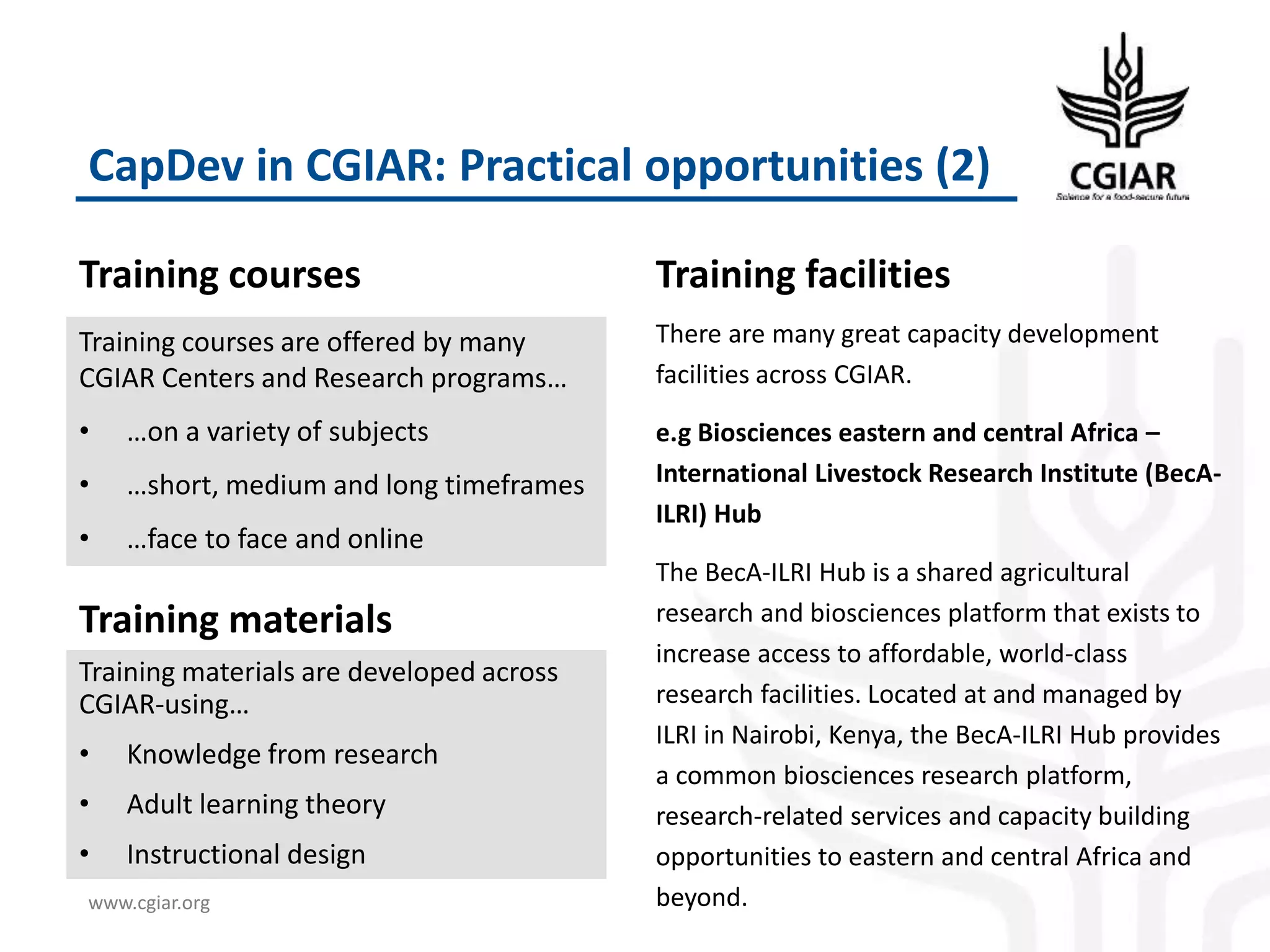
CapDev in CGIAR: Practical opportunities (2)
Training courses
Training courses are offered by many
CGIAR Centers and Research programs…
• …on a variety of subjects
• …short, medium and long timeframes
• …face to face and online
Training facilities
There are many great capacity development
facilities across CGIAR.
e.g Biosciences eastern and central Africa –
International Livestock Research Institute (BecA-
ILRI) Hub
The BecA-ILRI Hub is a shared agricultural
research and biosciences platform that exists to
increase access to affordable, world-class
research facilities. Located at and managed by
ILRI in Nairobi, Kenya, the BecA-ILRI Hub provides
a common biosciences research platform,
research-related services and capacity building
opportunities to eastern and central Africa and
beyond.
Training materials are developed across
CGIAR-using…
• Knowledge from research
• Adult learning theory
• Instructional design
Training materials
www.cgiar.org
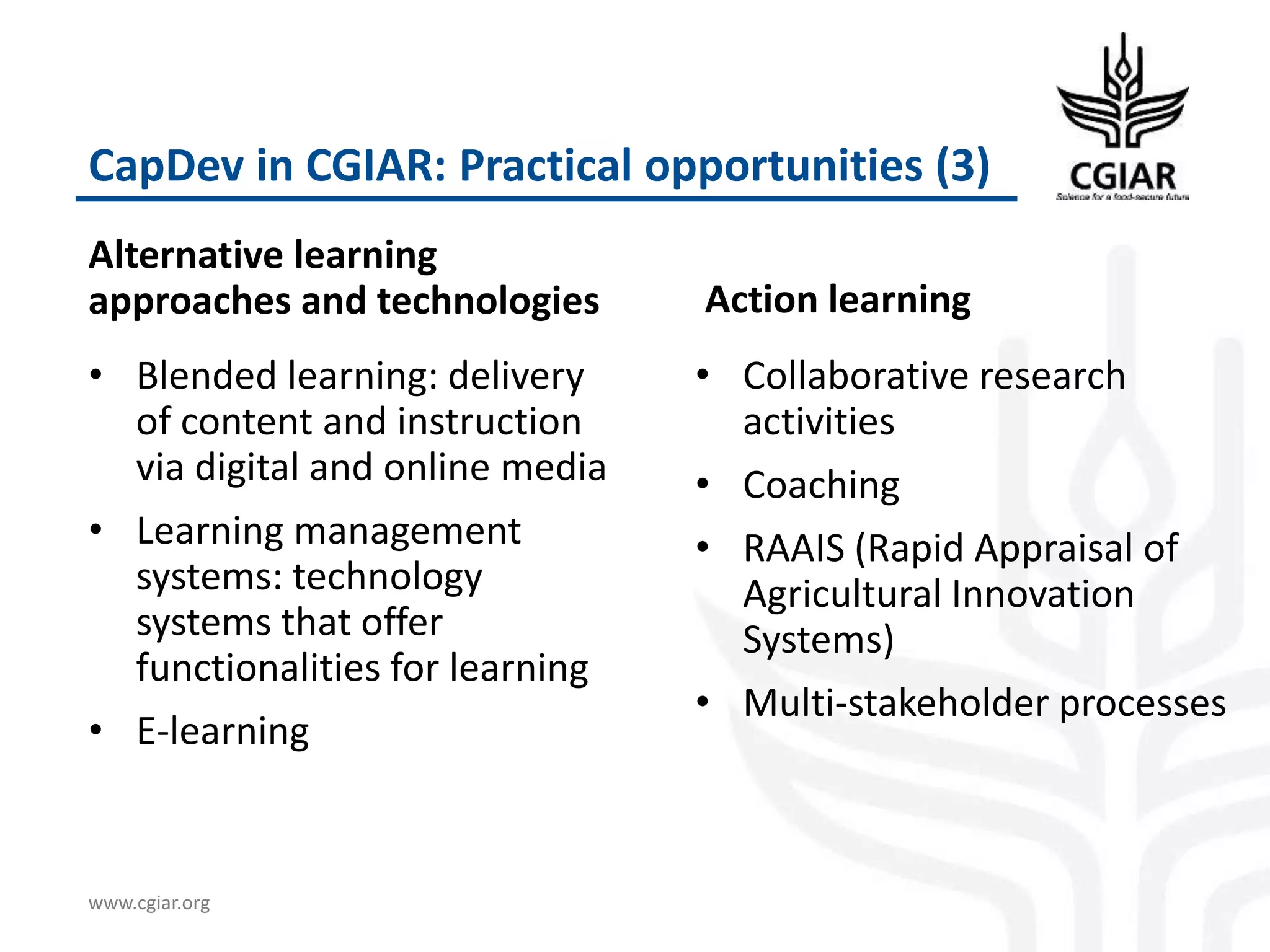
CapDev in CGIAR: Practical opportunities (3)
Alternative learning
approaches and technologies
• Blended learning: delivery
of content and instruction
via digital and online media
• Learning management
systems: technology
systems that offer
functionalities for learning
• E-learning
Action learning
• Collaborative research
activities
• Coaching
• RAAIS (Rapid Appraisal of
Agricultural Innovation
Systems)
• Multi-stakeholder processes
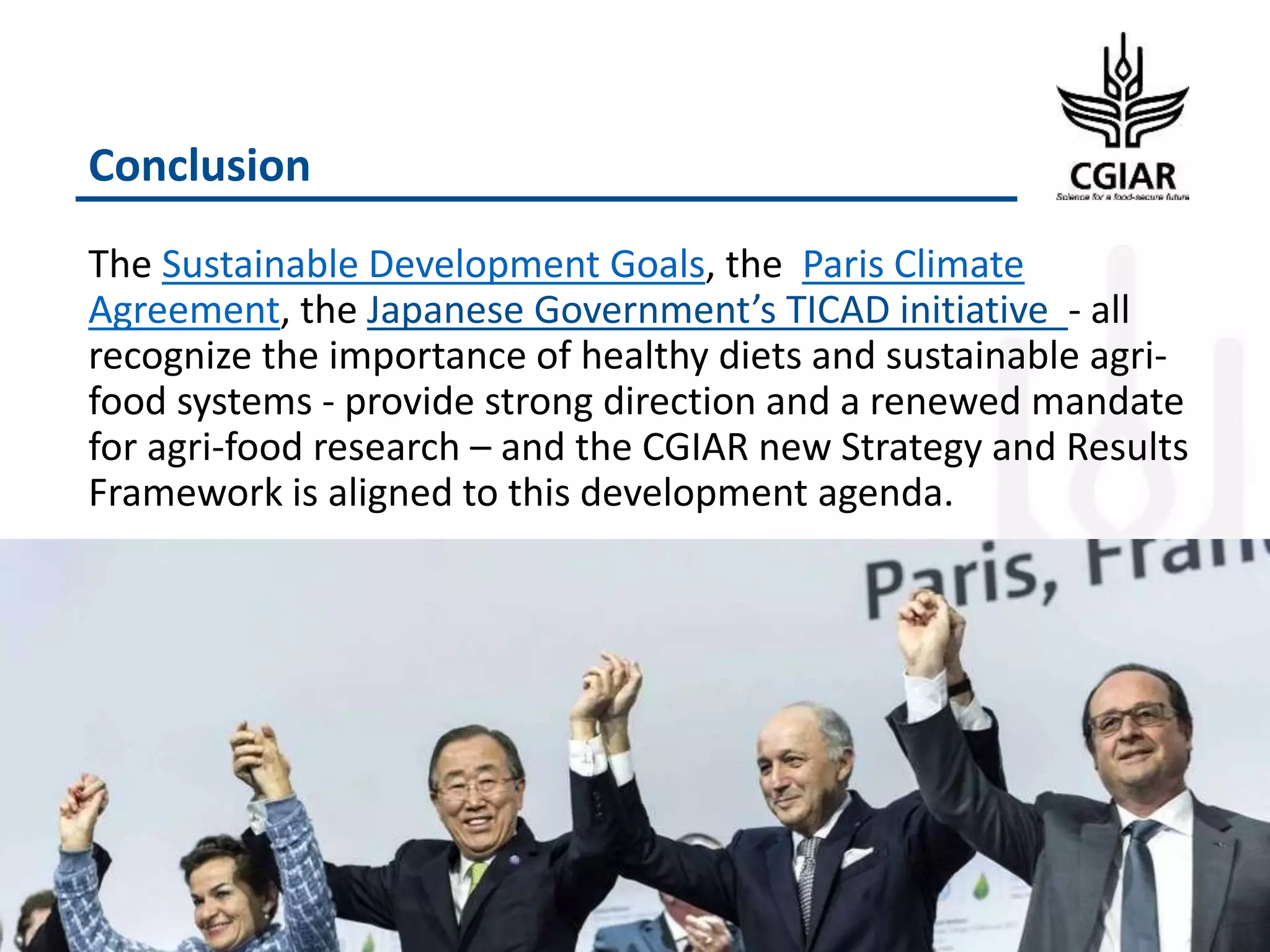
Conclusion
The Sustainable Development Goals, the Paris Climate
Agreement, the Japanese Government’s TICAD initiative - all
recognize the importance of healthy diets and sustainable agri-
food systems - provide strong direction and a renewed mandate
for agri-food research – and the CGIAR new Strategy and Results
Framework is aligned to this development agenda.
33
Our Fund Donors (2015)
Thanks to our donors, CGIAR research has transformed the
lives of hundreds of millions of people through tangible
research and development outcomes.
Abu Dhabi
Australia
Austria
Bangladesh
Belgium
Bill & Melinda Gates Foundation
Canada
China
Denmark
Finland
France
International Development
Research Centre
India
International Fund for Agricultural
Development
Ireland
Japan
Korea
Luxembourg
Netherlands
New Zealand
Norway
Portugal
South Africa
Sudan
Sweden
Switzerland
Thailand
Turkey
United Kingdom
United States of America
World Bank
Acknowledgements
Thanks to CGIAR colleagues who contributed materials or in
other ways to this presentation:
John Benzie, WorldFish/ The FISH CRP
Bas Bouman, GRiSP CRP
Liya Dejene, CGIAR System Management Office
Alice Laborte, IRRI
Nadia Manning-Thomas, CGIAR System Office
Tom Randolph, Livestock & Fish CRP
Michael Peters, CIAT
www.cgiar.org
Thank you

Enhancing Global Food Resources: CGIAR Strategy and its future Portfolio of Programs 2017–2030

  • 1.
    Enhancing Global FoodResources: CGIAR Strategy and its future Portfolio of Programs 2017–2030 presented to the Second International Forum on Global Food Resources, 5-6 October 2016, Hokkaido University by Peter Gardiner, CGIAR System Management Office, France
  • 2.
    What is CGIAR? CGIARis the only worldwide research partnership addressing agricultural research for development, whose work contributes to the global efforts to tackle poverty, food and nutrition insecurity, and environmental degradation. 1
  • 3.
    A world freeof poverty, hunger and environmental degradation. Our Vision To advance agri-food science and innovation to enable poor people, especially poor women, to increase agricultural productivity and resilience, share in economic growth, feed themselves and their families better, and conserve natural resources in the face of climate change and other threats. Our Mission
  • 4.
    CGIAR key facts: 3 •Annual turnover of US$1 billion in public funding provided by broad range of key development donors. • 15 non-profit research Centers with 10 thousand world class scientists and support staff on the ground in over 60 countries • Unique in public sector to work from discovery to translational research and have a product development capacity; reaching millions of farmers through work with development partners • CGIAR genebanks safeguard the world’s largest germplasm collections for staple food crops, that provide over 90% of all recorded transfers under the International Treaty on Plant Genetic Resources
  • 5.
    CGIAR Research Centers CGIARresearch is carried out by the 15 Centers, members of the CGIAR Consortium, in close collaboration with hundreds of partners, including national and regional research institutes, civil society organizations, academia, development organizations and the private sector. 4
  • 6.
    CGIAR Research Programs (1stround of CRPs, 2011-2016) 5 Aquatic Agricultural Systems (AAS) Agriculture for Nutrition and Health (A4NH) Climate Change, Agriculture and Food Security (CCAFS) Dryland Cereals Dryland Systems Forests, Trees and Agroforestry (FTA) The Global Rice Science Partnership (GRiSP) Grain Legumes Integrated Systems for the Humid Tropics (Humidtropics) Livestock and Fish Managing and Sustaining Crop Collections (Genebanks) Maize Policies, Institutions and Markets (PIM) Roots, Tubers and Bananas (RTB) Water, Land and Ecosystems (WLE) Wheat
  • 7.
    New CGIAR technologiesalready in the field: • Scuba rice, which can survive under water for two weeks, is protecting the harvests, incomes, and food security more than 5 million farmers in Asia. • New high-yielding, and more nutritious – biofortified - varieties of foods such as maize, cassava, beans, pearl millet, rice, beans and orange sweet potato are targeted to reach 50 million consumers by 2018. • AFLASAFE reduces aflatoxin contamination in African farmers fields by up to 90% - a product that has 4 atoxigenic strains of the fungus developed by CGIAR with USDA. • Index-based crop and livestock drought insurance and seasonal weather forecasts now benefit millions of poor rural households in Africa and Asia. • Wheat stem rust -Ug99- resistant varieties have been made available, preventing disaster at a scale affecting many millions of people. Maize lethal necrosis resistant varieties have been developed through rapid cycling (4 years). • Agroforestry: unfertilized maize yields under Faidherbia trees average 4.1 tonnes per hectare, compared to 1.3 tonnes; in Niger, more than 1.2 million households have regenerated 200 million fertilizer trees on their sorghum and millet fields across 5 million hectares. • Brachiaria forages with Biological Nitrification Inhibition capacity have reduced greenhouse gas emissions and improved nitrogen efficiency on 500 thousand hectares.
  • 8.
    Brachiaria humidicola residualBNI effect on maize as subsequent crop in Tropical Savannas of Colombia • Three contrasting land uses (half-hectare of field area): • 1) Long- term B. humidicola pasture (>10-year-old) • 2) Cropped area (maize/soybean), and • 3) Native savanna • Nitrogen fertilizer: 60, 120, and 240 kg N/ha • plus one control (“0” N) • Determination of grain yield and N-recovery Grain yield 0 1,000 2,000 3,000 4,000 5,000 6,000 2012 2013 2014 2015 Grainyield(kg/ha) Maize production cycle 60 kg N/ha B. humidicola Croppedarea Native savanna 0.00 0.10 0.20 0.30 0.40 0.50 0.60 0.70 0.80 B. humidicola Croppedarea Native savanna Nitrificationrateinsoil (mgNO3-N/kgsoil/day) Precedingland-use 2012baseline- 60 kg N/ha Nitrification rate in soil
  • 9.
    Brachiaria humidicola hybridswith different levels of BNI identified Best B. humidicola hybrids identified in a 2 year field evaluation (dry and rainy seasons) in the foothills of Colombia for their high BNI, superior yields and nutritional quality Dry season Rainy season Forage quality Forage quality Nitrification ratea Yieldb C. protein% IVDMDc Yieldb C. protein% IVDMDc Genotype/ year 2014 2015 2014 2015 2014 2015 2014 2015 2014 2015 2014 2015 2014 2015 BH08/1149 4.73 2.56 1,069 644 11.63 10.05 53.78 57.90 3,668 1,479 13.21 15.33 61.31 60.62 BH08/0700 3.50 2.83 873 775 9.45 6.68 53.70 57.21 3,023 1,362 8.03 15.21 60.68 58.17 BH08/0680 4.74 2.53 1,899 634 8.16 4.15 53.95 52.63 2,266 1,968 5.31 14.85 56.32 57.84 CIAT 679x 4.40 2.14 1,186 804 8.83 6.39 46.86 55.77 3,418 1,143 9.06 12.83 56.21 56.80 CIAT 16888y 4.11 4.27 1,515 749 9.34 4.63 57.24 56.12 3,812 1,531 9.05 14.84 62.78 60.83 CIAT 26149x 2.81 6.48 1,072 1,136 8.64 6.67 52.57 51.66 2,224 1,650 5.75 12.69 60.02 58.05 Aerial photo Mauricio Alvarez, Corpoica a mg NO3-N/kg soil/day, b kg dry matter/ha/month, c in vitro Dry matter digestibility (%), x Commercial cultivar, y High BNI Brachiaria. Values indicate the average ± SE of three replicates
  • 10.
    What are thechallenges going forward? Agri-food systems today are not sustainable, nor are they providing healthy food for all. Analysis of food system challenges shows that radical transformation is urgently needed
  • 11.
    Top 3 challenges: •Poor diets are now the #1 cause of ill health globally, overtaking smoking, with 800 million hungry people, 2 billion malnourished people, 159 million stunted children and 2 billion people overweight or obese, causing rapid increases in diabetes in India and heart disease in China. Three quarters of all overweight children live in Africa and Asia. • Planetary ill health. The food system is the primary driver, and responsible for soil degradation on 25% of cropped land, deforestation and loss of biodiversity, water scarcity, pollution of lakes and seas, and circa 25% of all greenhouse gas emissions • Massive un(der)employment for young people in rural areas, with employment in the agri-food system, on farms or in the food value chain, as the only realistic option for 60% of African next generation youth, requiring over 200 million jobs
  • 12.
    Daunting challenges -impressive opportunities, such as: • The life science revolution is changing our understanding of the fundamental biology of plants, animals and people. It has already transformed medicine and is just now reaching agriculture. • Big data approaches are critically transforming the retail end of food value chains • Open access to agriculture and nutrition related publications and data will increase access and accelerate agri-food system innovation, and the potential for impact • Renewed policy focus on the central role of the Bio-economy in the broader sense 11
  • 13.
    CGIAR discovery researchnow in the lab: • C4 Rice: targets introduction of more efficient photosynthesis in rice that would yield up to 50% more grain than current varieties, and double water-use efficiency, and increase nitrogen-use efficiency by 30% • Massive high-throughput sequencing of all 167 thousand accessions in CGIAR’s maize and wheat genebanks targets breakthroughs in understanding genetic diversity at molecular level for the whole collection, with over 60 thousand accessions already sequenced and in genotyping analysis 12
  • 14.
    C4 photosynthesis involvesalterations to biochemistry, cell biology and leaf anatomy Vein VeinBS BSM M M MM MM M C3 Rice (C3)Sorghum (C4) Setaria (C4) Leaf anatomy Biochemistry
  • 15.
    Homozygous lines oftransgenic rice expressing Maize C4 biochemical enzymes PEPC PPDK MDH ME CA No. of event 4 4 4 1 4 Generation T6 T6 T5 T4 T4 Insertion copy 1 copy 1 copy 1 copy 7 copies 1 copy Protein expression (% maize) 80-120% 75-125% 530-620% 37% Detectable (CA-AcV5 antibody) Cellular localization Phenotype normal normal normal slightly stunted normal M-PEPC M&B-PEPC PPDK-1 PPDK-2 CA-1 CA-2 MDH-1 MDH-2 ME-1
  • 16.
    What is PRISM? 4-year(2014-2017) R&D collaborative project in support of the Department of Agriculture’s (DA) Food Staples Sufficiency Program. Integrated into the project is the development of a Sustainability Plan to institutionalize PRISM within the DA and ensure its operation beyond 2017.
  • 17.
    Web-based information system Serverand Database system Secondary data Smartphones Satellite Online system/ Web page A web-based tool to facilitate the delivery of information
  • 18.
  • 19.
    • reveals heterogeneityin planting • shows if a cropping season is early or delayed • may reveal areas where there are constraints
  • 20.
    Flooded rice areasdue to Typhoon Koppu Month Year Typhoon Name Affectedregions July 2014 Glenda (Rammasun) Region V Region VIII September 2014 Mario (Fung-wong) Region III December 2014 Ruby (Hagupit) Region IVA Region VIII October 2015 Kabayan (Mujigae) Region III October 2015 Lando (Koppu) CAR Region I Region II Region III Region IVA December 2015 Nona (Melor) Region III Region IVA Region V Region VI Region VIII
  • 21.
    PRISM An information systemproviding the DA with the actionable information to support decision making on rice security Output Activities Capacity Building Training on data collection, management & analysis, Maintenance of PRISM web services Technologies Remote sensing, crop models and statistical analysis Web based reporting and information sharing
  • 22.
    An Integrated ProgrammaticApproach to Aquaculture based on three Technology Platforms . ABASSA STATION IN COLLABORATION WITH EGYPTIAN GOVERNMENT. Program on tilapia Abbassa Strain Technologies (breeds, feeds, husbandry methods for sub-Saharan Africa). Disease epidemiology. JITRA STATION: IN COLLABORATION WITH MALAYSIA DOF: Program on tilapia GIFT Jitra Strain Technologies (breeds, feeds, husbandry methods for Asia and globally). With BANGLADESH DOF – carps Technologies (breeds, feeds, husbandry methods). Disease epidemiology.
  • 23.
    WorldFish Laboratories andBiorepository • Systematic tissue sampling all broodstock (all breeding programs) • Building repository of tissues to support genomic work • Need to develop better germline preservation (not just sperm) – primordial cells??
  • 24.
  • 25.
    The new CGIARStrategy 2016–2030: • Guides the development and implementation of an ambitious portfolio of second-generation CGIAR Research Programs (CRPs) • Focuses on selected grand challenges, by 2030 it will contribute significantly to the achievement of key Sustainable Development Goals (SDGs) • Highlights a return on investment evaluated at US$17 for every US$1 put into CGIAR over its lifetime 24
  • 26.
    CGIAR’s ambitious 2030goals CGIAR has 3 goals, or System Level Outcomes (SLOs), through which we aim to:
  • 27.
    CGIAR Results Framework Centersand donors have a collective responsibility for the performance and results of the system
  • 28.
    CGIAR Research Programs& platforms (newly designed for 2017-2022) 27 Maize Wheat Rice Roots, Tubers and Bananas (RTB) Livestock Fish Forests, Trees and Agroforestry (FTA) Agriculture for Nutrition and Health (A4NH) Climate Change, Agriculture and Food Security (CCAFS) Policies, Institutions and Markets (PIM) Water, Land and Ecosystems (WLE) Genebanks Platform Excellence in Breeding Platform Big Data Platform
  • 29.
    Cross-cutting Themes • Gender& youth • Capacity Development • Climate change • Policies and institutions
  • 30.
    Capacity Development andCGIAR • Capacity Development(CapDev) is considered to be a strategic enabler of impact for CGIAR, particularly through building and sustaining capacity in national systems • CapDev activities contribute to the achievement of four key intermediate development outcomes: • Enhanced institutional capacity of partner research organisations • Enhanced individual capacity in partner research organisations through training and exchange • Increased capacity for innovation in partner research organisations • Increased capacity for innovation in partner development organisations, and in poor and vulnerable communities • CGIAR CapDev goes beyond the transfer of knowledge and skills through training. • CapDev by CGIAR cuts across multiple levels: individual, community, organisation and system • CapDev in the CGIAR Research programs is guided by a CapDev Framework
  • 31.
    www.cgiar.org CapDev in CGIAR:Practical opportunities (1) Fellowships Internships Providing real ‘work’ experiences within research institutes and projects e.g CRP on Dryland Cereals and RUFORUM internships • Different types of fellowships are offered by most CGIAR centers- • Graduate Fellows • Research Fellows • Thematic fellowships- e.g Gender Fellowships offered through the CGIAR Gender Network • African Women in Agricultural Research and Development (AWARD): AWARD is a career- development program that since 2008 has, through tailored fellowships, equipped top women agricultural scientists across sub-Saharan Africa to accelerate agricultural gains by strengthening their science and leadership skills. MSc and PhD Studies Students are supervised by CGIAR scientists and get an opportunity to work on a CGIAR program.
  • 32.
    www.cgiar.org CapDev in CGIAR:Practical opportunities (2) Training courses Training courses are offered by many CGIAR Centers and Research programs… • …on a variety of subjects • …short, medium and long timeframes • …face to face and online Training facilities There are many great capacity development facilities across CGIAR. e.g Biosciences eastern and central Africa – International Livestock Research Institute (BecA- ILRI) Hub The BecA-ILRI Hub is a shared agricultural research and biosciences platform that exists to increase access to affordable, world-class research facilities. Located at and managed by ILRI in Nairobi, Kenya, the BecA-ILRI Hub provides a common biosciences research platform, research-related services and capacity building opportunities to eastern and central Africa and beyond. Training materials are developed across CGIAR-using… • Knowledge from research • Adult learning theory • Instructional design Training materials
  • 33.
    www.cgiar.org CapDev in CGIAR:Practical opportunities (3) Alternative learning approaches and technologies • Blended learning: delivery of content and instruction via digital and online media • Learning management systems: technology systems that offer functionalities for learning • E-learning Action learning • Collaborative research activities • Coaching • RAAIS (Rapid Appraisal of Agricultural Innovation Systems) • Multi-stakeholder processes
  • 34.
    Conclusion The Sustainable DevelopmentGoals, the Paris Climate Agreement, the Japanese Government’s TICAD initiative - all recognize the importance of healthy diets and sustainable agri- food systems - provide strong direction and a renewed mandate for agri-food research – and the CGIAR new Strategy and Results Framework is aligned to this development agenda. 33
  • 35.
    Our Fund Donors(2015) Thanks to our donors, CGIAR research has transformed the lives of hundreds of millions of people through tangible research and development outcomes. Abu Dhabi Australia Austria Bangladesh Belgium Bill & Melinda Gates Foundation Canada China Denmark Finland France International Development Research Centre India International Fund for Agricultural Development Ireland Japan Korea Luxembourg Netherlands New Zealand Norway Portugal South Africa Sudan Sweden Switzerland Thailand Turkey United Kingdom United States of America World Bank
  • 36.
    Acknowledgements Thanks to CGIARcolleagues who contributed materials or in other ways to this presentation: John Benzie, WorldFish/ The FISH CRP Bas Bouman, GRiSP CRP Liya Dejene, CGIAR System Management Office Alice Laborte, IRRI Nadia Manning-Thomas, CGIAR System Office Tom Randolph, Livestock & Fish CRP Michael Peters, CIAT
  • 37.