Oort Cloud

By: Adam Anderson
Size
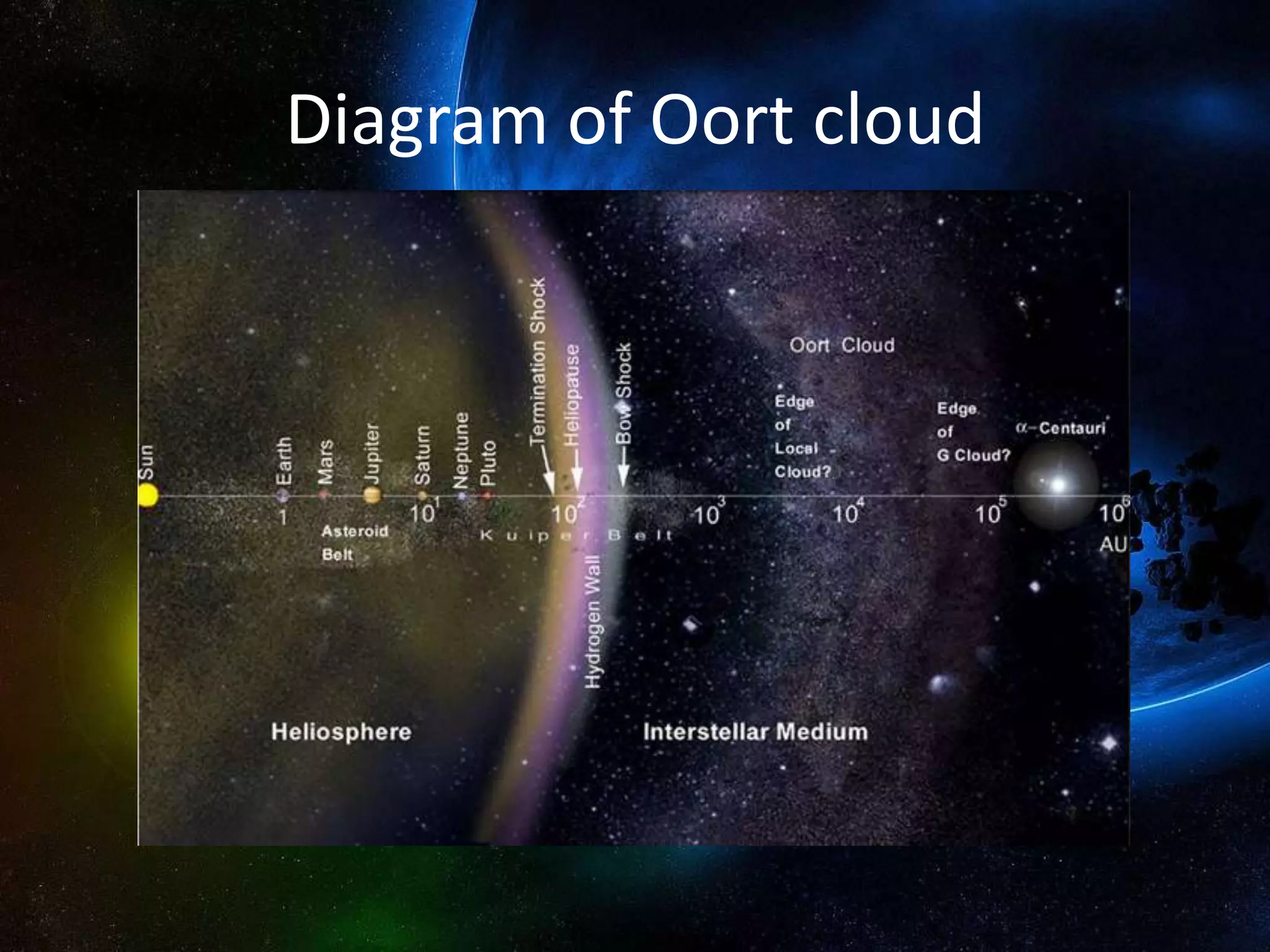
The Oort Cloud starts about 5000 AU’s from the
 sun, and extends to about 2.1 light-years from
the sun, and mostly a sphere. Most of the Oort
   cloud is beyond the outer solar system, and
stops about 2.1 light-years away at the edge of
 the sun gravitational influence, about half way
  to proximus centauri. One incorrect assumed
  fact is that the solar system is that it extends
   only to the Kuiper Belt. The solar system in
 fact, extends to the far edge of the Oort cloud.
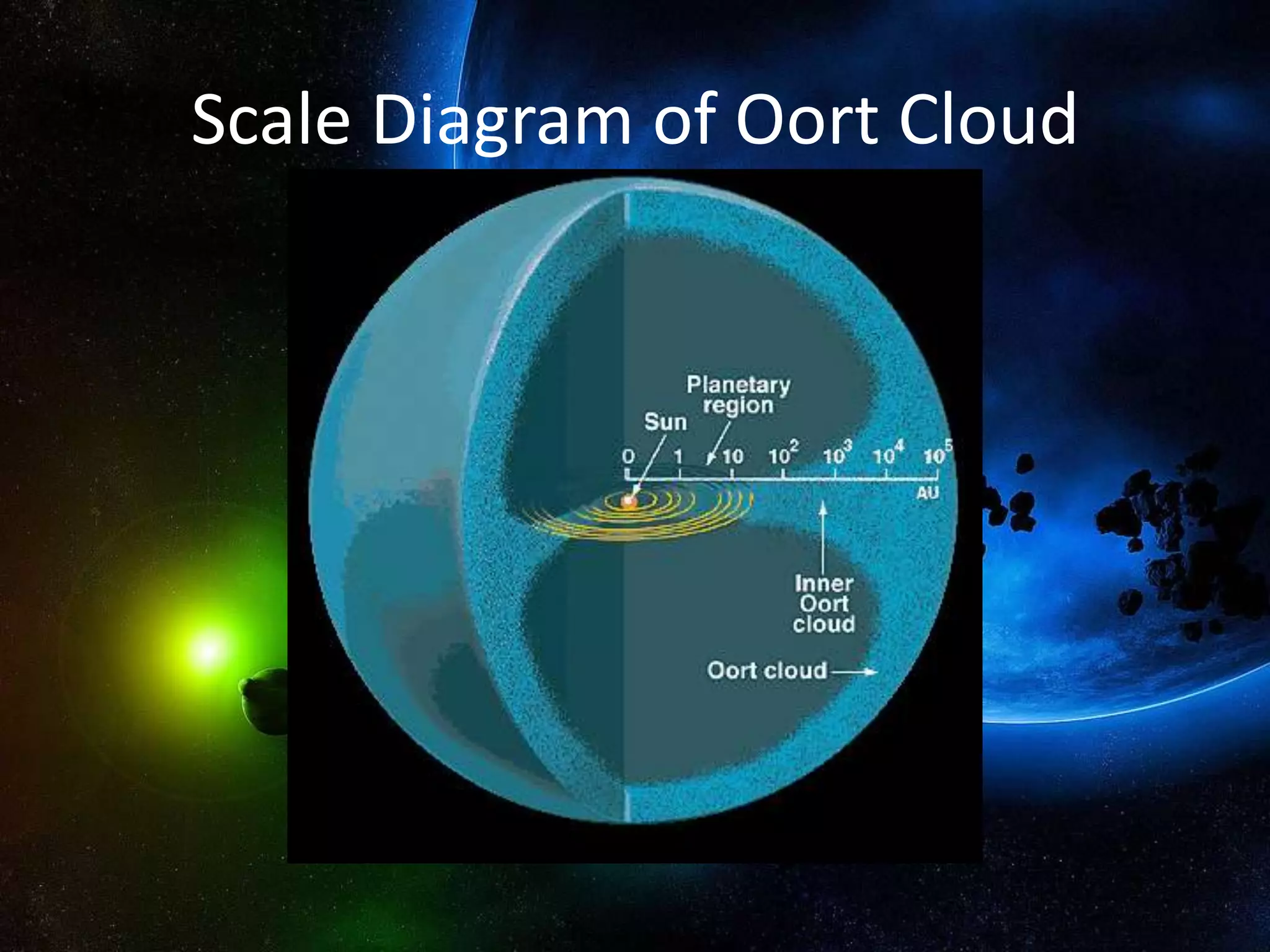
Scale Diagram of Oort Cloud
What is the Oort cloud made of?
   The Oort cloud is mainly made up of comets,
such as Hyakutake, a comet from the Oort cloud
that orbits high above the interstellar plane. The
  comet in the Oort cloud are extremely sparse,
  separated by about __________ km each. The
    estimated Temputure of the Oort cloud is 4
  Celsius above absolute zero. The Oort cloud is
 thought to be the source of Halley-type comets
   and trans-Neptunian comets. The Oort cloud
       may also contain a few rocky objects.
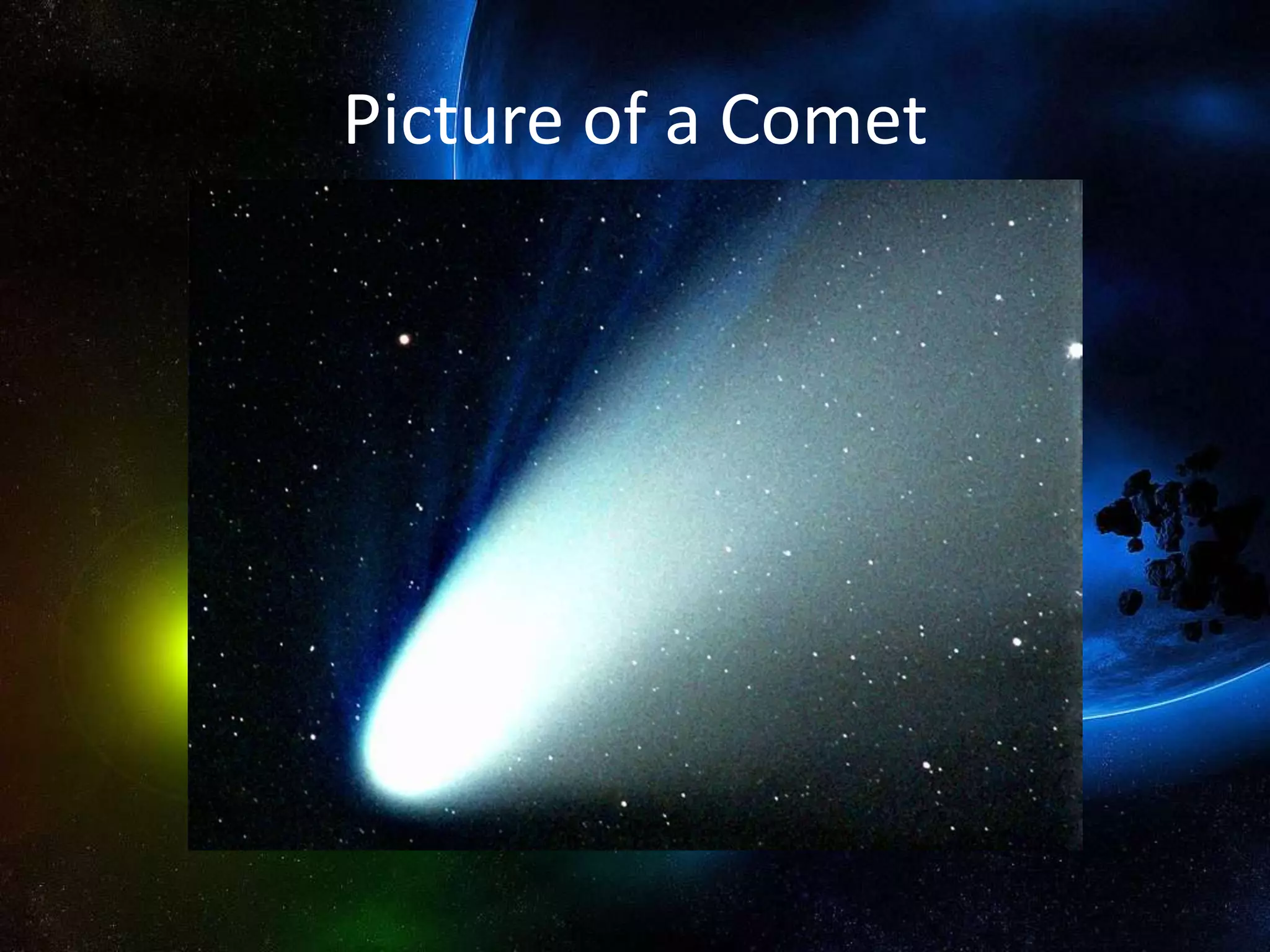
Picture of a Comet
Formation
• Most of the Oort Cloud formed at the
  formation of our solar system in the
  protoplanetary disc near the sun. The Oort
  clouds mass peaked after 800 million years.
  Some of the Oort Cloud’s comets are from
  other solar systems though. If another solar
  system passes close enough to our solar
  system, we can trade comets, and sometimes
  send some of our comets toward the inner
  solar system.
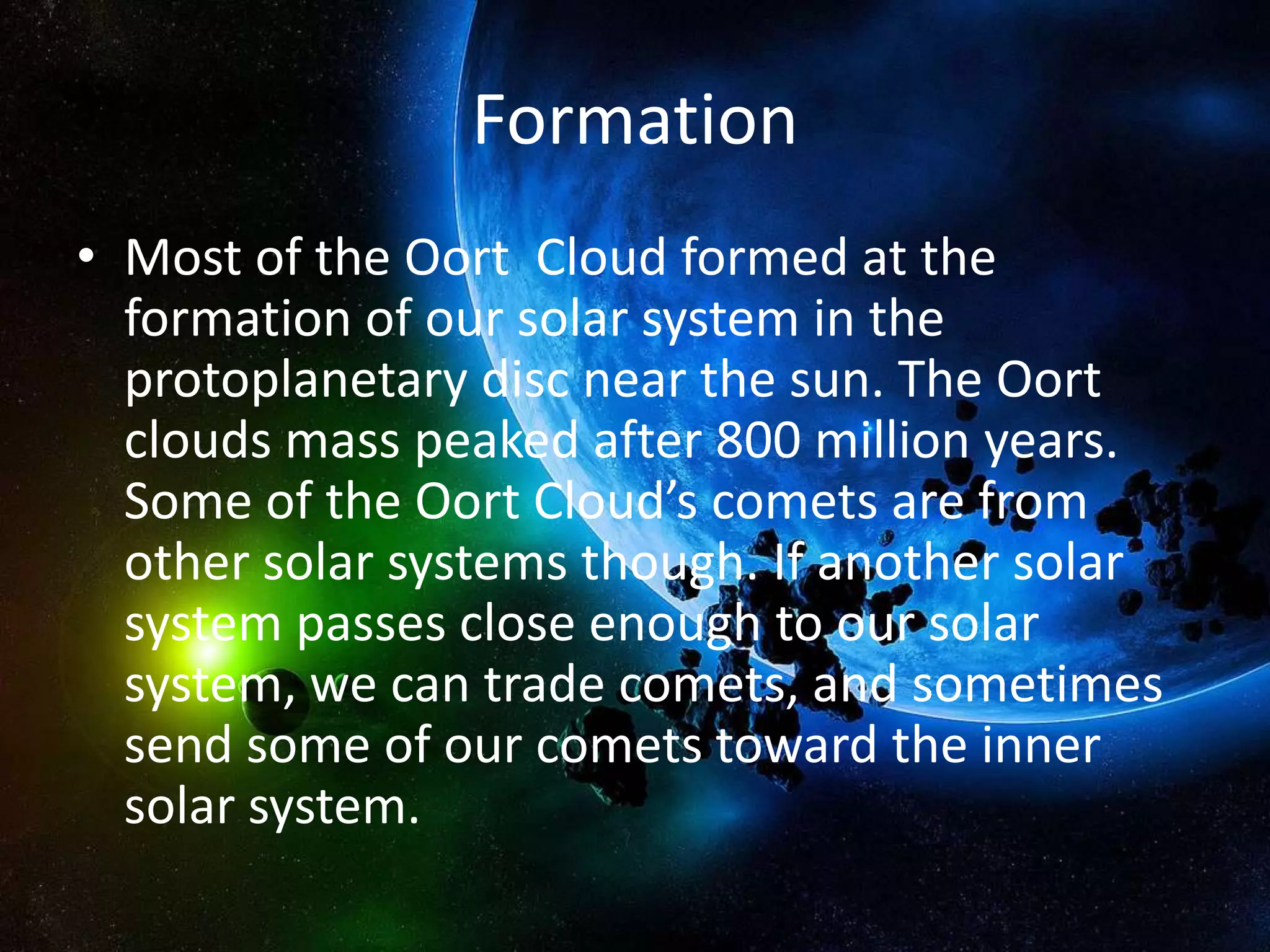
Picture of the Oort Cloud
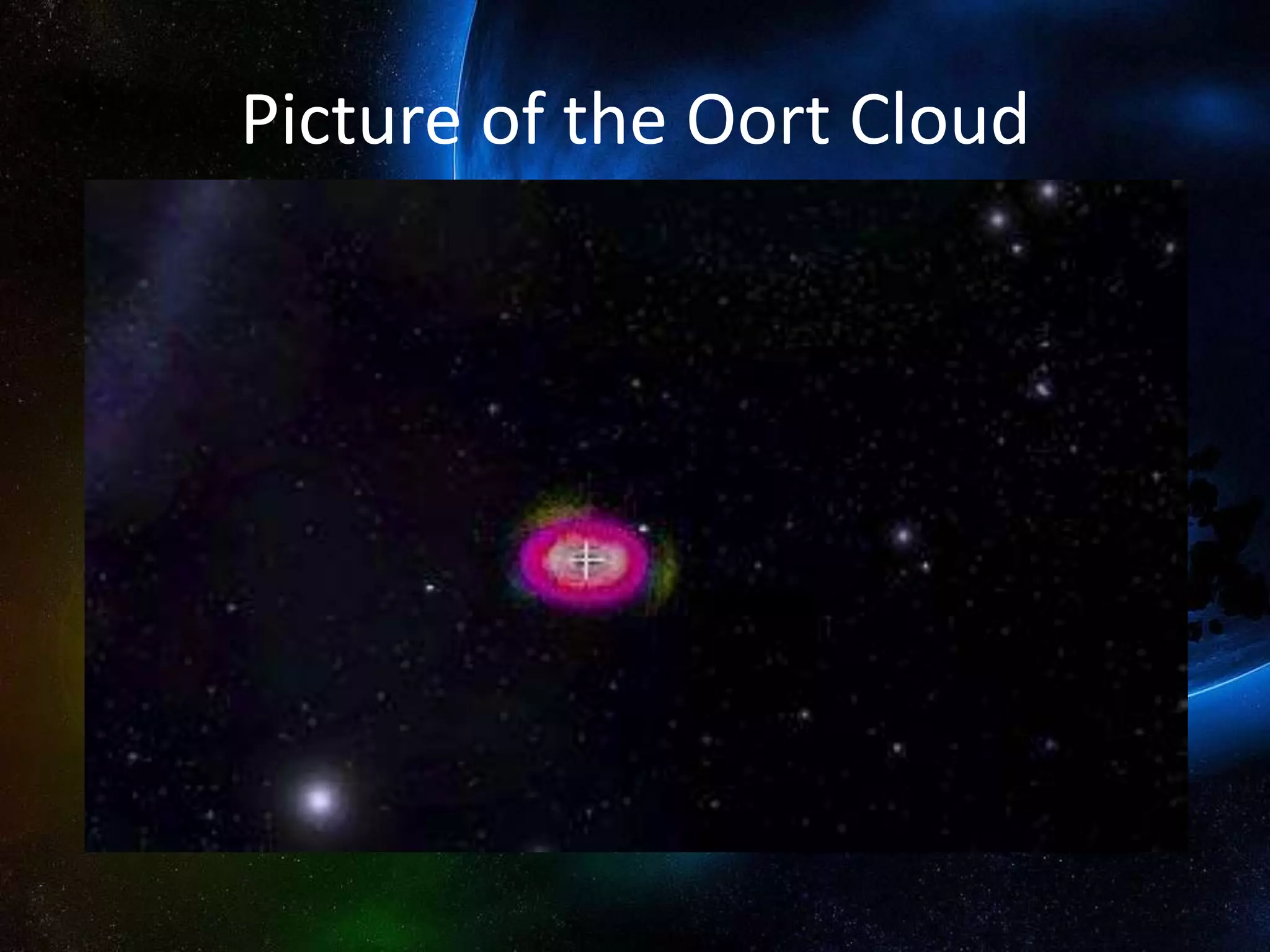
Diagram of Oort cloud
Parts of the Oort cloud
• The Oort cloud is made up of two
parts, the inner cloud, or hills cloud,
and the outer cloud. The outer cloud
 is more like a sphere, and the inner
      cloud is more like a disc.
Discovery
• The Oort Cloud was discovered by Jan
 Oort, in 1950.The Dutch astronomer Jan
 Oort theorized that comets came from a
 common region of the solar system now
 called the Oort cloud. The Oort Cloud is
 only technically theoretical, but we very
           much think it exists.
Mass
The mass of the Oort cloud is an estimated
     2.63390673876 * 1023 tons, or an
  estimated 40 times the mass of earth.
 When the Oort cloud was first discovered
in 1950, astronomers thought the mass of
the Oort Cloud was equivalent to the mass
 of Jupiter, 1.4354791726242 * 1024 tons.
        An difference of 2.6 to 14.4
Heliopause
• The Heliopause is the outer influence of the
  solar wind, where the solar wind is stopped.
  The Heliopause is also a deflector for the
  dangerous galactic interstellar radiation. No
  spacecraft's have ever reached the
  Heliopause, though explorer 1 and 2 are close.
  The Heliopause is observed by the IBEX
  spacecraft. The Heliopause is way outside of
  the planets, 110 to 115 AU from the sun.
Solar Transition
• The first part of the transition from the heliosphere
  to the interstellar medium is the termination shock,
  the slowing of the solar wind.
• The second part of the transition from the
  heliosphere to the interstellar medium is the
  Heliopause, the stopping of the solar wind.
• The third part of the transition from the heliosphere
  to the interstellar medium is the Bow Shock, the
  boundary between the heliosphere and the
  interstellar medium.

Oort cloud v2 Adam

  • 1.
  • 2.
    Size The Oort Cloudstarts about 5000 AU’s from the sun, and extends to about 2.1 light-years from the sun, and mostly a sphere. Most of the Oort cloud is beyond the outer solar system, and stops about 2.1 light-years away at the edge of the sun gravitational influence, about half way to proximus centauri. One incorrect assumed fact is that the solar system is that it extends only to the Kuiper Belt. The solar system in fact, extends to the far edge of the Oort cloud.
  • 3.
    Scale Diagram ofOort Cloud
  • 4.
    What is theOort cloud made of? The Oort cloud is mainly made up of comets, such as Hyakutake, a comet from the Oort cloud that orbits high above the interstellar plane. The comet in the Oort cloud are extremely sparse, separated by about __________ km each. The estimated Temputure of the Oort cloud is 4 Celsius above absolute zero. The Oort cloud is thought to be the source of Halley-type comets and trans-Neptunian comets. The Oort cloud may also contain a few rocky objects.
  • 5.
  • 6.
    Formation • Most ofthe Oort Cloud formed at the formation of our solar system in the protoplanetary disc near the sun. The Oort clouds mass peaked after 800 million years. Some of the Oort Cloud’s comets are from other solar systems though. If another solar system passes close enough to our solar system, we can trade comets, and sometimes send some of our comets toward the inner solar system.
  • 7.
    Picture of theOort Cloud
  • 8.
  • 9.
    Parts of theOort cloud • The Oort cloud is made up of two parts, the inner cloud, or hills cloud, and the outer cloud. The outer cloud is more like a sphere, and the inner cloud is more like a disc.
  • 10.
    Discovery • The OortCloud was discovered by Jan Oort, in 1950.The Dutch astronomer Jan Oort theorized that comets came from a common region of the solar system now called the Oort cloud. The Oort Cloud is only technically theoretical, but we very much think it exists.
  • 11.
    Mass The mass ofthe Oort cloud is an estimated 2.63390673876 * 1023 tons, or an estimated 40 times the mass of earth. When the Oort cloud was first discovered in 1950, astronomers thought the mass of the Oort Cloud was equivalent to the mass of Jupiter, 1.4354791726242 * 1024 tons. An difference of 2.6 to 14.4
  • 12.
    Heliopause • The Heliopauseis the outer influence of the solar wind, where the solar wind is stopped. The Heliopause is also a deflector for the dangerous galactic interstellar radiation. No spacecraft's have ever reached the Heliopause, though explorer 1 and 2 are close. The Heliopause is observed by the IBEX spacecraft. The Heliopause is way outside of the planets, 110 to 115 AU from the sun.
  • 13.
    Solar Transition • Thefirst part of the transition from the heliosphere to the interstellar medium is the termination shock, the slowing of the solar wind. • The second part of the transition from the heliosphere to the interstellar medium is the Heliopause, the stopping of the solar wind. • The third part of the transition from the heliosphere to the interstellar medium is the Bow Shock, the boundary between the heliosphere and the interstellar medium.