 Pros                 Cons
 They are easy to      They are too heavy
  build                  to lift into space
 Can operate in bad    They are costly to
  weather                maintain.
 Can be controlled     Placed in remote
  over the internet      places
  Cheap to make        Affected by other
                         radio waves
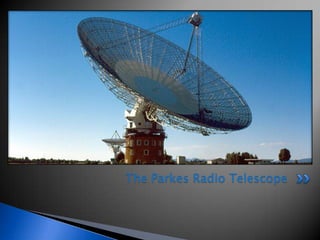
 The Parkes radio telescope
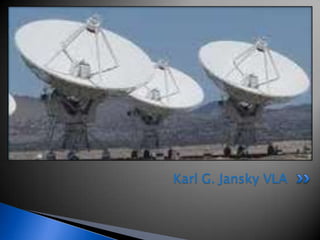
 Karl G. Jansky VLA (Very Large Array)
The Parkes Radio Telescope
Karl G. Jansky VLA
 Radio waves reflect off of the dish and into
  the tip
 There are receivers under the tip that
  intercept the radio waves
 We use them to intercept radio waves from space
 Invented in 1937 by Radio telescopes can measure
  hydrogen between stars, something that optical these
  telescopes measure radio waves, enabling them to see
  into ranges that optical telescopes cants see, Scientists
  can make false color pictures from these radio waves.
  telescopes cant do because
E t astronomer Grote Rever, radio telescopes can search.
Contribute in many ways to astronomers zero mission
wavelengths of these hydrogen clouds are too long.
Objects such as pulsars and quasars are highly energetic
and emit radio waves in addition to visible light. Radio
telescopes can read these radio waves and gain
additional information about these objects.
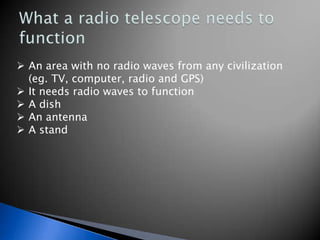
 An area with no radio waves from any civilization
  (eg. TV, computer, radio and GPS)
 It needs radio waves to function
 A dish
 An antenna
 A stand

The radio telescope

  • 2.
     Pros Cons They are easy to They are too heavy build to lift into space Can operate in bad They are costly to weather maintain. Can be controlled Placed in remote over the internet places  Cheap to make Affected by other radio waves
  • 4.
     The Parkesradio telescope  Karl G. Jansky VLA (Very Large Array)
  • 5.
  • 6.
  • 7.
     Radio wavesreflect off of the dish and into the tip  There are receivers under the tip that intercept the radio waves
  • 8.
     We usethem to intercept radio waves from space  Invented in 1937 by Radio telescopes can measure hydrogen between stars, something that optical these telescopes measure radio waves, enabling them to see into ranges that optical telescopes cants see, Scientists can make false color pictures from these radio waves. telescopes cant do because E t astronomer Grote Rever, radio telescopes can search. Contribute in many ways to astronomers zero mission wavelengths of these hydrogen clouds are too long. Objects such as pulsars and quasars are highly energetic and emit radio waves in addition to visible light. Radio telescopes can read these radio waves and gain additional information about these objects.
  • 9.
     An areawith no radio waves from any civilization (eg. TV, computer, radio and GPS)  It needs radio waves to function  A dish  An antenna  A stand