Oncogenesis Human cancer development is a result of a genetic disease protoncogenes Tumour suppressor genes. Regulatory expression of these genes can be seen in the normal cells and protein products of these genes are fundamental for normal cell function.
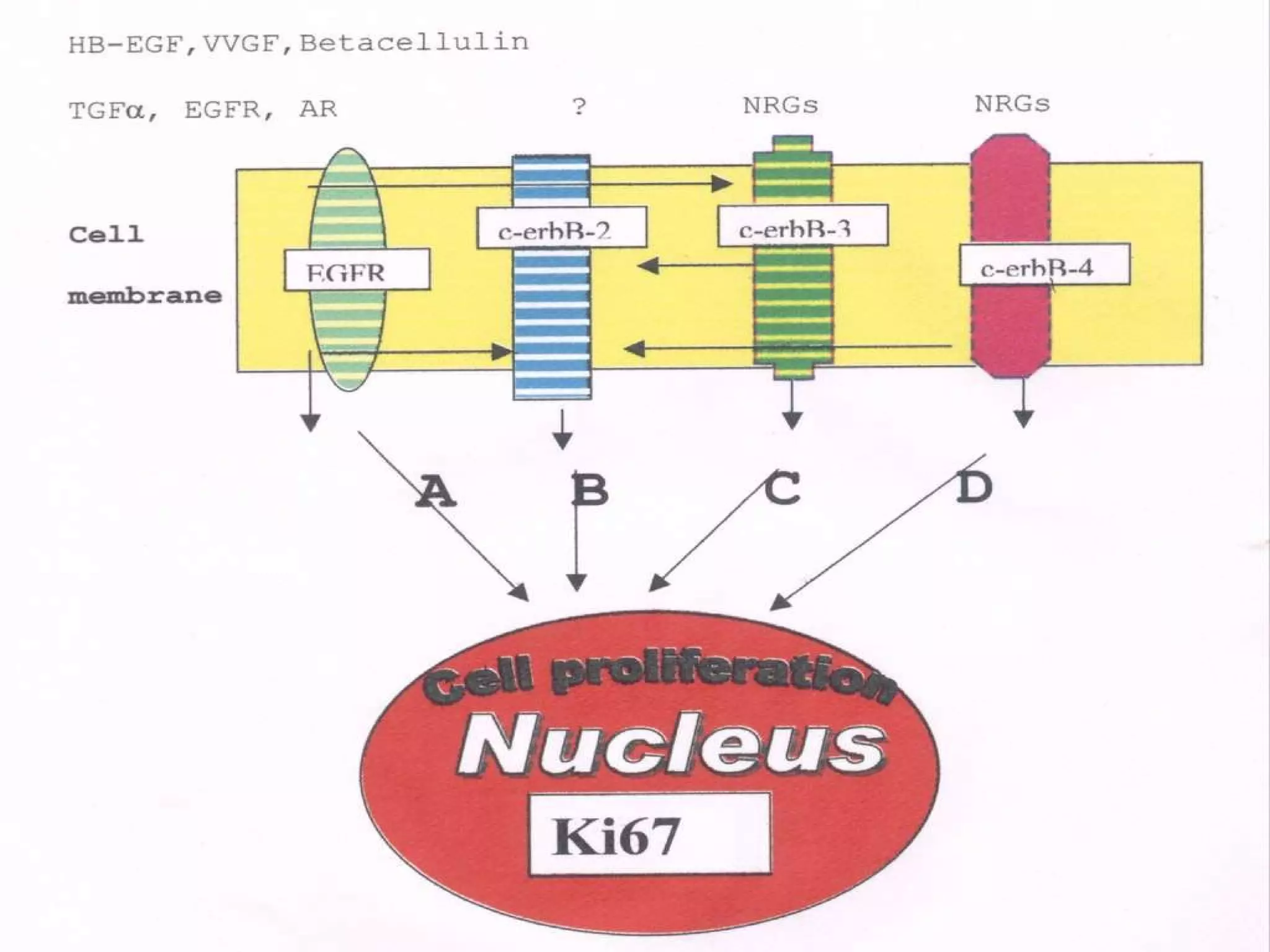
Examples: Oncogenes:  Ras, Myc, EGFR,c-erbB1,2,3. Tumour suppressor genes: p53, Rb genes
Carcinogenesis Multifactorial etiology.  The tumour suppressor genes or oncogenes would be altered in the presence of carcinogens: Chemical carcinogens Physical agents Ionizing radiation  Viral agents Others
Four common types of genetic changes Deletion : Loss of tumour suppressor genes  Mutation :p53, Ras Inversion :Relocate the the oncogenes in Translocation to DNA areas which will leads inappropriate transcription.
Subsequent accumulation of such growth promoting genetic defects forms the basis of current multi step process of tumourigenesis. This multi step process includes.  Initiation. Promotion.  Tumour progression.
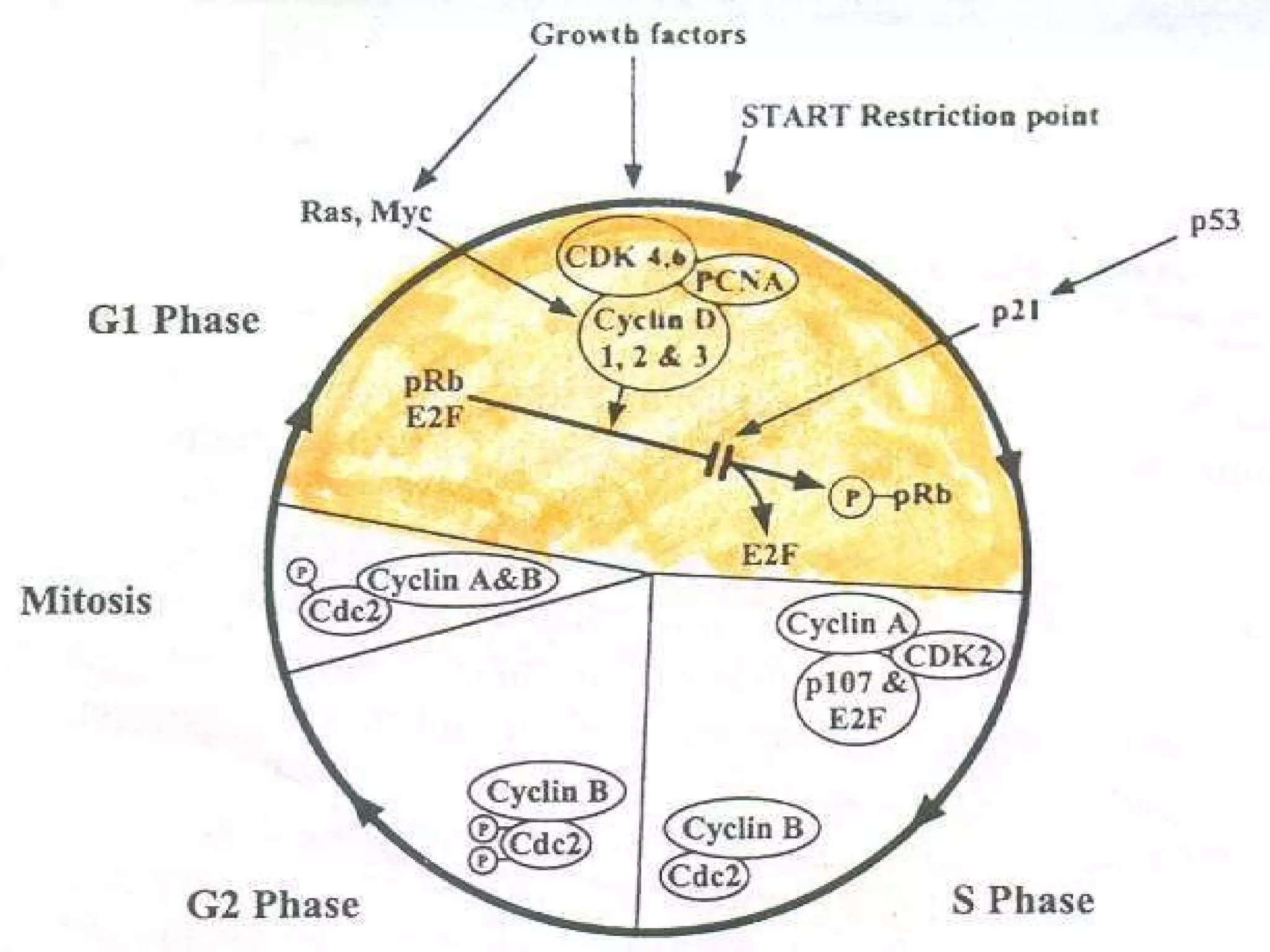
Many of the known oncogenes and oncosupressor genes help control mitosis and apoptosis. Lack of this control would leads to development of malignancy.  Genetic disease.
Tumour marker Substance or group of substance produced by the tumour  Which can be used as a indicator to detect the presence of the tumour.
A tumour marker should be indicative of : Tumour susceptibility of the patient. Severity or virulence of the tumour. Prognosis of the disease. Tumour burden (Including metastasis) . Treatment response.
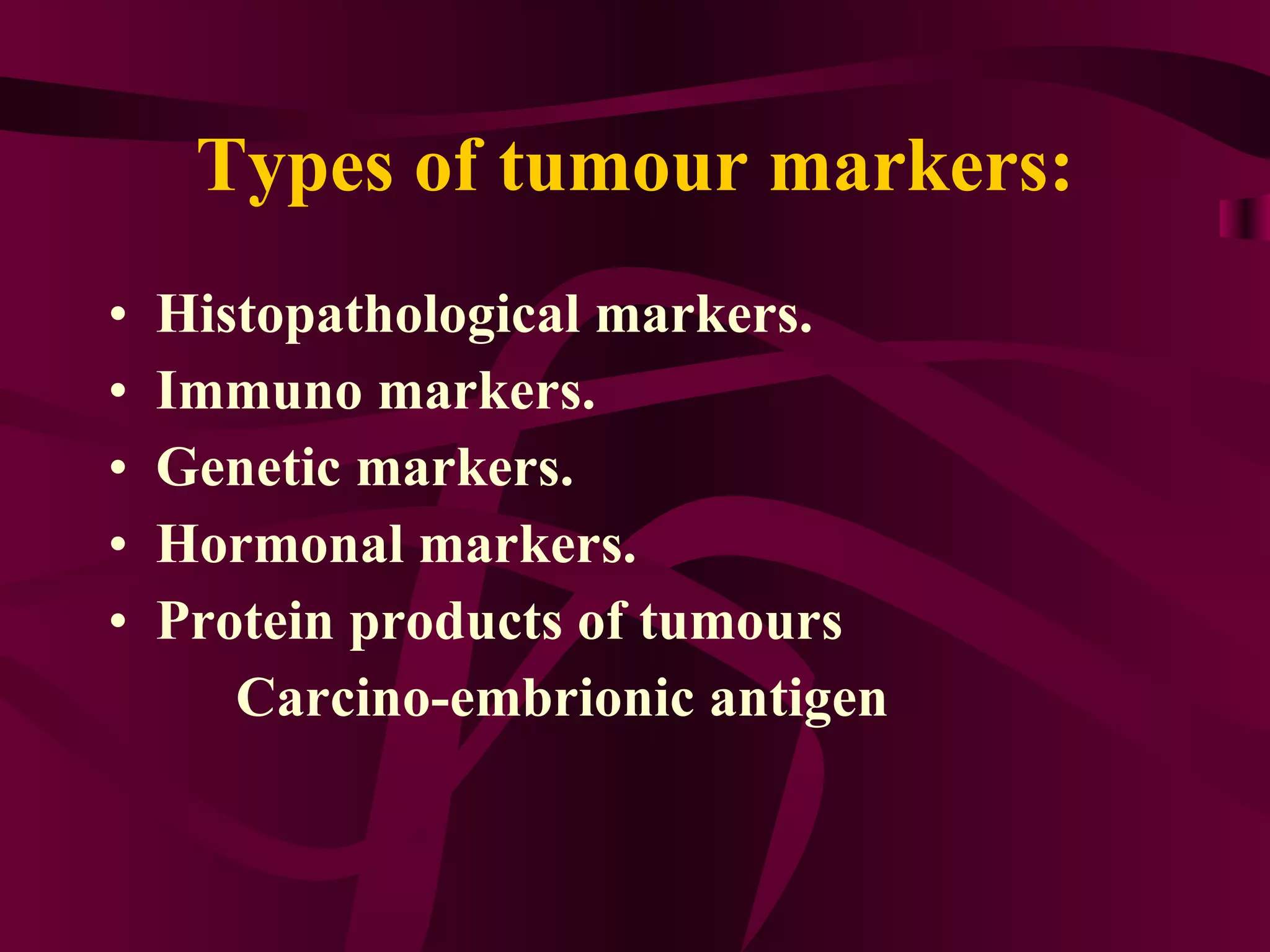
Types of tumour markers: Histopathological markers. Immuno markers. Genetic markers. Hormonal markers. Protein products of tumours Carcino-embrionic antigen
 
 
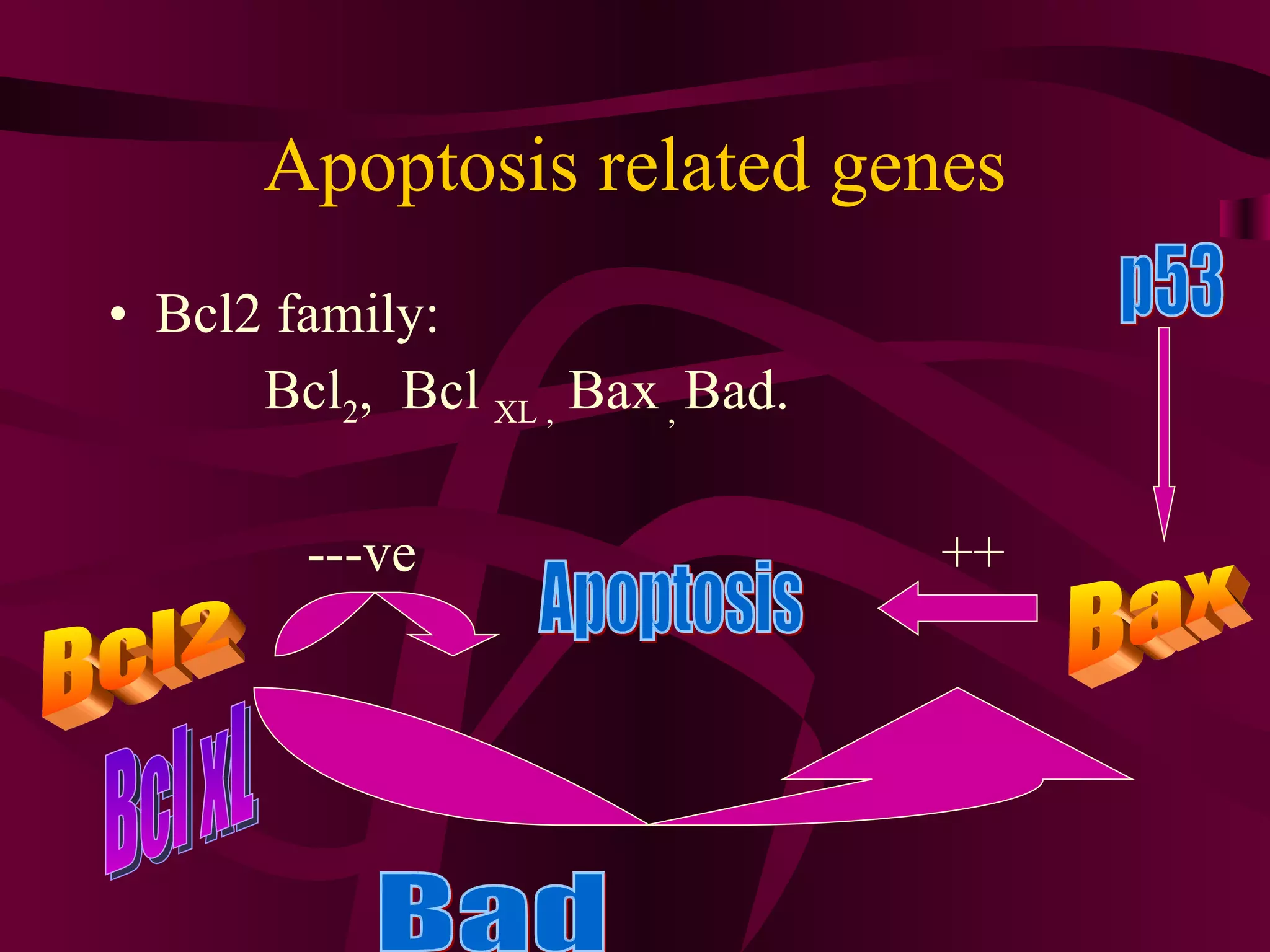
Apoptosis related genes Bcl2 family: Bcl 2 ,  Bcl  XL ,  Bax  ,  Bad. ---ve  ++  Apoptosis Bcl2 Bax Bcl xL p53 Bad

Oncogenisis and Tumor Markers

  • 1.
    Oncogenesis Human cancerdevelopment is a result of a genetic disease protoncogenes Tumour suppressor genes. Regulatory expression of these genes can be seen in the normal cells and protein products of these genes are fundamental for normal cell function.
  • 2.
    Examples: Oncogenes: Ras, Myc, EGFR,c-erbB1,2,3. Tumour suppressor genes: p53, Rb genes
  • 3.
    Carcinogenesis Multifactorial etiology. The tumour suppressor genes or oncogenes would be altered in the presence of carcinogens: Chemical carcinogens Physical agents Ionizing radiation Viral agents Others
  • 4.
    Four common typesof genetic changes Deletion : Loss of tumour suppressor genes Mutation :p53, Ras Inversion :Relocate the the oncogenes in Translocation to DNA areas which will leads inappropriate transcription.
  • 5.
    Subsequent accumulation ofsuch growth promoting genetic defects forms the basis of current multi step process of tumourigenesis. This multi step process includes. Initiation. Promotion. Tumour progression.
  • 6.
    Many of theknown oncogenes and oncosupressor genes help control mitosis and apoptosis. Lack of this control would leads to development of malignancy. Genetic disease.
  • 7.
    Tumour marker Substanceor group of substance produced by the tumour Which can be used as a indicator to detect the presence of the tumour.
  • 8.
    A tumour markershould be indicative of : Tumour susceptibility of the patient. Severity or virulence of the tumour. Prognosis of the disease. Tumour burden (Including metastasis) . Treatment response.
  • 9.
    Types of tumourmarkers: Histopathological markers. Immuno markers. Genetic markers. Hormonal markers. Protein products of tumours Carcino-embrionic antigen
  • 10.
  • 11.
  • 12.
    Apoptosis related genesBcl2 family: Bcl 2 , Bcl XL , Bax , Bad. ---ve ++ Apoptosis Bcl2 Bax Bcl xL p53 Bad