SLEEP DISORDERS
Dr. Munira Shapurwala Kausar
Dept of Respiratory Medicine
• What do you know about sleep?
• Sleep quality
7-8hrs
Everyone has different requirement
for sleep
Genetic variations are present
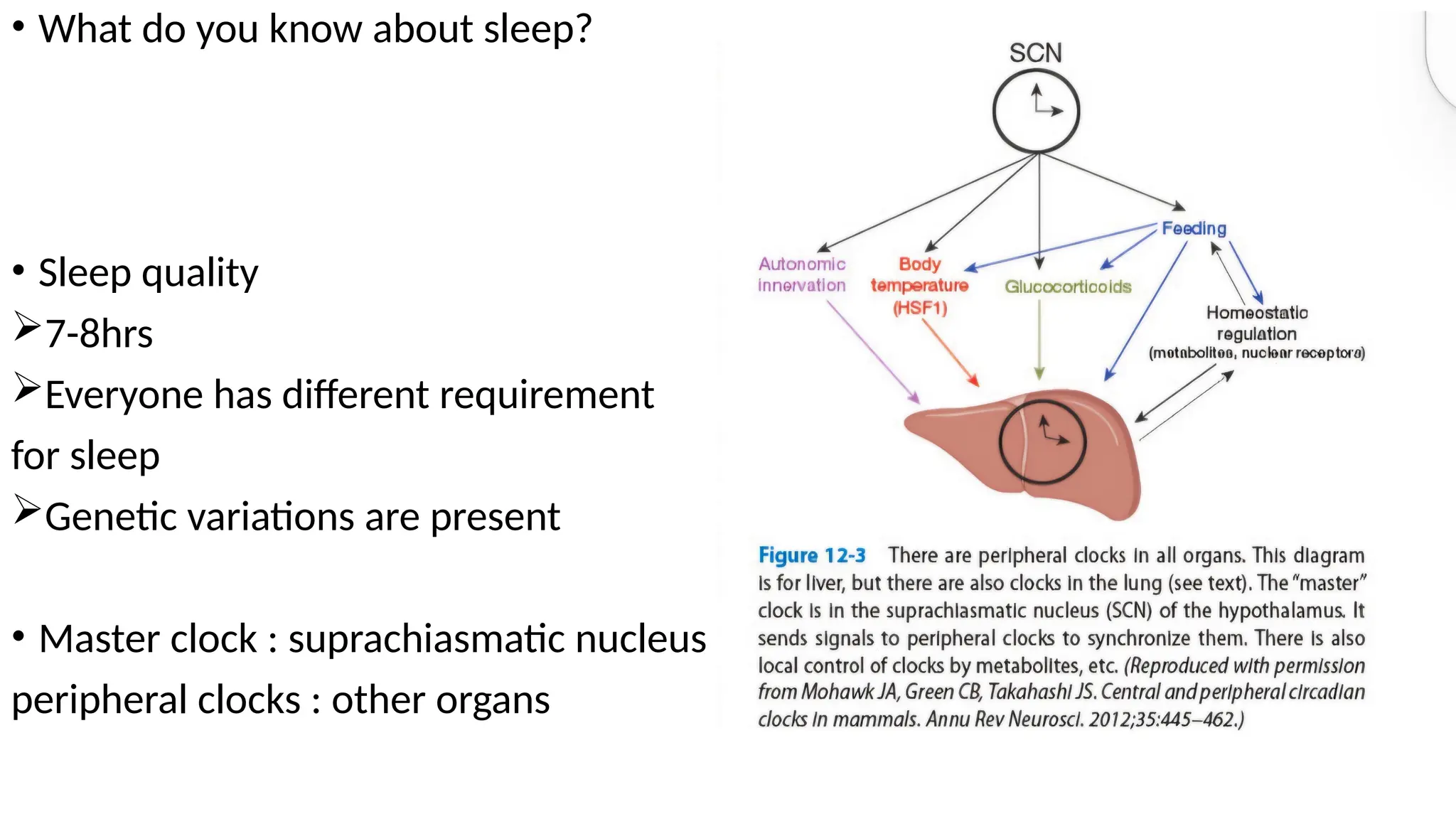
• Master clock : suprachiasmatic nucleus
peripheral clocks : other organs
Stages of sleep
REM
NREM
• Stage 1
• Stage 2
• Stage 3
REM sleep occurring every 90 minutes
Icsd 3 classification:
• Insomnia
• Sleep related breathing disorders
• Hypersomnia
• Circadian sleep disorders
• Parasomnias
• Sleep related movement disorders
• Isolated symptoms, apparently normal variants and unresolved issues
• Other sleep disorders
Dsm 5 classification
• Insomnia disorder
• Hypersomnolence disorder
• Narcolepsy
• Breathing related sleep disorders
Obstructive sleep apnea hypopnea
Central sleep apnea
Sleep related hypoventilation
• Circadian rhythm sleep-wake disorders
• Parasomnias
NREM sleep arousal disorders
Nightmare disorder and REM sleep behavior disorder
• Restless leg syndrome
• Substance/ medication induced sleep disorder
Icd 10 classification
G47 sleep disorders
• G47.0 Disorders of initiating and maintaining sleep (insomnias)
• G47.1 Disorders of excessive somnolence (hypersomnia)
• G47.2 Disorders of sleep wake schedule
• G47.3 Sleep apnea
• G47.4 Narcolepsy and cataplexy
• G47.8 Other sleep disorders
• G47.9 Sleep disorders, unspecified
Common Causes of Persistent
Daytime Sleepiness
• Obstructive sleep apnea and other sleep-disordered breathing conditions (e.g.,
neuromuscular weakness with nocturnal respiratory failure)
• Narcolepsy/cataplexy syndrome
• Sleep-related movement disorders (periodic limb movement disorder, bruxism, etc.)
• Depression
• Postviral fatigue
• Head injury
• Metabolic, toxic, and drug-induced hypersomnolence
• Idiopathic hypersomnolence
• Insufficient sleep
• Circadian rhythm sleep disorders
Definitions
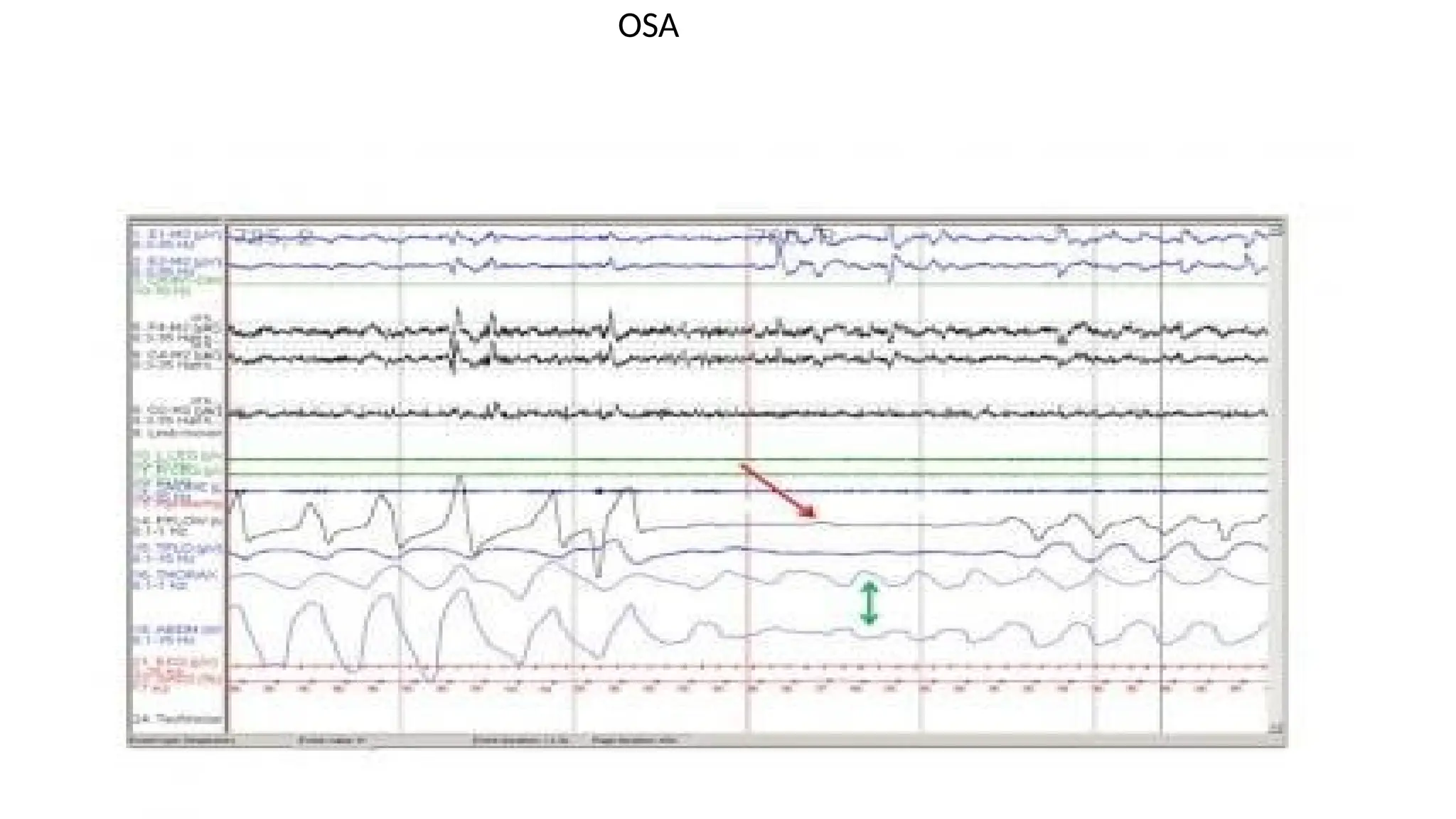
APNEA- a drop in the peak respiratory signal (using an oronasal thermal sensor, PAP flow, or
alternative sensor) of ≥90% from baseline; in addition, the drop must be ≥10 s in duration.
HYPOPNEA -a drop in the peak respiratory signal (using an oronasal thermal sensor, PAP flow, or
alternative sensor) Of ≥30% from baseline; the drop must be ≥10s in duration, and there is a ≥3%
(option≥ 4%) oxygen desaturation from baseline, or the event is associated with an arousal from
sleep apparent on the electroencephalogram (EEG).
APNEA–HYPOPNEA INDEX - (AHI, number of apneas and hypopneas per hour of sleep) is the
standard metric used to describe the severity of sleep apnea
APNEAS:
• obstructive (in which there is no airflow despite continued respiratory effort),
• central (no airflow and no respiratory effort)
• mixed (events initially appear central in origin, with respiratory effort occurring
during the latter portion of the same episode)
OSA
OSAS is usually defined by an AHI of at least 5 events/h and persistent complaints of excessive
daytime somnolence, unrefreshing sleep, or fatigue.
OSA is often classified as mild, moderate, or severe according to the AHI.
• 5 to<15 (mild),
• ≥15 to ≤ 30 (moderate),
• >30 events/h (severe)
Pathogenesis :
1) Anatomical 2)Neural
1)Anatomical
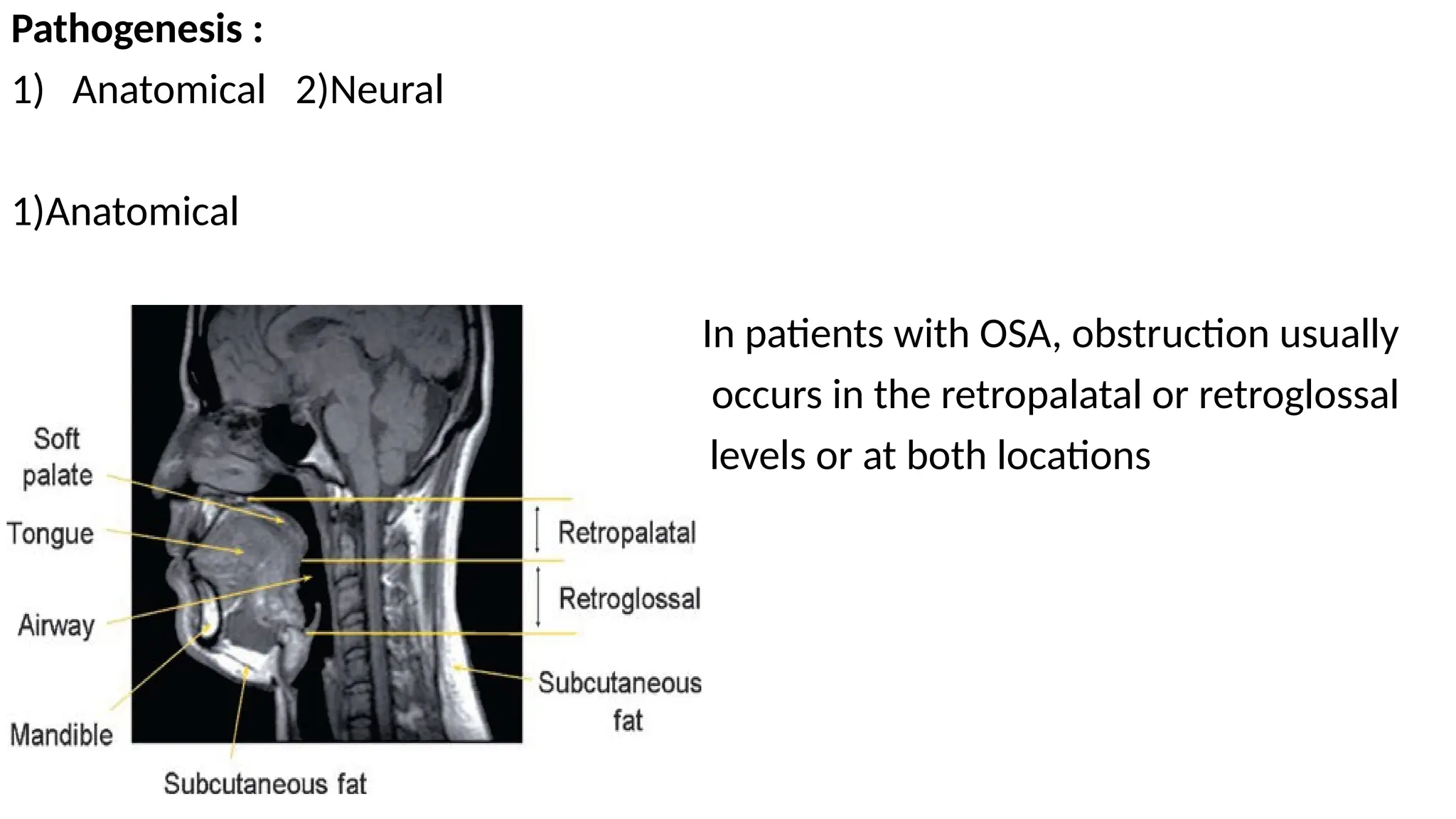
In patients with OSA, obstruction usually
occurs in the retropalatal or retroglossal
levels or at both locations
• A reduction in the lateral diameter of the airway
• Increased soft tissue mass may increase tissue pressure, resulting in airway
collapse and decreased airway volume.
• Craniofacial morphology also influence upper airway configuration. For example,
maxillary deficiency, mandibular retrusion, increased hyoid–mandibular plane
distance, and abnormalities of the cranial base have all been associated with
higher risks of sleep apnea.
• In inspiration the pressure in the upper airway falls below atmospheric pressure,
thus creating a tendency for the upper airway to collapse, this tendency is
exaggerated during sleep because of the posterior and downward displacement
of the tongue and the soft palate
2) Neural
The neural control of the upper airway muscles is complex and involves several
neurotransmitters (serotonin, norepinephrine, orexin–acetylcholine, and gamma-
aminobutyric acid) that are influenced by sleep itself.
1. negative airway pressure detected by laryngeal mechanoreceptors
activates the genioglossus via increased hypoglossal nerve discharge.
This reflex is diminished during non-REM sleep compared with wakefulness, and it
is further reduced during REM sleep, placing the airway at risk for collapse
REM sleep pharyngeal motor inhibition.
state-sensitive motor inhibitory cholinergic channel that operates at the hypoglossal motor pool
2. The upper airway muscles respond to input from the respiratory control center in the medulla,
with increases and decreases in activity in proportion to respiratory drive.
Diminished upper airway muscle activity can precipitate airway collapse, that is, obstructive
apnea
3. Neural mechanisms modulating arousal (serotonergic and noradrenergic neurons) have a tonic
excitatory influence on genioglossus activity. With the onset of sleep, there is a reduction in
arousal-modulated excitatory output to the upper airway musculature.
Arousal from sleep in response to respiratory activation helps to restore airway patency.
What happens in an apneic events?
reactive oxygen species & oxidative stress
Obstruction respiratory efforts intermittent hypoxemias arousals
apneic termination
intrathoracic pressure sympathetic activity
ANP peripheral resistance and cardiac stimulation
left ventricular (LV) transmural pressure HR and BP
compromise LV filling
increase both preload and afterload
EPIDEMIOLOGY AND RISK FACTORS FOR OSA:
AGE: prevalence increases through midlife & plateaus after age 60 to 65
GENDER: two to three times higher in men than women
postmenopausal women are at 3 fold higher risk
Risk Factors for Obstructive Sleep Apnea:
Obesity (BMI >30 kg/m2)
Neck size (collar size >17 inches in males, >16 inches in females)
Gender (male/female 2–3:1)
Genetic factors/family history
Upper airway and craniofacial anatomy
Macroglossia
Lateral peritonsillar narrowing
Elongation/enlargement of the soft palate
Tonsillar hypertrophy
Nasal septal deviation
Retrognathia, micrognathia
Narrowing of the hard palate
Class III/IV modified Mallampati airway
Specific genetic disorders, e.g., Treacher Collins, Down syndrome,
Apert syndrome
Endocrine disorders, e.g., hypothyroidism, polycystic ovarian
syndrome, acromegaly
Alcohol, sedative, or hypnotic use
Clinical Presentation of Obstructive Sleep Apnea:
• Loud, habitual snoring
• Witnessed apneas
• Nocturnal awakening
• Gasping or choking episodes during sleep
• Nocturia
• Nocturnal sweating
• Unrefreshing sleep, morning headaches
• Excessive daytime sleepiness
• Automobile or work-related accidents
• Irritability, memory loss, personality change
• Decreased libido
• Impotence
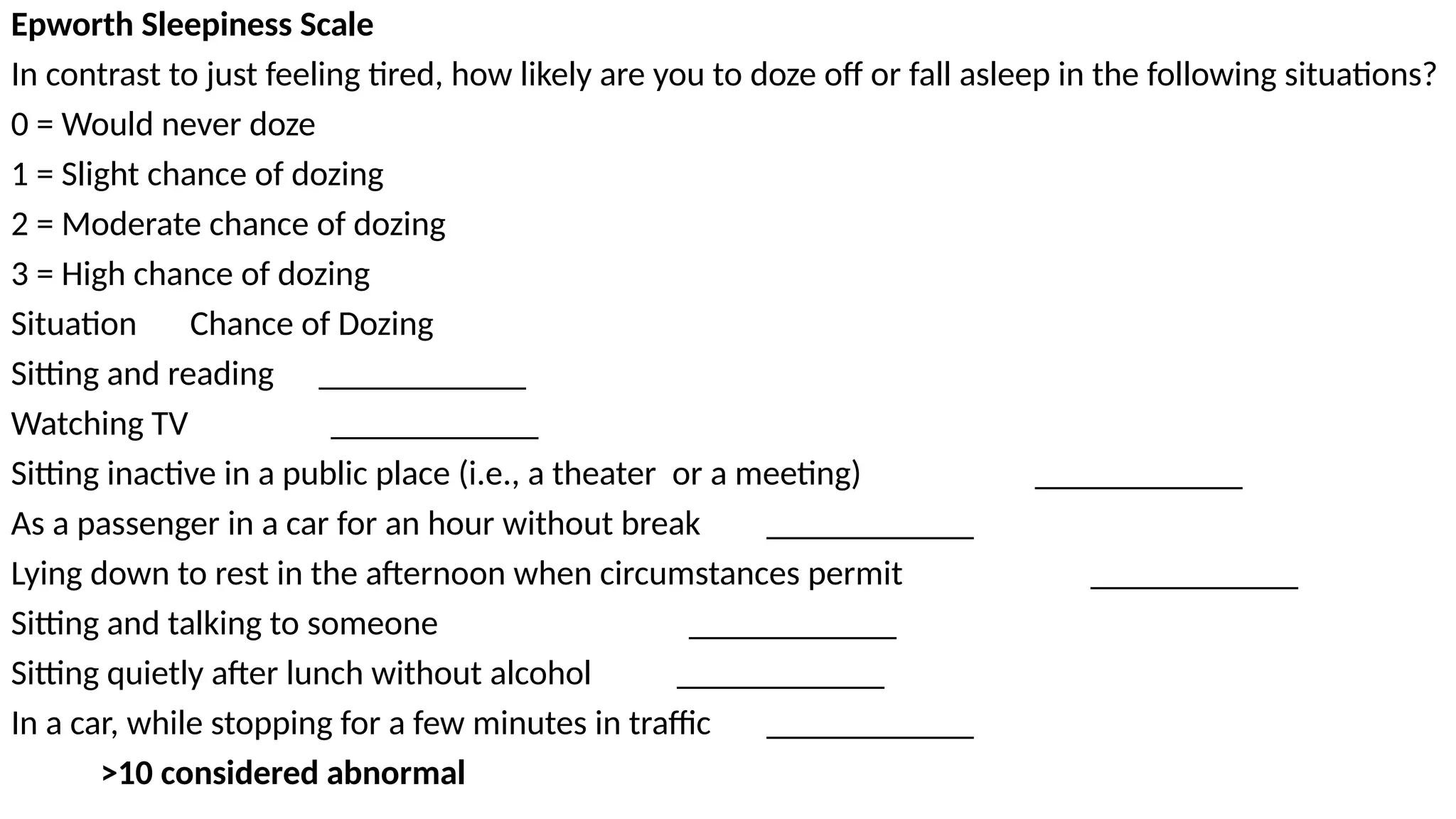
Epworth Sleepiness Scale
In contrast to just feeling tired, how likely are you to doze off or fall asleep in the following situations?
0 = Would never doze
1 = Slight chance of dozing
2 = Moderate chance of dozing
3 = High chance of dozing
Situation Chance of Dozing
Sitting and reading ____________
Watching TV ____________
Sitting inactive in a public place (i.e., a theater or a meeting) ____________
As a passenger in a car for an hour without break ____________
Lying down to rest in the afternoon when circumstances permit ____________
Sitting and talking to someone ____________
Sitting quietly after lunch without alcohol ____________
In a car, while stopping for a few minutes in traffic ____________
>10 considered abnormal
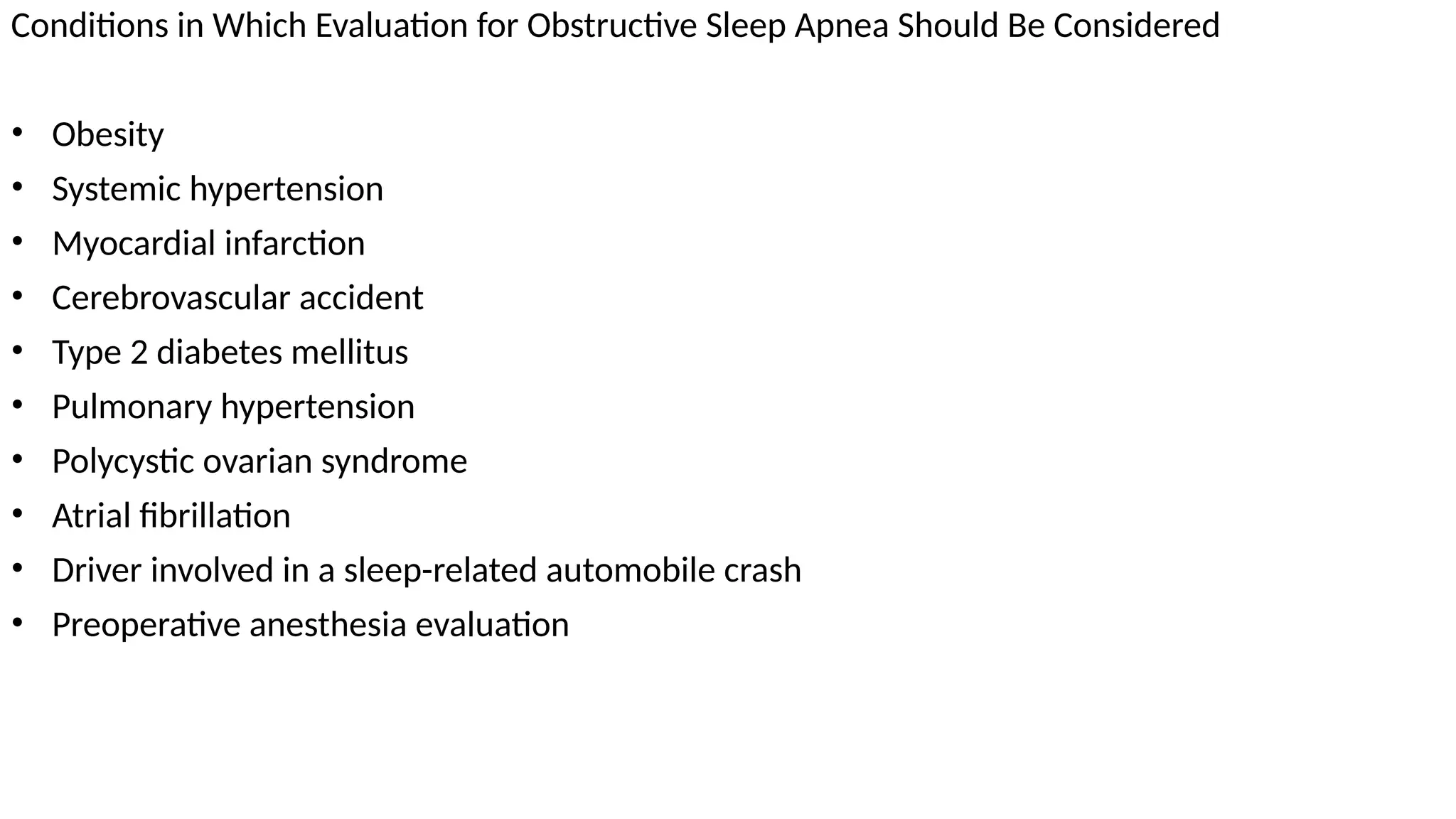
Conditions in Which Evaluation for Obstructive Sleep Apnea Should Be Considered
• Obesity
• Systemic hypertension
• Myocardial infarction
• Cerebrovascular accident
• Type 2 diabetes mellitus
• Pulmonary hypertension
• Polycystic ovarian syndrome
• Atrial fibrillation
• Driver involved in a sleep-related automobile crash
• Preoperative anesthesia evaluation
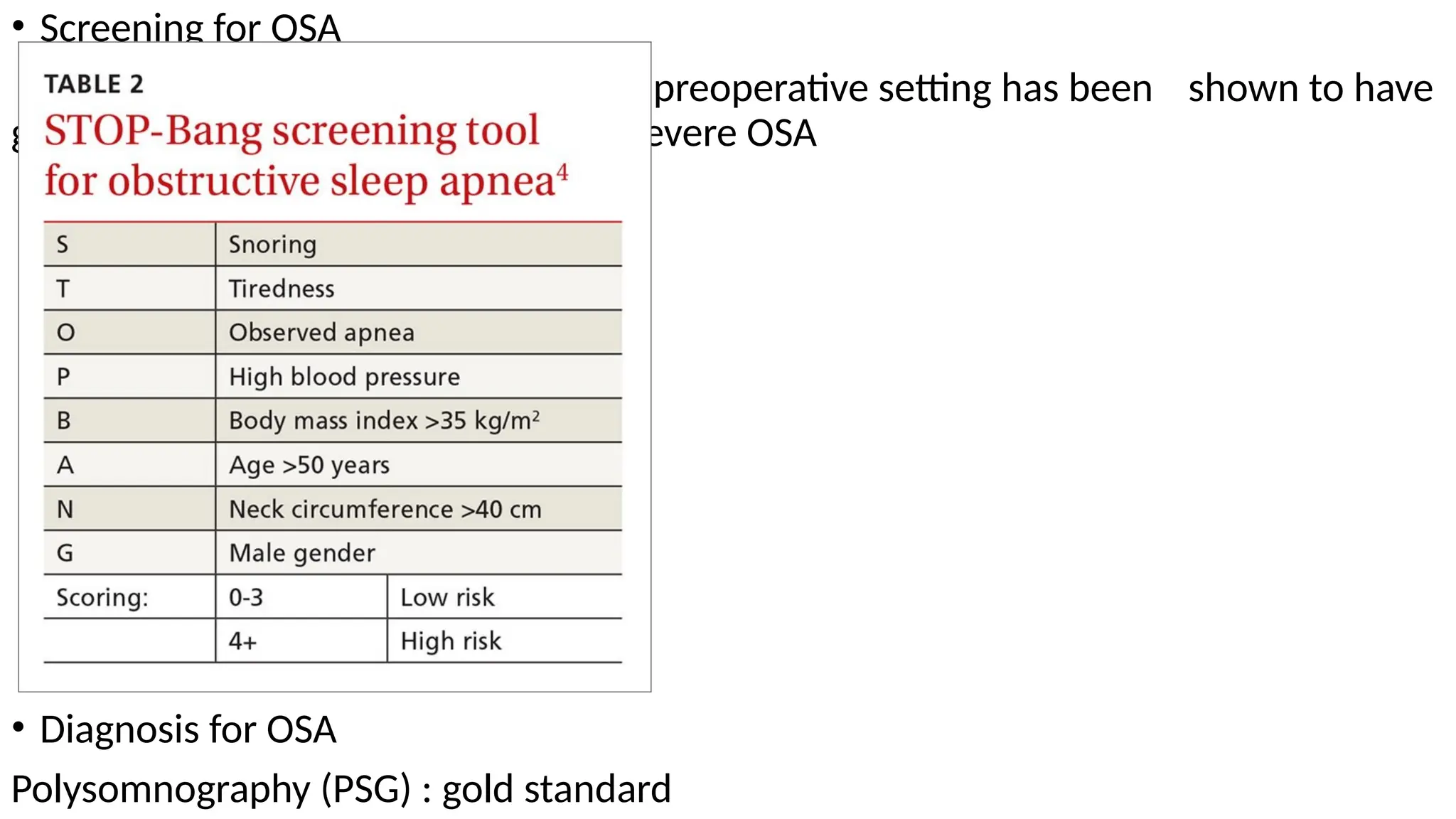
• Screening for OSA
Developed for the surgical preoperative setting has been shown to have
good predictive value for identifying severe OSA
• Diagnosis for OSA
Polysomnography (PSG) : gold standard
Diagnostic Testing Options for Sleep-disordered Breathing
Type
• I: EEG, EOG, EMG, ECG, airflow, respiratory effort, O2 saturation, usually video (all
conducted in a sleep laboratory with a sleep professional present)
• Out-of-center testing II : Minimum of seven channels including EEG, EOG, chin
EMG, ECG/HR, airflow, respiratory effort, and O2 saturation
• III: Minimum of four channels including ECG/HR, O2 saturation and at least two
channels of respiratory movement or respiratory movement and airflow
• IV : Airflow and/or O2 saturation
Treatment :
1. CPAP remains the mainstay of therapy for most patients mainstay of therapy for most patients with
OSA.
CPAP delivers a fixed pressure continuously throughout inspiration and expiration, providing a
pneumatic splint for the airway that prevents airway collapse during sleep
Typically, pressures of 5 to 20 cm H2O are needed to abolish apneic events, snoring, and oxyhemoglobin
desaturation in all positions and during REM sleep.
Complications Associated with Positive Airway Pressure (PAP) Therapies
 Nocturnal arousals
 Rhinitis, nasal irritation, and dryness
 Aerophagia
 Mask and mouth leaks (dry mouth in morning)
 Facial rash or irritation
 Difficulty with exhalation
 Claustrophobia
2. General measures
• Avoid alcohol, sedative hypnotics and opioids
• Sleep hygiene
• Weight loss
3. Intra oral devices :
Oral devices aim to alter the position of the upper airway structures, thereby enlarging airway
caliber and/or reducing airway collapsibility during sleep.
• Tongue retaining device (TRD)
• Palatal lifting device
• Mandibular advancing devices (MAD)
It is worn during sleep and results in anterior
motion of the mandible with consequent
enlargement of the airway. The appliance is
adjusted until the sleep-disordered is
breathing improves
4. Position Therapy
• The lateral position is associated with increased maximum cross-sectional upper
airway area and lower closing pressure of the passive pharyngeal airway
compared to the supine position
5. Oxygen therapy
• Reduces the degree of oxyhemoglobin desaturation and does not worsen apnea
frequency or duration
6.Medications
• Combination of atomoxetine and oxybutynin
• Modafinil can be utilized as adjunctive therapy for residual sleepiness
Doses from 200 to 400 mg daily have been shown to be effective in improving
excessive daytime sleepiness in several randomized trials
7. Surgery for Obstructive Sleep Apnea:
• Nasal surgery (septoplasty, sinus surgery, and others)
• Tonsillectomy and/or adenectomy
• Hypoglossal nerve stimulator implantation
• Uvulopalatopharyngoplasty (UPPP)
• Laser-assisted uvulopalatoplasty (LAUP)
• Radiofrequency volumetric tissue reduction
• Lingular tonsillectomy
• Genioglossus and hyoid advancement (GAHM)
• Sliding genioplasty
• Maxillomandibular advancement osteotomy
• Tracheostomy
Central sleep apnea
• CSA, in which repetitive episodes of breathing cessation occur in the absence of
respiratory effort, is characterized by reduced ventilatory motor output
• prevalence in the general population to be < 1%
1. Physiologic process in normal individuals in response to an arousal (especially
children and the elderly)
2. Manifestation of breathing instability in a number of medical conditions (e.g.,
Cheyne–Stokes respiration [CSR] in CHF and at high altitude)
3. In association with neurologic diseases such as Shy–Drager syndrome, stroke,
myasthenia gravis, neuromuscular disease, bulbar poliomyelitis, brainstem
infarction, and encephalitis.
• It is often divided into hypocapnic and hypercapnic types.
• Hypercapnic : awake resting hypoxemia and hypercapnia, hypersomnolence, signs of cor
pulmonale (right-sided heart failure and lower extremity edema), and nocturnal
hypoventilation
• Hypocapnic : increased chemo responsiveness of the ventilatory control, seen most commonly
in with heart failure or at high altitude.
• Central apneas occur if the arterial PCO2 falls below the “apneic threshold,” or PCO2 level
necessary to maintain rhythmic breathing
High-altitude Periodic Breathing
May occur in healthy individuals at high altitude
Hypoxia
Peripheral chemoreceptors (carotid body)
Increased ventilatory drive
PCO2 levels falls
Apneic threshold reached in sleep
CSA
Periodic breathing starts
• Delay between change in pco2 and po2 levels and detection by peripheral receptors is
brief
• Cycle time of periodic breathing is short 12 to 34 seconds
• Treatment : acetazolamide
oxygen supplementation
 Cheyne–Stokes Respiration (CSR)
Most commonly seen in systolic heart failure and, especially when present during wakefulness, is
a risk factor for higher mortality in this population
Risk factors for csr in systolic heart failure patients
• male gender
• Age greater than 65
• atrial fibrillation
• awake hypocapnia (PCO2<38 mm Hg)
Characterized by prolonged hyperpneas with a waxing and waning respiratory pattern and
prolonged cycle duration, that is, 40 to 90 s
Common in NREM sleep when ventilation in under metabolic control and is sensitive to apneic
thersholds and Pco2 levels
In systemic heart failure patients
Increased peripheral and central chemo responsiveness
Hyperventilation
Hypocapnia
• Arousals – peak of ventilation
• The diagnosis established by PSG demonstrating repetitive apneas in the absence
of thoracic–abdominal excursion.
Treatment :
• Pharmacologic management of heart failure, including beta blockade and angiotensin-
converting enzyme inhibitors.
• CPAP or oxygen for first-line treatment of CSR related to heart failure, and recommended
against the use of ASV to treat CHF-associated CSA in patients with low ejection fraction and
moderate or severe CSA
• PAP therapy : ASV mode (adaptive servo ventilation)- fixed expiratory pressure and variable
inspiratory pressure.
• Unilateral transvenous phrenic neurostimulation in patients with central sleep apnea
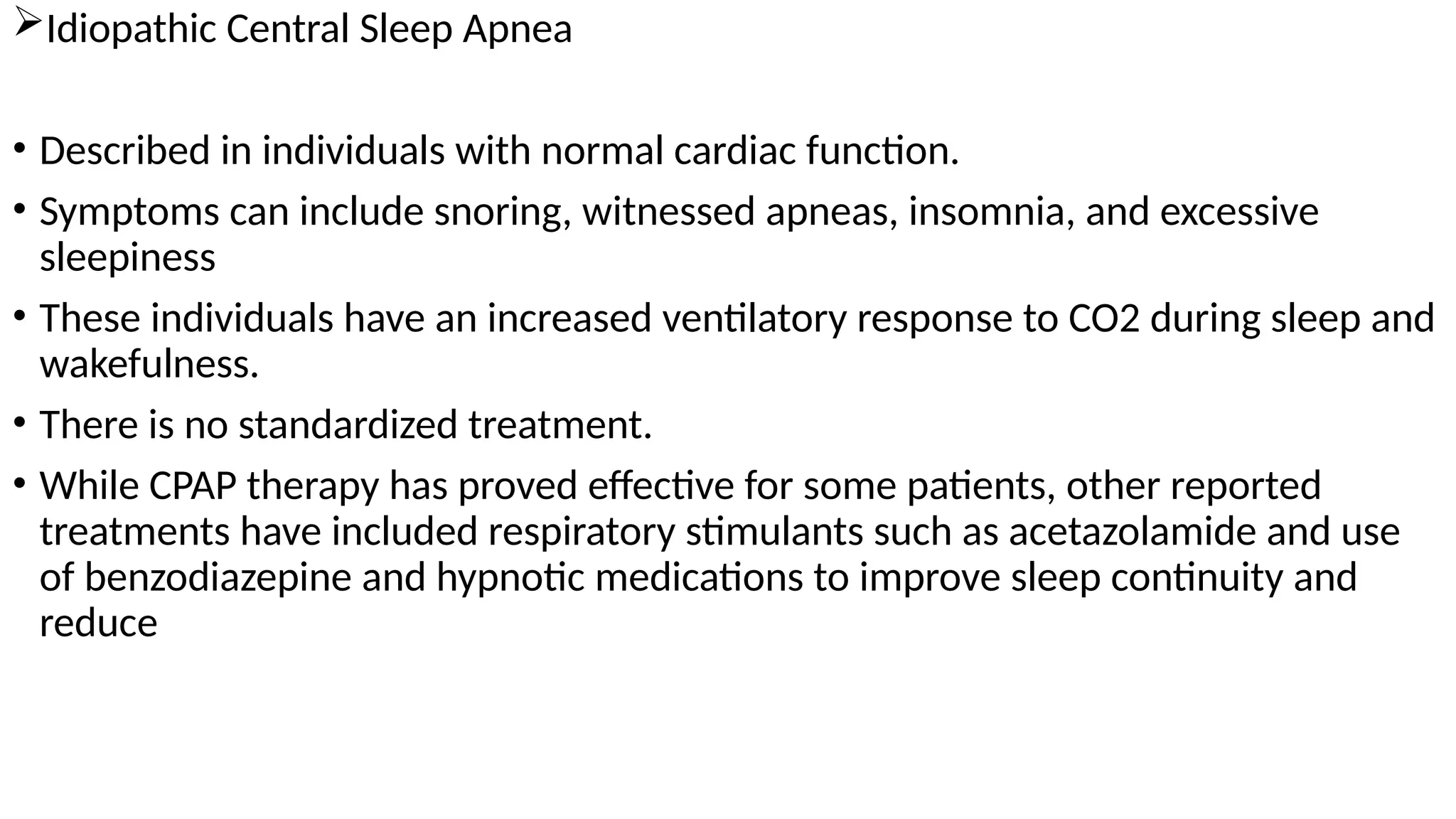
Idiopathic Central Sleep Apnea
• Described in individuals with normal cardiac function.
• Symptoms can include snoring, witnessed apneas, insomnia, and excessive
sleepiness
• These individuals have an increased ventilatory response to CO2 during sleep and
wakefulness.
• There is no standardized treatment.
• While CPAP therapy has proved effective for some patients, other reported
treatments have included respiratory stimulants such as acetazolamide and use
of benzodiazepine and hypnotic medications to improve sleep continuity and
reduce
Treatment-emergent Central Sleep Apnea
• “Treatment-emergent sleep apnea” (TECSA) or “complex sleep apnea” have been
applied to the emergence of central apneas during CPAP titration for treatment of
OSA.
• Polysomnography in patients with tecsa may reveal recurrent central apneas
occurring particularly during the lighter stages of sleep (n1 and n2), with more
stable breathing during n3 and rem sleep
• Associated primarily with cpap initiation and are likely to resolve over time
• Over- and under titration of cpap therapy, the presence of occult heart failure,
and use of respiratory-depressant medications such as opioids and
benzodiazepines
Congenital Central Alveolar Hypoventilation Syndrome (ondine’s curse)
• PHOX2B gene- disease-defining gene for CCHS
• Characterized by hypoventilation and diffuse autonomic nervous system dysregulation (ANSD)
• The syndrome is typically diagnosed in newborns with episodes of cyanosis and apnea usually
requiring mechanical ventilation.
• Hypoventilation in nrem sleep
• Complications of chronic hypoventilation- pulmonary hypertension, cor pulmonale, seizures,
or developmental delay.
• Late-onset central hypoventilation syndrome (lo-cchs) (reported as late as 35 years of age) in
individuals with only a minor increase in polyalanine repeats
• Children with cchs may have a characteristic box-shaped facies that is shorter and flatter
• Diagnosis of CCHS relies on genetic testing after excluding other causes of central
hypoventilation including pulmonary, neurologic, and metabolic etiologies
• Polysomnography (psg) coupled continuous co2 monitoring, either etco2 or ptcco2, permits
assessing ventilatory patterns and specific requirements in all stages of sleep
• Alveolar hypoventilation is the hallmark of cchs.
Treatment :
• Nocturnal ventilatory support ( nippv)
• Volume cycled or pressure-cycled ventilation can be used depending on patient’s tolerance.
• Diaphragmatic pacing remains a feasible treatment option—who require 24-h respiratory
support.
Monopolar electrodes are implanted on both phrenic nerves along with receivers in the
abdomen or chest, which convert energy received via antennas into electrical currents that
are then conducted by the phrenic nerves and result in diaphragmatic contraction.
Obesity hypoventilation syndrome
defined by
• the presence of obesity (body mass index [BMI] ≥30 kg/m2),
• Chronic alveolar hypoventilation with daytime hypercapnia (awake PaCO2≥45
mm Hg)
• sleep-related breathing disorder in the absence of any other causes of
hypoventilation.
90% of OHS patients there is an associated sleep related breathing disorder, that is,
Obstructive Sleep Apnea (OSA);
Pathophysiology:
(1) Abnormal respiratory system mechanics and increased work of breathing due to obesity (reduced chest
wall and respiratory system compliance, increased airway resistance, expiratory flow limitation, intrinsic
positive end-expiratory pressure, reduced respiratory muscle efficiency); (2) sleep-related breathing disorder;
(3) blunted central hypercapnic and hypoxic ventilatory drive, including central hypothalamic “resistance” to
leptin (a protein produced mainly by adipose tissue that stimulates ventilation)
Clinical presentation:
• Additional symptoms of hypercapnia including morning headaches, and excessive daytime sleepiness
despite adequate control of OSA
• Dyspnea is more frequently reported than in eucapnic OSA patients.
• Pulmonary hypertension cor pulmonale, and polycythemia are also more common in patients
• With OHS compared with patients with OSA alone.
• Physical examination may reveal facial plethora, injected sclera, a prominent pulmonic component of the
second heart sound, and signs of right heart failure including lower extremity edema in addition to signs
suggestive of osa.
Diagnosis:
• Awake hypercapnia, and an arterial blood gas on room air is necessary.
• Chronic hypercapnia may be suggested by an elevated serum bicarbonate, and a serum
bicarbonate of 27 meq/l or greater.
• Typically, patients manifest a >10 mm hg increase in their paco2 during sleep.
• Ohs is a diagnosis of exclusion.
Treatment:
• Continuous positive airway pressure (CPAP) and nocturnal noninvasive positive pressure
ventilation (NIPPV) are currently the mainstay of treatment for OHS.
• Weight reduction – lifestyle changes
medical weight loss ( semaglutide given s/c)
bariatric surgery
• Tracheostomy
PSG
OSA
CSA

Disorders of sleep related to breathing problems

  • 1.
    SLEEP DISORDERS Dr. MuniraShapurwala Kausar Dept of Respiratory Medicine
  • 2.
    • What doyou know about sleep? • Sleep quality 7-8hrs Everyone has different requirement for sleep Genetic variations are present • Master clock : suprachiasmatic nucleus peripheral clocks : other organs
  • 3.
    Stages of sleep REM NREM •Stage 1 • Stage 2 • Stage 3 REM sleep occurring every 90 minutes
  • 4.
    Icsd 3 classification: •Insomnia • Sleep related breathing disorders • Hypersomnia • Circadian sleep disorders • Parasomnias • Sleep related movement disorders • Isolated symptoms, apparently normal variants and unresolved issues • Other sleep disorders
  • 5.
    Dsm 5 classification •Insomnia disorder • Hypersomnolence disorder • Narcolepsy • Breathing related sleep disorders Obstructive sleep apnea hypopnea Central sleep apnea Sleep related hypoventilation • Circadian rhythm sleep-wake disorders • Parasomnias NREM sleep arousal disorders Nightmare disorder and REM sleep behavior disorder • Restless leg syndrome • Substance/ medication induced sleep disorder
  • 6.
    Icd 10 classification G47sleep disorders • G47.0 Disorders of initiating and maintaining sleep (insomnias) • G47.1 Disorders of excessive somnolence (hypersomnia) • G47.2 Disorders of sleep wake schedule • G47.3 Sleep apnea • G47.4 Narcolepsy and cataplexy • G47.8 Other sleep disorders • G47.9 Sleep disorders, unspecified
  • 7.
    Common Causes ofPersistent Daytime Sleepiness • Obstructive sleep apnea and other sleep-disordered breathing conditions (e.g., neuromuscular weakness with nocturnal respiratory failure) • Narcolepsy/cataplexy syndrome • Sleep-related movement disorders (periodic limb movement disorder, bruxism, etc.) • Depression • Postviral fatigue • Head injury • Metabolic, toxic, and drug-induced hypersomnolence • Idiopathic hypersomnolence • Insufficient sleep • Circadian rhythm sleep disorders
  • 8.
    Definitions APNEA- a dropin the peak respiratory signal (using an oronasal thermal sensor, PAP flow, or alternative sensor) of ≥90% from baseline; in addition, the drop must be ≥10 s in duration. HYPOPNEA -a drop in the peak respiratory signal (using an oronasal thermal sensor, PAP flow, or alternative sensor) Of ≥30% from baseline; the drop must be ≥10s in duration, and there is a ≥3% (option≥ 4%) oxygen desaturation from baseline, or the event is associated with an arousal from sleep apparent on the electroencephalogram (EEG). APNEA–HYPOPNEA INDEX - (AHI, number of apneas and hypopneas per hour of sleep) is the standard metric used to describe the severity of sleep apnea
  • 9.
    APNEAS: • obstructive (inwhich there is no airflow despite continued respiratory effort), • central (no airflow and no respiratory effort) • mixed (events initially appear central in origin, with respiratory effort occurring during the latter portion of the same episode)
  • 10.
    OSA OSAS is usuallydefined by an AHI of at least 5 events/h and persistent complaints of excessive daytime somnolence, unrefreshing sleep, or fatigue. OSA is often classified as mild, moderate, or severe according to the AHI. • 5 to<15 (mild), • ≥15 to ≤ 30 (moderate), • >30 events/h (severe)
  • 11.
    Pathogenesis : 1) Anatomical2)Neural 1)Anatomical In patients with OSA, obstruction usually occurs in the retropalatal or retroglossal levels or at both locations
  • 12.
    • A reductionin the lateral diameter of the airway • Increased soft tissue mass may increase tissue pressure, resulting in airway collapse and decreased airway volume. • Craniofacial morphology also influence upper airway configuration. For example, maxillary deficiency, mandibular retrusion, increased hyoid–mandibular plane distance, and abnormalities of the cranial base have all been associated with higher risks of sleep apnea. • In inspiration the pressure in the upper airway falls below atmospheric pressure, thus creating a tendency for the upper airway to collapse, this tendency is exaggerated during sleep because of the posterior and downward displacement of the tongue and the soft palate
  • 13.
    2) Neural The neuralcontrol of the upper airway muscles is complex and involves several neurotransmitters (serotonin, norepinephrine, orexin–acetylcholine, and gamma- aminobutyric acid) that are influenced by sleep itself. 1. negative airway pressure detected by laryngeal mechanoreceptors activates the genioglossus via increased hypoglossal nerve discharge. This reflex is diminished during non-REM sleep compared with wakefulness, and it is further reduced during REM sleep, placing the airway at risk for collapse
  • 14.
    REM sleep pharyngealmotor inhibition. state-sensitive motor inhibitory cholinergic channel that operates at the hypoglossal motor pool 2. The upper airway muscles respond to input from the respiratory control center in the medulla, with increases and decreases in activity in proportion to respiratory drive. Diminished upper airway muscle activity can precipitate airway collapse, that is, obstructive apnea 3. Neural mechanisms modulating arousal (serotonergic and noradrenergic neurons) have a tonic excitatory influence on genioglossus activity. With the onset of sleep, there is a reduction in arousal-modulated excitatory output to the upper airway musculature. Arousal from sleep in response to respiratory activation helps to restore airway patency.
  • 15.
    What happens inan apneic events? reactive oxygen species & oxidative stress Obstruction respiratory efforts intermittent hypoxemias arousals apneic termination intrathoracic pressure sympathetic activity ANP peripheral resistance and cardiac stimulation left ventricular (LV) transmural pressure HR and BP compromise LV filling increase both preload and afterload
  • 16.
    EPIDEMIOLOGY AND RISKFACTORS FOR OSA: AGE: prevalence increases through midlife & plateaus after age 60 to 65 GENDER: two to three times higher in men than women postmenopausal women are at 3 fold higher risk
  • 17.
    Risk Factors forObstructive Sleep Apnea: Obesity (BMI >30 kg/m2) Neck size (collar size >17 inches in males, >16 inches in females) Gender (male/female 2–3:1) Genetic factors/family history Upper airway and craniofacial anatomy Macroglossia Lateral peritonsillar narrowing Elongation/enlargement of the soft palate Tonsillar hypertrophy Nasal septal deviation Retrognathia, micrognathia Narrowing of the hard palate Class III/IV modified Mallampati airway Specific genetic disorders, e.g., Treacher Collins, Down syndrome, Apert syndrome Endocrine disorders, e.g., hypothyroidism, polycystic ovarian syndrome, acromegaly Alcohol, sedative, or hypnotic use
  • 18.
    Clinical Presentation ofObstructive Sleep Apnea: • Loud, habitual snoring • Witnessed apneas • Nocturnal awakening • Gasping or choking episodes during sleep • Nocturia • Nocturnal sweating • Unrefreshing sleep, morning headaches • Excessive daytime sleepiness • Automobile or work-related accidents • Irritability, memory loss, personality change • Decreased libido • Impotence
  • 19.
    Epworth Sleepiness Scale Incontrast to just feeling tired, how likely are you to doze off or fall asleep in the following situations? 0 = Would never doze 1 = Slight chance of dozing 2 = Moderate chance of dozing 3 = High chance of dozing Situation Chance of Dozing Sitting and reading ____________ Watching TV ____________ Sitting inactive in a public place (i.e., a theater or a meeting) ____________ As a passenger in a car for an hour without break ____________ Lying down to rest in the afternoon when circumstances permit ____________ Sitting and talking to someone ____________ Sitting quietly after lunch without alcohol ____________ In a car, while stopping for a few minutes in traffic ____________ >10 considered abnormal
  • 20.
    Conditions in WhichEvaluation for Obstructive Sleep Apnea Should Be Considered • Obesity • Systemic hypertension • Myocardial infarction • Cerebrovascular accident • Type 2 diabetes mellitus • Pulmonary hypertension • Polycystic ovarian syndrome • Atrial fibrillation • Driver involved in a sleep-related automobile crash • Preoperative anesthesia evaluation
  • 21.
    • Screening forOSA Developed for the surgical preoperative setting has been shown to have good predictive value for identifying severe OSA • Diagnosis for OSA Polysomnography (PSG) : gold standard
  • 22.
    Diagnostic Testing Optionsfor Sleep-disordered Breathing Type • I: EEG, EOG, EMG, ECG, airflow, respiratory effort, O2 saturation, usually video (all conducted in a sleep laboratory with a sleep professional present) • Out-of-center testing II : Minimum of seven channels including EEG, EOG, chin EMG, ECG/HR, airflow, respiratory effort, and O2 saturation • III: Minimum of four channels including ECG/HR, O2 saturation and at least two channels of respiratory movement or respiratory movement and airflow • IV : Airflow and/or O2 saturation
  • 24.
    Treatment : 1. CPAPremains the mainstay of therapy for most patients mainstay of therapy for most patients with OSA. CPAP delivers a fixed pressure continuously throughout inspiration and expiration, providing a pneumatic splint for the airway that prevents airway collapse during sleep Typically, pressures of 5 to 20 cm H2O are needed to abolish apneic events, snoring, and oxyhemoglobin desaturation in all positions and during REM sleep. Complications Associated with Positive Airway Pressure (PAP) Therapies  Nocturnal arousals  Rhinitis, nasal irritation, and dryness  Aerophagia  Mask and mouth leaks (dry mouth in morning)  Facial rash or irritation  Difficulty with exhalation  Claustrophobia
  • 25.
    2. General measures •Avoid alcohol, sedative hypnotics and opioids • Sleep hygiene • Weight loss
  • 26.
    3. Intra oraldevices : Oral devices aim to alter the position of the upper airway structures, thereby enlarging airway caliber and/or reducing airway collapsibility during sleep. • Tongue retaining device (TRD) • Palatal lifting device • Mandibular advancing devices (MAD) It is worn during sleep and results in anterior motion of the mandible with consequent enlargement of the airway. The appliance is adjusted until the sleep-disordered is breathing improves
  • 27.
    4. Position Therapy •The lateral position is associated with increased maximum cross-sectional upper airway area and lower closing pressure of the passive pharyngeal airway compared to the supine position 5. Oxygen therapy • Reduces the degree of oxyhemoglobin desaturation and does not worsen apnea frequency or duration 6.Medications • Combination of atomoxetine and oxybutynin • Modafinil can be utilized as adjunctive therapy for residual sleepiness Doses from 200 to 400 mg daily have been shown to be effective in improving excessive daytime sleepiness in several randomized trials
  • 28.
    7. Surgery forObstructive Sleep Apnea: • Nasal surgery (septoplasty, sinus surgery, and others) • Tonsillectomy and/or adenectomy • Hypoglossal nerve stimulator implantation • Uvulopalatopharyngoplasty (UPPP) • Laser-assisted uvulopalatoplasty (LAUP) • Radiofrequency volumetric tissue reduction • Lingular tonsillectomy • Genioglossus and hyoid advancement (GAHM) • Sliding genioplasty • Maxillomandibular advancement osteotomy • Tracheostomy
  • 29.
    Central sleep apnea •CSA, in which repetitive episodes of breathing cessation occur in the absence of respiratory effort, is characterized by reduced ventilatory motor output • prevalence in the general population to be < 1% 1. Physiologic process in normal individuals in response to an arousal (especially children and the elderly) 2. Manifestation of breathing instability in a number of medical conditions (e.g., Cheyne–Stokes respiration [CSR] in CHF and at high altitude) 3. In association with neurologic diseases such as Shy–Drager syndrome, stroke, myasthenia gravis, neuromuscular disease, bulbar poliomyelitis, brainstem infarction, and encephalitis. • It is often divided into hypocapnic and hypercapnic types.
  • 30.
    • Hypercapnic :awake resting hypoxemia and hypercapnia, hypersomnolence, signs of cor pulmonale (right-sided heart failure and lower extremity edema), and nocturnal hypoventilation • Hypocapnic : increased chemo responsiveness of the ventilatory control, seen most commonly in with heart failure or at high altitude. • Central apneas occur if the arterial PCO2 falls below the “apneic threshold,” or PCO2 level necessary to maintain rhythmic breathing
  • 31.
    High-altitude Periodic Breathing Mayoccur in healthy individuals at high altitude Hypoxia Peripheral chemoreceptors (carotid body) Increased ventilatory drive PCO2 levels falls Apneic threshold reached in sleep CSA Periodic breathing starts • Delay between change in pco2 and po2 levels and detection by peripheral receptors is brief • Cycle time of periodic breathing is short 12 to 34 seconds • Treatment : acetazolamide oxygen supplementation
  • 32.
     Cheyne–Stokes Respiration(CSR) Most commonly seen in systolic heart failure and, especially when present during wakefulness, is a risk factor for higher mortality in this population Risk factors for csr in systolic heart failure patients • male gender • Age greater than 65 • atrial fibrillation • awake hypocapnia (PCO2<38 mm Hg) Characterized by prolonged hyperpneas with a waxing and waning respiratory pattern and prolonged cycle duration, that is, 40 to 90 s Common in NREM sleep when ventilation in under metabolic control and is sensitive to apneic thersholds and Pco2 levels
  • 33.
    In systemic heartfailure patients Increased peripheral and central chemo responsiveness Hyperventilation Hypocapnia • Arousals – peak of ventilation • The diagnosis established by PSG demonstrating repetitive apneas in the absence of thoracic–abdominal excursion.
  • 34.
    Treatment : • Pharmacologicmanagement of heart failure, including beta blockade and angiotensin- converting enzyme inhibitors. • CPAP or oxygen for first-line treatment of CSR related to heart failure, and recommended against the use of ASV to treat CHF-associated CSA in patients with low ejection fraction and moderate or severe CSA • PAP therapy : ASV mode (adaptive servo ventilation)- fixed expiratory pressure and variable inspiratory pressure. • Unilateral transvenous phrenic neurostimulation in patients with central sleep apnea
  • 35.
    Idiopathic Central SleepApnea • Described in individuals with normal cardiac function. • Symptoms can include snoring, witnessed apneas, insomnia, and excessive sleepiness • These individuals have an increased ventilatory response to CO2 during sleep and wakefulness. • There is no standardized treatment. • While CPAP therapy has proved effective for some patients, other reported treatments have included respiratory stimulants such as acetazolamide and use of benzodiazepine and hypnotic medications to improve sleep continuity and reduce
  • 36.
    Treatment-emergent Central SleepApnea • “Treatment-emergent sleep apnea” (TECSA) or “complex sleep apnea” have been applied to the emergence of central apneas during CPAP titration for treatment of OSA. • Polysomnography in patients with tecsa may reveal recurrent central apneas occurring particularly during the lighter stages of sleep (n1 and n2), with more stable breathing during n3 and rem sleep • Associated primarily with cpap initiation and are likely to resolve over time • Over- and under titration of cpap therapy, the presence of occult heart failure, and use of respiratory-depressant medications such as opioids and benzodiazepines
  • 37.
    Congenital Central AlveolarHypoventilation Syndrome (ondine’s curse) • PHOX2B gene- disease-defining gene for CCHS • Characterized by hypoventilation and diffuse autonomic nervous system dysregulation (ANSD) • The syndrome is typically diagnosed in newborns with episodes of cyanosis and apnea usually requiring mechanical ventilation. • Hypoventilation in nrem sleep • Complications of chronic hypoventilation- pulmonary hypertension, cor pulmonale, seizures, or developmental delay. • Late-onset central hypoventilation syndrome (lo-cchs) (reported as late as 35 years of age) in individuals with only a minor increase in polyalanine repeats • Children with cchs may have a characteristic box-shaped facies that is shorter and flatter
  • 38.
    • Diagnosis ofCCHS relies on genetic testing after excluding other causes of central hypoventilation including pulmonary, neurologic, and metabolic etiologies • Polysomnography (psg) coupled continuous co2 monitoring, either etco2 or ptcco2, permits assessing ventilatory patterns and specific requirements in all stages of sleep • Alveolar hypoventilation is the hallmark of cchs. Treatment : • Nocturnal ventilatory support ( nippv) • Volume cycled or pressure-cycled ventilation can be used depending on patient’s tolerance. • Diaphragmatic pacing remains a feasible treatment option—who require 24-h respiratory support. Monopolar electrodes are implanted on both phrenic nerves along with receivers in the abdomen or chest, which convert energy received via antennas into electrical currents that are then conducted by the phrenic nerves and result in diaphragmatic contraction.
  • 39.
    Obesity hypoventilation syndrome definedby • the presence of obesity (body mass index [BMI] ≥30 kg/m2), • Chronic alveolar hypoventilation with daytime hypercapnia (awake PaCO2≥45 mm Hg) • sleep-related breathing disorder in the absence of any other causes of hypoventilation. 90% of OHS patients there is an associated sleep related breathing disorder, that is, Obstructive Sleep Apnea (OSA);
  • 40.
    Pathophysiology: (1) Abnormal respiratorysystem mechanics and increased work of breathing due to obesity (reduced chest wall and respiratory system compliance, increased airway resistance, expiratory flow limitation, intrinsic positive end-expiratory pressure, reduced respiratory muscle efficiency); (2) sleep-related breathing disorder; (3) blunted central hypercapnic and hypoxic ventilatory drive, including central hypothalamic “resistance” to leptin (a protein produced mainly by adipose tissue that stimulates ventilation) Clinical presentation: • Additional symptoms of hypercapnia including morning headaches, and excessive daytime sleepiness despite adequate control of OSA • Dyspnea is more frequently reported than in eucapnic OSA patients. • Pulmonary hypertension cor pulmonale, and polycythemia are also more common in patients • With OHS compared with patients with OSA alone. • Physical examination may reveal facial plethora, injected sclera, a prominent pulmonic component of the second heart sound, and signs of right heart failure including lower extremity edema in addition to signs suggestive of osa.
  • 41.
    Diagnosis: • Awake hypercapnia,and an arterial blood gas on room air is necessary. • Chronic hypercapnia may be suggested by an elevated serum bicarbonate, and a serum bicarbonate of 27 meq/l or greater. • Typically, patients manifest a >10 mm hg increase in their paco2 during sleep. • Ohs is a diagnosis of exclusion. Treatment: • Continuous positive airway pressure (CPAP) and nocturnal noninvasive positive pressure ventilation (NIPPV) are currently the mainstay of treatment for OHS. • Weight reduction – lifestyle changes medical weight loss ( semaglutide given s/c) bariatric surgery • Tracheostomy
  • 42.
  • 45.
  • 46.