OOBBJJEECCTT LLOOCCAALLIISSAATTIIOONN
LLooccaalliizzaattiioonn bbyy 
RRaaddiiooggrraapphhiicc TTeecchhnniiqquueess 
WWHHYY??
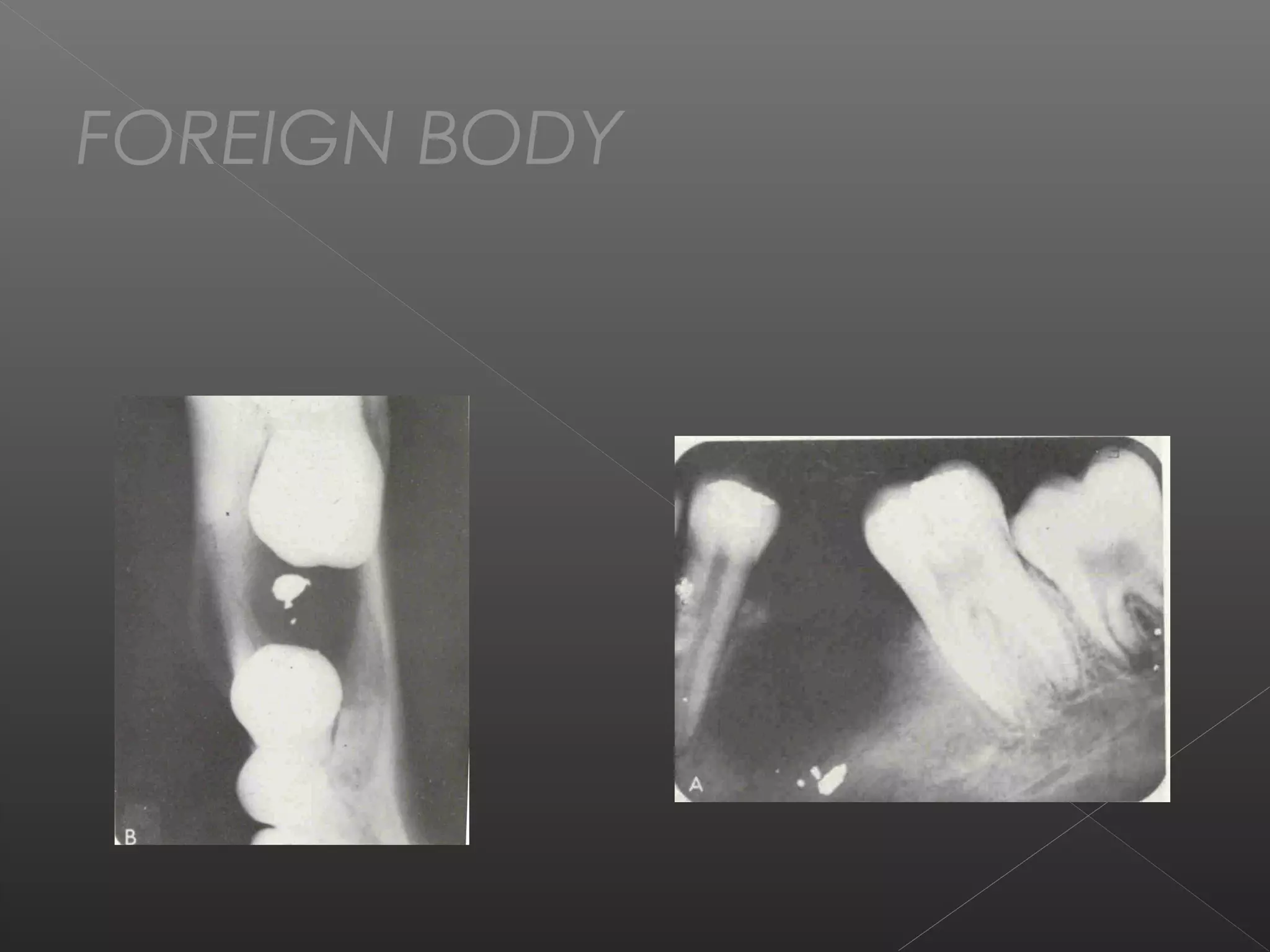
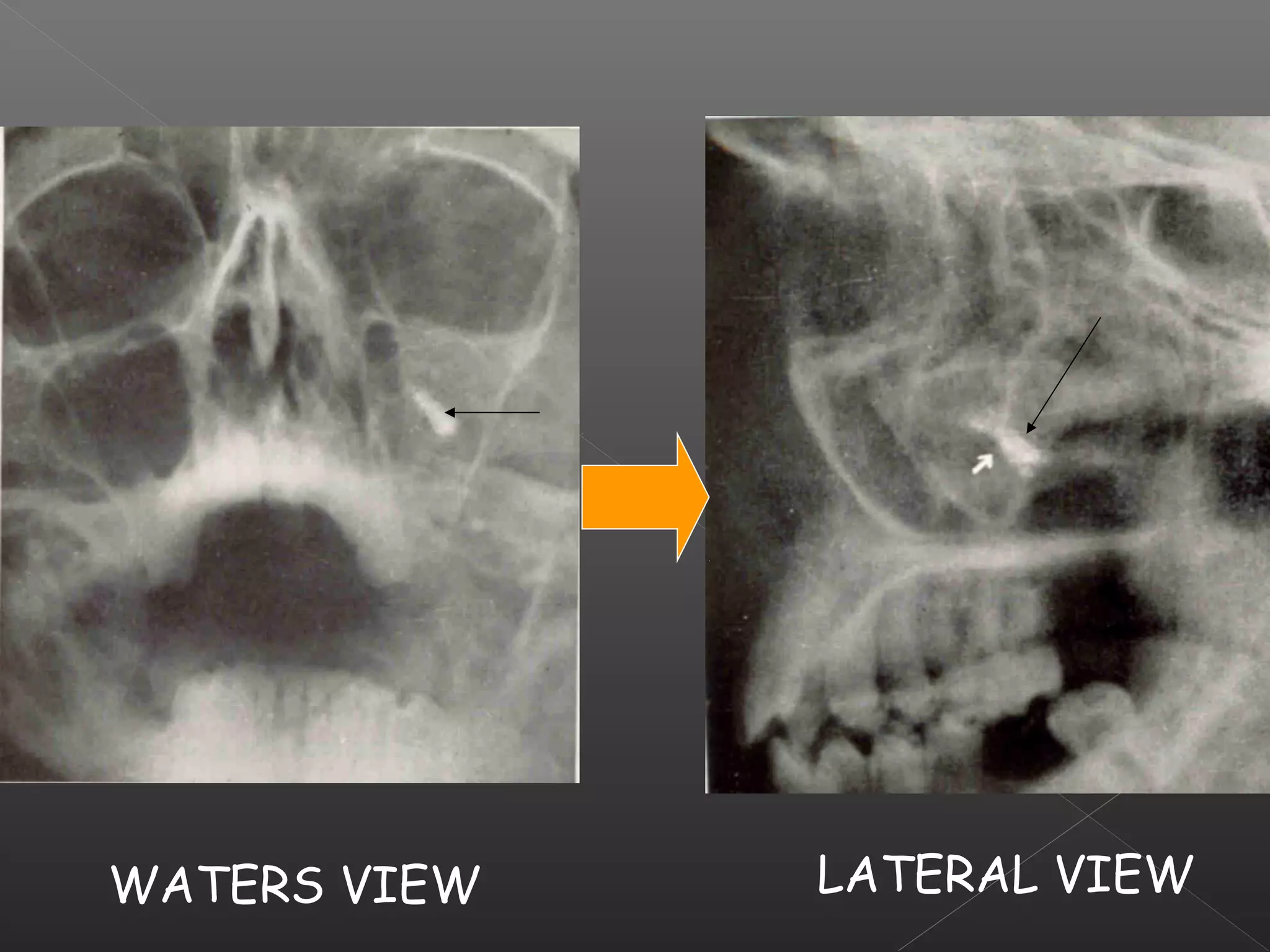
 Foreign bodies 
 Impacted, unerupted teeth 
 Supernumerary teeth 
 Broken needles 
 Retained roots 
 Fractures of maxillofacial structures 
 Soft tissue calcifications 
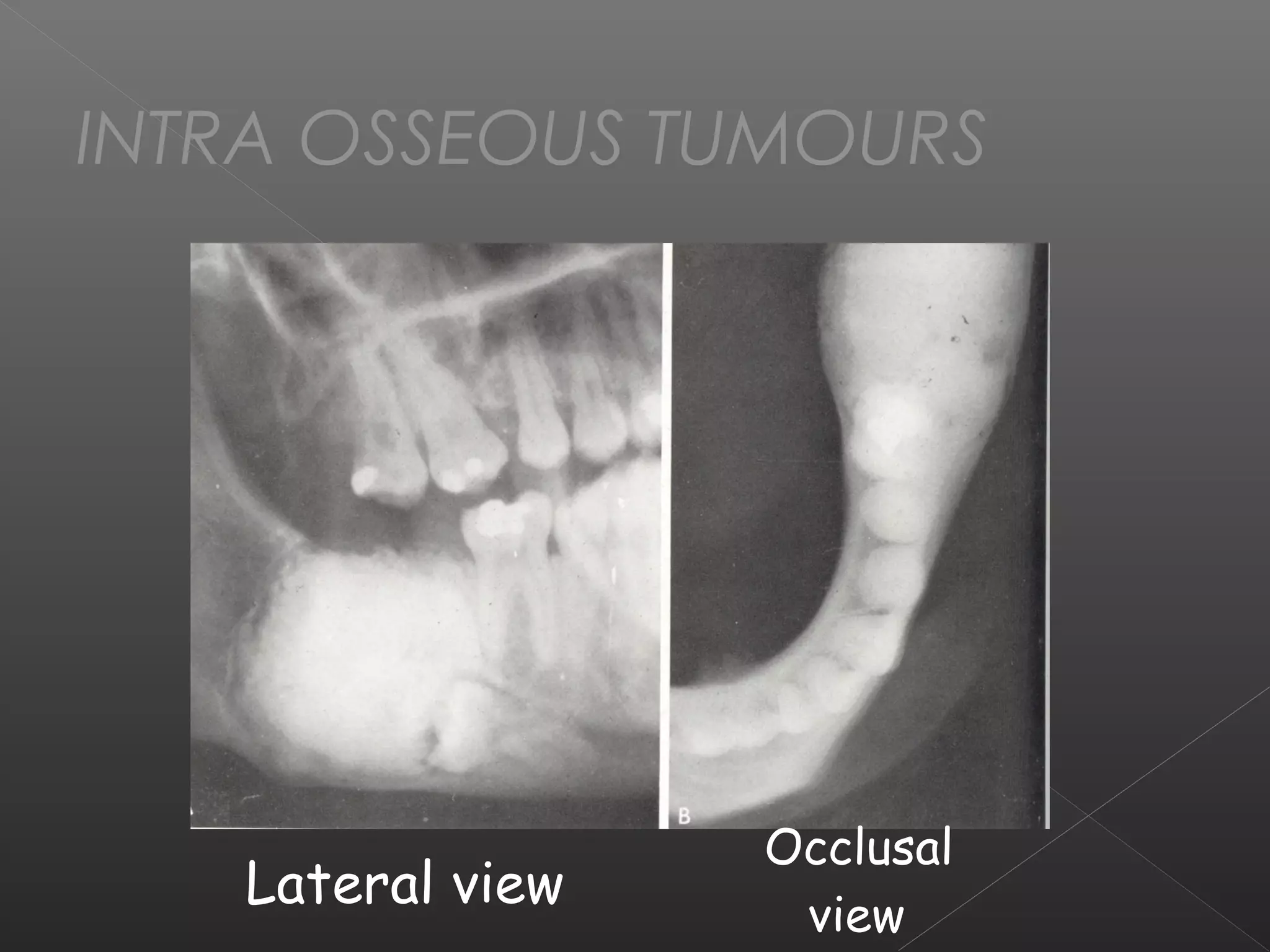
 Intra-osseous tumors 
 Calculi in gland/duct of gland 
 Filling materials in alveolar process
TTeecchhnniiqquueess 
 Miller’s Technique/ Right angle Technique 
 Clark’s Technique/ Tube-shift Technique
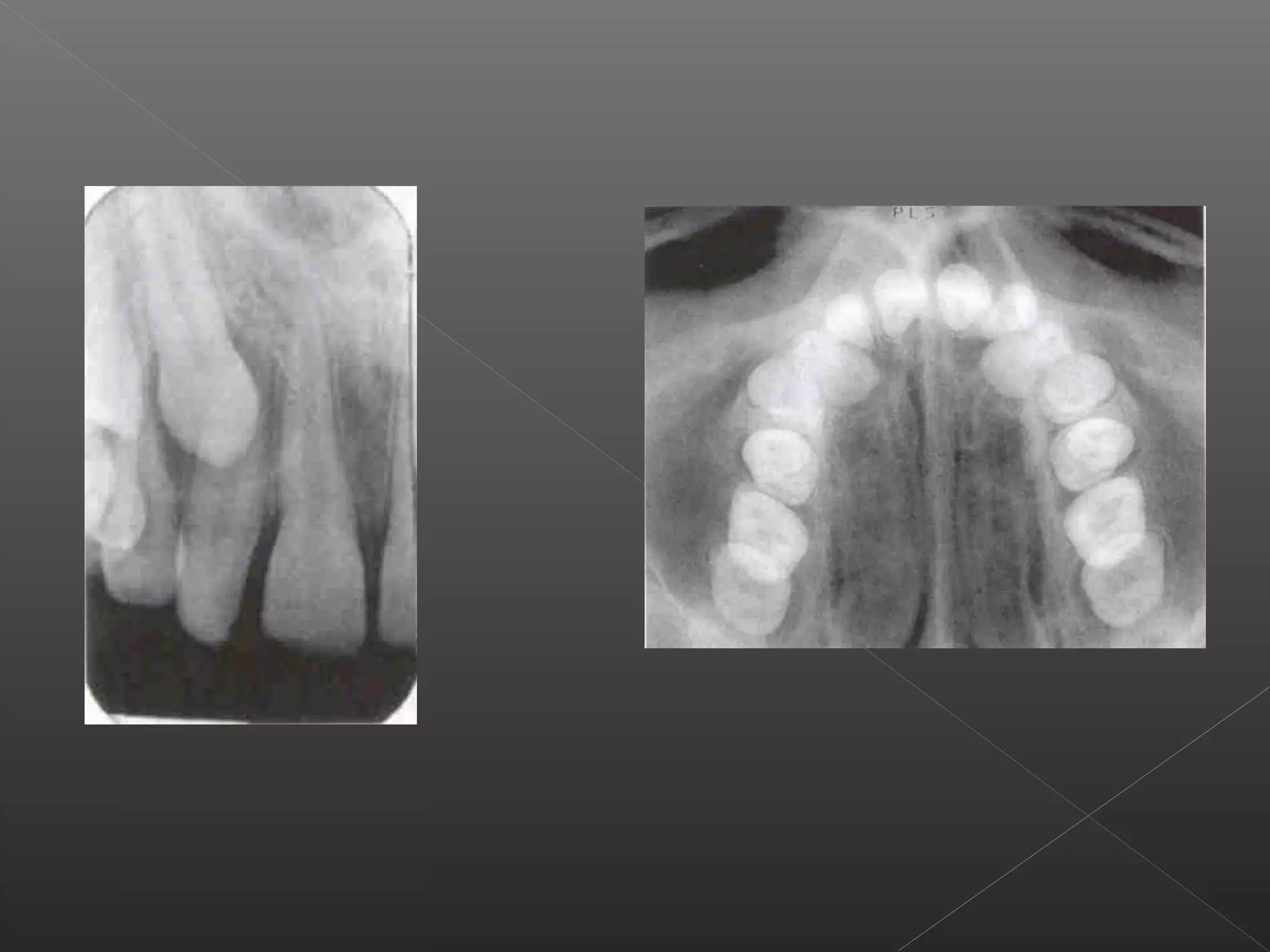
MMiilllleerr’’ss TTeecchhnniiqquuee 
Usually Indicated for Mandibular Third molar 
area 
Two radiographs made are positioned at right 
angles to each other
LOCALIZES in 3 Dimensions 
DISADVANTAGES 
Can be used in maxilla but not that useful 
like in mandible due to superimpositions
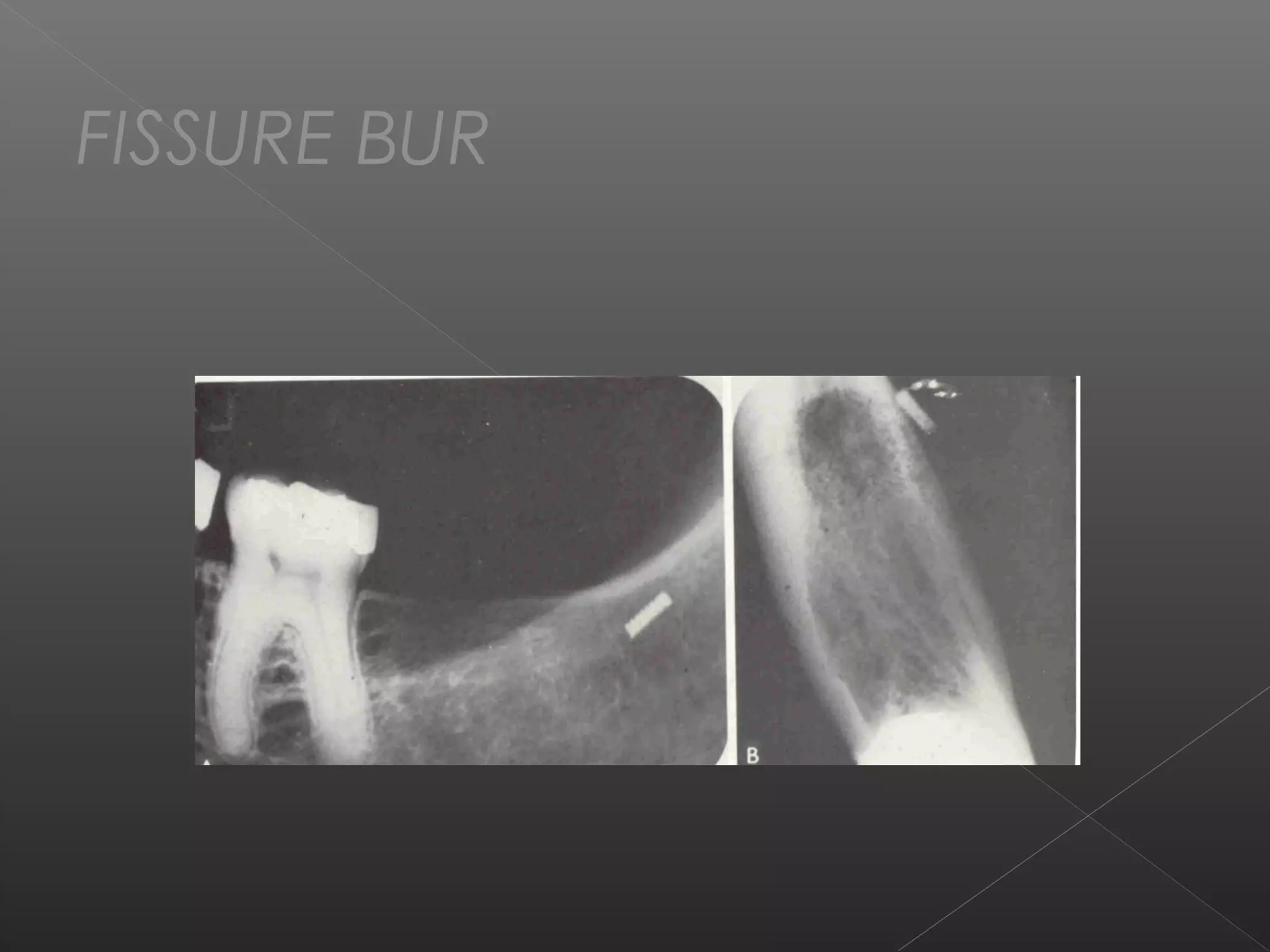
FISSURE BUR
FOREIGN BODY
WATERS VIEW LATERAL VIEW
INTRA OSSEOUS TUMOURS 
Occlusal 
Lateral view view
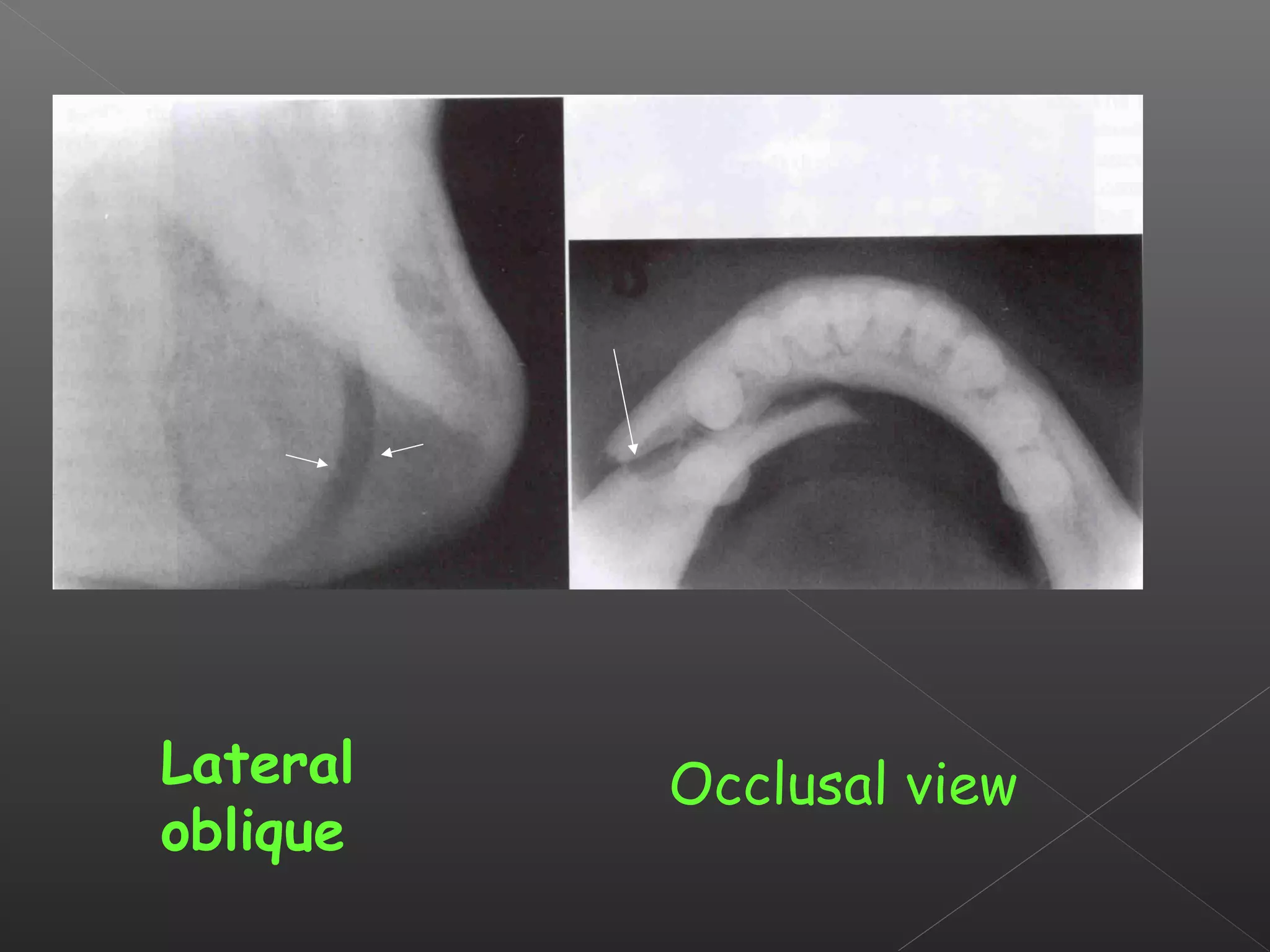
Lateral 
oblique 
Occlusal view
CCllaarrkk’’ss rruullee 
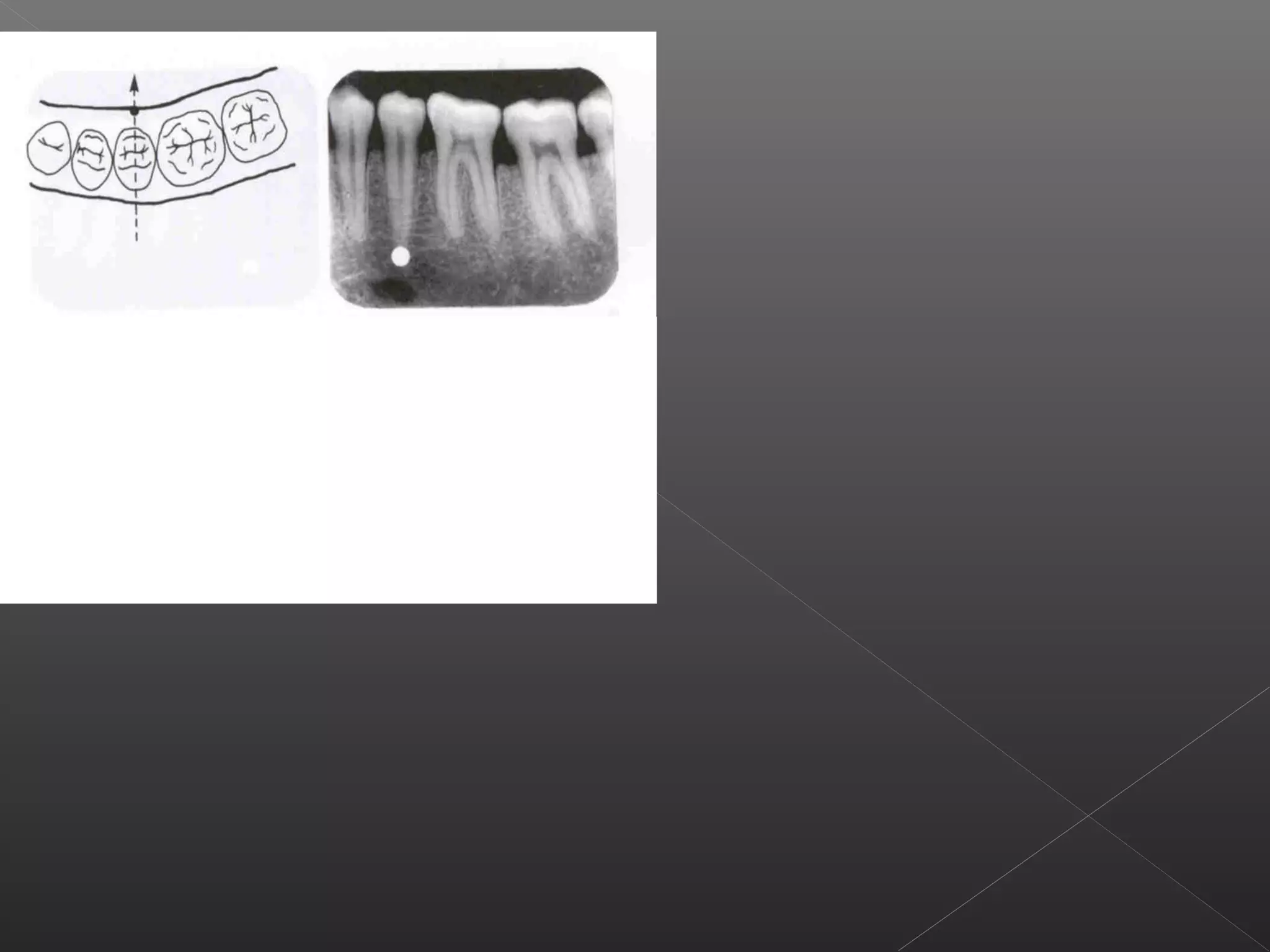
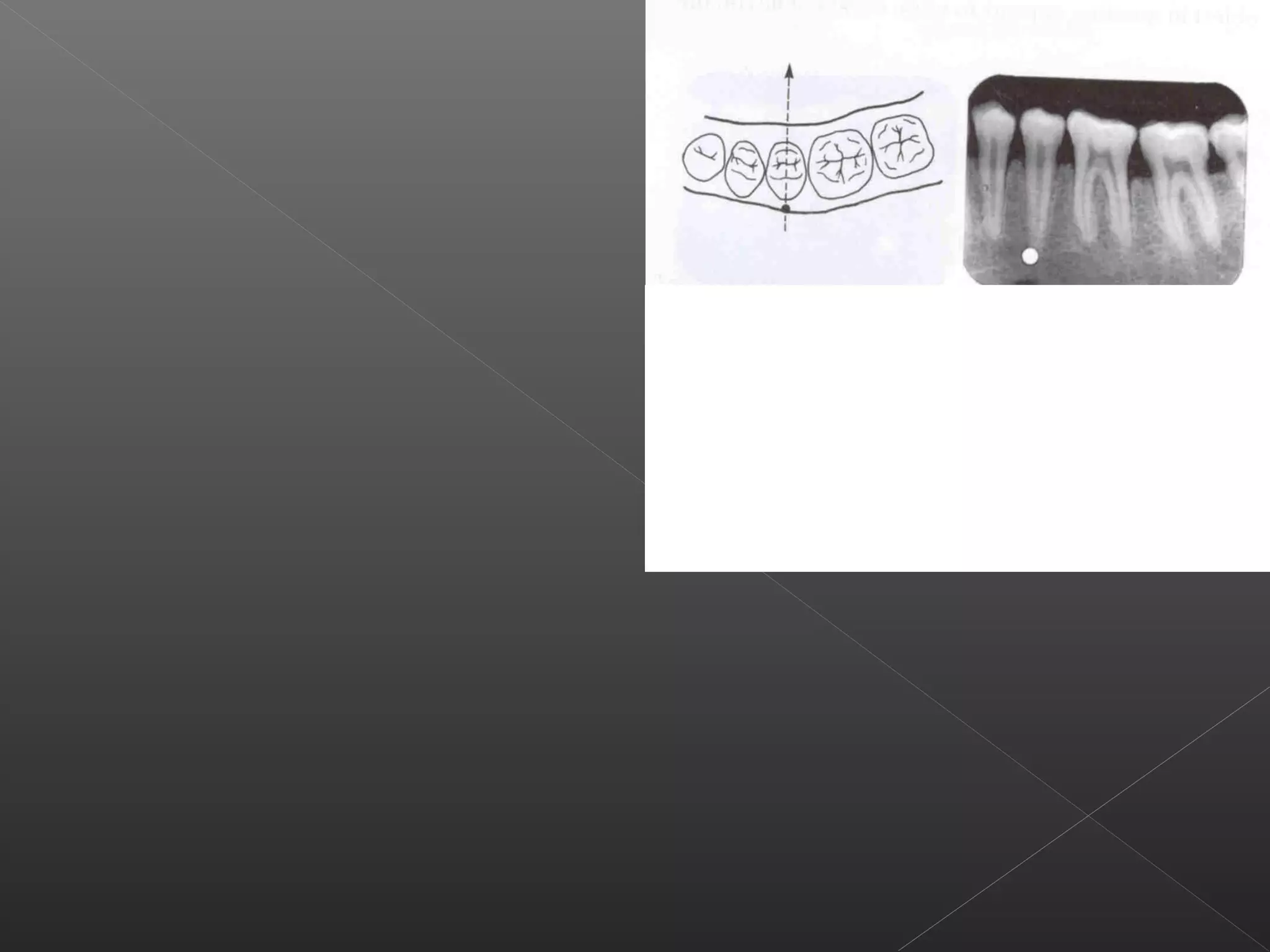
Tube shift technique , 
C.A. Clark 
PRINCIPLE 
Relative positions of radiographic images of two 
separate objects changes ,when projection angle at which 
images were made, is changed
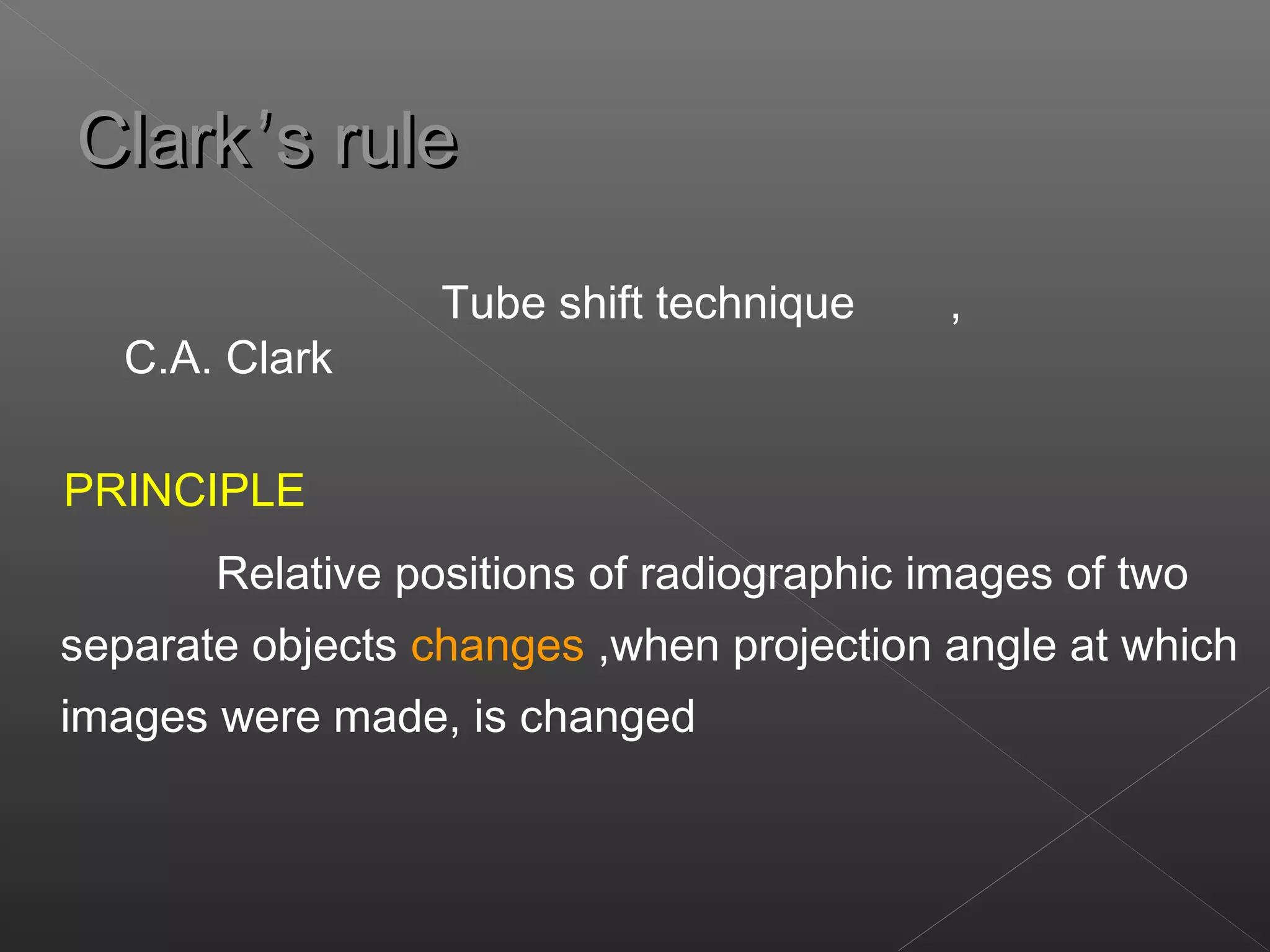
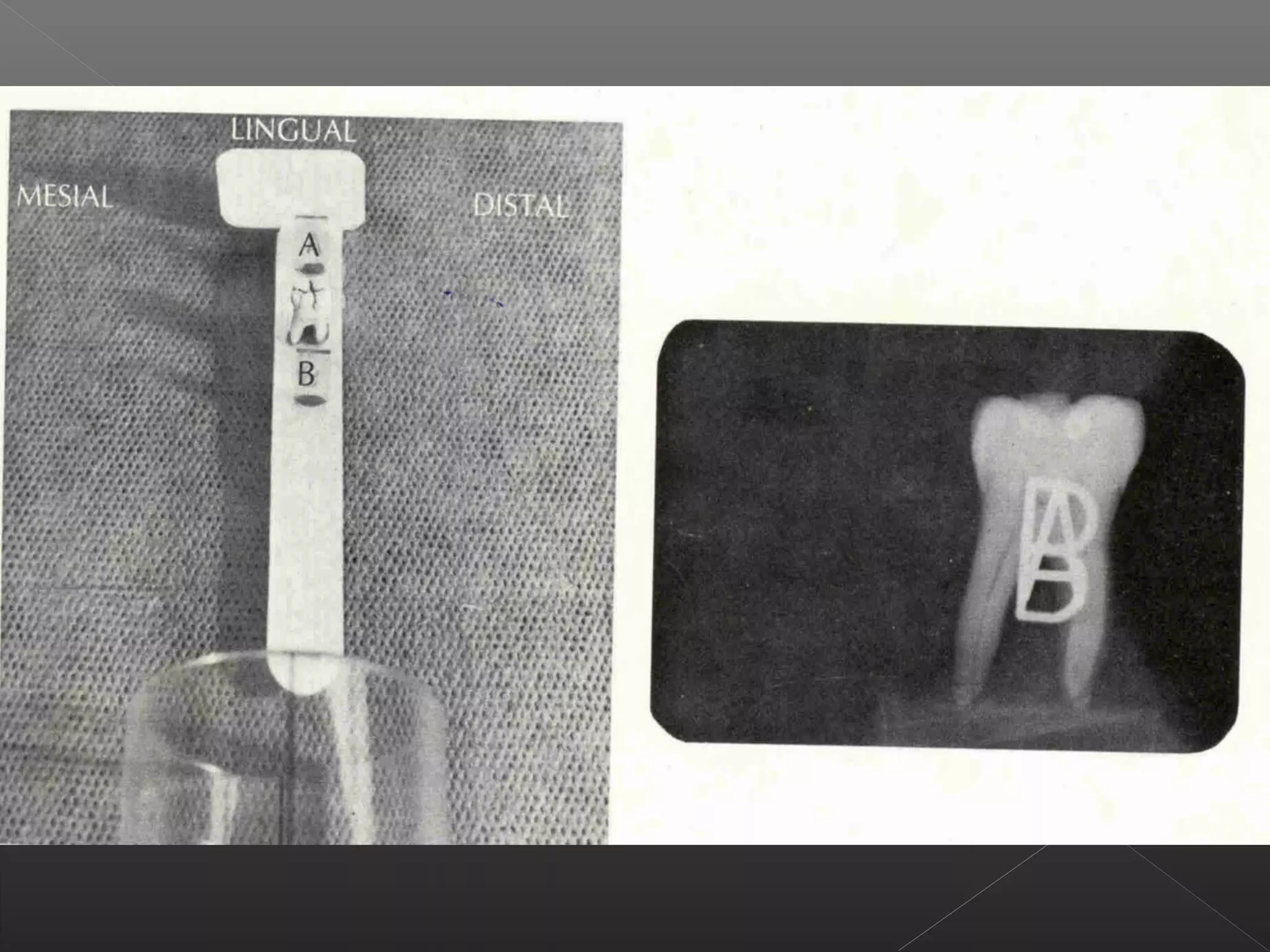
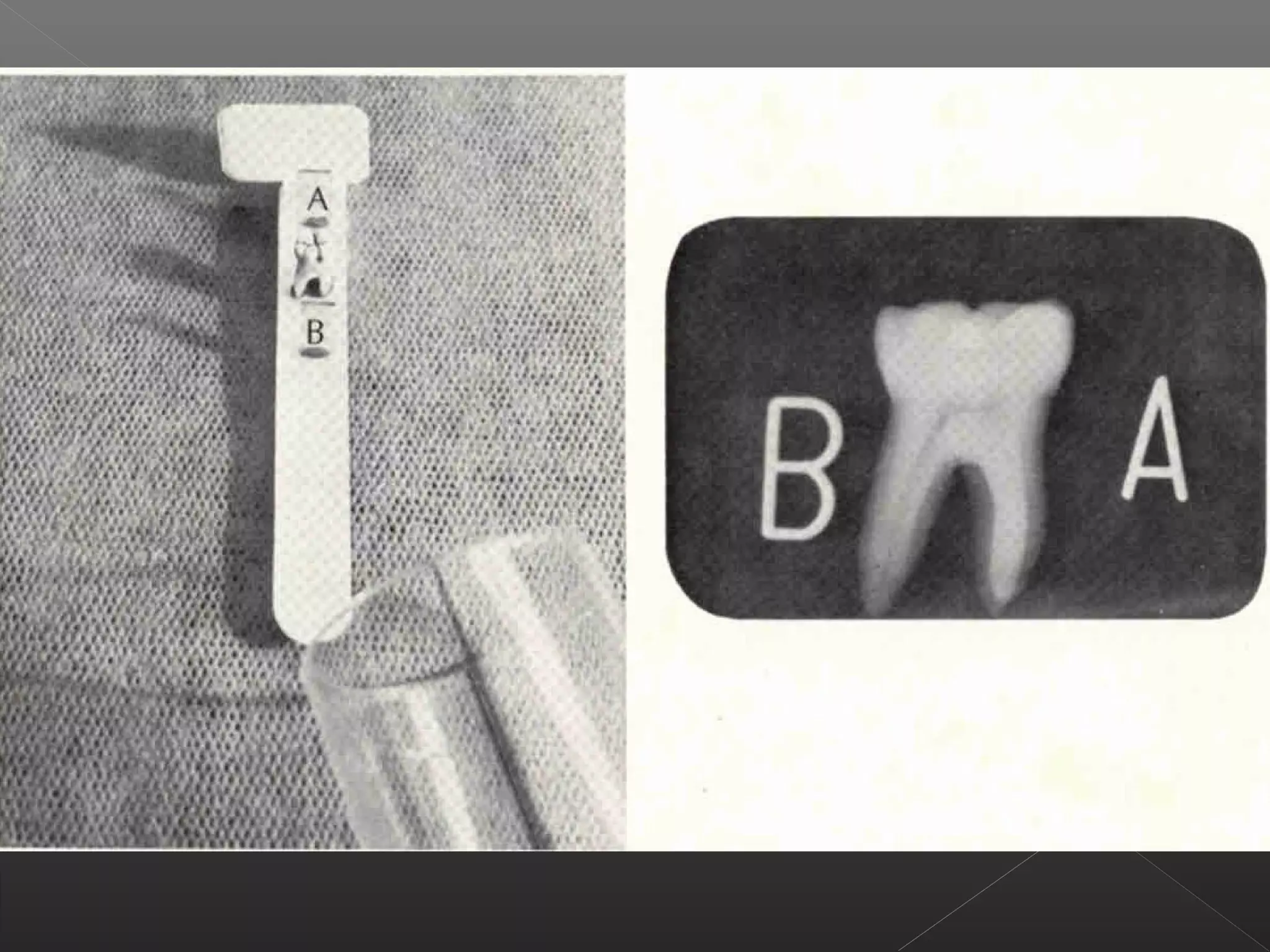
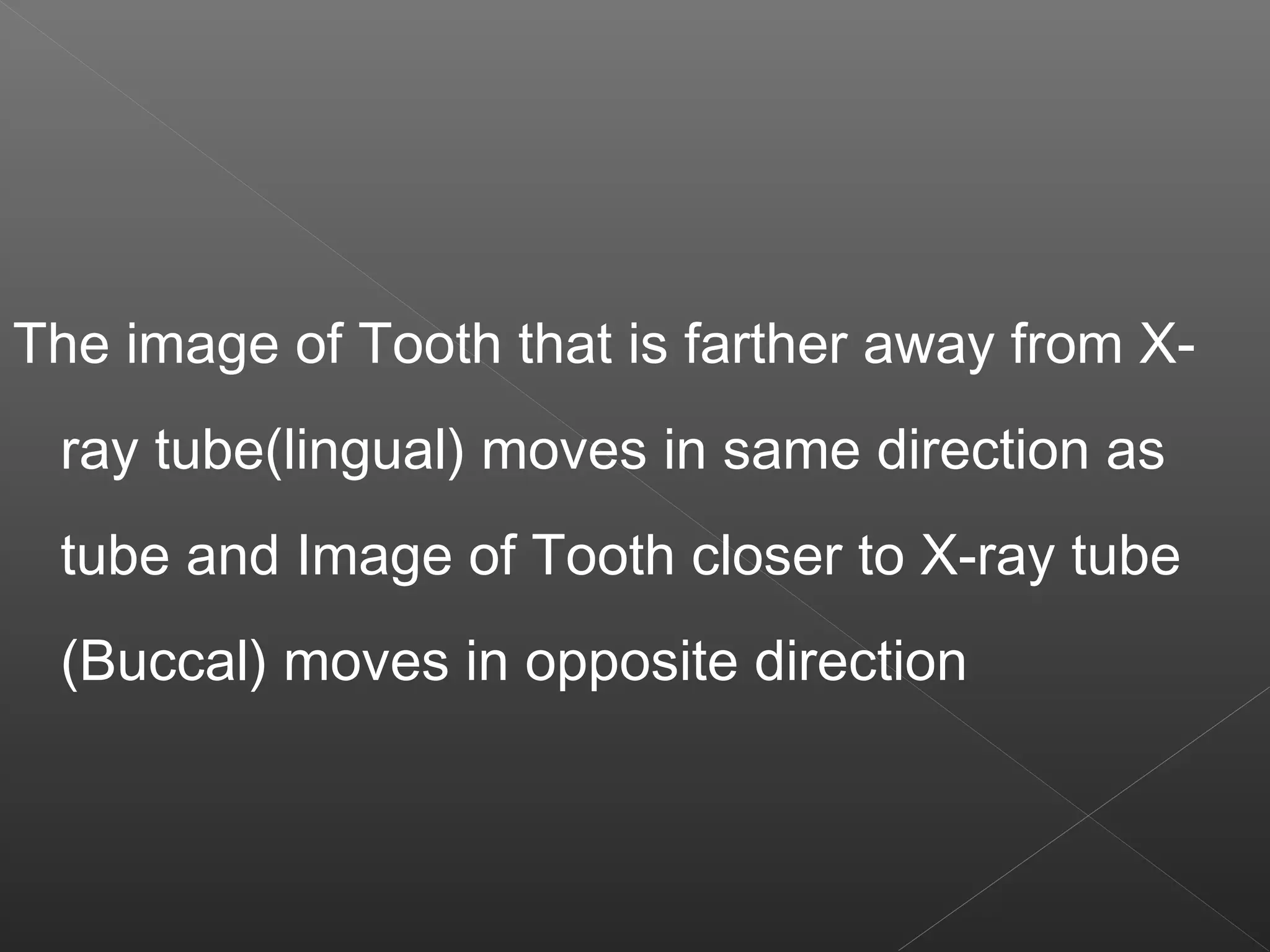
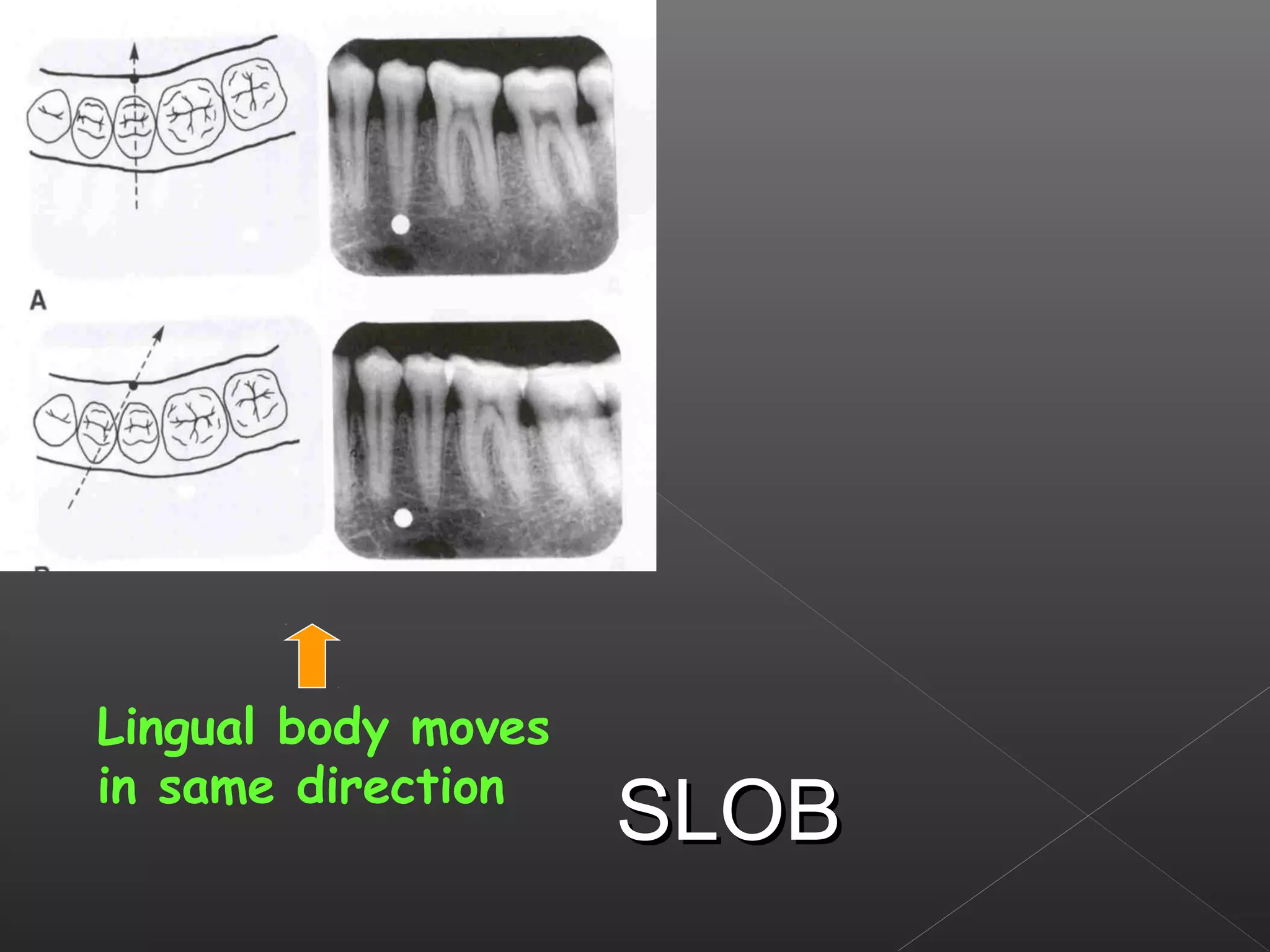
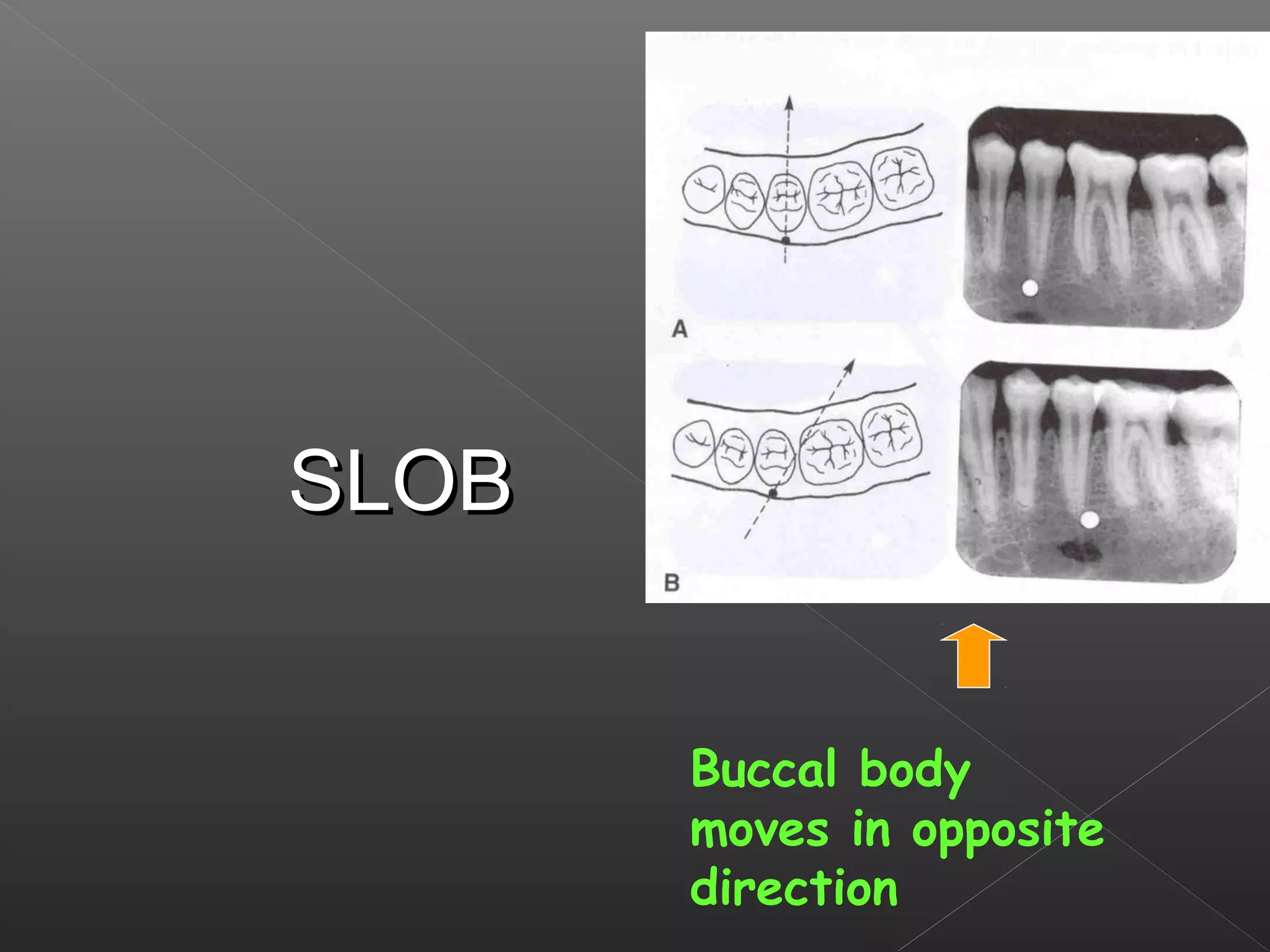
The image of Tooth that is farther away from X-ray 
tube(lingual) moves in same direction as 
tube and Image of Tooth closer to X-ray tube 
(Buccal) moves in opposite direction
SSLLOOBB
Lingual body moves 
in same direction SSLLOOBB
Buccal body 
moves in opposite 
direction 
SSLLOOBB
 SAME LINGUAL OPPOSITE BUCCAL
Object localisation in dentistry

Object localisation in dentistry