OBESITY 
DISEASE OF THE 
21st CENTURY 
Presented By: 
Abhinav Sawhney 
M. Pharm (Pharmacology) 
Amity Institute of Pharmacy 
1
Obesity 
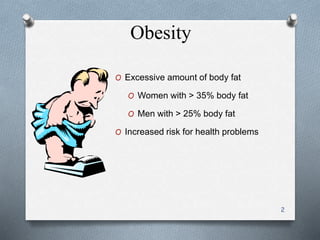
O Excessive amount of body fat 
O Women with > 35% body fat 
O Men with > 25% body fat 
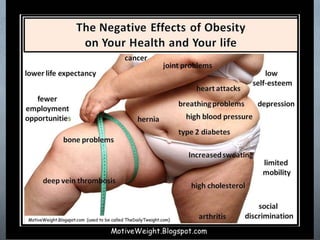
O Increased risk for health problems 
2
Regional Distribution 
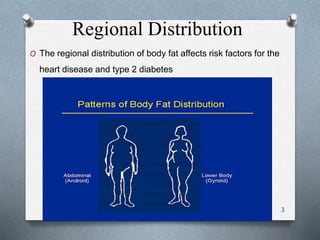
O The regional distribution of body fat affects risk factors for the 
heart disease and type 2 diabetes 
3
Body Fat Distribution: Gynoid 
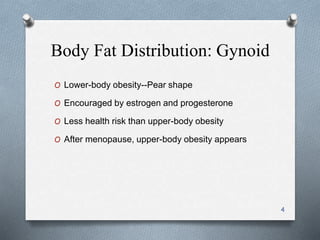
O Lower-body obesity--Pear shape 
O Encouraged by estrogen and progesterone 
O Less health risk than upper-body obesity 
O After menopause, upper-body obesity appears 
4
Body Fat Distribution: Android 
O Upper-body obesity--apple shape 
O Associated with more heart disease, HTN, Type II Diabetes 
O Abdominal fat is released right into the liver 
O Encouraged by testosterone and excessive alcohol intake 
O Defined as waist measurement of > 40” for men and >35” for 
women 
5
6
Obesity Pathophysiology: 
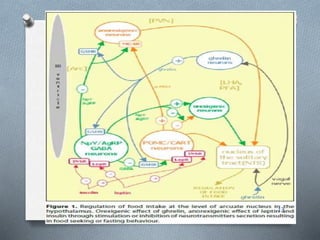
O The pathogenesis of obesity is far more complex than the 
simple paradigm of an imbalance between energy intake and 
energy output. 
7
Components of Energy Expenditure 
O Resting energy expenditure: expressed as RMR 
O Energy expended in voluntary activity 
O Thermic effect of food (TEF) or diet-induced 
thermogenesis (DIT) 
O Related to energy value of food consumed and 
adaptive response to overeating 
O TEF may decline as day progresses 
8
Role of Brain Neurotransmitters 
O Neurotransmitters govern the body’s response to starvation and 
dietary intake 
O Decreases in serotonin and increases in neuropeptide Y are 
associated with an increase in carbohydrate appetite 
O Neuropeptide Y increases during deprivation; may account for 
increase in appetite after dieting 
O Cravings for sweet high-fat foods among obese and bulimic 
patients may involve the endorphin system 
9
Hormonal Regulation of Body Weight 
O Norepinephrine and dopamine—released by sympathetic 
nervous system in response to dietary intake 
O Fasting and semistarvation lead to decreased levels of 
these neurotransmitters—more epinephrine is made and 
substrate is mobilized. 
10
Hormones and Weight 
O Hypothyroidism may diminish adaptive 
thermogenesis 
O Insulin resistance may impair adaptive 
thermogenesis 
O Leptin is secreted in proportion to percent adipose 
tissue and may regulate (decrease) appetite 
11
Leptin 
O Leptin was discovered in 1994 by Friedman et al and ushered in an 
explosion of research and a great increase in knowledge about regulation of 
the human feeding and eating cycle. 
O The major role of leptin in body weight regulation is to signal satiety to the 
hypothalamus and, thus, reduce dietary intake and fat storage while 
modulating energy expenditure and carbohydrate metabolism to prevent 
further weight gain. 
12
13
PHARMACOLOGY OF ANTI-OBESITY 
DRUGS 
14
Potential Strategies for Anti-Obesity Drug Action 
O Reducing food intake. Either amplify effects of signals/factors that inhibit food 
intake or block signals/factors that augment food intake 
O Blocking nutrient absorption (especially fat carbohydrates) in the intestine. 
O Increasing thermogenesis. Either increase metabolism and dissipate food energy as 
heat or increase energy expenditure through the enhancement of physical activity. 
O Modulating fat metabolism/storage. Regulate fat synthesis/breakdown by making 
appropriate adjustments to food intake or energy expenditure. 
O Modulating the central regulation of body weight. Either alter the internal set 
point or modulate the signals presented regarding fat stores. 
15
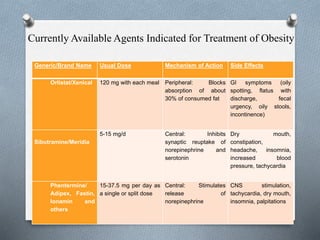
Currently Available Agents Indicated for Treatment of Obesity 
16 
Generic/Brand Name Usual Dose Mechanism of Action Side Effects 
Orlistat/Xenical 120 mg with each meal Peripheral: Blocks 
absorption of about 
30% of consumed fat 
GI symptoms (oily 
spotting, flatus with 
discharge, fecal 
urgency, oily stools, 
incontinence) 
Sibutramine/Meridia 
5-15 mg/d Central: Inhibits 
synaptic reuptake of 
norepinephrine and 
serotonin 
Dry mouth, 
constipation, 
headache, insomnia, 
increased blood 
pressure, tachycardia 
Phentermine/ 
Adipex, Fastin, 
Ionamin and 
others 
15-37.5 mg per day as 
a single or split dose 
Central: Stimulates 
release of 
norepinephrine 
CNS stimulation, 
tachycardia, dry mouth, 
insomnia, palpitations
17 
`
Future Perspectives 
O Development of treatment at molecular level 
O Prevention in Hormonal Imbalance eg. Leptin 
O Prevention of binge eating. 
18
Reference 
O Stefan Engeli; “The clinical pharmacology of obesity”, Therapeutic Advances in Endocrinology and 
Metabolism (2012) 3(3) 83–84 
O Lee M. Kaplan, “Pharmacological Therapies for Obesity”, Gastroenterol Clin N Am 34 (2005) 91–104 
O Obesity The Science Inside, book by American Association for the Advancement of Science. 
O Stern J, Kazaks A, “ Obesity A Reference Handbook” 2009, Library of Congress Cataloging-in- 
Publication Data, California 
O Magdalena Warchoł, Hanna Krauss, Małgorzata Wojciechowska, Tomasz Opala, Beata Pięta, Wioletta 
Żukiewicz-Sobczak, Justyna Kupsz, Alina Grochowalska “The role of ghrelin, leptin and insulin in 
foetal development” Annals of Agricultural and Environmental Medicine 2014, Vol 21, No 2, 349–352 
O G W Kim, J E Lin, E S Blomain, S A Waldman (2013). Antiobesity Pharmacotherapy: New Drugs and 
Emerging Targets. [ONLINE] Available at: 
http://www.nature.com/clpt/journal/v95/n1/fig_tab/clpt2013204t2.html#figure-title. [Last Accessed 10 
November 2014 ]. 
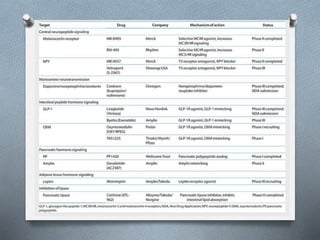
19
20

Obesity

  • 1.
    OBESITY DISEASE OFTHE 21st CENTURY Presented By: Abhinav Sawhney M. Pharm (Pharmacology) Amity Institute of Pharmacy 1
  • 2.
    Obesity O Excessiveamount of body fat O Women with > 35% body fat O Men with > 25% body fat O Increased risk for health problems 2
  • 3.
    Regional Distribution OThe regional distribution of body fat affects risk factors for the heart disease and type 2 diabetes 3
  • 4.
    Body Fat Distribution:Gynoid O Lower-body obesity--Pear shape O Encouraged by estrogen and progesterone O Less health risk than upper-body obesity O After menopause, upper-body obesity appears 4
  • 5.
    Body Fat Distribution:Android O Upper-body obesity--apple shape O Associated with more heart disease, HTN, Type II Diabetes O Abdominal fat is released right into the liver O Encouraged by testosterone and excessive alcohol intake O Defined as waist measurement of > 40” for men and >35” for women 5
  • 6.
  • 7.
    Obesity Pathophysiology: OThe pathogenesis of obesity is far more complex than the simple paradigm of an imbalance between energy intake and energy output. 7
  • 8.
    Components of EnergyExpenditure O Resting energy expenditure: expressed as RMR O Energy expended in voluntary activity O Thermic effect of food (TEF) or diet-induced thermogenesis (DIT) O Related to energy value of food consumed and adaptive response to overeating O TEF may decline as day progresses 8
  • 9.
    Role of BrainNeurotransmitters O Neurotransmitters govern the body’s response to starvation and dietary intake O Decreases in serotonin and increases in neuropeptide Y are associated with an increase in carbohydrate appetite O Neuropeptide Y increases during deprivation; may account for increase in appetite after dieting O Cravings for sweet high-fat foods among obese and bulimic patients may involve the endorphin system 9
  • 10.
    Hormonal Regulation ofBody Weight O Norepinephrine and dopamine—released by sympathetic nervous system in response to dietary intake O Fasting and semistarvation lead to decreased levels of these neurotransmitters—more epinephrine is made and substrate is mobilized. 10
  • 11.
    Hormones and Weight O Hypothyroidism may diminish adaptive thermogenesis O Insulin resistance may impair adaptive thermogenesis O Leptin is secreted in proportion to percent adipose tissue and may regulate (decrease) appetite 11
  • 12.
    Leptin O Leptinwas discovered in 1994 by Friedman et al and ushered in an explosion of research and a great increase in knowledge about regulation of the human feeding and eating cycle. O The major role of leptin in body weight regulation is to signal satiety to the hypothalamus and, thus, reduce dietary intake and fat storage while modulating energy expenditure and carbohydrate metabolism to prevent further weight gain. 12
  • 13.
  • 14.
  • 15.
    Potential Strategies forAnti-Obesity Drug Action O Reducing food intake. Either amplify effects of signals/factors that inhibit food intake or block signals/factors that augment food intake O Blocking nutrient absorption (especially fat carbohydrates) in the intestine. O Increasing thermogenesis. Either increase metabolism and dissipate food energy as heat or increase energy expenditure through the enhancement of physical activity. O Modulating fat metabolism/storage. Regulate fat synthesis/breakdown by making appropriate adjustments to food intake or energy expenditure. O Modulating the central regulation of body weight. Either alter the internal set point or modulate the signals presented regarding fat stores. 15
  • 16.
    Currently Available AgentsIndicated for Treatment of Obesity 16 Generic/Brand Name Usual Dose Mechanism of Action Side Effects Orlistat/Xenical 120 mg with each meal Peripheral: Blocks absorption of about 30% of consumed fat GI symptoms (oily spotting, flatus with discharge, fecal urgency, oily stools, incontinence) Sibutramine/Meridia 5-15 mg/d Central: Inhibits synaptic reuptake of norepinephrine and serotonin Dry mouth, constipation, headache, insomnia, increased blood pressure, tachycardia Phentermine/ Adipex, Fastin, Ionamin and others 15-37.5 mg per day as a single or split dose Central: Stimulates release of norepinephrine CNS stimulation, tachycardia, dry mouth, insomnia, palpitations
  • 17.
  • 18.
    Future Perspectives ODevelopment of treatment at molecular level O Prevention in Hormonal Imbalance eg. Leptin O Prevention of binge eating. 18
  • 19.
    Reference O StefanEngeli; “The clinical pharmacology of obesity”, Therapeutic Advances in Endocrinology and Metabolism (2012) 3(3) 83–84 O Lee M. Kaplan, “Pharmacological Therapies for Obesity”, Gastroenterol Clin N Am 34 (2005) 91–104 O Obesity The Science Inside, book by American Association for the Advancement of Science. O Stern J, Kazaks A, “ Obesity A Reference Handbook” 2009, Library of Congress Cataloging-in- Publication Data, California O Magdalena Warchoł, Hanna Krauss, Małgorzata Wojciechowska, Tomasz Opala, Beata Pięta, Wioletta Żukiewicz-Sobczak, Justyna Kupsz, Alina Grochowalska “The role of ghrelin, leptin and insulin in foetal development” Annals of Agricultural and Environmental Medicine 2014, Vol 21, No 2, 349–352 O G W Kim, J E Lin, E S Blomain, S A Waldman (2013). Antiobesity Pharmacotherapy: New Drugs and Emerging Targets. [ONLINE] Available at: http://www.nature.com/clpt/journal/v95/n1/fig_tab/clpt2013204t2.html#figure-title. [Last Accessed 10 November 2014 ]. 19
  • 20.