Decision Making & Creativity
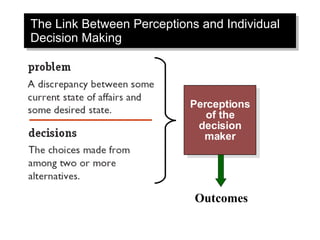
The Link Between Perceptions and Individual Decision Making Perceptions of the decision maker Outcomes
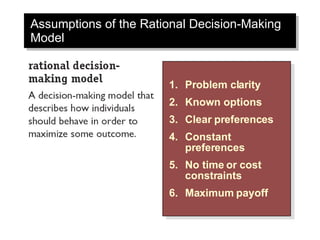
Assumptions of the Rational Decision-Making Model Problem clarity Known options Clear preferences Constant preferences No time or cost constraints Maximum payoff
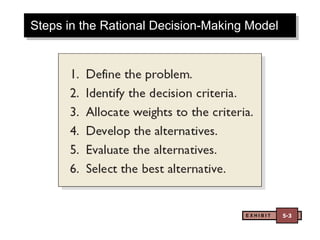
Steps in the Rational Decision-Making Model E X H I B I T 5-3
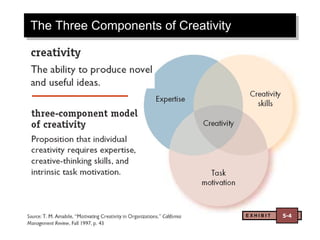
The Three Components of Creativity E X H I B I T 5-4
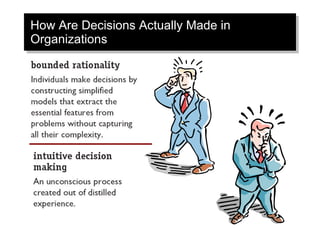
How Are Decisions Actually Made in Organizations
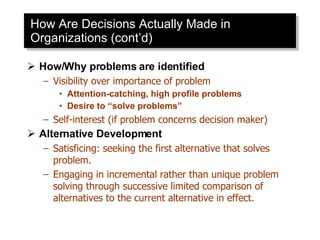
How Are Decisions Actually Made in Organizations (cont’d) How/Why problems are identified Visibility over importance of problem Attention-catching, high profile problems Desire to “solve problems” Self-interest (if problem concerns decision maker) Alternative Development Satisficing: seeking the first alternative that solves problem. Engaging in incremental rather than unique problem solving through successive limited comparison of alternatives to the current alternative in effect.
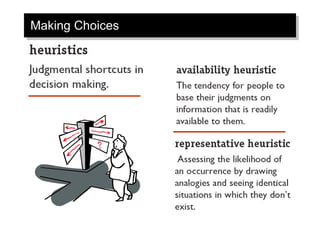
Making Choices
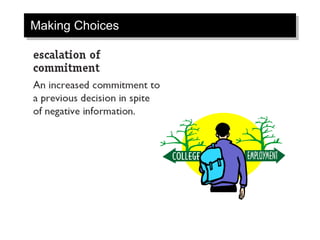
Making Choices
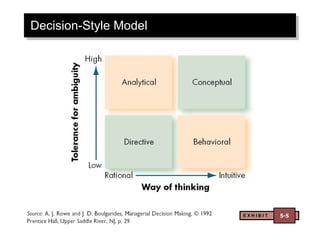
Decision-Style Model E X H I B I T 5-5
Organizational Constraints on Decision Makers Performance Evaluation Evaluation criteria influence the choice of actions. Reward Systems Decision makers make action choices that are favored by the organization. Formal Regulations Organizational rules and policies limit the alternative choices of decision makers. System-imposed Time Constraints Organizations require decisions by specific deadlines. Historical Precedents Past decisions influence current decisions.
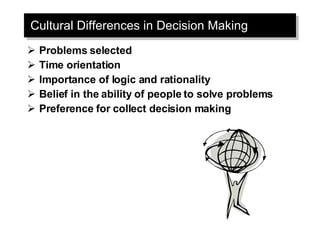
Cultural Differences in Decision Making Problems selected Time orientation Importance of logic and rationality Belief in the ability of people to solve problems Preference for collect decision making
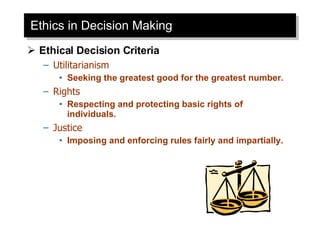
Ethics in Decision Making Ethical Decision Criteria Utilitarianism Seeking the greatest good for the greatest number. Rights Respecting and protecting basic rights of individuals. Justice Imposing and enforcing rules fairly and impartially.
Ethics in Decision Making Ethics and National Culture There are no global ethical standards. The ethical principles of global organizations that reflect and respect local cultural norms are necessary for high standards and consistent practices.

Ob Dm And Creativity

  • 1.
  • 2.
    The Link BetweenPerceptions and Individual Decision Making Perceptions of the decision maker Outcomes
  • 3.
    Assumptions of theRational Decision-Making Model Problem clarity Known options Clear preferences Constant preferences No time or cost constraints Maximum payoff
  • 4.
    Steps in theRational Decision-Making Model E X H I B I T 5-3
  • 5.
    The Three Componentsof Creativity E X H I B I T 5-4
  • 6.
    How Are DecisionsActually Made in Organizations
  • 7.
    How Are DecisionsActually Made in Organizations (cont’d) How/Why problems are identified Visibility over importance of problem Attention-catching, high profile problems Desire to “solve problems” Self-interest (if problem concerns decision maker) Alternative Development Satisficing: seeking the first alternative that solves problem. Engaging in incremental rather than unique problem solving through successive limited comparison of alternatives to the current alternative in effect.
  • 8.
  • 9.
  • 10.
    Decision-Style Model EX H I B I T 5-5
  • 11.
    Organizational Constraints onDecision Makers Performance Evaluation Evaluation criteria influence the choice of actions. Reward Systems Decision makers make action choices that are favored by the organization. Formal Regulations Organizational rules and policies limit the alternative choices of decision makers. System-imposed Time Constraints Organizations require decisions by specific deadlines. Historical Precedents Past decisions influence current decisions.
  • 12.
    Cultural Differences inDecision Making Problems selected Time orientation Importance of logic and rationality Belief in the ability of people to solve problems Preference for collect decision making
  • 13.
    Ethics in DecisionMaking Ethical Decision Criteria Utilitarianism Seeking the greatest good for the greatest number. Rights Respecting and protecting basic rights of individuals. Justice Imposing and enforcing rules fairly and impartially.
  • 14.
    Ethics in DecisionMaking Ethics and National Culture There are no global ethical standards. The ethical principles of global organizations that reflect and respect local cultural norms are necessary for high standards and consistent practices.