Organization Development and Change
Thomas G. Cummings
Christopher G. Worley
Individual, Interpersonal, and
Group Process Approaches
Cummings & Worley, 8e
(c)2005 Thomson/South-Western
12-2
Learning Objectives
for Chapter Twelve
• To understand the human process
interventions aimed at individuals,
interpersonal relations, and group dynamics
• To understand the application and
effectiveness of various process
interventions in producing change
Cummings & Worley, 8e
(c)2005 Thomson/South-Western
12-3
Process Interventions
• A set of activities on the part of the
consultant that helps individuals and group
members understand, diagnose, and
improve their behaviors.
• Interventions are aimed at helping
individuals develop skills, and members of
groups assess their interactions and devise
more effective ways of working.
Cummings & Worley, 8e
(c)2005 Thomson/South-Western
12-4
Individual, Interpersonal and
Group Process Approaches
• Coaching
• Training and Development
• Process Consultation
• Third-Party Interventions
• Team Building
Cummings & Worley, 8e
(c)2005 Thomson/South-Western
12-5
Coaching
• Goals
– Assist in execution of a transition
– Address a performance problem
– Develop new behavioral skills with leadership
development
• Application Stages
– Establish the principles of the relationship
– Conduct an assessment
– Coach and client debrief the results
– Develop and Implement an action plan
– Assess the results
Cummings & Worley, 8e
(c)2005 Thomson/South-Western
12-6
Training and Development
• Goals
– Changing the skills and knowledge of organization
members to improve effectiveness and build
capabilities
• Application Stages
– Perform needs assessment
– Develop objectives and design training
– Deliver training
– Evaluate training
Cummings & Worley, 8e
(c)2005 Thomson/South-Western
12-7
Process Consultation
• Definitions
– The creation of a relationship that permits the client to
perceive, understand, and act on the process events…”
– An approach that helps people and groups help
themselves
• Group Process Issues Addressed by Process
Consultation
– Communications
– The functional roles of group members
– Group problem solving and decision making
– Group norms
– Leadership and authority
Cummings & Worley, 8e
(c)2005 Thomson/South-Western
12-8
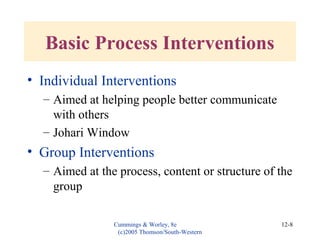
• Individual Interventions
– Aimed at helping people better communicate
with others
– Johari Window
• Group Interventions
– Aimed at the process, content or structure of the
group
Basic Process Interventions
Cummings & Worley, 8e
(c)2005 Thomson/South-Western
12-9
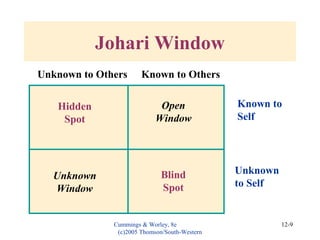
Johari Window
Unknown to Others Known to Others
Known to
Self
Unknown
to Self
Hidden
Spot
Open
Window
Unknown
Window
Blind
Spot
Cummings & Worley, 8e
(c)2005 Thomson/South-Western
12-10
Unknown to Others Known to Others
Known to
Self
Unknown
to Self
Open
Window
Improving Communications
Using the Johari Window
Reduce
Hidden Area
through
Disclosure to
Others
Reduce Blind Spot
through Feedback from
Others
Cummings & Worley, 8e
(c)2005 Thomson/South-Western
12-11
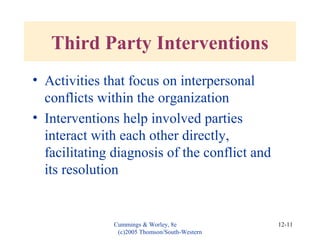
Third Party Interventions
• Activities that focus on interpersonal
conflicts within the organization
• Interventions help involved parties
interact with each other directly,
facilitating diagnosis of the conflict and
its resolution
Cummings & Worley, 8e
(c)2005 Thomson/South-Western
12-12
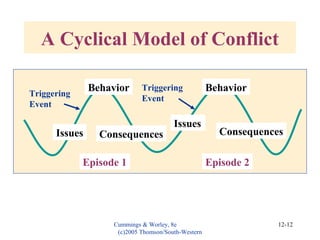
A Cyclical Model of Conflict
Episode 1 Episode 2
Triggering
Event
Triggering
Event
Issues
Behavior Behavior
Consequences Consequences
Issues
Cummings & Worley, 8e
(c)2005 Thomson/South-Western
12-13
Strategies for Conflict Resolution
• Prevent the conflict through mandate or
separation of the parties
• Set limits on the timing and extent of the
conflict
• Help the parties to cope differently with the
conflict
• Attempt to eliminate or resolve the basic
issues in the conflict
Cummings & Worley, 8e
(c)2005 Thomson/South-Western
12-14
Team Building Activities
• Activities Related to One or More
Individuals
• Activities Oriented to the Group’s
Operations and Behaviors
• Activities Affecting the Group’s
Relationship with the Rest of the
Organization
Cummings & Worley, 8e
(c)2005 Thomson/South-Western
12-15
Types of Teams
• Groups reporting to the same manager
• Groups involving people with common goals
• Temporary groups formed to accomplish a
specific, one-time task
• Groups consisting of people whose work
roles are interdependent
• Groups with no formal links but whose
collective purpose requires coordination
Cummings & Worley, 8e
(c)2005 Thomson/South-Western
12-16
Team-Building Activities
• Determine the Intervention Target
– One or more individuals
– A group’s operation and behavior
– A group’s relationships with the rest of the
organization
• Determine the Intervention Orientation
– Diagnostic
– Developmental
Cummings & Worley, 8e
(c)2005 Thomson/South-Western
12-17
Team Building Activities
• Group Operation and Behavior
– An inward look by the team at its own performance,
behavior and culture for the purpose of improving
effectiveness
• Group Relationships with the Organization
– Understand the group’s role within the organization
including interaction, support, and collaboration
• Manager’s Role

Oc 6440 individual, interpersonal, and group process

  • 1.
    Organization Development andChange Thomas G. Cummings Christopher G. Worley Individual, Interpersonal, and Group Process Approaches
  • 2.
    Cummings & Worley,8e (c)2005 Thomson/South-Western 12-2 Learning Objectives for Chapter Twelve • To understand the human process interventions aimed at individuals, interpersonal relations, and group dynamics • To understand the application and effectiveness of various process interventions in producing change
  • 3.
    Cummings & Worley,8e (c)2005 Thomson/South-Western 12-3 Process Interventions • A set of activities on the part of the consultant that helps individuals and group members understand, diagnose, and improve their behaviors. • Interventions are aimed at helping individuals develop skills, and members of groups assess their interactions and devise more effective ways of working.
  • 4.
    Cummings & Worley,8e (c)2005 Thomson/South-Western 12-4 Individual, Interpersonal and Group Process Approaches • Coaching • Training and Development • Process Consultation • Third-Party Interventions • Team Building
  • 5.
    Cummings & Worley,8e (c)2005 Thomson/South-Western 12-5 Coaching • Goals – Assist in execution of a transition – Address a performance problem – Develop new behavioral skills with leadership development • Application Stages – Establish the principles of the relationship – Conduct an assessment – Coach and client debrief the results – Develop and Implement an action plan – Assess the results
  • 6.
    Cummings & Worley,8e (c)2005 Thomson/South-Western 12-6 Training and Development • Goals – Changing the skills and knowledge of organization members to improve effectiveness and build capabilities • Application Stages – Perform needs assessment – Develop objectives and design training – Deliver training – Evaluate training
  • 7.
    Cummings & Worley,8e (c)2005 Thomson/South-Western 12-7 Process Consultation • Definitions – The creation of a relationship that permits the client to perceive, understand, and act on the process events…” – An approach that helps people and groups help themselves • Group Process Issues Addressed by Process Consultation – Communications – The functional roles of group members – Group problem solving and decision making – Group norms – Leadership and authority
  • 8.
    Cummings & Worley,8e (c)2005 Thomson/South-Western 12-8 • Individual Interventions – Aimed at helping people better communicate with others – Johari Window • Group Interventions – Aimed at the process, content or structure of the group Basic Process Interventions
  • 9.
    Cummings & Worley,8e (c)2005 Thomson/South-Western 12-9 Johari Window Unknown to Others Known to Others Known to Self Unknown to Self Hidden Spot Open Window Unknown Window Blind Spot
  • 10.
    Cummings & Worley,8e (c)2005 Thomson/South-Western 12-10 Unknown to Others Known to Others Known to Self Unknown to Self Open Window Improving Communications Using the Johari Window Reduce Hidden Area through Disclosure to Others Reduce Blind Spot through Feedback from Others
  • 11.
    Cummings & Worley,8e (c)2005 Thomson/South-Western 12-11 Third Party Interventions • Activities that focus on interpersonal conflicts within the organization • Interventions help involved parties interact with each other directly, facilitating diagnosis of the conflict and its resolution
  • 12.
    Cummings & Worley,8e (c)2005 Thomson/South-Western 12-12 A Cyclical Model of Conflict Episode 1 Episode 2 Triggering Event Triggering Event Issues Behavior Behavior Consequences Consequences Issues
  • 13.
    Cummings & Worley,8e (c)2005 Thomson/South-Western 12-13 Strategies for Conflict Resolution • Prevent the conflict through mandate or separation of the parties • Set limits on the timing and extent of the conflict • Help the parties to cope differently with the conflict • Attempt to eliminate or resolve the basic issues in the conflict
  • 14.
    Cummings & Worley,8e (c)2005 Thomson/South-Western 12-14 Team Building Activities • Activities Related to One or More Individuals • Activities Oriented to the Group’s Operations and Behaviors • Activities Affecting the Group’s Relationship with the Rest of the Organization
  • 15.
    Cummings & Worley,8e (c)2005 Thomson/South-Western 12-15 Types of Teams • Groups reporting to the same manager • Groups involving people with common goals • Temporary groups formed to accomplish a specific, one-time task • Groups consisting of people whose work roles are interdependent • Groups with no formal links but whose collective purpose requires coordination
  • 16.
    Cummings & Worley,8e (c)2005 Thomson/South-Western 12-16 Team-Building Activities • Determine the Intervention Target – One or more individuals – A group’s operation and behavior – A group’s relationships with the rest of the organization • Determine the Intervention Orientation – Diagnostic – Developmental
  • 17.
    Cummings & Worley,8e (c)2005 Thomson/South-Western 12-17 Team Building Activities • Group Operation and Behavior – An inward look by the team at its own performance, behavior and culture for the purpose of improving effectiveness • Group Relationships with the Organization – Understand the group’s role within the organization including interaction, support, and collaboration • Manager’s Role