Beyond the Impact Factor: Getting your 
research noticed in the algorithmic era. 
William Gunn, Ph.D. 
Head of Academic Outreach 
twitter: @mrgunn
Writing for Robots
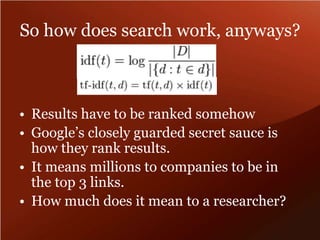
So how does search work, anyways? 
• Results have to be ranked somehow 
• Google’s closely guarded secret sauce is 
how they rank results. 
• It means millions to companies to be in 
the top 3 links. 
• How much does it mean to a researcher?
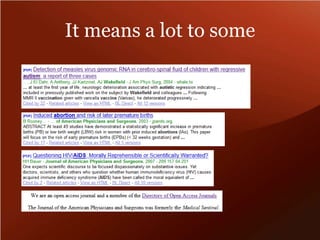
It means a lot to some
Discovery 
• Finding things when you don’t know what 
to search for 
• Finding things without searching at all 
• Finding things related conceptually 
• This requires reading implicit preference 
information 
• collaborative filtering
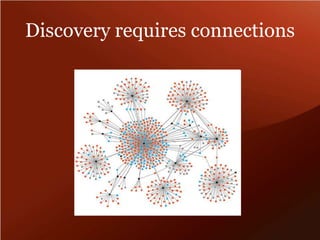
Discovery requires connections
Open Access papers are cited & 
read more! 
• People who otherwise wouldn’t have seen 
an article can now read it & cite it! 
• Readership & citations start accumulating 
earlier. 
• 75% of readers of Pubmed Central papers 
are non-institutional 
• In Mendeley’s catalog, OA papers can have 
up to 10x the readership. 
http://www.istl.org/10-winter/article2.html
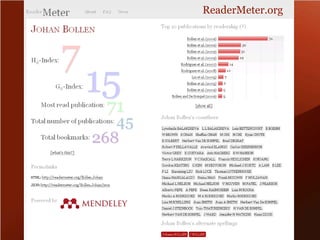
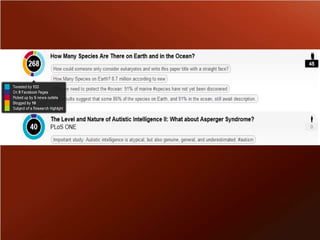
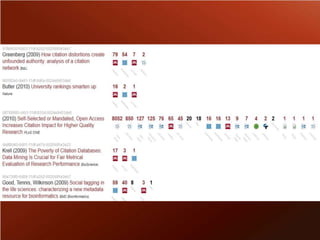
ReaderMeter.org
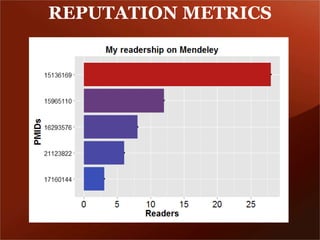
REPUTATION METRICS
Today… 
•Over 1,000,000 people are using Mendeley 
•Over 120M papers have been uploaded 
•Over 1000 API keys have been given to 
developers
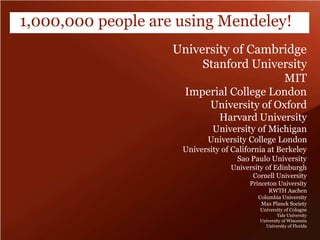
1,000,000 people are using Mendeley! 
University of Cambridge 
Stanford University 
MIT 
Imperial College London 
University of Oxford 
Harvard University 
University of Michigan 
University College London 
University of California at Berkeley 
Sao Paulo University 
University of Edinburgh 
Cornell University 
Princeton University 
RWTH Aachen 
Columbia University 
Max Planck Society 
University of Cologne 
Yale University 
University of Wisconsin 
University of Florida
[1] Online experimental peer review of the “Arsenic Life” paper that 
recently appeared in Science: 
http://rrresearch.fieldofscience.com/2010/12/arsenic-associated-bacteria- 
nasas.html 
[2] Open Science is a Research Accelerator, M. Woelfle, P. Olliaro and 
M. H. Todd, Nature Chemistry 2011, 3, 745-748. 
http://www.nature.com/nchem/journal/v3/n10/full/nchem.1149.html 
PLoS ONE ALM API: http://api.plos.org/alm/examples/ 
Mendeley’s API: http://dev.mendeley.com
“All the time we are very 
conscious of the huge challenges 
that human society has now – 
curing cancer, understanding 
the brain for Alzheimer‘s [...]. 
But a lot of the state of knowledge 
of the human race is sitting in the 
scientists’ computers, and is 
currently not shared […] We need 
to get it unlocked so we can tackle 
those huge problems.“
www.mendeley.com

OA Week 2011 UC Davis: Beyond the Impact Factor: Getting Your Research Noticed in the Algorithmic Era

  • 1.
    Beyond the ImpactFactor: Getting your research noticed in the algorithmic era. William Gunn, Ph.D. Head of Academic Outreach twitter: @mrgunn
  • 2.
  • 3.
    So how doessearch work, anyways? • Results have to be ranked somehow • Google’s closely guarded secret sauce is how they rank results. • It means millions to companies to be in the top 3 links. • How much does it mean to a researcher?
  • 4.
    It means alot to some
  • 5.
    Discovery • Findingthings when you don’t know what to search for • Finding things without searching at all • Finding things related conceptually • This requires reading implicit preference information • collaborative filtering
  • 6.
  • 7.
    Open Access papersare cited & read more! • People who otherwise wouldn’t have seen an article can now read it & cite it! • Readership & citations start accumulating earlier. • 75% of readers of Pubmed Central papers are non-institutional • In Mendeley’s catalog, OA papers can have up to 10x the readership. http://www.istl.org/10-winter/article2.html
  • 8.
  • 11.
  • 12.
    Today… •Over 1,000,000people are using Mendeley •Over 120M papers have been uploaded •Over 1000 API keys have been given to developers
  • 13.
    1,000,000 people areusing Mendeley! University of Cambridge Stanford University MIT Imperial College London University of Oxford Harvard University University of Michigan University College London University of California at Berkeley Sao Paulo University University of Edinburgh Cornell University Princeton University RWTH Aachen Columbia University Max Planck Society University of Cologne Yale University University of Wisconsin University of Florida
  • 14.
    [1] Online experimentalpeer review of the “Arsenic Life” paper that recently appeared in Science: http://rrresearch.fieldofscience.com/2010/12/arsenic-associated-bacteria- nasas.html [2] Open Science is a Research Accelerator, M. Woelfle, P. Olliaro and M. H. Todd, Nature Chemistry 2011, 3, 745-748. http://www.nature.com/nchem/journal/v3/n10/full/nchem.1149.html PLoS ONE ALM API: http://api.plos.org/alm/examples/ Mendeley’s API: http://dev.mendeley.com
  • 15.
    “All the timewe are very conscious of the huge challenges that human society has now – curing cancer, understanding the brain for Alzheimer‘s [...]. But a lot of the state of knowledge of the human race is sitting in the scientists’ computers, and is currently not shared […] We need to get it unlocked so we can tackle those huge problems.“
  • 16.

Editor's Notes

  • #2 We support academics, students and other professionals (or researchers) in their work with scientific literature. We provide scientific knowledge. We organize scientific knowledge. We help to explore and share scientific knowledge.
  • #17 We support academics, students and other professionals (or researchers) in their work with scientific literature. We provide scientific knowledge. We organize scientific knowledge. We help to explore and share scientific knowledge.