Kandi Horsman
OPWL 550
 Define asynchronous learning.
 Define synchronous learning.
 Categorize communication tools as synchronous
& asynchronous.
 Explain when & why an asynchronous delivery
method would be appropriate.
 Explain how to effectively use this method in
conjunction with other methods.
 Explain ways in which this method will be helpful
to your organization.
At the conclusion of this session, you will be able to:
Define asynchronous learning.
Define synchronous learning.
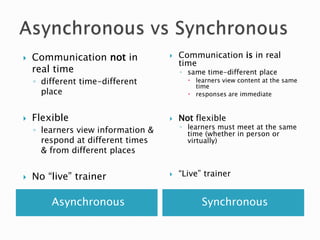
Asynchronous
 Communication not in
real time
◦ different time-different
place
 Flexible
◦ learners view information &
respond at different times
& from different places
 No “live” trainer
Synchronous
 Communication is in real
time
◦ same time-different place
 learners view content at the same
time
 responses are immediate
 Not flexible
◦ learners must meet at the same
time (whether in person or
virtually)
 “Live” trainer
Categorize communication
tools as synchronous &
asynchronous.
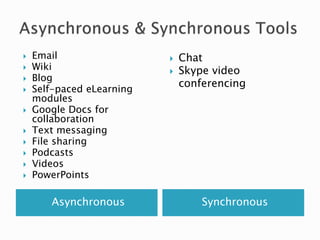
Asynchronous Synchronous
 Email
 Wiki
 Blog
 Self-paced eLearning
modules
 Google Docs for
collaboration
 Text messaging
 File sharing
 Podcasts
 Videos
 PowerPoints
 Chat
 Skype video
conferencing
Explain when and why an
asynchronous delivery method
would be appropriate.
A
•Planning a group project (e.g., group members getting to
know one another & assigning tasks).
B
•Reflecting on complex content and critically responding to
peers' ideas.
C
•Communicating urgent information to administrators in
four schools about the need to evacuate their students.
d
•Facilitating discussions that build a sense of social
presence and community.
Poll
Explain how to effectively use
this method in conjunction
with other methods.
 What types of synchronous tools might you
use in conjunction with asynchronous tools
like self-paced eLearning modules and
discussion boards to maximize participants'
learning experience?
Explain ways in which this
method would be helpful to
your organization.
Email: kandih@gmail.com
PowerPoint at SlideShare:

Asynchronous Learning

  • 1.
  • 2.
     Define asynchronouslearning.  Define synchronous learning.  Categorize communication tools as synchronous & asynchronous.  Explain when & why an asynchronous delivery method would be appropriate.  Explain how to effectively use this method in conjunction with other methods.  Explain ways in which this method will be helpful to your organization. At the conclusion of this session, you will be able to:
  • 3.
  • 4.
    Asynchronous  Communication notin real time ◦ different time-different place  Flexible ◦ learners view information & respond at different times & from different places  No “live” trainer Synchronous  Communication is in real time ◦ same time-different place  learners view content at the same time  responses are immediate  Not flexible ◦ learners must meet at the same time (whether in person or virtually)  “Live” trainer
  • 5.
    Categorize communication tools assynchronous & asynchronous.
  • 6.
    Asynchronous Synchronous  Email Wiki  Blog  Self-paced eLearning modules  Google Docs for collaboration  Text messaging  File sharing  Podcasts  Videos  PowerPoints  Chat  Skype video conferencing
  • 7.
    Explain when andwhy an asynchronous delivery method would be appropriate.
  • 8.
    A •Planning a groupproject (e.g., group members getting to know one another & assigning tasks). B •Reflecting on complex content and critically responding to peers' ideas. C •Communicating urgent information to administrators in four schools about the need to evacuate their students. d •Facilitating discussions that build a sense of social presence and community. Poll
  • 9.
    Explain how toeffectively use this method in conjunction with other methods.
  • 10.
     What typesof synchronous tools might you use in conjunction with asynchronous tools like self-paced eLearning modules and discussion boards to maximize participants' learning experience?
  • 11.
    Explain ways inwhich this method would be helpful to your organization.
  • 14.