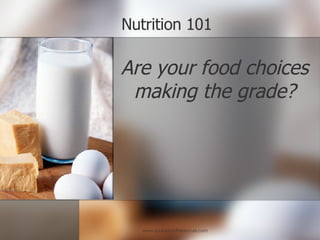
Nutrition 101 Are your food choices making the grade?
~ You are What you Eat ~ Nutrition is the study of how our body uses the food we eat to maintain our health.
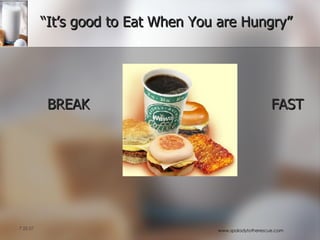
“It’s good to Eat When You are Hungry” BREAK FAST
Hunger v. Appetite They are the same thing right?
Hunger Hunger  is a physiological need for food.
Appetite Appetite is the psychological desire for food
Diet A diet is a pattern of eating that includes  what  a person eats,  how  much a person eats, and  when  a person eats.
Ask the Right questions Why?
Reasons  Why  we eat It (food) was there Social (family, holiday, outing) Emotions (anger, sadness, happiness) Someone Else Nervousness Stress
Factors that affect food choices Personal preference Convenience Cost Cultural Social Religious Availability/Variety
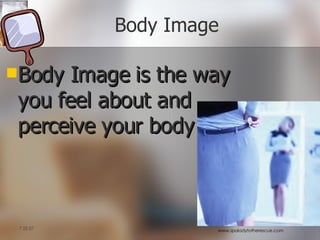
Body Image Body Image is the way you feel about and perceive your body
Eating Disorders A disease that involves an unhealthy concern with one’s body weight and shape. Anorexia Nervosa Self-starvation Extreme weight loss Bulimia Nervosa Binge & Purge Binge-eating Disorder Bingeing
The latest data from the National Center for Health Statistics show that 30 percent of U.S. adults 20 years of age and older are obese. An estimated 119 million Americans, or 64.5 percent, of adults are either overweight or obese.  Centers for Disease Control
Obesity Obesity is a condition characterized by a large percentage of body fat High cholesterol High Blood Pressure Heart disease Diabetes Stroke Cancer (certain forms)
Top 10 Leading Causes of Death Top 6 leading causes of death all associated with obesity Heart Disease Cancer Stroke Chronic lower respiratory diseases Diabetes Accidents (unintentional injuries) National Center for Health Statistics
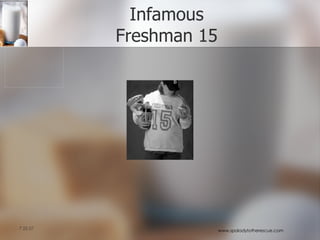
Infamous Freshman 15
Dietary Guidelines Guide for healthy eating for Americans age 2 and up USDA & DHHS
Moderation Moderation Moderation Moderation
What’s a Calorie? Unit of measurement for energy 3 of the 6 nutrients provide us with energy Carbohydrate – 1 g = 4 calories Protein – 1 g = 4 calories Fat – 1 g = 9 calories
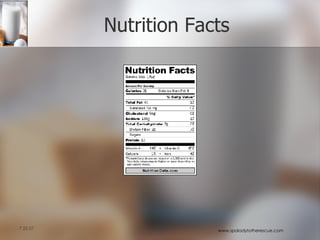
Nutrition Facts
The Skinny on Fat Fat gives us twice as many calories per gram as carbohydrates and protein Quality v. Quantity
Serving Size Not  a portion, which is the amount of food a person wants to eat; In essence whatever amount you put on your plate A serving size  is  the amount of food considered healthy for an average adult Need v. Want
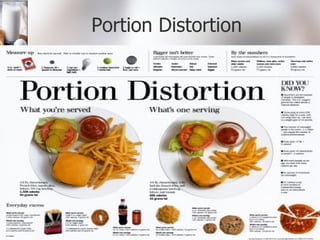
Portion Distortion
Carb Count Carbohydrates are vital for our diet  One of the six essential nutrients Source of energy for the body Similar to gas for the car, our body will not function without carbohydrates.
Low Carb / No Carb “Diets”
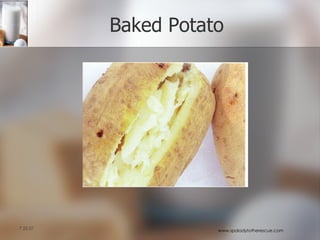
Baked Potato
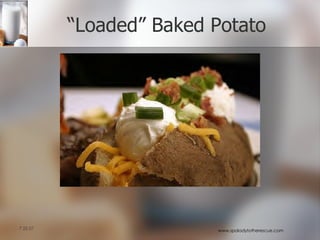
“ Loaded” Baked Potato
Load of Calories Butter Sour cream Cheese Bacon Ranch
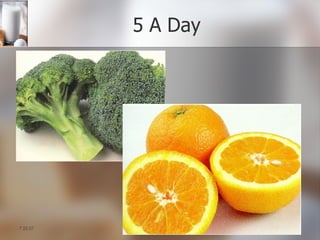
5 A Day
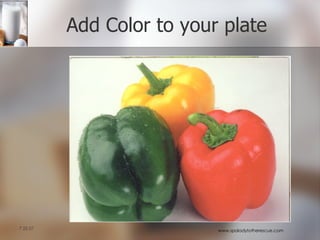
Add Color to your plate
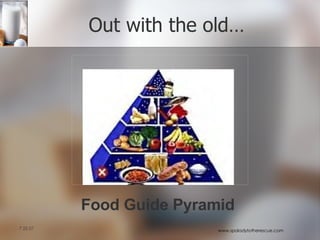
Out with the old…        Food Guide Pyramid
In with the new… United States Department of Agriculture
Let’s get physical Partnership Pedometer Compare yourself to Yourself
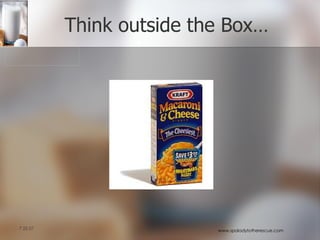
Think outside the Box…
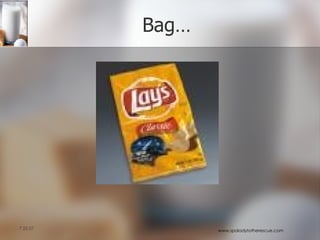
Bag…
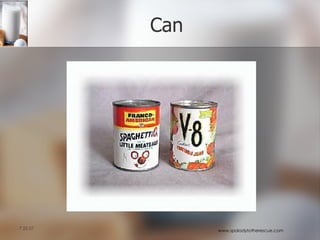
Can
Homework “Diet” Analysis “SuperSize Me for a Week” caloric calculations Visit  mypyramid.gov
Evaluation One thing you learned from the presentation A question that the presentation evoked Something you will do as a result of today’s presentation Additional comments
Thank you for your time.  I have enjoyed meeting with you today. Charlotte R. Williams, MAEd, CHES [email_address] “ Providing timely solutions for  Community Health needs” Nutrition 101 Are your food choices making the grade?

Nutrition 101

  • 1.
    Nutrition 101 Areyour food choices making the grade?
  • 2.
    ~ You areWhat you Eat ~ Nutrition is the study of how our body uses the food we eat to maintain our health.
  • 3.
    “It’s good toEat When You are Hungry” BREAK FAST
  • 4.
    Hunger v. AppetiteThey are the same thing right?
  • 5.
    Hunger Hunger is a physiological need for food.
  • 6.
    Appetite Appetite isthe psychological desire for food
  • 7.
    Diet A dietis a pattern of eating that includes what a person eats, how much a person eats, and when a person eats.
  • 8.
    Ask the Rightquestions Why?
  • 9.
    Reasons Why we eat It (food) was there Social (family, holiday, outing) Emotions (anger, sadness, happiness) Someone Else Nervousness Stress
  • 10.
    Factors that affectfood choices Personal preference Convenience Cost Cultural Social Religious Availability/Variety
  • 11.
    Body Image BodyImage is the way you feel about and perceive your body
  • 12.
    Eating Disorders Adisease that involves an unhealthy concern with one’s body weight and shape. Anorexia Nervosa Self-starvation Extreme weight loss Bulimia Nervosa Binge & Purge Binge-eating Disorder Bingeing
  • 13.
    The latest datafrom the National Center for Health Statistics show that 30 percent of U.S. adults 20 years of age and older are obese. An estimated 119 million Americans, or 64.5 percent, of adults are either overweight or obese. Centers for Disease Control
  • 14.
    Obesity Obesity isa condition characterized by a large percentage of body fat High cholesterol High Blood Pressure Heart disease Diabetes Stroke Cancer (certain forms)
  • 15.
    Top 10 LeadingCauses of Death Top 6 leading causes of death all associated with obesity Heart Disease Cancer Stroke Chronic lower respiratory diseases Diabetes Accidents (unintentional injuries) National Center for Health Statistics
  • 16.
  • 17.
    Dietary Guidelines Guidefor healthy eating for Americans age 2 and up USDA & DHHS
  • 18.
  • 19.
    What’s a Calorie?Unit of measurement for energy 3 of the 6 nutrients provide us with energy Carbohydrate – 1 g = 4 calories Protein – 1 g = 4 calories Fat – 1 g = 9 calories
  • 20.
  • 21.
    The Skinny onFat Fat gives us twice as many calories per gram as carbohydrates and protein Quality v. Quantity
  • 22.
    Serving Size Not a portion, which is the amount of food a person wants to eat; In essence whatever amount you put on your plate A serving size is the amount of food considered healthy for an average adult Need v. Want
  • 23.
  • 24.
    Carb Count Carbohydratesare vital for our diet One of the six essential nutrients Source of energy for the body Similar to gas for the car, our body will not function without carbohydrates.
  • 25.
    Low Carb /No Carb “Diets”
  • 26.
  • 27.
  • 28.
    Load of CaloriesButter Sour cream Cheese Bacon Ranch
  • 29.
  • 30.
    Add Color toyour plate
  • 31.
    Out with theold…       Food Guide Pyramid
  • 32.
    In with thenew… United States Department of Agriculture
  • 33.
    Let’s get physicalPartnership Pedometer Compare yourself to Yourself
  • 34.
  • 35.
  • 36.
  • 37.
    Homework “Diet” Analysis“SuperSize Me for a Week” caloric calculations Visit mypyramid.gov
  • 38.
    Evaluation One thingyou learned from the presentation A question that the presentation evoked Something you will do as a result of today’s presentation Additional comments
  • 39.
    Thank you foryour time. I have enjoyed meeting with you today. Charlotte R. Williams, MAEd, CHES [email_address] “ Providing timely solutions for Community Health needs” Nutrition 101 Are your food choices making the grade?

Editor's Notes

  • #2 Give out m v. factsquiz