NUTRITION
AND
NUTRIENTS
NUTRITION – is the study of food and health, it
is the science that centers in foods, their
nutrient and other chemical constituent, and
the effects of food on body processes and
health.
NUTRIENTS- chemical substances that found
in the food that are used by the body for
growth and health.The six categories of
nutrients are carbohydrates, protein, fats
vitamins, mineral and water.
FOOD
It is the basic needs of human. Human need
enough food to live and the right assortments of food
for optimal health.The need for food is combined with
the condition of food security.
FOOD SECURITY- People who experience food security,
have access at all times to a sufficient supply of safe,
nutritious food needed for an active and healthy life.
FOOD INSECURITY- exist whenever the availability of
safe, nutritious food, or the ability to acquire them in
socially acceptable ways, is limited or uncertain. Food
insecurity leads to poor health, increased risk for
certain diseases, and in children lowered academic
achievements.
GOOD NUTRITION
DIETARY GUIDELINES
1. EATVARIETY OF FOODS.
- Include the selections of fruits, vegetables, milk cheese, yogurt, meats,
poultry, fish, eggs, and legumes.Whole grain, cereals.
2. MAINTAIN IDEAL WEIGHT.
- to improve eating habits: eat slowly, prepare smaller portion; avoid seconds
- to loose weight; increase physical activity, eat less fat and fewer fatty
foods, eat less sugar, avoid too much alcohol.
3. AVOIDTOO MUCH FAT,SATURATED FAT AND CHOLESTEROL.
- choose lean meat, fish, poultry, dry bean as your protein sources.
- moderate your use of eggs, and organ meats (such as liver)
- limit your intake of butter, cream, margarine, coconut oil and food made
from such products.
4. EAT FOOD WITH ADEQUATE STARCH AND FIBERS.
-substitute starches for fat and sugar, select foods that are good sources of
fiber and starch, such as whole-grain bread and cereals, fruits and
vegetables.
5. AVOIDTOO MUCH SUGAR.
- use less of all sugars such as brown ,white sugar, raw sugar, honey, syrups
- eat fewer foods containing these sugars.
6. AVOIDTOO MUCH SODIUM
7. IFYOU DRINK ALCOHOL,DO SO IN MODERATION .
Six Categories of
Nutrients
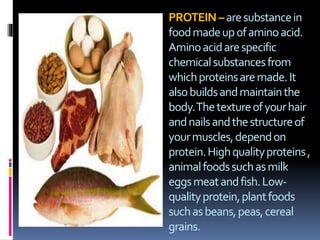
PROTEIN–aresubstancein
foodmadeupofaminoacid.
Aminoacidarespecific
chemicalsubstancesfrom
whichproteinsaremade.It
alsobuildsandmaintainthe
body.Thetextureofyourhair
andnailsandthestructureof
yourmuscles,dependon
protein.Highqualityproteins,
animalfoodssuchasmilk
eggsmeatandfish.Low-
qualityprotein,plantfoods
suchasbeans,peas,cereal
grains.
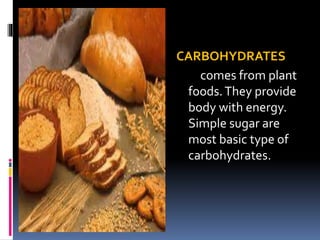
CARBOHYDRATES
comes from plant
foods.They provide
body with energy.
Simple sugar are
most basic type of
carbohydrates.
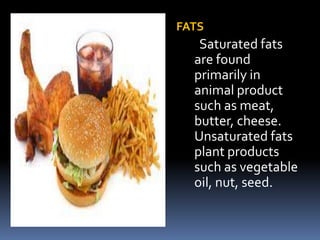
FATS
Saturated fats
are found
primarily in
animal product
such as meat,
butter, cheese.
Unsaturated fats
plant products
such as vegetable
oil, nut, seed.
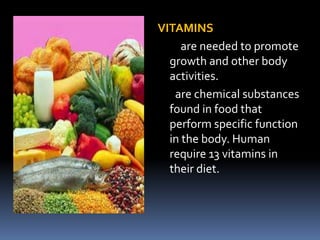
VITAMINS
are needed to promote
growth and other body
activities.
are chemical substances
found in food that
perform specific function
in the body. Human
require 13 vitamins in
their diet.
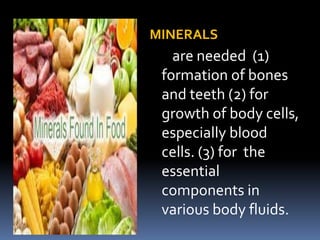
MINERALS
are needed (1)
formation of bones
and teeth (2) for
growth of body cells,
especially blood
cells. (3) for the
essential
components in
various body fluids.
WATER
you can live without
food for a week, but
without water you would
die within days.Water
helps remove waste
products through
kidneys, it also cools the
body as you perspire as it
evaporate from the
lungs.
NUTRITIONALLY BALANCE DIET
A “well-balanced” diet means one that contains
all the key nutrient and enough calories for daily
activities.
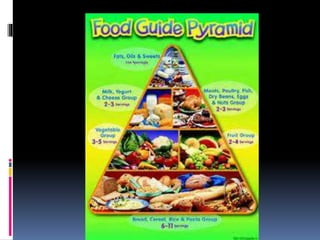
A FOOD GUIDE PYRAMID
is a pyramid shape guide of healthy foods
divided into section to show the recommended
intake for each food group
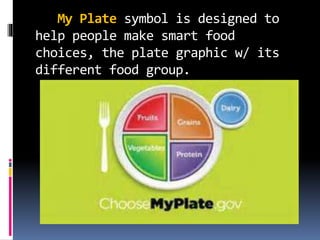
My Plate symbol is designed to
help people make smart food
choices, the plate graphic w/ its
different food group.
IS BREAKFAST IMPORTANT?
A poor or skipped breakfast can impair mental
and physical performance.This is why breakfast is
called the most important meal of the day.
WHAT ABOUT FAST FOOD AND SNACKS?
Fast food are low in calcium, iron and vitamins
and fiber .They are high in calories, sugar salt and
fat.
IS AVEGETARIAN DIET HEALTHFUL?
These diets are not harmful and can even benefit
health. It reduce the risk of cancer, heart disease
and obesity due to there lower fats and cholesterol
content and higher fiber content.
WEIGHT CONTROL
The Human body has always been admired for it
symmetry and beauty. But the image of the ideal
physique has varied throughout history and culture.
Good nutrition and a fitness program are the keys to
a healthful, more attractive self-image..
OBESITY
- being overweight, over fat (obese)
- the more obese a person, is the more common
health problems related to obesity become.
- it increases the risk of both heart disease and
stroke.
- it increases the risk of diabetes, kidney, gallbladder,
joint diseases, and posture problem.
WHAT CAUSES OBESITY?
Simply stated, obesity result when the intake
of calories exceeds caloric expenditure.
- diet
- physical activity
- environmental exposures
- genetic background
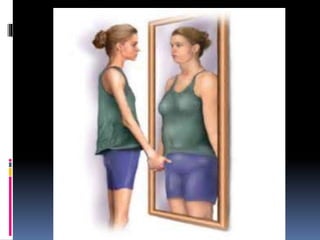
Anorexia
An eating disorder characterized by
extreme weight loss, poor body image, and
irrational fears of weight gain and obesity.
Starves the body, muscle tissues waste
away.The skin dries and yellow and the hair
thins and falls out . Blood pressure drops.
Menstruation ceases, and weight drops
drastically.
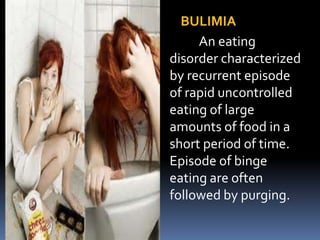
BULIMIA
An eating
disorder characterized
by recurrent episode
of rapid uncontrolled
eating of large
amounts of food in a
short period of time.
Episode of binge
eating are often
followed by purging.
MALNUTRITION
- means “poor” nutrition and result from
both inadequate and excessive availability of
calories and nutrients in the body.
- malnutrition early in life has long-term
effects on mental and physical development.
- underweight children are an indicator of
malnutrition .
- poverty, corrupt government, the HIV/AIDS
epidemic, low rates of breastfeeding, unsafe water
supply, discrimination against females all
contribute to malnutrition.
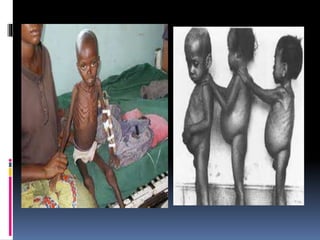
Marasmus
- malnutrition caused by a lack of
calories and protein
- children with marasmus look
like “skin and bones”, they don’t get
enough calories and protein in their
diet.
KWASHIORKOR
- malnutrition resulting from
inadequate protein intake in children.
- this children has the characteristic
of “moon face”(edema), swollen belly,
and patchy dermatitis.
- they not look starved because of the
massive swelling.
CONSUMER ISSUES IN NUTRITION
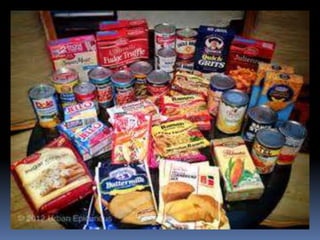
Because of food technology more than half of
our diet now consist of processed foods.We hardly
think of some of the foods we consume today as
being processed.
- most milk for instance is first pasteurized to
destroy the bacteria in it.
What are Food Additives?
-additives are any substance that added to foods.
- some additive creep into a foods indirectly when
they are processed, packaged or stored.
- additives also help maintain food freshness and
safety.
-preservatives reduced food spoilage caused by
bacteria or molds.
Some additives once thought safe were later
found cause cancer to animals.The artificial color
Red dye no.2 an cyclamate were withdrawn from
foods for this reason.
Sodium Nitrate and Sodium Nitrite are
controversial preservatives today.They are added
to hot dogs, bacon, ham, lunch meat, smoked
fish.They give many processed meats their red
color , they also prevent the growth of a bacteria
that causes deadly form of food poisoning.
Research has found that in lab animals nitrates
and nitrites combine with other compounds in
the body to form cancer-causing substances.

NUTRITION AND NUTRIENTS

  • 1.
  • 2.
    NUTRITION – isthe study of food and health, it is the science that centers in foods, their nutrient and other chemical constituent, and the effects of food on body processes and health. NUTRIENTS- chemical substances that found in the food that are used by the body for growth and health.The six categories of nutrients are carbohydrates, protein, fats vitamins, mineral and water.
  • 3.
    FOOD It is thebasic needs of human. Human need enough food to live and the right assortments of food for optimal health.The need for food is combined with the condition of food security. FOOD SECURITY- People who experience food security, have access at all times to a sufficient supply of safe, nutritious food needed for an active and healthy life. FOOD INSECURITY- exist whenever the availability of safe, nutritious food, or the ability to acquire them in socially acceptable ways, is limited or uncertain. Food insecurity leads to poor health, increased risk for certain diseases, and in children lowered academic achievements.
  • 4.
    GOOD NUTRITION DIETARY GUIDELINES 1.EATVARIETY OF FOODS. - Include the selections of fruits, vegetables, milk cheese, yogurt, meats, poultry, fish, eggs, and legumes.Whole grain, cereals. 2. MAINTAIN IDEAL WEIGHT. - to improve eating habits: eat slowly, prepare smaller portion; avoid seconds - to loose weight; increase physical activity, eat less fat and fewer fatty foods, eat less sugar, avoid too much alcohol. 3. AVOIDTOO MUCH FAT,SATURATED FAT AND CHOLESTEROL. - choose lean meat, fish, poultry, dry bean as your protein sources. - moderate your use of eggs, and organ meats (such as liver) - limit your intake of butter, cream, margarine, coconut oil and food made from such products. 4. EAT FOOD WITH ADEQUATE STARCH AND FIBERS. -substitute starches for fat and sugar, select foods that are good sources of fiber and starch, such as whole-grain bread and cereals, fruits and vegetables. 5. AVOIDTOO MUCH SUGAR. - use less of all sugars such as brown ,white sugar, raw sugar, honey, syrups - eat fewer foods containing these sugars. 6. AVOIDTOO MUCH SODIUM 7. IFYOU DRINK ALCOHOL,DO SO IN MODERATION .
  • 5.
  • 6.
  • 7.
    CARBOHYDRATES comes from plant foods.Theyprovide body with energy. Simple sugar are most basic type of carbohydrates.
  • 8.
    FATS Saturated fats are found primarilyin animal product such as meat, butter, cheese. Unsaturated fats plant products such as vegetable oil, nut, seed.
  • 9.
    VITAMINS are needed topromote growth and other body activities. are chemical substances found in food that perform specific function in the body. Human require 13 vitamins in their diet.
  • 10.
    MINERALS are needed (1) formationof bones and teeth (2) for growth of body cells, especially blood cells. (3) for the essential components in various body fluids.
  • 11.
    WATER you can livewithout food for a week, but without water you would die within days.Water helps remove waste products through kidneys, it also cools the body as you perspire as it evaporate from the lungs.
  • 12.
    NUTRITIONALLY BALANCE DIET A“well-balanced” diet means one that contains all the key nutrient and enough calories for daily activities. A FOOD GUIDE PYRAMID is a pyramid shape guide of healthy foods divided into section to show the recommended intake for each food group
  • 14.
    My Plate symbolis designed to help people make smart food choices, the plate graphic w/ its different food group.
  • 15.
    IS BREAKFAST IMPORTANT? Apoor or skipped breakfast can impair mental and physical performance.This is why breakfast is called the most important meal of the day. WHAT ABOUT FAST FOOD AND SNACKS? Fast food are low in calcium, iron and vitamins and fiber .They are high in calories, sugar salt and fat. IS AVEGETARIAN DIET HEALTHFUL? These diets are not harmful and can even benefit health. It reduce the risk of cancer, heart disease and obesity due to there lower fats and cholesterol content and higher fiber content.
  • 16.
    WEIGHT CONTROL The Humanbody has always been admired for it symmetry and beauty. But the image of the ideal physique has varied throughout history and culture. Good nutrition and a fitness program are the keys to a healthful, more attractive self-image.. OBESITY - being overweight, over fat (obese) - the more obese a person, is the more common health problems related to obesity become. - it increases the risk of both heart disease and stroke. - it increases the risk of diabetes, kidney, gallbladder, joint diseases, and posture problem.
  • 17.
    WHAT CAUSES OBESITY? Simplystated, obesity result when the intake of calories exceeds caloric expenditure. - diet - physical activity - environmental exposures - genetic background
  • 18.
    Anorexia An eating disordercharacterized by extreme weight loss, poor body image, and irrational fears of weight gain and obesity. Starves the body, muscle tissues waste away.The skin dries and yellow and the hair thins and falls out . Blood pressure drops. Menstruation ceases, and weight drops drastically.
  • 20.
    BULIMIA An eating disorder characterized byrecurrent episode of rapid uncontrolled eating of large amounts of food in a short period of time. Episode of binge eating are often followed by purging.
  • 21.
    MALNUTRITION - means “poor”nutrition and result from both inadequate and excessive availability of calories and nutrients in the body. - malnutrition early in life has long-term effects on mental and physical development. - underweight children are an indicator of malnutrition . - poverty, corrupt government, the HIV/AIDS epidemic, low rates of breastfeeding, unsafe water supply, discrimination against females all contribute to malnutrition.
  • 22.
    Marasmus - malnutrition causedby a lack of calories and protein - children with marasmus look like “skin and bones”, they don’t get enough calories and protein in their diet.
  • 24.
    KWASHIORKOR - malnutrition resultingfrom inadequate protein intake in children. - this children has the characteristic of “moon face”(edema), swollen belly, and patchy dermatitis. - they not look starved because of the massive swelling.
  • 26.
    CONSUMER ISSUES INNUTRITION Because of food technology more than half of our diet now consist of processed foods.We hardly think of some of the foods we consume today as being processed. - most milk for instance is first pasteurized to destroy the bacteria in it. What are Food Additives? -additives are any substance that added to foods. - some additive creep into a foods indirectly when they are processed, packaged or stored. - additives also help maintain food freshness and safety. -preservatives reduced food spoilage caused by bacteria or molds.
  • 28.
    Some additives oncethought safe were later found cause cancer to animals.The artificial color Red dye no.2 an cyclamate were withdrawn from foods for this reason. Sodium Nitrate and Sodium Nitrite are controversial preservatives today.They are added to hot dogs, bacon, ham, lunch meat, smoked fish.They give many processed meats their red color , they also prevent the growth of a bacteria that causes deadly form of food poisoning. Research has found that in lab animals nitrates and nitrites combine with other compounds in the body to form cancer-causing substances.