THE NUTRIENTS IN FOOD
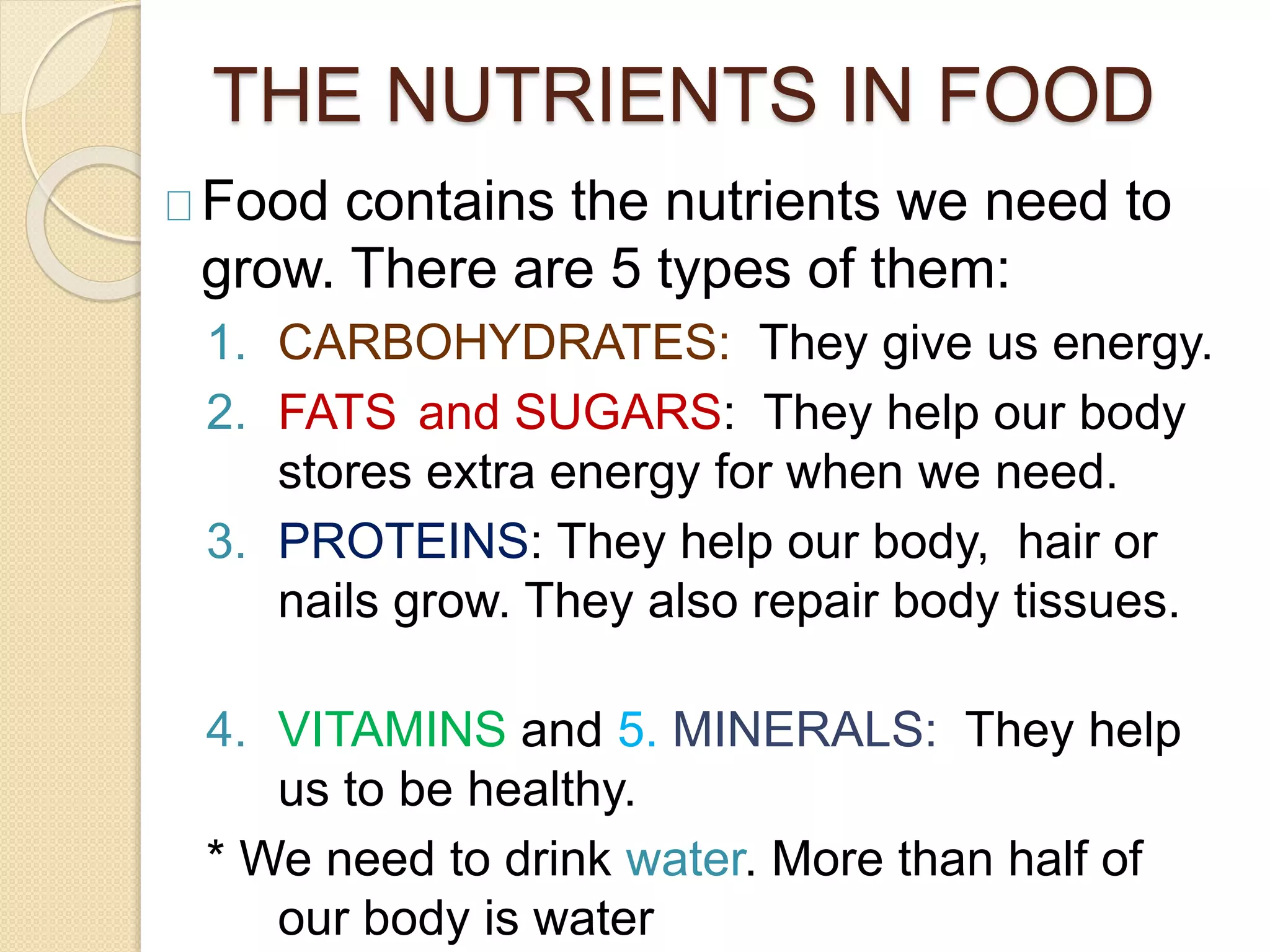
Food contains the nutrients we need to
grow. There are 5 types of them:
1. CARBOHYDRATES: They give us energy.
2. FATS and SUGARS: They help our body
stores extra energy for when we need.
3. PROTEINS: They help our body, hair or
nails grow. They also repair body tissues.
4. VITAMINS and 5. MINERALS: They help
us to be healthy.
* We need to drink water. More than half of
our body is water
Energy-producing foods
OIL
RICE
PORK
BELLYSWEETS
Fats and Oils
There are “good” fats and “bad” fats.
Saturated tend to come from animal
products and unsaturated from plants.
It is important to regularly consume fat
in your diet.
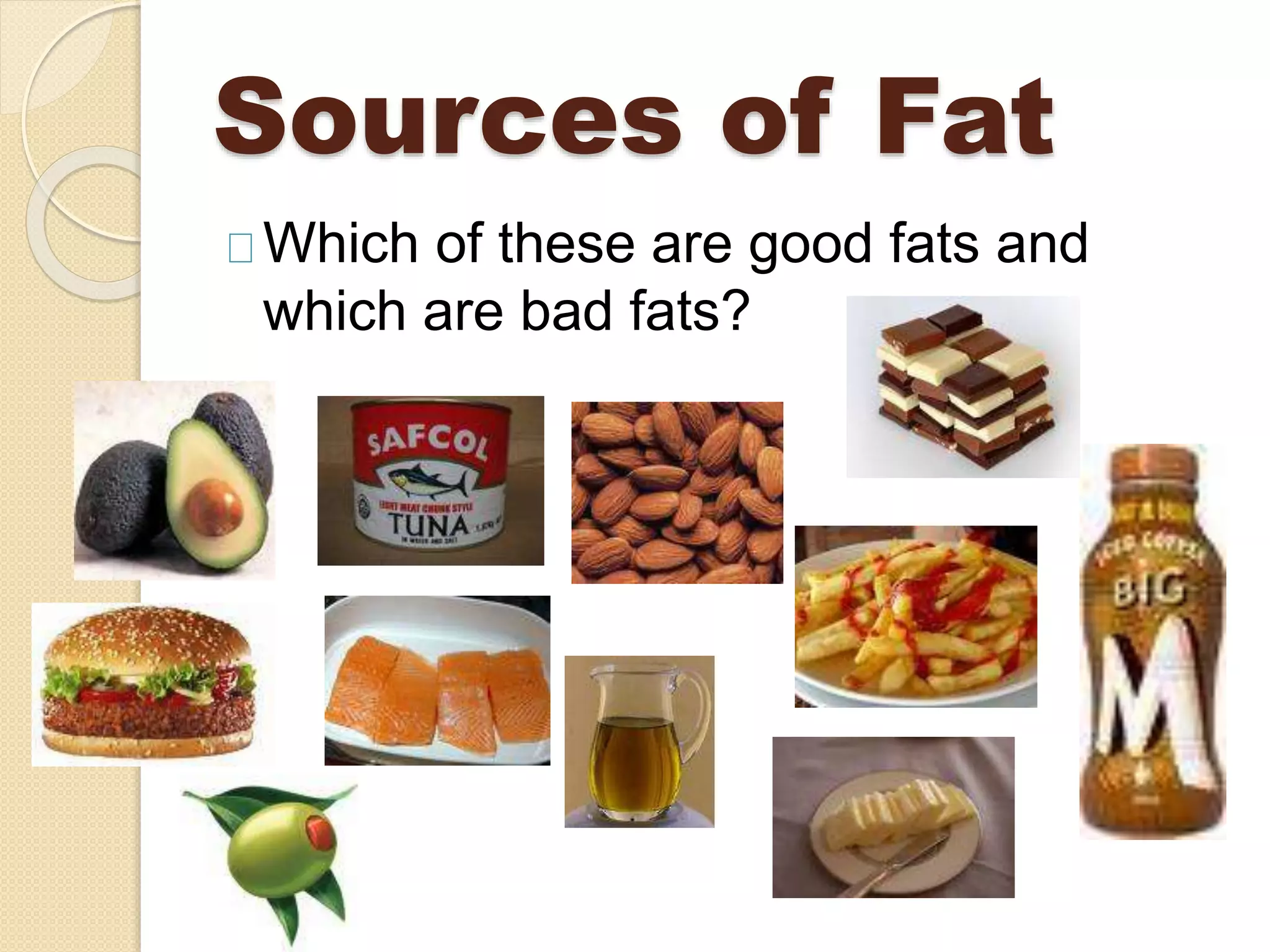
Sources of Fat
Which of these are good fats and
which are bad fats?
Energy- producing foods
PASTA
BREAD
POTATOES
CEREALS
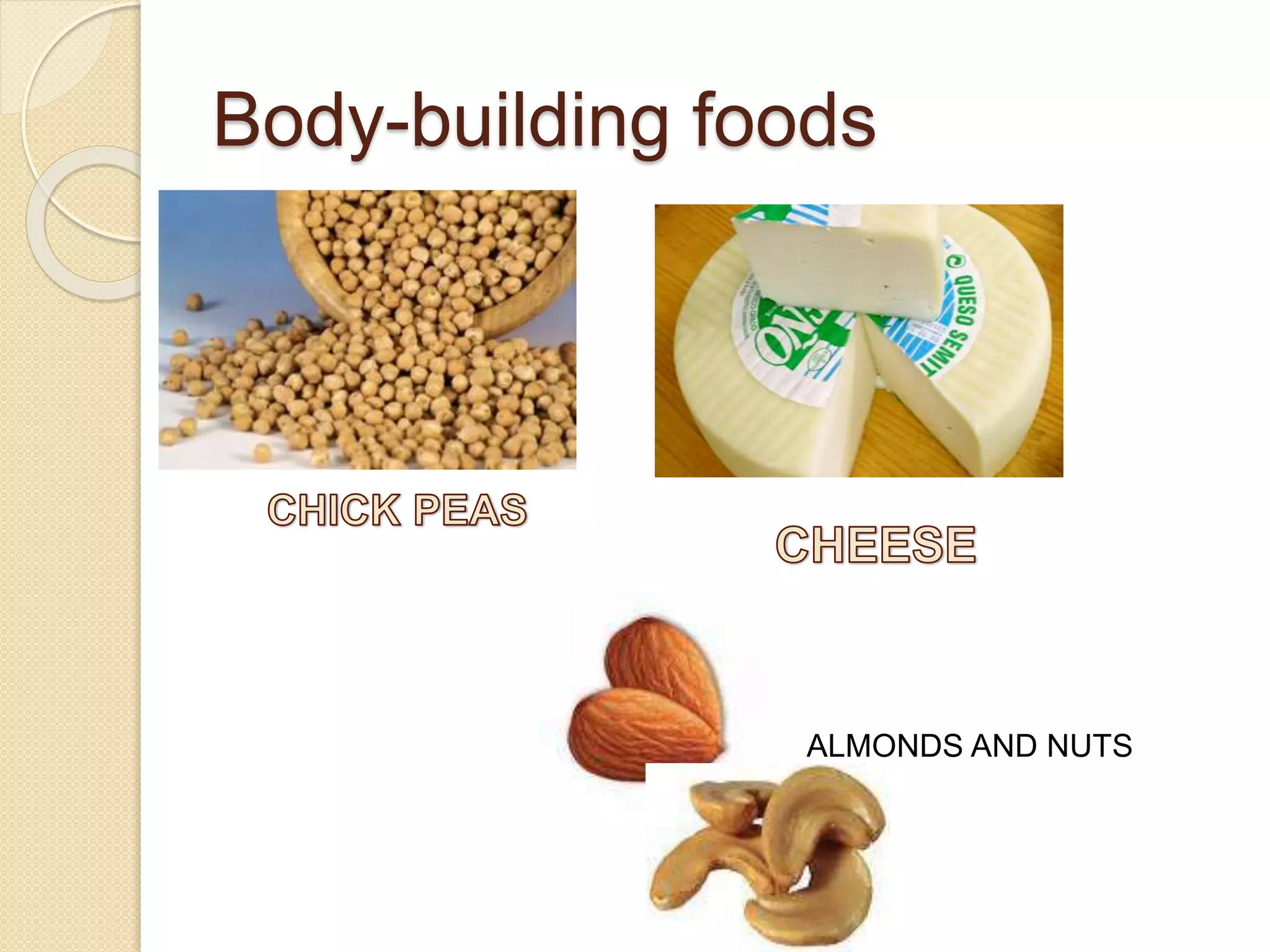
Body-building foods
FISH
EGGS
MEAT
BEANS
Body-building foods
ALMONDS AND NUTS
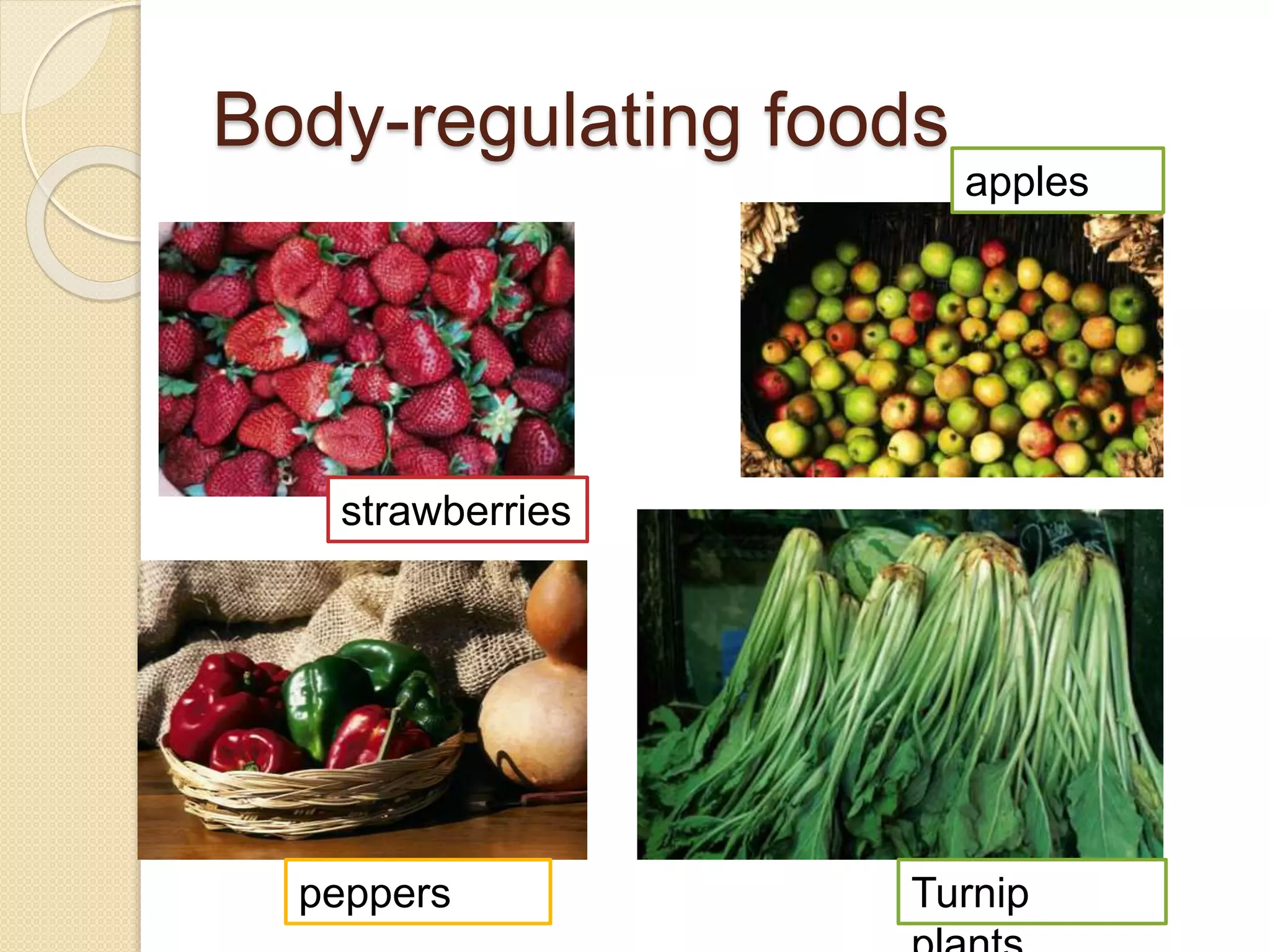
Body-regulating foods
strawberries
apples
Turnippeppers
Mini-project:
Create a fact sheet containing information on a
vitamin or a mineral.
Your fact sheet should include:
- Some examples foods that contain it.
- Where it is stored (optional)
- Facts about deficiency of the vitamin
- Extra information
Extra points for presentation.
A HEALTHY DIET
DIET is what we eat. It can be healthy or
unhealthy.
TO BE HEALTHY…We need to eat:
◦ a variety of food.
◦ more of some things and less of others.
HOMEWORK: entrevistar y anotar Healthy
habits relacionados con la Nutrition and Diet.
HEALTHY HABITS
Eat a healthy breakfast.
Drink a lot of water.
Don´t eat a lot of fats.
Eat fruit and vegetables daily.
Eat fish that is rich in omega-3.
Eat a variety of food.
Do exercise at least 1 hour per day.
Get between 8 -10 hours of sleep.
Eat proteins like fish and milk.
Avoid conservatives and colorants and
other bad substances.
food Pyramid
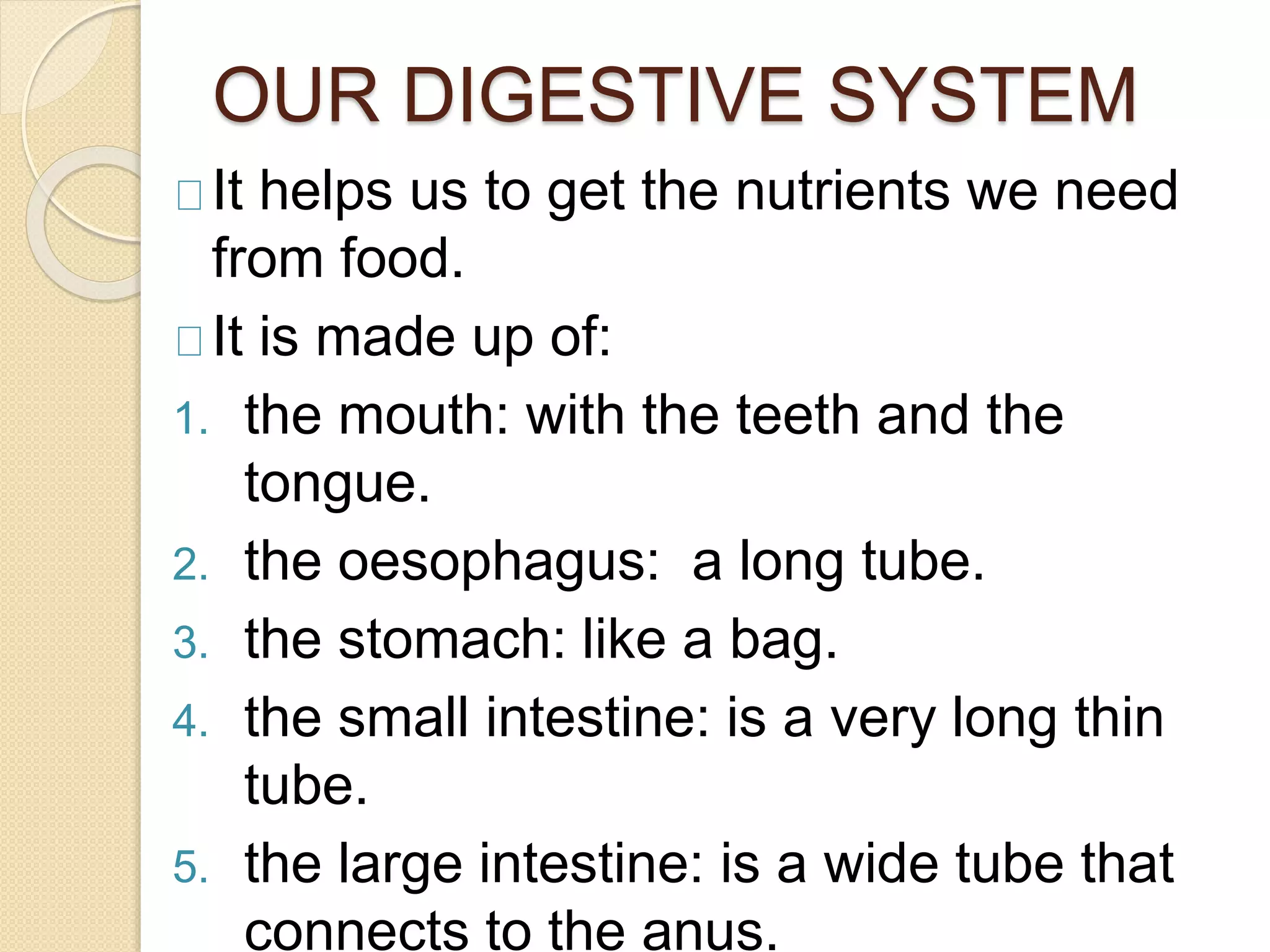
OUR DIGESTIVE SYSTEM
It helps us to get the nutrients we need
from food.
It is made up of:
1. the mouth: with the teeth and the
tongue.
2. the oesophagus: a long tube.
3. the stomach: like a bag.
4. the small intestine: is a very long thin
tube.
5. the large intestine: is a wide tube that
connects to the anus.
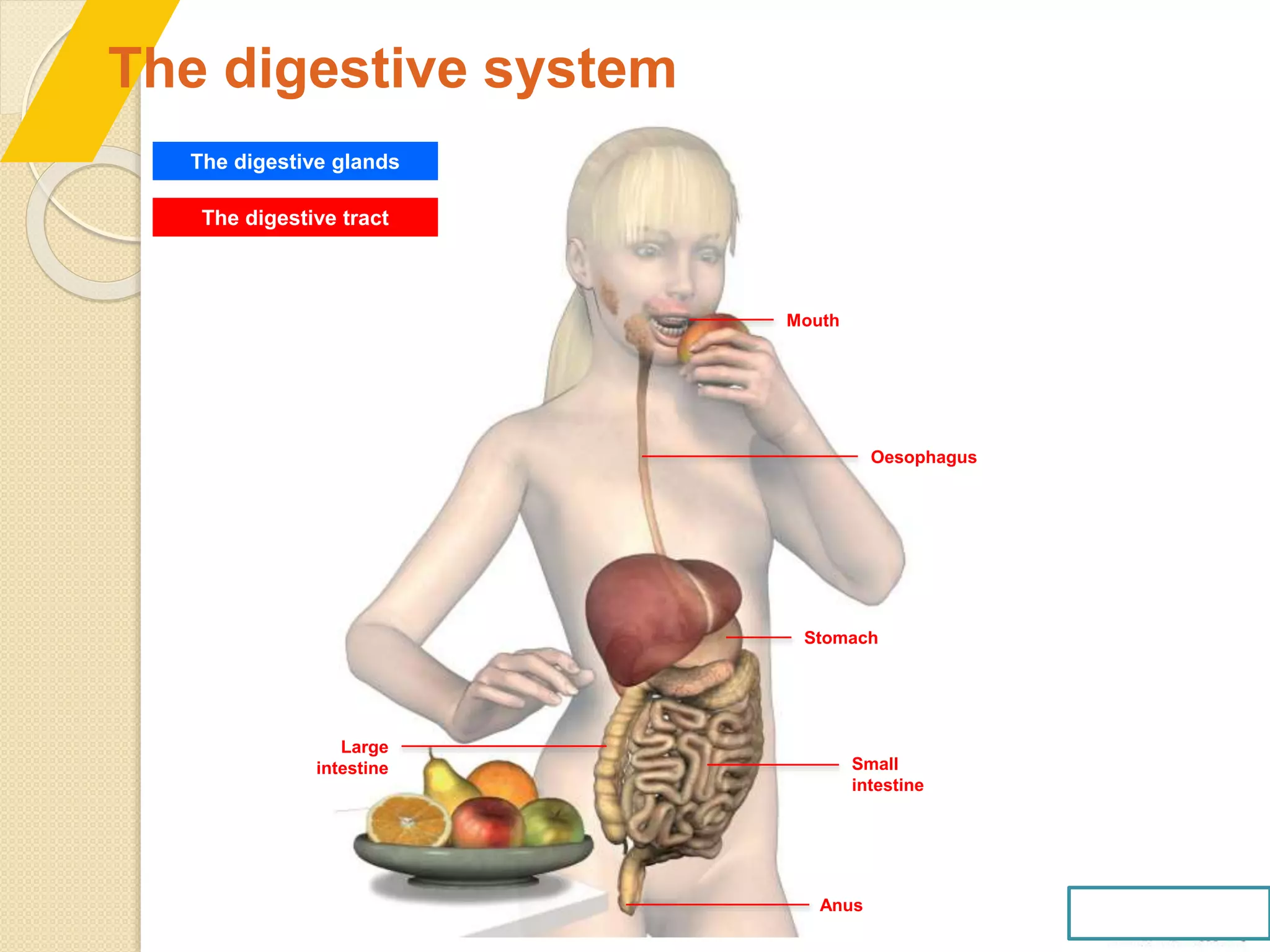
The digestive system
The digestive glands
The digestive tract
Mouth
Oesophagus
Stomach
Large
intestine Small
intestine
Anus
HOW DOES THE DIGESTIVE SYSTEM
WORK?
In the MOUTH, the teeth break the food into
small pieces and the tongue mixes the food
with saliva.
In the OESOPHAGUS , food goes down here
to the stomach.
In the STOMACH, gastric juices break down
the food and turn it into a thick liquid. This
liquid goes into the small intestine.
In the SMALL INTESTINE , there are a lot of
blood vessels around it. The liquid goes
through it and the nutrients pass into the
blood.
In the LARGE INTESTINE, what our body
doesn’t need goes through it and out through
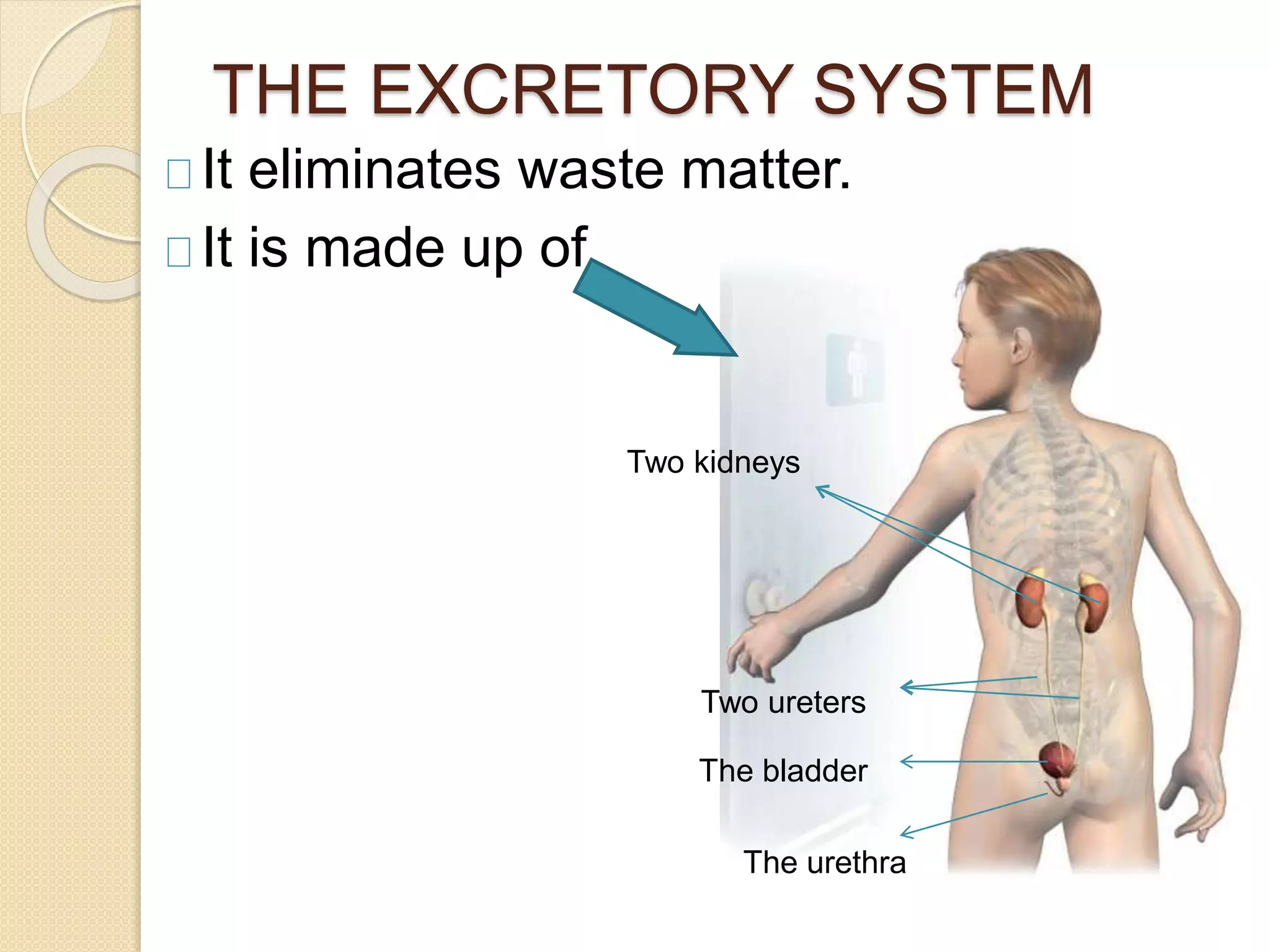
THE EXCRETORY SYSTEM
It eliminates waste matter.
It is made up of
Two kidneys
Two ureters
The bladder
The urethra
THE EXCRETORY SYSTEM
The kidneys remove the waste matter from
the blood and turn it into urine.
The ureters are thin tubes that connect the
kidneys and the bladder.
The bladder is a bag which contains urine.
When ii is full we know that we have to go to
the toilet.
The urethra is a short tube. It connects the
bladder with outside the body.
HEALTHY HABITS
When we are unhealthy we feel tired and we become sick.
So it´s important to be healthy.
What things can you do?
1. Rest: go to bed early and sleep 10 hrs.
2. Exercise everyday. Sit properly. Strecht.
3. Eat a healthy diet.
4. Hygiene: have a shower, wash your hands and the food,
brush your teeth…
5. Use the free time wisely: don´t watch the tv o play
computer games for a long time, do different activities, read
or do new things, spend time with your friends and family…
Teens should get at
least 30 minutes of
moderate exercise a
day.
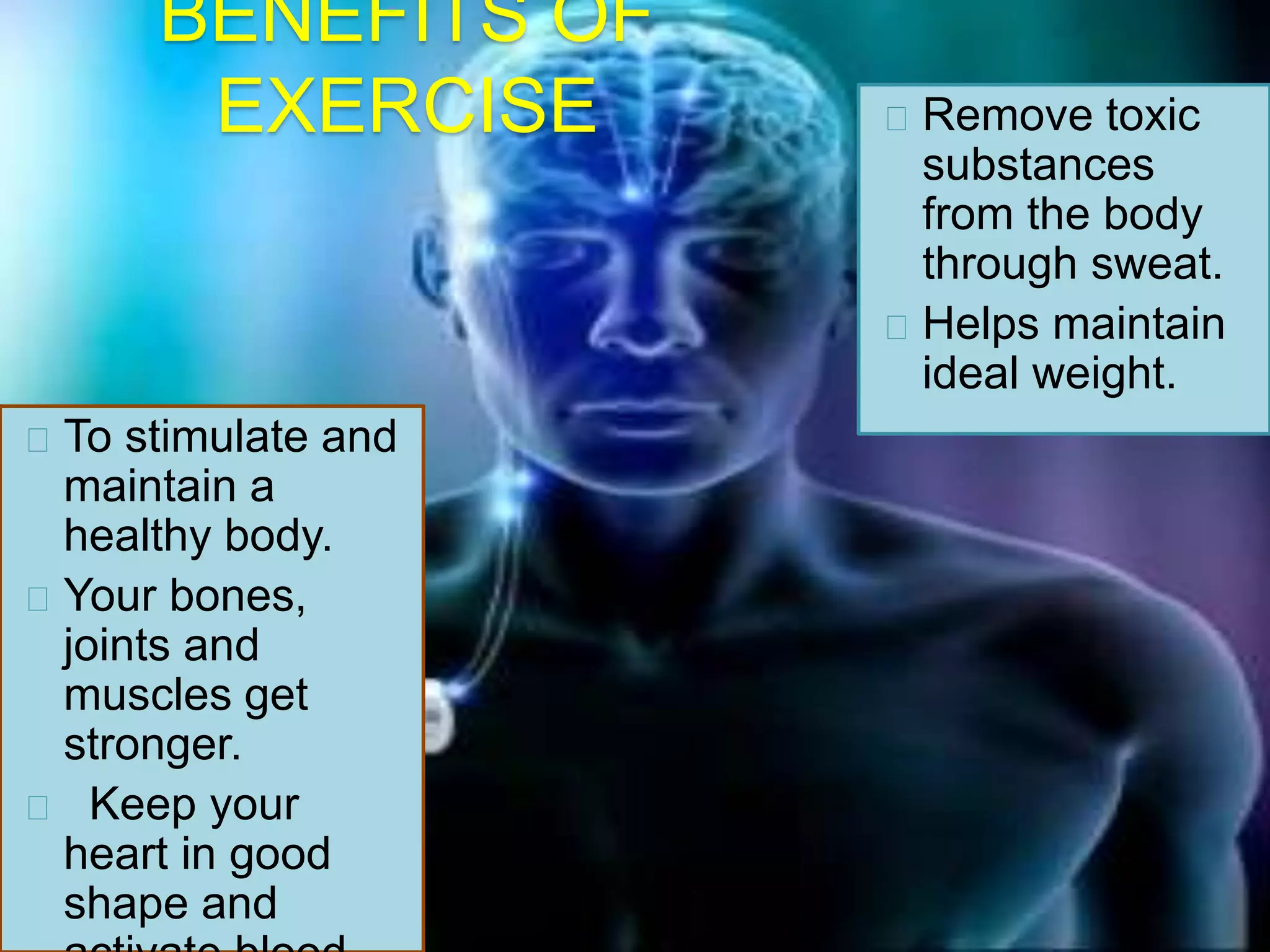
BENEFITS OF
EXERCISE
To stimulate and
maintain a
healthy body.
Your bones,
joints and
muscles get
stronger.
Keep your
heart in good
shape and
Remove toxic
substances
from the body
through sweat.
Helps maintain
ideal weight.

The nutrients in food

  • 1.
    THE NUTRIENTS INFOOD Food contains the nutrients we need to grow. There are 5 types of them: 1. CARBOHYDRATES: They give us energy. 2. FATS and SUGARS: They help our body stores extra energy for when we need. 3. PROTEINS: They help our body, hair or nails grow. They also repair body tissues. 4. VITAMINS and 5. MINERALS: They help us to be healthy. * We need to drink water. More than half of our body is water
  • 2.
  • 3.
    Fats and Oils Thereare “good” fats and “bad” fats. Saturated tend to come from animal products and unsaturated from plants. It is important to regularly consume fat in your diet.
  • 4.
    Sources of Fat Whichof these are good fats and which are bad fats?
  • 5.
  • 6.
  • 7.
  • 8.
  • 9.
    Mini-project: Create a factsheet containing information on a vitamin or a mineral. Your fact sheet should include: - Some examples foods that contain it. - Where it is stored (optional) - Facts about deficiency of the vitamin - Extra information Extra points for presentation.
  • 10.
    A HEALTHY DIET DIETis what we eat. It can be healthy or unhealthy. TO BE HEALTHY…We need to eat: ◦ a variety of food. ◦ more of some things and less of others. HOMEWORK: entrevistar y anotar Healthy habits relacionados con la Nutrition and Diet.
  • 11.
    HEALTHY HABITS Eat ahealthy breakfast. Drink a lot of water. Don´t eat a lot of fats. Eat fruit and vegetables daily. Eat fish that is rich in omega-3. Eat a variety of food. Do exercise at least 1 hour per day. Get between 8 -10 hours of sleep. Eat proteins like fish and milk. Avoid conservatives and colorants and other bad substances.
  • 12.
  • 13.
    OUR DIGESTIVE SYSTEM Ithelps us to get the nutrients we need from food. It is made up of: 1. the mouth: with the teeth and the tongue. 2. the oesophagus: a long tube. 3. the stomach: like a bag. 4. the small intestine: is a very long thin tube. 5. the large intestine: is a wide tube that connects to the anus.
  • 14.
    The digestive system Thedigestive glands The digestive tract Mouth Oesophagus Stomach Large intestine Small intestine Anus
  • 15.
    HOW DOES THEDIGESTIVE SYSTEM WORK? In the MOUTH, the teeth break the food into small pieces and the tongue mixes the food with saliva. In the OESOPHAGUS , food goes down here to the stomach. In the STOMACH, gastric juices break down the food and turn it into a thick liquid. This liquid goes into the small intestine. In the SMALL INTESTINE , there are a lot of blood vessels around it. The liquid goes through it and the nutrients pass into the blood. In the LARGE INTESTINE, what our body doesn’t need goes through it and out through
  • 16.
    THE EXCRETORY SYSTEM Iteliminates waste matter. It is made up of Two kidneys Two ureters The bladder The urethra
  • 17.
    THE EXCRETORY SYSTEM Thekidneys remove the waste matter from the blood and turn it into urine. The ureters are thin tubes that connect the kidneys and the bladder. The bladder is a bag which contains urine. When ii is full we know that we have to go to the toilet. The urethra is a short tube. It connects the bladder with outside the body.
  • 18.
    HEALTHY HABITS When weare unhealthy we feel tired and we become sick. So it´s important to be healthy. What things can you do? 1. Rest: go to bed early and sleep 10 hrs. 2. Exercise everyday. Sit properly. Strecht. 3. Eat a healthy diet. 4. Hygiene: have a shower, wash your hands and the food, brush your teeth… 5. Use the free time wisely: don´t watch the tv o play computer games for a long time, do different activities, read or do new things, spend time with your friends and family…
  • 19.
    Teens should getat least 30 minutes of moderate exercise a day.
  • 20.
    BENEFITS OF EXERCISE To stimulateand maintain a healthy body. Your bones, joints and muscles get stronger. Keep your heart in good shape and Remove toxic substances from the body through sweat. Helps maintain ideal weight.