Nutrition 
5th Grade 
Saint Andrew
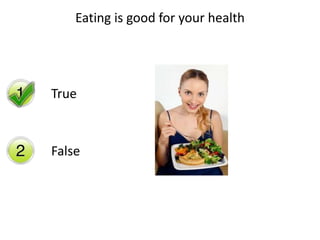
Eating is good for your health 
True 
False
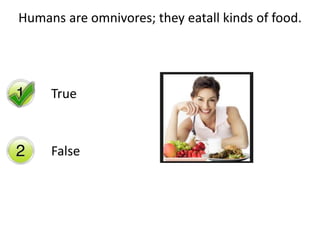
Humans are omnivores; they eatall kinds of food. 
True 
False
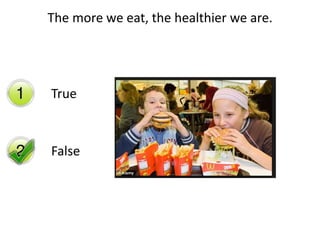
The more we eat, the healthier we are. 
True 
False
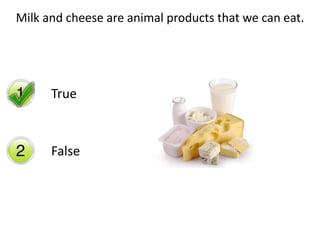
Milk and cheese are animal products that we can eat. 
True 
False
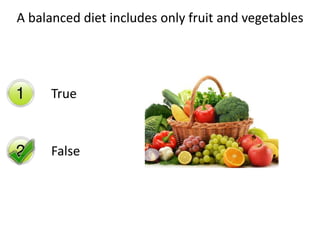
A balanced diet includes only fruit and vegetables 
True 
False
Food and nutrients 
• The food you eat daily helps you strengthen 
your body. 
• It provides energy abd nutrients that keep the 
body systems healthy.
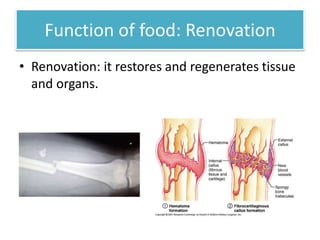
Function of food: Renovation 
• Renovation: it restores and regenerates tissue 
and organs.
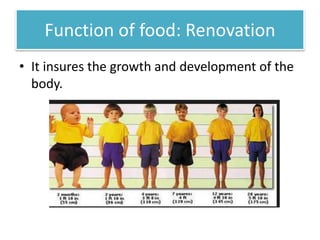
Function of food: Renovation 
• It insures the growth and development of the 
body.
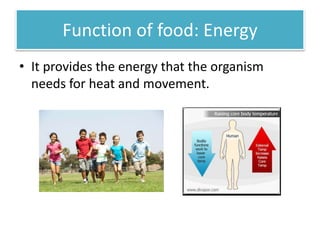
Function of food: Energy 
• It provides the energy that the organism 
needs for heat and movement.
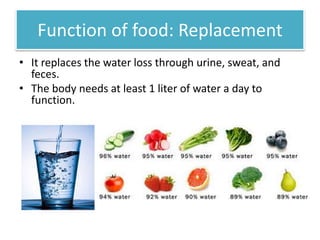
Function of food: Replacement 
• It replaces the water loss through urine, sweat, and 
feces. 
• The body needs at least 1 liter of water a day to 
function.
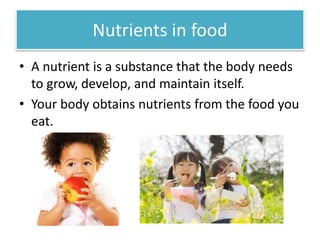
Nutrients in food 
• A nutrient is a substance that the body needs 
to grow, develop, and maintain itself. 
• Your body obtains nutrients from the food you 
eat.
Nutrients in food 
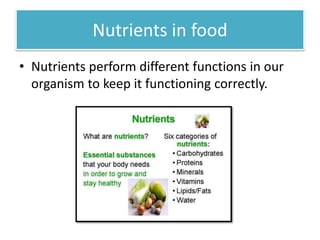
• Nutrients perform different functions in our 
organism to keep it functioning correctly.
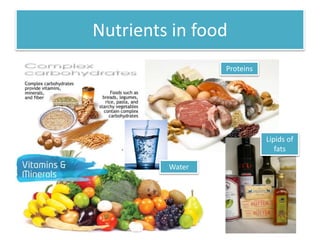
Nutrients in food 
Proteins 
Lipids of 
fats 
Water
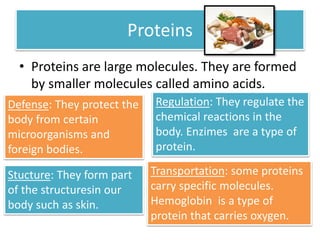
Proteins 
• Proteins are large molecules. They are formed 
by smaller molecules called amino acids. 
Defense: They protect the 
body from certain 
microorganisms and 
foreign bodies. 
Stucture: They form part 
of the structuresin our 
body such as skin. 
Regulation: They regulate the 
chemical reactions in the 
body. Enzimes are a type of 
protein. 
Transportation: some proteins 
carry specific molecules. 
Hemoglobin is a type of 
protein that carries oxygen.
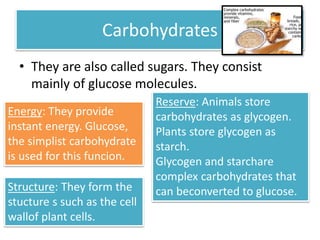
Carbohydrates 
• They are also called sugars. They consist 
mainly of glucose molecules. 
Energy: They provide 
instant energy. Glucose, 
the simplist carbohydrate 
is used for this funcion. 
Structure: They form the 
stucture s such as the cell 
wallof plant cells. 
Reserve: Animals store 
carbohydrates as glycogen. 
Plants store glycogen as 
starch. 
Glycogen and starchare 
complex carbohydrates that 
can beconverted to glucose.
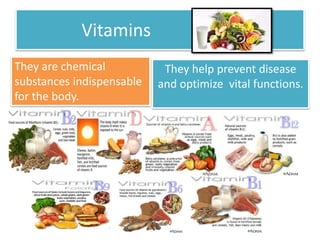
Vitamins 
They are chemical 
substances indispensable 
for the body. 
They help prevent disease 
and optimize vital functions.
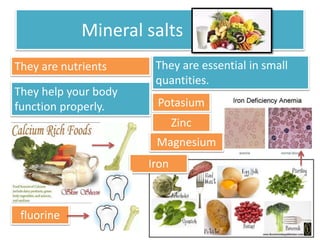
Mineral salts 
They are nutrients They are essential in small 
quantities. 
They help your body 
function properly. 
fluorine 
Potasium 
Iron 
Zinc 
Magnesium
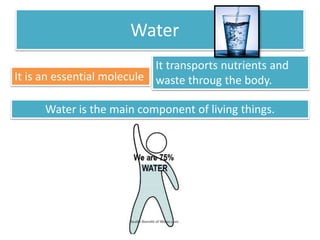
Water 
It is an essential molecule 
It transports nutrients and 
waste throug the body. 
Water is the main component of living things.
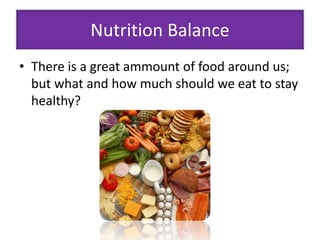
Nutrition Balance 
• There is a great ammount of food around us; 
but what and how much should we eat to stay 
healthy?
Nutrition Balance 
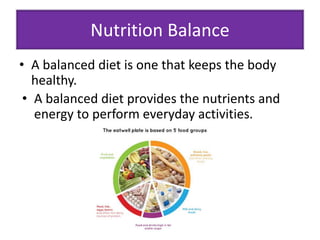
• A balanced diet is one that keeps the body 
healthy. 
• A balanced diet provides the nutrients and 
energy to perform everyday activities.
Nutrition Balance 
• Follow a balanced diet that includes a varity of 
food . 
• Not everyone needs to eat the same amount of 
food 
• It Depends : 
- geneder: male or female 
- age 
-physical activity levels
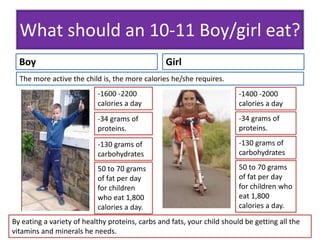
What should an 10-11 Boy/girl eat? 
Boy Girl 
-1600 -2200 
calories a day 
-1400 -2000 
calories a day 
-34 grams of 
proteins. 
-34 grams of 
proteins. 
-130 grams of 
carbohydrates 
-130 grams of 
carbohydrates 
50 to 70 grams 
of fat per day 
for children 
who eat 1,800 
calories a day. 
50 to 70 grams 
of fat per day 
for children who 
eat 1,800 
calories a day. 
The more active the child is, the more calories he/she requires. 
By eating a variety of healthy proteins, carbs and fats, your child should be getting all the 
vitamins and minerals he needs.
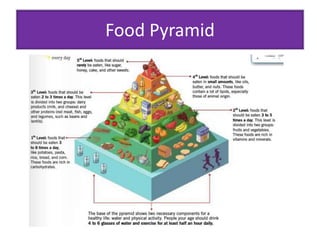
Food Pyramid

Nutrition

  • 1.
    Nutrition 5th Grade Saint Andrew
  • 2.
    Eating is goodfor your health True False
  • 3.
    Humans are omnivores;they eatall kinds of food. True False
  • 4.
    The more weeat, the healthier we are. True False
  • 5.
    Milk and cheeseare animal products that we can eat. True False
  • 6.
    A balanced dietincludes only fruit and vegetables True False
  • 7.
    Food and nutrients • The food you eat daily helps you strengthen your body. • It provides energy abd nutrients that keep the body systems healthy.
  • 8.
    Function of food:Renovation • Renovation: it restores and regenerates tissue and organs.
  • 9.
    Function of food:Renovation • It insures the growth and development of the body.
  • 10.
    Function of food:Energy • It provides the energy that the organism needs for heat and movement.
  • 11.
    Function of food:Replacement • It replaces the water loss through urine, sweat, and feces. • The body needs at least 1 liter of water a day to function.
  • 12.
    Nutrients in food • A nutrient is a substance that the body needs to grow, develop, and maintain itself. • Your body obtains nutrients from the food you eat.
  • 13.
    Nutrients in food • Nutrients perform different functions in our organism to keep it functioning correctly.
  • 14.
    Nutrients in food Proteins Lipids of fats Water
  • 15.
    Proteins • Proteinsare large molecules. They are formed by smaller molecules called amino acids. Defense: They protect the body from certain microorganisms and foreign bodies. Stucture: They form part of the structuresin our body such as skin. Regulation: They regulate the chemical reactions in the body. Enzimes are a type of protein. Transportation: some proteins carry specific molecules. Hemoglobin is a type of protein that carries oxygen.
  • 16.
    Carbohydrates • Theyare also called sugars. They consist mainly of glucose molecules. Energy: They provide instant energy. Glucose, the simplist carbohydrate is used for this funcion. Structure: They form the stucture s such as the cell wallof plant cells. Reserve: Animals store carbohydrates as glycogen. Plants store glycogen as starch. Glycogen and starchare complex carbohydrates that can beconverted to glucose.
  • 17.
    Vitamins They arechemical substances indispensable for the body. They help prevent disease and optimize vital functions.
  • 18.
    Mineral salts Theyare nutrients They are essential in small quantities. They help your body function properly. fluorine Potasium Iron Zinc Magnesium
  • 19.
    Water It isan essential molecule It transports nutrients and waste throug the body. Water is the main component of living things.
  • 20.
    Nutrition Balance •There is a great ammount of food around us; but what and how much should we eat to stay healthy?
  • 21.
    Nutrition Balance •A balanced diet is one that keeps the body healthy. • A balanced diet provides the nutrients and energy to perform everyday activities.
  • 22.
    Nutrition Balance •Follow a balanced diet that includes a varity of food . • Not everyone needs to eat the same amount of food • It Depends : - geneder: male or female - age -physical activity levels
  • 23.
    What should an10-11 Boy/girl eat? Boy Girl -1600 -2200 calories a day -1400 -2000 calories a day -34 grams of proteins. -34 grams of proteins. -130 grams of carbohydrates -130 grams of carbohydrates 50 to 70 grams of fat per day for children who eat 1,800 calories a day. 50 to 70 grams of fat per day for children who eat 1,800 calories a day. The more active the child is, the more calories he/she requires. By eating a variety of healthy proteins, carbs and fats, your child should be getting all the vitamins and minerals he needs.
  • 24.