NUTRITION
What do you understand by
nutrition?
• Definition: Nutrition is the study of food,
including how it nourishes our bodies as
well as how it influences our health both
positively and negatively.
• Scientific definition: Nutrition is the bio-
chemical and physiological process by
which an organism uses food to support its
life.
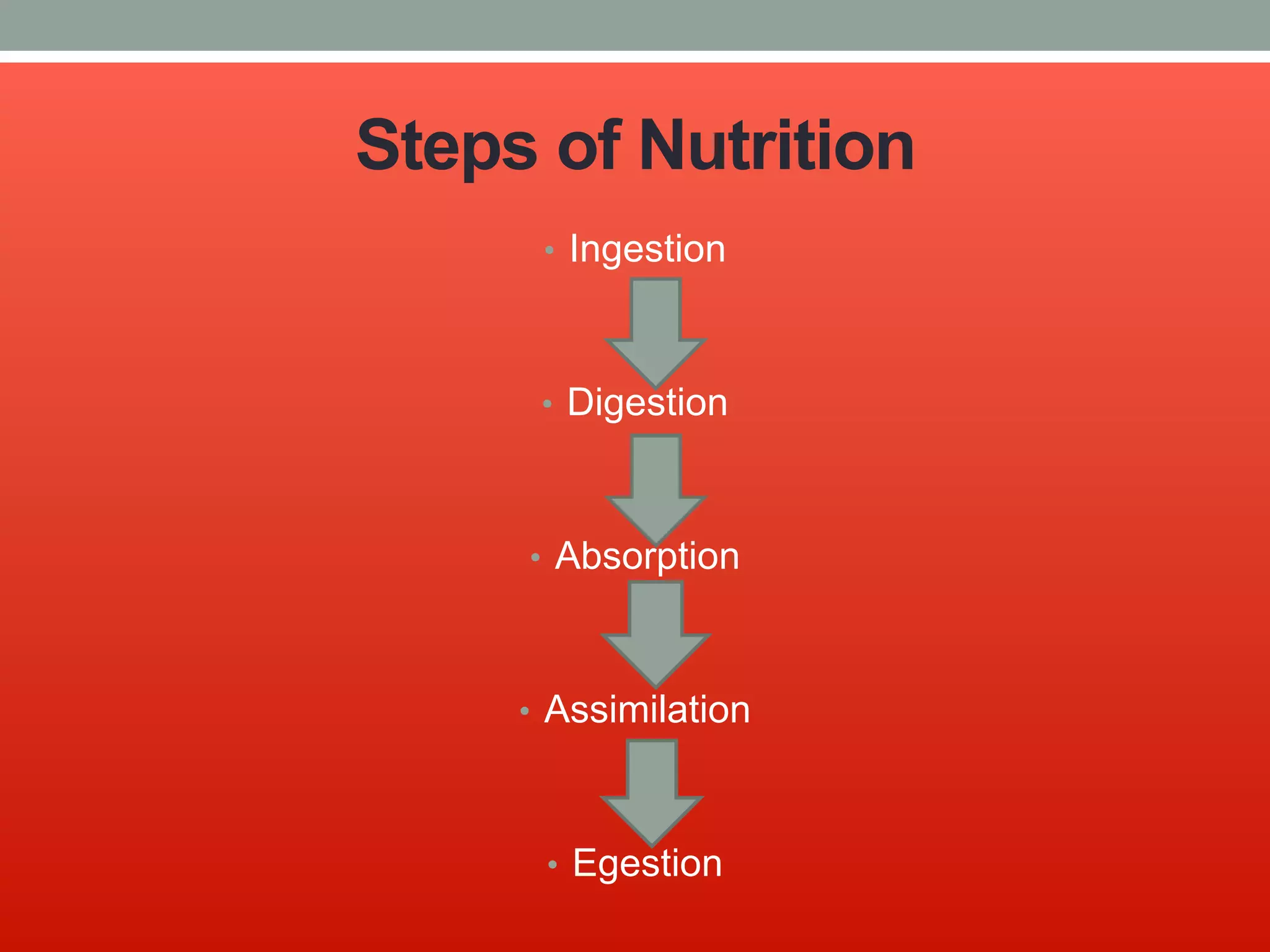
Steps of Nutrition
• Ingestion
• Digestion
• Absorption
• Assimilation
• Egestion
Role of each step
• Ingestion: The process of taking food into the
body
• Digestion: It involves breakdown of nutrients
• Absorption: It involves the absorption of nutrients
from the food by blood
• Assimilation: It involves the process of
transporting nutrients and water to all parts of the
body by blood.
• Egestion: It involves the disposal of waste food
out from the body.
What do you
understand by the term
nutrients?
Nutrients are substances used by humans to
survive, grow and reproduce.
Nutrients are chemical compounds in food
that are used by the body to function properly
and maintain health.
Types and Categories of
Nutrients
Types of nutrients:
There are 7 types Of nutrients:
• Carbohydrates
• Protein
• Fats
• Roughage aka Dietary Fibre
• Water
• Vitamins
• Minerals
Categories of Nutrients:
Macro Nutrients
• Carbohydrates
• Protein
• Fats
• Roughage/Dietary fibre
• Water
These nutrients are
consumed in large
amounts.
Eg: grams, litres
Micro Nutrients
• Vitamins
• Minerals
These nutrients are taken in
small amounts.
Eg; miligram, microgram
Where does these nutrients come
from?
What are the sources?
Carbohydrates
Protein
Fat
Dietary Fibre
Vitamin
Minerals
When do we consume these sources?
Where do we include these nutrients in
our day to day life?
Diet
Diet is the kind of food that a person or a
community habitually eats at different time of the
day.
It is the sum of food consumed by a person. It
often implies the use of specific intake of nutrition
for health or sometimes for weight management
reasons.
Balanced Diet
A balanced diet is a diet consisting of adequate
amounts of all the necessary nutrients
recommended for healthy growth, for efficient daily
activities and proper functions of the body.
It contains the proper quantities and proportions of
the needed nutrients to maintain good health.
Important points:
A nutritionally balanced diet fulfills all nutritional
needs of the body. Each body needs specific amount
of nutrients and calories to stay active and healthy.
But this requirement is not uniform for all and it varies
from person to person due to- body built type,
weight, height, sex (male and female) and the
amount of regular physical activities a person
does.
What are calories?
The concept of calories and good nutrition doesn’t go
hand in hand. Some food are having only calories
without any good nutritional value. Give an example.
How do we achieve a balanced diet?
By taking the right composition of nutrients and
also importantly avoiding the wrong food. Such as
junk food as well as food with low nutritional value.
It is important to eat healthy and maintain a well
balanced diet because diet provides the human
body with essential nutrients needed to allow it to
effectively perform different activities. Without a
balanced diet, our body is prone to easy fatigue,
infections and different types of deficiency
diseases.
Functions of Nutrients:
• Carbohydrates- Known for providing major source of
energy.
• Protein- Helps in growth and repair and maintaining
healthy body tissues.
• Fats- Provides energy and warmth to the body
• Dietary fibre- It is the indigestible part found in plant.
Helps to stabilise blood sugar, helps in digestion and
prevents constipation.
• Water- Makes up 70% of the human body. Regulates
body temperature, aids in digestion, production of
body fluids and helps in lubrication of joints between
bones.
• Vitamin- They are important for many daily bodily
functions, such as cell reproduction and growth. They
help shore up bones, heal wounds, and bolster your
immune system.
oVitamin A- Keeps eyes and skin healthy
oVitamin B- Keeps muscles, brain and nerves healthy
oVitamin C- Keeps gums and skin healthy and also
helps in healing cuts
oVitamin D- Makes bones and teeth strong and
healthy
oVitamin E- Repairs damaged skin, keeps hair
healthy and shiny, strengthens muscles and bones
and fights against toxic substances in the body.
oVitamin K- Helps in blood clotting
• Minerals- It helps in fluid balance, builds strong and
healthy bones and also keeps muscles, heart, and brain
working properly
• Calcium- bone and tooth formation, blood clotting,
helps in functioning of the nerve and muscle
• Iron- component of hemoglobin, healthy growth &
development, helps to deliver oxygen to our bodies
and helps to maintain our energy levels
• Zinc- supports healthy growth and development,
helps in building good immune system, supports our
reproduction, helps our nerves to carry messages
between brain and body and helps our bodies build
proteins
• Iodine- supports our thyroid functions, regulates our
overall metabolism, maintain our energy levels and
regulates our body temperature
• Potassium- regulates the fluid balance in our body,
proper function of the nervous system, regulation of
muscle and heart contraction, helps to lower blood
pressure
Examples of few common diseases:
Obesity- Excess consumption of high calorie food and
nutrients than the body requires will lead to obesity. The
excess amount of nutrients mostly gets stored as fats. In
some cases it is a genetic disorder. Obese people have risk
of developing heart diseases and diabetes.
Malnutrition- Malnutrition is a condition in which a person
does not get enough nutrients for proper functions of the
body. This is caused due to not eating enough food, poor
diet, digestive conditions or other diseases.
High protein intake- It might lead to having uric acid
problems leading to gout (joint pains and kidney stones)
Excess consumption of fat- Chances of getting high
cholesterol level in blood and deposition of fat in the liver
might take place leading to risk of having heart diseases.
Major deficiency diseases
Protein Energy Malnutrition
Vitamins deficiency
Minerals deficiency

NUTRITION.pptx

  • 1.
  • 2.
    What do youunderstand by nutrition?
  • 3.
    • Definition: Nutritionis the study of food, including how it nourishes our bodies as well as how it influences our health both positively and negatively. • Scientific definition: Nutrition is the bio- chemical and physiological process by which an organism uses food to support its life.
  • 4.
    Steps of Nutrition •Ingestion • Digestion • Absorption • Assimilation • Egestion
  • 5.
    Role of eachstep • Ingestion: The process of taking food into the body • Digestion: It involves breakdown of nutrients • Absorption: It involves the absorption of nutrients from the food by blood • Assimilation: It involves the process of transporting nutrients and water to all parts of the body by blood. • Egestion: It involves the disposal of waste food out from the body.
  • 6.
    What do you understandby the term nutrients?
  • 7.
    Nutrients are substancesused by humans to survive, grow and reproduce. Nutrients are chemical compounds in food that are used by the body to function properly and maintain health.
  • 8.
  • 9.
    Types of nutrients: Thereare 7 types Of nutrients: • Carbohydrates • Protein • Fats • Roughage aka Dietary Fibre • Water • Vitamins • Minerals
  • 10.
    Categories of Nutrients: MacroNutrients • Carbohydrates • Protein • Fats • Roughage/Dietary fibre • Water These nutrients are consumed in large amounts. Eg: grams, litres Micro Nutrients • Vitamins • Minerals These nutrients are taken in small amounts. Eg; miligram, microgram
  • 11.
    Where does thesenutrients come from? What are the sources?
  • 12.
  • 13.
  • 14.
  • 15.
  • 16.
  • 17.
  • 18.
    When do weconsume these sources? Where do we include these nutrients in our day to day life?
  • 19.
    Diet Diet is thekind of food that a person or a community habitually eats at different time of the day. It is the sum of food consumed by a person. It often implies the use of specific intake of nutrition for health or sometimes for weight management reasons.
  • 20.
    Balanced Diet A balanceddiet is a diet consisting of adequate amounts of all the necessary nutrients recommended for healthy growth, for efficient daily activities and proper functions of the body. It contains the proper quantities and proportions of the needed nutrients to maintain good health.
  • 21.
    Important points: A nutritionallybalanced diet fulfills all nutritional needs of the body. Each body needs specific amount of nutrients and calories to stay active and healthy. But this requirement is not uniform for all and it varies from person to person due to- body built type, weight, height, sex (male and female) and the amount of regular physical activities a person does. What are calories? The concept of calories and good nutrition doesn’t go hand in hand. Some food are having only calories without any good nutritional value. Give an example.
  • 22.
    How do weachieve a balanced diet? By taking the right composition of nutrients and also importantly avoiding the wrong food. Such as junk food as well as food with low nutritional value. It is important to eat healthy and maintain a well balanced diet because diet provides the human body with essential nutrients needed to allow it to effectively perform different activities. Without a balanced diet, our body is prone to easy fatigue, infections and different types of deficiency diseases.
  • 23.
    Functions of Nutrients: •Carbohydrates- Known for providing major source of energy. • Protein- Helps in growth and repair and maintaining healthy body tissues. • Fats- Provides energy and warmth to the body • Dietary fibre- It is the indigestible part found in plant. Helps to stabilise blood sugar, helps in digestion and prevents constipation. • Water- Makes up 70% of the human body. Regulates body temperature, aids in digestion, production of body fluids and helps in lubrication of joints between bones.
  • 24.
    • Vitamin- Theyare important for many daily bodily functions, such as cell reproduction and growth. They help shore up bones, heal wounds, and bolster your immune system. oVitamin A- Keeps eyes and skin healthy oVitamin B- Keeps muscles, brain and nerves healthy oVitamin C- Keeps gums and skin healthy and also helps in healing cuts oVitamin D- Makes bones and teeth strong and healthy oVitamin E- Repairs damaged skin, keeps hair healthy and shiny, strengthens muscles and bones and fights against toxic substances in the body. oVitamin K- Helps in blood clotting
  • 25.
    • Minerals- Ithelps in fluid balance, builds strong and healthy bones and also keeps muscles, heart, and brain working properly • Calcium- bone and tooth formation, blood clotting, helps in functioning of the nerve and muscle • Iron- component of hemoglobin, healthy growth & development, helps to deliver oxygen to our bodies and helps to maintain our energy levels • Zinc- supports healthy growth and development, helps in building good immune system, supports our reproduction, helps our nerves to carry messages between brain and body and helps our bodies build proteins
  • 26.
    • Iodine- supportsour thyroid functions, regulates our overall metabolism, maintain our energy levels and regulates our body temperature • Potassium- regulates the fluid balance in our body, proper function of the nervous system, regulation of muscle and heart contraction, helps to lower blood pressure
  • 27.
    Examples of fewcommon diseases: Obesity- Excess consumption of high calorie food and nutrients than the body requires will lead to obesity. The excess amount of nutrients mostly gets stored as fats. In some cases it is a genetic disorder. Obese people have risk of developing heart diseases and diabetes. Malnutrition- Malnutrition is a condition in which a person does not get enough nutrients for proper functions of the body. This is caused due to not eating enough food, poor diet, digestive conditions or other diseases. High protein intake- It might lead to having uric acid problems leading to gout (joint pains and kidney stones) Excess consumption of fat- Chances of getting high cholesterol level in blood and deposition of fat in the liver might take place leading to risk of having heart diseases.
  • 28.
  • 29.
  • 30.
  • 31.