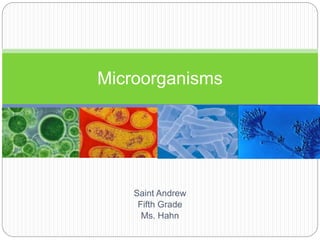
Microorganisms 
Saint Andrew 
Fifth Grade 
Ms. Hahn
Health 
 Being healthy involves: 
-physical body 
-mental mind 
- social well- being 
surroundings
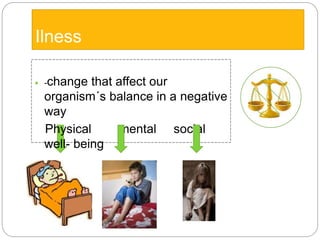
Ilness 
 -change that affect our 
organism´s balance in a negative 
way 
Physical mental social 
well- being
Types of physical ilnesses 
 Degenerativ 
e 
 Infectuous 
 Parasitic 
 deciciency
Types of physical ilnesses: 
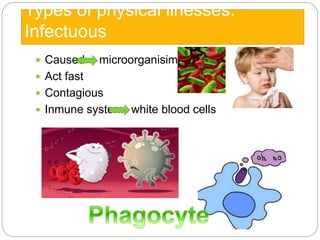
Infectuous 
 Caused microorganisims 
 Act fast 
 Contagious 
 Inmune system white blood cells
Types of physical ilnesses: 
degenertative 
Caused: 
 Degeneration aging 
lifestyle 
 Progressive
Types of physical 
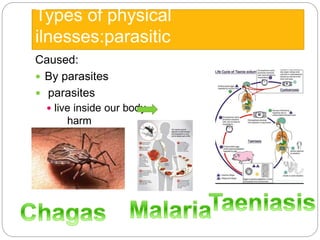
ilnesses:parasitic 
Caused: 
 By parasites 
 parasites 
 live inside our body 
harm
Types of physical ilnesses: 
deficiency 
Cause: 
 Lack or deficiency of 
nutrients
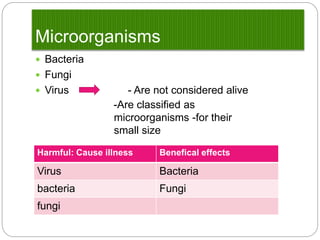
Microorganisms 
 Bacteria 
 Fungi 
 Virus - Are not considered alive 
-Are classified as 
microorganisms -for their 
small size 
Harmful: Cause illness Benefical effects 
Virus Bacteria 
bacteria Fungi 
fungi
Bacteria 
 Unicellular organisms 
 Smallest 
 Most abundant 
 Can be found everywhere: -air 
-water 
-the ground 
-our bodies 
-cold places 
Antartica 
-close to hot places 
volcanoes
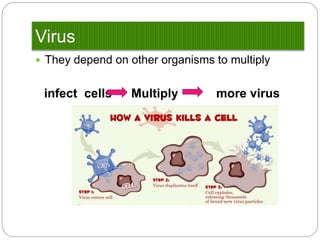
Virus 
 They depend on other organisms to multiply 
infect cells Multiply more virus
Fungi 
 Grow in damp areas 
 There are - Unicelular e.g.: 
yeast 
-Multicelular e.g.: 
mushrooms 
 They absorb nutrients from 
decomposing plants and animals
Harmful Microorganisms
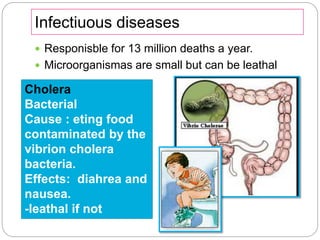
Infectiuous diseases 
 Responisble for 13 million deaths a year. 
 Microorganismas are small but can be leathal 
Cholera 
Bacterial 
Cause : eting food 
contaminated by the 
vibrion cholera 
bacteria. 
Effects: diahrea and 
nausea. 
-leathal if not 
treated
Infectious diseases 
Typhoid fever 
Bacterial 
Cause : eating food 
contaminated by the 
salmonella typhi 
bacteria. 
Effects: 
-abdominal pain 
-fever 
-diarrhea
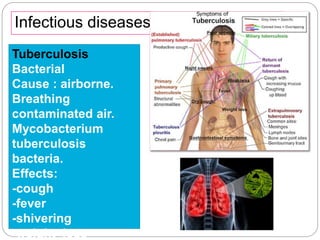
Infectious diseases 
Tuberculosis 
Bacterial 
Cause : airborne. 
Breathing 
contaminated air. 
Mycobacterium 
tuberculosis 
bacteria. 
Effects: 
-cough 
-fever 
-shivering 
-weight loss
Infectious diseases 
Harmful Fungi: micosis or fungal infections: 
Ringworm 
Fungi 
Cause : -prolonged humidity 
-wound 
-lack of hygiene 
Effects: 
-burning sensation 
-bad odor 
-irritation 
-redness 
Itchiness
Beneficial Effects of Microrganisms
Beneficial Bacteria 
 Our bodies are home to many beneficial bacteria 
 Use: - food 
- remedies
Beneficial Bacteria 
 Our bodies are home to many 
beneficial bacteria: 
 human microbiome 
 Skin 
 Nose 
 Stomach 
 Intetines 
It stops harmful mircoorganisms from 
getting in.
Beneficial Fungi 
 Penicillium

Microorganisms

  • 1.
    Microorganisms Saint Andrew Fifth Grade Ms. Hahn
  • 2.
    Health  Beinghealthy involves: -physical body -mental mind - social well- being surroundings
  • 3.
    Ilness  -changethat affect our organism´s balance in a negative way Physical mental social well- being
  • 4.
    Types of physicalilnesses  Degenerativ e  Infectuous  Parasitic  deciciency
  • 5.
    Types of physicalilnesses: Infectuous  Caused microorganisims  Act fast  Contagious  Inmune system white blood cells
  • 6.
    Types of physicalilnesses: degenertative Caused:  Degeneration aging lifestyle  Progressive
  • 7.
    Types of physical ilnesses:parasitic Caused:  By parasites  parasites  live inside our body harm
  • 8.
    Types of physicalilnesses: deficiency Cause:  Lack or deficiency of nutrients
  • 9.
    Microorganisms  Bacteria  Fungi  Virus - Are not considered alive -Are classified as microorganisms -for their small size Harmful: Cause illness Benefical effects Virus Bacteria bacteria Fungi fungi
  • 10.
    Bacteria  Unicellularorganisms  Smallest  Most abundant  Can be found everywhere: -air -water -the ground -our bodies -cold places Antartica -close to hot places volcanoes
  • 11.
    Virus  Theydepend on other organisms to multiply infect cells Multiply more virus
  • 12.
    Fungi  Growin damp areas  There are - Unicelular e.g.: yeast -Multicelular e.g.: mushrooms  They absorb nutrients from decomposing plants and animals
  • 13.
  • 14.
    Infectiuous diseases Responisble for 13 million deaths a year.  Microorganismas are small but can be leathal Cholera Bacterial Cause : eting food contaminated by the vibrion cholera bacteria. Effects: diahrea and nausea. -leathal if not treated
  • 15.
    Infectious diseases Typhoidfever Bacterial Cause : eating food contaminated by the salmonella typhi bacteria. Effects: -abdominal pain -fever -diarrhea
  • 16.
    Infectious diseases Tuberculosis Bacterial Cause : airborne. Breathing contaminated air. Mycobacterium tuberculosis bacteria. Effects: -cough -fever -shivering -weight loss
  • 17.
    Infectious diseases HarmfulFungi: micosis or fungal infections: Ringworm Fungi Cause : -prolonged humidity -wound -lack of hygiene Effects: -burning sensation -bad odor -irritation -redness Itchiness
  • 18.
    Beneficial Effects ofMicrorganisms
  • 19.
    Beneficial Bacteria Our bodies are home to many beneficial bacteria  Use: - food - remedies
  • 20.
    Beneficial Bacteria Our bodies are home to many beneficial bacteria:  human microbiome  Skin  Nose  Stomach  Intetines It stops harmful mircoorganisms from getting in.
  • 21.