THE NUTRIENTS
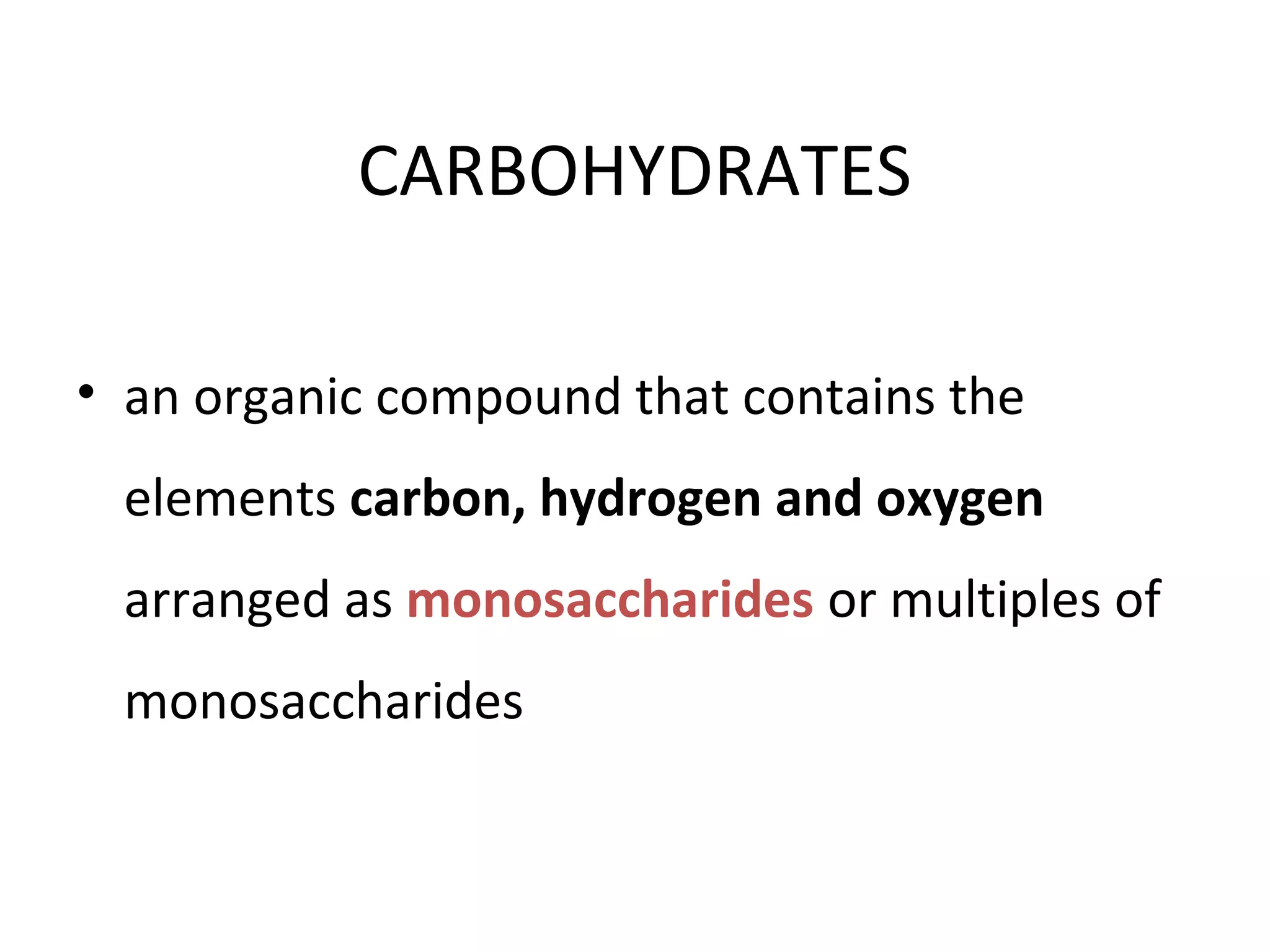
CARBOHYDRATES
• an organic compound that contains the
elements carbon, hydrogen and oxygen
arranged as monosaccharides or multiples of
monosaccharides
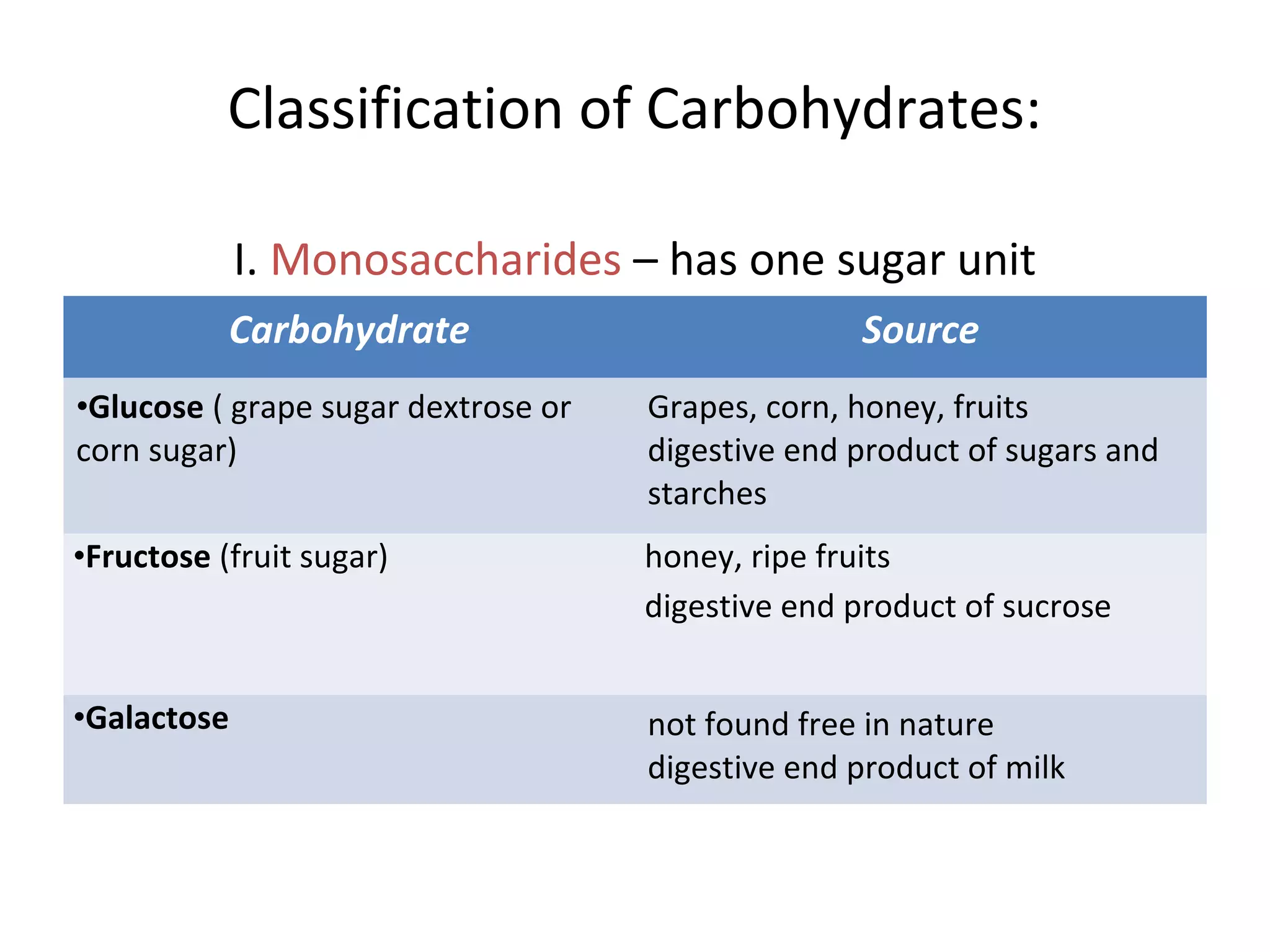
Classification of Carbohydrates:
I. Monosaccharides – has one sugar unit
Carbohydrate Source
•Glucose ( grape sugar dextrose or
corn sugar)
Grapes, corn, honey, fruits
digestive end product of sugars and
starches
•Fructose (fruit sugar) honey, ripe fruits
digestive end product of sucrose
•Galactose not found free in nature
digestive end product of milk
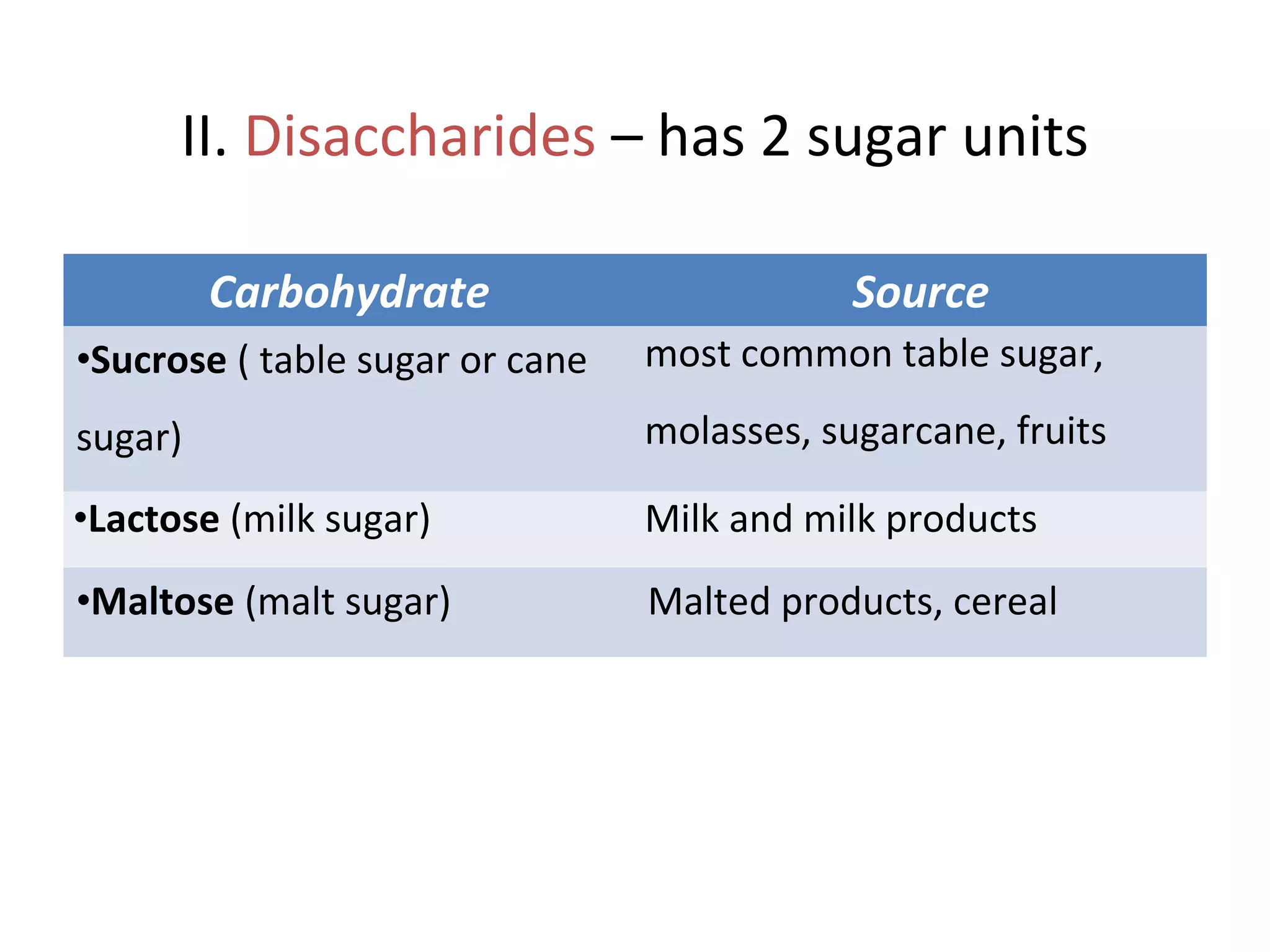
II. Disaccharides – has 2 sugar units
Carbohydrate Source
•Sucrose ( table sugar or cane
sugar)
most common table sugar,
molasses, sugarcane, fruits
•Lactose (milk sugar) Milk and milk products
•Maltose (malt sugar) Malted products, cereal
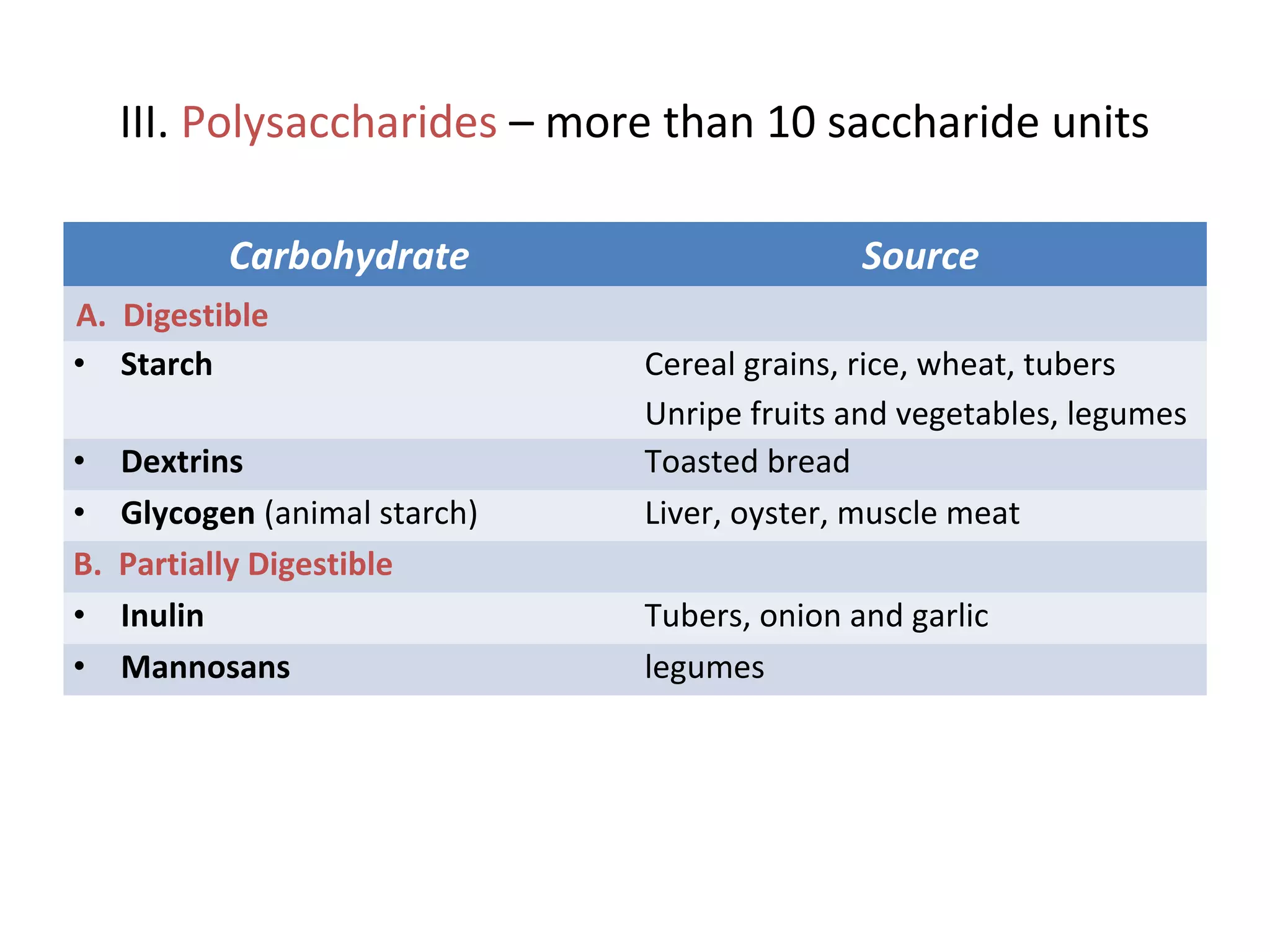
III. Polysaccharides – more than 10 saccharide units
Carbohydrate Source
A. Digestible
• Starch Cereal grains, rice, wheat, tubers
Unripe fruits and vegetables, legumes
• Dextrins Toasted bread
• Glycogen (animal starch) Liver, oyster, muscle meat
B. Partially Digestible
• Inulin Tubers, onion and garlic
• Mannosans legumes
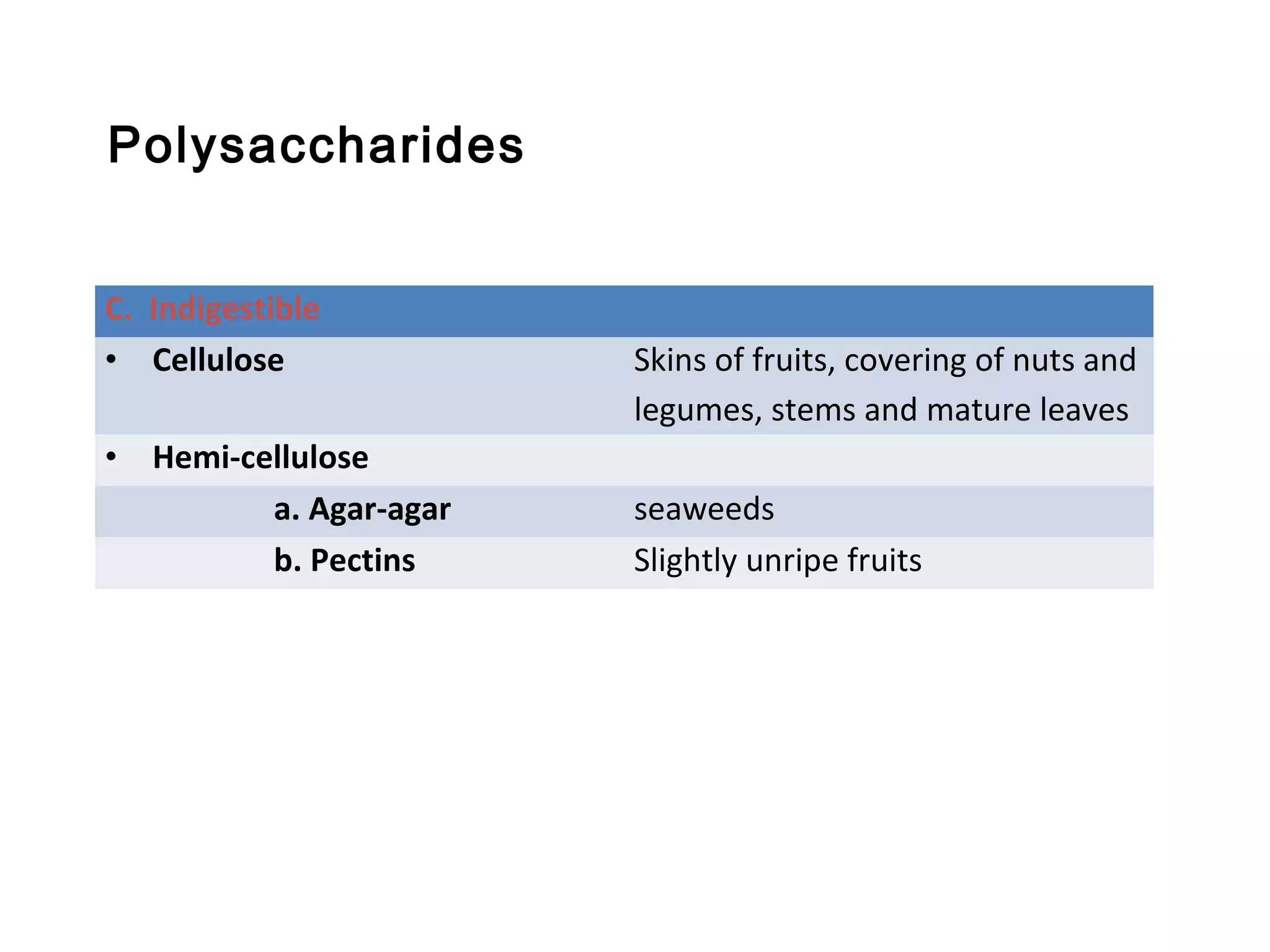
C. Indigestible
• Cellulose Skins of fruits, covering of nuts and
legumes, stems and mature leaves
• Hemi-cellulose
a. Agar-agar seaweeds
b. Pectins Slightly unripe fruits
Polysaccharides
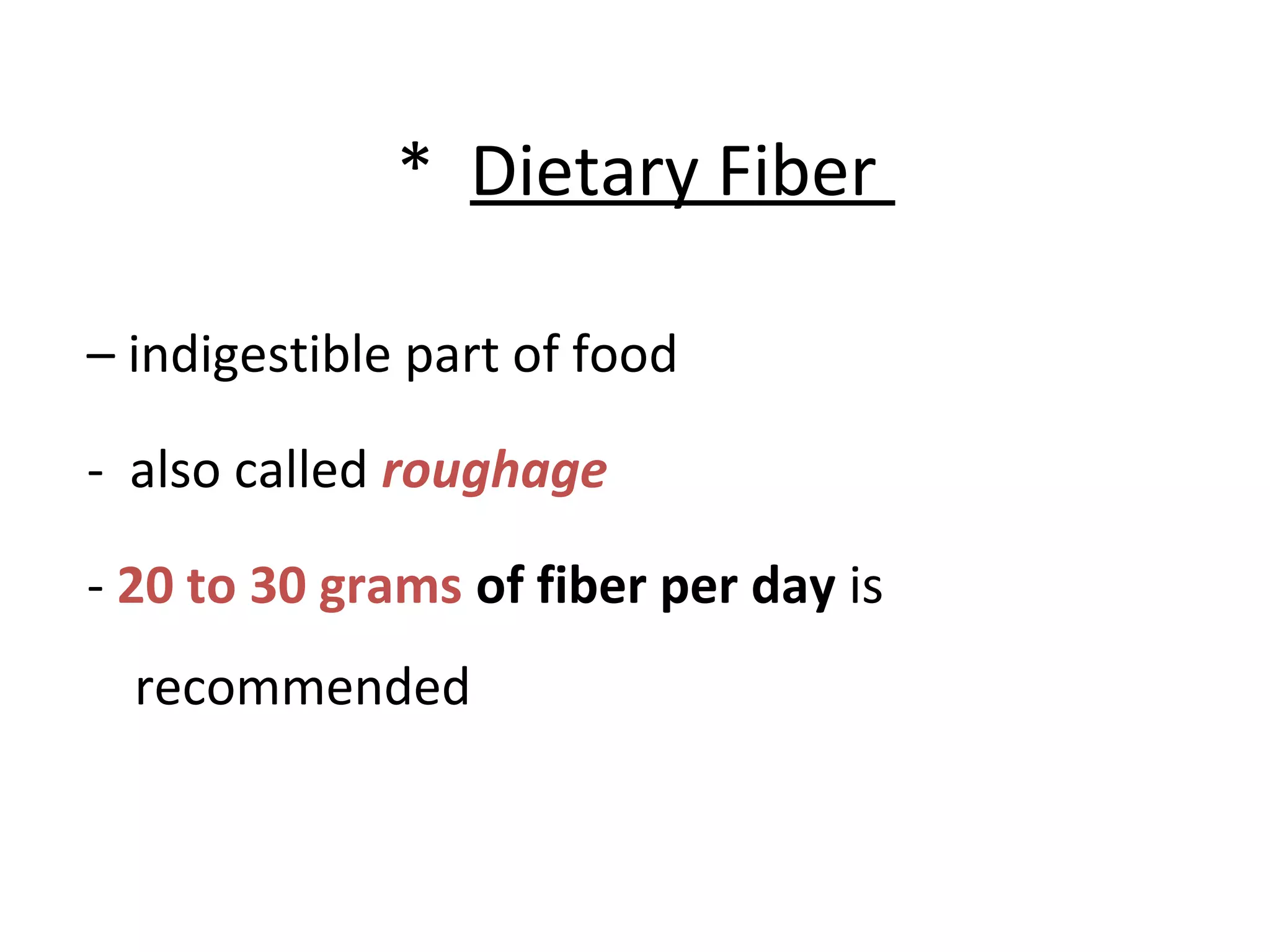
* Dietary Fiber
– indigestible part of food
- also called roughage
- 20 to 30 grams of fiber per day is
recommended
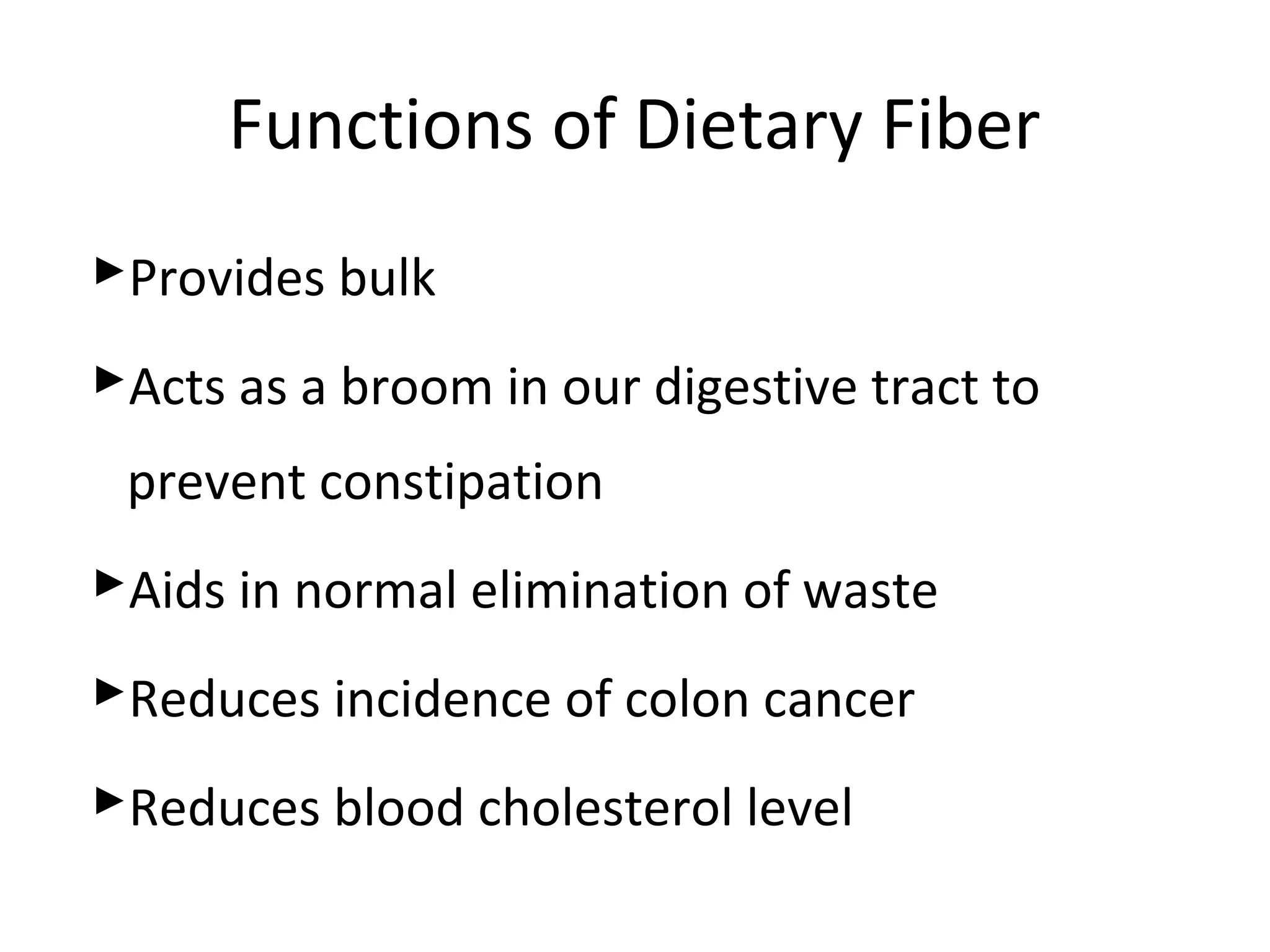
Functions of Dietary Fiber
Provides bulk
Acts as a broom in our digestive tract to
prevent constipation
Aids in normal elimination of waste
Reduces incidence of colon cancer
Reduces blood cholesterol level
Functions of Carbohydrates in the
Body
• Chief source of energy – provides 4kcal/gram
• Cheap and main energy food
• Protein sparer
• Regulator of fat metabolism
• Sole energy source for the brain and nerve
tissues
• Storage form of energy as glycogen
• Regulator of peristalsis and provider of bulk
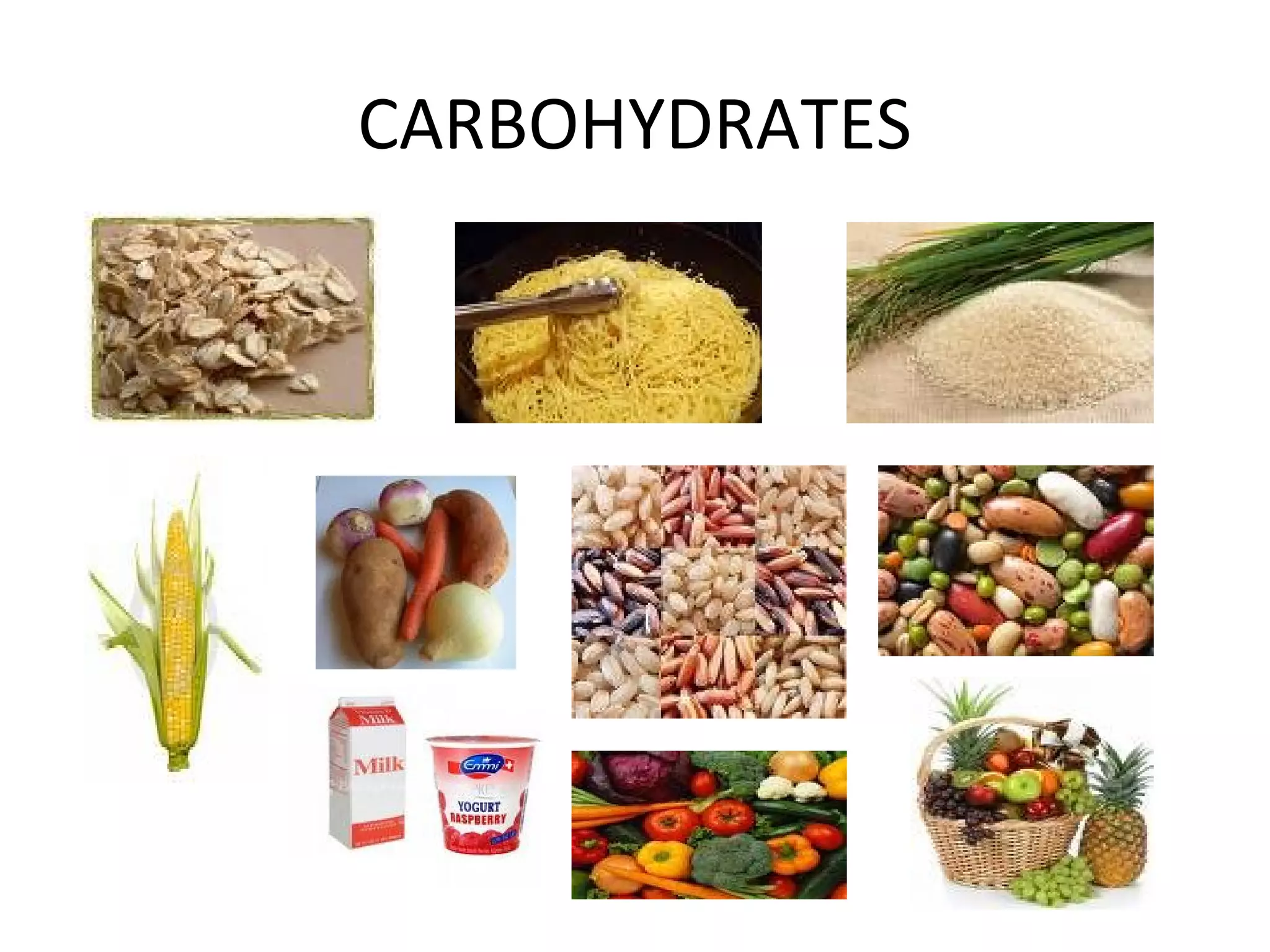
Food Sources of Carbohydrates:
• Sugars, fruits and milk
• Cereal grains and products ( rice, corn, oat,
breads and other baked goods, noodles or
pasta)
• Root crops, vegetables and legumes
Molasses Malted barley
CARBOHYDRATES
PROTEIN
• An organic compound that contains the
elements carbon, hydrogen, oxygen and
nitrogen arranged into amino acids linked in a
chain by peptide bonds
Amino Acids
• Building blocks of protein
• Contains hydrogen atom, an amino group,
acid group and a distinctive side group
• There are about 20 different amino acids.
• Can be broken down by means of hydrolysis
Classification of Amino Acids
• Essential amino acids – amino acids that the
body cannot synthesize in amounts sufficient to
meet physiological needs
• “indispensable”
• TV TILL PM (tryptophan, valine, threonine, isoleucine, leucine,
lysine, phenylalanine, methionine)
• Note: histidine & arginine are considered
essential for infants
• Semi-essential amino acid– reduces the need
for a particular essential amino acid or
partially spares it
• Non-essential amino acid – amino acids that
the body can synthesize
– Ex. Alanine, arginine, asparagine,aspartic acid,
cysteine, glutamic acid, glutamine, glycine,
tyrosine etc.
Classification of Protein
According to Amino Acid Content
• Complete protein – contains all essential
amino acids in amount sufficient for growth
and life maintenance
Ex. Egg and animal proteins
• Partially complete – can maintain life but do
not support growth
ex. Wheat and legumes
• Incomplete protein – cannot support life or
growth
ex. Corn and most plant proteins
FUNCTIONS of PROTEINS:
• As building materials – for growth and
maintenance
ex. Skin, muscles (actin & myosin), hair
(keratin), tendons & bone matrix (collagen)
• As enzymes – facilitates chemical reactions in
• As hormones – regulates body processes
• As antibodies – inactivates foreign invaders
thus protecting our body against infection
• As regulators of fluid balance – maintains the
fluid volume and the composition of the body
fluids
• As acid-base regulators – maintains acid-base
• As transporters – transports substances such
as lipids, vitamins, minerals, oxygen around
the body
• As source of energy – provides some fuel for
the body’s needs
– Each gram of protein yields 4 calories
PROTEIN-ENERGY
MALNUTRITION
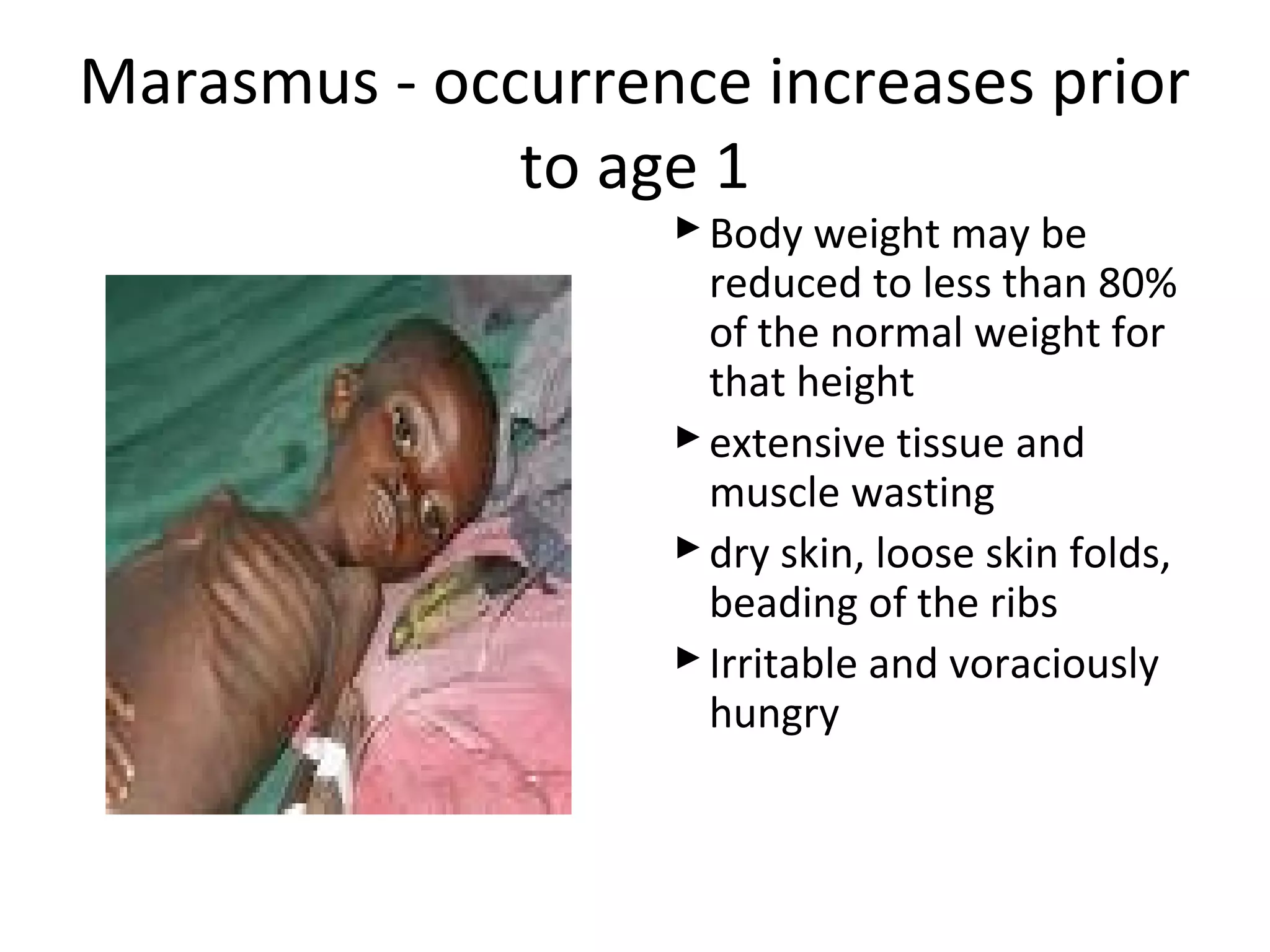
Marasmus - occurrence increases prior
to age 1
Body weight may be
reduced to less than 80%
of the normal weight for
that height
extensive tissue and
muscle wasting
dry skin, loose skin folds,
beading of the ribs
Irritable and voraciously
hungry
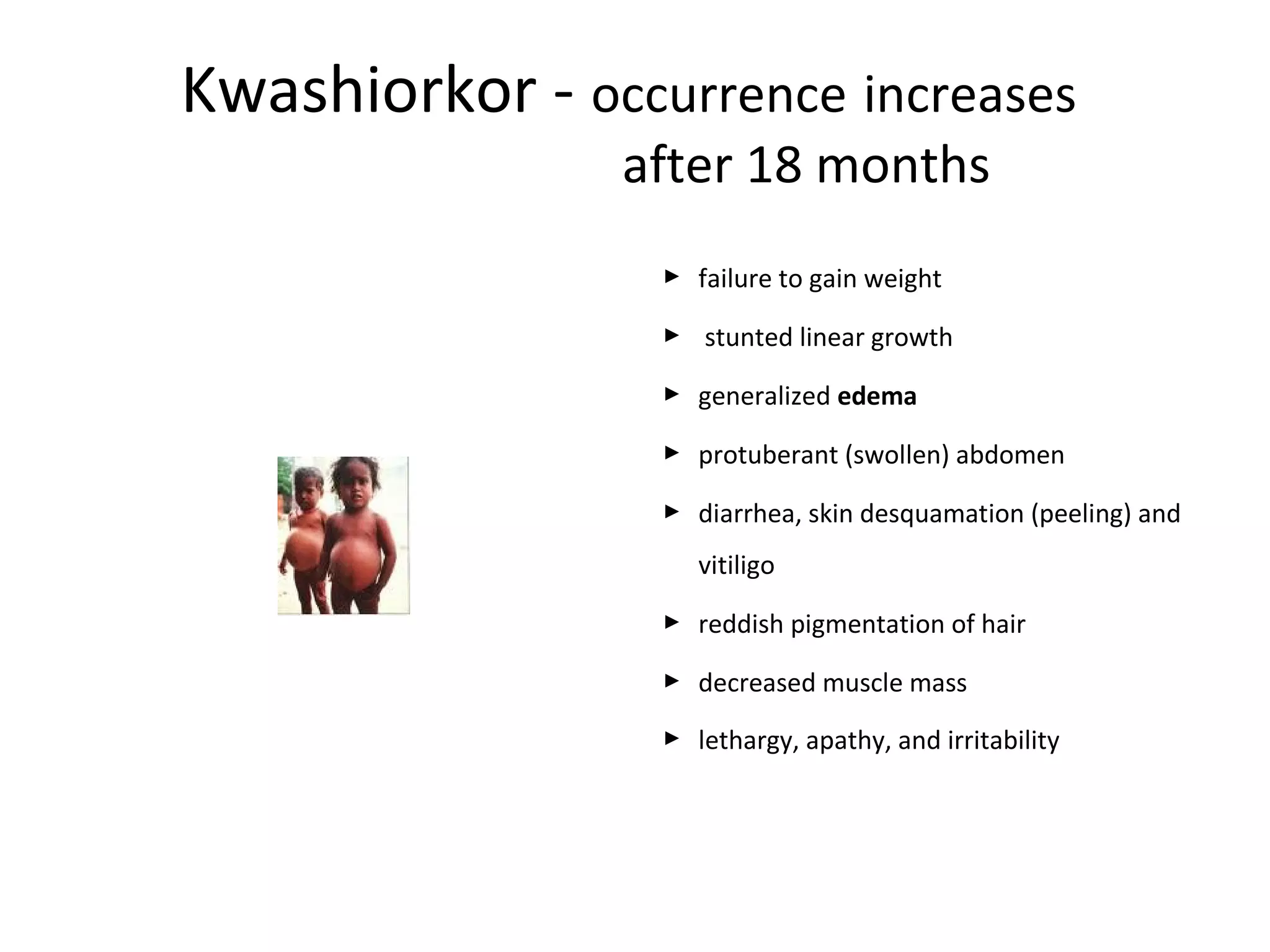
Kwashiorkor - occurrence increases
after 18 months
 failure to gain weight
 stunted linear growth
 generalized edema
 protuberant (swollen) abdomen
 diarrhea, skin desquamation (peeling) and
vitiligo
 reddish pigmentation of hair
 decreased muscle mass
 lethargy, apathy, and irritability
LIPIDS
• Organic compounds that are insoluble in
water but soluble in fat solvents and are
utilizable by man
• Contains the elements carbon, hydrogen and
oxygen in glyceride linkage
• Yields 3 fatty acids and a molecule of glycerol
LIPIDS
• Solid lipid is called FAT while its liquid form is
termed OIL
Classification of Fatty Acids
I. Degree of Saturation or Unsaturation
• Saturated fatty acid (SAFA) – commonly
found in coconut oil, palm oil, chocolate,
butter and animal fat
• Monounsaturated fatty acids (MUFA) – with
one double bond between 2 carbons
– found in olive oil, avocado, almonds, peanuts and margarine
• Polyunsaturated fatty acids (PUFA) – with 2
or more double bonds
– found in corn oil, soybean oil and fish oils
II. Essentiality
• Essential fatty acids
» Arachidonic acid
» Linolenic acid (omega-6)
» Linoleic acid (omega-3)
• Non-essential fatty acids
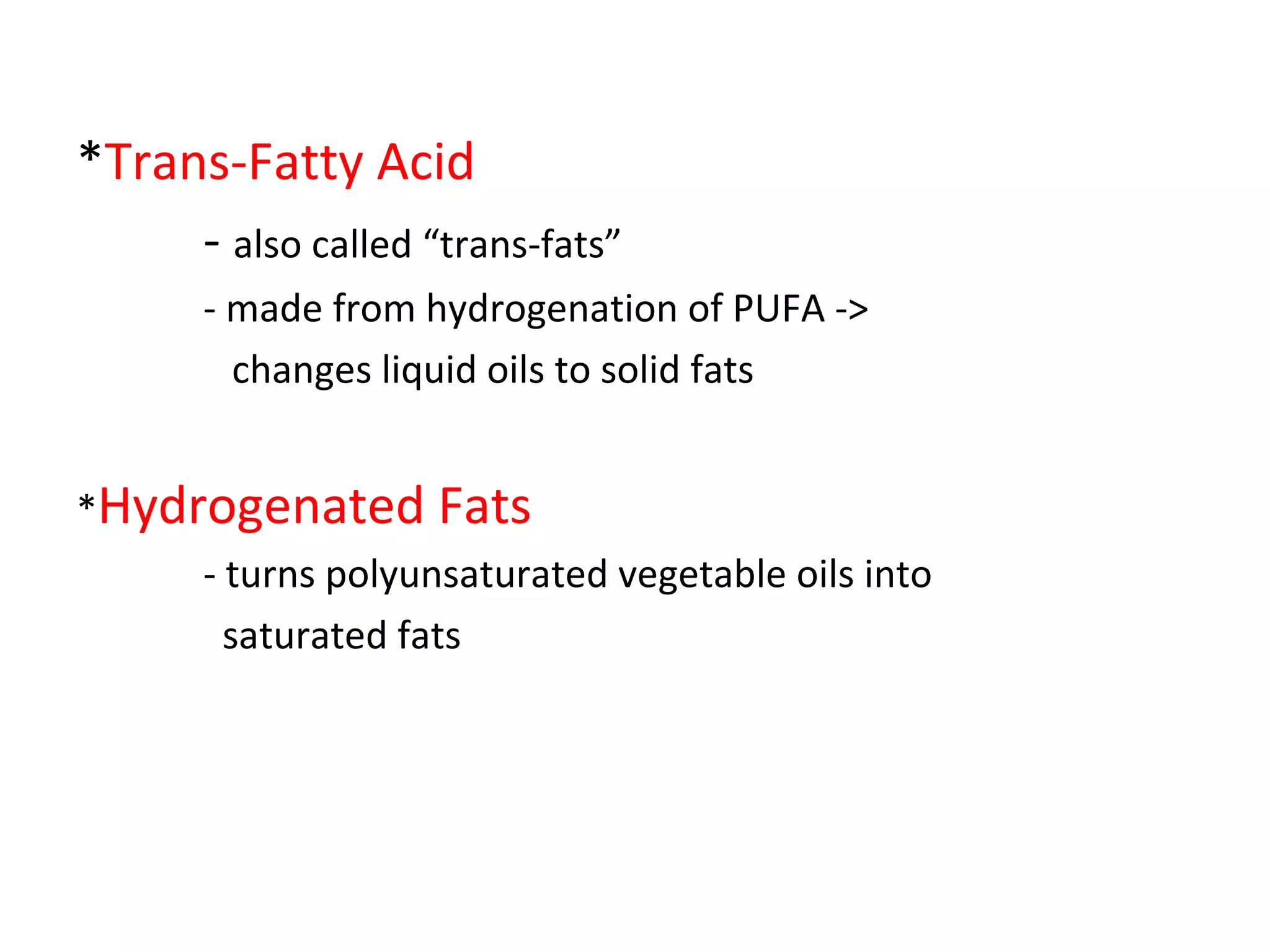
*Trans-Fatty Acid
- also called “trans-fats”
- made from hydrogenation of PUFA ->
changes liquid oils to solid fats
*Hydrogenated Fats
- turns polyunsaturated vegetable oils into
saturated fats
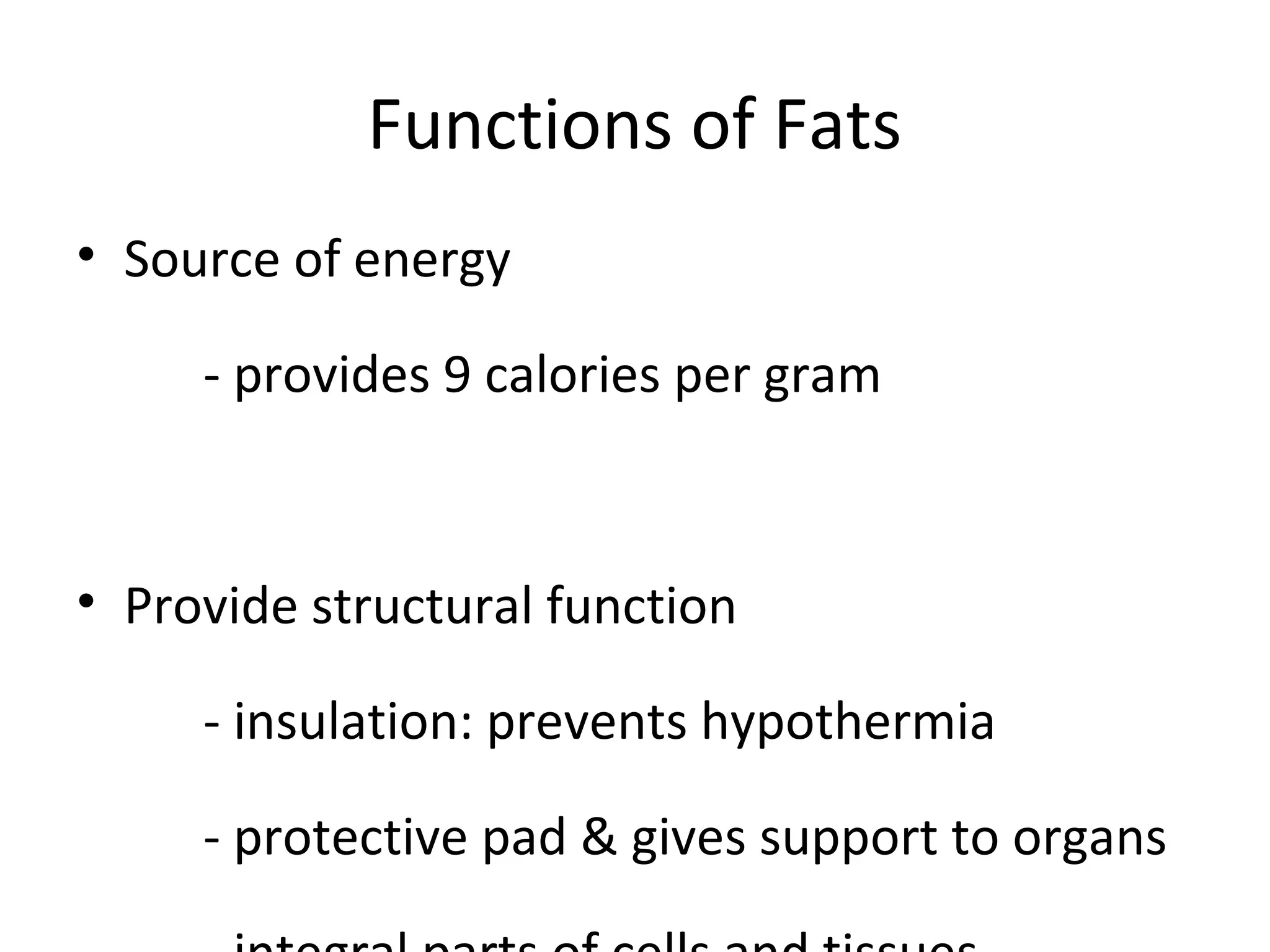
Functions of Fats
• Source of energy
- provides 9 calories per gram
• Provide structural function
- insulation: prevents hypothermia
- protective pad & gives support to organs
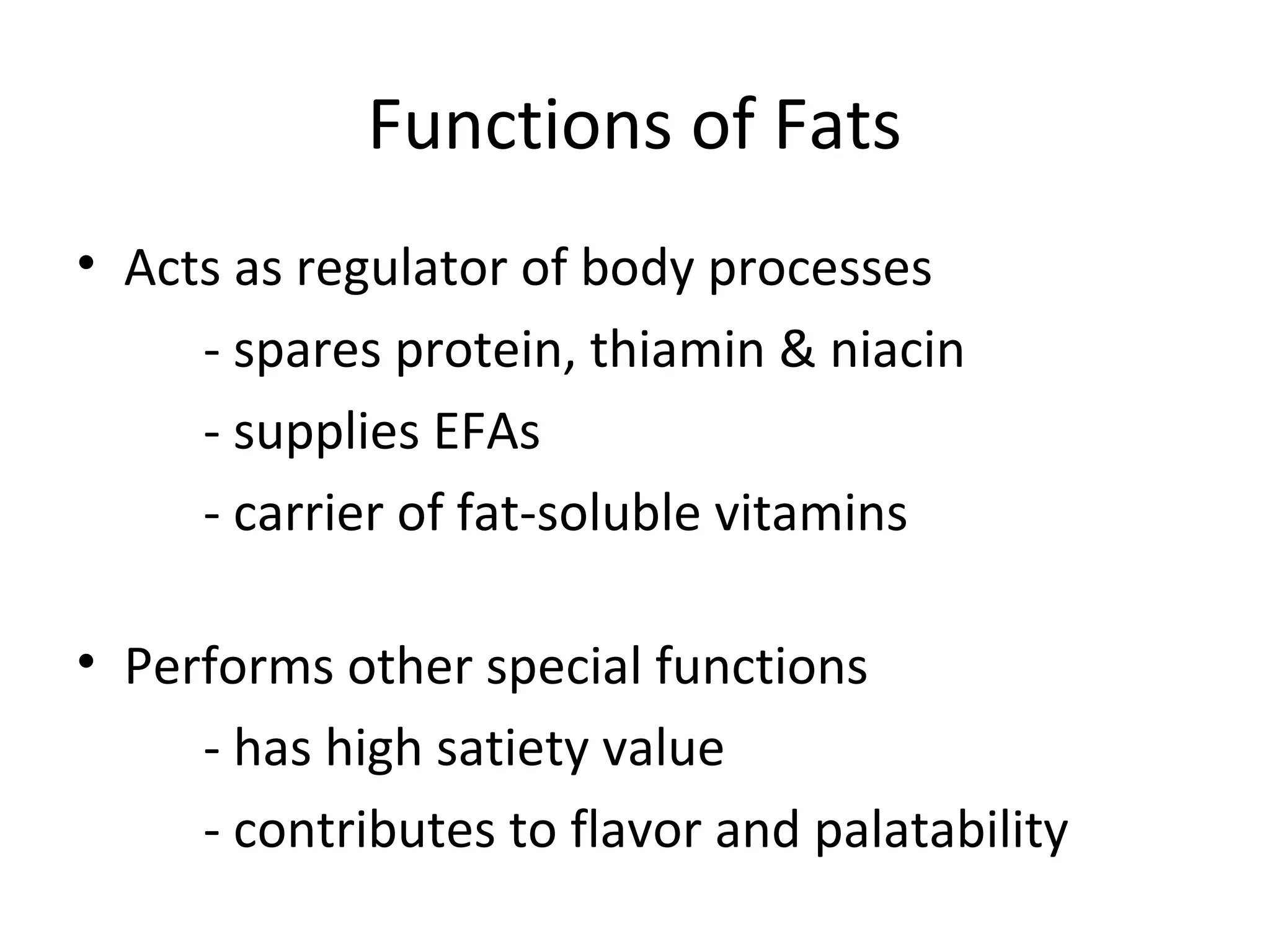
Functions of Fats
• Acts as regulator of body processes
- spares protein, thiamin & niacin
- supplies EFAs
- carrier of fat-soluble vitamins
• Performs other special functions
- has high satiety value
- contributes to flavor and palatability

Nutrients

  • 1.
  • 2.
    CARBOHYDRATES • an organiccompound that contains the elements carbon, hydrogen and oxygen arranged as monosaccharides or multiples of monosaccharides
  • 3.
    Classification of Carbohydrates: I.Monosaccharides – has one sugar unit Carbohydrate Source •Glucose ( grape sugar dextrose or corn sugar) Grapes, corn, honey, fruits digestive end product of sugars and starches •Fructose (fruit sugar) honey, ripe fruits digestive end product of sucrose •Galactose not found free in nature digestive end product of milk
  • 4.
    II. Disaccharides –has 2 sugar units Carbohydrate Source •Sucrose ( table sugar or cane sugar) most common table sugar, molasses, sugarcane, fruits •Lactose (milk sugar) Milk and milk products •Maltose (malt sugar) Malted products, cereal
  • 5.
    III. Polysaccharides –more than 10 saccharide units Carbohydrate Source A. Digestible • Starch Cereal grains, rice, wheat, tubers Unripe fruits and vegetables, legumes • Dextrins Toasted bread • Glycogen (animal starch) Liver, oyster, muscle meat B. Partially Digestible • Inulin Tubers, onion and garlic • Mannosans legumes
  • 6.
    C. Indigestible • CelluloseSkins of fruits, covering of nuts and legumes, stems and mature leaves • Hemi-cellulose a. Agar-agar seaweeds b. Pectins Slightly unripe fruits Polysaccharides
  • 7.
    * Dietary Fiber –indigestible part of food - also called roughage - 20 to 30 grams of fiber per day is recommended
  • 8.
    Functions of DietaryFiber Provides bulk Acts as a broom in our digestive tract to prevent constipation Aids in normal elimination of waste Reduces incidence of colon cancer Reduces blood cholesterol level
  • 9.
    Functions of Carbohydratesin the Body • Chief source of energy – provides 4kcal/gram • Cheap and main energy food • Protein sparer • Regulator of fat metabolism • Sole energy source for the brain and nerve tissues • Storage form of energy as glycogen • Regulator of peristalsis and provider of bulk
  • 10.
    Food Sources ofCarbohydrates: • Sugars, fruits and milk • Cereal grains and products ( rice, corn, oat, breads and other baked goods, noodles or pasta) • Root crops, vegetables and legumes
  • 11.
  • 12.
  • 13.
    PROTEIN • An organiccompound that contains the elements carbon, hydrogen, oxygen and nitrogen arranged into amino acids linked in a chain by peptide bonds
  • 14.
    Amino Acids • Buildingblocks of protein • Contains hydrogen atom, an amino group, acid group and a distinctive side group • There are about 20 different amino acids. • Can be broken down by means of hydrolysis
  • 15.
    Classification of AminoAcids • Essential amino acids – amino acids that the body cannot synthesize in amounts sufficient to meet physiological needs • “indispensable” • TV TILL PM (tryptophan, valine, threonine, isoleucine, leucine, lysine, phenylalanine, methionine) • Note: histidine & arginine are considered essential for infants
  • 16.
    • Semi-essential aminoacid– reduces the need for a particular essential amino acid or partially spares it • Non-essential amino acid – amino acids that the body can synthesize – Ex. Alanine, arginine, asparagine,aspartic acid, cysteine, glutamic acid, glutamine, glycine, tyrosine etc.
  • 17.
    Classification of Protein Accordingto Amino Acid Content • Complete protein – contains all essential amino acids in amount sufficient for growth and life maintenance Ex. Egg and animal proteins
  • 18.
    • Partially complete– can maintain life but do not support growth ex. Wheat and legumes • Incomplete protein – cannot support life or growth ex. Corn and most plant proteins
  • 19.
    FUNCTIONS of PROTEINS: •As building materials – for growth and maintenance ex. Skin, muscles (actin & myosin), hair (keratin), tendons & bone matrix (collagen) • As enzymes – facilitates chemical reactions in
  • 20.
    • As hormones– regulates body processes • As antibodies – inactivates foreign invaders thus protecting our body against infection • As regulators of fluid balance – maintains the fluid volume and the composition of the body fluids • As acid-base regulators – maintains acid-base
  • 21.
    • As transporters– transports substances such as lipids, vitamins, minerals, oxygen around the body • As source of energy – provides some fuel for the body’s needs – Each gram of protein yields 4 calories
  • 22.
  • 23.
    Marasmus - occurrenceincreases prior to age 1 Body weight may be reduced to less than 80% of the normal weight for that height extensive tissue and muscle wasting dry skin, loose skin folds, beading of the ribs Irritable and voraciously hungry
  • 24.
    Kwashiorkor - occurrenceincreases after 18 months  failure to gain weight  stunted linear growth  generalized edema  protuberant (swollen) abdomen  diarrhea, skin desquamation (peeling) and vitiligo  reddish pigmentation of hair  decreased muscle mass  lethargy, apathy, and irritability
  • 25.
    LIPIDS • Organic compoundsthat are insoluble in water but soluble in fat solvents and are utilizable by man • Contains the elements carbon, hydrogen and oxygen in glyceride linkage • Yields 3 fatty acids and a molecule of glycerol
  • 26.
    LIPIDS • Solid lipidis called FAT while its liquid form is termed OIL
  • 27.
    Classification of FattyAcids I. Degree of Saturation or Unsaturation • Saturated fatty acid (SAFA) – commonly found in coconut oil, palm oil, chocolate, butter and animal fat
  • 28.
    • Monounsaturated fattyacids (MUFA) – with one double bond between 2 carbons – found in olive oil, avocado, almonds, peanuts and margarine • Polyunsaturated fatty acids (PUFA) – with 2 or more double bonds – found in corn oil, soybean oil and fish oils
  • 29.
    II. Essentiality • Essentialfatty acids » Arachidonic acid » Linolenic acid (omega-6) » Linoleic acid (omega-3) • Non-essential fatty acids
  • 30.
    *Trans-Fatty Acid - alsocalled “trans-fats” - made from hydrogenation of PUFA -> changes liquid oils to solid fats *Hydrogenated Fats - turns polyunsaturated vegetable oils into saturated fats
  • 31.
    Functions of Fats •Source of energy - provides 9 calories per gram • Provide structural function - insulation: prevents hypothermia - protective pad & gives support to organs
  • 32.
    Functions of Fats •Acts as regulator of body processes - spares protein, thiamin & niacin - supplies EFAs - carrier of fat-soluble vitamins • Performs other special functions - has high satiety value - contributes to flavor and palatability