   Hypercalcemia (excess calcium in the blood)
   Hypercalcinuria (excess calcium in the urine)
   Kidney stones (result in high levels of calcium
    in the serum and urine calcification of soft
    tissues)
   Hyperparathyroidism
   One of the most essential elements of the
    body
   Available in all foods of plant and animal
    origin
   Second most abundant mineral in body, after
    calcium
   >600 g of phosphorus in the normal human
    body, 80-90% combined with calcium to form
    bones and teeth
   Dietary phosphorus intake : 1.5 g/day
   Phosphorus balance is regulated by the
    metabolic and hormonal factors vitamin D,
    calcitonin, parathyroid hormone
   Amount of phosphorus in the body is
    controlled by excretion in the urine rather
    than by absorption
   Major functions:
    -formation of bone and tooth mineral
    -production and transfer of high-energy phosphates
   Plays a role in absorption and transport of nutrients
   Regulates the acid-base balances
   Plays an important role in cell protein synthesis (part
    of the nucleic acids DNA and RNA, the substances
    that control heredity)
   Buffers in blood and tissue (chemicals that prevent
    change in the concentration of other chemicals)
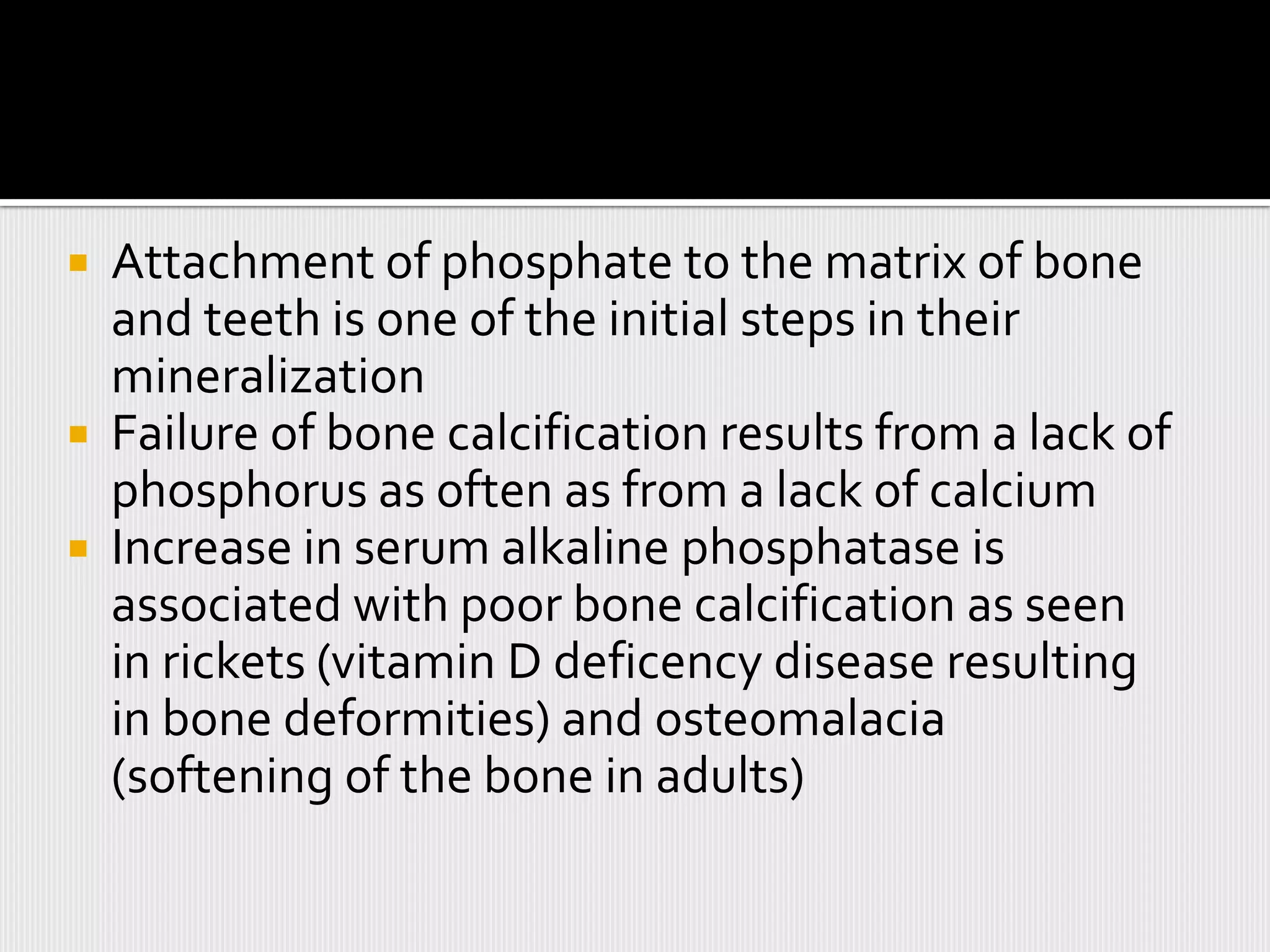
 Attachment of phosphate to the matrix of bone
  and teeth is one of the initial steps in their
  mineralization
 Failure of bone calcification results from a lack of
  phosphorus as often as from a lack of calcium
 Increase in serum alkaline phosphatase is
  associated with poor bone calcification as seen
  in rickets (vitamin D deficency disease resulting
  in bone deformities) and osteomalacia
  (softening of the bone in adults)
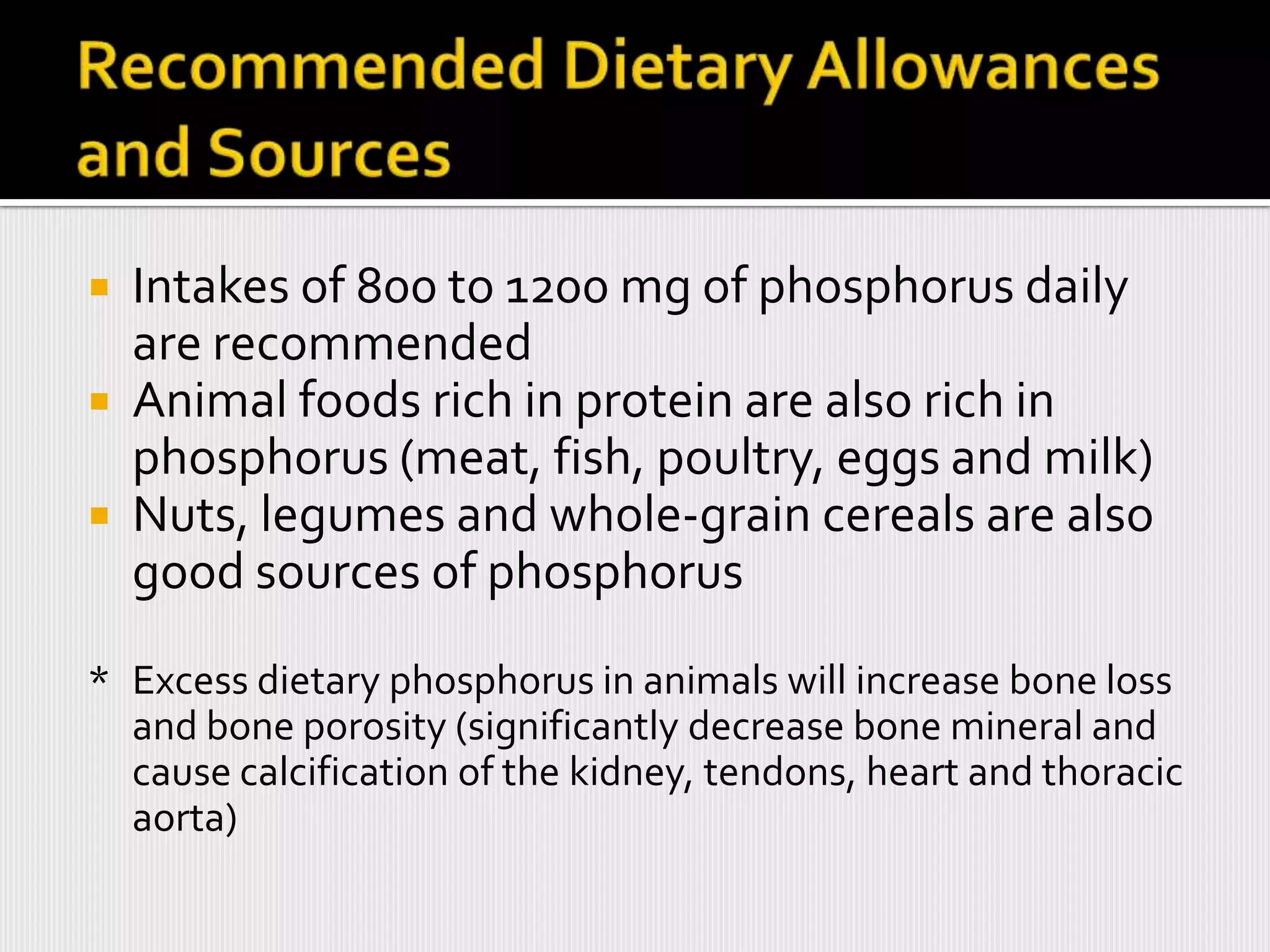
 Intakes of 800 to 1200 mg of phosphorus daily
  are recommended
 Animal foods rich in protein are also rich in
  phosphorus (meat, fish, poultry, eggs and milk)
 Nuts, legumes and whole-grain cereals are also
  good sources of phosphorus
* Excess dietary phosphorus in animals will increase bone loss
  and bone porosity (significantly decrease bone mineral and
  cause calcification of the kidney, tendons, heart and thoracic
  aorta)
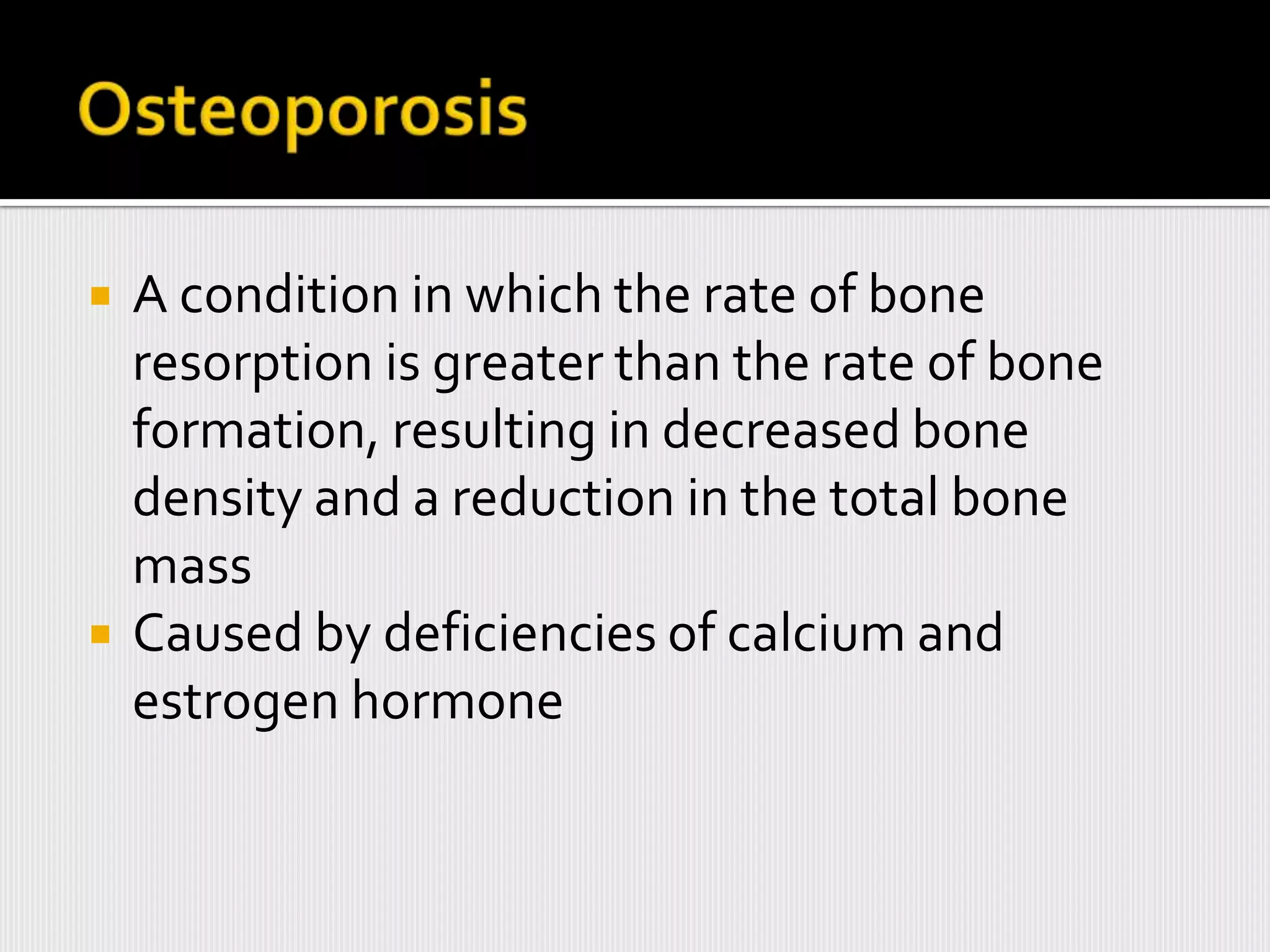
   A condition in which the rate of bone
    resorption is greater than the rate of bone
    formation, resulting in decreased bone
    density and a reduction in the total bone
    mass
   Caused by deficiencies of calcium and
    estrogen hormone
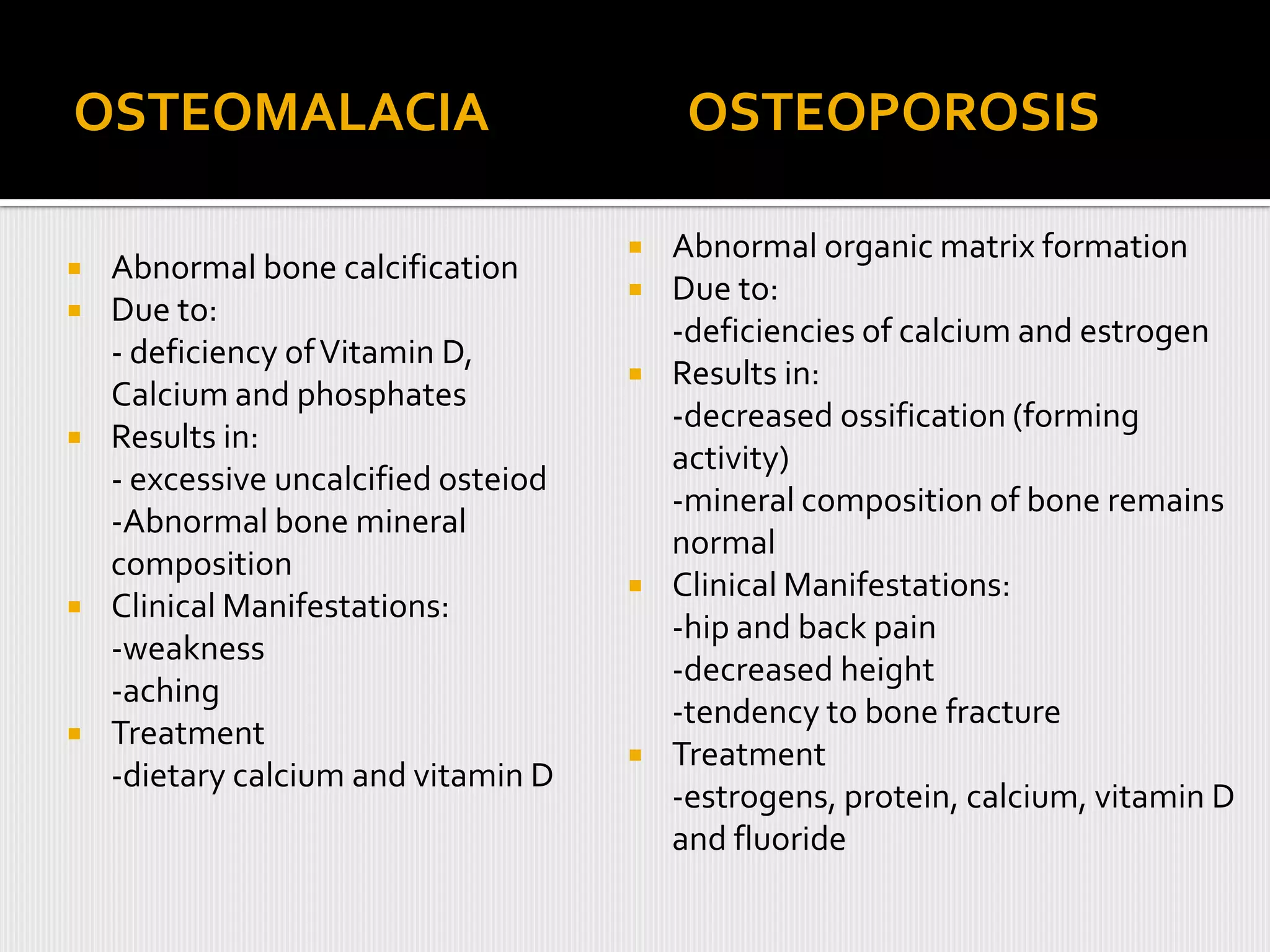
OSTEOMALACIA                               OSTEOPOROSIS

                                         Abnormal organic matrix formation
   Abnormal bone calcification
                                         Due to:
   Due to:
                                          -deficiencies of calcium and estrogen
    - deficiency of Vitamin D,
                                         Results in:
    Calcium and phosphates
                                          -decreased ossification (forming
   Results in:
                                          activity)
    - excessive uncalcified osteiod
                                          -mineral composition of bone remains
    -Abnormal bone mineral
                                          normal
    composition
                                         Clinical Manifestations:
   Clinical Manifestations:
                                          -hip and back pain
    -weakness
                                          -decreased height
    -aching
                                          -tendency to bone fracture
   Treatment
                                         Treatment
    -dietary calcium and vitamin D
                                          -estrogens, protein, calcium, vitamin D
                                          and fluoride
   Heredity
   Smoking
   Alcohol
   Coffee(5 or more cups daily)
   Low calcium intake
   Certain levels of hormones, PTH, calcitonin,
    estrogen, androgen, insulin, growth
    hormone, throid hormones, protein
   Drugs like phenytoin (anticonvulsant) and
    phenobarbital
   Osteoporosis occurs most commonly in older
    people, >60 age
   Osteoporotic individuals tends to have a
    lower intake and a higher urinary excretion of
    calcium than normal persobs
   Loss of height because of shortening of the
    trunk and collapsed of the vertebrae
   Ingestion of high calcium diets , estrogen,
    fluoride, calcitonin, PTH, active form of
    vitamin D
   Estrogen and diet: reduces vertebral, hip and
    forearm fractures
   Fluoride: large doses of fluoride can stimulate
    bone formation
   Calcitonin: can increase bone mass
   PTH increases with age, also found to
    increase bone mass

Nutri report

  • 1.
    Hypercalcemia (excess calcium in the blood)  Hypercalcinuria (excess calcium in the urine)  Kidney stones (result in high levels of calcium in the serum and urine calcification of soft tissues)  Hyperparathyroidism
  • 2.
    One of the most essential elements of the body  Available in all foods of plant and animal origin  Second most abundant mineral in body, after calcium  >600 g of phosphorus in the normal human body, 80-90% combined with calcium to form bones and teeth
  • 3.
    Dietary phosphorus intake : 1.5 g/day  Phosphorus balance is regulated by the metabolic and hormonal factors vitamin D, calcitonin, parathyroid hormone  Amount of phosphorus in the body is controlled by excretion in the urine rather than by absorption
  • 4.
    Major functions: -formation of bone and tooth mineral -production and transfer of high-energy phosphates  Plays a role in absorption and transport of nutrients  Regulates the acid-base balances  Plays an important role in cell protein synthesis (part of the nucleic acids DNA and RNA, the substances that control heredity)  Buffers in blood and tissue (chemicals that prevent change in the concentration of other chemicals)
  • 5.
     Attachment ofphosphate to the matrix of bone and teeth is one of the initial steps in their mineralization  Failure of bone calcification results from a lack of phosphorus as often as from a lack of calcium  Increase in serum alkaline phosphatase is associated with poor bone calcification as seen in rickets (vitamin D deficency disease resulting in bone deformities) and osteomalacia (softening of the bone in adults)
  • 6.
     Intakes of800 to 1200 mg of phosphorus daily are recommended  Animal foods rich in protein are also rich in phosphorus (meat, fish, poultry, eggs and milk)  Nuts, legumes and whole-grain cereals are also good sources of phosphorus * Excess dietary phosphorus in animals will increase bone loss and bone porosity (significantly decrease bone mineral and cause calcification of the kidney, tendons, heart and thoracic aorta)
  • 7.
    A condition in which the rate of bone resorption is greater than the rate of bone formation, resulting in decreased bone density and a reduction in the total bone mass  Caused by deficiencies of calcium and estrogen hormone
  • 8.
    OSTEOMALACIA OSTEOPOROSIS  Abnormal organic matrix formation  Abnormal bone calcification  Due to:  Due to: -deficiencies of calcium and estrogen - deficiency of Vitamin D,  Results in: Calcium and phosphates -decreased ossification (forming  Results in: activity) - excessive uncalcified osteiod -mineral composition of bone remains -Abnormal bone mineral normal composition  Clinical Manifestations:  Clinical Manifestations: -hip and back pain -weakness -decreased height -aching -tendency to bone fracture  Treatment  Treatment -dietary calcium and vitamin D -estrogens, protein, calcium, vitamin D and fluoride
  • 9.
    Heredity  Smoking  Alcohol  Coffee(5 or more cups daily)  Low calcium intake  Certain levels of hormones, PTH, calcitonin, estrogen, androgen, insulin, growth hormone, throid hormones, protein  Drugs like phenytoin (anticonvulsant) and phenobarbital
  • 10.
    Osteoporosis occurs most commonly in older people, >60 age  Osteoporotic individuals tends to have a lower intake and a higher urinary excretion of calcium than normal persobs  Loss of height because of shortening of the trunk and collapsed of the vertebrae
  • 11.
    Ingestion of high calcium diets , estrogen, fluoride, calcitonin, PTH, active form of vitamin D  Estrogen and diet: reduces vertebral, hip and forearm fractures  Fluoride: large doses of fluoride can stimulate bone formation  Calcitonin: can increase bone mass  PTH increases with age, also found to increase bone mass