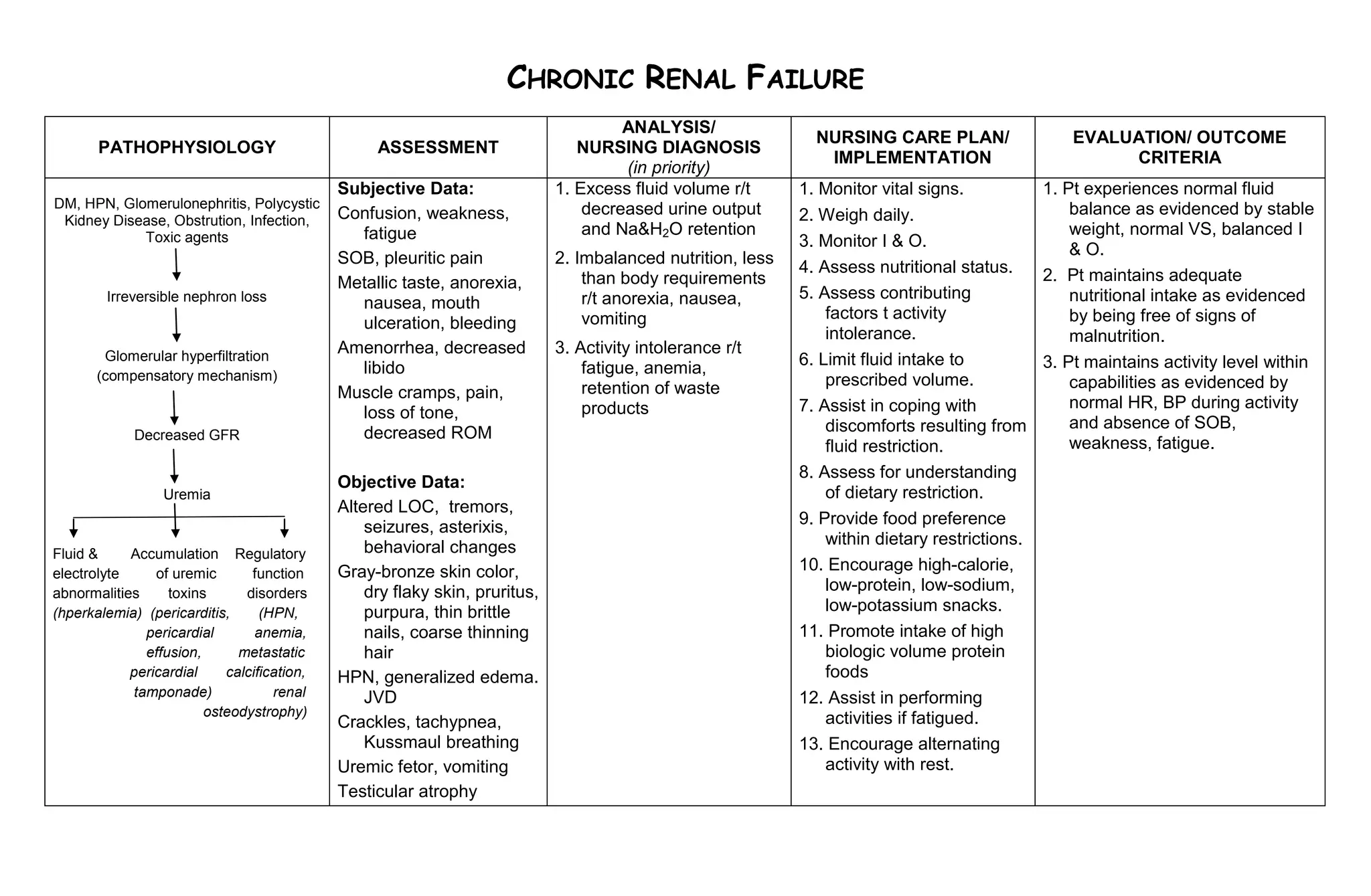
CHRONIC RENAL FAILURE
                                                                                     ANALYSIS/
                                                                                                              NURSING CARE PLAN/                 EVALUATION/ OUTCOME
       PATHOPHYSIOLOGY                           ASSESSMENT                    NURSING DIAGNOSIS
                                                                                                               IMPLEMENTATION                         CRITERIA
                                                                                     (in priority)
                                            Subjective Data:                1. Excess fluid volume r/t      1. Monitor vital signs.          1. Pt experiences normal fluid
DM, HPN, Glomerulonephritis, Polycystic                                         decreased urine output                                           balance as evidenced by stable
 Kidney Disease, Obstrution, Infection,     Confusion, weakness,                                            2. Weigh daily.
            Toxic agents                      fatigue                           and Na&H2O retention                                             weight, normal VS, balanced I
                                                                                                            3. Monitor I & O.                    & O.
                                            SOB, pleuritic pain             2. Imbalanced nutrition, less
                                                                                                            4. Assess nutritional status.    2. Pt maintains adequate
                                            Metallic taste, anorexia,           than body requirements
        Irreversible nephron loss                                               r/t anorexia, nausea,       5. Assess contributing               nutritional intake as evidenced
                                              nausea, mouth
                                                                                vomiting                        factors t activity               by being free of signs of
                                              ulceration, bleeding
                                                                                                                intolerance.                     malnutrition.
        Glomerular hyperfiltration
                                            Amenorrhea, decreased           3. Activity intolerance r/t
                                              libido                            fatigue, anemia,            6. Limit fluid intake to         3. Pt maintains activity level within
       (compensatory mechanism)                                                                                 prescribed volume.
                                                                                retention of waste                                               capabilities as evidenced by
                                            Muscle cramps, pain,
                                                                                products                    7. Assist in coping with             normal HR, BP during activity
                                              loss of tone,
                                                                                                                discomforts resulting from       and absence of SOB,
             Decreased GFR                    decreased ROM
                                                                                                                fluid restriction.               weakness, fatigue.
                                                                                                            8. Assess for understanding
                                            Objective Data:
                 Uremia                                                                                         of dietary restriction.
                                            Altered LOC, tremors,
                                                seizures, asterixis,                                        9. Provide food preference
                                                behavioral changes                                              within dietary restrictions.
Fluid &     Accumulation Regulatory
electrolyte     of uremic      function     Gray-bronze skin color,                                         10. Encourage high-calorie,
abnormalities     toxins      disorders         dry flaky skin, pruritus,                                       low-protein, low-sodium,
(hperkalemia) (pericarditis,     (HPN,          purpura, thin brittle                                           low-potassium snacks.
              pericardial       anemia,         nails, coarse thinning                                      11. Promote intake of high
              effusion,      metastatic         hair                                                            biologic volume protein
            pericardial    calcification,   HPN, generalized edema.                                             foods
            tamponade)             renal        JVD                                                         12. Assist in performing
                        osteodystrophy)
                                            Crackles, tachypnea,                                                activities if fatigued.
                                                Kussmaul breathing                                          13. Encourage alternating
                                            Uremic fetor, vomiting                                              activity with rest.
                                            Testicular atrophy

Nursing care plan chronic renal failure

  • 1.
    CHRONIC RENAL FAILURE ANALYSIS/ NURSING CARE PLAN/ EVALUATION/ OUTCOME PATHOPHYSIOLOGY ASSESSMENT NURSING DIAGNOSIS IMPLEMENTATION CRITERIA (in priority) Subjective Data: 1. Excess fluid volume r/t 1. Monitor vital signs. 1. Pt experiences normal fluid DM, HPN, Glomerulonephritis, Polycystic decreased urine output balance as evidenced by stable Kidney Disease, Obstrution, Infection, Confusion, weakness, 2. Weigh daily. Toxic agents fatigue and Na&H2O retention weight, normal VS, balanced I 3. Monitor I & O. & O. SOB, pleuritic pain 2. Imbalanced nutrition, less 4. Assess nutritional status. 2. Pt maintains adequate Metallic taste, anorexia, than body requirements Irreversible nephron loss r/t anorexia, nausea, 5. Assess contributing nutritional intake as evidenced nausea, mouth vomiting factors t activity by being free of signs of ulceration, bleeding intolerance. malnutrition. Glomerular hyperfiltration Amenorrhea, decreased 3. Activity intolerance r/t libido fatigue, anemia, 6. Limit fluid intake to 3. Pt maintains activity level within (compensatory mechanism) prescribed volume. retention of waste capabilities as evidenced by Muscle cramps, pain, products 7. Assist in coping with normal HR, BP during activity loss of tone, discomforts resulting from and absence of SOB, Decreased GFR decreased ROM fluid restriction. weakness, fatigue. 8. Assess for understanding Objective Data: Uremia of dietary restriction. Altered LOC, tremors, seizures, asterixis, 9. Provide food preference behavioral changes within dietary restrictions. Fluid & Accumulation Regulatory electrolyte of uremic function Gray-bronze skin color, 10. Encourage high-calorie, abnormalities toxins disorders dry flaky skin, pruritus, low-protein, low-sodium, (hperkalemia) (pericarditis, (HPN, purpura, thin brittle low-potassium snacks. pericardial anemia, nails, coarse thinning 11. Promote intake of high effusion, metastatic hair biologic volume protein pericardial calcification, HPN, generalized edema. foods tamponade) renal JVD 12. Assist in performing osteodystrophy) Crackles, tachypnea, activities if fatigued. Kussmaul breathing 13. Encourage alternating Uremic fetor, vomiting activity with rest. Testicular atrophy