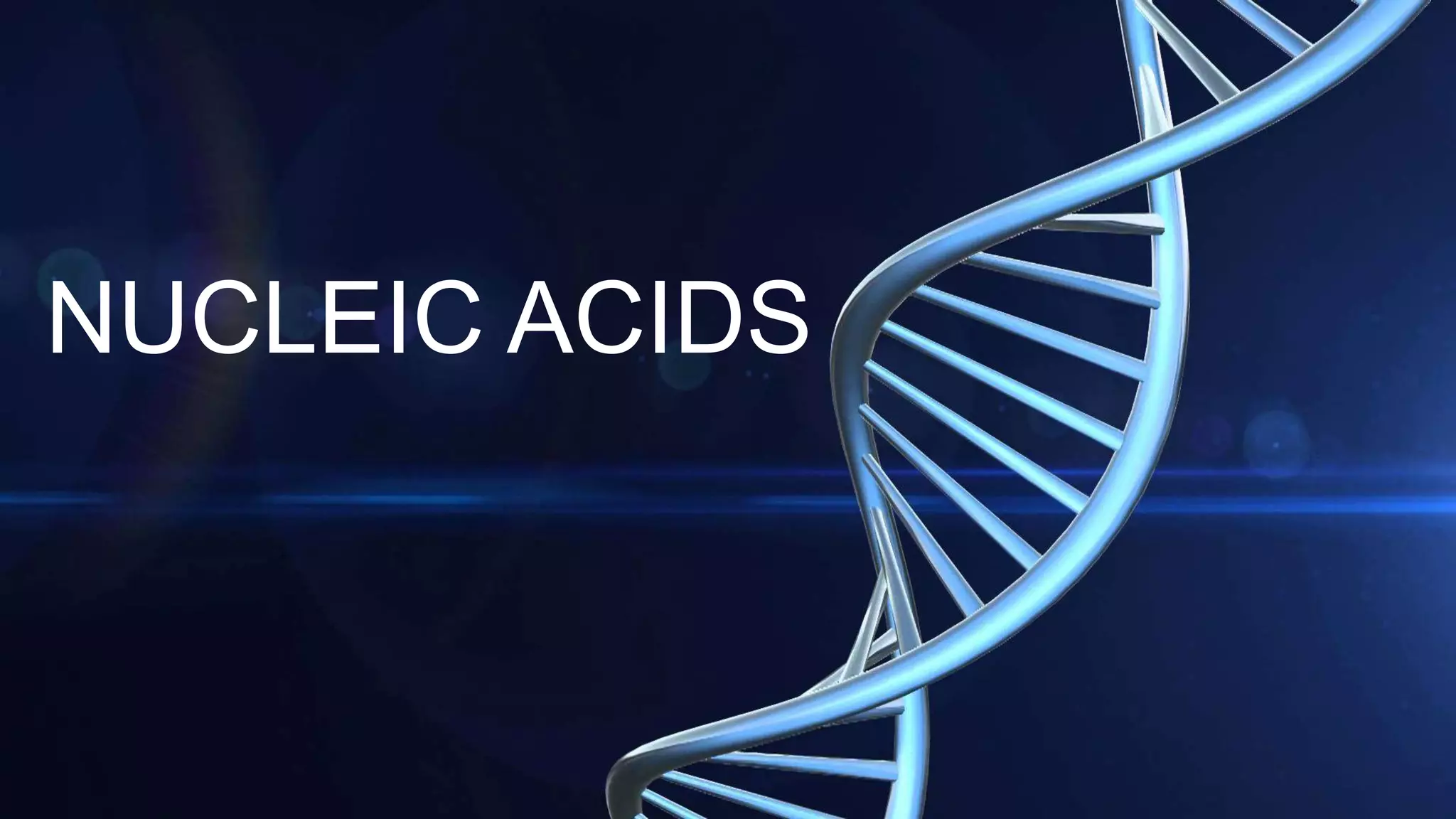
NUCLEIC ACIDS
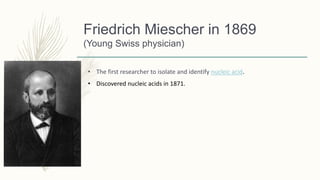
Friedrich Miescher in 1869
(Young Swiss physician)
• The first researcher to isolate and identify nucleic acid.
• Discovered nucleic acids in 1871.
Nucleic Acids
• Were first isolated from the cellular nucleus. They are huge polymers with
molecular masses of over 100 million.
• Are the largest and the most complex organic molecules.
• They are also macromolecules found in all cells, and it is a transmission and
translation of genetic information.
Two types of nucleic acid
• Deoxyribonucleic acid (DNA)
• Ribonucleic acid (RNA)
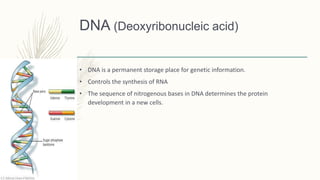
DNA (Deoxyribonucleic acid)
• DNA is a permanent storage place for genetic information.
• Controls the synthesis of RNA
• The sequence of nitrogenous bases in DNA determines the protein
development in a new cells.
DNA Function
• The DNA segments that carry this genetic information are called gene, but other
DNA sequences have structural purposes, or are involved in regulating the use
of this genetic information.
• The main role of DNA molecules is the long-term storage of information.
RNA(Ribonucleic acid)
• RNA is synthesized by DNA for the transportation of genetic information to the
protein building apparatus in the cell.
• RNA also directs the synthesis of new proteins using the genetic information it
has transported.
• MRNA ( messenger ribonucleic acid) is used to transfer genetic information
through plasma membranes.
RNA Function
• Converting genetic information from genes into the amino acid sequence of
proteins.
The three universal types of RNA
• Transfer RNA (tRNA)
• Messenger RNA (mRNA)
• Ribosomes RNA
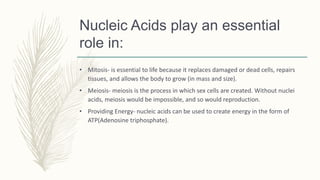
Nucleic Acids play an essential
role in:
• Mitosis- is essential to life because it replaces damaged or dead cells, repairs
tissues, and allows the body to grow (in mass and size).
• Meiosis- meiosis is the process in which sex cells are created. Without nuclei
acids, meiosis would be impossible, and so would reproduction.
• Providing Energy- nucleic acids can be used to create energy in the form of
ATP(Adenosine triphosphate).
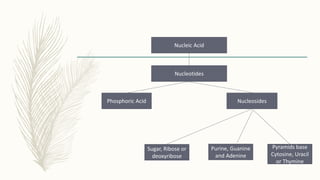
Nucleic Acid
Nucleotides
Phosphoric Acid Nucleosides
Sugar, Ribose or
deoxyribose
Purine, Guanine
and Adenine
Pyramids base
Cytosine, Uracil
or Thymine
Levels of Nucleic acids
• Primary Structure
• Secondary Structure
• Tertiary Structure
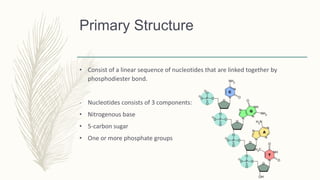
Primary Structure
• Consist of a linear sequence of nucleotides that are linked together by
phosphodiester bond.
- Nucleotides consists of 3 components:
• Nitrogenous base
• 5-carbon sugar
• One or more phosphate groups
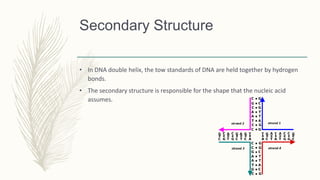
Secondary Structure
• In DNA double helix, the tow standards of DNA are held together by hydrogen
bonds.
• The secondary structure is responsible for the shape that the nucleic acid
assumes.
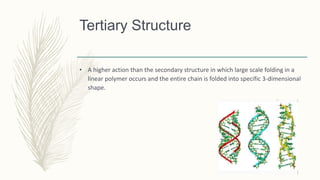
Tertiary Structure
• A higher action than the secondary structure in which large scale folding in a
linear polymer occurs and the entire chain is folded into specific 3-dimensional
shape.
THANKYOU

Nucleic acid

  • 1.
  • 2.
    Friedrich Miescher in1869 (Young Swiss physician) • The first researcher to isolate and identify nucleic acid. • Discovered nucleic acids in 1871.
  • 3.
    Nucleic Acids • Werefirst isolated from the cellular nucleus. They are huge polymers with molecular masses of over 100 million. • Are the largest and the most complex organic molecules. • They are also macromolecules found in all cells, and it is a transmission and translation of genetic information.
  • 4.
    Two types ofnucleic acid • Deoxyribonucleic acid (DNA) • Ribonucleic acid (RNA)
  • 5.
    DNA (Deoxyribonucleic acid) •DNA is a permanent storage place for genetic information. • Controls the synthesis of RNA • The sequence of nitrogenous bases in DNA determines the protein development in a new cells.
  • 6.
    DNA Function • TheDNA segments that carry this genetic information are called gene, but other DNA sequences have structural purposes, or are involved in regulating the use of this genetic information. • The main role of DNA molecules is the long-term storage of information.
  • 7.
    RNA(Ribonucleic acid) • RNAis synthesized by DNA for the transportation of genetic information to the protein building apparatus in the cell. • RNA also directs the synthesis of new proteins using the genetic information it has transported. • MRNA ( messenger ribonucleic acid) is used to transfer genetic information through plasma membranes.
  • 8.
    RNA Function • Convertinggenetic information from genes into the amino acid sequence of proteins. The three universal types of RNA • Transfer RNA (tRNA) • Messenger RNA (mRNA) • Ribosomes RNA
  • 9.
    Nucleic Acids playan essential role in: • Mitosis- is essential to life because it replaces damaged or dead cells, repairs tissues, and allows the body to grow (in mass and size). • Meiosis- meiosis is the process in which sex cells are created. Without nuclei acids, meiosis would be impossible, and so would reproduction. • Providing Energy- nucleic acids can be used to create energy in the form of ATP(Adenosine triphosphate).
  • 10.
    Nucleic Acid Nucleotides Phosphoric AcidNucleosides Sugar, Ribose or deoxyribose Purine, Guanine and Adenine Pyramids base Cytosine, Uracil or Thymine
  • 11.
    Levels of Nucleicacids • Primary Structure • Secondary Structure • Tertiary Structure
  • 12.
    Primary Structure • Consistof a linear sequence of nucleotides that are linked together by phosphodiester bond. - Nucleotides consists of 3 components: • Nitrogenous base • 5-carbon sugar • One or more phosphate groups
  • 13.
    Secondary Structure • InDNA double helix, the tow standards of DNA are held together by hydrogen bonds. • The secondary structure is responsible for the shape that the nucleic acid assumes.
  • 14.
    Tertiary Structure • Ahigher action than the secondary structure in which large scale folding in a linear polymer occurs and the entire chain is folded into specific 3-dimensional shape.
  • 15.