MicroRNAs
Biogenesis, Function and Regulation
Bardia Farivar
Department of Medical Biology
Istanbul University
Cerrahpaşa Medical Faculty
Introduction
• MiRNAs are non-coding RNAs found only in eukaryotic cells.
• Small in size with an average length of 22 nucleotides.
• Transcribed by RNA polymerase II from independent genes
or introns of protein-coding genes
• They play important gene-regulatory roles in both plants and
animals.
• The first miRNA (lin-4) was discovered in C.elegans in the
year 1993.
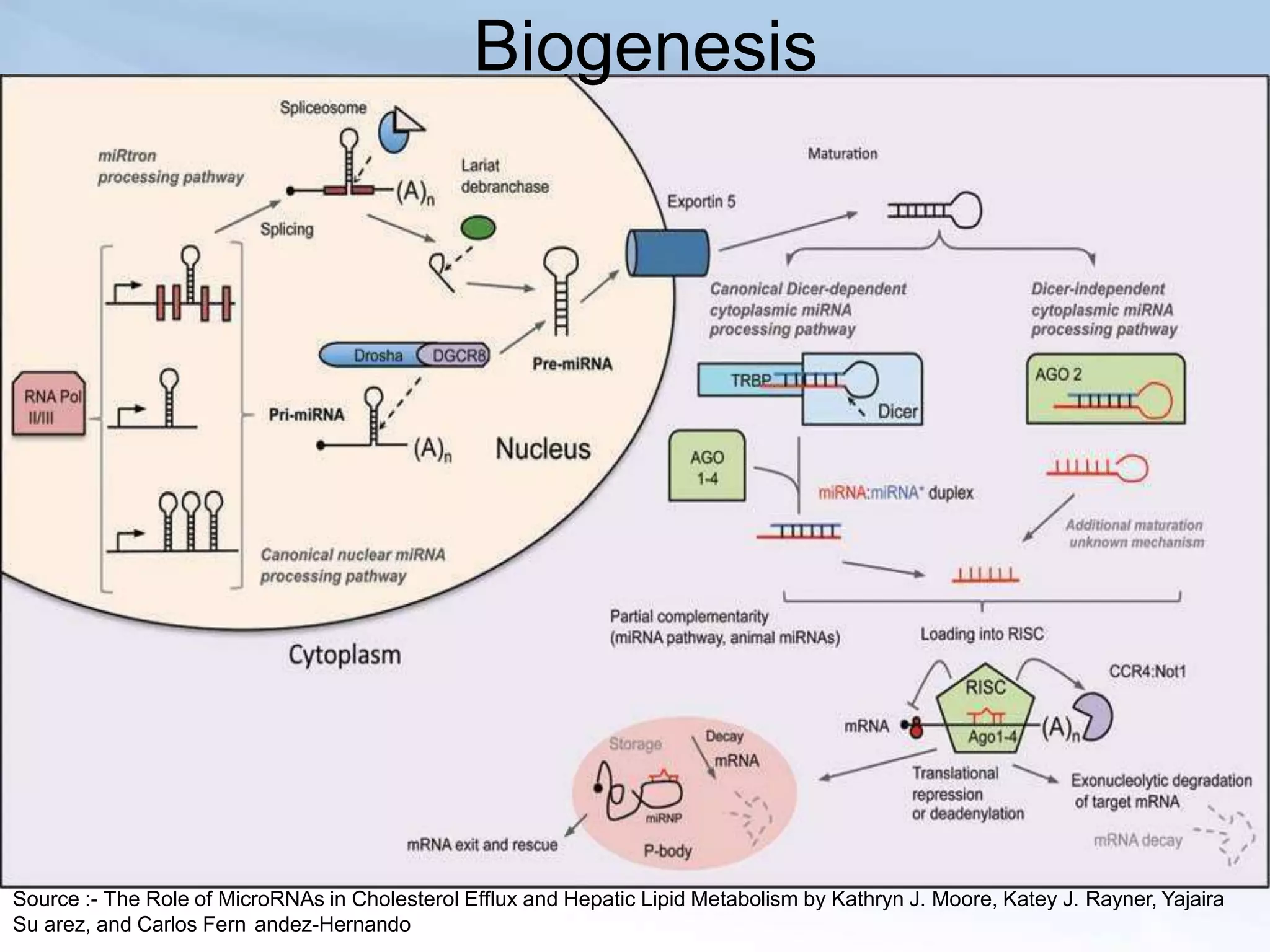
Biogenesis
Source :- The Role of MicroRNAs in Cholesterol Efflux and Hepatic Lipid Metabolism by Kathryn J. Moore, Katey J. Rayner, Yajaira
Su arez, and Carlos Fern andez-Hernando
Functions of miRNAs
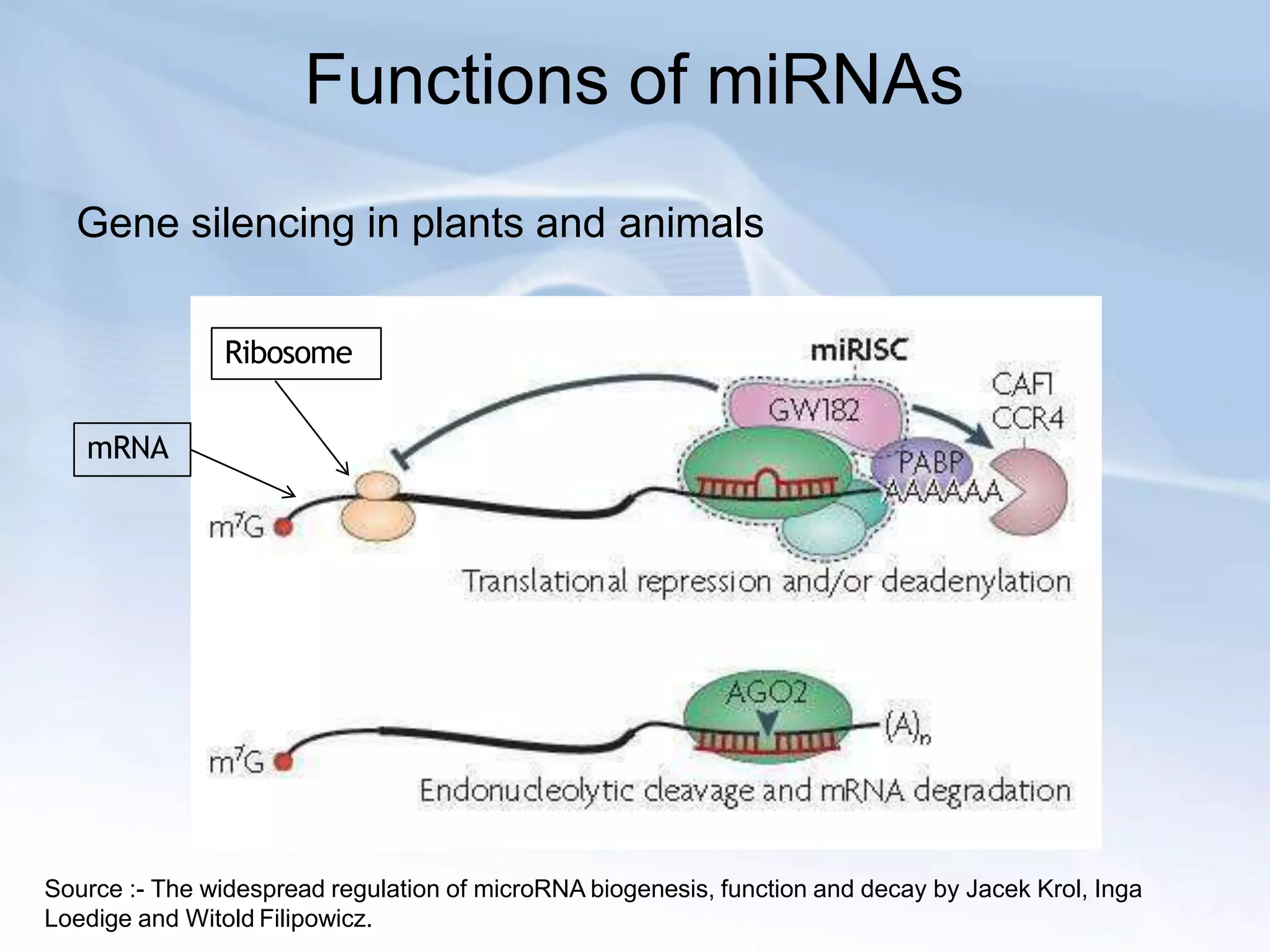
Gene silencing in plants and animals
Source :- The widespread regulation of microRNA biogenesis, function and decay by Jacek Krol, Inga
Loedige and Witold Filipowicz.
mRNA
Ribosome
Functions of miRNAs
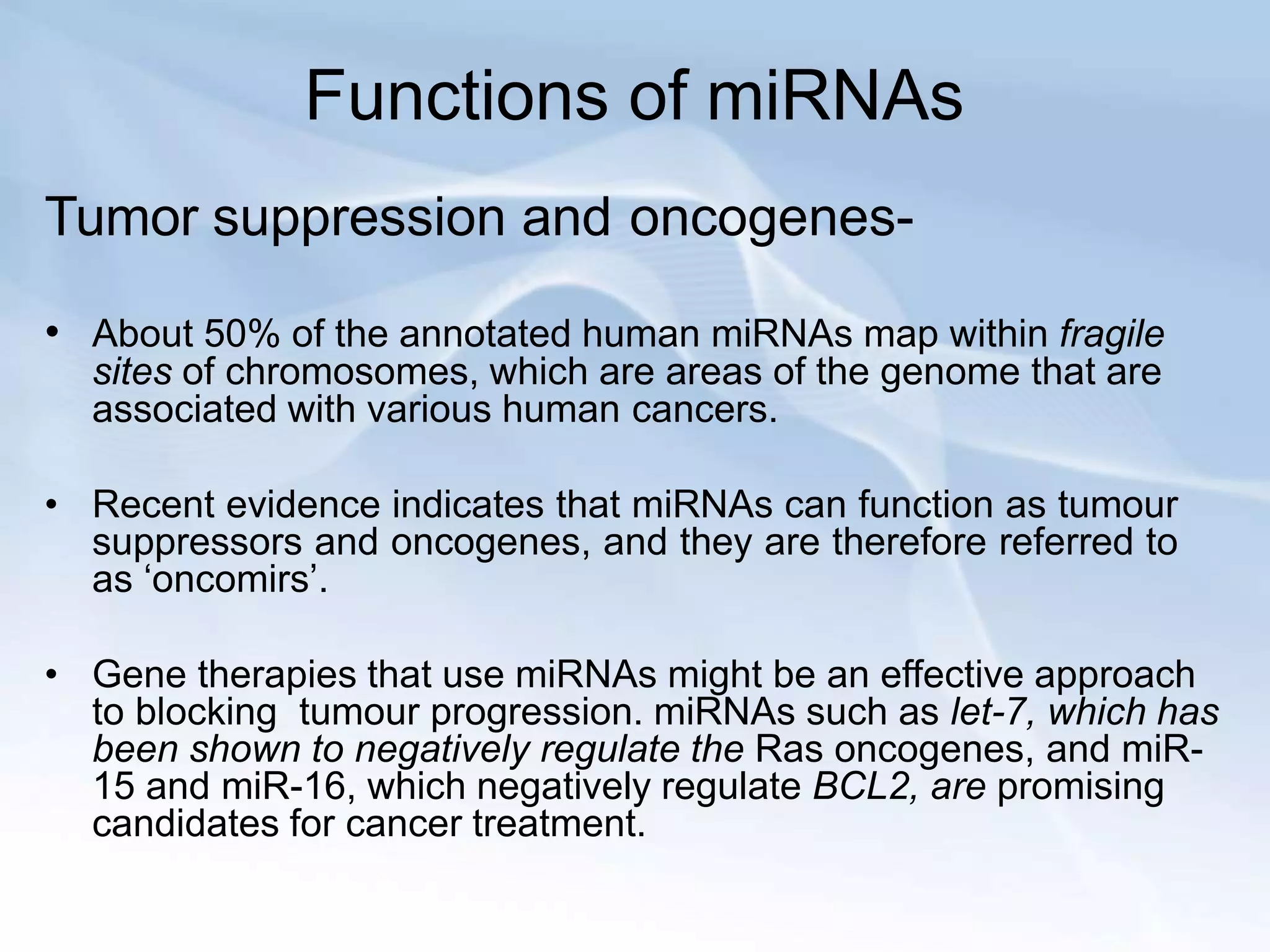
Tumor suppression and oncogenes-
• About 50% of the annotated human miRNAs map within fragile
sites of chromosomes, which are areas of the genome that are
associated with various human cancers.
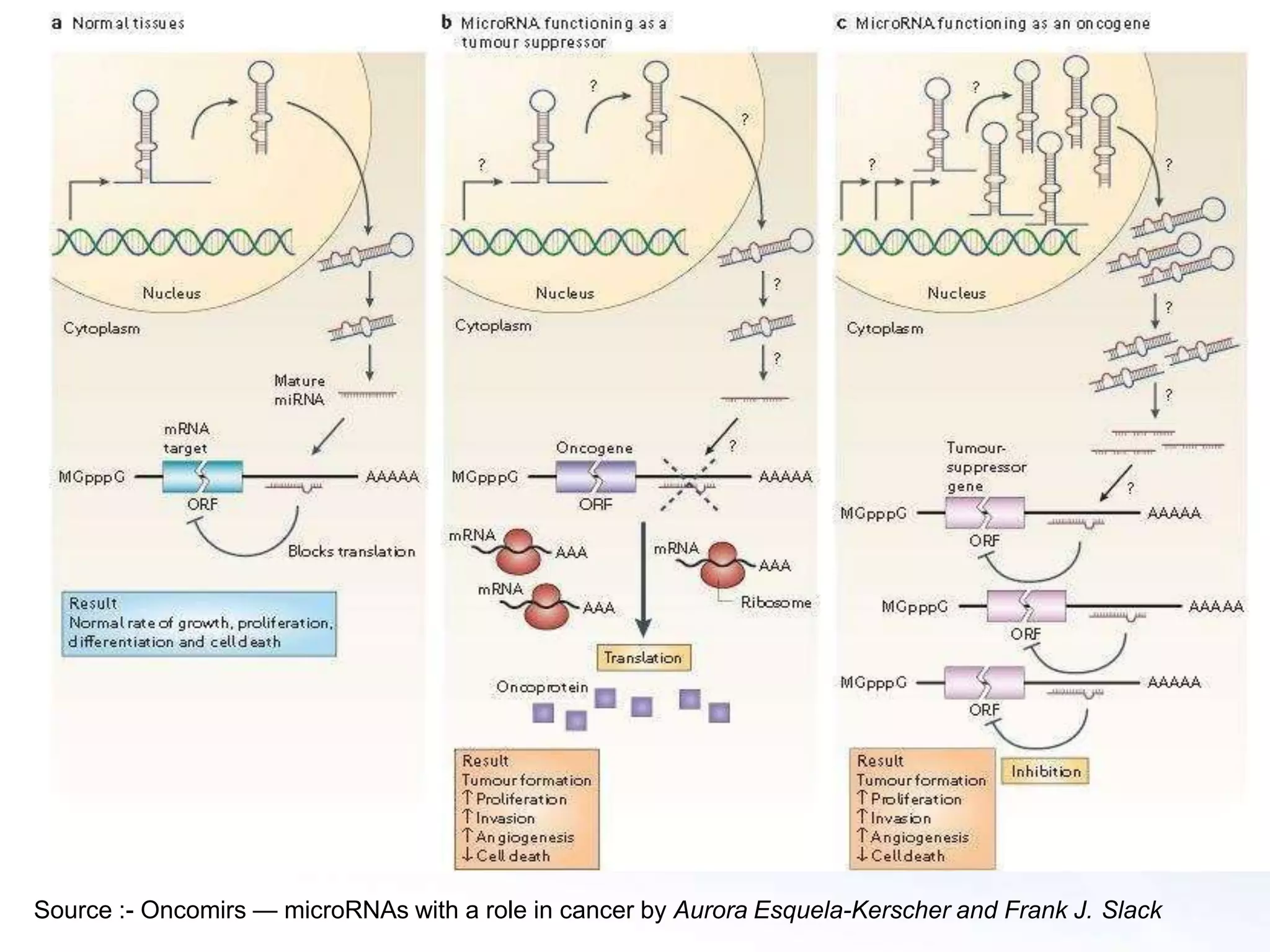
• Recent evidence indicates that miRNAs can function as tumour
suppressors and oncogenes, and they are therefore referred to
as ‘oncomirs’.
• Gene therapies that use miRNAs might be an effective approach
to blocking tumour progression. miRNAs such as let-7, which has
been shown to negatively regulate the Ras oncogenes, and miR-
15 and miR-16, which negatively regulate BCL2, are promising
candidates for cancer treatment.
Source :- Oncomirs — microRNAs with a role in cancer by Aurora Esquela-Kerscher and Frank J. Slack
Functions of miRNAs
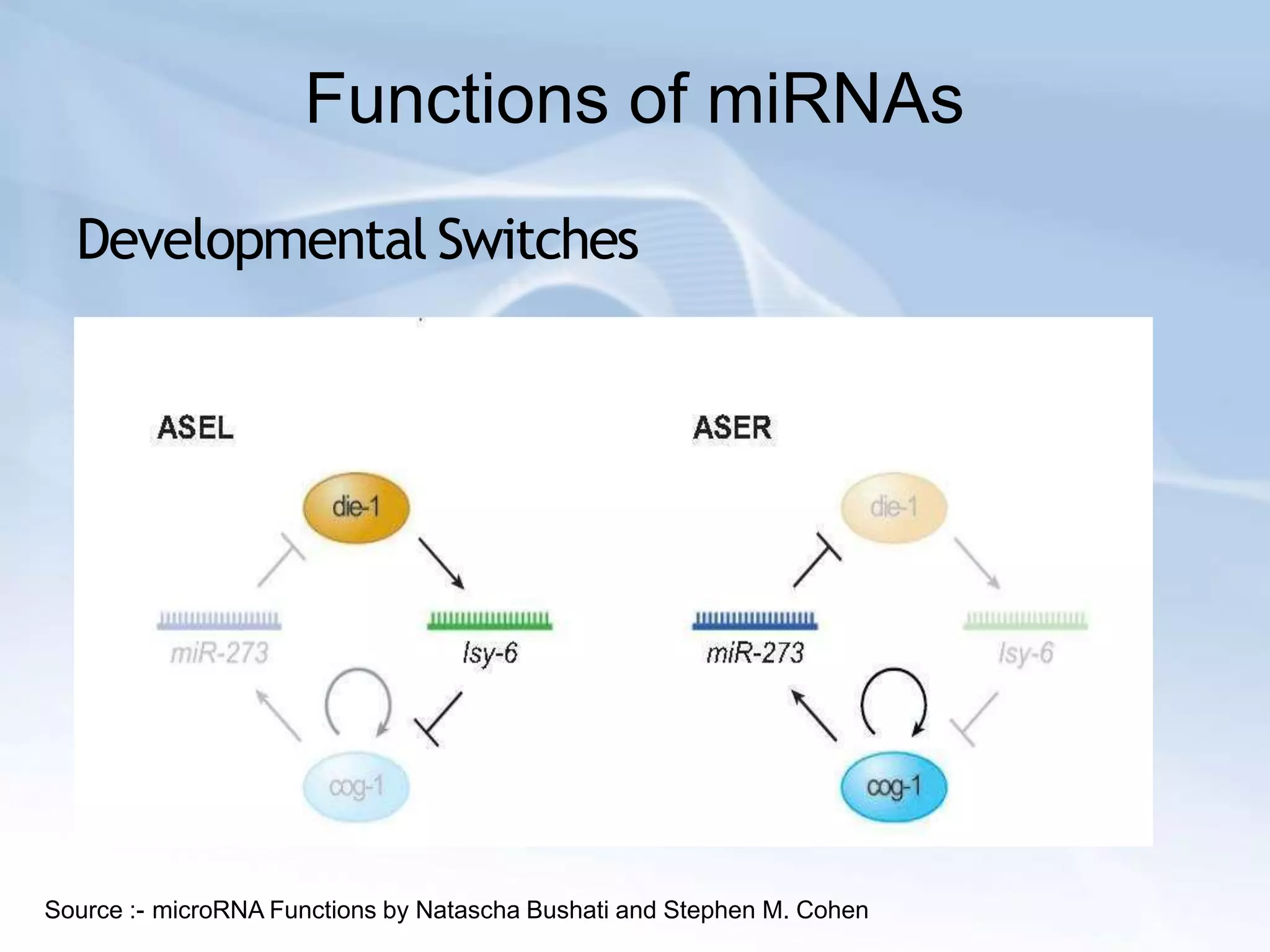
Developmental Switches
Source :- microRNA Functions by Natascha Bushati and Stephen M. Cohen
Functions of miRNAs
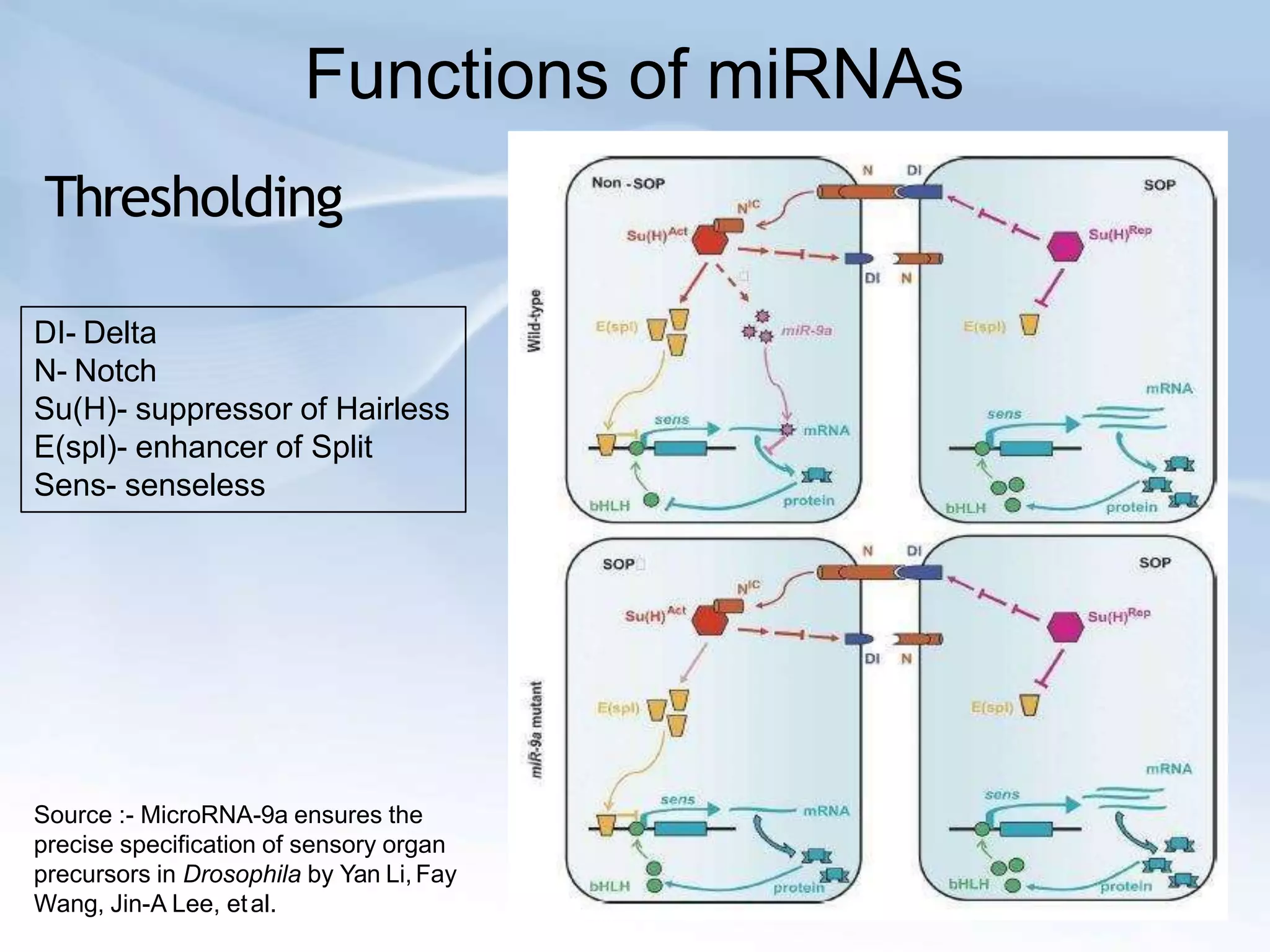
Thresholding
Source :- MicroRNA-9a ensures the
precise specification of sensory organ
precursors in Drosophila by Yan Li, Fay
Wang, Jin-A Lee, etal.
DI- Delta
N- Notch
Su(H)- suppressor of Hairless
E(spl)- enhancer of Split
Sens- senseless
Regulation of miRNAs
The need :-
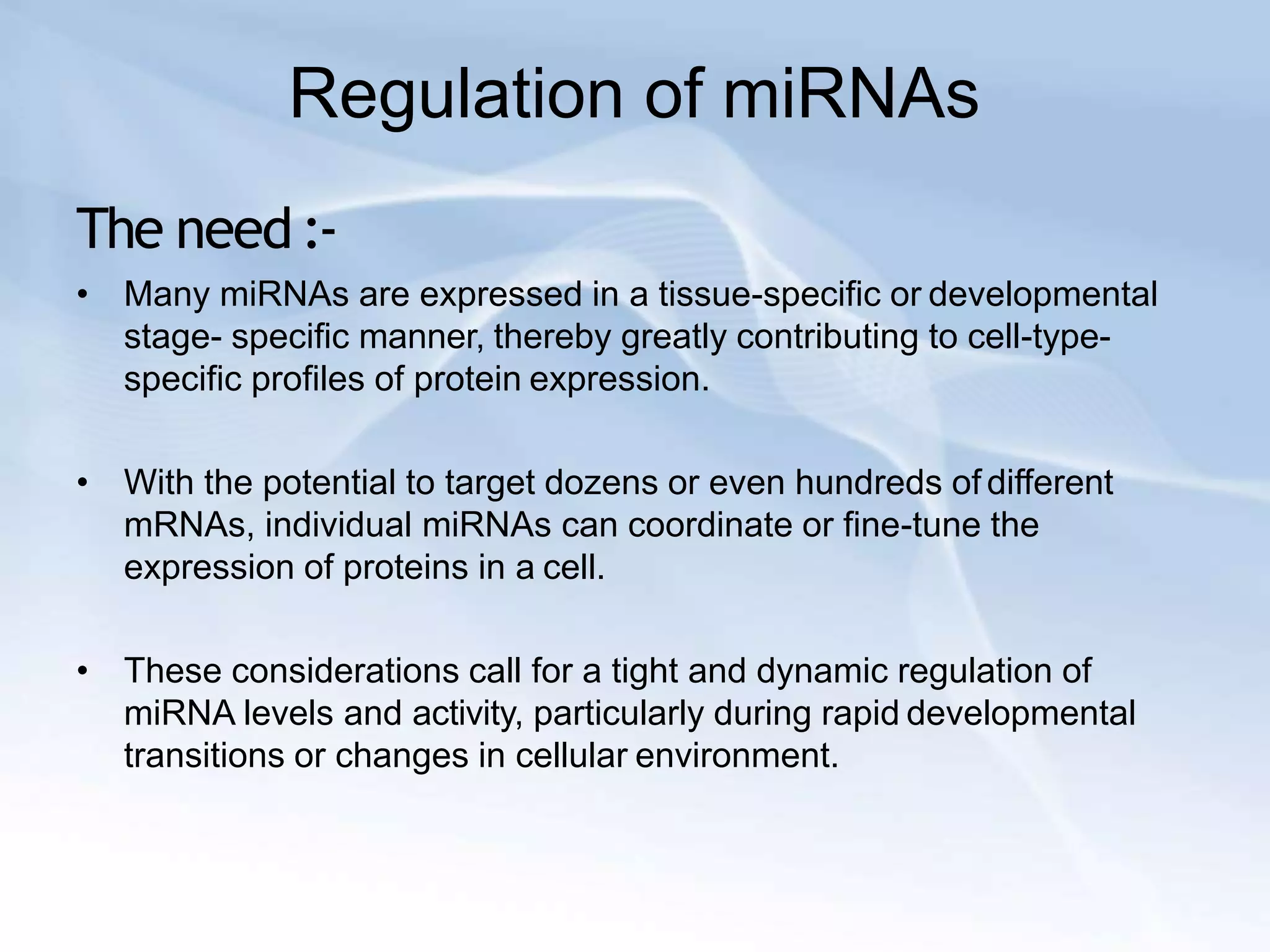
• Many miRNAs are expressed in a tissue-specific or developmental
stage- specific manner, thereby greatly contributing to cell-type-
specific profiles of protein expression.
• With the potential to target dozens or even hundreds of different
mRNAs, individual miRNAs can coordinate or fine-tune the
expression of proteins in a cell.
• These considerations call for a tight and dynamic regulation of
miRNA levels and activity, particularly during rapid developmental
transitions or changes in cellular environment.
Regulation of miRNAs
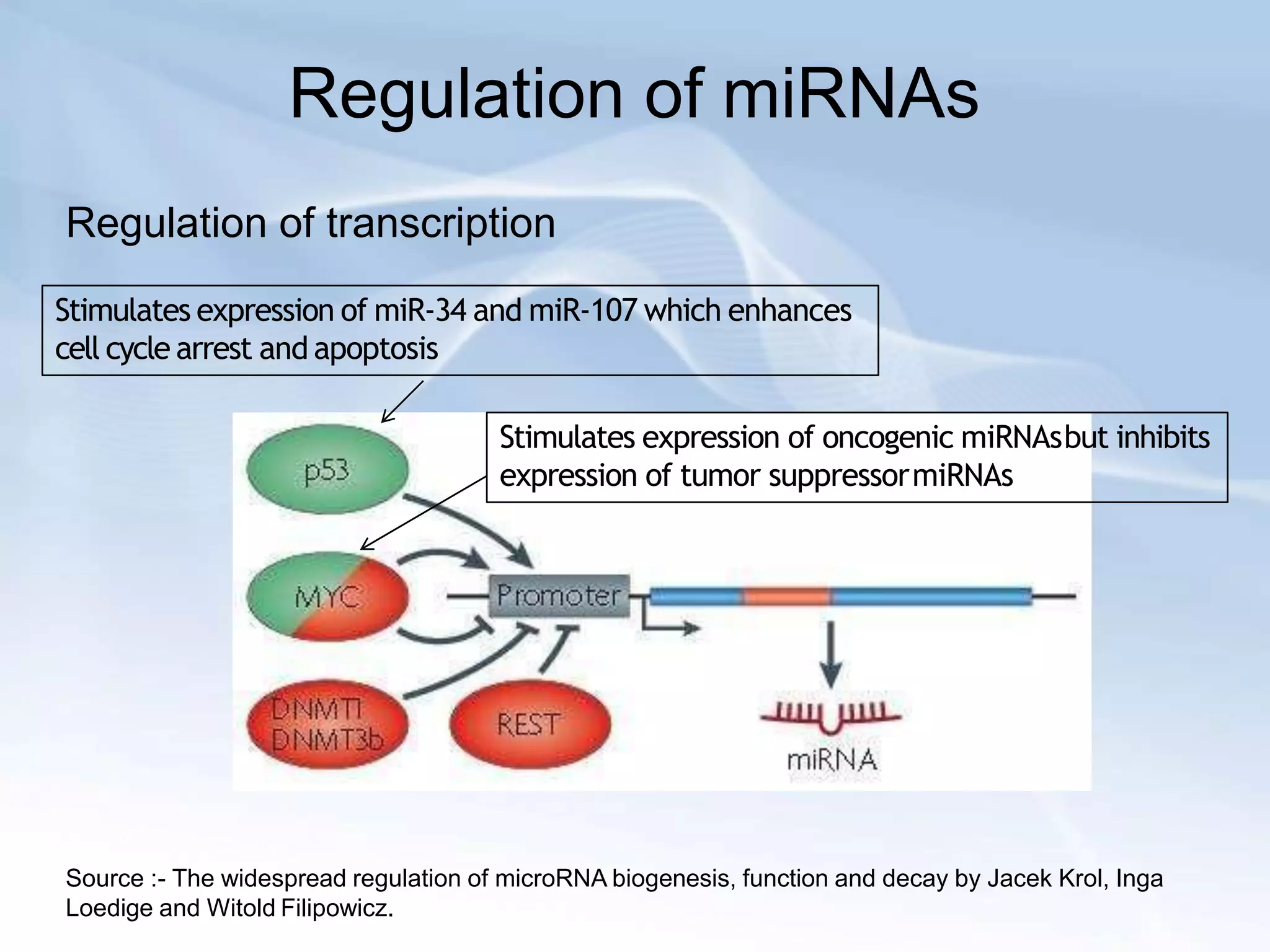
Regulation of transcription
Stimulates expression of miR-34 and miR-107 which enhances
cell cycle arrest and apoptosis
Stimulates expression of oncogenic miRNAsbut inhibits
expression of tumor suppressormiRNAs
Source :- The widespread regulation of microRNA biogenesis, function and decay by Jacek Krol, Inga
Loedige and Witold Filipowicz.
Regulation of miRNAs
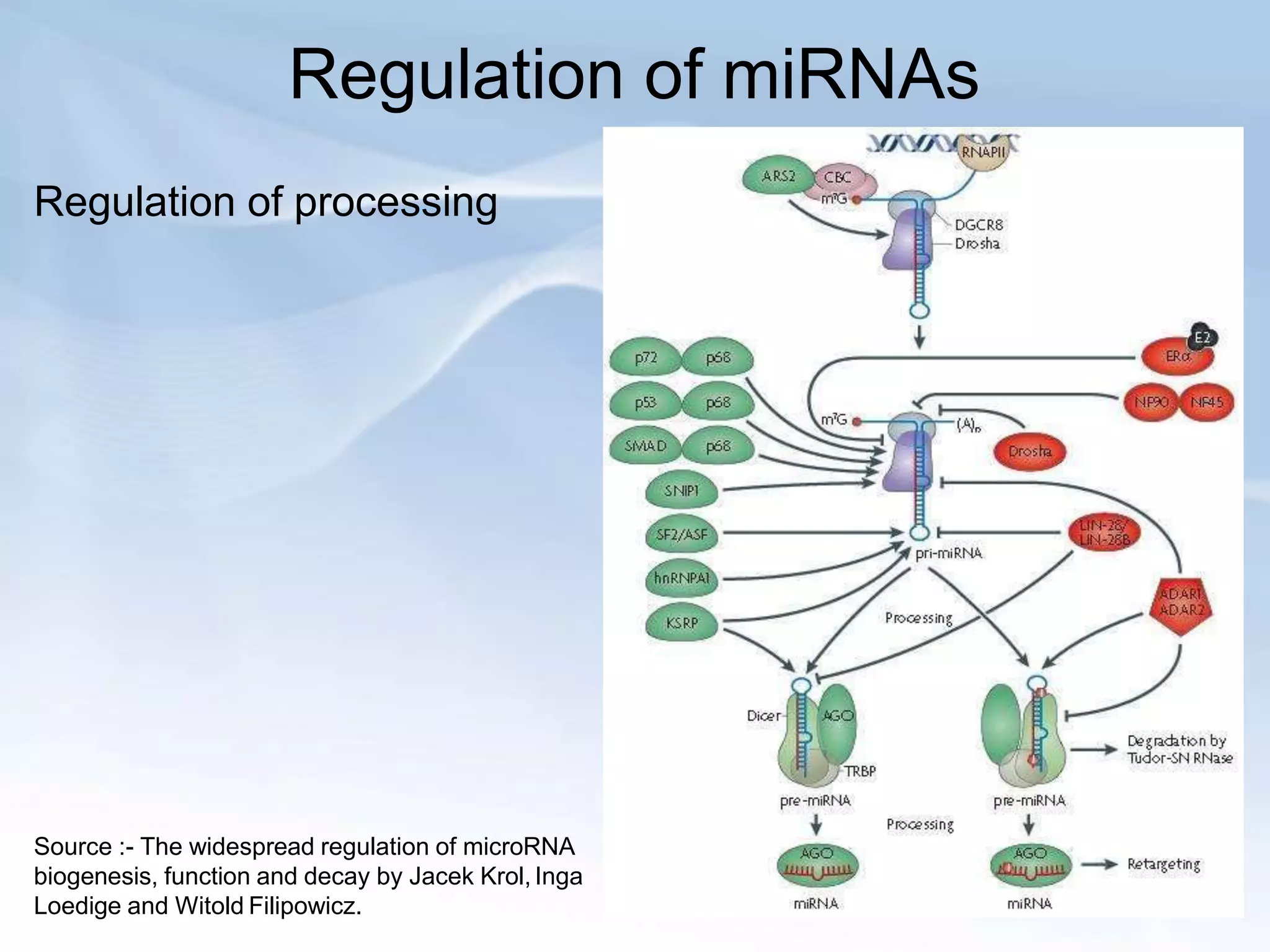
Regulation of processing
Source :- The widespread regulation of microRNA
biogenesis, function and decay by Jacek Krol, Inga
Loedige and Witold Filipowicz.
Future perspectives
• The past several years have witnessed tremendous
progress in our understanding of miRNAs.
• Still several important questions remain to be answered.
• Understanding how miRNAs are processed and how
they are integrated into the complex regulatory networks
will be crucial.
• Considering the fundamental role of miRNAs in
organismal development, cellular differentiation and
metabolism, viral infection, and oncogenesis, we can
anticipate many more sophisticated mechanisms for the
regulation of their biogenesis, function and catabolism to
emerge in coming years.
References
• The widespread regulation of microRNA biogenesis, function and
decay by Jacek Krol, Inga Loedige and Witold Filipowicz.
• MicroRNA Functions by Natascha Bushati and Stephen M. Cohen.
• MicroRNA-9a ensures the precise specification of sensory organ
precursors in Drosophila by Yan Li, Fay Wang, Jin-A Lee, etal.
• Oncomirs — microRNAs with a role in cancer by Aurora Esquela-
Kerscher and Frank J. Slack

miRNA - Biogenesis, Function and Regulation

  • 1.
    MicroRNAs Biogenesis, Function andRegulation Bardia Farivar Department of Medical Biology Istanbul University Cerrahpaşa Medical Faculty
  • 2.
    Introduction • MiRNAs arenon-coding RNAs found only in eukaryotic cells. • Small in size with an average length of 22 nucleotides. • Transcribed by RNA polymerase II from independent genes or introns of protein-coding genes • They play important gene-regulatory roles in both plants and animals. • The first miRNA (lin-4) was discovered in C.elegans in the year 1993.
  • 3.
    Biogenesis Source :- TheRole of MicroRNAs in Cholesterol Efflux and Hepatic Lipid Metabolism by Kathryn J. Moore, Katey J. Rayner, Yajaira Su arez, and Carlos Fern andez-Hernando
  • 4.
    Functions of miRNAs Genesilencing in plants and animals Source :- The widespread regulation of microRNA biogenesis, function and decay by Jacek Krol, Inga Loedige and Witold Filipowicz. mRNA Ribosome
  • 5.
    Functions of miRNAs Tumorsuppression and oncogenes- • About 50% of the annotated human miRNAs map within fragile sites of chromosomes, which are areas of the genome that are associated with various human cancers. • Recent evidence indicates that miRNAs can function as tumour suppressors and oncogenes, and they are therefore referred to as ‘oncomirs’. • Gene therapies that use miRNAs might be an effective approach to blocking tumour progression. miRNAs such as let-7, which has been shown to negatively regulate the Ras oncogenes, and miR- 15 and miR-16, which negatively regulate BCL2, are promising candidates for cancer treatment.
  • 6.
    Source :- Oncomirs— microRNAs with a role in cancer by Aurora Esquela-Kerscher and Frank J. Slack
  • 7.
    Functions of miRNAs DevelopmentalSwitches Source :- microRNA Functions by Natascha Bushati and Stephen M. Cohen
  • 8.
    Functions of miRNAs Thresholding Source:- MicroRNA-9a ensures the precise specification of sensory organ precursors in Drosophila by Yan Li, Fay Wang, Jin-A Lee, etal. DI- Delta N- Notch Su(H)- suppressor of Hairless E(spl)- enhancer of Split Sens- senseless
  • 9.
    Regulation of miRNAs Theneed :- • Many miRNAs are expressed in a tissue-specific or developmental stage- specific manner, thereby greatly contributing to cell-type- specific profiles of protein expression. • With the potential to target dozens or even hundreds of different mRNAs, individual miRNAs can coordinate or fine-tune the expression of proteins in a cell. • These considerations call for a tight and dynamic regulation of miRNA levels and activity, particularly during rapid developmental transitions or changes in cellular environment.
  • 10.
    Regulation of miRNAs Regulationof transcription Stimulates expression of miR-34 and miR-107 which enhances cell cycle arrest and apoptosis Stimulates expression of oncogenic miRNAsbut inhibits expression of tumor suppressormiRNAs Source :- The widespread regulation of microRNA biogenesis, function and decay by Jacek Krol, Inga Loedige and Witold Filipowicz.
  • 11.
    Regulation of miRNAs Regulationof processing Source :- The widespread regulation of microRNA biogenesis, function and decay by Jacek Krol, Inga Loedige and Witold Filipowicz.
  • 12.
    Future perspectives • Thepast several years have witnessed tremendous progress in our understanding of miRNAs. • Still several important questions remain to be answered. • Understanding how miRNAs are processed and how they are integrated into the complex regulatory networks will be crucial. • Considering the fundamental role of miRNAs in organismal development, cellular differentiation and metabolism, viral infection, and oncogenesis, we can anticipate many more sophisticated mechanisms for the regulation of their biogenesis, function and catabolism to emerge in coming years.
  • 13.
    References • The widespreadregulation of microRNA biogenesis, function and decay by Jacek Krol, Inga Loedige and Witold Filipowicz. • MicroRNA Functions by Natascha Bushati and Stephen M. Cohen. • MicroRNA-9a ensures the precise specification of sensory organ precursors in Drosophila by Yan Li, Fay Wang, Jin-A Lee, etal. • Oncomirs — microRNAs with a role in cancer by Aurora Esquela- Kerscher and Frank J. Slack