REPORT ON
“GENERATION OF THERMAL POWER”
AT
NTPC DADRI
www.powerpointpresentationon.blogspot.com
About NTPC
• NTPC, the largest power Company in India, was
setup in 1975 to accelerate power development
in the country.
• NTPC has installed capacity of 29,394 MW.
• It has 15 coal based power stations (23,395 MW)
• 7 gas based power stations (3,955 MW)
• 4 power stations in Joint Ventures (1,794 MW).
• The company has power generating facilities in
all major regions of the country.
• It plans to be a 75,000 MW company by 2017.
Generation of Electricity
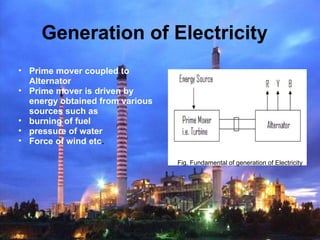
• Prime mover coupled to
Alternator
• Prime mover is driven by
energy obtained from various
sources such as
• burning of fuel
• pressure of water
• Force of wind etc.
Fig. Fundamental of generation of Electricity
Thermal Power Plant
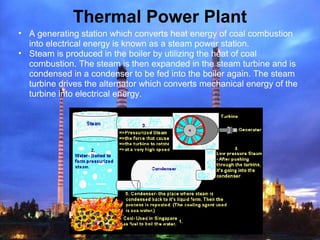
• A generating station which converts heat energy of coal combustion
into electrical energy is known as a steam power station.
• Steam is produced in the boiler by utilizing the heat of coal
combustion. The steam is then expanded in the steam turbine and is
condensed in a condenser to be fed into the boiler again. The steam
turbine drives the alternator which converts mechanical energy of the
turbine into electrical energy.
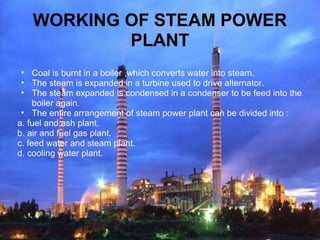
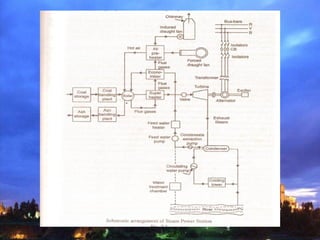
WORKING OF STEAM POWER
PLANT
• Coal is burnt in a boiler ,which converts water into steam.
• The steam is expanded in a turbine used to drive alternator.
• The steam expanded is condensed in a condenser to be feed into the
boiler again.
• The entire arrangement of steam power plant can be divided into :
a. fuel and ash plant.
b. air and fuel gas plant.
c. feed water and steam plant.
d. cooling water plant.
The most important constituents of a steam power station
are:
a. Steam generating equipment
b. Condenser
c. Prime mover
d. Cooling towers
e. Electrical equipment
Steam generating equipment includes:
• Boiler
• Boiler furnace
• Superheater
• Economiser
• Air Pre-heater
Boiler
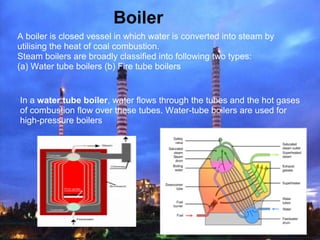
A boiler is closed vessel in which water is converted into steam by
utilising the heat of coal combustion.
Steam boilers are broadly classified into following two types:
(a) Water tube boilers (b) Fire tube boilers
In a water tube boiler, water flows through the tubes and the hot gases
of combustion flow over these tubes. Water-tube boilers are used for
high-pressure boilers
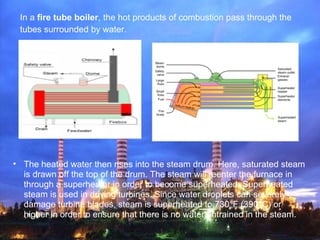
In a fire tube boiler, the hot products of combustion pass through the
tubes surrounded by water.
• The heated water then rises into the steam drum. Here, saturated steam
is drawn off the top of the drum. The steam will reenter the furnace in
through a superheater in order to become superheated. Superheated
steam is used in driving turbines. Since water droplets can severely
damage turbine blades, steam is superheated to 730°F (390°C) or
higher in order to ensure that there is no water entrained in the steam.
Super heater
• A device which removes last traces of
moisture.
• It helps in reduction in requirement of
steam quantity.
• steam being dry reduces the mechanical
resistance of turbine.
• No corrosion at the turbine blades.
Economiser and Air Pre-heater
• They are such devices which recover the
heat from the flue gases on their way to
chimney and raise the temperature of feed
water.
• Economiser raises boiler efficiency.
• Air Pre-heaters recover the heat from the
flue gases leaving the economiser and
heat the incoming air required for
combustion
Condenser
• Which condenses the steam at the exhaust of
turbine.
• It creates a very low pressure at the exhaust of
turbine, this helps in converting heat energy of
steam into mechanical energy in the prime
mover.
• The condensed steam can be used as feed
water to the boiler.
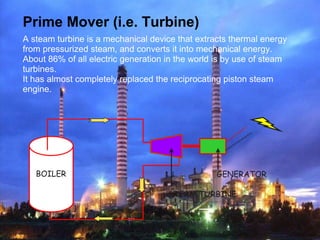
Prime Mover (i.e. Turbine)
A steam turbine is a mechanical device that extracts thermal energy
from pressurized steam, and converts it into mechanical energy.
About 86% of all electric generation in the world is by use of steam
turbines.
It has almost completely replaced the reciprocating piston steam
engine.
BOILER GENERATOR
STEAM TURBINE
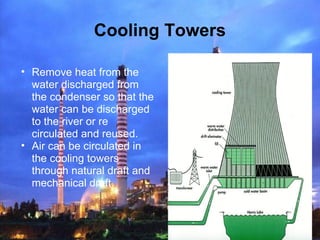
Cooling Towers
• Remove heat from the
water discharged from
the condenser so that the
water can be discharged
to the river or re
circulated and reused.
• Air can be circulated in
the cooling towers
through natural draft and
mechanical draft.
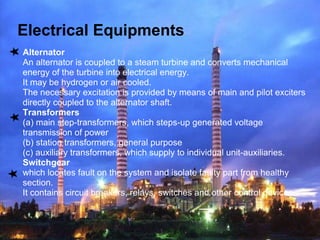
Electrical Equipments
Alternator
An alternator is coupled to a steam turbine and converts mechanical
energy of the turbine into electrical energy.
It may be hydrogen or air cooled.
The necessary excitation is provided by means of main and pilot exciters
directly coupled to the alternator shaft.
Transformers
(a) main step-transformers, which steps-up generated voltage
transmission of power
(b) station transformers, general purpose
(c) auxiliary transformers, which supply to individual unit-auxiliaries.
Switchgear
which locates fault on the system and isolate faulty part from healthy
section.
It contains circuit breakers, relays, switches and other control devices.
Coal Handling Plant Details
• Source of coal = Piparwar Mines North Karanpur (Jharkhand)
• Location = Near Ranchi
• Distance = 1200 Kms.
• Type of coal = F-grade (Washed)
• E grade (Raw)
• Coal requirement = 13,000 MT/Day
• ( 04 rakes )
Ash Handling Technique
• A natural result from the burning of fossil fuels,
particularly coal, is the emission of flyash. Ash is mineral
matter present in the fuel. For a pulverized coal unit, 60-
80% of ash leaves with the flue gas.
• Two emission control devices for flyash are the fabric
filters and electrostatic precipitators.
• Electrostatic precipitators have collection efficiency of
99%, but do not work well for flyash with a high electrical
resistivity (as commonly results from combustion of low-
sulfur coal). In addition, the designer must avoid
allowing unburned gas to enter the electrostatic
precipitator since the gas could be ignited.
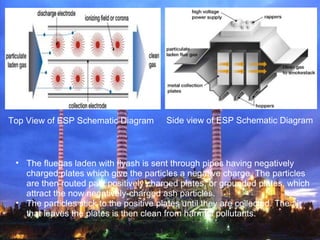
Top View of ESP Schematic Diagram
• The fluegas laden with flyash is sent through pipes having negatively
charged plates which give the particles a negative charge. The particles
are then routed past positively charged plates, or grounded plates, which
attract the now negatively-charged ash particles.
• The particles stick to the positive plates until they are collected. The air
that leaves the plates is then clean from harmful pollutants.
Side view of ESP Schematic Diagram
Coal Ash can be used in:
• Construction of embankments and fills
• Construction of road in sub-base
• Manufacture of cement
• Manufacture of bricks/blocks
• Filling as flowable fill material
• Agriculture as soil amendment/source of
essential plant nutrients
Ntpc2 111125042448-phpapp02

Ntpc2 111125042448-phpapp02

  • 1.
    REPORT ON “GENERATION OFTHERMAL POWER” AT NTPC DADRI www.powerpointpresentationon.blogspot.com
  • 2.
    About NTPC • NTPC,the largest power Company in India, was setup in 1975 to accelerate power development in the country. • NTPC has installed capacity of 29,394 MW. • It has 15 coal based power stations (23,395 MW) • 7 gas based power stations (3,955 MW) • 4 power stations in Joint Ventures (1,794 MW). • The company has power generating facilities in all major regions of the country. • It plans to be a 75,000 MW company by 2017.
  • 3.
    Generation of Electricity •Prime mover coupled to Alternator • Prime mover is driven by energy obtained from various sources such as • burning of fuel • pressure of water • Force of wind etc. Fig. Fundamental of generation of Electricity
  • 4.
    Thermal Power Plant •A generating station which converts heat energy of coal combustion into electrical energy is known as a steam power station. • Steam is produced in the boiler by utilizing the heat of coal combustion. The steam is then expanded in the steam turbine and is condensed in a condenser to be fed into the boiler again. The steam turbine drives the alternator which converts mechanical energy of the turbine into electrical energy.
  • 5.
    WORKING OF STEAMPOWER PLANT • Coal is burnt in a boiler ,which converts water into steam. • The steam is expanded in a turbine used to drive alternator. • The steam expanded is condensed in a condenser to be feed into the boiler again. • The entire arrangement of steam power plant can be divided into : a. fuel and ash plant. b. air and fuel gas plant. c. feed water and steam plant. d. cooling water plant.
  • 6.
    The most importantconstituents of a steam power station are: a. Steam generating equipment b. Condenser c. Prime mover d. Cooling towers e. Electrical equipment Steam generating equipment includes: • Boiler • Boiler furnace • Superheater • Economiser • Air Pre-heater
  • 7.
    Boiler A boiler isclosed vessel in which water is converted into steam by utilising the heat of coal combustion. Steam boilers are broadly classified into following two types: (a) Water tube boilers (b) Fire tube boilers In a water tube boiler, water flows through the tubes and the hot gases of combustion flow over these tubes. Water-tube boilers are used for high-pressure boilers
  • 8.
    In a firetube boiler, the hot products of combustion pass through the tubes surrounded by water. • The heated water then rises into the steam drum. Here, saturated steam is drawn off the top of the drum. The steam will reenter the furnace in through a superheater in order to become superheated. Superheated steam is used in driving turbines. Since water droplets can severely damage turbine blades, steam is superheated to 730°F (390°C) or higher in order to ensure that there is no water entrained in the steam.
  • 9.
    Super heater • Adevice which removes last traces of moisture. • It helps in reduction in requirement of steam quantity. • steam being dry reduces the mechanical resistance of turbine. • No corrosion at the turbine blades.
  • 10.
    Economiser and AirPre-heater • They are such devices which recover the heat from the flue gases on their way to chimney and raise the temperature of feed water. • Economiser raises boiler efficiency. • Air Pre-heaters recover the heat from the flue gases leaving the economiser and heat the incoming air required for combustion
  • 11.
    Condenser • Which condensesthe steam at the exhaust of turbine. • It creates a very low pressure at the exhaust of turbine, this helps in converting heat energy of steam into mechanical energy in the prime mover. • The condensed steam can be used as feed water to the boiler.
  • 12.
    Prime Mover (i.e.Turbine) A steam turbine is a mechanical device that extracts thermal energy from pressurized steam, and converts it into mechanical energy. About 86% of all electric generation in the world is by use of steam turbines. It has almost completely replaced the reciprocating piston steam engine. BOILER GENERATOR STEAM TURBINE
  • 13.
    Cooling Towers • Removeheat from the water discharged from the condenser so that the water can be discharged to the river or re circulated and reused. • Air can be circulated in the cooling towers through natural draft and mechanical draft.
  • 15.
    Electrical Equipments Alternator An alternatoris coupled to a steam turbine and converts mechanical energy of the turbine into electrical energy. It may be hydrogen or air cooled. The necessary excitation is provided by means of main and pilot exciters directly coupled to the alternator shaft. Transformers (a) main step-transformers, which steps-up generated voltage transmission of power (b) station transformers, general purpose (c) auxiliary transformers, which supply to individual unit-auxiliaries. Switchgear which locates fault on the system and isolate faulty part from healthy section. It contains circuit breakers, relays, switches and other control devices.
  • 16.
    Coal Handling PlantDetails • Source of coal = Piparwar Mines North Karanpur (Jharkhand) • Location = Near Ranchi • Distance = 1200 Kms. • Type of coal = F-grade (Washed) • E grade (Raw) • Coal requirement = 13,000 MT/Day • ( 04 rakes )
  • 17.
    Ash Handling Technique •A natural result from the burning of fossil fuels, particularly coal, is the emission of flyash. Ash is mineral matter present in the fuel. For a pulverized coal unit, 60- 80% of ash leaves with the flue gas. • Two emission control devices for flyash are the fabric filters and electrostatic precipitators. • Electrostatic precipitators have collection efficiency of 99%, but do not work well for flyash with a high electrical resistivity (as commonly results from combustion of low- sulfur coal). In addition, the designer must avoid allowing unburned gas to enter the electrostatic precipitator since the gas could be ignited.
  • 18.
    Top View ofESP Schematic Diagram • The fluegas laden with flyash is sent through pipes having negatively charged plates which give the particles a negative charge. The particles are then routed past positively charged plates, or grounded plates, which attract the now negatively-charged ash particles. • The particles stick to the positive plates until they are collected. The air that leaves the plates is then clean from harmful pollutants. Side view of ESP Schematic Diagram
  • 19.
    Coal Ash canbe used in: • Construction of embankments and fills • Construction of road in sub-base • Manufacture of cement • Manufacture of bricks/blocks • Filling as flowable fill material • Agriculture as soil amendment/source of essential plant nutrients