What is Situated Learning?
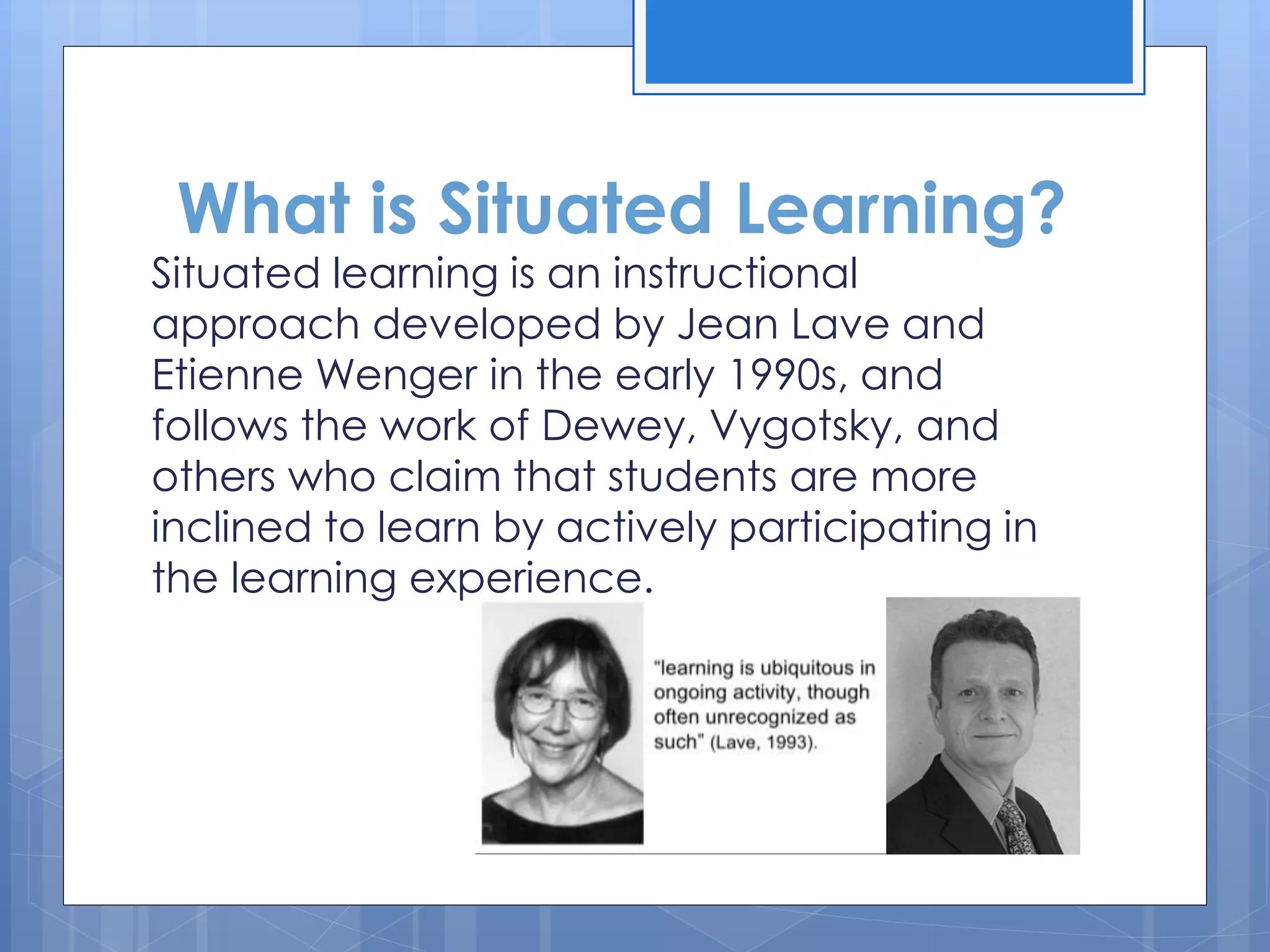
Situated learning is an instructional
approach developed by Jean Lave and
Etienne Wenger in the early 1990s, and
follows the work of Dewey, Vygotsky, and
others who claim that students are more
inclined to learn by actively participating in
the learning experience.
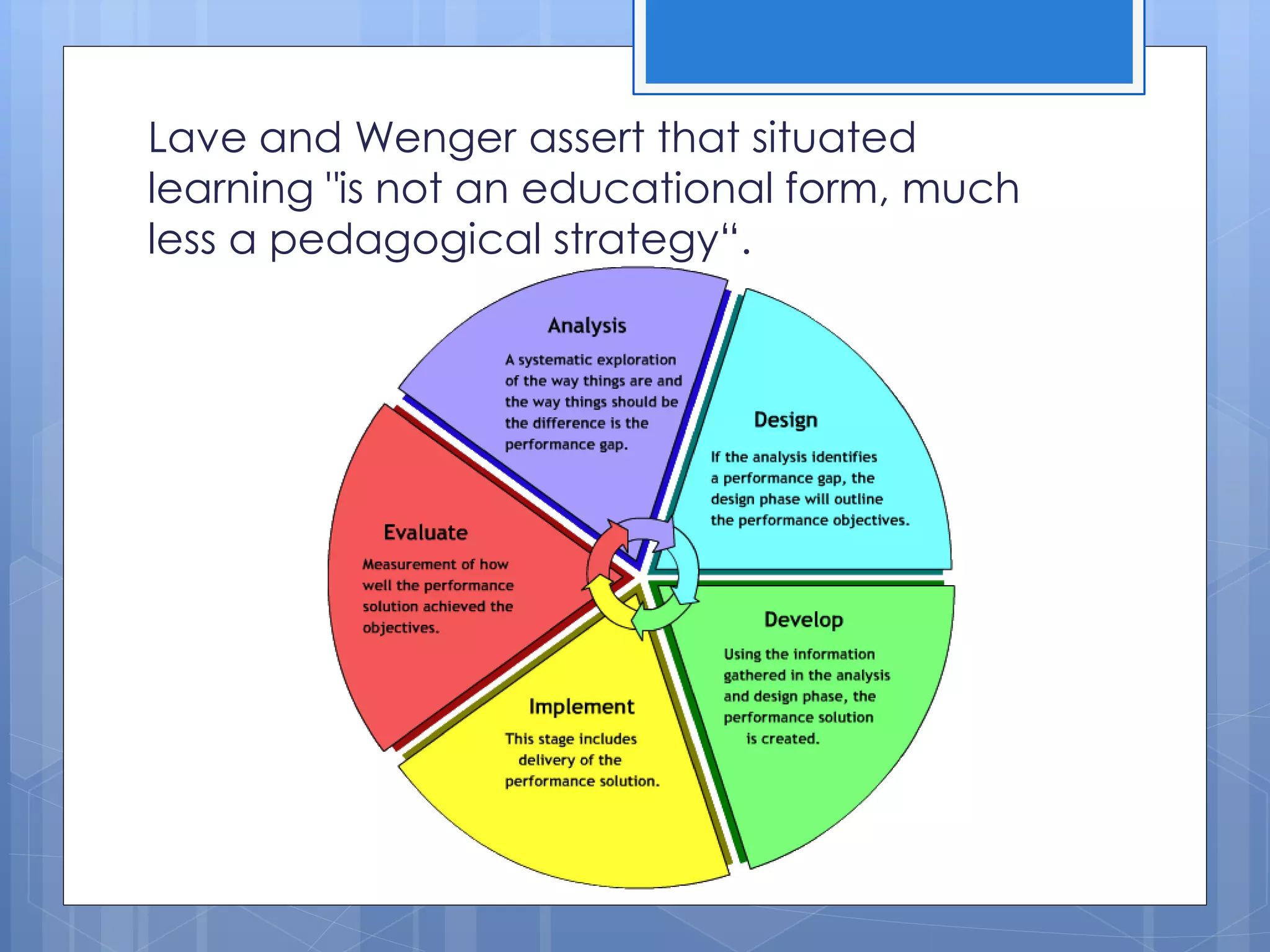
Lave and Wenger assert that situated
learning "is not an educational form, much
less a pedagogical strategy“.
Examples of situated learning
activities:
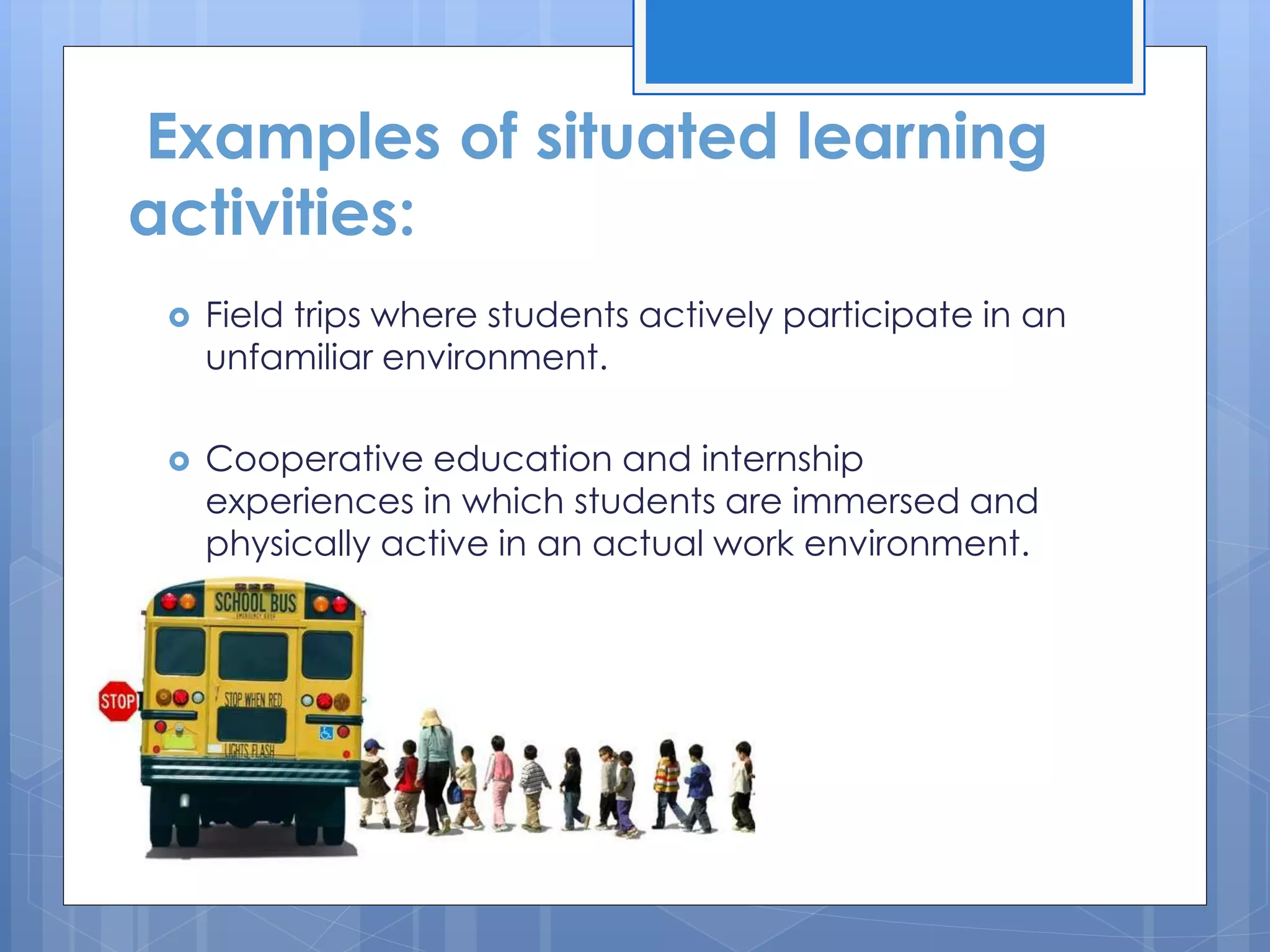
 Field trips where students actively participate in an
unfamiliar environment.
 Cooperative education and internship
experiences in which students are immersed and
physically active in an actual work environment.
examples of situated learning
activities:
 Music and sports (physical education) practice
which replicate actual setting of these events,
e.g., orchestras, studios, training facilities
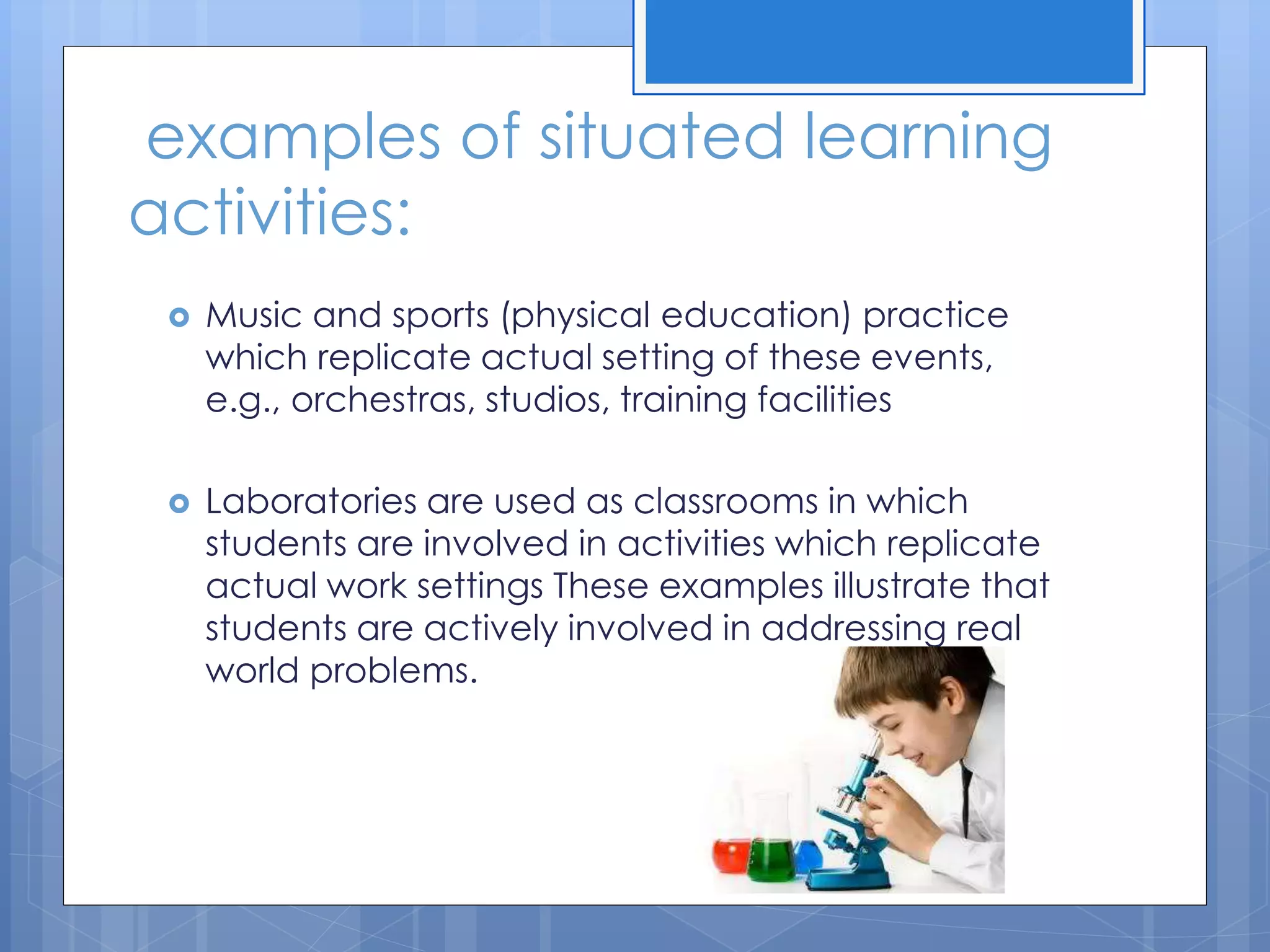
 Laboratories are used as classrooms in which
students are involved in activities which replicate
actual work settings These examples illustrate that
students are actively involved in addressing real
world problems.
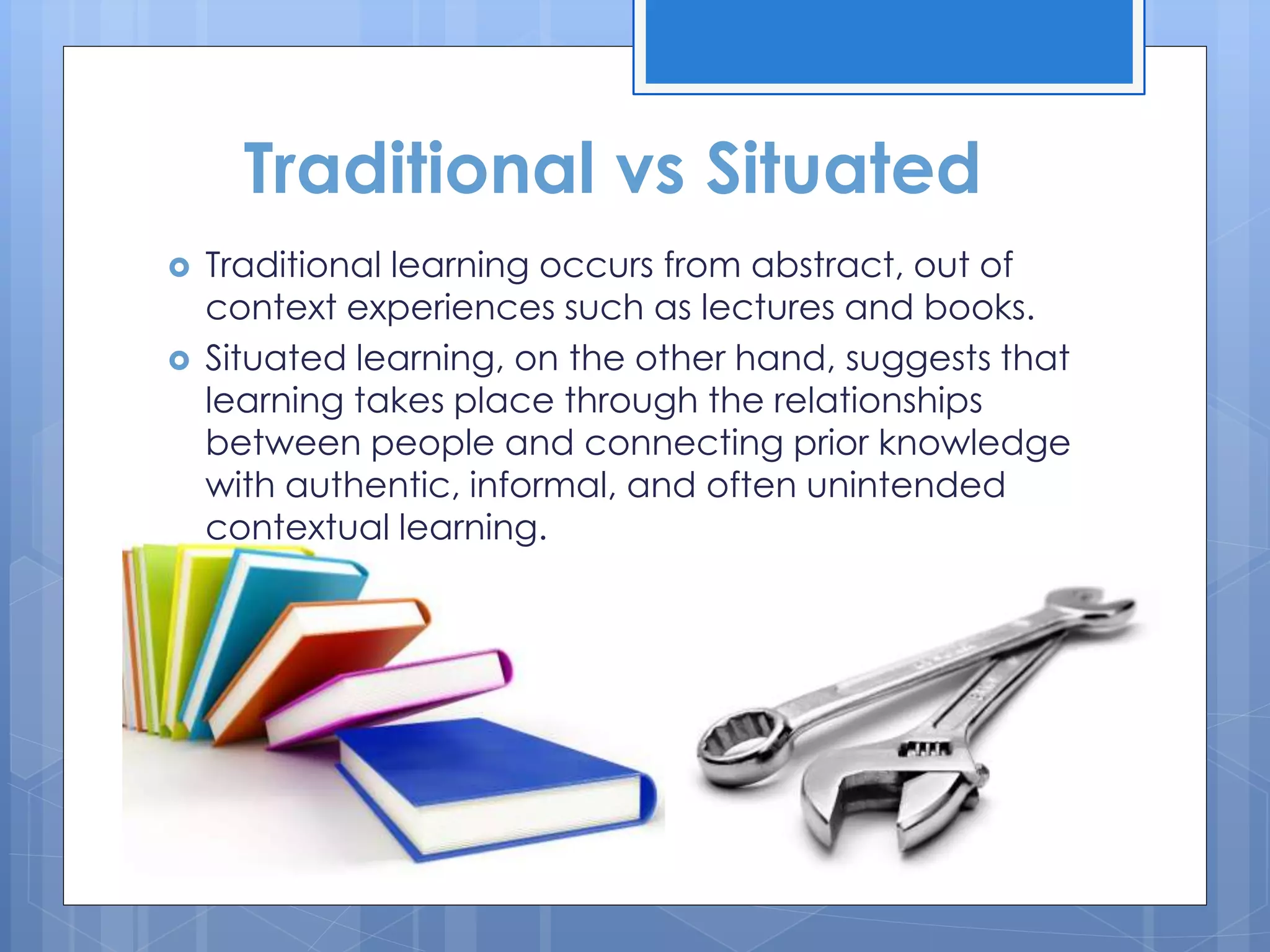
Traditional vs Situated
 Traditional learning occurs from abstract, out of
context experiences such as lectures and books.
 Situated learning, on the other hand, suggests that
learning takes place through the relationships
between people and connecting prior knowledge
with authentic, informal, and often unintended
contextual learning.
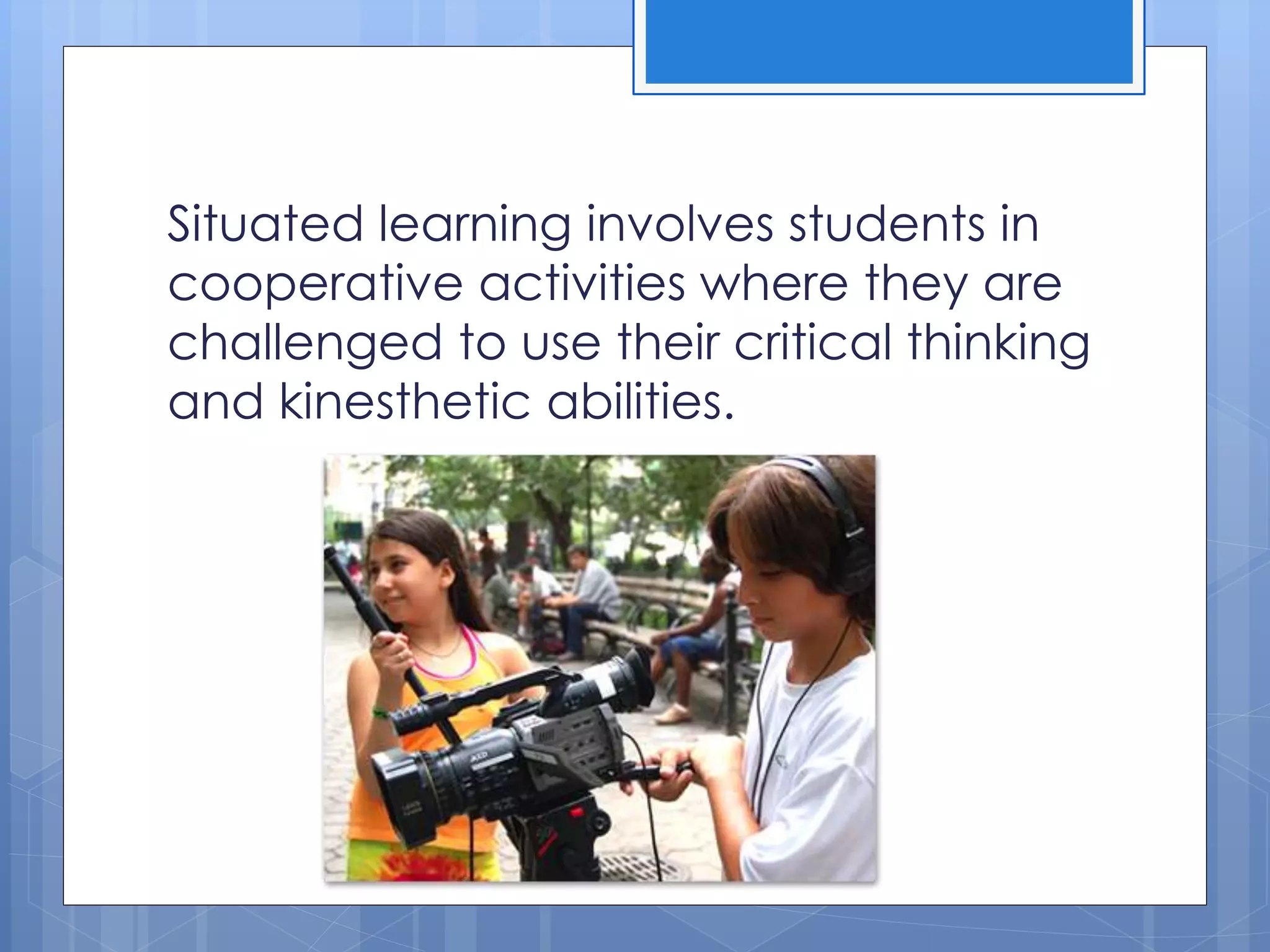
Situated learning involves students in
cooperative activities where they are
challenged to use their critical thinking
and kinesthetic abilities.
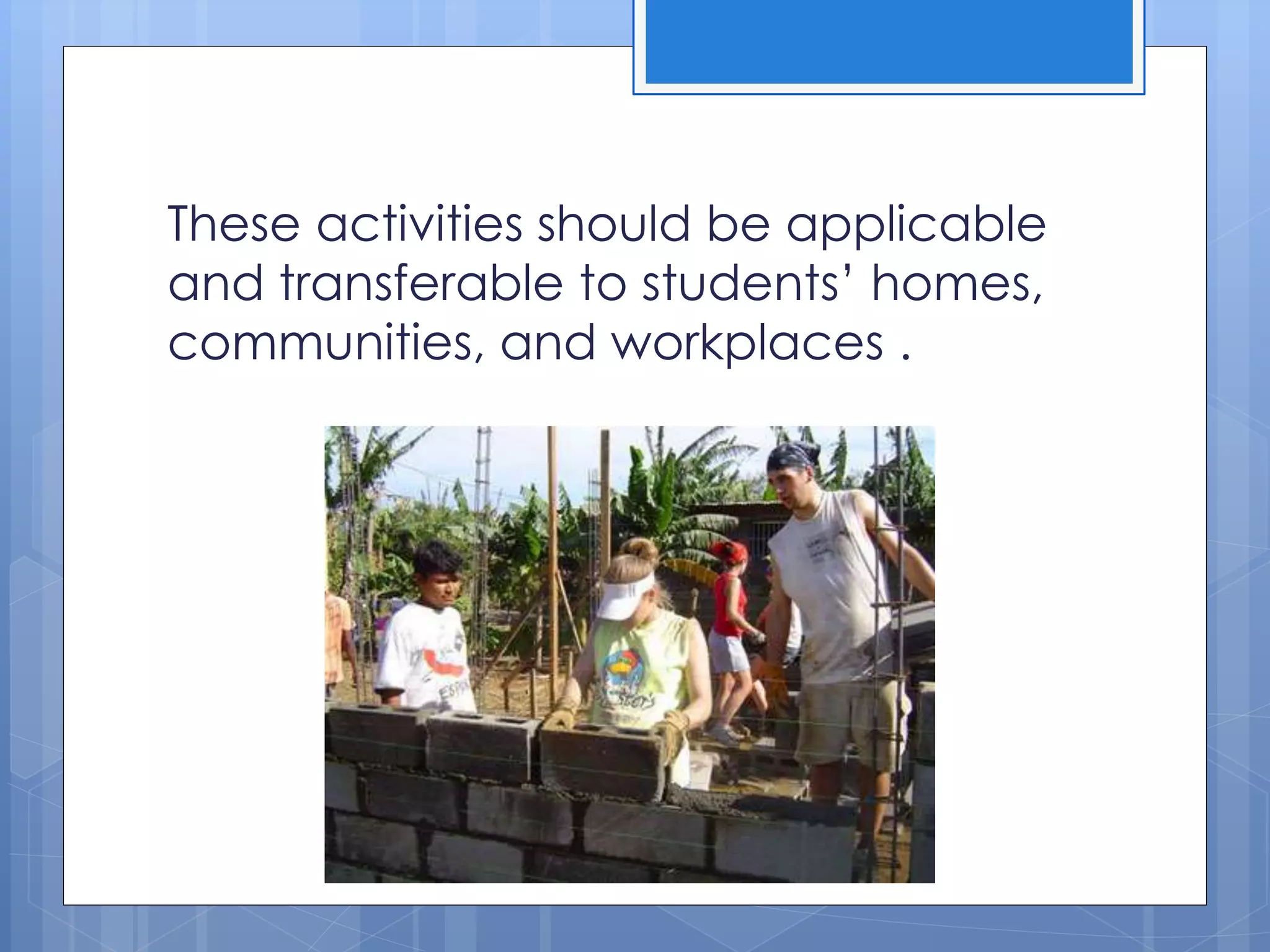
These activities should be applicable
and transferable to students’ homes,
communities, and workplaces .
 Provide authentic context that reflect
the way the knowledge will be used in
real-life.
 Provide authentic activities.
 Provide access to expert performances
and the modelling of processes.
 Provide multiple roles and perspective.
 Support collaborative construction of
knowledge.
The learning Environment will
 Provide coaching and scaffolding at
critical times.
Promote reflection to enable
abstractions to be formed.
Promote articulation to enable tacit
knowledge to be made explicit.
Provide for integrated assessment of
learning within the tasks.
 Select situations that will engage the learners in
complex, realistic, problem-centered activities.
 Provide a scaffold for new learners, knowing the type
and intensity of guidance necessary to help learners
master the situations.
How to include it in the
classroom
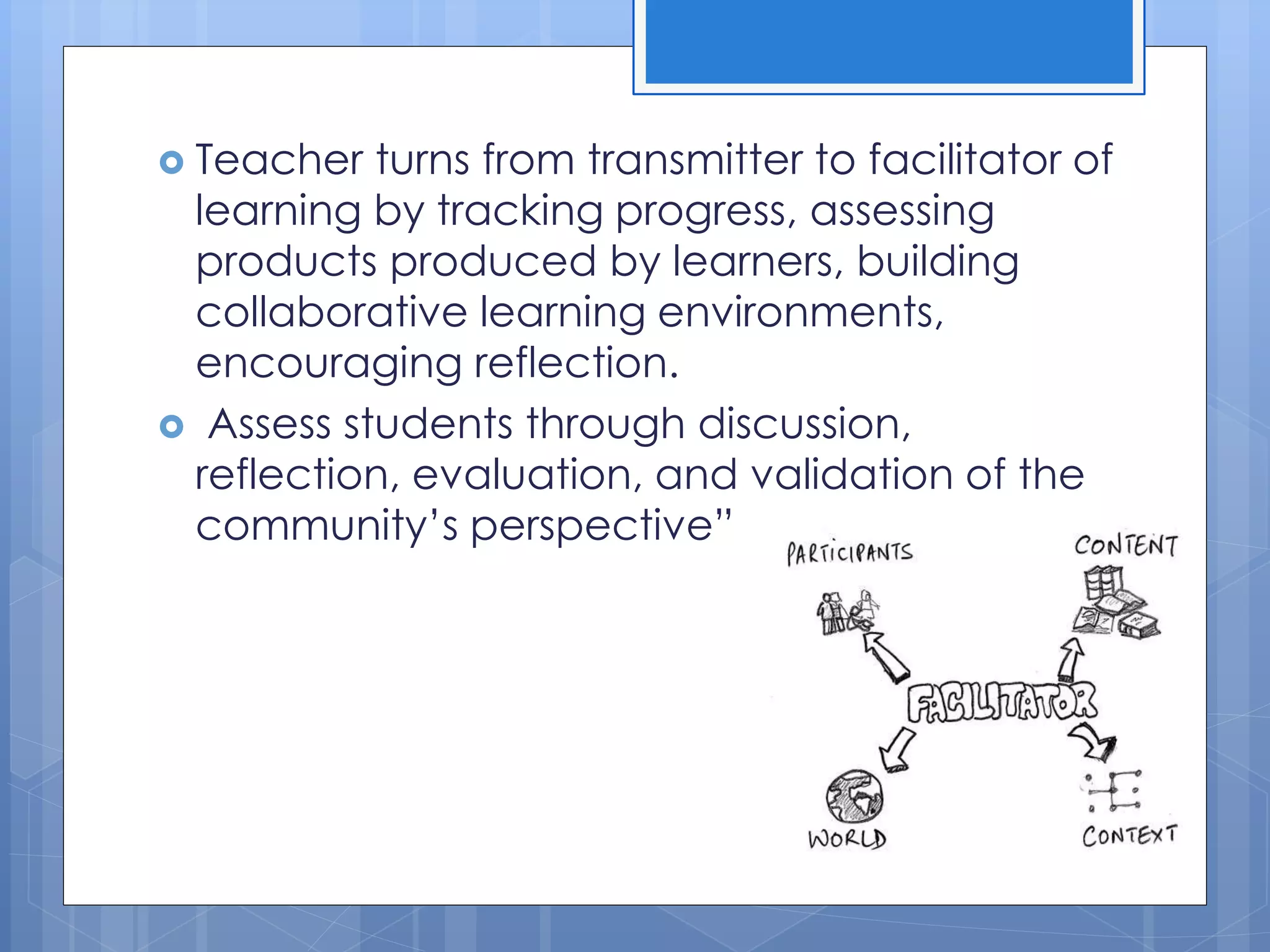
 Teacher turns from transmitter to facilitator of
learning by tracking progress, assessing
products produced by learners, building
collaborative learning environments,
encouraging reflection.
 Assess students through discussion,
reflection, evaluation, and validation of the
community’s perspective”
The act of writing in a Weblog, or
“blogging” can go a long way toward
teaching skills such as research,
organizations and the synthesis of ideas.
Examples of Situated Learning
and Technology
Social networks like Facebook, Twitter
allow learners, once they move beyond
the personal connections, to embrace a
community where they can learn from
each other.
Students are able to mimic what they
see and hear which enables them to
retain information for the long term.
Through visualizations of different types
of computer applications; the student’s
knowledge is defined by the social
process of interacting and doing.
It allows the students to learn naturally as
a result of social behavior. The computer
application acts as a guide while the
students learn naturally from their own
experience. As always, situated learning
accelerates a student learning process
and ability.
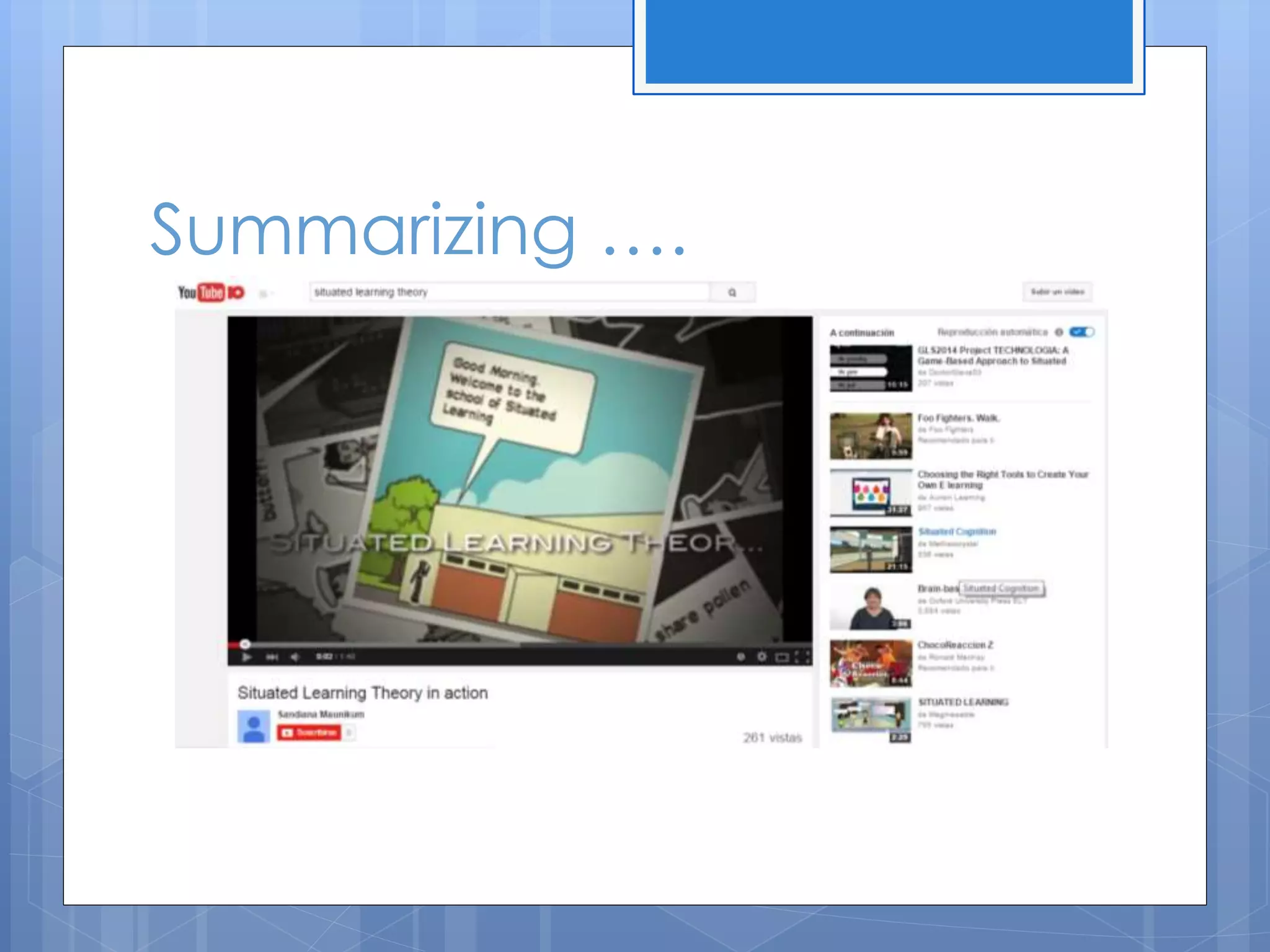
Summarizing ….
Conclusion
Situated Learning approach focusses on
developing skills that will be helpful for
learners in a real context, students need to
engage and create products, all this
through collaborative work, reserarch,
hands on activities and experience.
Thank You
José Carlos Cifuentes H.
Alejandra Alvarez O.

Situated learning

  • 2.
    What is SituatedLearning? Situated learning is an instructional approach developed by Jean Lave and Etienne Wenger in the early 1990s, and follows the work of Dewey, Vygotsky, and others who claim that students are more inclined to learn by actively participating in the learning experience.
  • 3.
    Lave and Wengerassert that situated learning "is not an educational form, much less a pedagogical strategy“.
  • 4.
    Examples of situatedlearning activities:  Field trips where students actively participate in an unfamiliar environment.  Cooperative education and internship experiences in which students are immersed and physically active in an actual work environment.
  • 5.
    examples of situatedlearning activities:  Music and sports (physical education) practice which replicate actual setting of these events, e.g., orchestras, studios, training facilities  Laboratories are used as classrooms in which students are involved in activities which replicate actual work settings These examples illustrate that students are actively involved in addressing real world problems.
  • 6.
    Traditional vs Situated Traditional learning occurs from abstract, out of context experiences such as lectures and books.  Situated learning, on the other hand, suggests that learning takes place through the relationships between people and connecting prior knowledge with authentic, informal, and often unintended contextual learning.
  • 7.
    Situated learning involvesstudents in cooperative activities where they are challenged to use their critical thinking and kinesthetic abilities.
  • 8.
    These activities shouldbe applicable and transferable to students’ homes, communities, and workplaces .
  • 9.
     Provide authenticcontext that reflect the way the knowledge will be used in real-life.  Provide authentic activities.  Provide access to expert performances and the modelling of processes.  Provide multiple roles and perspective.  Support collaborative construction of knowledge. The learning Environment will
  • 10.
     Provide coachingand scaffolding at critical times. Promote reflection to enable abstractions to be formed. Promote articulation to enable tacit knowledge to be made explicit. Provide for integrated assessment of learning within the tasks.
  • 11.
     Select situationsthat will engage the learners in complex, realistic, problem-centered activities.  Provide a scaffold for new learners, knowing the type and intensity of guidance necessary to help learners master the situations. How to include it in the classroom
  • 12.
     Teacher turnsfrom transmitter to facilitator of learning by tracking progress, assessing products produced by learners, building collaborative learning environments, encouraging reflection.  Assess students through discussion, reflection, evaluation, and validation of the community’s perspective”
  • 13.
    The act ofwriting in a Weblog, or “blogging” can go a long way toward teaching skills such as research, organizations and the synthesis of ideas. Examples of Situated Learning and Technology
  • 14.
    Social networks likeFacebook, Twitter allow learners, once they move beyond the personal connections, to embrace a community where they can learn from each other.
  • 15.
    Students are ableto mimic what they see and hear which enables them to retain information for the long term. Through visualizations of different types of computer applications; the student’s knowledge is defined by the social process of interacting and doing.
  • 16.
    It allows thestudents to learn naturally as a result of social behavior. The computer application acts as a guide while the students learn naturally from their own experience. As always, situated learning accelerates a student learning process and ability.
  • 18.
  • 19.
    Conclusion Situated Learning approachfocusses on developing skills that will be helpful for learners in a real context, students need to engage and create products, all this through collaborative work, reserarch, hands on activities and experience.
  • 20.
    Thank You José CarlosCifuentes H. Alejandra Alvarez O.

Editor's Notes

  • #3 Use audio from test ….
  • #4 Use audio from test ….
  • #5 Use audio from test ….
  • #6 Use audio from test ….
  • #7 Use audio from test ….
  • #15 depending on how much information is being called up, in terms of graphics, etc. Therefore it is important to always find out the definition of a hit in the system that you are using.
  • #16 depending on how much information is being called up, in terms of graphics, etc. Therefore it is important to always find out the definition of a hit in the system that you are using.
  • #18 depending on how much information is being called up, in terms of graphics, etc. Therefore it is important to always find out the definition of a hit in the system that you are using.