BODY LANGUAGE NEELAM ANTIL M.Sc IIyr, Centre for Bio-informatics Pondicherry University
Bodily Speaking  According to the social Anthropologist human communication consist of 93% of body language and paralinguistic cues and only 7% communication consist of words. Other researches said between 60-70% of all the meaning is derived from non-verbal behavior.
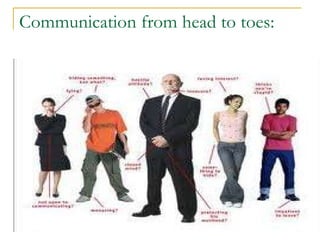
Communication from head to toes:
Introduction: Form of non-verbal communication. Body posture, gesture, facial expression, eye movement. Provide clues about attitude or state of mind. Eg. Aggression, attentiveness, boredom etc.
Head: Nodding the head: yes, in some scoieties. Tossing the head backward: yes, in india. Rocking head slowly, back or forward. yes, I m listening, in most of Asian  countries .
Face: Reflects emontion, feeling, attitude… Like, laugh, smile, giggle, frown etc.
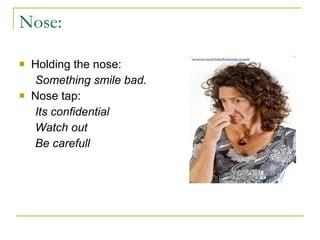
Nose: Holding the nose: Something smile bad. Nose tap: Its confidential Watch out Be carefull
Hands Fingers and Thumb: Hand holding Hand shaking Crossing fingers Thumbs ups Pointing Thumbing a ride
Signs:
Body Language & Space: First zone:   Ranges from touching to 8inches. Reserved for lovers, children, close family members, friends and pet animals . Second zone: Ranges from arm length to 4 feet way from a person. Used when conversation with friends, associates, group etc.
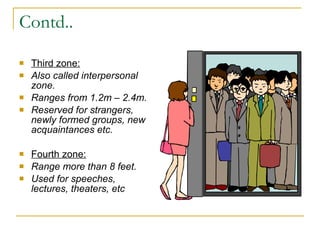
Contd.. Third zone: Also called interpersonal zone. Ranges from 1.2m – 2.4m. Reserved for strangers, newly formed groups, new acquaintances etc. Fourth zone: Range more than 8 feet. Used for speeches, lectures, theaters, etc
References: http:// www.juniorsociety.com /contact/   http://www.blifaloo.com/info/flirting-body-language.php   http://www.authorstream.com/Presentation/
 

Body language

  • 1.
    BODY LANGUAGE NEELAMANTIL M.Sc IIyr, Centre for Bio-informatics Pondicherry University
  • 2.
    Bodily Speaking According to the social Anthropologist human communication consist of 93% of body language and paralinguistic cues and only 7% communication consist of words. Other researches said between 60-70% of all the meaning is derived from non-verbal behavior.
  • 3.
  • 4.
    Introduction: Form ofnon-verbal communication. Body posture, gesture, facial expression, eye movement. Provide clues about attitude or state of mind. Eg. Aggression, attentiveness, boredom etc.
  • 5.
    Head: Nodding thehead: yes, in some scoieties. Tossing the head backward: yes, in india. Rocking head slowly, back or forward. yes, I m listening, in most of Asian countries .
  • 6.
    Face: Reflects emontion,feeling, attitude… Like, laugh, smile, giggle, frown etc.
  • 7.
    Nose: Holding thenose: Something smile bad. Nose tap: Its confidential Watch out Be carefull
  • 8.
    Hands Fingers andThumb: Hand holding Hand shaking Crossing fingers Thumbs ups Pointing Thumbing a ride
  • 9.
  • 10.
    Body Language &Space: First zone: Ranges from touching to 8inches. Reserved for lovers, children, close family members, friends and pet animals . Second zone: Ranges from arm length to 4 feet way from a person. Used when conversation with friends, associates, group etc.
  • 11.
    Contd.. Third zone:Also called interpersonal zone. Ranges from 1.2m – 2.4m. Reserved for strangers, newly formed groups, new acquaintances etc. Fourth zone: Range more than 8 feet. Used for speeches, lectures, theaters, etc
  • 12.
    References: http:// www.juniorsociety.com/contact/ http://www.blifaloo.com/info/flirting-body-language.php http://www.authorstream.com/Presentation/
  • 13.