Rahul K Kamble
Noise barriers
Mufflers or silences
 Vibration isolation
Damping
Lagging
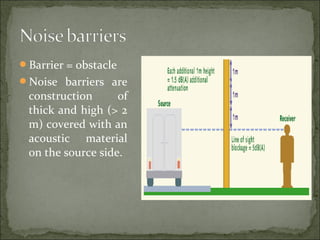
Barrier = obstacle
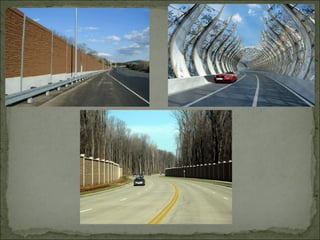
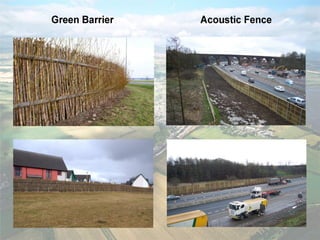
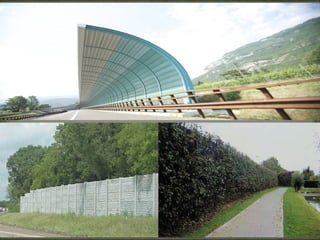
Noise barriers are
construction of
thick and high (> 2
m) covered with an
acoustic material
on the source side.
Noise barriers provides appreciable
protection from noise i.e. about 15 dB
(A)
Any solid material can acts as a barrier
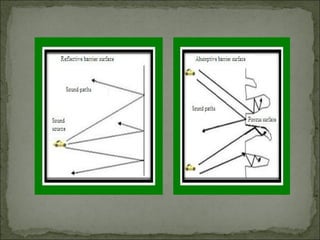
Sound barriers can reflect or absorb
noise
Degree of sound reduction depends
upon physical form of barrier,
specifically on its height and length.
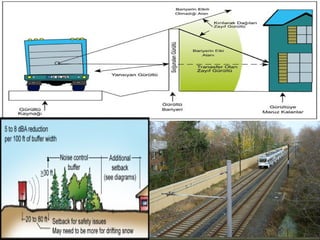
Buildings, earth embankment, stored
materials and other solids acts as barrier
Effectiveness is more when placed closer
to noise source or receiving point
No leak should be there
Length should be 10 times the height
For effectiveness barrier material should
have superficial mass of 7 kg/m2
, e.g.
brickwork, asbestos cement boards, fiber
board, wood wool slabs etc.
What is meant by silence ?
What are the means by which silence is
achieved?
Keep silence !!!
Silence = Silencer (the condition of no sound)
Where do you find silencers ?
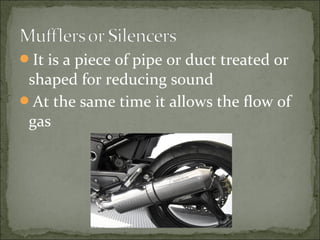
It is a piece of pipe or duct treated or
shaped for reducing sound
At the same time it allows the flow of
gas
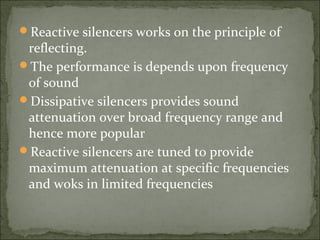
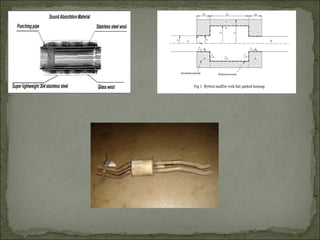
Two types of mufflers
Dissipative and reactive
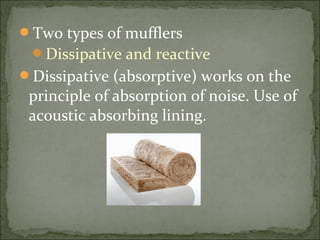
Dissipative (absorptive) works on the
principle of absorption of noise. Use of
acoustic absorbing lining.
Reactive silencers works on the principle of
reflecting.
The performance is depends upon frequency
of sound
Dissipative silencers provides sound
attenuation over broad frequency range and
hence more popular
Reactive silencers are tuned to provide
maximum attenuation at specific frequencies
and woks in limited frequencies
Reduce the magnitude of vibration between
two sources attached to each other
Radiation and noise can be controlled by
impedance mismatch
Is a measure of the rate at which a unit mass
of material receives the acoustic energy.
Acoustic impedance of a material is given by
the product of density of the material and
velocity of sound in the material.
Material having low impedance is
inefficient sound transmitter or good
sound isolator.
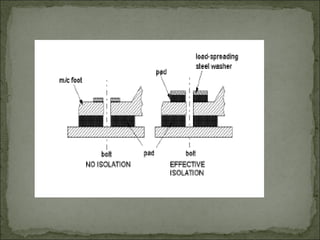
Rubber between two blocks of steel can
provide a very good sound isolation.
Noisy machine should be floated on a soft
and low impedance mounting rather than
bolting it to the floor mounting.
Examples: springs, elastomers mounts,
flexible couplings to conduits, ducts and
pipes, gaskets on ducts.
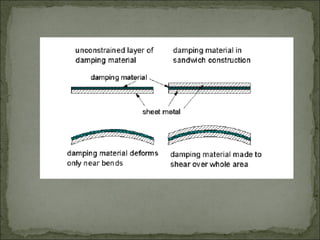
A method to control vibration, shock
and noise.
The process involves converting
dissipating energy by heat
Damping can be applied to mechanical
systems by
Viscous, - Dry fiction, - Hysterisis
damping
Noise radiating surfaces are wrapped with
acoustic materials.
Applied to piping, values, vessels etc.
The porous material attenuates the sound
waves by reflecting them back into the
structure and by converting it into heat.
Fibre glass or mineral wool of 300 mm
thickness  attenuation of 60 dB (A) at
sound wave frequency of 1000 Hz.
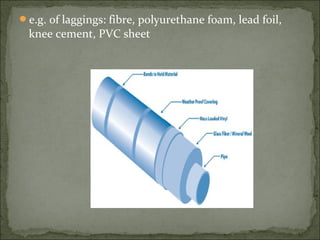
e.g. of laggings: fibre, polyurethane foam, lead foil,
knee cement, PVC sheet
Thank you!!!

Noise pollution control

  • 1.
  • 2.
    Noise barriers Mufflers orsilences  Vibration isolation Damping Lagging
  • 3.
    Barrier = obstacle Noisebarriers are construction of thick and high (> 2 m) covered with an acoustic material on the source side.
  • 4.
    Noise barriers providesappreciable protection from noise i.e. about 15 dB (A) Any solid material can acts as a barrier Sound barriers can reflect or absorb noise Degree of sound reduction depends upon physical form of barrier, specifically on its height and length.
  • 5.
    Buildings, earth embankment,stored materials and other solids acts as barrier Effectiveness is more when placed closer to noise source or receiving point No leak should be there Length should be 10 times the height For effectiveness barrier material should have superficial mass of 7 kg/m2 , e.g. brickwork, asbestos cement boards, fiber board, wood wool slabs etc.
  • 10.
    What is meantby silence ? What are the means by which silence is achieved? Keep silence !!! Silence = Silencer (the condition of no sound) Where do you find silencers ?
  • 11.
    It is apiece of pipe or duct treated or shaped for reducing sound At the same time it allows the flow of gas
  • 12.
    Two types ofmufflers Dissipative and reactive Dissipative (absorptive) works on the principle of absorption of noise. Use of acoustic absorbing lining.
  • 13.
    Reactive silencers workson the principle of reflecting. The performance is depends upon frequency of sound Dissipative silencers provides sound attenuation over broad frequency range and hence more popular Reactive silencers are tuned to provide maximum attenuation at specific frequencies and woks in limited frequencies
  • 16.
    Reduce the magnitudeof vibration between two sources attached to each other Radiation and noise can be controlled by impedance mismatch Is a measure of the rate at which a unit mass of material receives the acoustic energy. Acoustic impedance of a material is given by the product of density of the material and velocity of sound in the material.
  • 17.
    Material having lowimpedance is inefficient sound transmitter or good sound isolator. Rubber between two blocks of steel can provide a very good sound isolation. Noisy machine should be floated on a soft and low impedance mounting rather than bolting it to the floor mounting. Examples: springs, elastomers mounts, flexible couplings to conduits, ducts and pipes, gaskets on ducts.
  • 19.
    A method tocontrol vibration, shock and noise. The process involves converting dissipating energy by heat Damping can be applied to mechanical systems by Viscous, - Dry fiction, - Hysterisis damping
  • 21.
    Noise radiating surfacesare wrapped with acoustic materials. Applied to piping, values, vessels etc. The porous material attenuates the sound waves by reflecting them back into the structure and by converting it into heat. Fibre glass or mineral wool of 300 mm thickness  attenuation of 60 dB (A) at sound wave frequency of 1000 Hz.
  • 22.
    e.g. of laggings:fibre, polyurethane foam, lead foil, knee cement, PVC sheet
  • 23.