NIOSOMES
Presented by:
NAVEEN BALAJI
2nd Semester M.Pharm
Department of Pharmaceutics
SSCP
Tumkur.
• Niosomes are novel drug delivery system in which both hydrophilic
and hydrophobic drug is encapsulated in a vesicle. This are non-ionic
surfactant vesicles, which are biodegradable , relatively non-toxic ,
more stable, inexpensive and alternative to liposome.
• They present a structure similar to liposomes they can represent
alternative to vesicular system with respect to liposomes.
• Niosomes basically made of non – ionic surfactant which provide
advantages over the phospholipids because they are more
economical and are chemically more stable as they are not easily
hydrolysed or oxidized during storage.
• The vesicles forming amphiphile is a non-ionic surfactant stabilized by
addition of cholesterol and small amount of anionic surfactant such
as dicetyl phosphate
• Similar to liposomes, in that they are also made up of a bilayer.
• However, the bilayer in the case of Niosomes is made up of non-ionic
• Surface active agents rather than phospholipids.
• Vesicle holds hydrophilic drugs within the space enclosed in the
vesicle, while hydrophobic drugs are embedded within the bilayer
itself.
• Niosomes vesicle would consist of a vesicle forming amphiphile
• i.e.a non-ionic surfactant such as Span- 60, which is usually stabilized
by the addition of cholesterol.
made of uncharged single chain
made of neutral or charged double
 In both basic unit of assembly is Amphiphiles, but they
phospholipids in liposomes and nonionic surfactants in
niosomes.
 Both can entrap hydrophilic and lipophilic drugs.
 Both have same physical properties but differ in their chemical
composition.
 Niosomes has higher chemical stability than liposomes.
 Niosomes
surfactant molecules
 Liposomes
chain phospholipids.
They are osmotically active and stable.
They increase the stability of the entrapped drug.
The vesicle suspension being water based offers greater
patient compliance over oil based systems
Since the structure of the niosome offers place to
accommodate hydrophilic, lipophilic as well as ampiphilic
drug moieties, they can be used for a variety of drugs.
The vesicles can act as a depot to release the drug slowly and
of controlled release.
Biodegradable, non-immunogenic and biocompatible.
Advantagesofniosomes:
6
 Improve the therapeutic performance of the drug molecules by
 Delayed clearance from the circulation
 Protecting the drug from biological environment
 Restricting effects to target cells
 Niosomal dispersion in an aqueous phase can be emulsified in a nonaqueous
phase to
 Regulate the delivery rate of drug
 Administer normal vesicle in external non-aqueous phase.
 Handling and storage of surfactants requires no special conditions.
 Bioavailability of poorly absorbed drugs is increased.
 Targeted to the site of action by oral, parenteralas well as topical
routes.
ADVANTAGES OF NIOSOMES
DELIVERY SYSTEM
Aggregation (Some charged molecules are added to
niosomes to increase stability of niosomes by electrostatic
repulsion which prevents coalescence.
The negatively charged molecules used are diacetyl
phosphate (DCP) and phosphotidic acid. These charged
molecule sare used mainly to prevent aggregation of
niosomes) Fusion(due to repulsive force it can
avoided)
Leaking of entrappeddrug
Hydrolysis of encapsulated drugs
which limiting the shelf life of the
dispersion.
Leaking of entrappeddrug
Hydrolysis of encapsulated drugs
which limiting the shelf life of the
dispersion.
Disadvantage of niosomes
 The aqueous suspension , of niosomes may have
10
to fusion , aggregation ,limited shelf life due
leaking of entrapped drugs , and hydrolysis of
encapsulated drugs.
 The methods of preparation of multilamellar vesicles
such as extrusion , sonication, are time consuming
specliazed equipment forand may require
processing .
 According to the nature of lamellarity
1. Multilamellar vesicles (MLV) 1-5 μm in size.
2. Large Unilamellar vesicles (LUV) 0.1 – 1μm in size
3. Small Unilamellar vesicles (SUV) 25 – 500 nm in size.
 According to the size
1. Small Niosomes (100 nm – 200 nm)
2. Large Niosomes (800 nm – 900 nm)
3. Big Niosomes (2 μm – 4 μm)
TYPES OF NIOSOMES
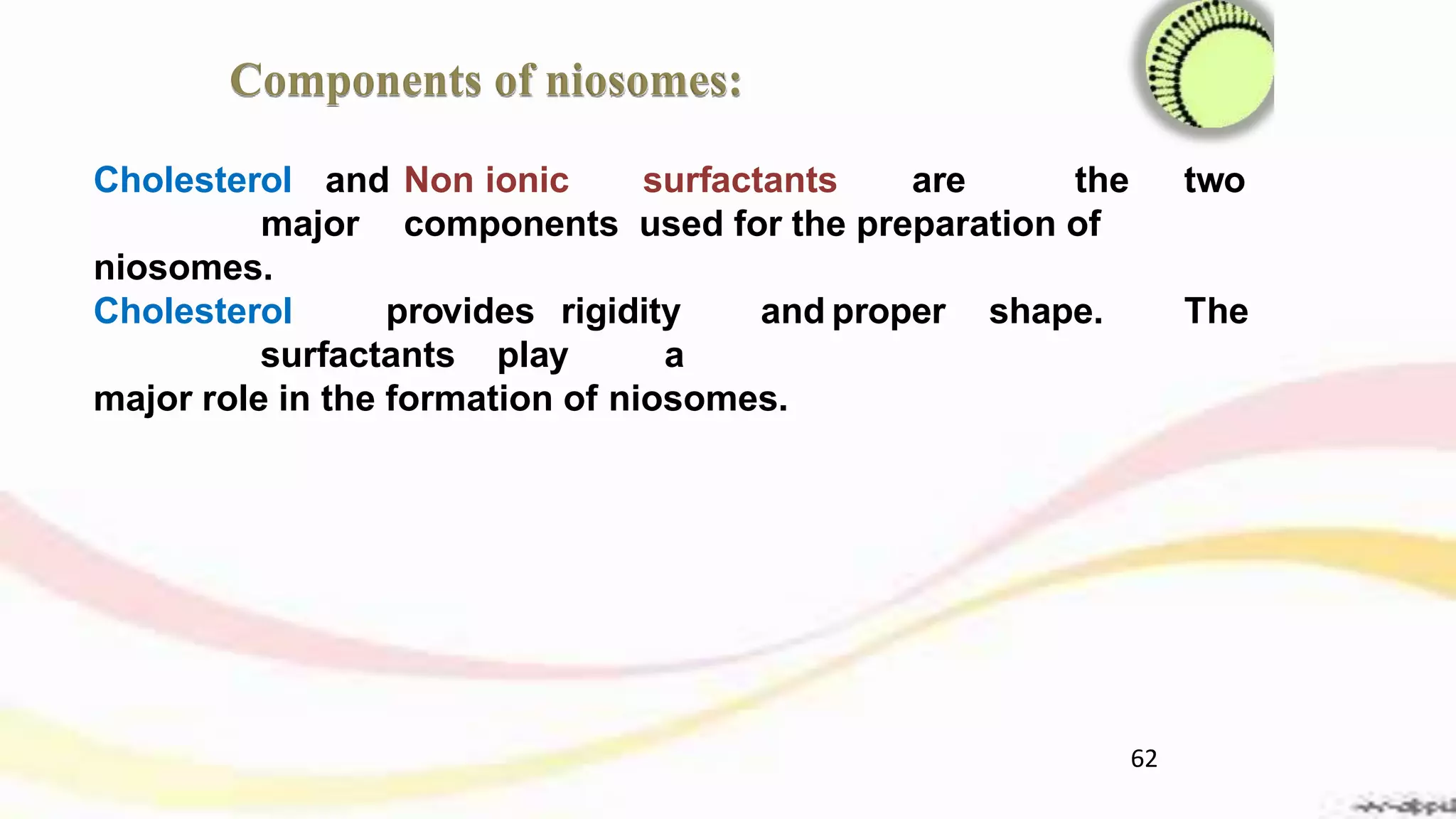
Cholesterol and Non ionic surfactants are the two
major components used for the preparation of
niosomes.
Cholesterol provides rigidity and proper shape. The
surfactants play a
major role in the formation of niosomes.
Components of niosomes:
62
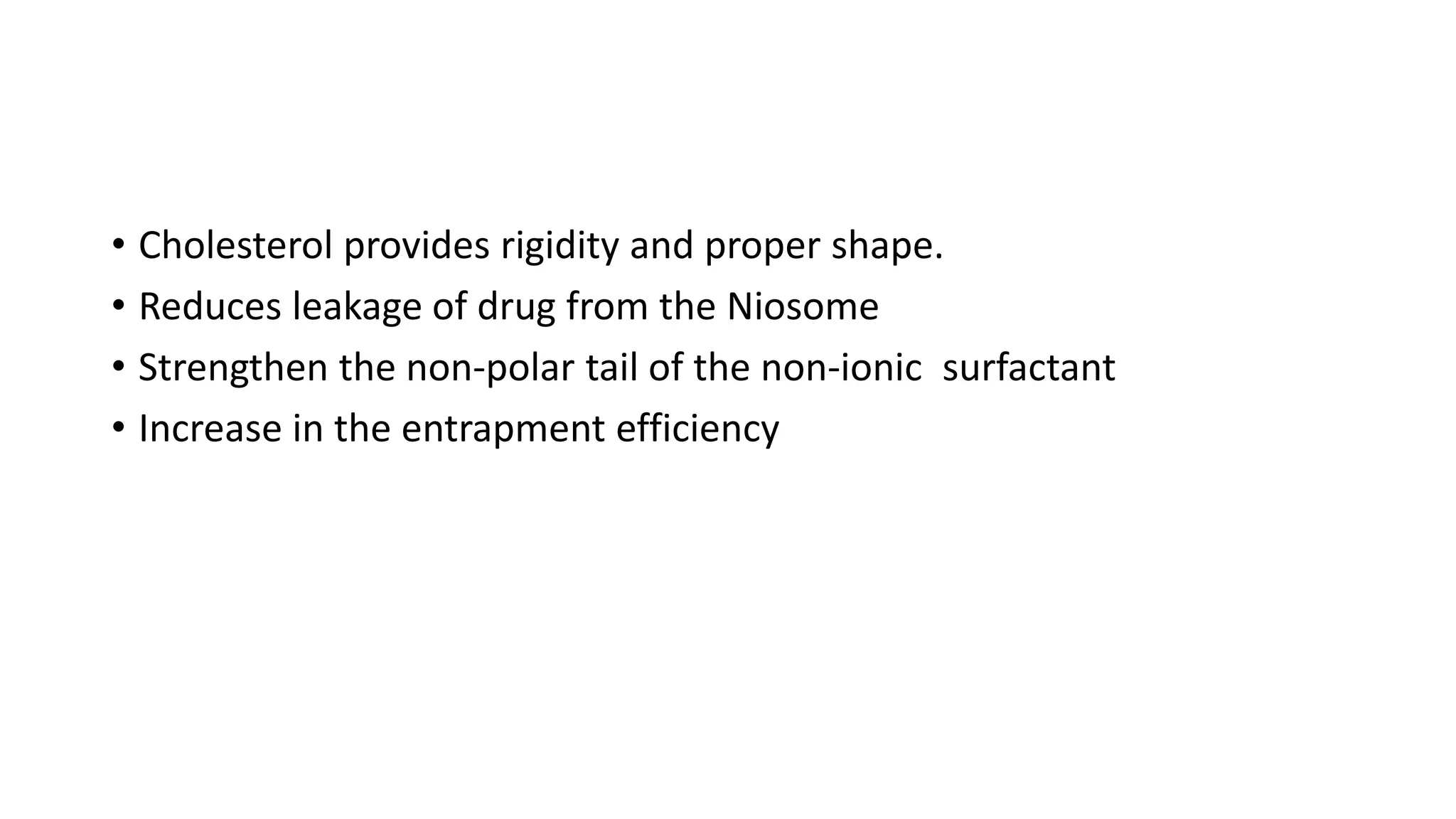
• Cholesterol provides rigidity and proper shape.
• Reduces leakage of drug from the Niosome
• Strengthen the non-polar tail of the non-ionic surfactant
• Increase in the entrapment efficiency
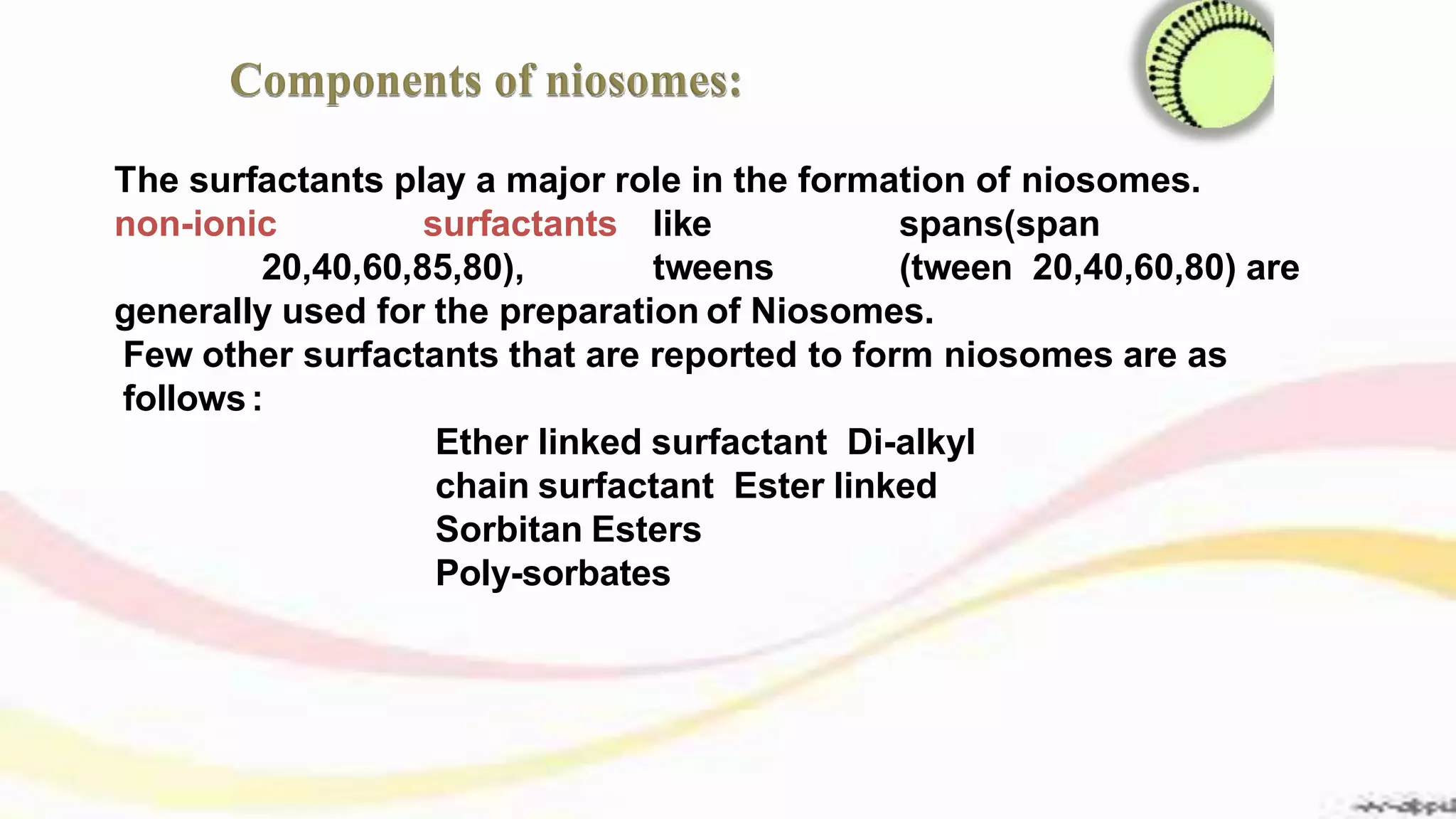
The surfactants play a major role in the formation of niosomes.
non-ionic surfactants like spans(span
20,40,60,85,80), tweens (tween 20,40,60,80) are
generally used for the preparation of Niosomes.
Few other surfactants that are reported to form niosomes are as
follows:
Ether linked surfactant Di-alkyl
chain surfactant Ester linked
Sorbitan Esters
Poly-sorbates
Components of niosomes:
METHODS OF PREPARATION
(Madhav NVS, 2011)
 Film Method
 Ether Injection Method
 Sonication
 Reverse Phase Evaporation
 Heating Method
 Microfluidization
 Multiple Membrane Extrusion Method
 Transmembrane pH gradient (inside acidic) Drug
Uptake Process (remote Loading)
 The “Bubble” Method
 Formation of Niosomes from Proniosomes
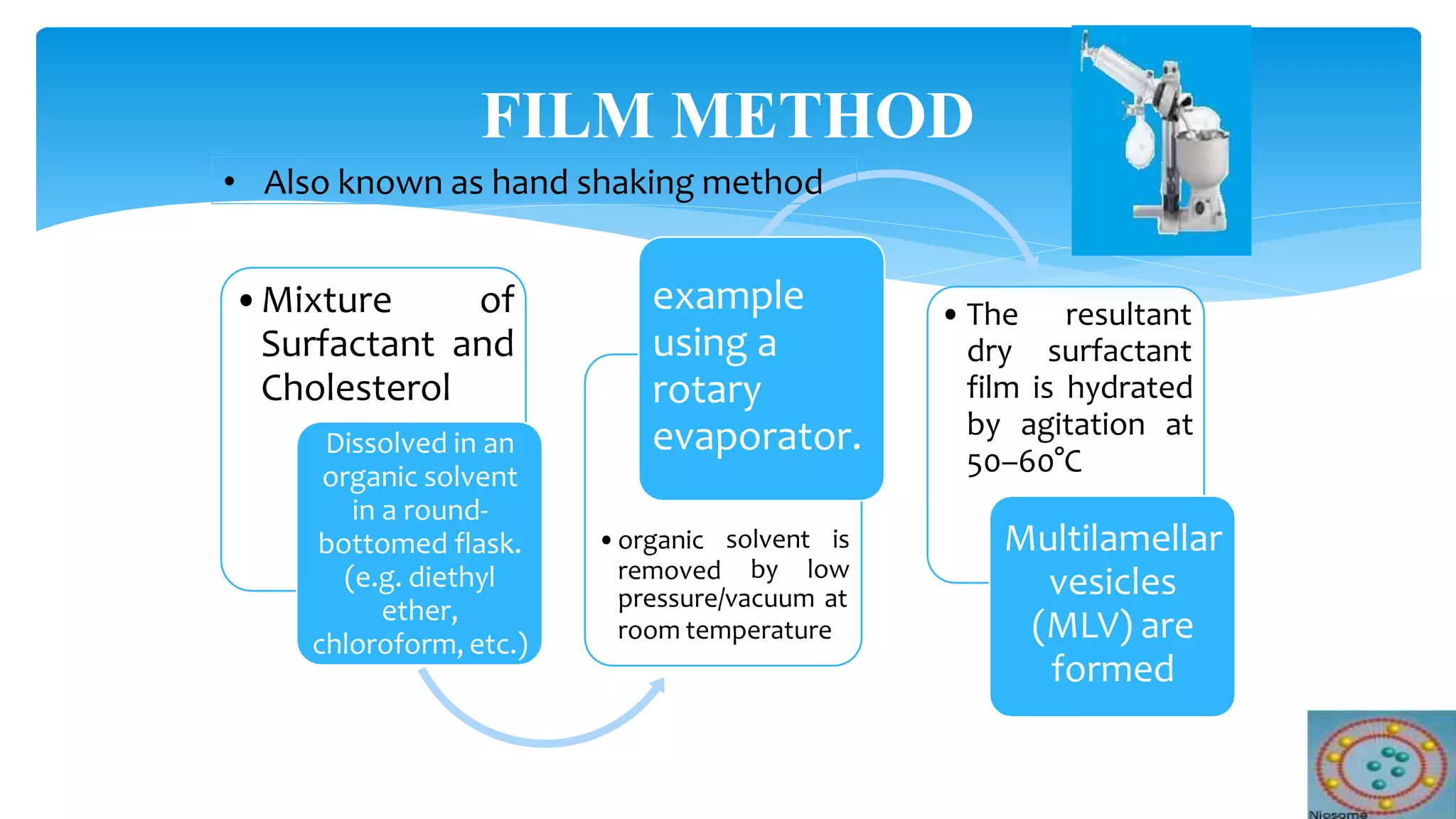
•Mixture of
Surfactant and
Cholesterol
Dissolved in an
organic solvent
in a round-
bottomed flask.
(e.g. diethyl
ether,
chloroform, etc.)
solvent is•organic
removed by low
pressure/vacuum at
room temperature
example
using a
rotary
evaporator.
• The resultant
dry surfactant
film is hydrated
by agitation at
50–60°C
Multilamellar
vesicles
(MLV) are
formed
FILM METHOD
• Also known as hand shaking method
FILM METHOD
Figure 6: Steps of Film method (Madhav NVS, 2011)
• The drug can be added to aqueous phase if hydrophilic and can be
dissolved in organic solvent with other component if hydrophobic.
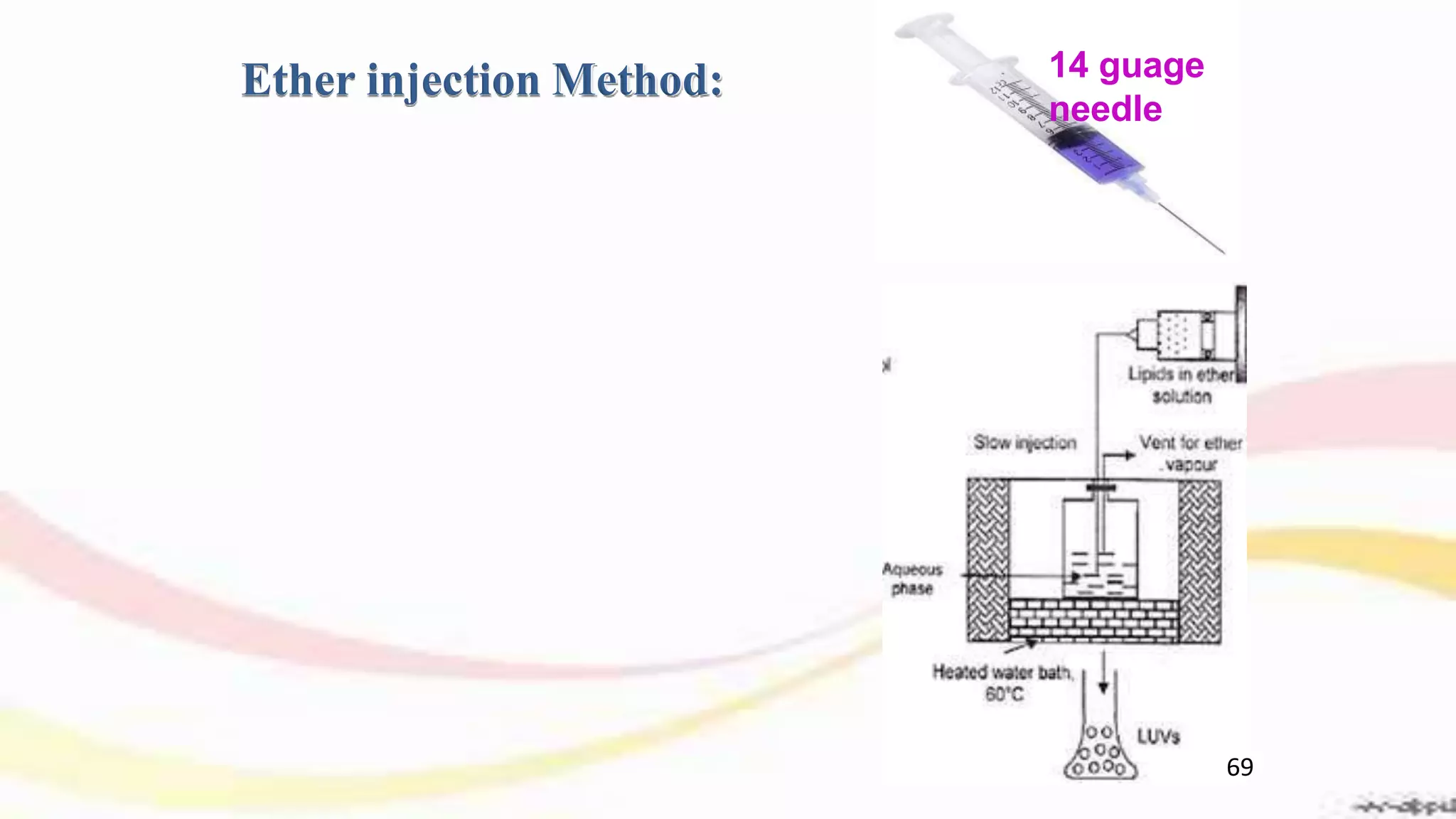
A solution of the surfactant is
made by dissolving it in diethyl
ether.
This solution is then introduced using an
injection (14 gauge needle) into warm water
or aqueous media containing the drug
maintained at 60°C.
Vaporization of the ether
leads to the formation of
single layered vesicles.
• The particle size of the Niosomes formed depend on the
conditions used, and can range anywhere between 50-1000
μm.
ETHER INJECTION METHOD
Figure 7: Steps of Ether injection method (Madhav NVS, 2011)
Ether injection Method: 14 guage
needle
69
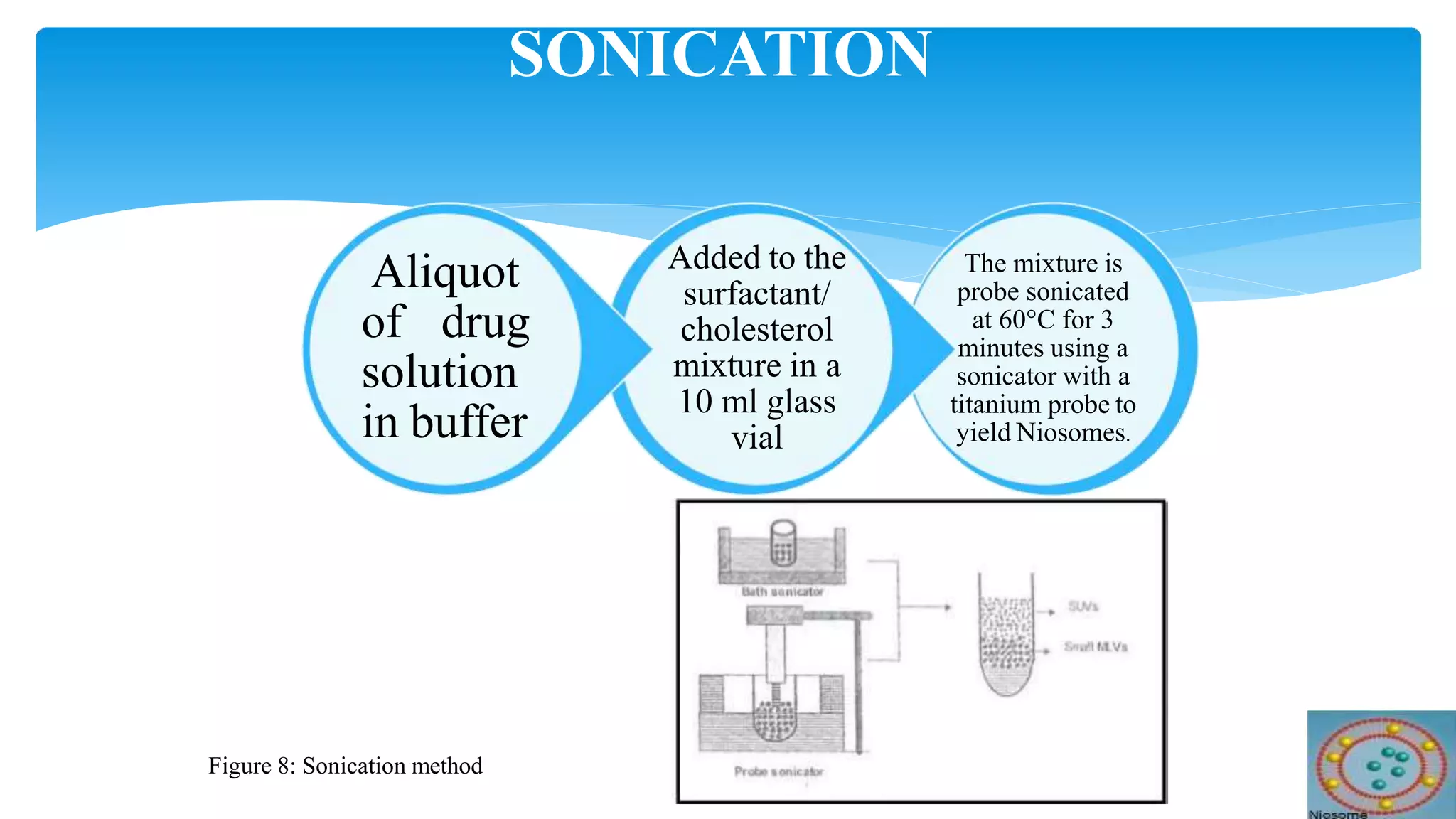
The mixture is
probe sonicated
at 60°C for 3
minutes using a
sonicator with a
titanium probe to
yield Niosomes.
Added to the
surfactant/
cholesterol
mixture in a
10 ml glass
vial
Aliquot
of drug
solution
in buffer
SONICATION
Figure 8: Sonication method
Creation of a solution
of cholesterol and
surfactant (1:1 ratio)
in a mixture of ether
and chloroform
An aqueous phase
containing the drug
to be loaded is
added to this
Resulting two
phases are
sonicated at 4-
5°C
A clear gel is
formed which is
further sonicated
after the addition
phosphate
saline
of
buffered
(PBS)
Temperature is
raised to 40°C and
pressure is reduced
to remove the
organic phase
Viscous Niosome
suspension is formed
which can be diluted
with PBS and heated
on a water bath at
60°C for 10 minutes
to yield Niosomes
REVERSE PHASE EVAPORATION
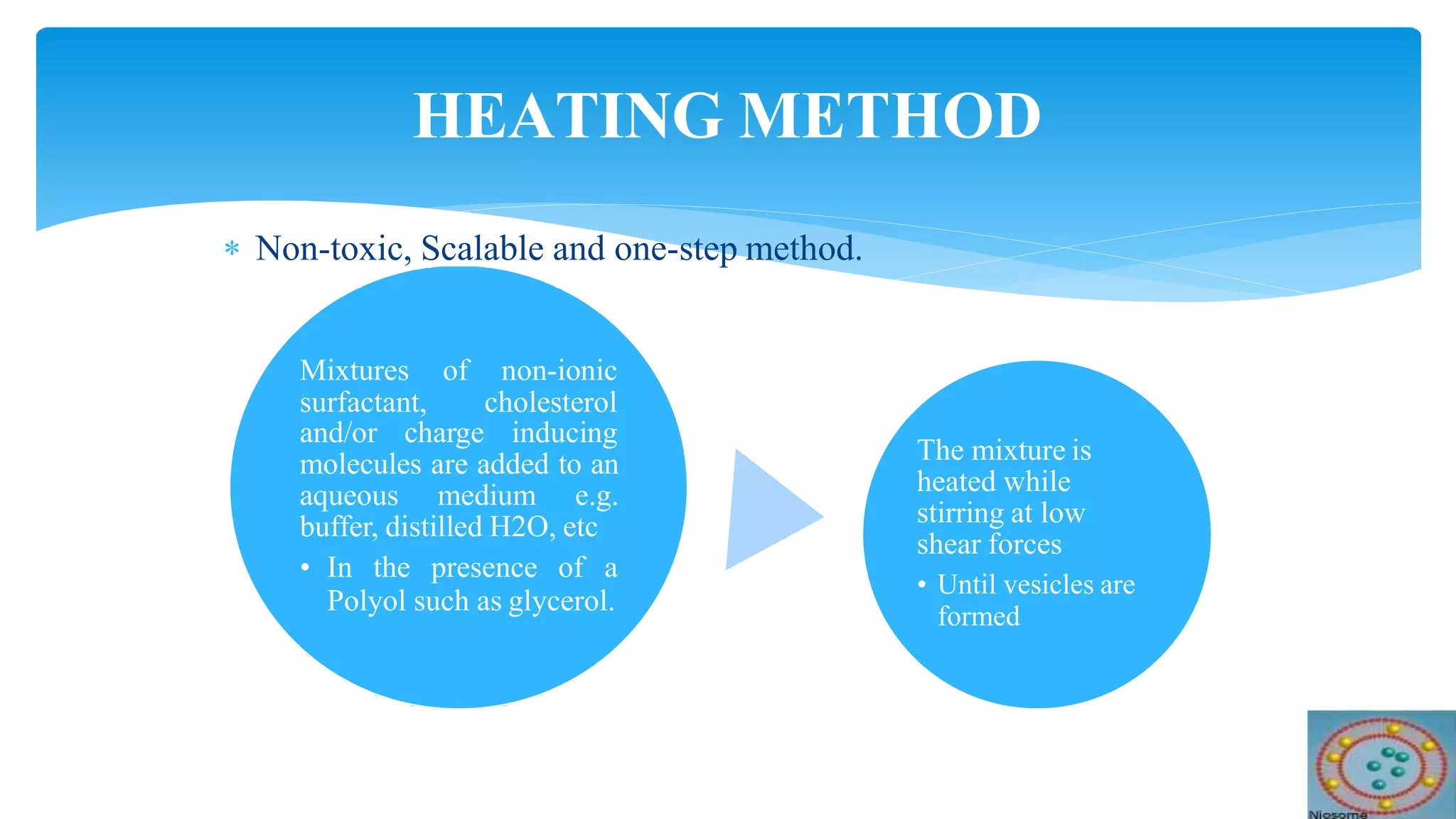
 Non-toxic, Scalable and one-step method.
HEATING METHOD
Mixtures of non-ionic
surfactant, cholesterol
and/or charge inducing
molecules are added to an
aqueous medium e.g.
buffer, distilled H2O, etc
• In the presence of a
Polyol such as glycerol.
The mixture is
heated while
stirring at low
shear forces
• Until vesicles are
formed
• Charge inducing molecule Some charged molecules are added to
niosomes to increase stability . Charge-inducing components like
charged phospholipids, and non-ionic surfactant .
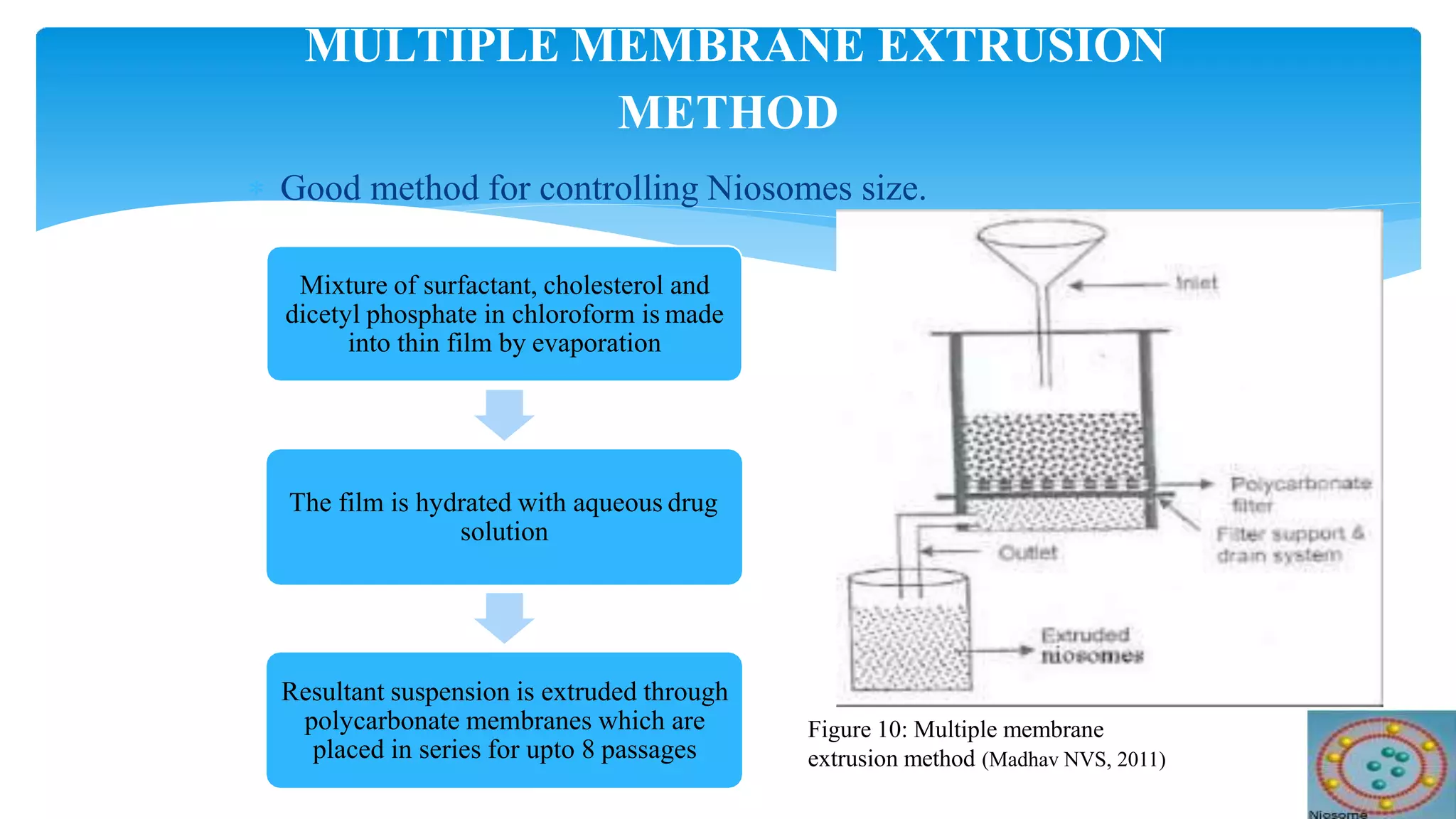
 Good method for controlling Niosomes size.
MULTIPLE MEMBRANE EXTRUSION
METHOD
Mixture of surfactant, cholesterol and
dicetyl phosphate in chloroform is made
into thin film by evaporation
The film is hydrated with aqueous drug
solution
Resultant suspension is extruded through
polycarbonate membranes which are
placed in series for upto 8 passages
Figure 10: Multiple membrane
extrusion method (Madhav NVS, 2011)
• Extruded:
• Force or press out; expel:
NIOSOME DELIVERYAPPLICATIONS
 Niosomes as Drug Carriers
 Diagnostic imaging with Niosomes:
 Niosomes can act as carriers for radiopharmaceuticals
 and site specific vehicles for spleen and liver imaging.
NIOSOME DELIVERYAPPLICATIONS
 Drug Targeting
 Delivery to the brain
 Anti cancer drugs
 Anti infectives
• In Oncology:
• Most–anti neoplastic drug cause severe side effects. Niosomes can
alter the metabolism , prolong circulation and half life of drug , thus
decreasing the side effects of drug.
• Various anticancer drugs like MTX(methotrexate),can be encapsulated
inside the niosomes and they can be easily delivered to the tumor
cells due to small size.
• Targeting of bioactive agents:
• To Reticulo-endothelial system (RES)
• The cells of RES preferentially take up the vesicles .
• To organs other than RES
 Ophthalmic drug delivery
 Delivery of peptide drugs
 Immunological application of Niosomes
 Delivery system for the vasoactive intestinalpeptide
(VIP)
 Niosomes as carriers for Hemoglobin
 Niosomal vaccines
NIOSOME DELIVERYAPPLICATIONS
• Transdermal delivery of drugs by Niosomes:
• They have application in topical and transdermal products both
containing hydrophobic and hydrophilic drugs. An increase in the
penetration rate is achieved by transdermal delivery incorporated in
niosomes. The intracellular route is the main route of vesicle
penetration across the skin. Ex: erythromycin
• In the treatment of Lieshmaniasis:
• Niosomes are used for drug targeting in treatment of diseases in
which the organism resides in the RES. Lieshmaniasis is a disease in
which parasite invades the cells of liver and spleen. Niosomes are
used for the delivery of stilbogluconate, an anti-leishmaniasis agent
to visceral organs.
• In the delivery of peptide drugs
• As immunological adjuvants:
• The ability of niosomes to enhance antibody production.
• Niosomes as pulmonary drug delivery system.
• They improved oral bioavailability of poorly absorbed drugs
 Sustained Release
 Localized Drug Action
OTHER APPLICATIONS
Niosomes Naveen Balaji

Niosomes Naveen Balaji

  • 1.
    NIOSOMES Presented by: NAVEEN BALAJI 2ndSemester M.Pharm Department of Pharmaceutics SSCP Tumkur.
  • 2.
    • Niosomes arenovel drug delivery system in which both hydrophilic and hydrophobic drug is encapsulated in a vesicle. This are non-ionic surfactant vesicles, which are biodegradable , relatively non-toxic , more stable, inexpensive and alternative to liposome. • They present a structure similar to liposomes they can represent alternative to vesicular system with respect to liposomes.
  • 3.
    • Niosomes basicallymade of non – ionic surfactant which provide advantages over the phospholipids because they are more economical and are chemically more stable as they are not easily hydrolysed or oxidized during storage. • The vesicles forming amphiphile is a non-ionic surfactant stabilized by addition of cholesterol and small amount of anionic surfactant such as dicetyl phosphate
  • 4.
    • Similar toliposomes, in that they are also made up of a bilayer. • However, the bilayer in the case of Niosomes is made up of non-ionic • Surface active agents rather than phospholipids. • Vesicle holds hydrophilic drugs within the space enclosed in the vesicle, while hydrophobic drugs are embedded within the bilayer itself. • Niosomes vesicle would consist of a vesicle forming amphiphile • i.e.a non-ionic surfactant such as Span- 60, which is usually stabilized by the addition of cholesterol.
  • 5.
    made of unchargedsingle chain made of neutral or charged double  In both basic unit of assembly is Amphiphiles, but they phospholipids in liposomes and nonionic surfactants in niosomes.  Both can entrap hydrophilic and lipophilic drugs.  Both have same physical properties but differ in their chemical composition.  Niosomes has higher chemical stability than liposomes.  Niosomes surfactant molecules  Liposomes chain phospholipids.
  • 6.
    They are osmoticallyactive and stable. They increase the stability of the entrapped drug. The vesicle suspension being water based offers greater patient compliance over oil based systems Since the structure of the niosome offers place to accommodate hydrophilic, lipophilic as well as ampiphilic drug moieties, they can be used for a variety of drugs. The vesicles can act as a depot to release the drug slowly and of controlled release. Biodegradable, non-immunogenic and biocompatible. Advantagesofniosomes: 6
  • 7.
     Improve thetherapeutic performance of the drug molecules by  Delayed clearance from the circulation  Protecting the drug from biological environment  Restricting effects to target cells  Niosomal dispersion in an aqueous phase can be emulsified in a nonaqueous phase to  Regulate the delivery rate of drug  Administer normal vesicle in external non-aqueous phase.  Handling and storage of surfactants requires no special conditions.  Bioavailability of poorly absorbed drugs is increased.  Targeted to the site of action by oral, parenteralas well as topical routes. ADVANTAGES OF NIOSOMES DELIVERY SYSTEM
  • 8.
    Aggregation (Some chargedmolecules are added to niosomes to increase stability of niosomes by electrostatic repulsion which prevents coalescence. The negatively charged molecules used are diacetyl phosphate (DCP) and phosphotidic acid. These charged molecule sare used mainly to prevent aggregation of niosomes) Fusion(due to repulsive force it can avoided)
  • 9.
    Leaking of entrappeddrug Hydrolysisof encapsulated drugs which limiting the shelf life of the dispersion. Leaking of entrappeddrug Hydrolysis of encapsulated drugs which limiting the shelf life of the dispersion.
  • 10.
    Disadvantage of niosomes The aqueous suspension , of niosomes may have 10 to fusion , aggregation ,limited shelf life due leaking of entrapped drugs , and hydrolysis of encapsulated drugs.  The methods of preparation of multilamellar vesicles such as extrusion , sonication, are time consuming specliazed equipment forand may require processing .
  • 11.
     According tothe nature of lamellarity 1. Multilamellar vesicles (MLV) 1-5 μm in size. 2. Large Unilamellar vesicles (LUV) 0.1 – 1μm in size 3. Small Unilamellar vesicles (SUV) 25 – 500 nm in size.  According to the size 1. Small Niosomes (100 nm – 200 nm) 2. Large Niosomes (800 nm – 900 nm) 3. Big Niosomes (2 μm – 4 μm) TYPES OF NIOSOMES
  • 12.
    Cholesterol and Nonionic surfactants are the two major components used for the preparation of niosomes. Cholesterol provides rigidity and proper shape. The surfactants play a major role in the formation of niosomes. Components of niosomes: 62
  • 13.
    • Cholesterol providesrigidity and proper shape. • Reduces leakage of drug from the Niosome • Strengthen the non-polar tail of the non-ionic surfactant • Increase in the entrapment efficiency
  • 14.
    The surfactants playa major role in the formation of niosomes. non-ionic surfactants like spans(span 20,40,60,85,80), tweens (tween 20,40,60,80) are generally used for the preparation of Niosomes. Few other surfactants that are reported to form niosomes are as follows: Ether linked surfactant Di-alkyl chain surfactant Ester linked Sorbitan Esters Poly-sorbates Components of niosomes:
  • 15.
    METHODS OF PREPARATION (MadhavNVS, 2011)  Film Method  Ether Injection Method  Sonication  Reverse Phase Evaporation  Heating Method  Microfluidization  Multiple Membrane Extrusion Method  Transmembrane pH gradient (inside acidic) Drug Uptake Process (remote Loading)  The “Bubble” Method  Formation of Niosomes from Proniosomes
  • 16.
    •Mixture of Surfactant and Cholesterol Dissolvedin an organic solvent in a round- bottomed flask. (e.g. diethyl ether, chloroform, etc.) solvent is•organic removed by low pressure/vacuum at room temperature example using a rotary evaporator. • The resultant dry surfactant film is hydrated by agitation at 50–60°C Multilamellar vesicles (MLV) are formed FILM METHOD • Also known as hand shaking method
  • 17.
    FILM METHOD Figure 6:Steps of Film method (Madhav NVS, 2011)
  • 18.
    • The drugcan be added to aqueous phase if hydrophilic and can be dissolved in organic solvent with other component if hydrophobic.
  • 19.
    A solution ofthe surfactant is made by dissolving it in diethyl ether. This solution is then introduced using an injection (14 gauge needle) into warm water or aqueous media containing the drug maintained at 60°C. Vaporization of the ether leads to the formation of single layered vesicles. • The particle size of the Niosomes formed depend on the conditions used, and can range anywhere between 50-1000 μm. ETHER INJECTION METHOD Figure 7: Steps of Ether injection method (Madhav NVS, 2011)
  • 20.
    Ether injection Method:14 guage needle 69
  • 21.
    The mixture is probesonicated at 60°C for 3 minutes using a sonicator with a titanium probe to yield Niosomes. Added to the surfactant/ cholesterol mixture in a 10 ml glass vial Aliquot of drug solution in buffer SONICATION Figure 8: Sonication method
  • 22.
    Creation of asolution of cholesterol and surfactant (1:1 ratio) in a mixture of ether and chloroform An aqueous phase containing the drug to be loaded is added to this Resulting two phases are sonicated at 4- 5°C A clear gel is formed which is further sonicated after the addition phosphate saline of buffered (PBS) Temperature is raised to 40°C and pressure is reduced to remove the organic phase Viscous Niosome suspension is formed which can be diluted with PBS and heated on a water bath at 60°C for 10 minutes to yield Niosomes REVERSE PHASE EVAPORATION
  • 23.
     Non-toxic, Scalableand one-step method. HEATING METHOD Mixtures of non-ionic surfactant, cholesterol and/or charge inducing molecules are added to an aqueous medium e.g. buffer, distilled H2O, etc • In the presence of a Polyol such as glycerol. The mixture is heated while stirring at low shear forces • Until vesicles are formed
  • 24.
    • Charge inducingmolecule Some charged molecules are added to niosomes to increase stability . Charge-inducing components like charged phospholipids, and non-ionic surfactant .
  • 25.
     Good methodfor controlling Niosomes size. MULTIPLE MEMBRANE EXTRUSION METHOD Mixture of surfactant, cholesterol and dicetyl phosphate in chloroform is made into thin film by evaporation The film is hydrated with aqueous drug solution Resultant suspension is extruded through polycarbonate membranes which are placed in series for upto 8 passages Figure 10: Multiple membrane extrusion method (Madhav NVS, 2011)
  • 26.
    • Extruded: • Forceor press out; expel:
  • 27.
    NIOSOME DELIVERYAPPLICATIONS  Niosomesas Drug Carriers  Diagnostic imaging with Niosomes:  Niosomes can act as carriers for radiopharmaceuticals  and site specific vehicles for spleen and liver imaging.
  • 28.
    NIOSOME DELIVERYAPPLICATIONS  DrugTargeting  Delivery to the brain  Anti cancer drugs  Anti infectives
  • 29.
    • In Oncology: •Most–anti neoplastic drug cause severe side effects. Niosomes can alter the metabolism , prolong circulation and half life of drug , thus decreasing the side effects of drug. • Various anticancer drugs like MTX(methotrexate),can be encapsulated inside the niosomes and they can be easily delivered to the tumor cells due to small size.
  • 30.
    • Targeting ofbioactive agents: • To Reticulo-endothelial system (RES) • The cells of RES preferentially take up the vesicles . • To organs other than RES
  • 31.
     Ophthalmic drugdelivery  Delivery of peptide drugs  Immunological application of Niosomes  Delivery system for the vasoactive intestinalpeptide (VIP)  Niosomes as carriers for Hemoglobin  Niosomal vaccines NIOSOME DELIVERYAPPLICATIONS
  • 32.
    • Transdermal deliveryof drugs by Niosomes: • They have application in topical and transdermal products both containing hydrophobic and hydrophilic drugs. An increase in the penetration rate is achieved by transdermal delivery incorporated in niosomes. The intracellular route is the main route of vesicle penetration across the skin. Ex: erythromycin
  • 33.
    • In thetreatment of Lieshmaniasis: • Niosomes are used for drug targeting in treatment of diseases in which the organism resides in the RES. Lieshmaniasis is a disease in which parasite invades the cells of liver and spleen. Niosomes are used for the delivery of stilbogluconate, an anti-leishmaniasis agent to visceral organs.
  • 34.
    • In thedelivery of peptide drugs • As immunological adjuvants: • The ability of niosomes to enhance antibody production. • Niosomes as pulmonary drug delivery system. • They improved oral bioavailability of poorly absorbed drugs
  • 35.
     Sustained Release Localized Drug Action OTHER APPLICATIONS