
presentation tilte
Text specific for subtitle
19.07.2010
Centro Nacional de Análisis Genómico
Introduction to Meeting
NGS and the molecular basis of
disease: a practical view.
Vall d’Hebron
Barcelona
Ivo Glynne Gut
11.02.2015
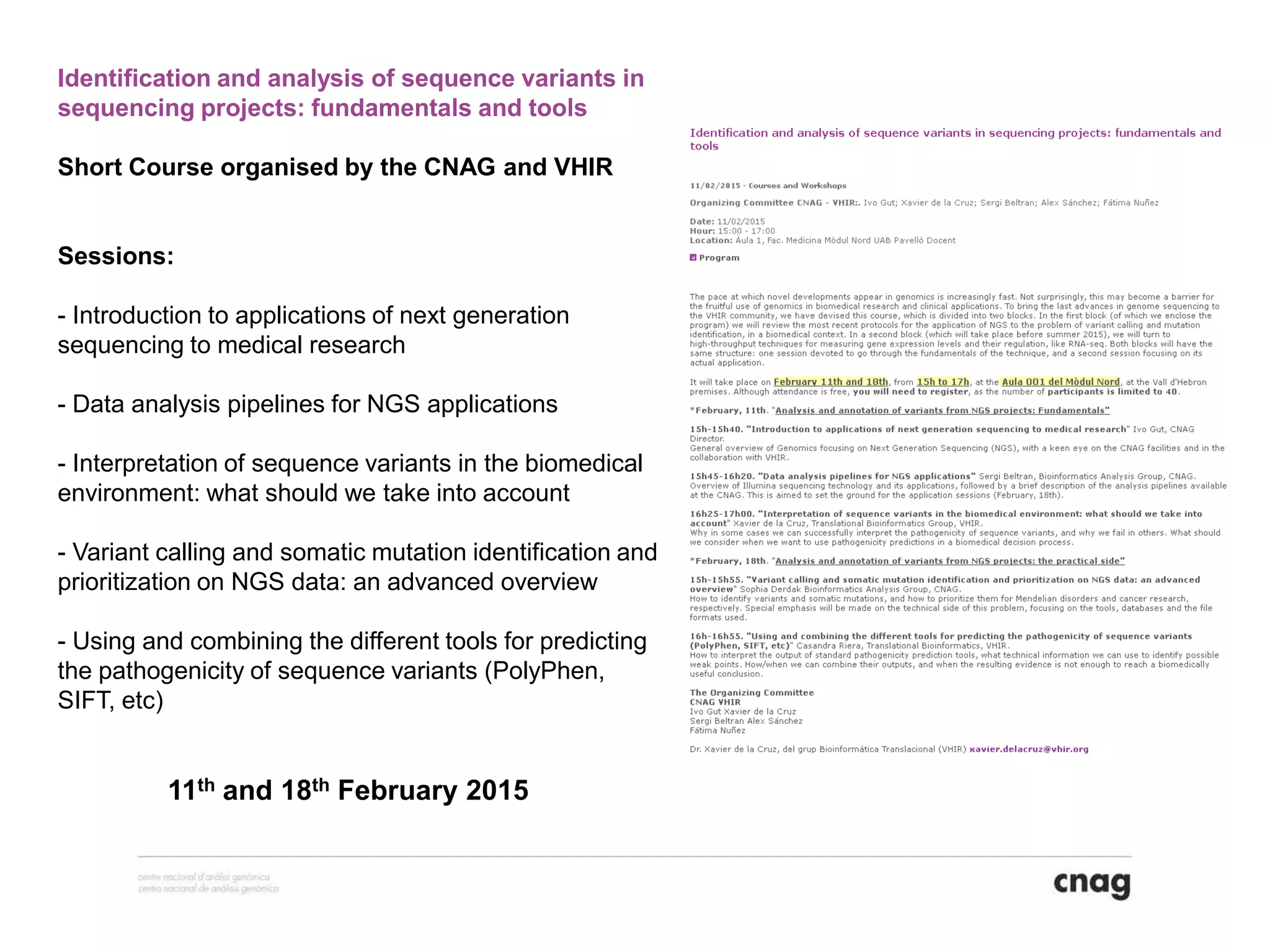
11th and 18th February 2015
Identification and analysis of sequence variants in
sequencing projects: fundamentals and tools
Short Course organised by the CNAG and VHIR
Sessions:
- Introduction to applications of next generation
sequencing to medical research
- Data analysis pipelines for NGS applications
- Interpretation of sequence variants in the biomedical
environment: what should we take into account
- Variant calling and somatic mutation identification and
prioritization on NGS data: an advanced overview
- Using and combining the different tools for predicting
the pathogenicity of sequence variants (PolyPhen,
SIFT, etc)
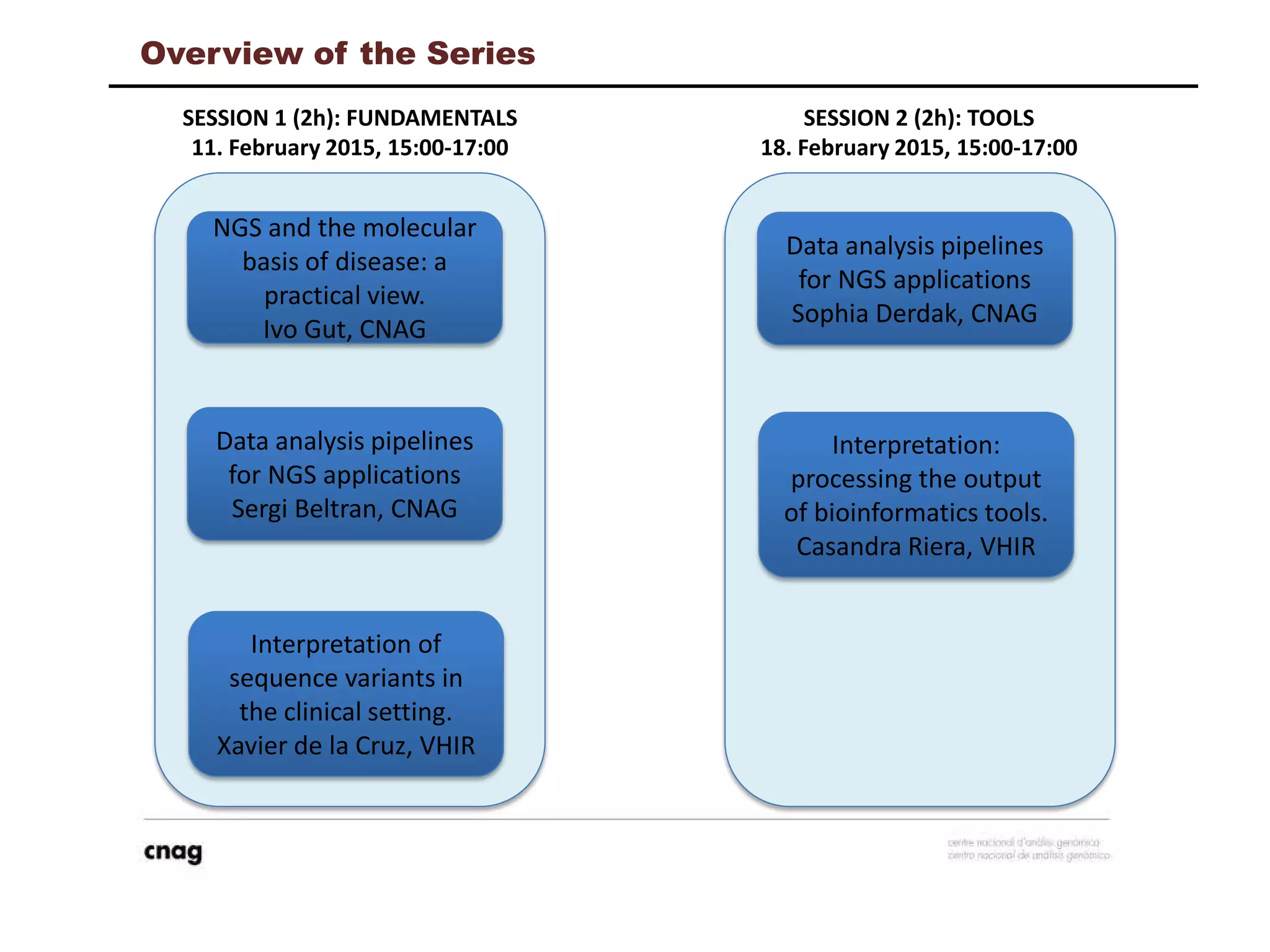
Overview of the Series
NGS and the molecular
basis of disease: a
practical view.
Ivo Gut, CNAG
Data analysis pipelines
for NGS applications
Sergi Beltran, CNAG
Interpretation of
sequence variants in
the clinical setting.
Xavier de la Cruz, VHIR
SESSION 1 (2h): FUNDAMENTALS
11. February 2015, 15:00-17:00
Data analysis pipelines
for NGS applications
Sophia Derdak, CNAG
Interpretation:
processing the output
of bioinformatics tools.
Casandra Riera, VHIR
SESSION 2 (2h): TOOLS
18. February 2015, 15:00-17:00
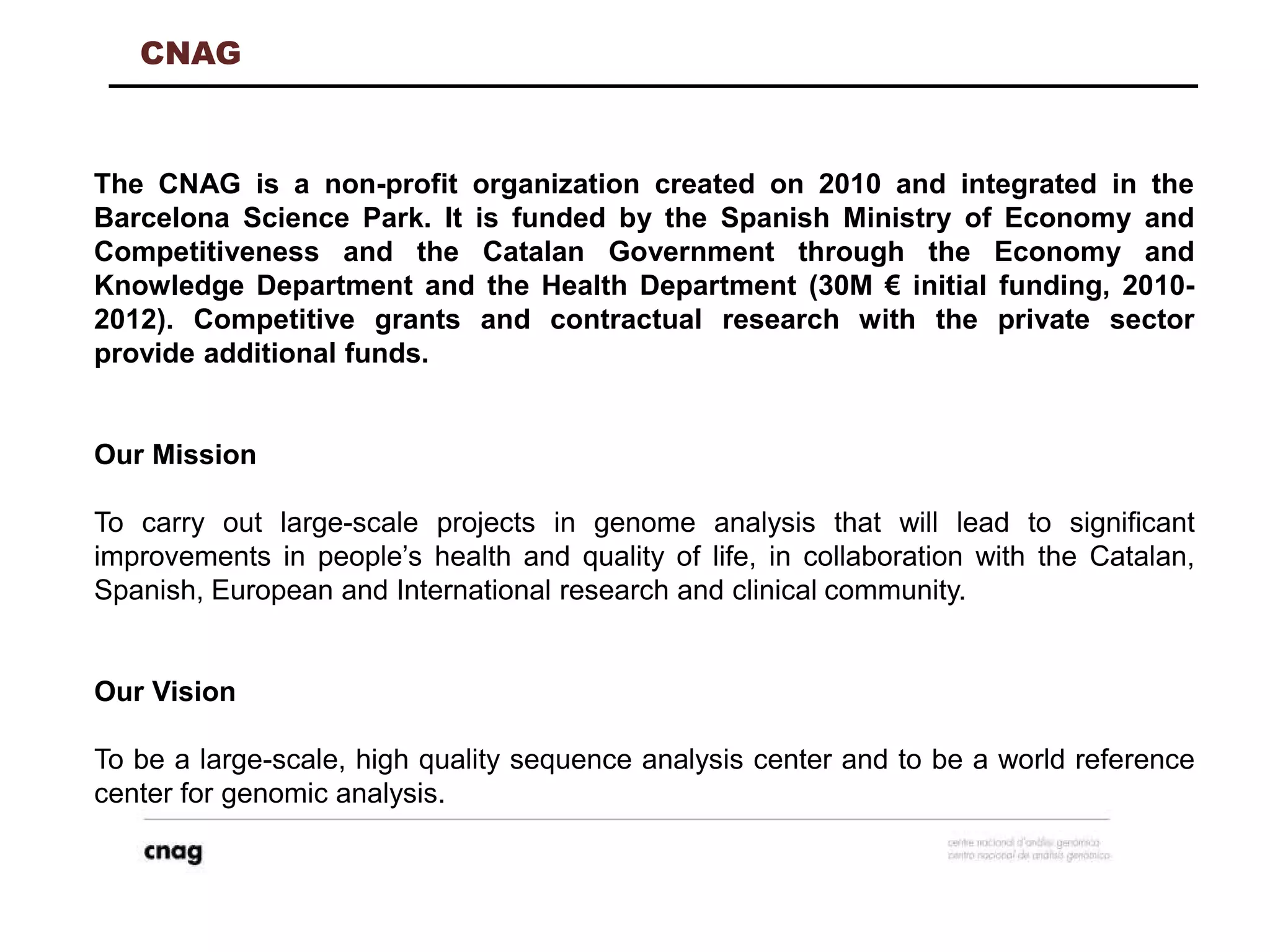
CNAG
The CNAG is a non-profit organization created on 2010 and integrated in the
Barcelona Science Park. It is funded by the Spanish Ministry of Economy and
Competitiveness and the Catalan Government through the Economy and
Knowledge Department and the Health Department (30M € initial funding, 2010-
2012). Competitive grants and contractual research with the private sector
provide additional funds.
Our Mission
To carry out large-scale projects in genome analysis that will lead to significant
improvements in people’s health and quality of life, in collaboration with the Catalan,
Spanish, European and International research and clinical community.
Our Vision
To be a large-scale, high quality sequence analysis center and to be a world reference
center for genomic analysis.
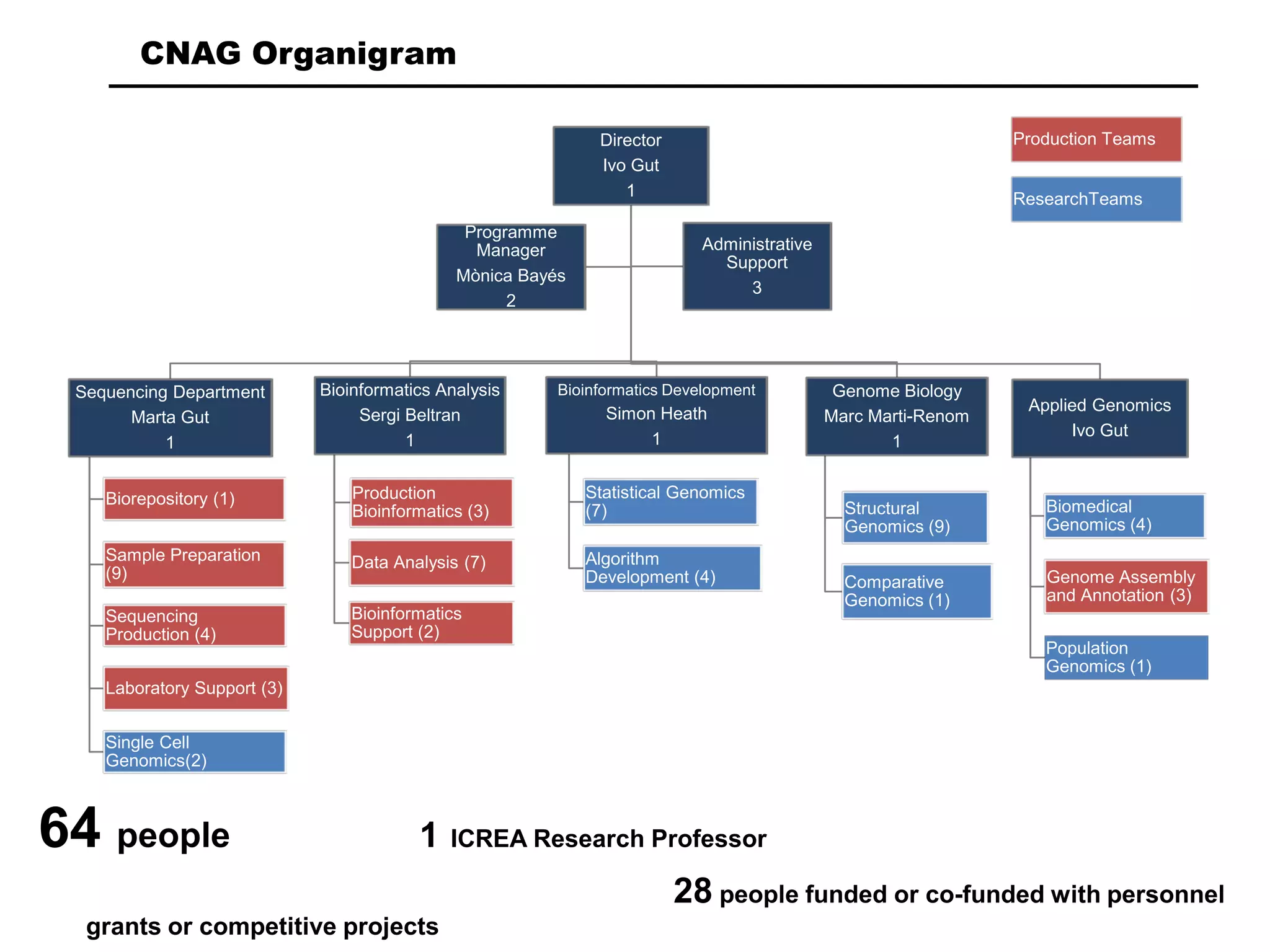
Director
Ivo Gut
1
Sequencing Department
Marta Gut
1
Biorepository (1)
Sample Preparation
(9)
Sequencing
Production (4)
Laboratory Support (3)
Single Cell
Genomics(2)
Bioinformatics Analysis
Sergi Beltran
1
Production
Bioinformatics (3)
Data Analysis (7)
Bioinformatics
Support (2)
Bioinformatics Development
Simon Heath
1
Statistical Genomics
(7)
Algorithm
Development (4)
Genome Biology
Marc Marti-Renom
1
Structural
Genomics (9)
Comparative
Genomics (1)
Applied Genomics
Ivo Gut
Biomedical
Genomics (4)
Genome Assembly
and Annotation (3)
Population
Genomics (1)
Programme
Manager
Mònica Bayés
2
Administrative
Support
3
Production Teams
ResearchTeams
CNAG Organigram
64 people 1 ICREA Research Professor
28 people funded or co-funded with personnel
grants or competitive projects
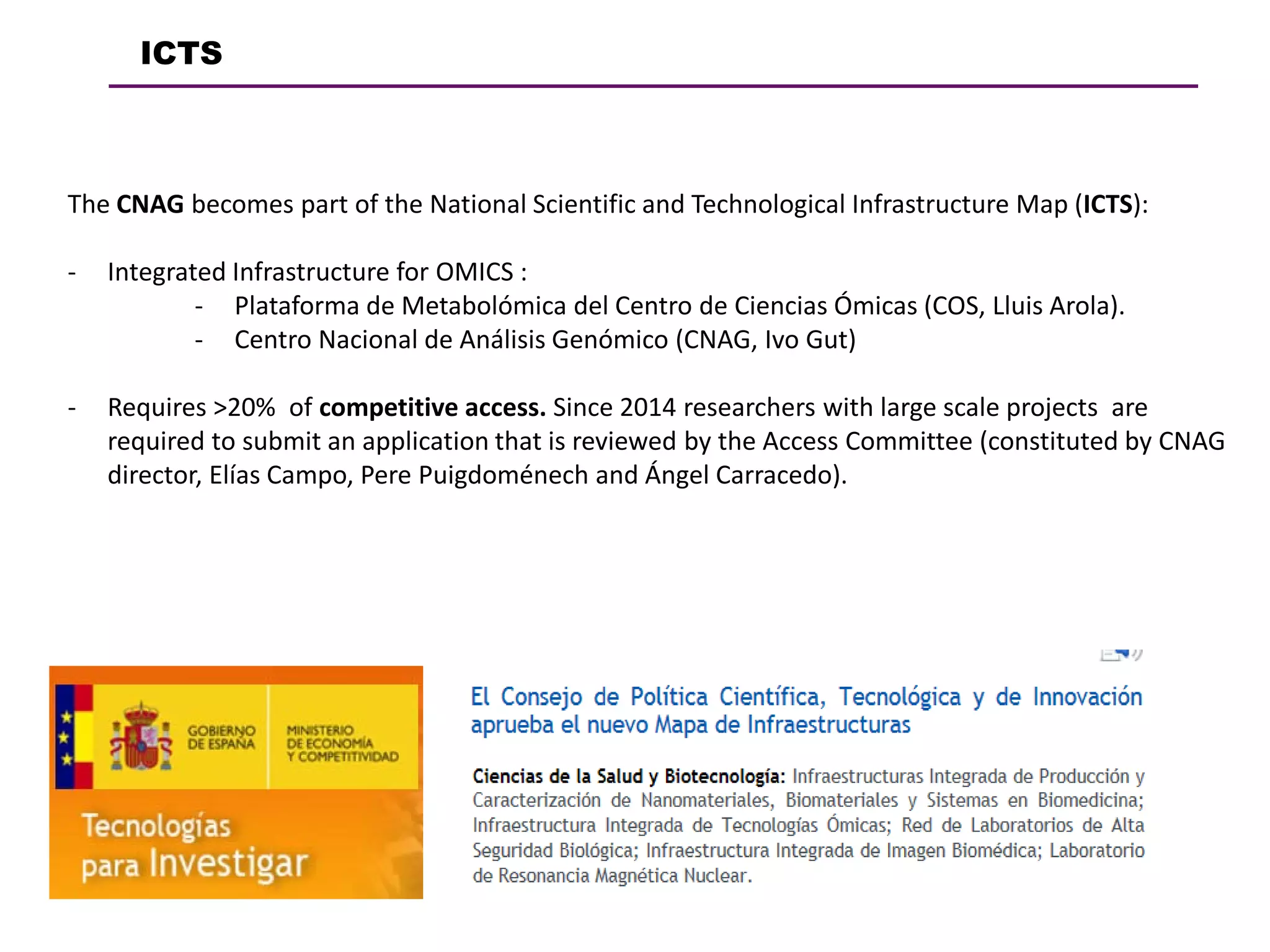
ICTS
The CNAG becomes part of the National Scientific and Technological Infrastructure Map (ICTS):
- Integrated Infrastructure for OMICS :
- Plataforma de Metabolómica del Centro de Ciencias Ómicas (COS, Lluis Arola).
- Centro Nacional de Análisis Genómico (CNAG, Ivo Gut)
- Requires >20% of competitive access. Since 2014 researchers with large scale projects are
required to submit an application that is reviewed by the Access Committee (constituted by CNAG
director, Elías Campo, Pere Puigdoménech and Ángel Carracedo).
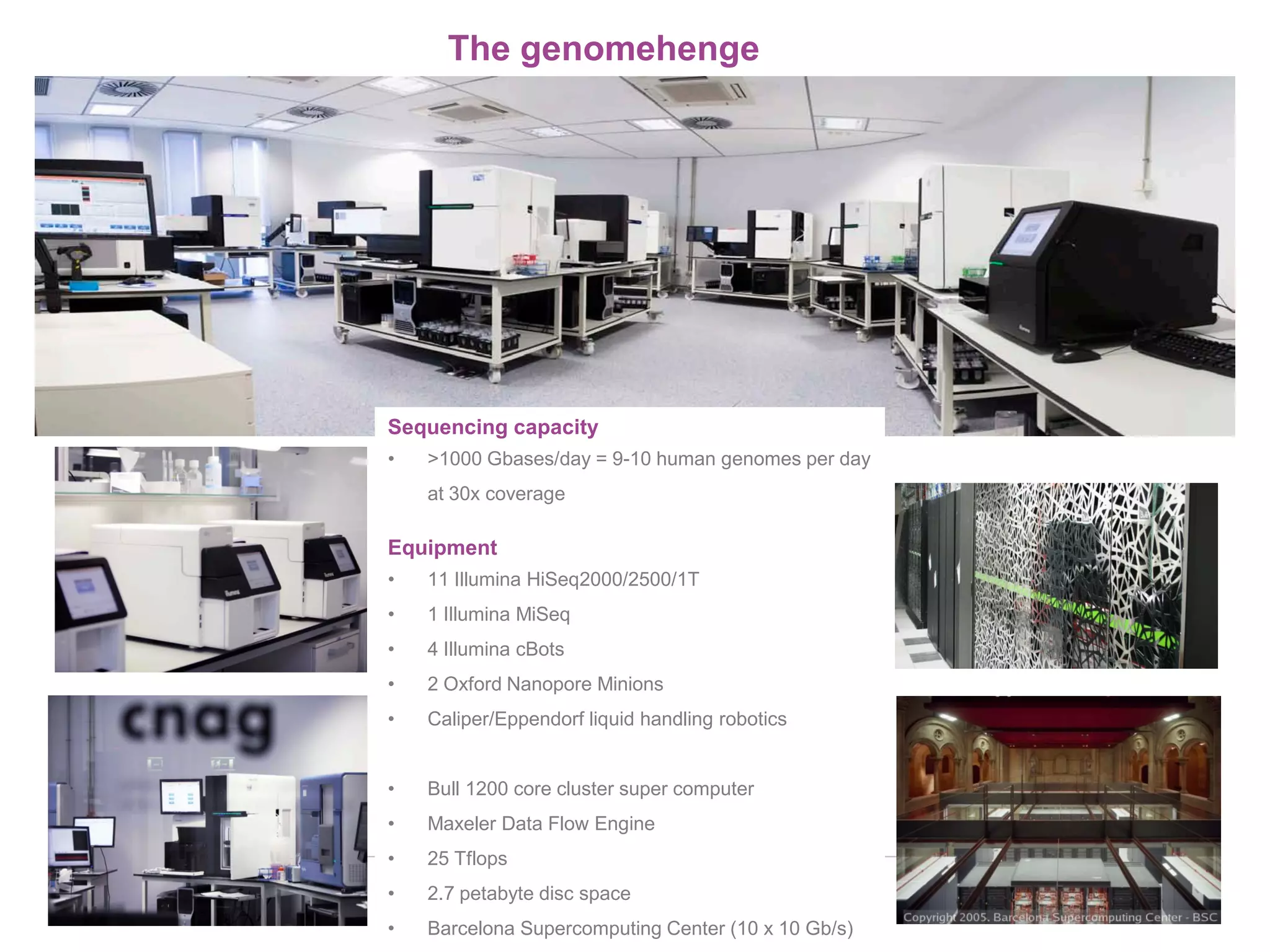
The genomehenge
Sequencing capacity
• >1000 Gbases/day = 9-10 human genomes per day
at 30x coverage
Equipment
• 11 Illumina HiSeq2000/2500/1T
• 1 Illumina MiSeq
• 4 Illumina cBots
• 2 Oxford Nanopore Minions
• Caliper/Eppendorf liquid handling robotics
• Bull 1200 core cluster super computer
• Maxeler Data Flow Engine
• 25 Tflops
• 2.7 petabyte disc space
• Barcelona Supercomputing Center (10 x 10 Gb/s)
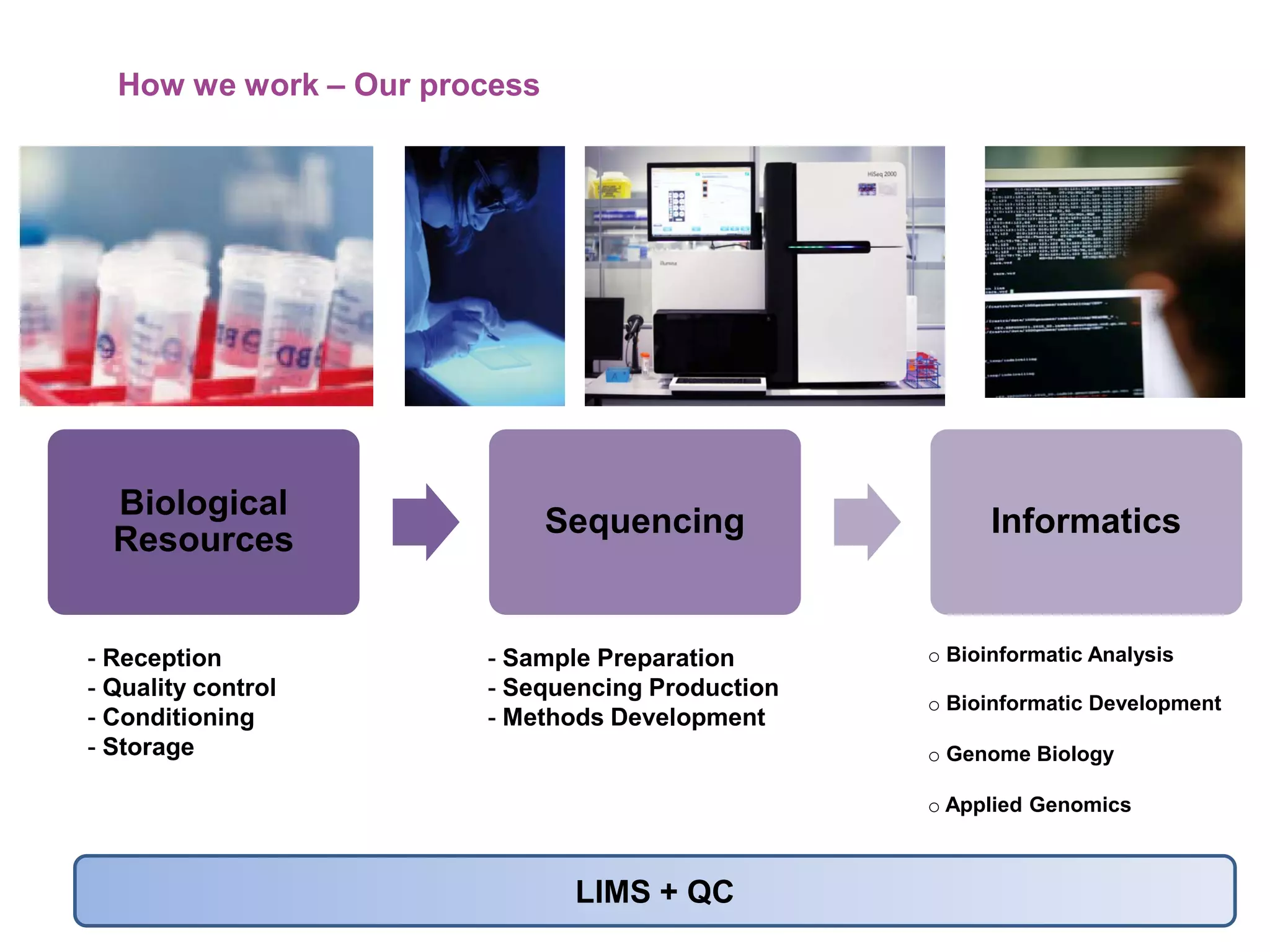
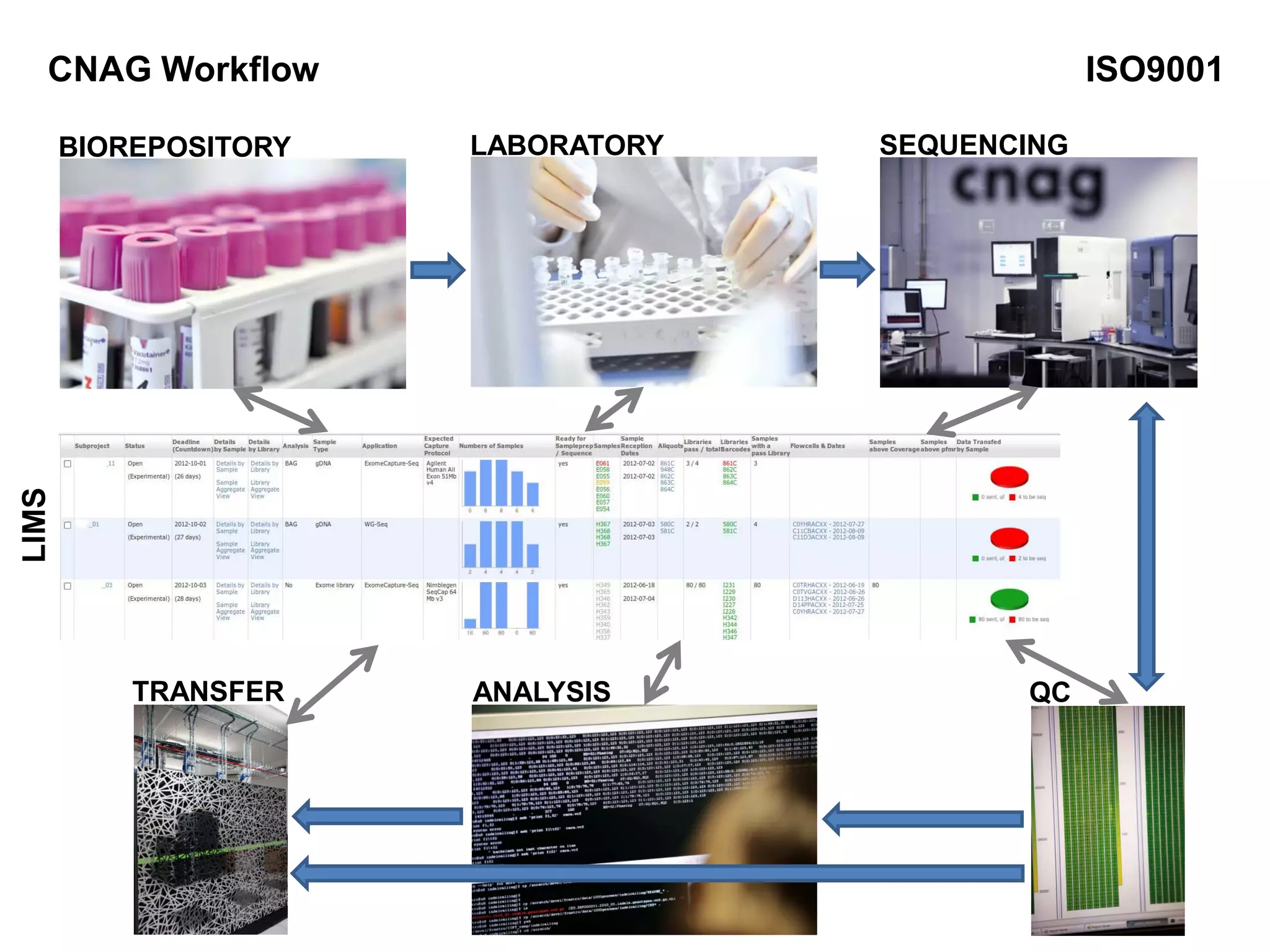
How we work – Our process
Biological
Resources
Sequencing Informatics
- Reception
- Quality control
- Conditioning
- Storage
- Sample Preparation
- Sequencing Production
- Methods Development
o Bioinformatic Analysis
o Bioinformatic Development
o Genome Biology
o Applied Genomics
LIMS + QC
BIOREPOSITORY LABORATORY SEQUENCING
QCANALYSISTRANSFER
LIMS
CNAG Workflow ISO9001
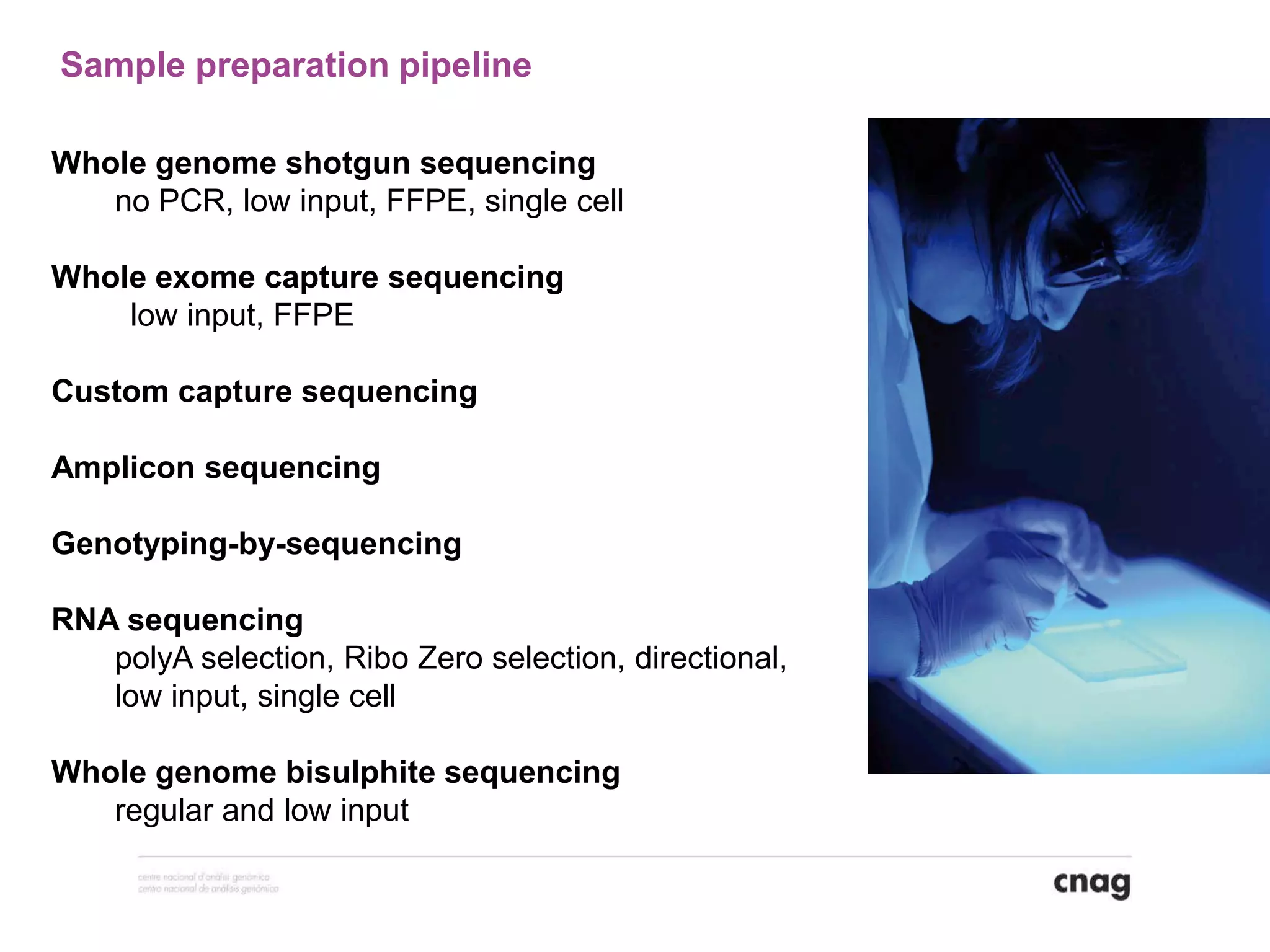
Sample preparation pipeline
Whole genome shotgun sequencing
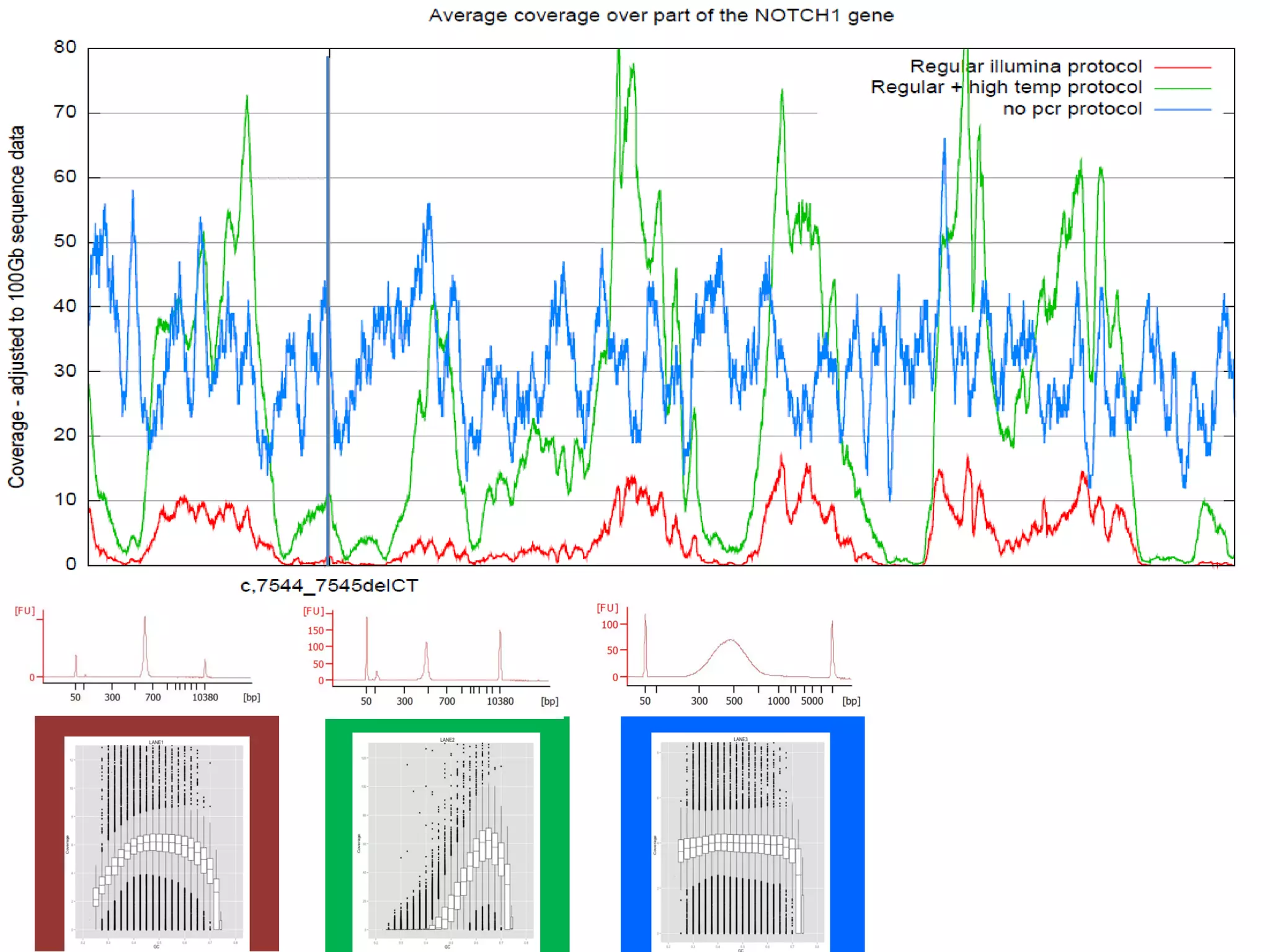
no PCR, low input, FFPE, single cell
Whole exome capture sequencing
low input, FFPE
Custom capture sequencing
Amplicon sequencing
Genotyping-by-sequencing
RNA sequencing
polyA selection, Ribo Zero selection, directional,
low input, single cell
Whole genome bisulphite sequencing
regular and low input
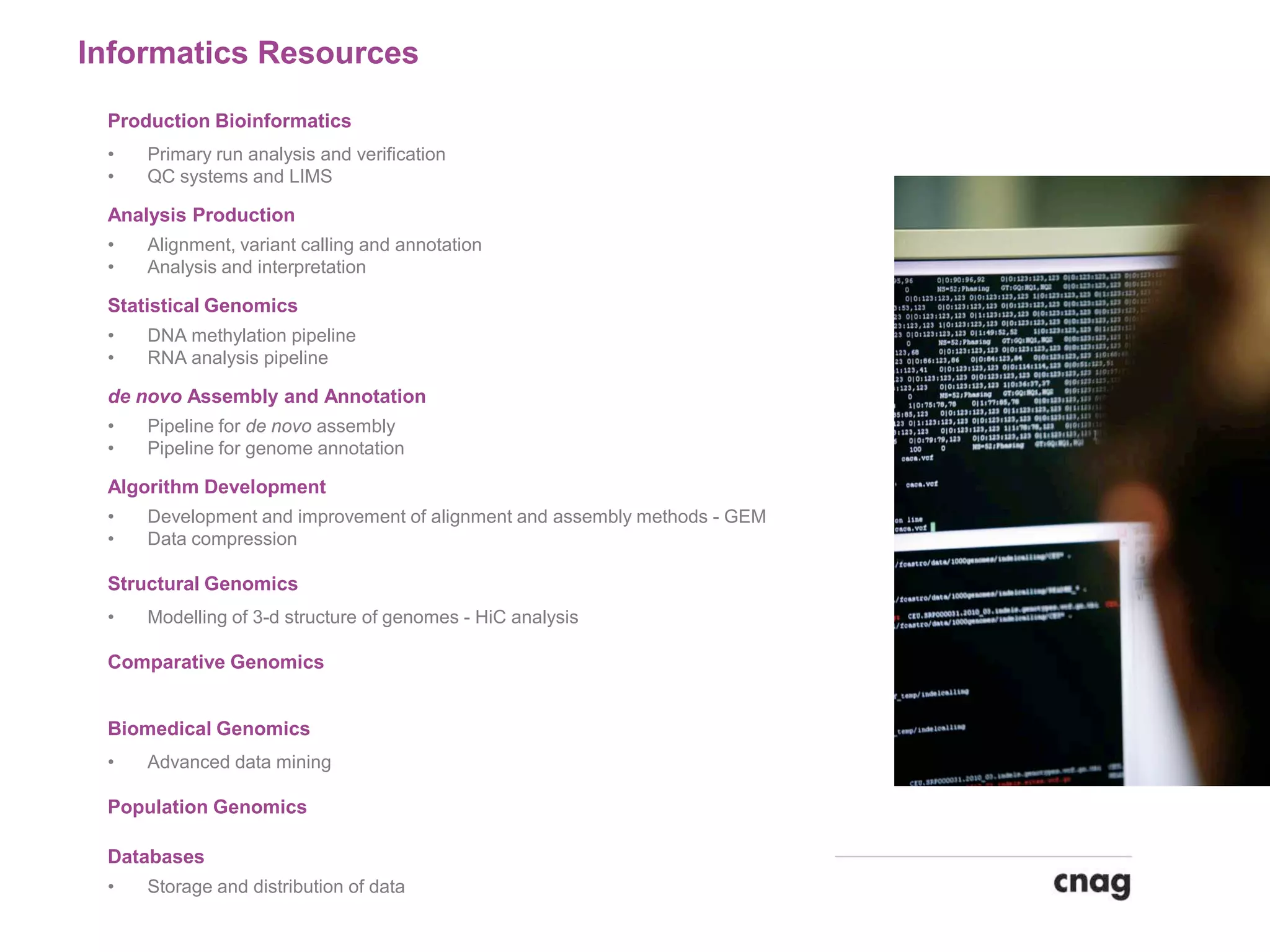
Informatics Resources
Production Bioinformatics
• Primary run analysis and verification
• QC systems and LIMS
Analysis Production
• Alignment, variant calling and annotation
• Analysis and interpretation
Statistical Genomics
• DNA methylation pipeline
• RNA analysis pipeline
de novo Assembly and Annotation
• Pipeline for de novo assembly
• Pipeline for genome annotation
Algorithm Development
• Development and improvement of alignment and assembly methods - GEM
• Data compression
Structural Genomics
• Modelling of 3-d structure of genomes - HiC analysis
Comparative Genomics
Biomedical Genomics
• Advanced data mining
Population Genomics
Databases
• Storage and distribution of data
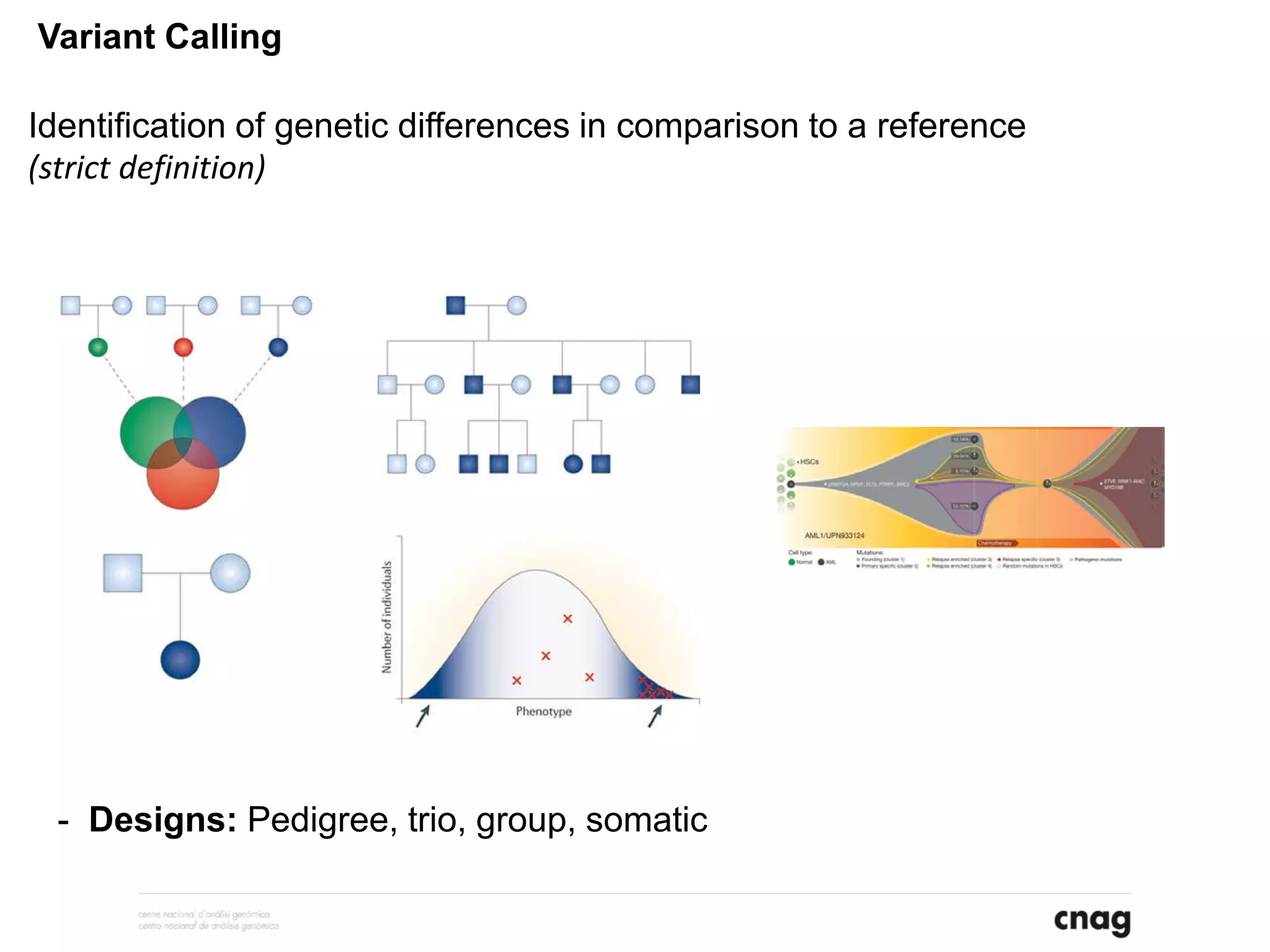
Variant Calling
Identification of genetic differences in comparison to a reference
(strict definition)
- Designs: Pedigree, trio, group, somatic
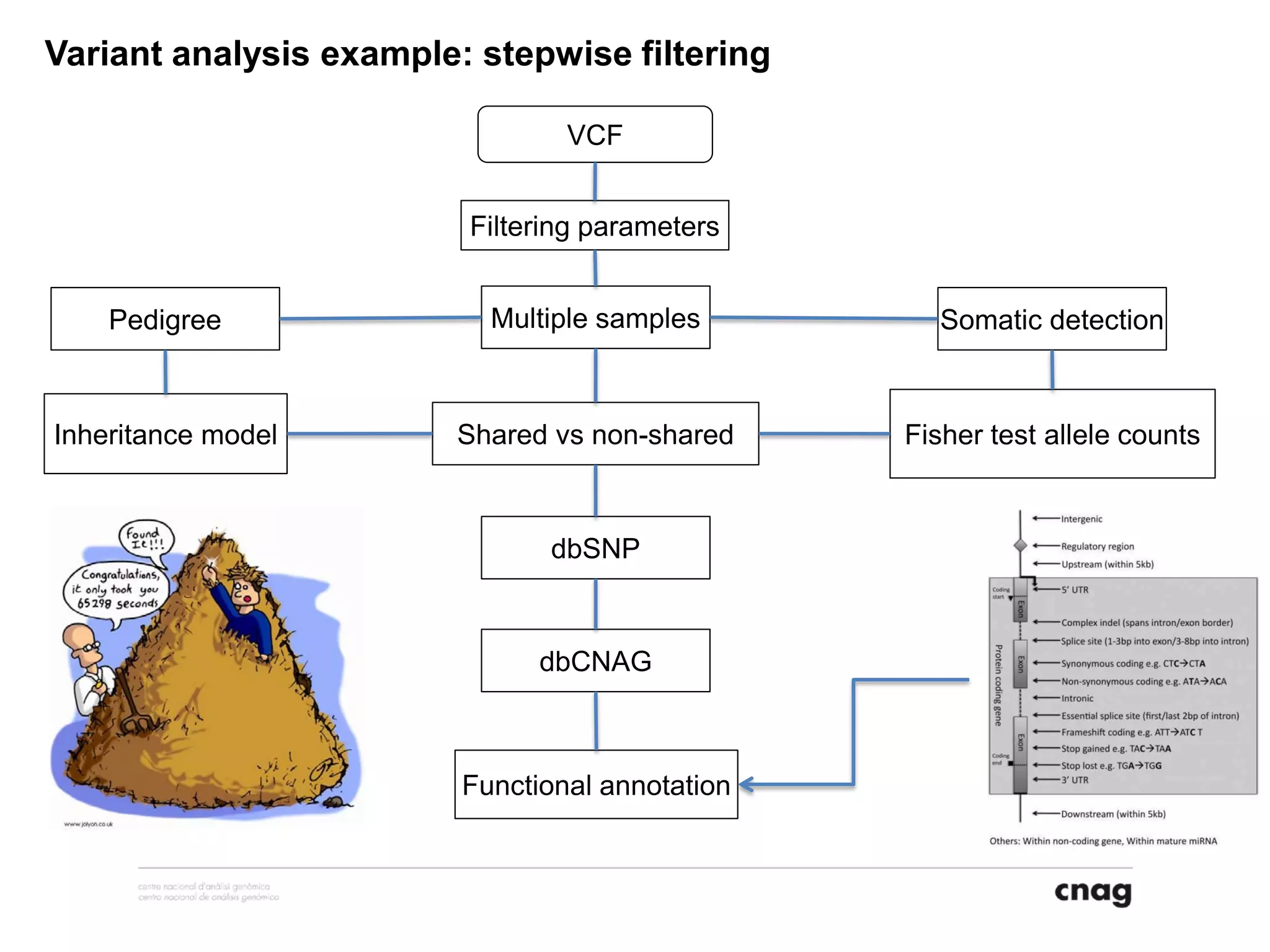
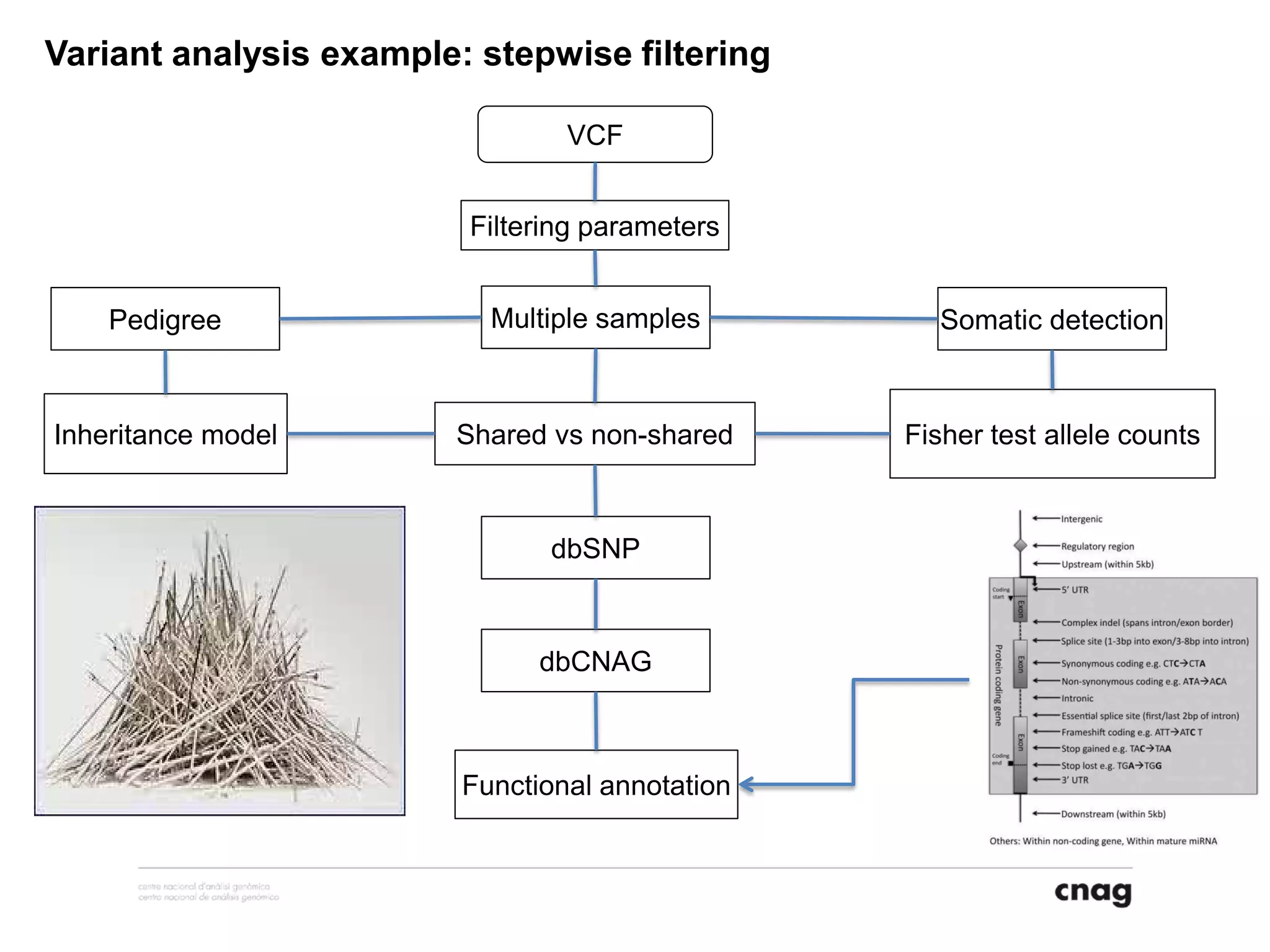
Variant analysis example: stepwise filtering
VCF
Filtering parameters
dbSNP
dbCNAG
Inheritance model
Functional annotation
Pedigree Multiple samples Somatic detection
Shared vs non-shared Fisher test allele counts
Variant analysis example: stepwise filtering
VCF
Filtering parameters
dbSNP
dbCNAG
Inheritance model
Functional annotation
Pedigree Multiple samples Somatic detection
Shared vs non-shared Fisher test allele counts
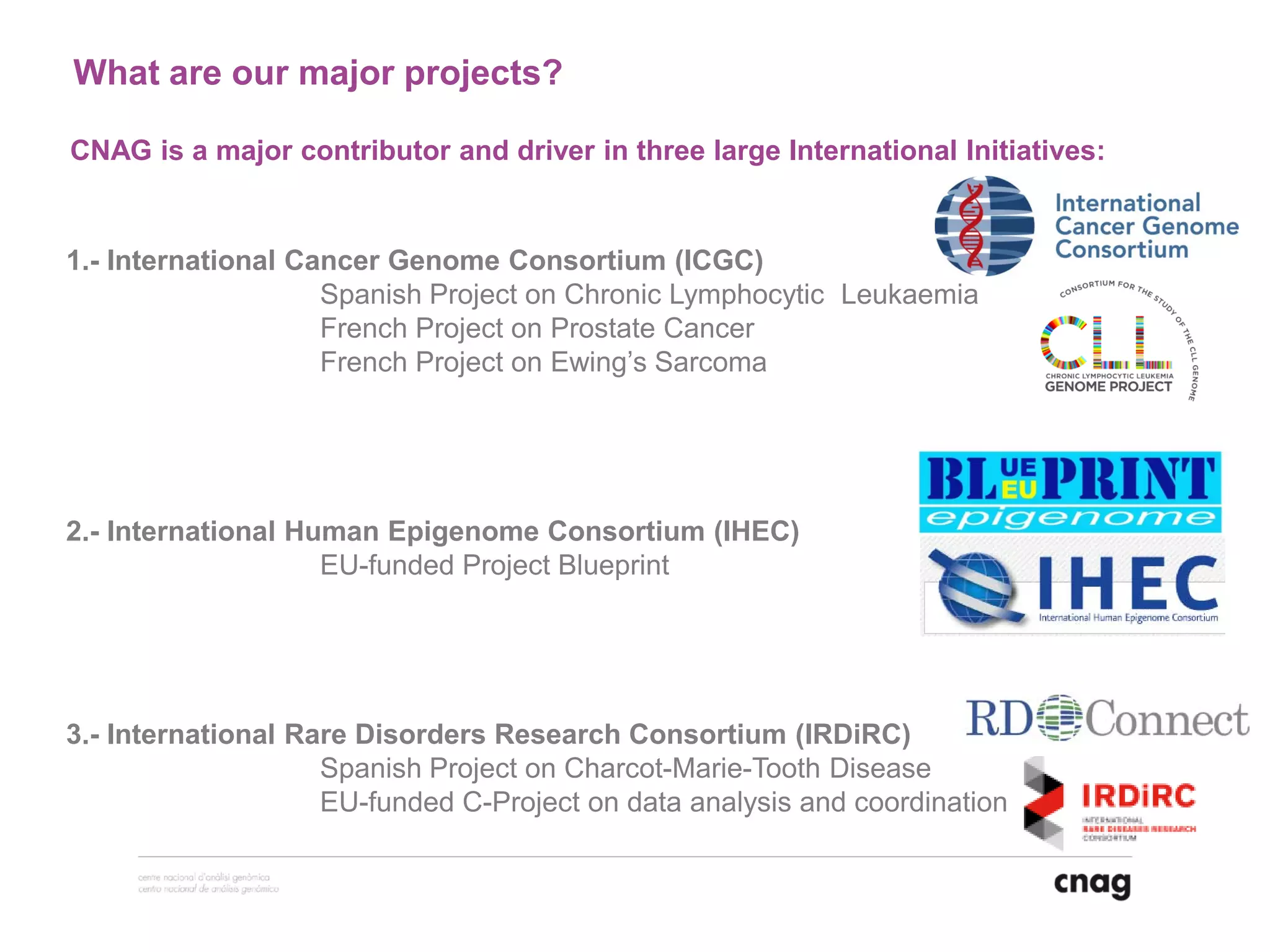
CNAG is a major contributor and driver in three large International Initiatives:
1.- International Cancer Genome Consortium (ICGC)
Spanish Project on Chronic Lymphocytic Leukaemia
French Project on Prostate Cancer
French Project on Ewing’s Sarcoma
2.- International Human Epigenome Consortium (IHEC)
EU-funded Project Blueprint
3.- International Rare Disorders Research Consortium (IRDiRC)
Spanish Project on Charcot-Marie-Tooth Disease
EU-funded C-Project on data analysis and coordination
What are our major projects?
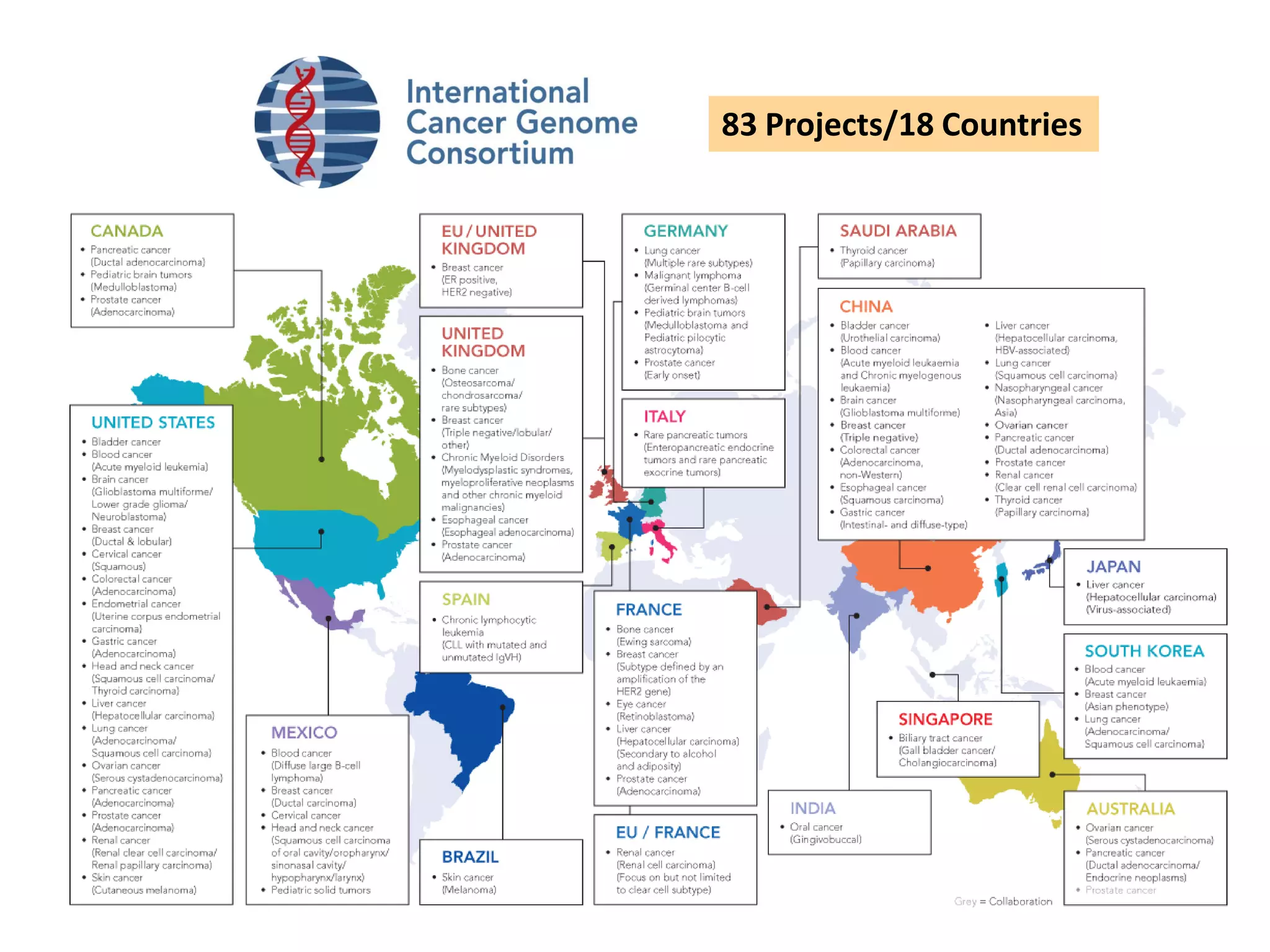
83 Projects/18 Countries
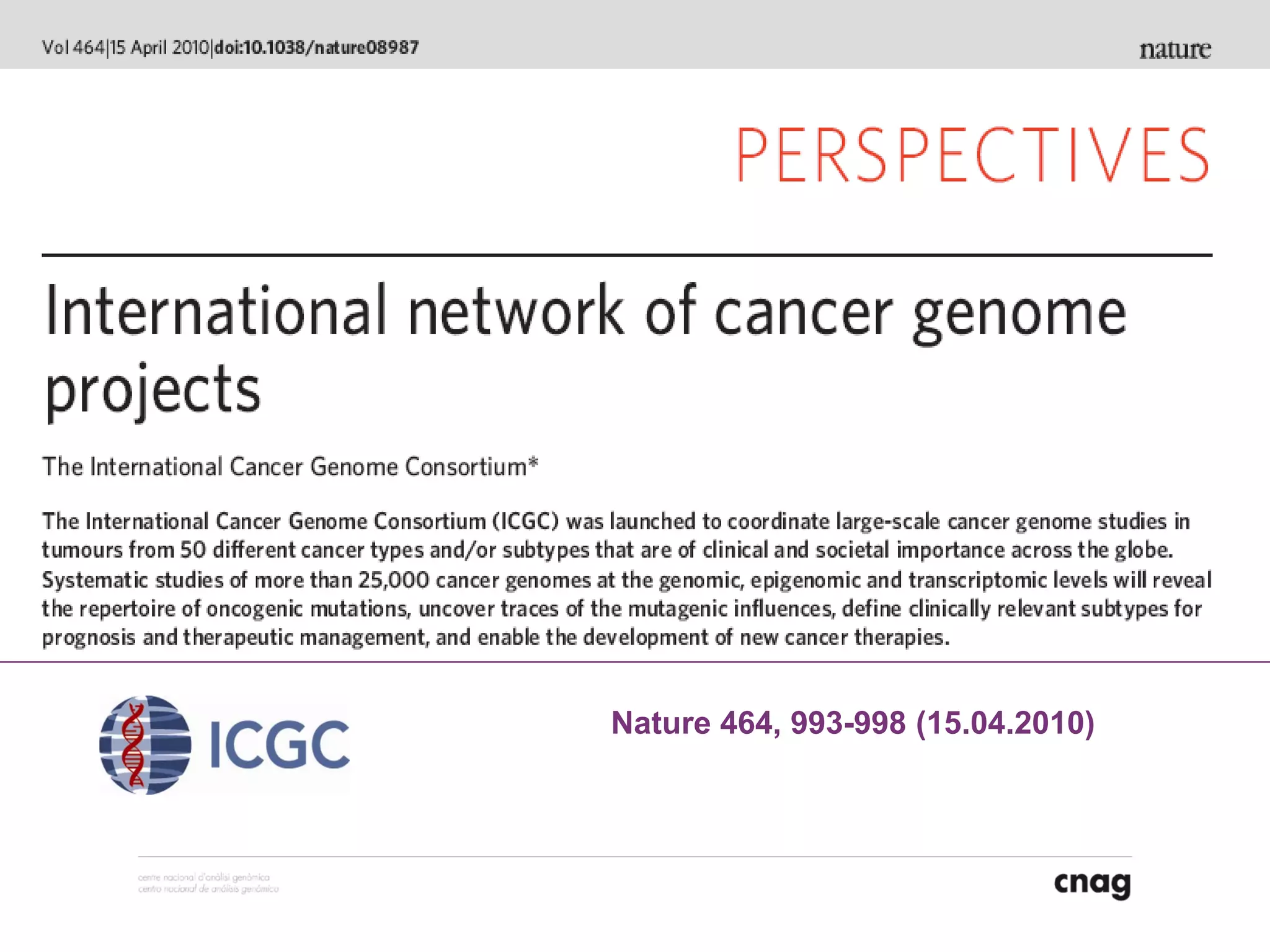
Nature 464, 993-998 (15.04.2010)
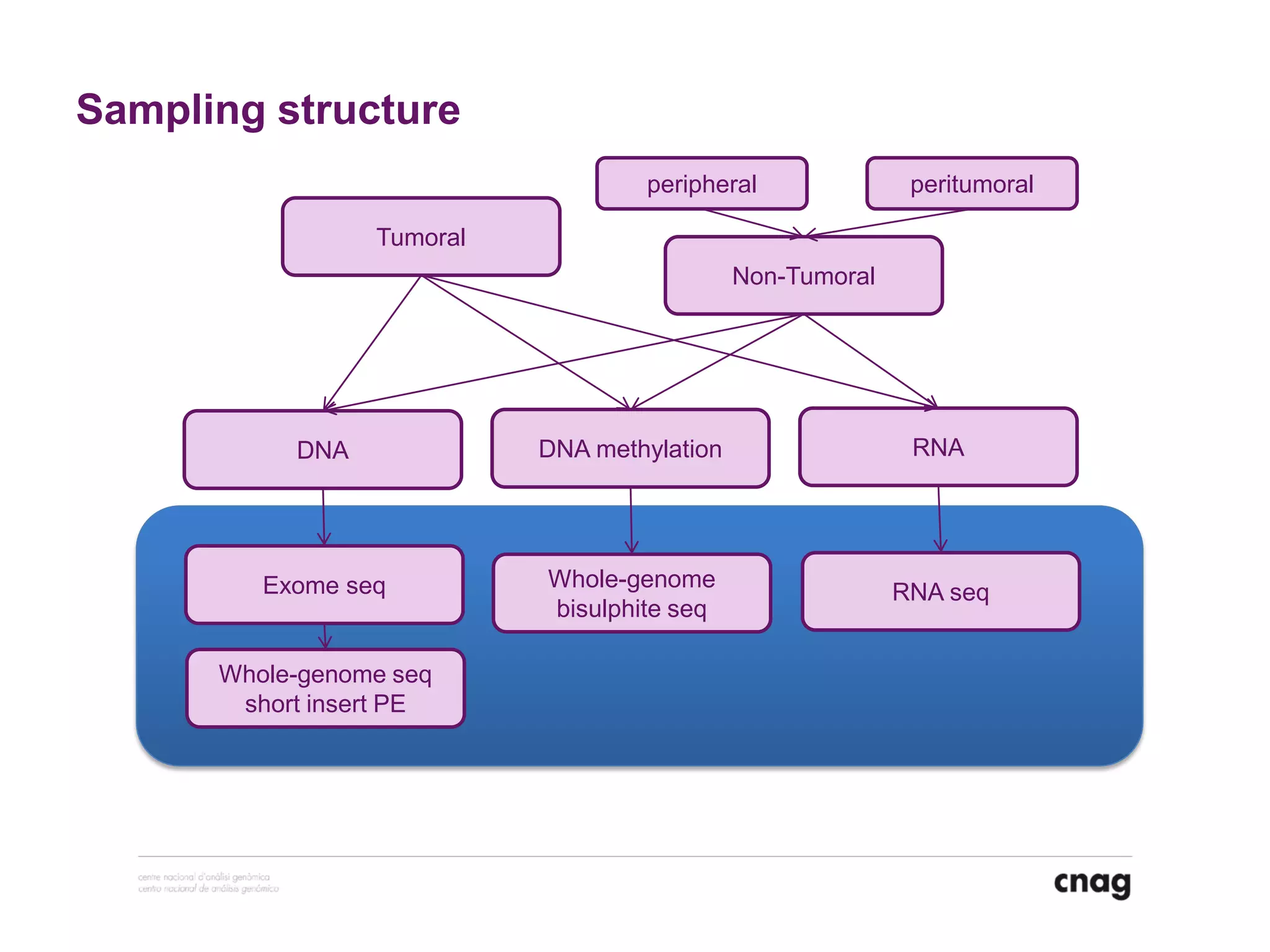
Tumoral
Non-Tumoral
RNADNA methylationDNA
peripheral peritumoral
Whole-genome
bisulphite seq
Exome seq RNA seq
Whole-genome seq
short insert PE
Sampling structure
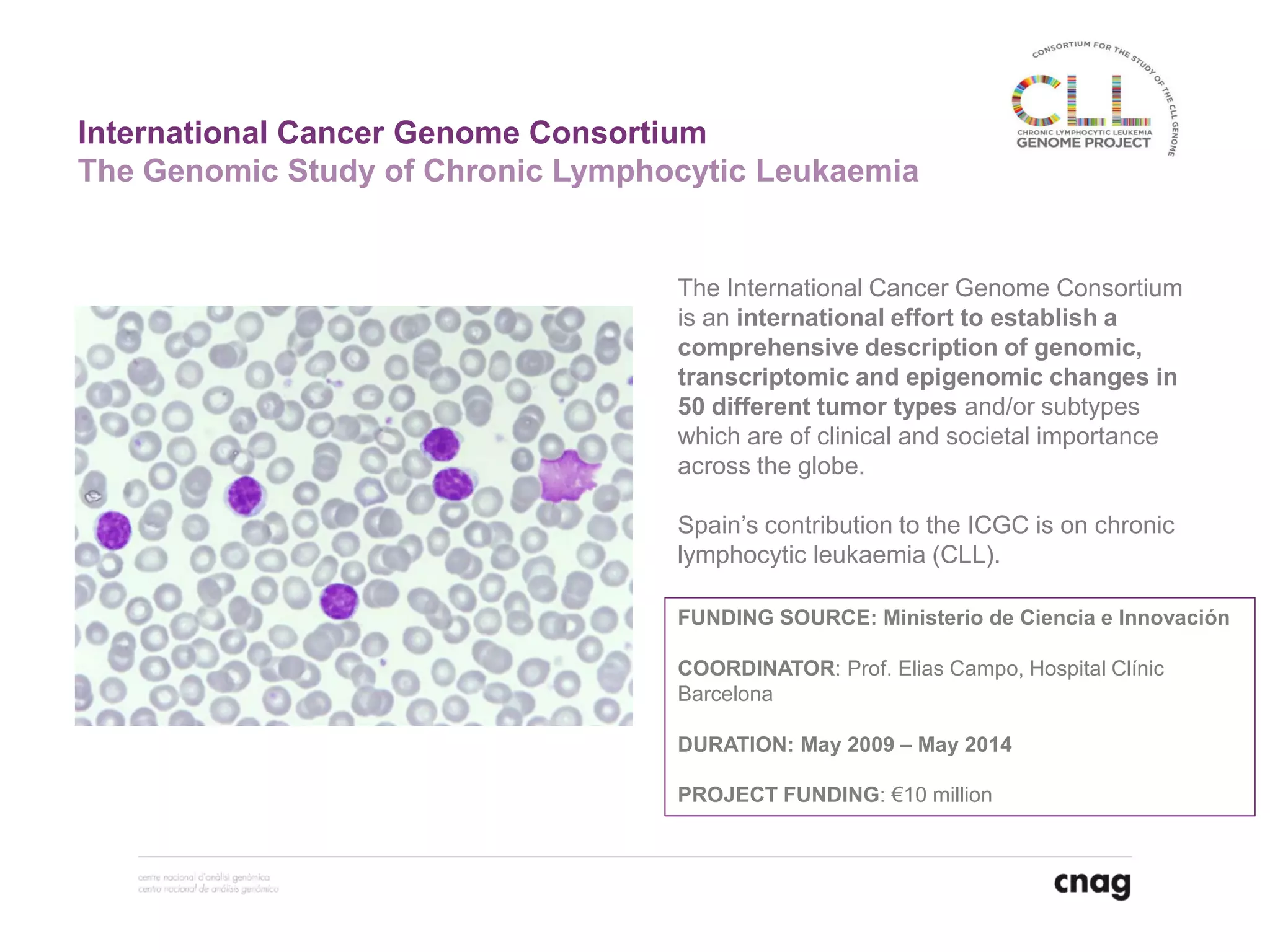
International Cancer Genome Consortium
The International Cancer Genome Consortium
is an international effort to establish a
comprehensive description of genomic,
transcriptomic and epigenomic changes in
50 different tumor types and/or subtypes
which are of clinical and societal importance
across the globe.
Spain’s contribution to the ICGC is on chronic
lymphocytic leukaemia (CLL).
FUNDING SOURCE: Ministerio de Ciencia e Innovación
COORDINATOR: Prof. Elias Campo, Hospital Clínic
Barcelona
DURATION: May 2009 – May 2014
PROJECT FUNDING: €10 million
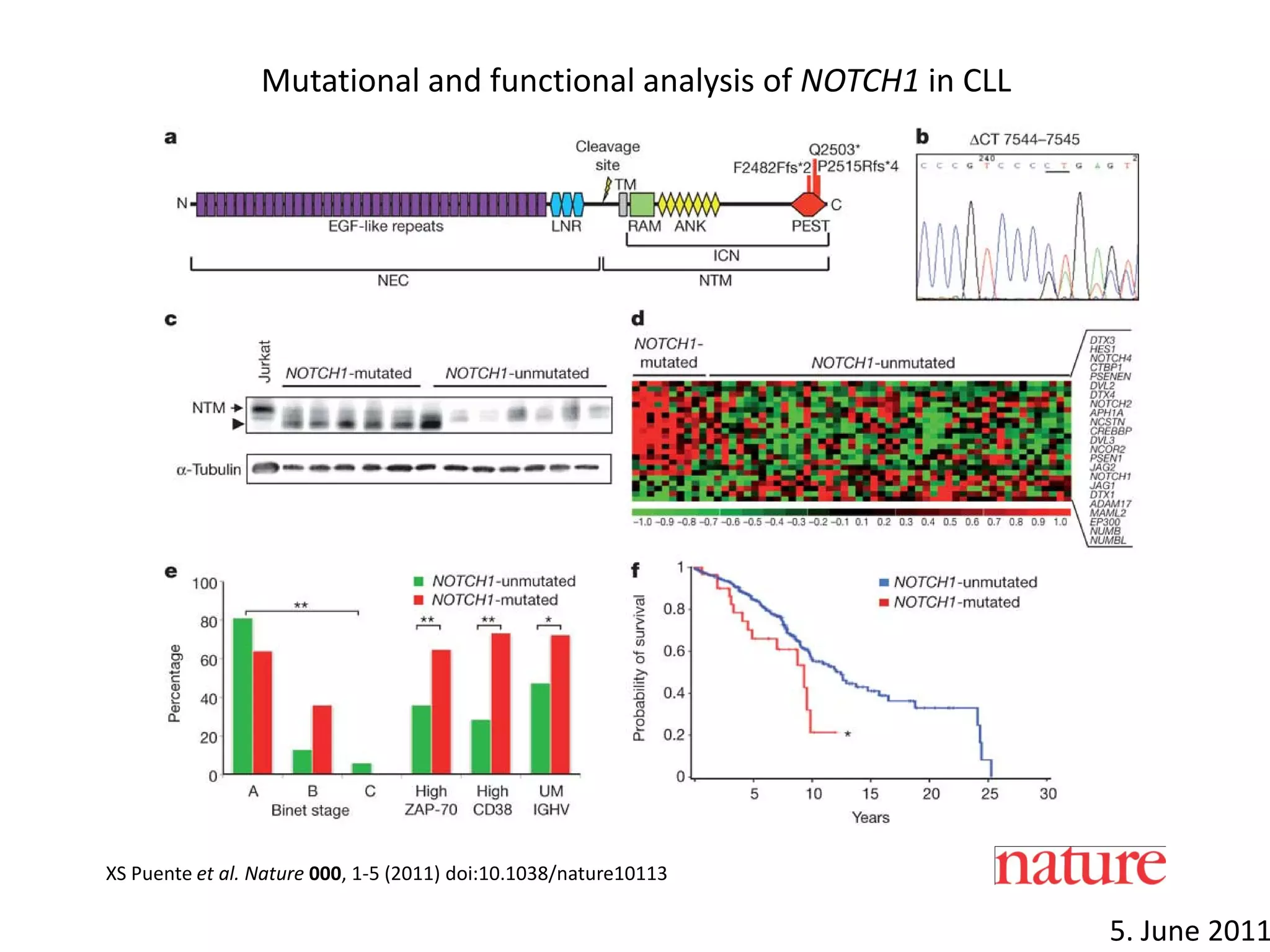
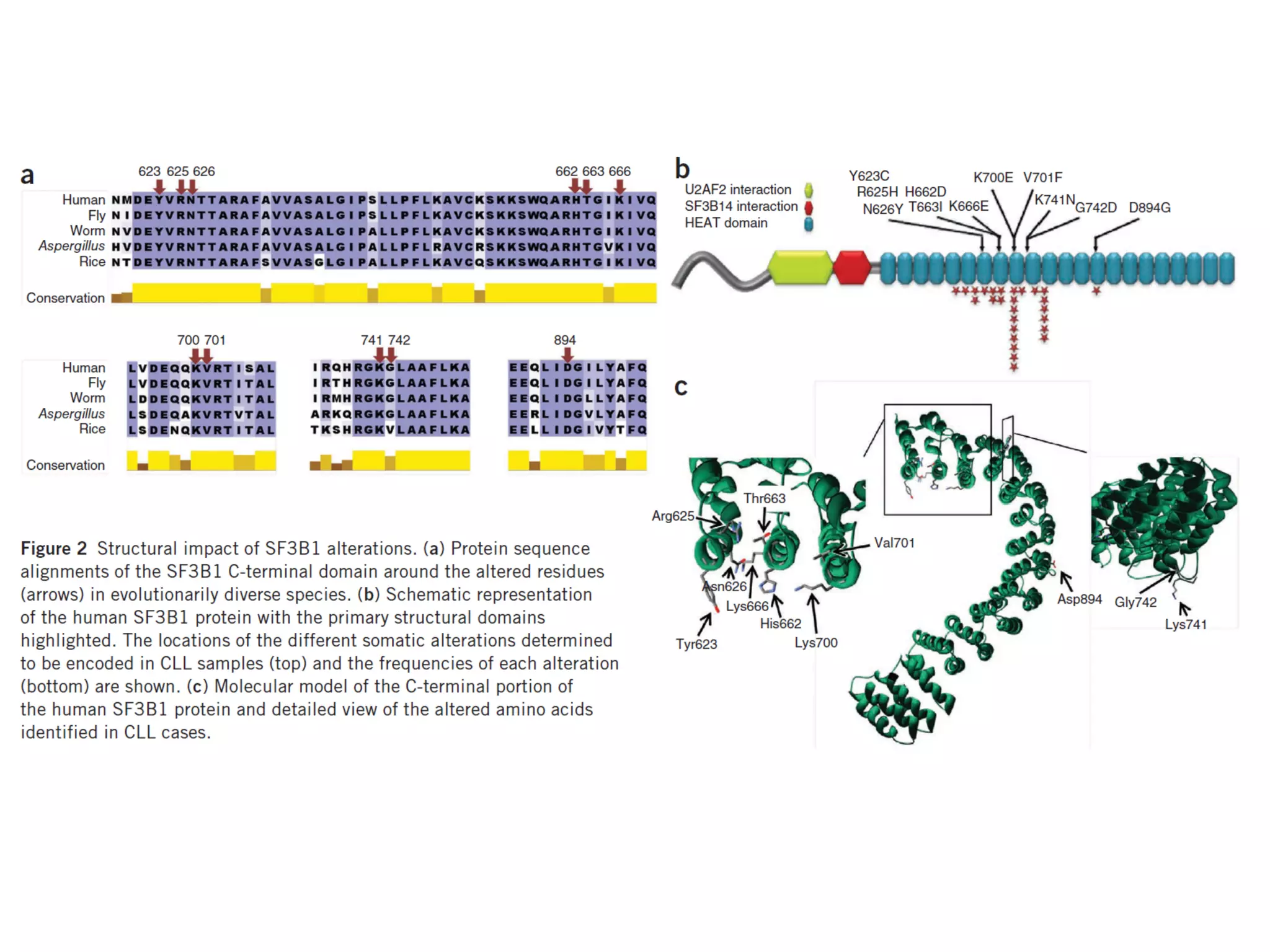
XS Puente et al. Nature 000, 1-5 (2011) doi:10.1038/nature10113
Mutational and functional analysis of NOTCH1 in CLL
5. June 2011
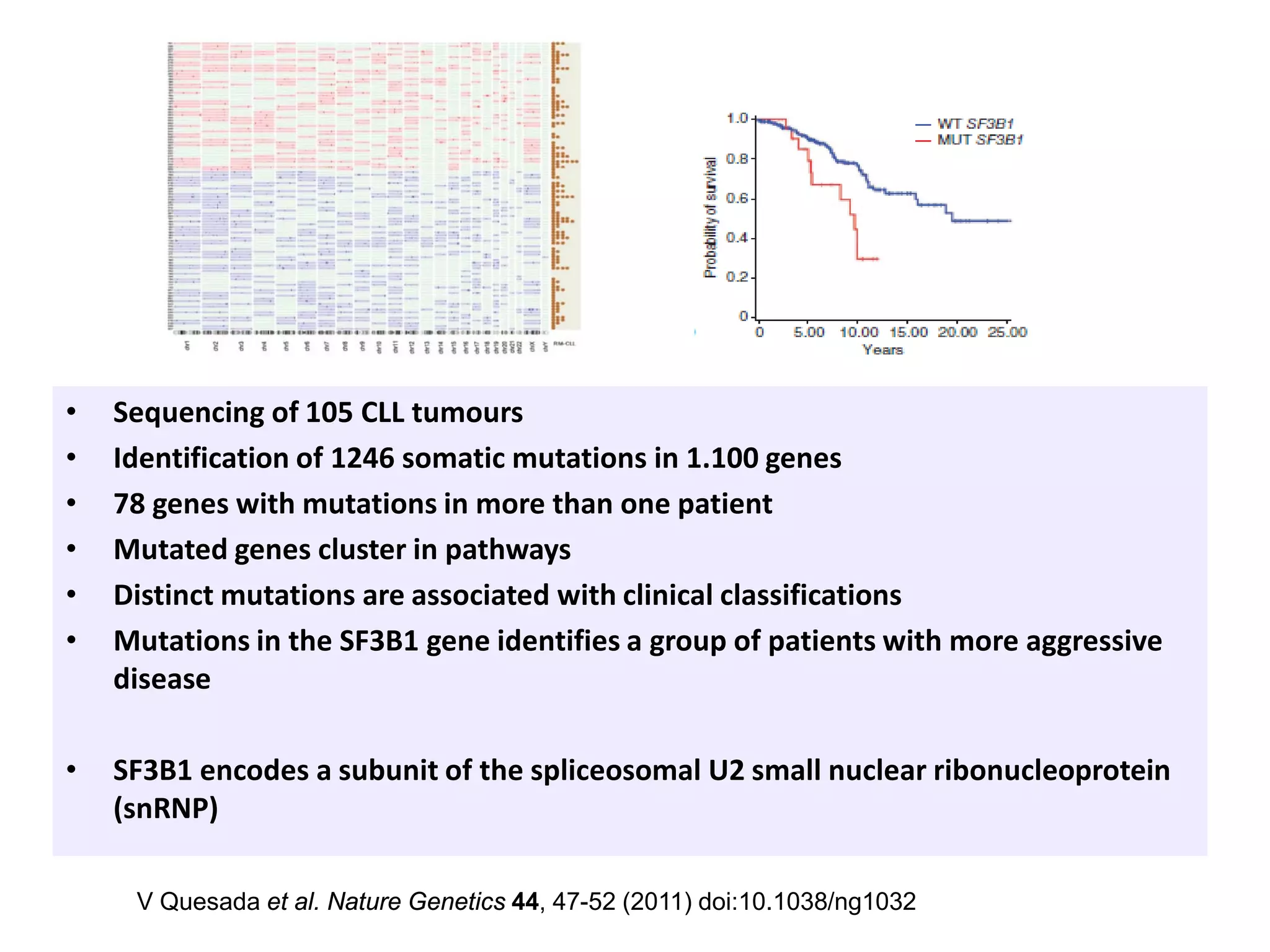
• Sequencing of 105 CLL tumours
• Identification of 1246 somatic mutations in 1.100 genes
• 78 genes with mutations in more than one patient
• Mutated genes cluster in pathways
• Distinct mutations are associated with clinical classifications
• Mutations in the SF3B1 gene identifies a group of patients with more aggressive
disease
• SF3B1 encodes a subunit of the spliceosomal U2 small nuclear ribonucleoprotein
(snRNP)
V Quesada et al. Nature Genetics 44, 47-52 (2011) doi:10.1038/ng1032
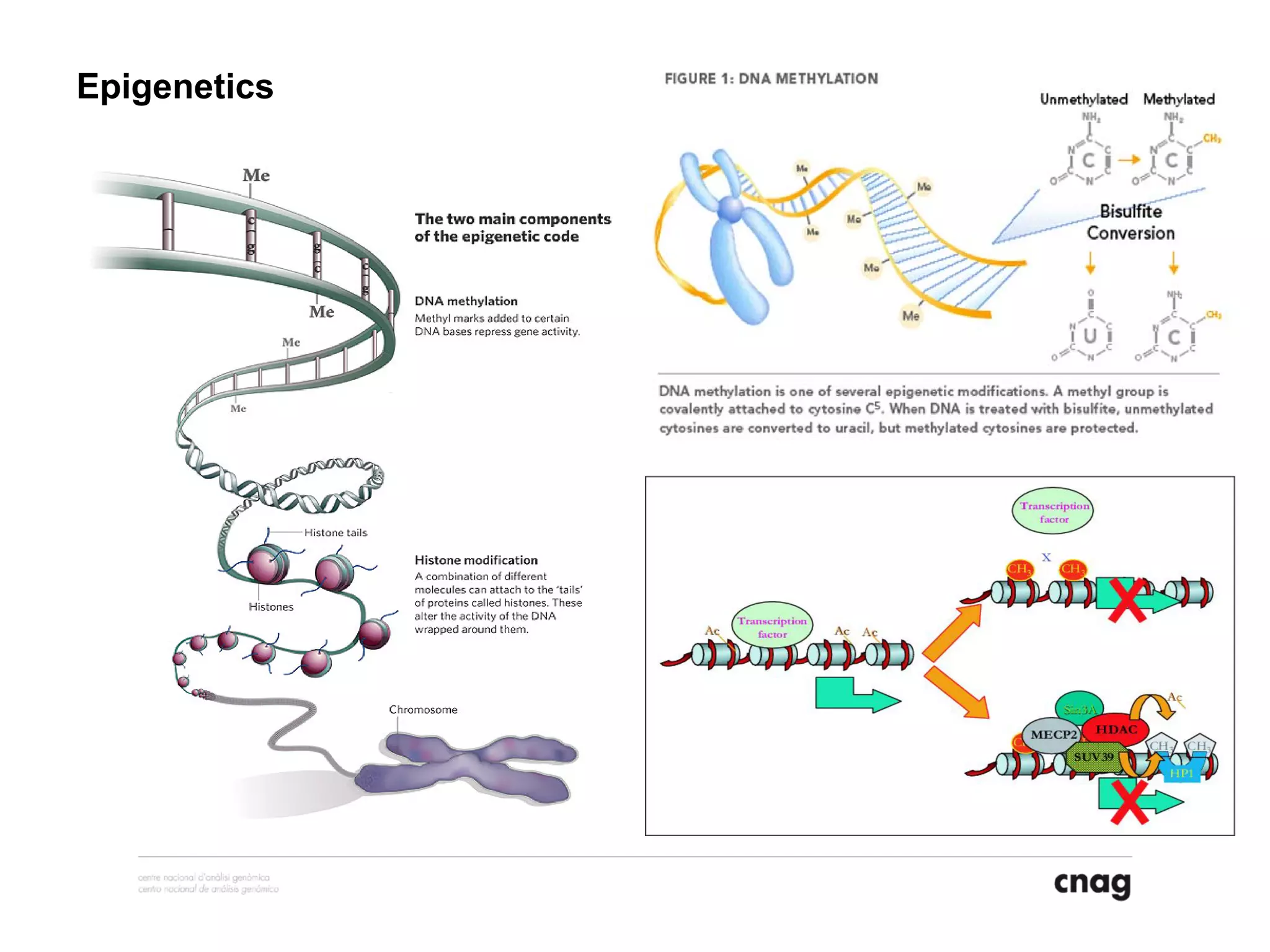
Epigenetics
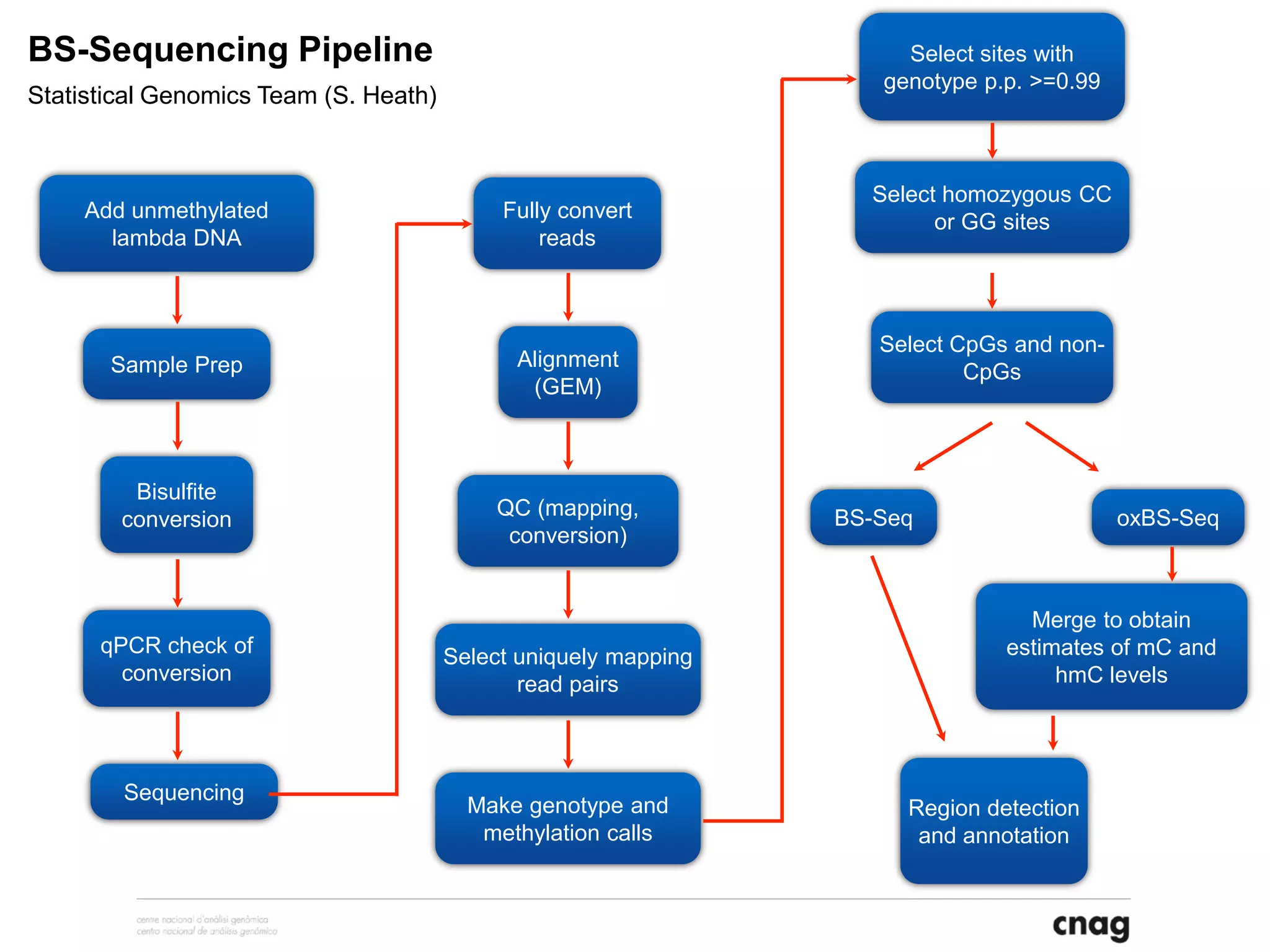
Sample Prep
Add unmethylated
lambda DNA
Bisulfite
conversion
qPCR check of
conversion
Sequencing
Fully convert
reads
Alignment
(GEM)
QC (mapping,
conversion)
Select uniquely mapping
read pairs
Make genotype and
methylation calls
Select sites with
genotype p.p. >=0.99
Select CpGs and non-
CpGs
Select homozygous CC
or GG sites
Region detection
and annotation
BS-Seq oxBS-Seq
Merge to obtain
estimates of mC and
hmC levels
BS-Sequencing Pipeline
Statistical Genomics Team (S. Heath)
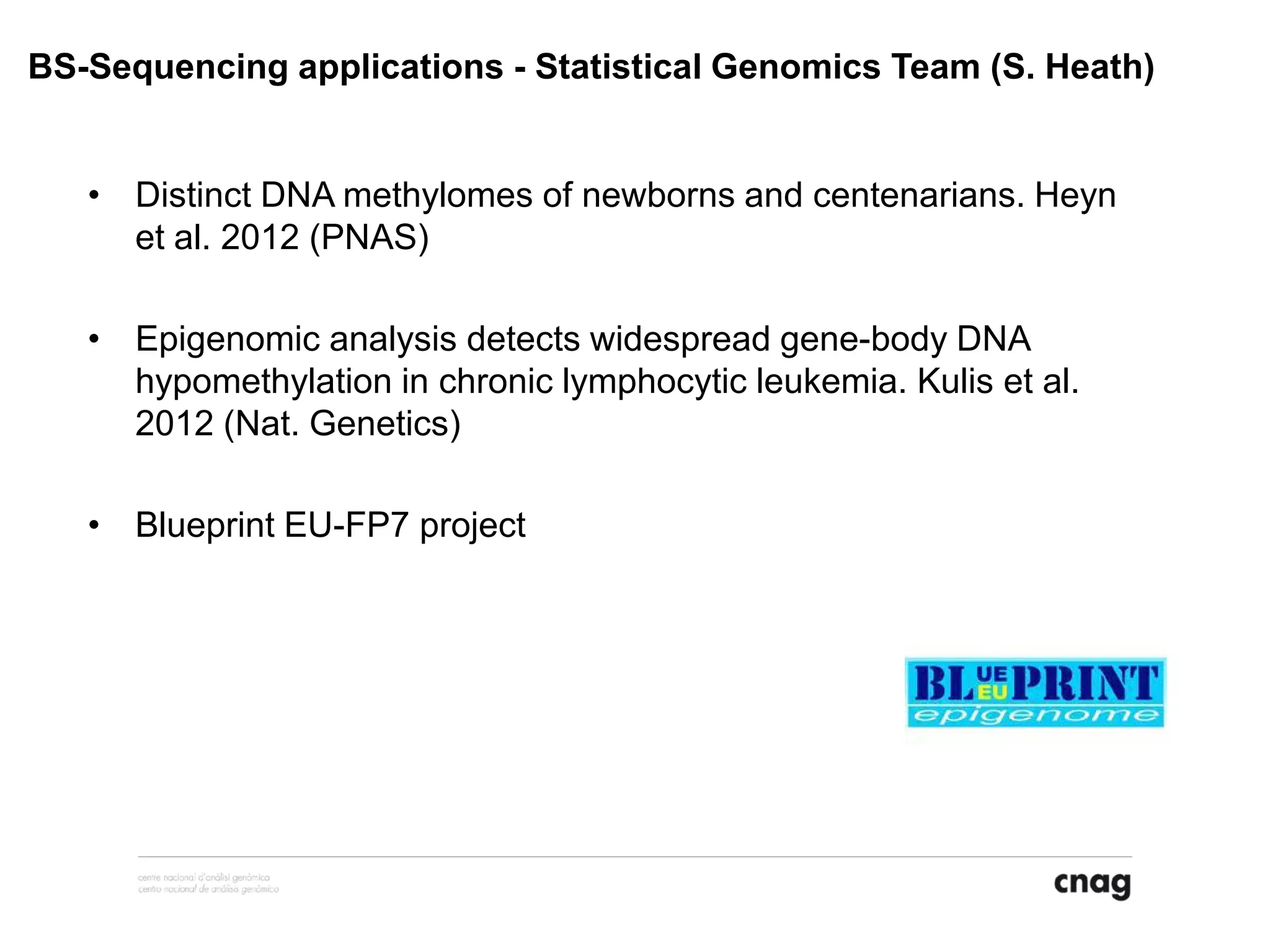
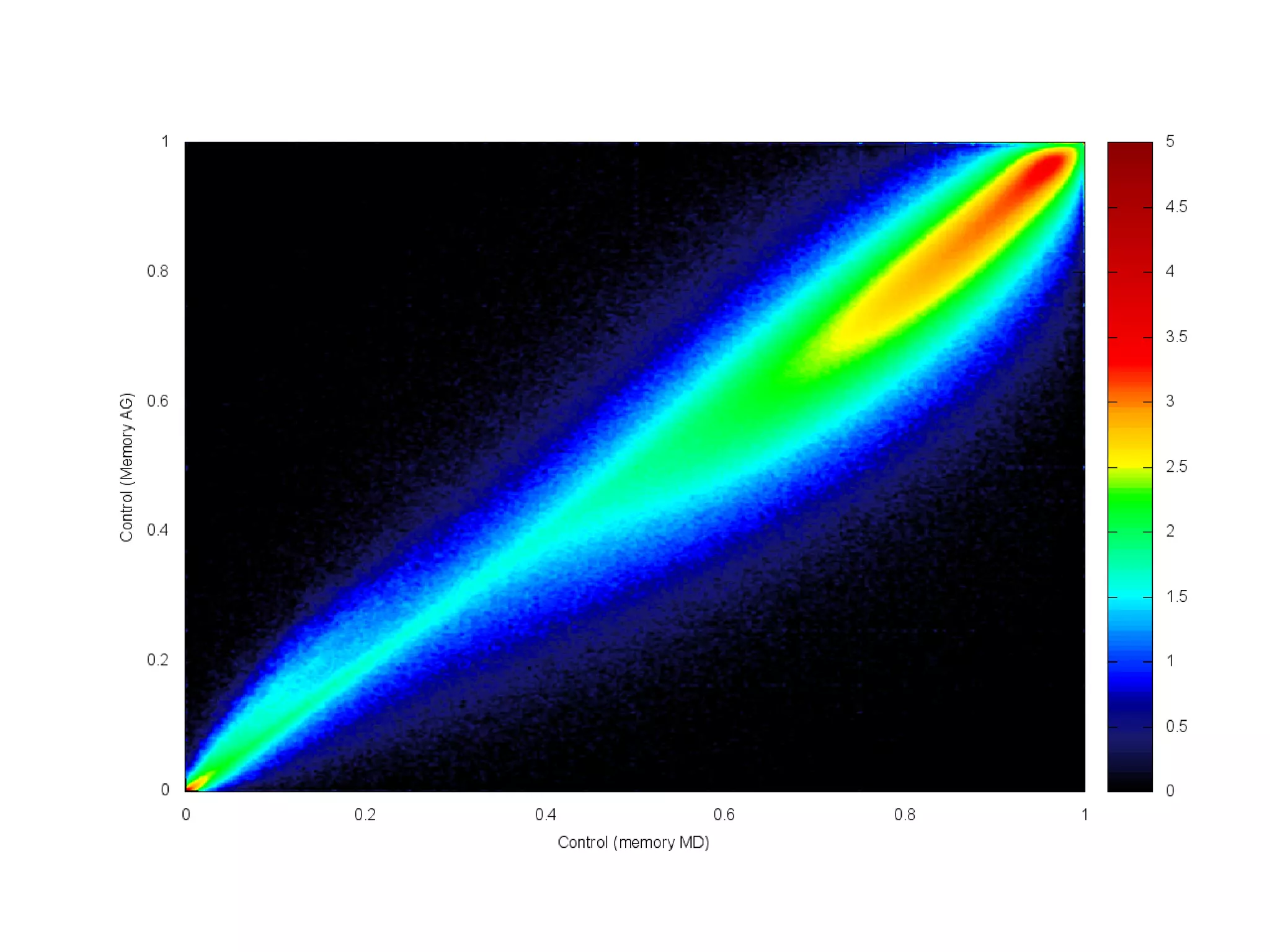
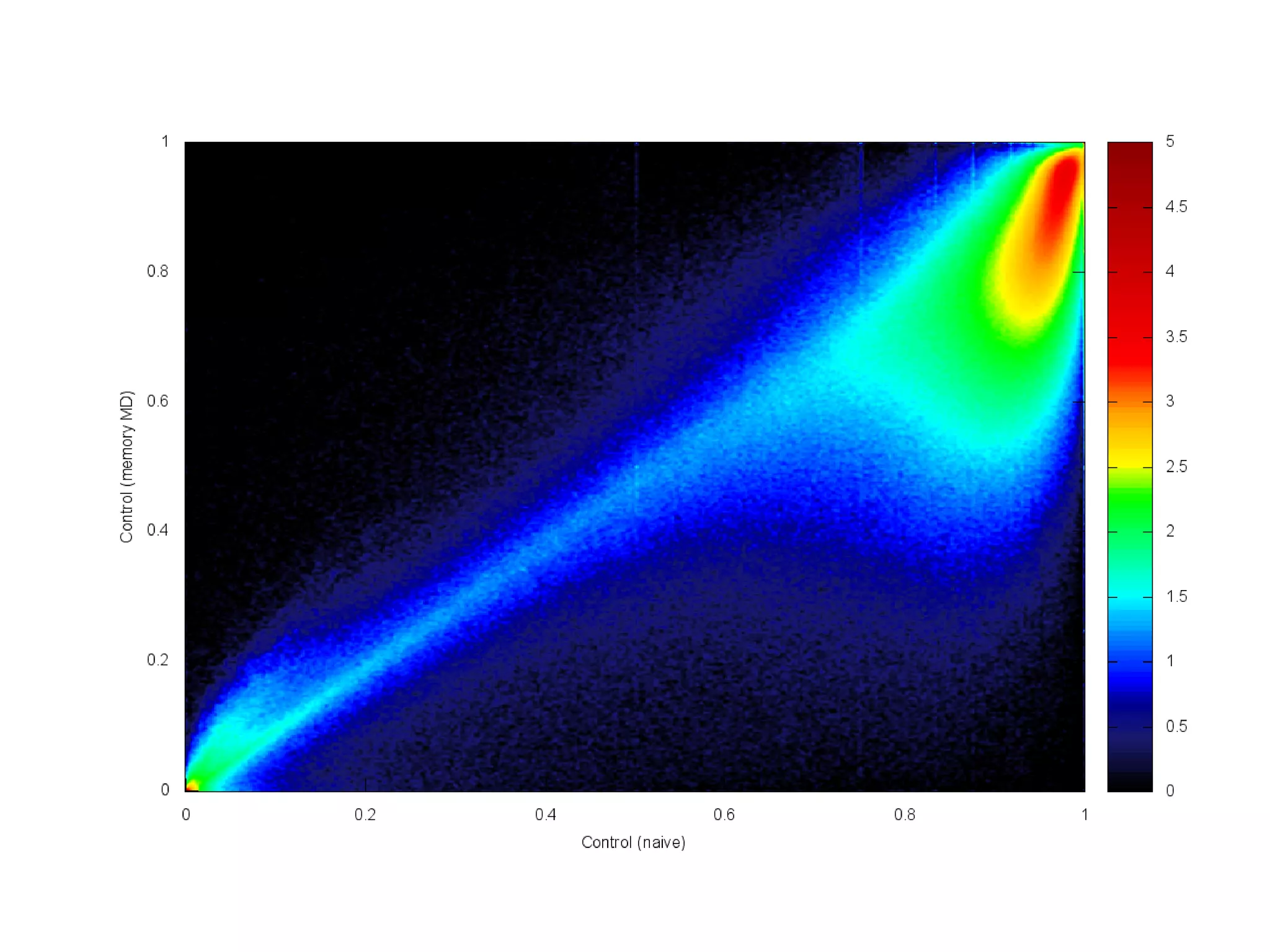
• Distinct DNA methylomes of newborns and centenarians. Heyn
et al. 2012 (PNAS)
• Epigenomic analysis detects widespread gene-body DNA
hypomethylation in chronic lymphocytic leukemia. Kulis et al.
2012 (Nat. Genetics)
• Blueprint EU-FP7 project
BS-Sequencing applications - Statistical Genomics Team (S. Heath)
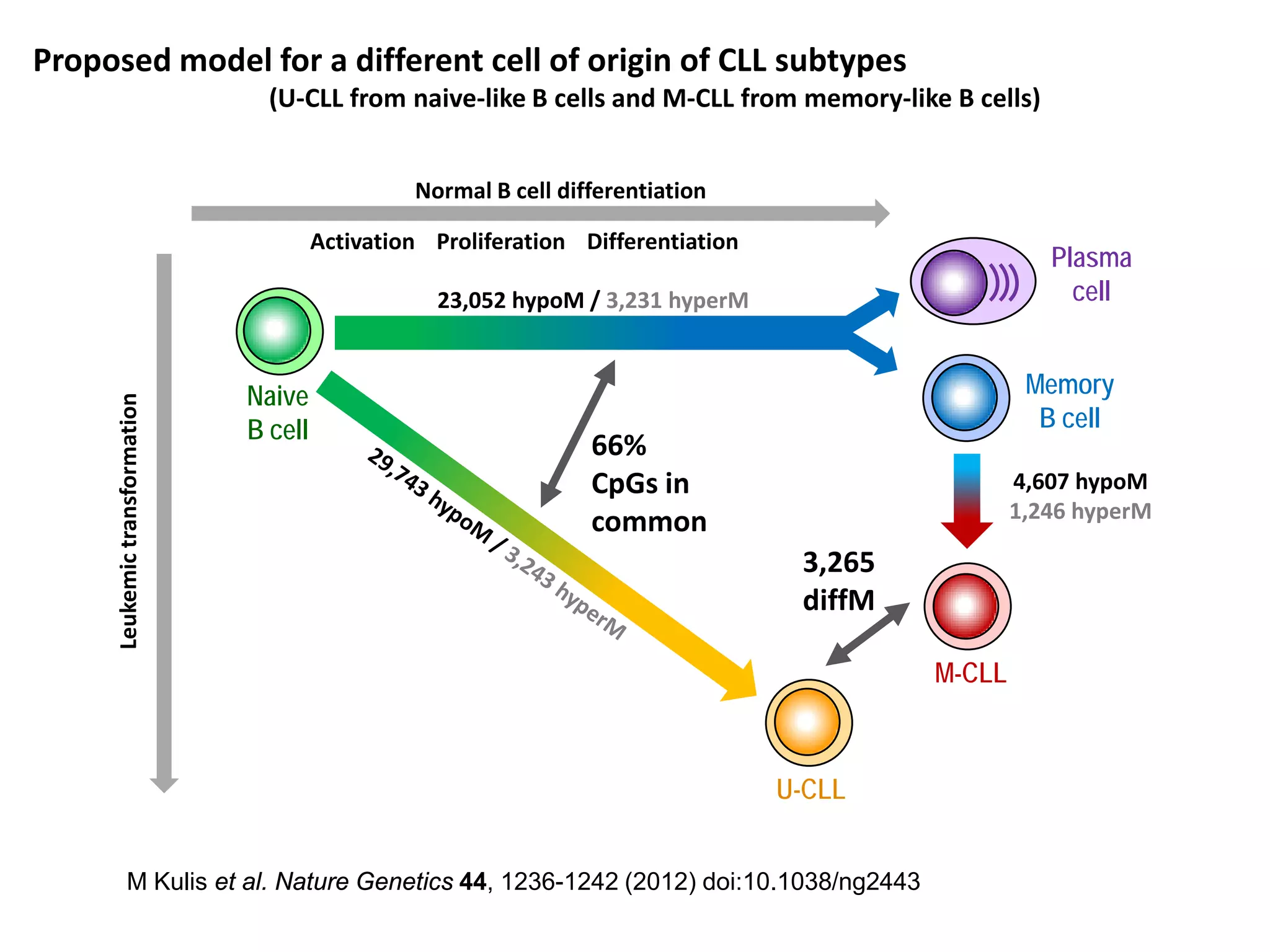
Proposed model for a different cell of origin of CLL subtypes
(U-CLL from naive-like B cells and M-CLL from memory-like B cells)
Naive
B cell
Leukemictransformation
Activation Proliferation Differentiation
Normal B cell differentiation
66%
CpGs in
common
Memory
B cell
Plasma
cell23,052 hypoM / 3,231 hyperM
U-CLL
M-CLL
4,607 hypoM
1,246 hyperM
3,265
diffM
M Kulis et al. Nature Genetics 44, 1236-1242 (2012) doi:10.1038/ng2443
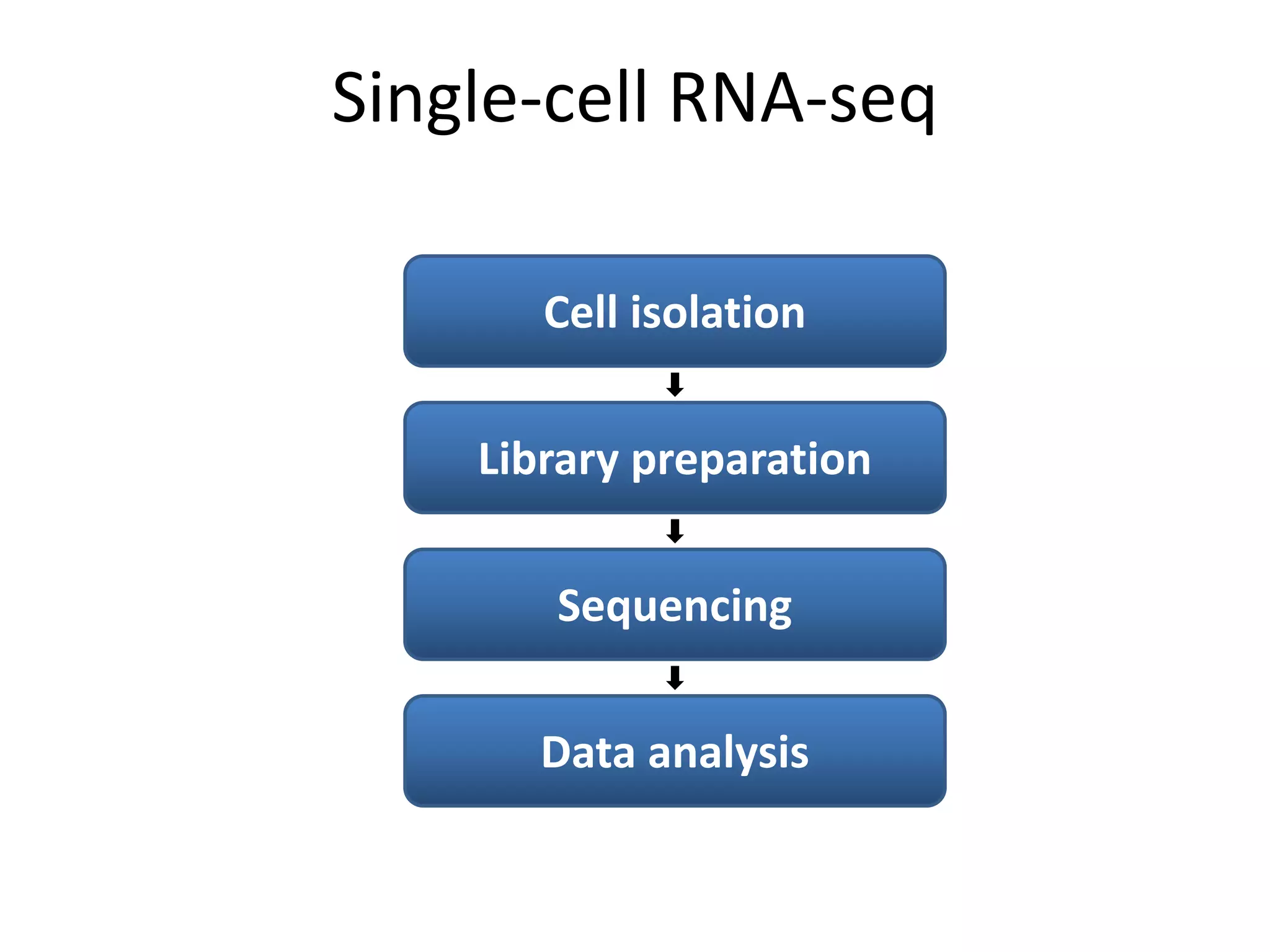
Single-cell RNA-seq
Cell isolation
Library preparation
Sequencing
Data analysis
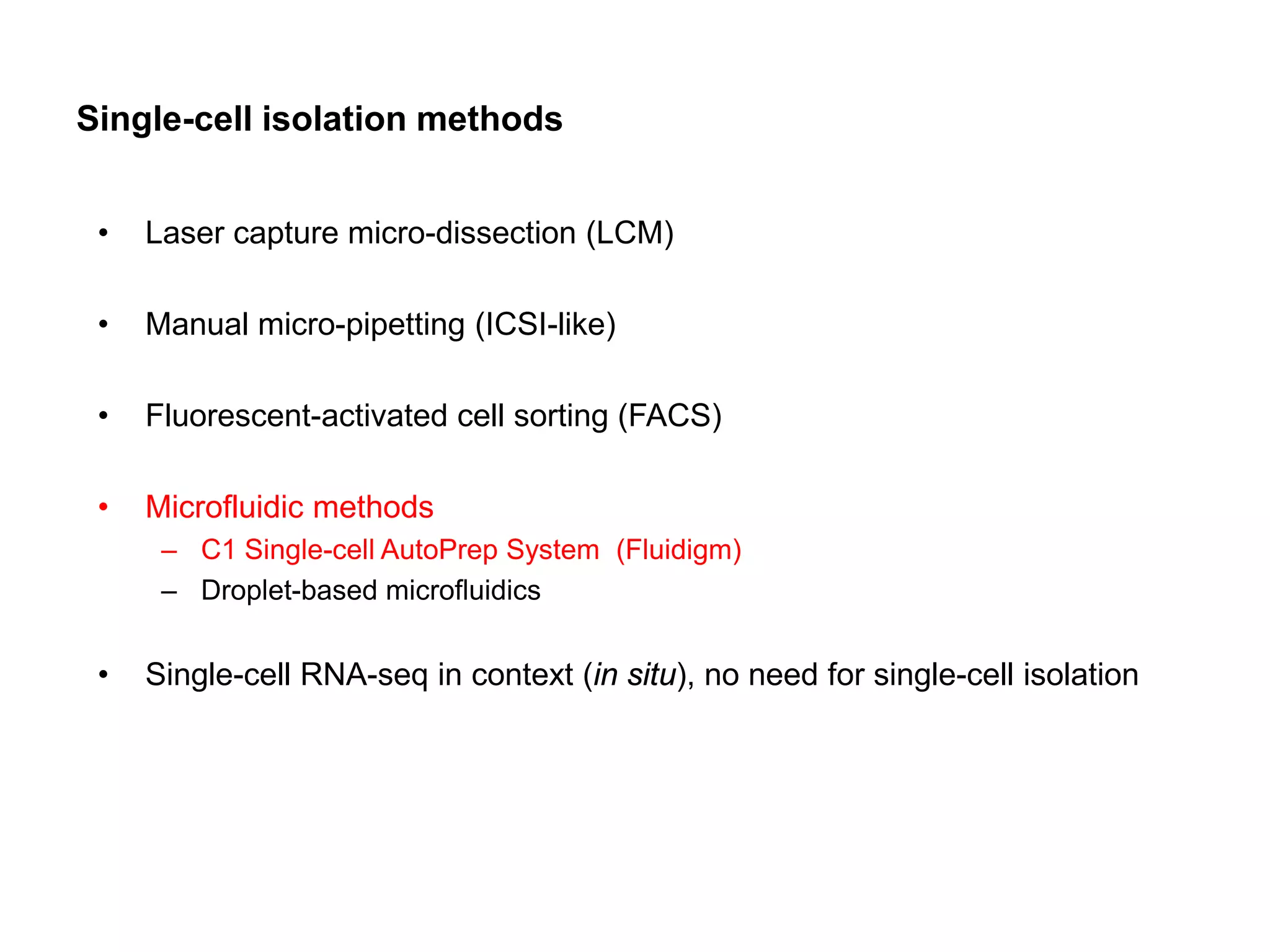
Single-cell isolation methods
• Laser capture micro-dissection (LCM)
• Manual micro-pipetting (ICSI-like)
• Fluorescent-activated cell sorting (FACS)
• Microfluidic methods
– C1 Single-cell AutoPrep System (Fluidigm)
– Droplet-based microfluidics
• Single-cell RNA-seq in context (in situ), no need for single-cell isolation
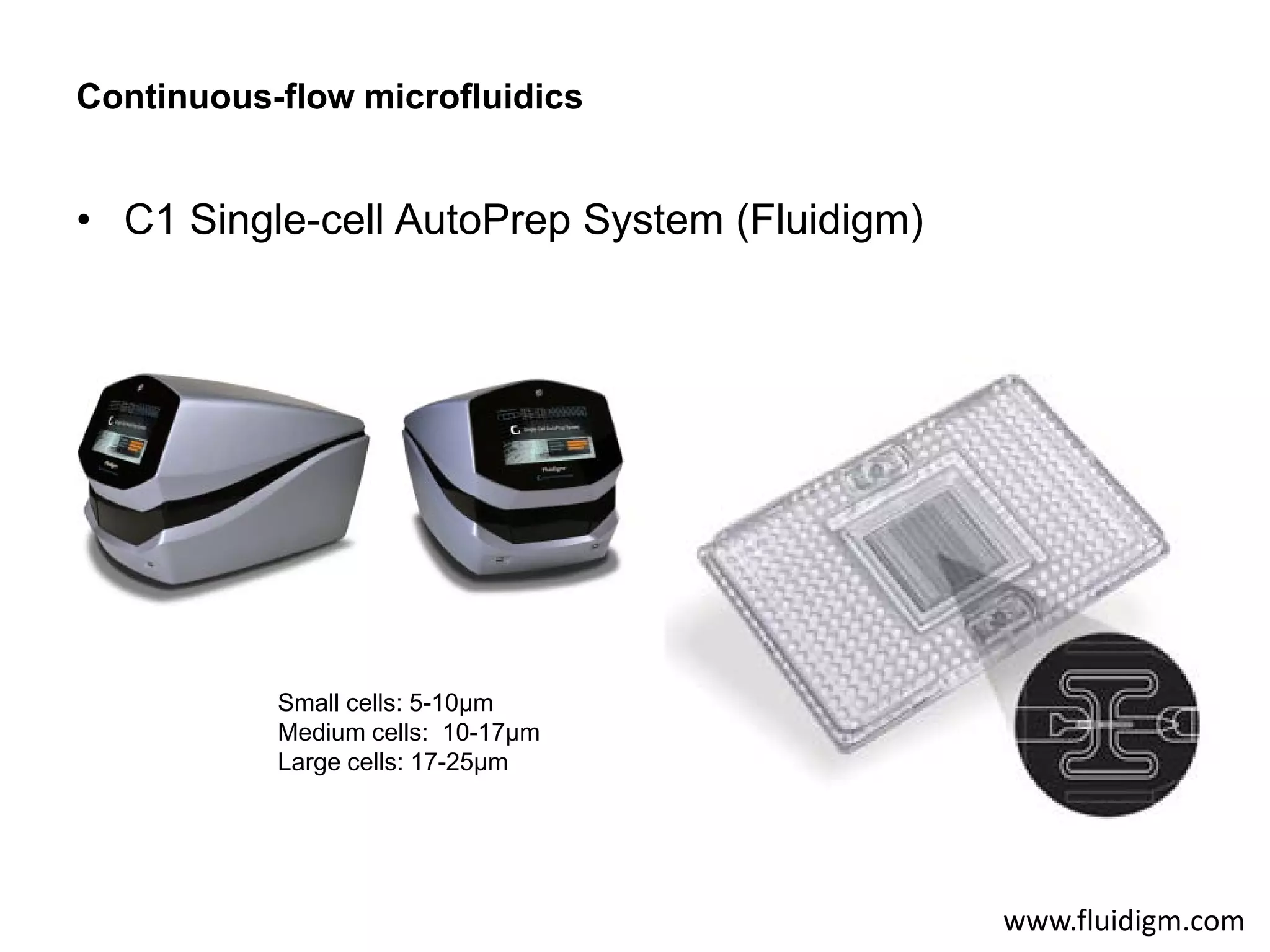
• C1 Single-cell AutoPrep System (Fluidigm)
Continuous-flow microfluidics
Small cells: 5-10µm
Medium cells: 10-17µm
Large cells: 17-25µm
www.fluidigm.com
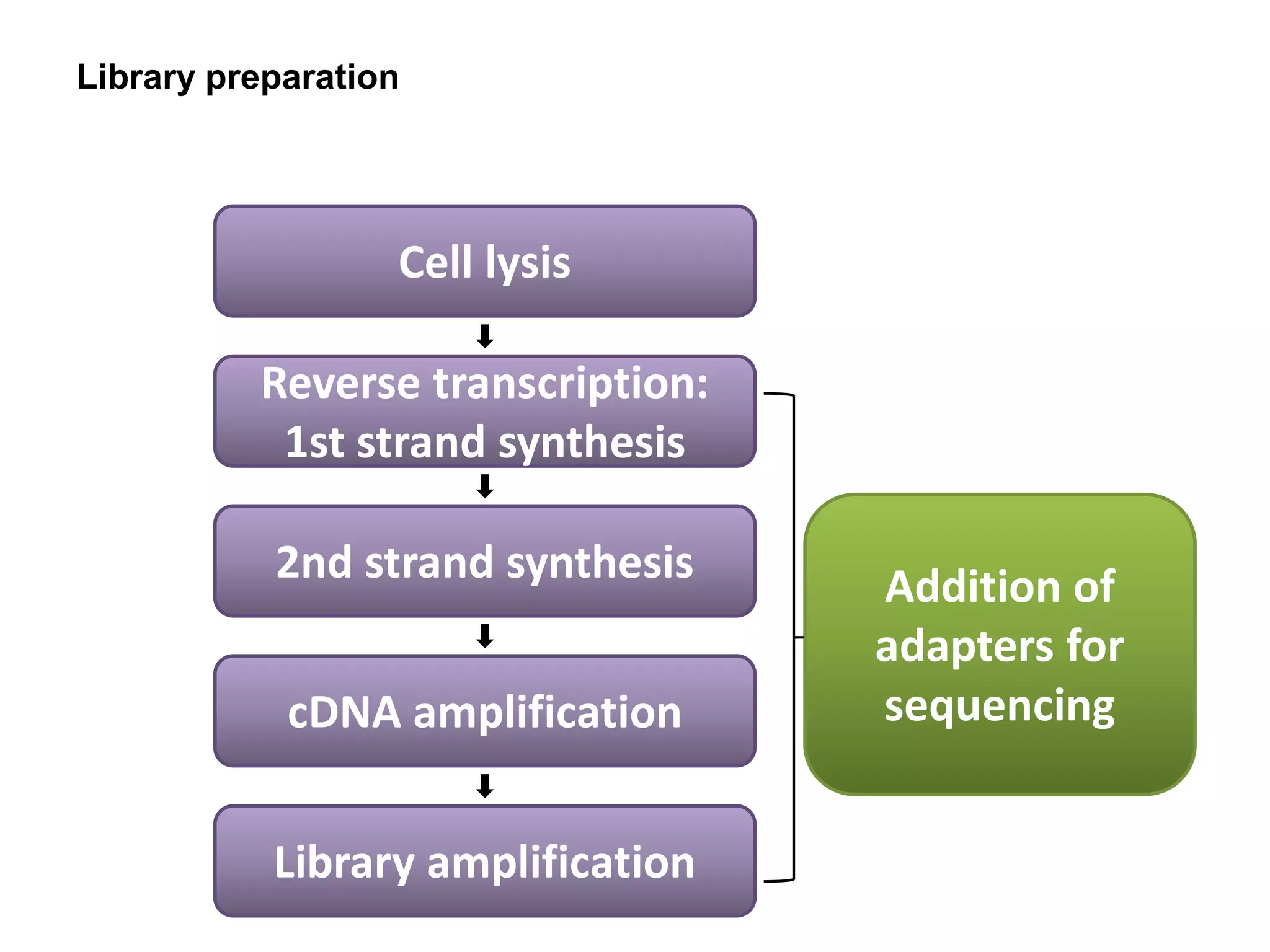
Library preparation
Cell lysis
Reverse transcription:
1st strand synthesis
2nd strand synthesis
cDNA amplification
Addition of
adapters for
sequencing
Library amplification
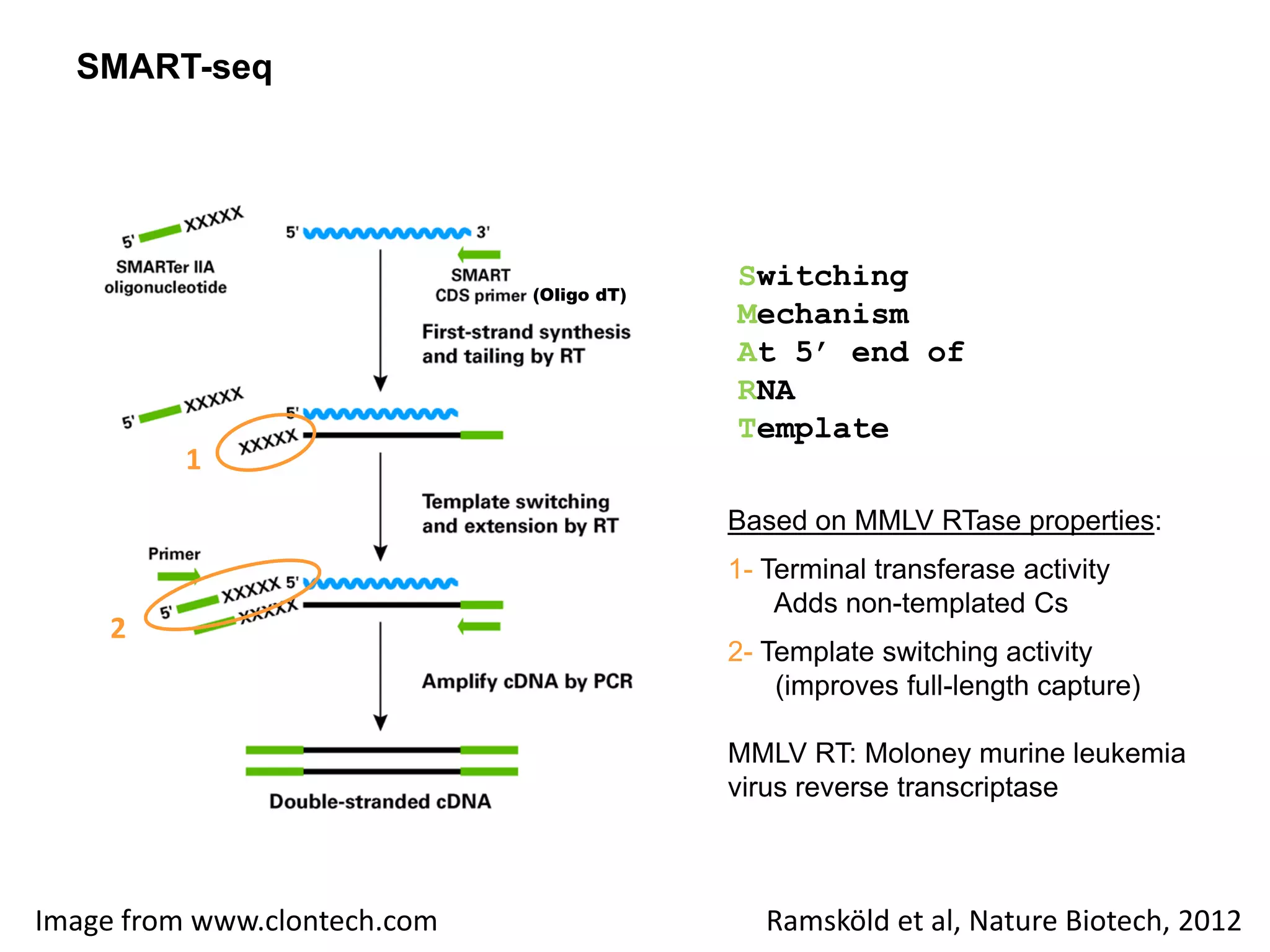
SMART-seq
Image from www.clontech.com Ramsköld et al, Nature Biotech, 2012
Switching
Mechanism
At 5’ end of
RNA
Template
Based on MMLV RTase properties:
1- Terminal transferase activity
Adds non-templated Cs
2- Template switching activity
(improves full-length capture)
MMLV RT: Moloney murine leukemia
virus reverse transcriptase
(Oligo dT)
1
2
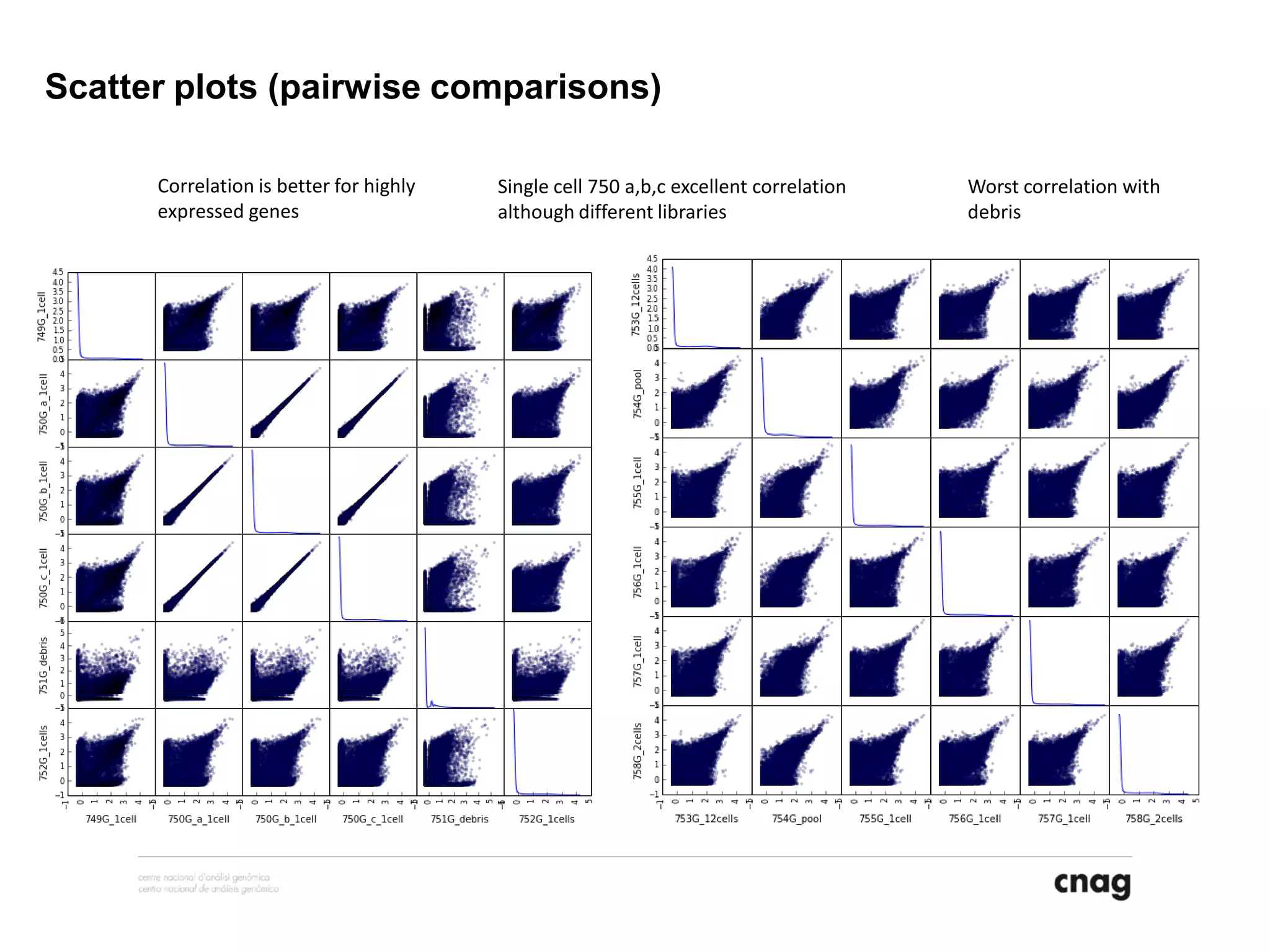
Scatter plots (pairwise comparisons)
Correlation is better for highly
expressed genes
Single cell 750 a,b,c excellent correlation
although different libraries
Worst correlation with
debris
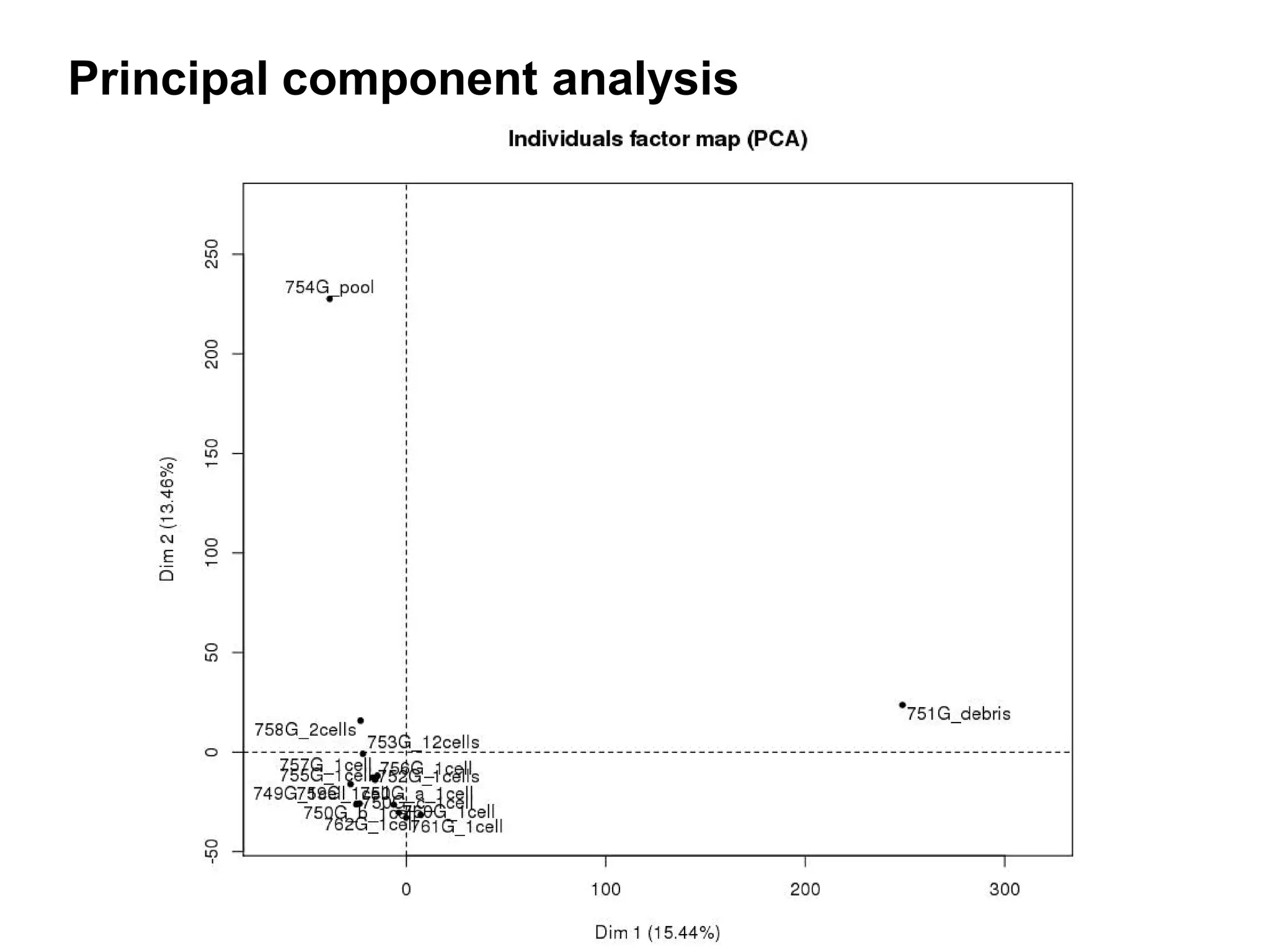
Principal component analysis
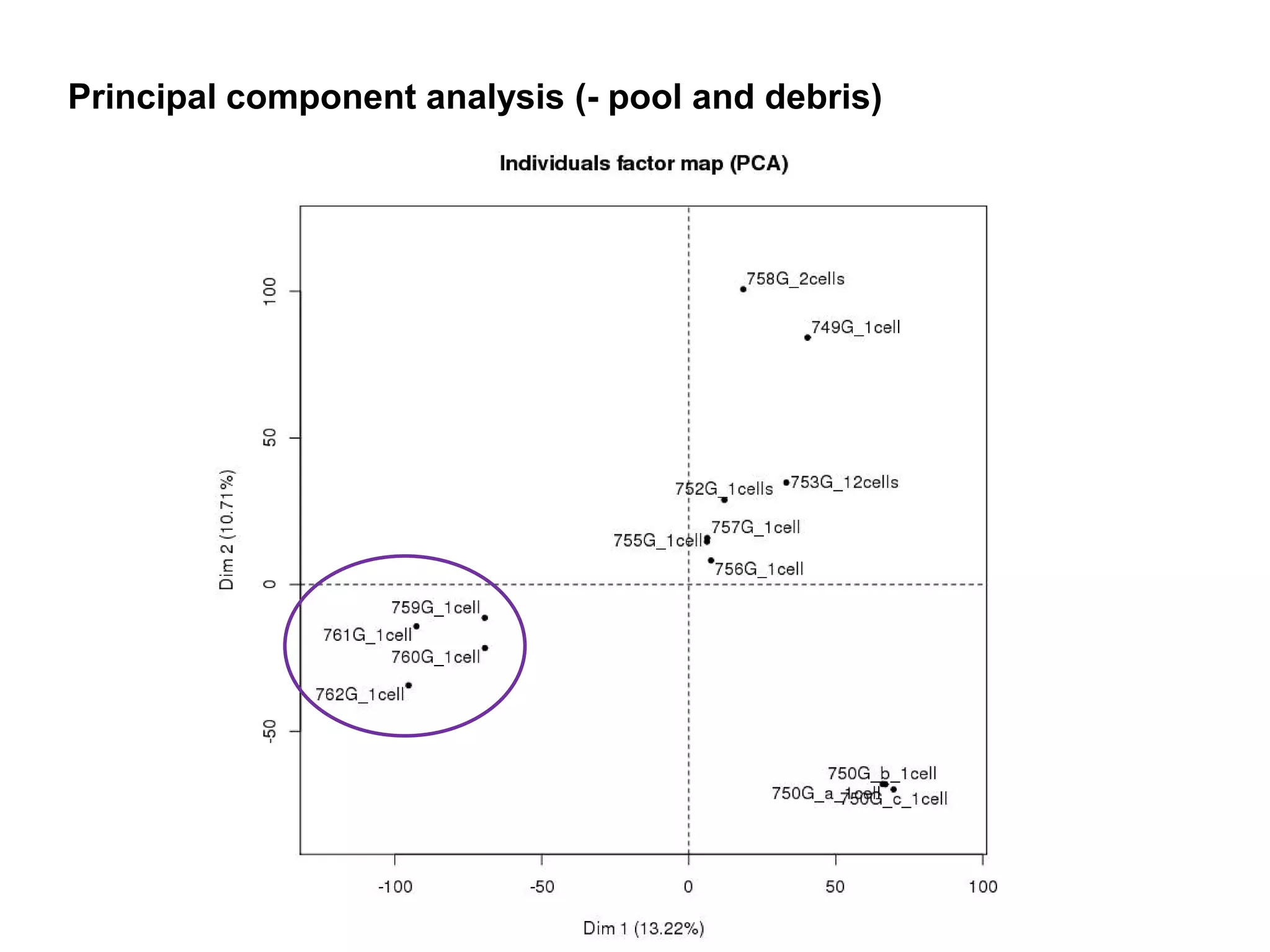
Principal component analysis (- pool and debris)
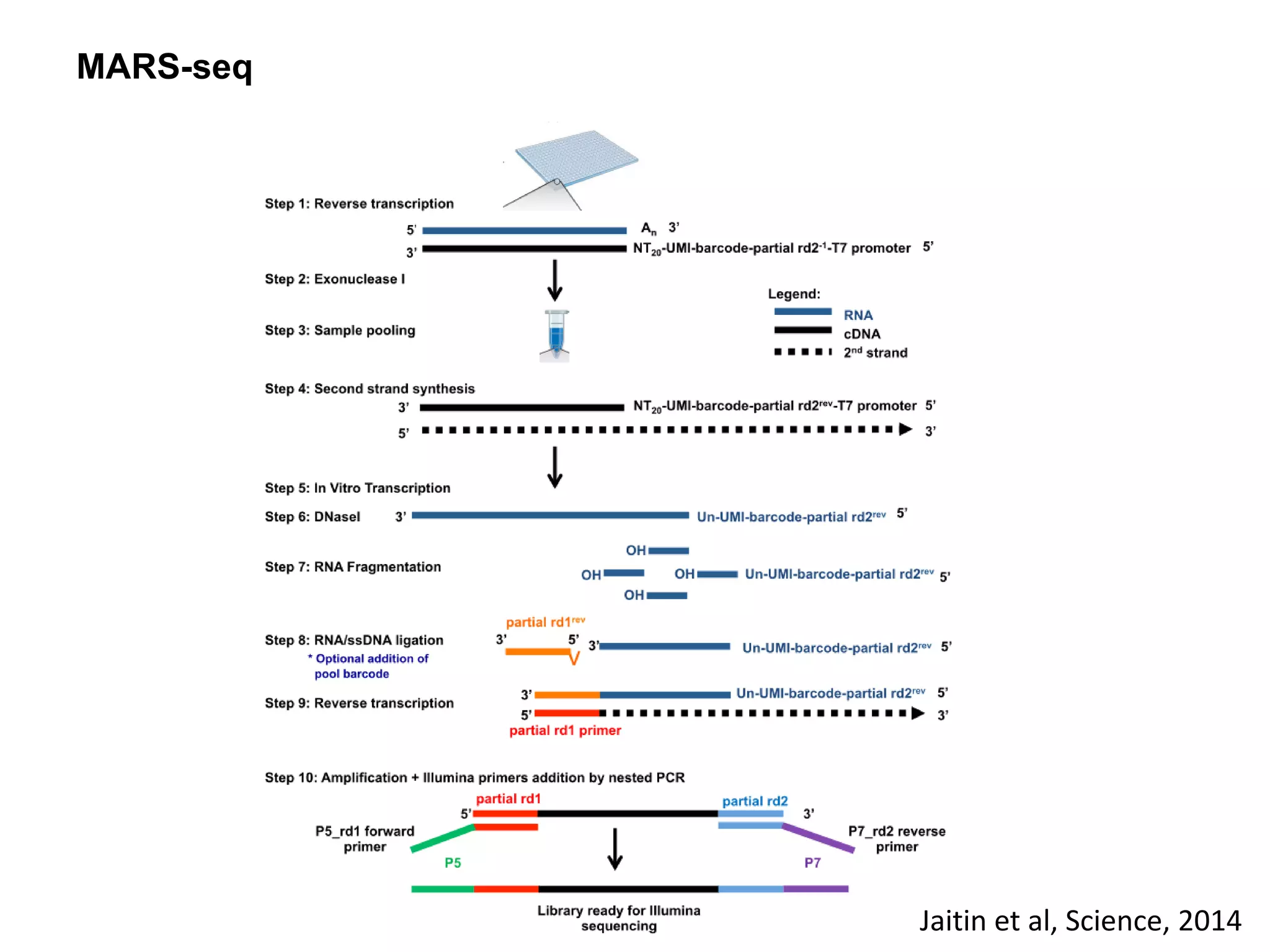
MARS-seq
Jaitin et al, Science, 2014
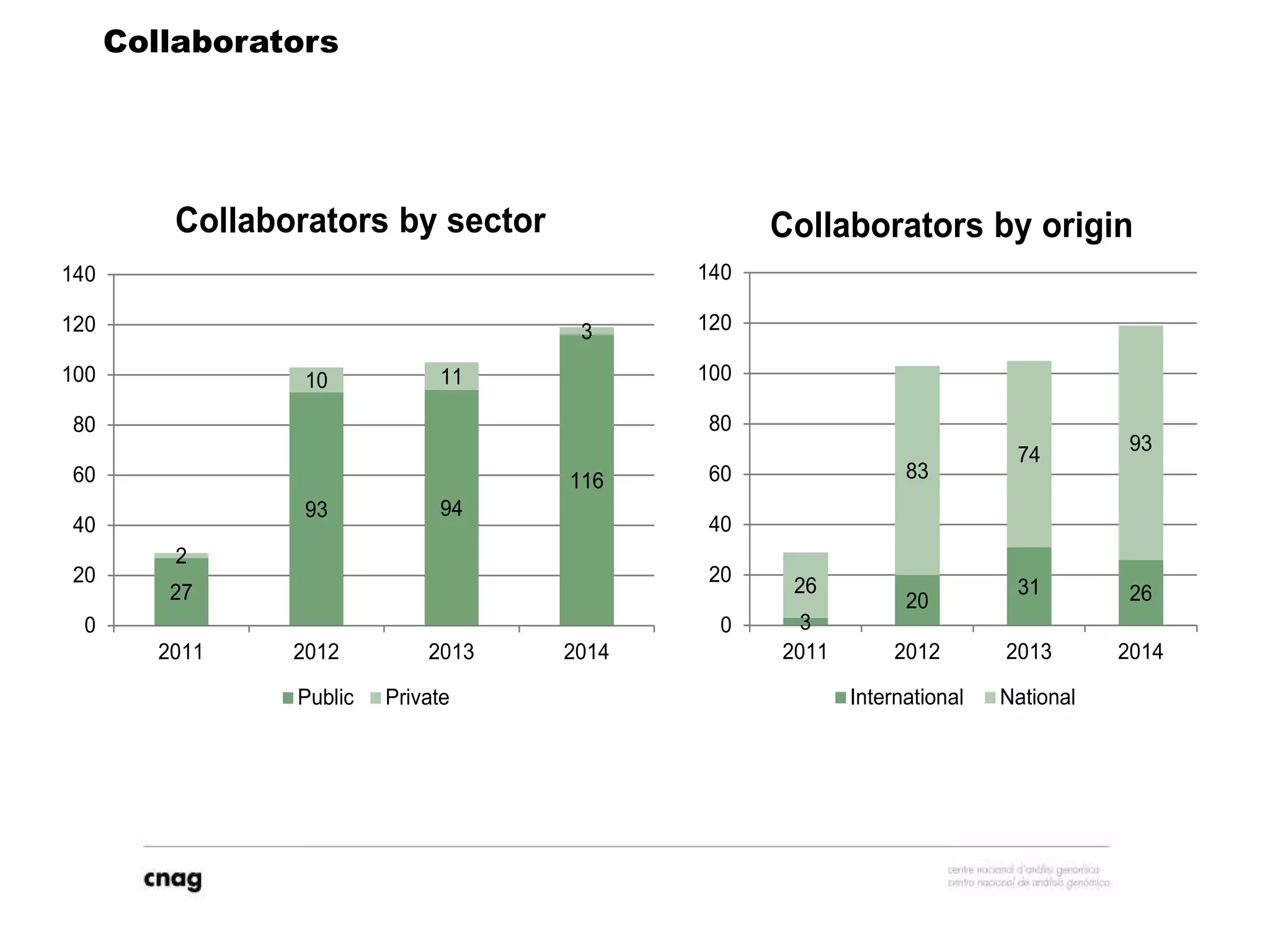
Collaborators
27
93 94
116
2
10 11
3
0
20
40
60
80
100
120
140
2011 2012 2013 2014
Collaborators by sector
Public Private
3
20
31 2626
83
74
93
0
20
40
60
80
100
120
140
2011 2012 2013 2014
Collaborators by origin
International National
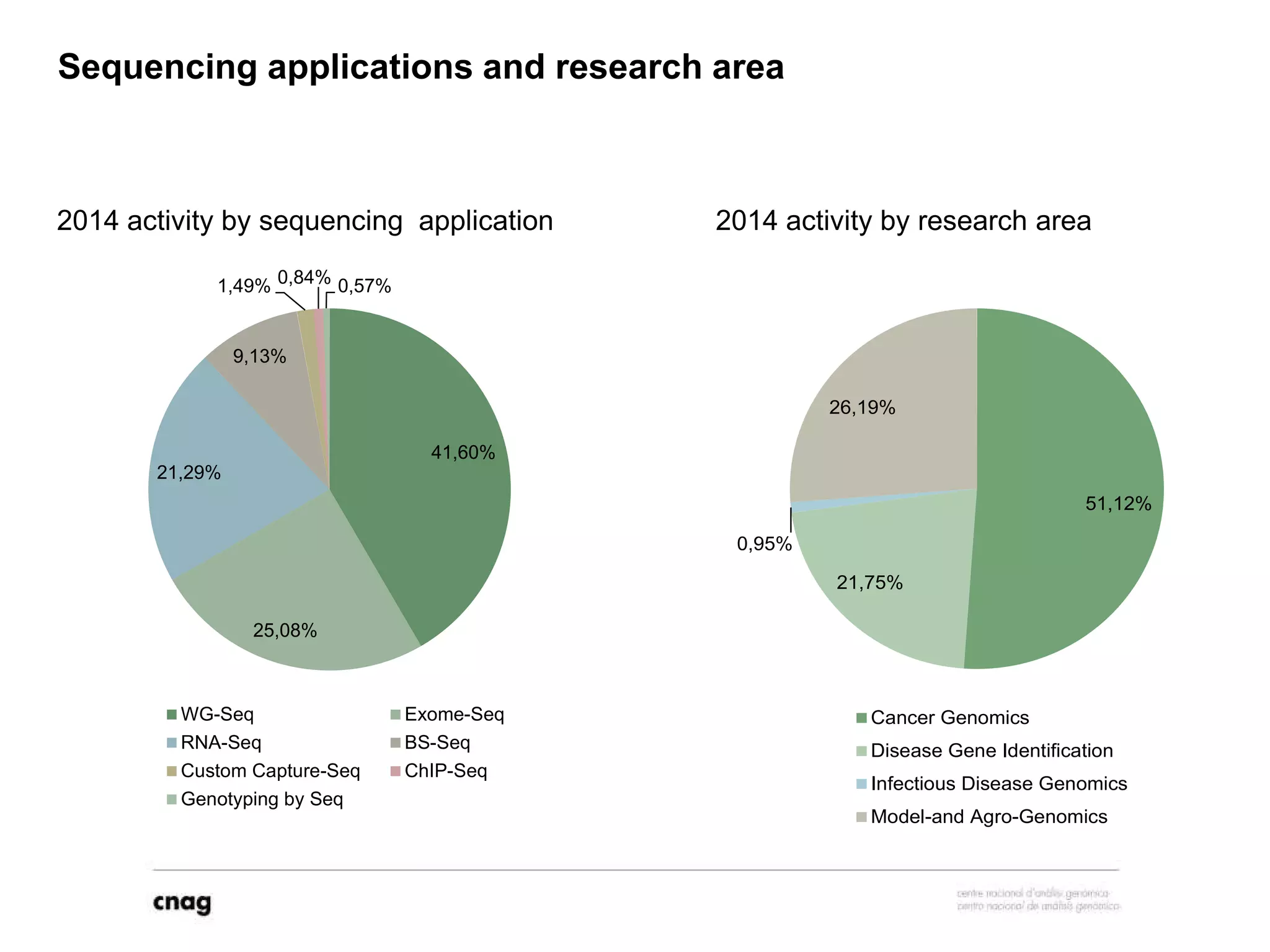
Sequencing applications and research area
2014 activity by sequencing application 2014 activity by research area
51,12%
21,75%
0,95%
26,19%
Cancer Genomics
Disease Gene Identification
Infectious Disease Genomics
Model-and Agro-Genomics
41,60%
25,08%
21,29%
9,13%
1,49% 0,84% 0,57%
WG-Seq Exome-Seq
RNA-Seq BS-Seq
Custom Capture-Seq ChIP-Seq
Genotyping by Seq
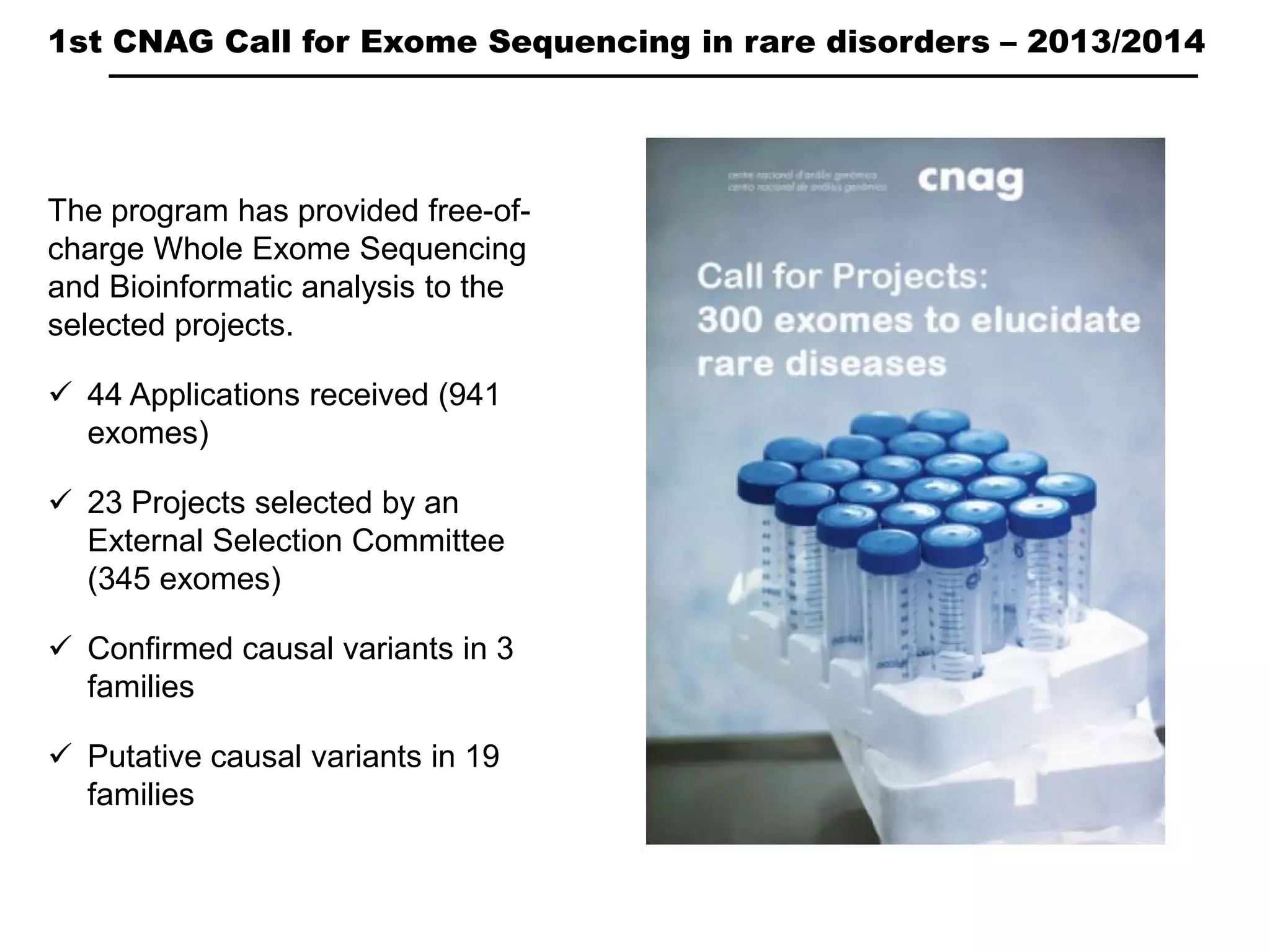
1st CNAG Call for Exome Sequencing in rare disorders – 2013/2014
The program has provided free-of-
charge Whole Exome Sequencing
and Bioinformatic analysis to the
selected projects.
 44 Applications received (941
exomes)
 23 Projects selected by an
External Selection Committee
(345 exomes)
 Confirmed causal variants in 3
families
 Putative causal variants in 19
families
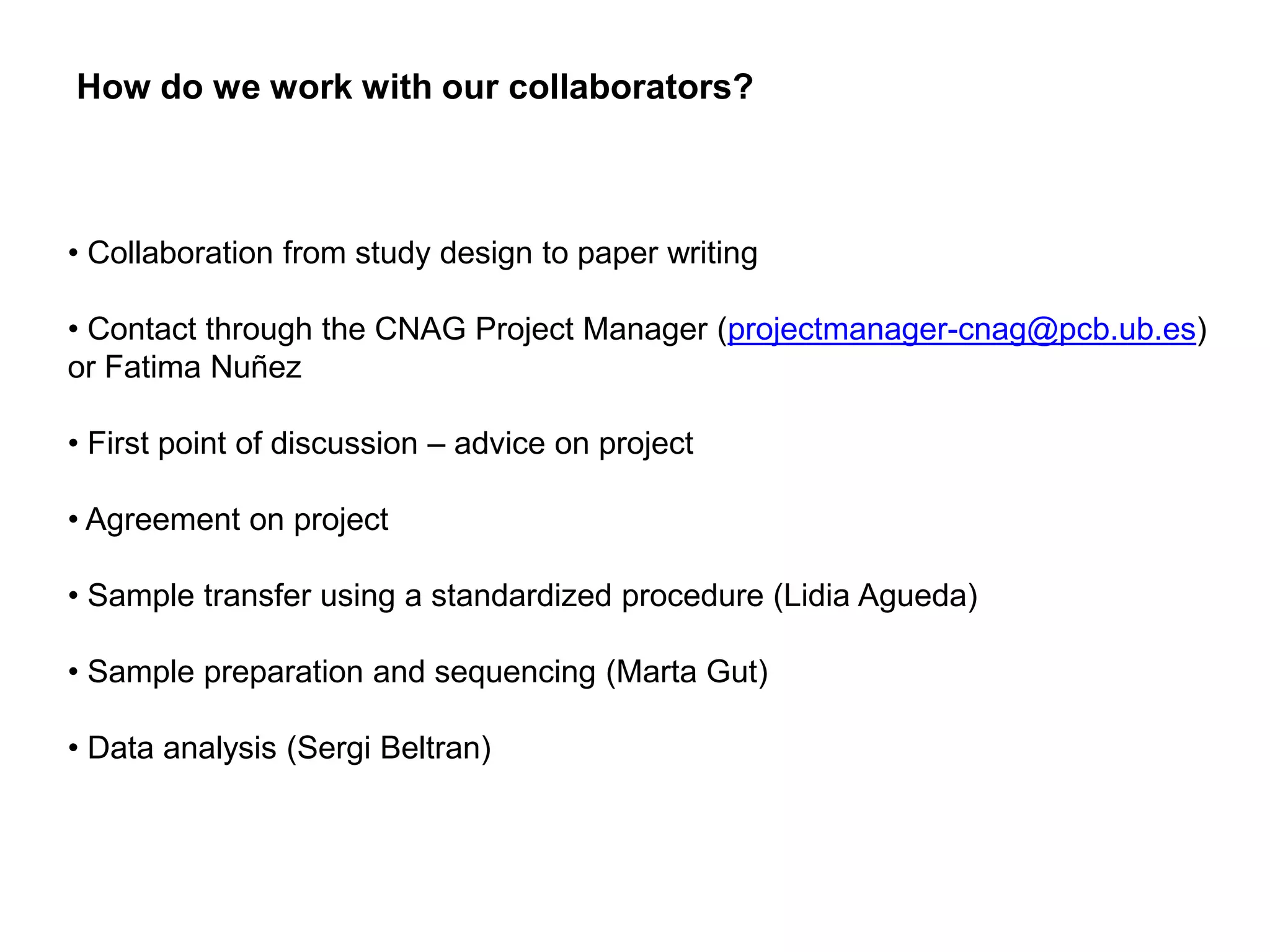
How do we work with our collaborators?
• Collaboration from study design to paper writing
• Contact through the CNAG Project Manager (projectmanager-cnag@pcb.ub.es)
or Fatima Nuñez
• First point of discussion – advice on project
• Agreement on project
• Sample transfer using a standardized procedure (Lidia Agueda)
• Sample preparation and sequencing (Marta Gut)
• Data analysis (Sergi Beltran)
It is like Ballet, - because it looks easy,
everyone thinks it is easy.
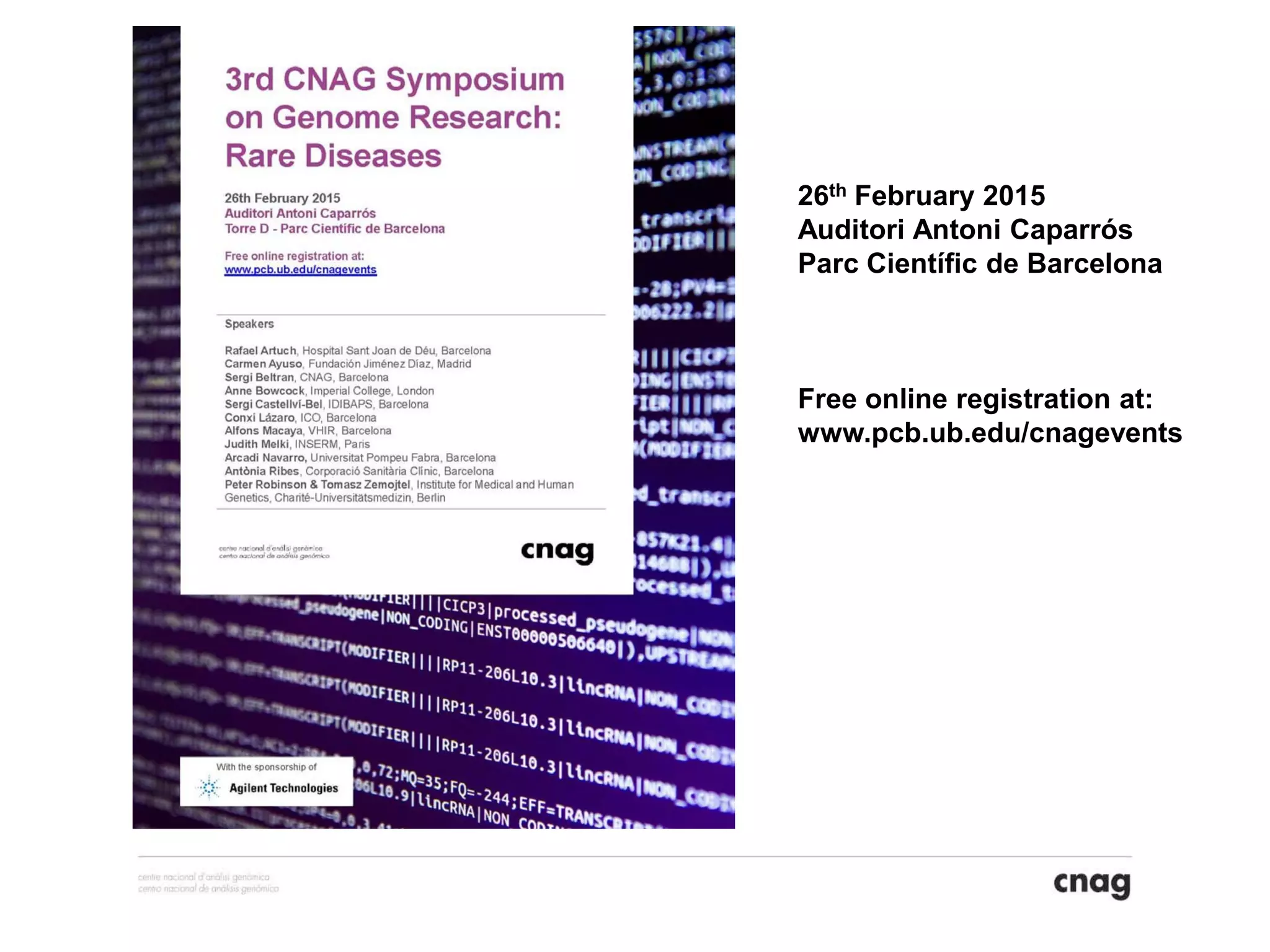
26th February 2015
Auditori Antoni Caparrós
Parc Científic de Barcelona
Free online registration at:
www.pcb.ub.edu/cnagevents
Acknowledgements
Ivo Gut
Mònica Bayés
Berta Fusté
Diego Ravenda
Katia López
Anna Borrell
Marta Gut
Julie Blanc
Katja Kahlem
María Méndez-Lago
Lidia Agueda
Lidia Sevilla
Javier Gutiérrez
Aurora Padrón
Gloria Plaja
Marta López
Pili Herruzo
Bea Fontal
Ana González
Laetitia Casano
Amaya Alzu
Maite Rico
Caterina Mata
Amy Guillaumet
Nicolas Boulanger
Esther Lizano
Simon Heath
Sergi Beltran
Marc A. Marti-Renom
Tomas Marques
Jordi Camps
Jean-Rémi Trotta
Emanuele Raineri
Ron Schuyler
Angelika Merkel
Marc Dabad
Justin Whalley
Paolo Ribeca
Tyler Alioto
Leonor Frías
Santiago Marco
Lukasz Roguski
Marcos Fernández
Fernando Cruz
Anna Esteve
Davide Baú
François Serra
Sophia Derdak
Steven Laurie
Raul Tonda
Enric Serra
Francisco Martínez
Mike Goodstadt
Matt Ingham
Colin Kingswood
Raul Alcántara
Meritxell Oliva
Gian Andri Thun
Gustavo Rodriguez-Esteban
Miranda Stobbe
baldiri reixac, 4
08028, barcelona
spain
t +34 93 4020542
f +34 93 4037279
www.cnag.eu

NGS and the molecular basis of disease: a practical view

  • 1.
    presentation tilte Text specificfor subtitle 19.07.2010 Centro Nacional de Análisis Genómico Introduction to Meeting NGS and the molecular basis of disease: a practical view. Vall d’Hebron Barcelona Ivo Glynne Gut 11.02.2015
  • 2.
    11th and 18thFebruary 2015 Identification and analysis of sequence variants in sequencing projects: fundamentals and tools Short Course organised by the CNAG and VHIR Sessions: - Introduction to applications of next generation sequencing to medical research - Data analysis pipelines for NGS applications - Interpretation of sequence variants in the biomedical environment: what should we take into account - Variant calling and somatic mutation identification and prioritization on NGS data: an advanced overview - Using and combining the different tools for predicting the pathogenicity of sequence variants (PolyPhen, SIFT, etc)
  • 3.
    Overview of theSeries NGS and the molecular basis of disease: a practical view. Ivo Gut, CNAG Data analysis pipelines for NGS applications Sergi Beltran, CNAG Interpretation of sequence variants in the clinical setting. Xavier de la Cruz, VHIR SESSION 1 (2h): FUNDAMENTALS 11. February 2015, 15:00-17:00 Data analysis pipelines for NGS applications Sophia Derdak, CNAG Interpretation: processing the output of bioinformatics tools. Casandra Riera, VHIR SESSION 2 (2h): TOOLS 18. February 2015, 15:00-17:00
  • 4.
    CNAG The CNAG isa non-profit organization created on 2010 and integrated in the Barcelona Science Park. It is funded by the Spanish Ministry of Economy and Competitiveness and the Catalan Government through the Economy and Knowledge Department and the Health Department (30M € initial funding, 2010- 2012). Competitive grants and contractual research with the private sector provide additional funds. Our Mission To carry out large-scale projects in genome analysis that will lead to significant improvements in people’s health and quality of life, in collaboration with the Catalan, Spanish, European and International research and clinical community. Our Vision To be a large-scale, high quality sequence analysis center and to be a world reference center for genomic analysis.
  • 5.
    Director Ivo Gut 1 Sequencing Department MartaGut 1 Biorepository (1) Sample Preparation (9) Sequencing Production (4) Laboratory Support (3) Single Cell Genomics(2) Bioinformatics Analysis Sergi Beltran 1 Production Bioinformatics (3) Data Analysis (7) Bioinformatics Support (2) Bioinformatics Development Simon Heath 1 Statistical Genomics (7) Algorithm Development (4) Genome Biology Marc Marti-Renom 1 Structural Genomics (9) Comparative Genomics (1) Applied Genomics Ivo Gut Biomedical Genomics (4) Genome Assembly and Annotation (3) Population Genomics (1) Programme Manager Mònica Bayés 2 Administrative Support 3 Production Teams ResearchTeams CNAG Organigram 64 people 1 ICREA Research Professor 28 people funded or co-funded with personnel grants or competitive projects
  • 6.
    ICTS The CNAG becomespart of the National Scientific and Technological Infrastructure Map (ICTS): - Integrated Infrastructure for OMICS : - Plataforma de Metabolómica del Centro de Ciencias Ómicas (COS, Lluis Arola). - Centro Nacional de Análisis Genómico (CNAG, Ivo Gut) - Requires >20% of competitive access. Since 2014 researchers with large scale projects are required to submit an application that is reviewed by the Access Committee (constituted by CNAG director, Elías Campo, Pere Puigdoménech and Ángel Carracedo).
  • 7.
    The genomehenge Sequencing capacity •>1000 Gbases/day = 9-10 human genomes per day at 30x coverage Equipment • 11 Illumina HiSeq2000/2500/1T • 1 Illumina MiSeq • 4 Illumina cBots • 2 Oxford Nanopore Minions • Caliper/Eppendorf liquid handling robotics • Bull 1200 core cluster super computer • Maxeler Data Flow Engine • 25 Tflops • 2.7 petabyte disc space • Barcelona Supercomputing Center (10 x 10 Gb/s)
  • 8.
    How we work– Our process Biological Resources Sequencing Informatics - Reception - Quality control - Conditioning - Storage - Sample Preparation - Sequencing Production - Methods Development o Bioinformatic Analysis o Bioinformatic Development o Genome Biology o Applied Genomics LIMS + QC
  • 9.
  • 10.
    Sample preparation pipeline Wholegenome shotgun sequencing no PCR, low input, FFPE, single cell Whole exome capture sequencing low input, FFPE Custom capture sequencing Amplicon sequencing Genotyping-by-sequencing RNA sequencing polyA selection, Ribo Zero selection, directional, low input, single cell Whole genome bisulphite sequencing regular and low input
  • 14.
    Informatics Resources Production Bioinformatics •Primary run analysis and verification • QC systems and LIMS Analysis Production • Alignment, variant calling and annotation • Analysis and interpretation Statistical Genomics • DNA methylation pipeline • RNA analysis pipeline de novo Assembly and Annotation • Pipeline for de novo assembly • Pipeline for genome annotation Algorithm Development • Development and improvement of alignment and assembly methods - GEM • Data compression Structural Genomics • Modelling of 3-d structure of genomes - HiC analysis Comparative Genomics Biomedical Genomics • Advanced data mining Population Genomics Databases • Storage and distribution of data
  • 15.
    Variant Calling Identification ofgenetic differences in comparison to a reference (strict definition) - Designs: Pedigree, trio, group, somatic
  • 16.
    Variant analysis example:stepwise filtering VCF Filtering parameters dbSNP dbCNAG Inheritance model Functional annotation Pedigree Multiple samples Somatic detection Shared vs non-shared Fisher test allele counts
  • 17.
    Variant analysis example:stepwise filtering VCF Filtering parameters dbSNP dbCNAG Inheritance model Functional annotation Pedigree Multiple samples Somatic detection Shared vs non-shared Fisher test allele counts
  • 18.
    CNAG is amajor contributor and driver in three large International Initiatives: 1.- International Cancer Genome Consortium (ICGC) Spanish Project on Chronic Lymphocytic Leukaemia French Project on Prostate Cancer French Project on Ewing’s Sarcoma 2.- International Human Epigenome Consortium (IHEC) EU-funded Project Blueprint 3.- International Rare Disorders Research Consortium (IRDiRC) Spanish Project on Charcot-Marie-Tooth Disease EU-funded C-Project on data analysis and coordination What are our major projects?
  • 19.
  • 20.
    Nature 464, 993-998(15.04.2010)
  • 21.
    Tumoral Non-Tumoral RNADNA methylationDNA peripheral peritumoral Whole-genome bisulphiteseq Exome seq RNA seq Whole-genome seq short insert PE Sampling structure
  • 22.
    International Cancer GenomeConsortium The International Cancer Genome Consortium is an international effort to establish a comprehensive description of genomic, transcriptomic and epigenomic changes in 50 different tumor types and/or subtypes which are of clinical and societal importance across the globe. Spain’s contribution to the ICGC is on chronic lymphocytic leukaemia (CLL). FUNDING SOURCE: Ministerio de Ciencia e Innovación COORDINATOR: Prof. Elias Campo, Hospital Clínic Barcelona DURATION: May 2009 – May 2014 PROJECT FUNDING: €10 million
  • 23.
    XS Puente etal. Nature 000, 1-5 (2011) doi:10.1038/nature10113 Mutational and functional analysis of NOTCH1 in CLL 5. June 2011
  • 24.
    • Sequencing of105 CLL tumours • Identification of 1246 somatic mutations in 1.100 genes • 78 genes with mutations in more than one patient • Mutated genes cluster in pathways • Distinct mutations are associated with clinical classifications • Mutations in the SF3B1 gene identifies a group of patients with more aggressive disease • SF3B1 encodes a subunit of the spliceosomal U2 small nuclear ribonucleoprotein (snRNP) V Quesada et al. Nature Genetics 44, 47-52 (2011) doi:10.1038/ng1032
  • 26.
  • 27.
    Sample Prep Add unmethylated lambdaDNA Bisulfite conversion qPCR check of conversion Sequencing Fully convert reads Alignment (GEM) QC (mapping, conversion) Select uniquely mapping read pairs Make genotype and methylation calls Select sites with genotype p.p. >=0.99 Select CpGs and non- CpGs Select homozygous CC or GG sites Region detection and annotation BS-Seq oxBS-Seq Merge to obtain estimates of mC and hmC levels BS-Sequencing Pipeline Statistical Genomics Team (S. Heath)
  • 28.
    • Distinct DNAmethylomes of newborns and centenarians. Heyn et al. 2012 (PNAS) • Epigenomic analysis detects widespread gene-body DNA hypomethylation in chronic lymphocytic leukemia. Kulis et al. 2012 (Nat. Genetics) • Blueprint EU-FP7 project BS-Sequencing applications - Statistical Genomics Team (S. Heath)
  • 31.
    Proposed model fora different cell of origin of CLL subtypes (U-CLL from naive-like B cells and M-CLL from memory-like B cells) Naive B cell Leukemictransformation Activation Proliferation Differentiation Normal B cell differentiation 66% CpGs in common Memory B cell Plasma cell23,052 hypoM / 3,231 hyperM U-CLL M-CLL 4,607 hypoM 1,246 hyperM 3,265 diffM M Kulis et al. Nature Genetics 44, 1236-1242 (2012) doi:10.1038/ng2443
  • 32.
    Single-cell RNA-seq Cell isolation Librarypreparation Sequencing Data analysis
  • 33.
    Single-cell isolation methods •Laser capture micro-dissection (LCM) • Manual micro-pipetting (ICSI-like) • Fluorescent-activated cell sorting (FACS) • Microfluidic methods – C1 Single-cell AutoPrep System (Fluidigm) – Droplet-based microfluidics • Single-cell RNA-seq in context (in situ), no need for single-cell isolation
  • 34.
    • C1 Single-cellAutoPrep System (Fluidigm) Continuous-flow microfluidics Small cells: 5-10µm Medium cells: 10-17µm Large cells: 17-25µm www.fluidigm.com
  • 35.
    Library preparation Cell lysis Reversetranscription: 1st strand synthesis 2nd strand synthesis cDNA amplification Addition of adapters for sequencing Library amplification
  • 36.
    SMART-seq Image from www.clontech.comRamsköld et al, Nature Biotech, 2012 Switching Mechanism At 5’ end of RNA Template Based on MMLV RTase properties: 1- Terminal transferase activity Adds non-templated Cs 2- Template switching activity (improves full-length capture) MMLV RT: Moloney murine leukemia virus reverse transcriptase (Oligo dT) 1 2
  • 37.
    Scatter plots (pairwisecomparisons) Correlation is better for highly expressed genes Single cell 750 a,b,c excellent correlation although different libraries Worst correlation with debris
  • 38.
  • 39.
    Principal component analysis(- pool and debris)
  • 40.
  • 41.
    Collaborators 27 93 94 116 2 10 11 3 0 20 40 60 80 100 120 140 20112012 2013 2014 Collaborators by sector Public Private 3 20 31 2626 83 74 93 0 20 40 60 80 100 120 140 2011 2012 2013 2014 Collaborators by origin International National
  • 42.
    Sequencing applications andresearch area 2014 activity by sequencing application 2014 activity by research area 51,12% 21,75% 0,95% 26,19% Cancer Genomics Disease Gene Identification Infectious Disease Genomics Model-and Agro-Genomics 41,60% 25,08% 21,29% 9,13% 1,49% 0,84% 0,57% WG-Seq Exome-Seq RNA-Seq BS-Seq Custom Capture-Seq ChIP-Seq Genotyping by Seq
  • 43.
    1st CNAG Callfor Exome Sequencing in rare disorders – 2013/2014 The program has provided free-of- charge Whole Exome Sequencing and Bioinformatic analysis to the selected projects.  44 Applications received (941 exomes)  23 Projects selected by an External Selection Committee (345 exomes)  Confirmed causal variants in 3 families  Putative causal variants in 19 families
  • 44.
    How do wework with our collaborators? • Collaboration from study design to paper writing • Contact through the CNAG Project Manager (projectmanager-cnag@pcb.ub.es) or Fatima Nuñez • First point of discussion – advice on project • Agreement on project • Sample transfer using a standardized procedure (Lidia Agueda) • Sample preparation and sequencing (Marta Gut) • Data analysis (Sergi Beltran)
  • 45.
    It is likeBallet, - because it looks easy, everyone thinks it is easy.
  • 46.
    26th February 2015 AuditoriAntoni Caparrós Parc Científic de Barcelona Free online registration at: www.pcb.ub.edu/cnagevents
  • 48.
    Acknowledgements Ivo Gut Mònica Bayés BertaFusté Diego Ravenda Katia López Anna Borrell Marta Gut Julie Blanc Katja Kahlem María Méndez-Lago Lidia Agueda Lidia Sevilla Javier Gutiérrez Aurora Padrón Gloria Plaja Marta López Pili Herruzo Bea Fontal Ana González Laetitia Casano Amaya Alzu Maite Rico Caterina Mata Amy Guillaumet Nicolas Boulanger Esther Lizano Simon Heath Sergi Beltran Marc A. Marti-Renom Tomas Marques Jordi Camps Jean-Rémi Trotta Emanuele Raineri Ron Schuyler Angelika Merkel Marc Dabad Justin Whalley Paolo Ribeca Tyler Alioto Leonor Frías Santiago Marco Lukasz Roguski Marcos Fernández Fernando Cruz Anna Esteve Davide Baú François Serra Sophia Derdak Steven Laurie Raul Tonda Enric Serra Francisco Martínez Mike Goodstadt Matt Ingham Colin Kingswood Raul Alcántara Meritxell Oliva Gian Andri Thun Gustavo Rodriguez-Esteban Miranda Stobbe
  • 49.
    baldiri reixac, 4 08028,barcelona spain t +34 93 4020542 f +34 93 4037279 www.cnag.eu