Next Generation
Sequencing
Joshua Lee Voon Kai (0333356)
Tee Zhong Ee (0327975)
Sing (0328048)
Cheong Pui Yi (0326329)
Hsing Lu (0331441)
Julian Tay (0328917)
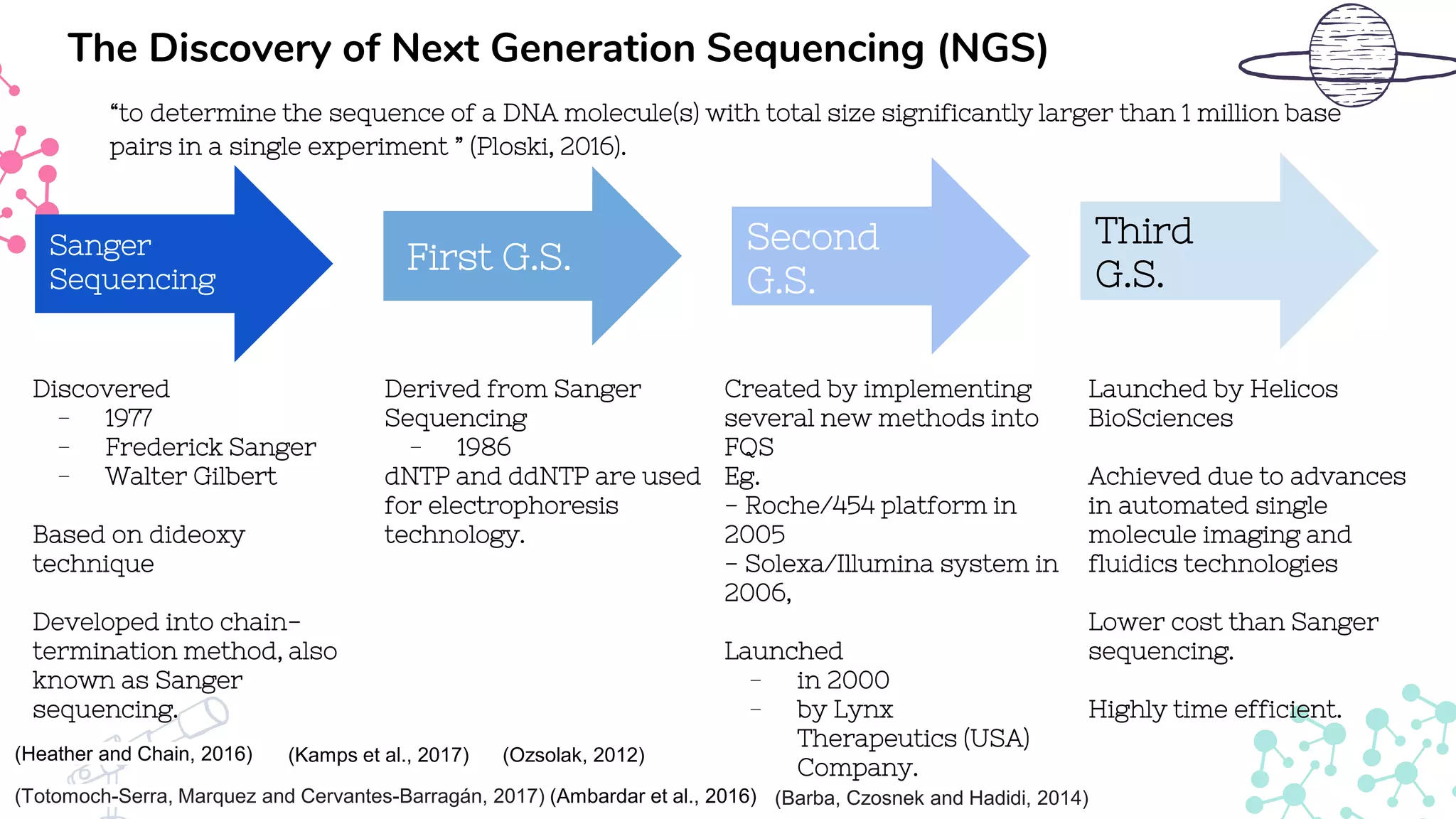
Second
G.S.
Sanger
Sequencing
First G.S.
The Discovery of Next Generation Sequencing (NGS)
“to determine the sequence of a DNA molecule(s) with total size significantly larger than 1 million base
pairs in a single experiment ” (Ploski, 2016).
Third
G.S.
Discovered
- 1977
- Frederick Sanger
- Walter Gilbert
Based on dideoxy
technique
Developed into chain-
termination method, also
known as Sanger
sequencing.
Derived from Sanger
Sequencing
- 1986
dNTP and ddNTP are used
for electrophoresis
technology.
Created by implementing
several new methods into
FQS
Eg.
- Roche/454 platform in
2005
- Solexa/Illumina system in
2006,
Launched
- in 2000
- by Lynx
Therapeutics (USA)
Company.
Launched by Helicos
BioSciences
Achieved due to advances
in automated single
molecule imaging and
fluidics technologies
Lower cost than Sanger
sequencing.
Highly time efficient.
(Barba, Czosnek and Hadidi, 2014)
(Heather and Chain, 2016)
(Ambardar et al., 2016)(Totomoch-Serra, Marquez and Cervantes-Barragán, 2017)
(Ozsolak, 2012)(Kamps et al., 2017)
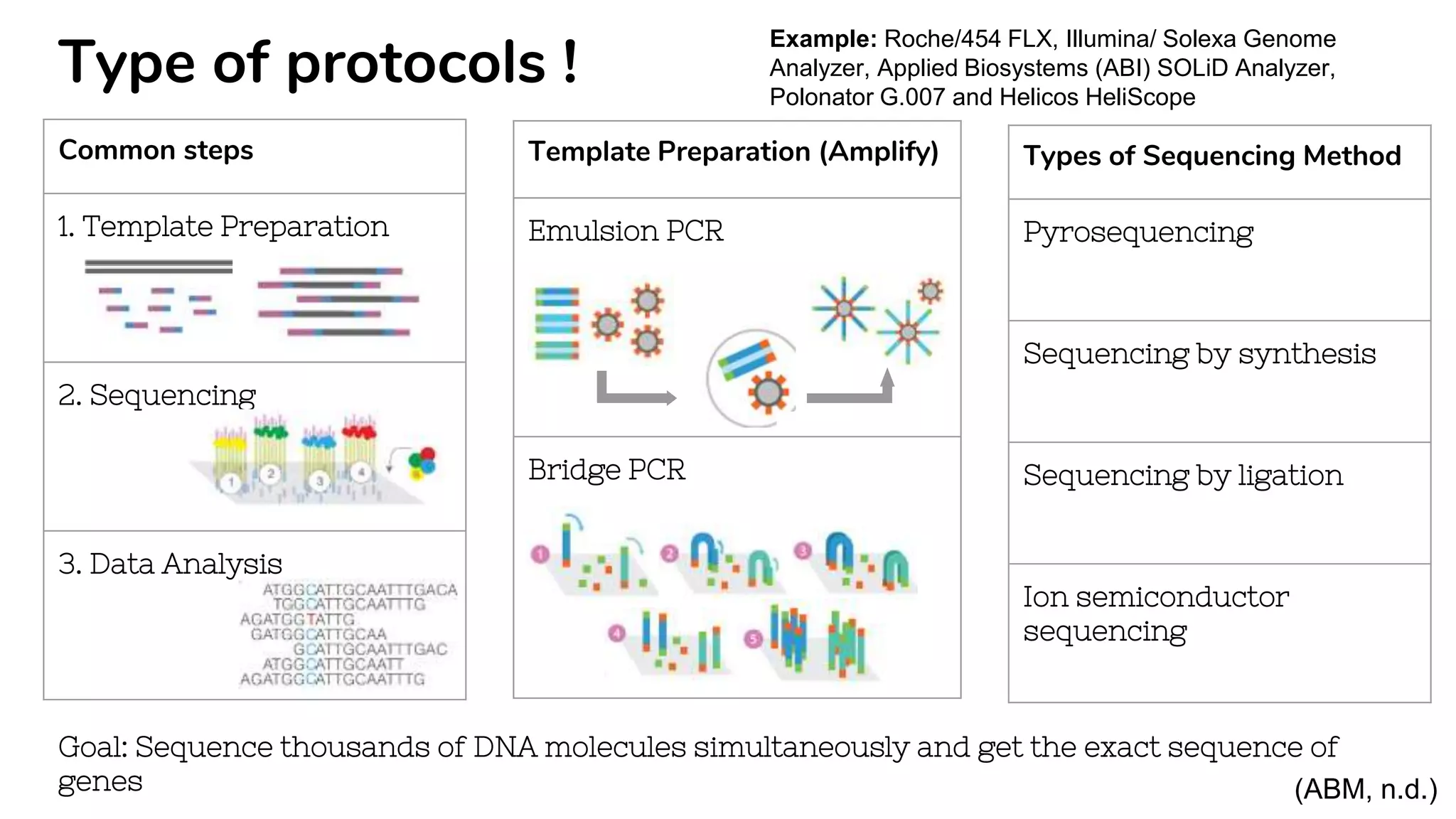
Type of protocols !
Types of Sequencing Method
Pyrosequencing
Sequencing by synthesis
Sequencing by ligation
Ion semiconductor
sequencing
Template Preparation (Amplify)
Emulsion PCR
Bridge PCR
Common steps
1. Template Preparation
2. Sequencing
3. Data Analysis
Goal: Sequence thousands of DNA molecules simultaneously and get the exact sequence of
genes
Example: Roche/454 FLX, Illumina/ Solexa Genome
Analyzer, Applied Biosystems (ABI) SOLiD Analyzer,
Polonator G.007 and Helicos HeliScope
(ABM, n.d.)
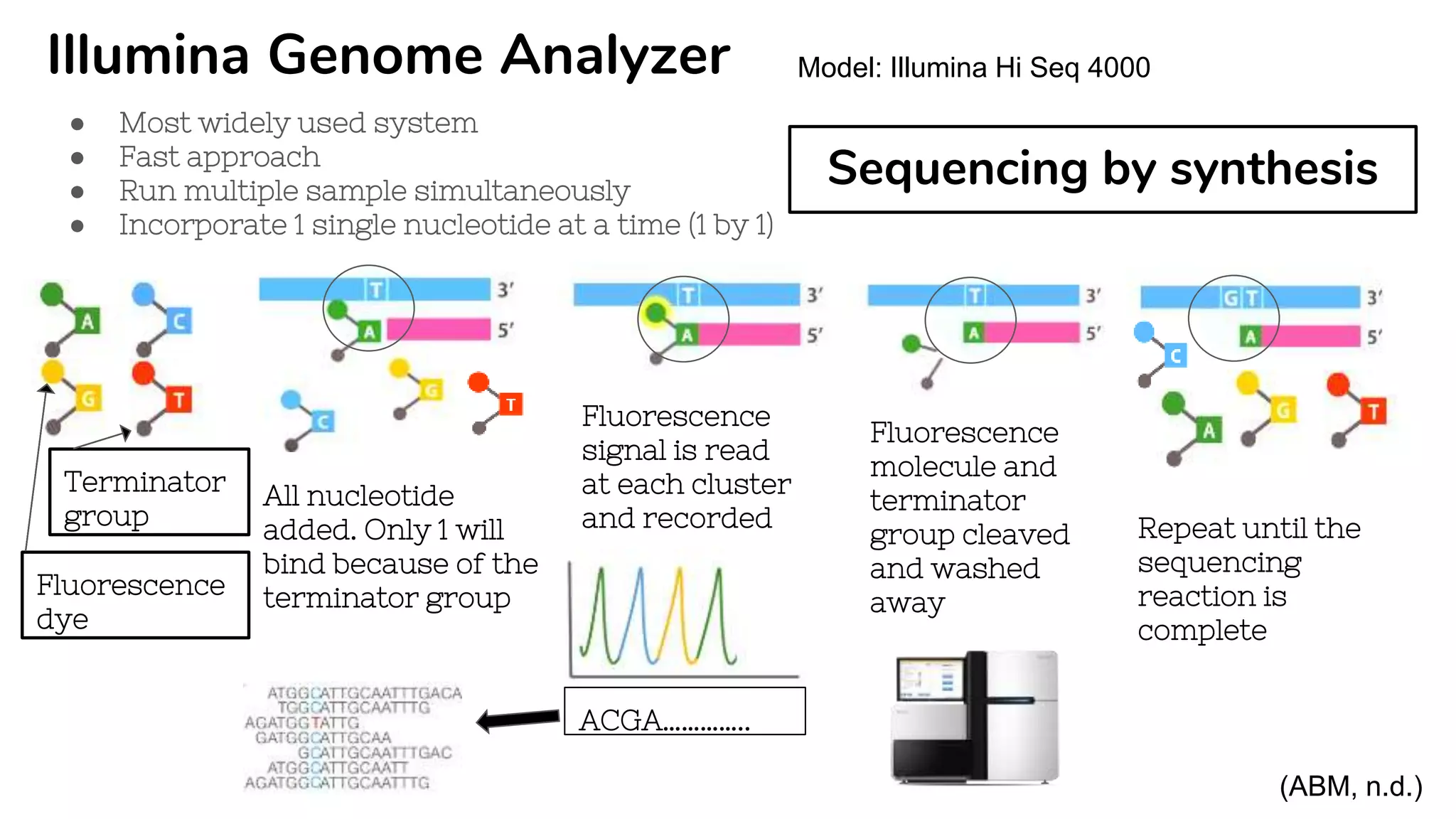
Illumina Genome Analyzer
● Most widely used system
● Fast approach
● Run multiple sample simultaneously
● Incorporate 1 single nucleotide at a time (1 by 1)
All nucleotide
added. Only 1 will
bind because of the
terminator group
Fluorescence
molecule and
terminator
group cleaved
and washed
away
Repeat until the
sequencing
reaction is
complete
Terminator
group
Fluorescence
dye
Fluorescence
signal is read
at each cluster
and recorded
ACGA…………..
Sequencing by synthesis
(ABM, n.d.)
Model: Illumina Hi Seq 4000
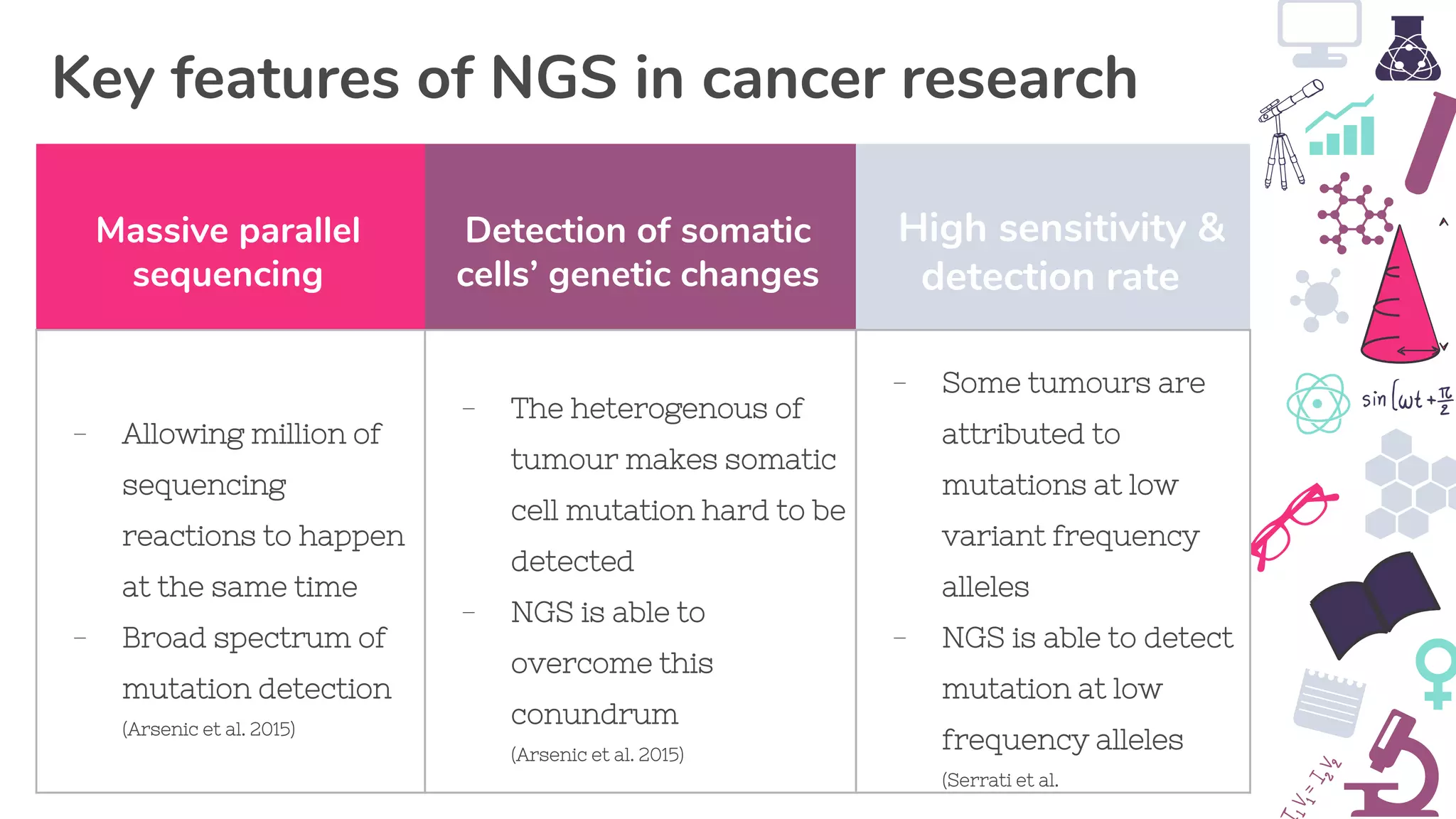
Massive parallel
sequencing
Detection of somatic
cells’ genetic changes
High sensitivity &
detection rate
- Allowing million of
sequencing
reactions to happen
at the same time
- Broad spectrum of
mutation detection
(Arsenic et al. 2015)
- The heterogenous of
tumour makes somatic
cell mutation hard to be
detected
- NGS is able to
overcome this
conundrum
(Arsenic et al. 2015)
- Some tumours are
attributed to
mutations at low
variant frequency
alleles
- NGS is able to detect
mutation at low
frequency alleles
(Serrati et al.
Key features of NGS in cancer research
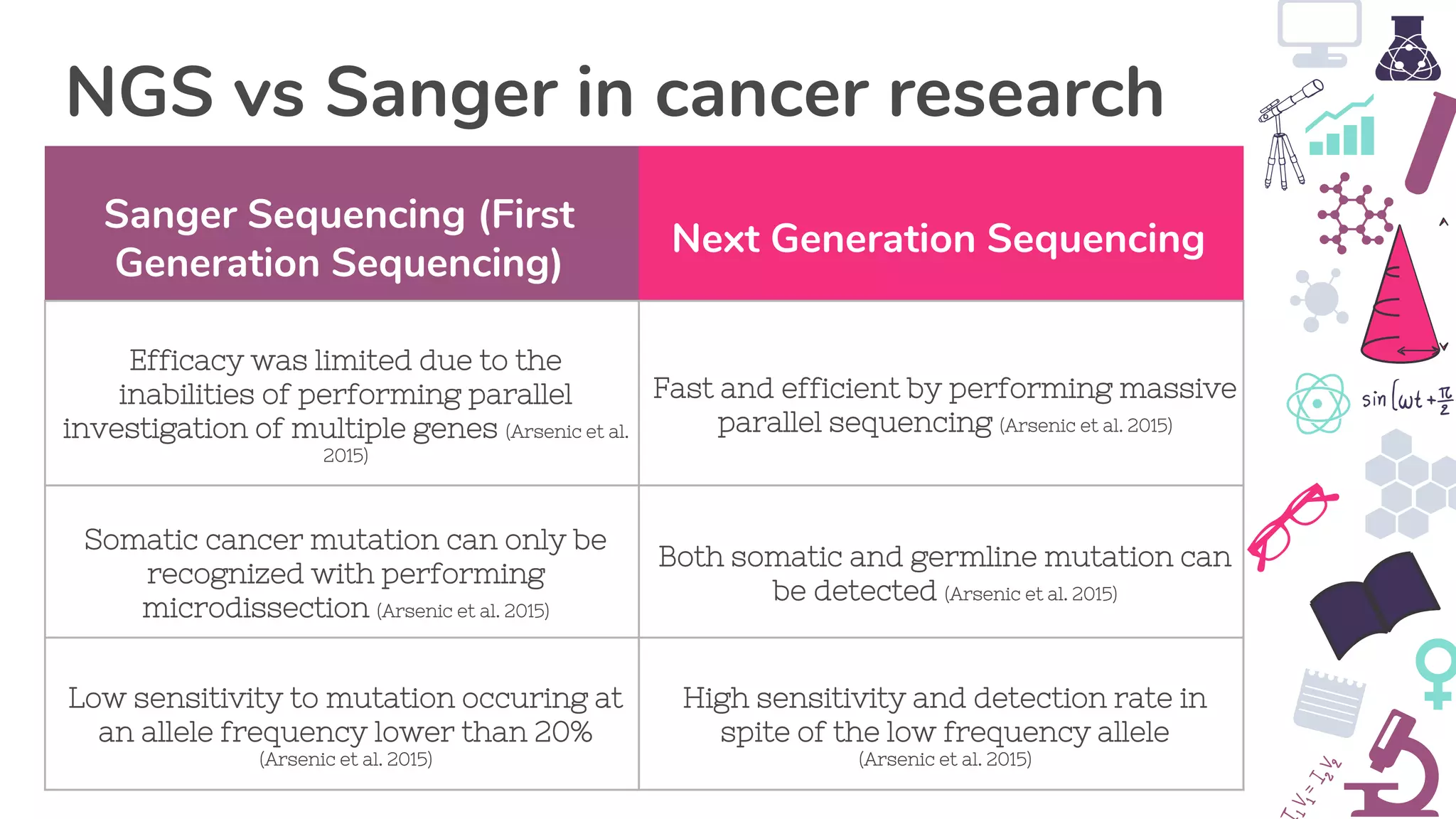
Sanger Sequencing (First
Generation Sequencing)
Next Generation Sequencing
Efficacy was limited due to the
inabilities of performing parallel
investigation of multiple genes (Arsenic et al.
2015)
Fast and efficient by performing massive
parallel sequencing (Arsenic et al. 2015)
Somatic cancer mutation can only be
recognized with performing
microdissection (Arsenic et al. 2015)
Both somatic and germline mutation can
be detected (Arsenic et al. 2015)
Low sensitivity to mutation occuring at
an allele frequency lower than 20%
(Arsenic et al. 2015)
High sensitivity and detection rate in
spite of the low frequency allele
(Arsenic et al. 2015)
NGS vs Sanger in cancer research
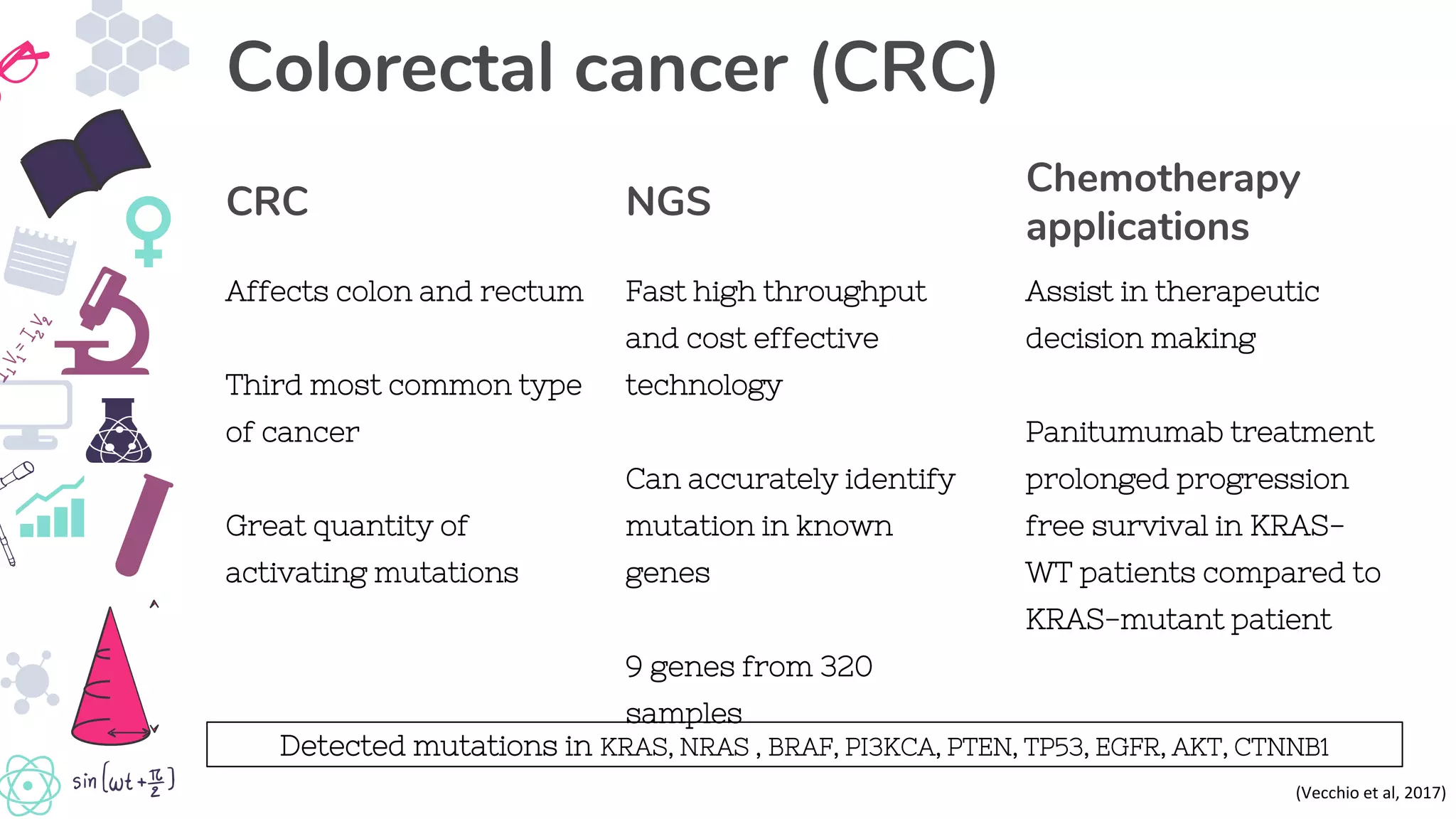
Assist in therapeutic
decision making
Panitumumab treatment
prolonged progression
free survival in KRAS-
WT patients compared to
KRAS-mutant patient
Chemotherapy
applications
Colorectal cancer (CRC)
Affects colon and rectum
Third most common type
of cancer
Great quantity of
activating mutations
CRC
Fast high throughput
and cost effective
technology
Can accurately identify
mutation in known
genes
9 genes from 320
samples
NGS
Detected mutations in KRAS, NRAS , BRAF, PI3KCA, PTEN, TP53, EGFR, AKT, CTNNB1
(Vecchio et al, 2017)
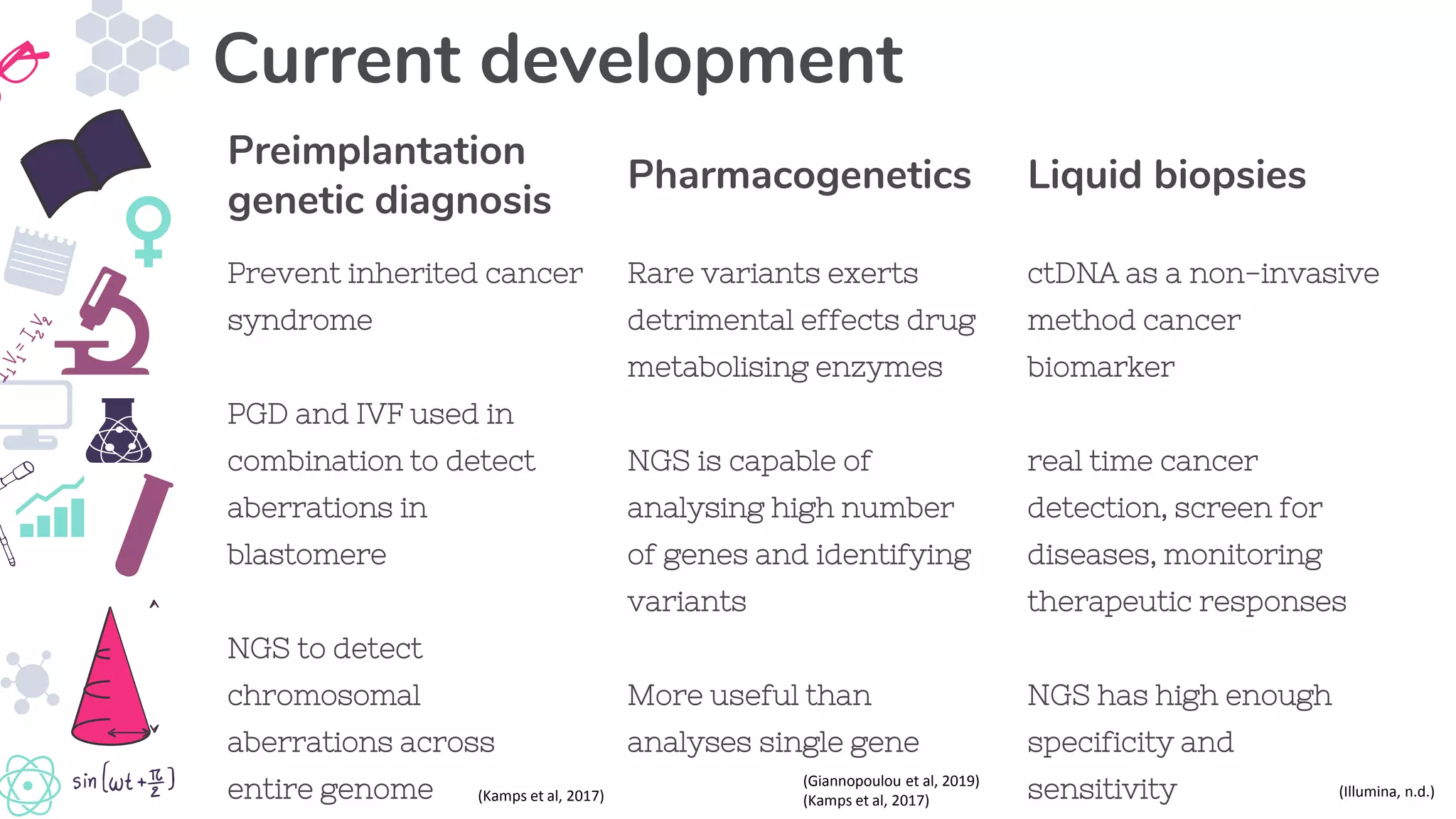
ctDNA as a non-invasive
method cancer
biomarker
real time cancer
detection, screen for
diseases, monitoring
therapeutic responses
NGS has high enough
specificity and
sensitivity
Liquid biopsies
Current development
Prevent inherited cancer
syndrome
PGD and IVF used in
combination to detect
aberrations in
blastomere
NGS to detect
chromosomal
aberrations across
entire genome
Preimplantation
genetic diagnosis
Rare variants exerts
detrimental effects drug
metabolising enzymes
NGS is capable of
analysing high number
of genes and identifying
variants
More useful than
analyses single gene
Pharmacogenetics
(Kamps et al, 2017)
(Giannopoulou et al, 2019)
(Kamps et al, 2017)
(Illumina, n.d.)
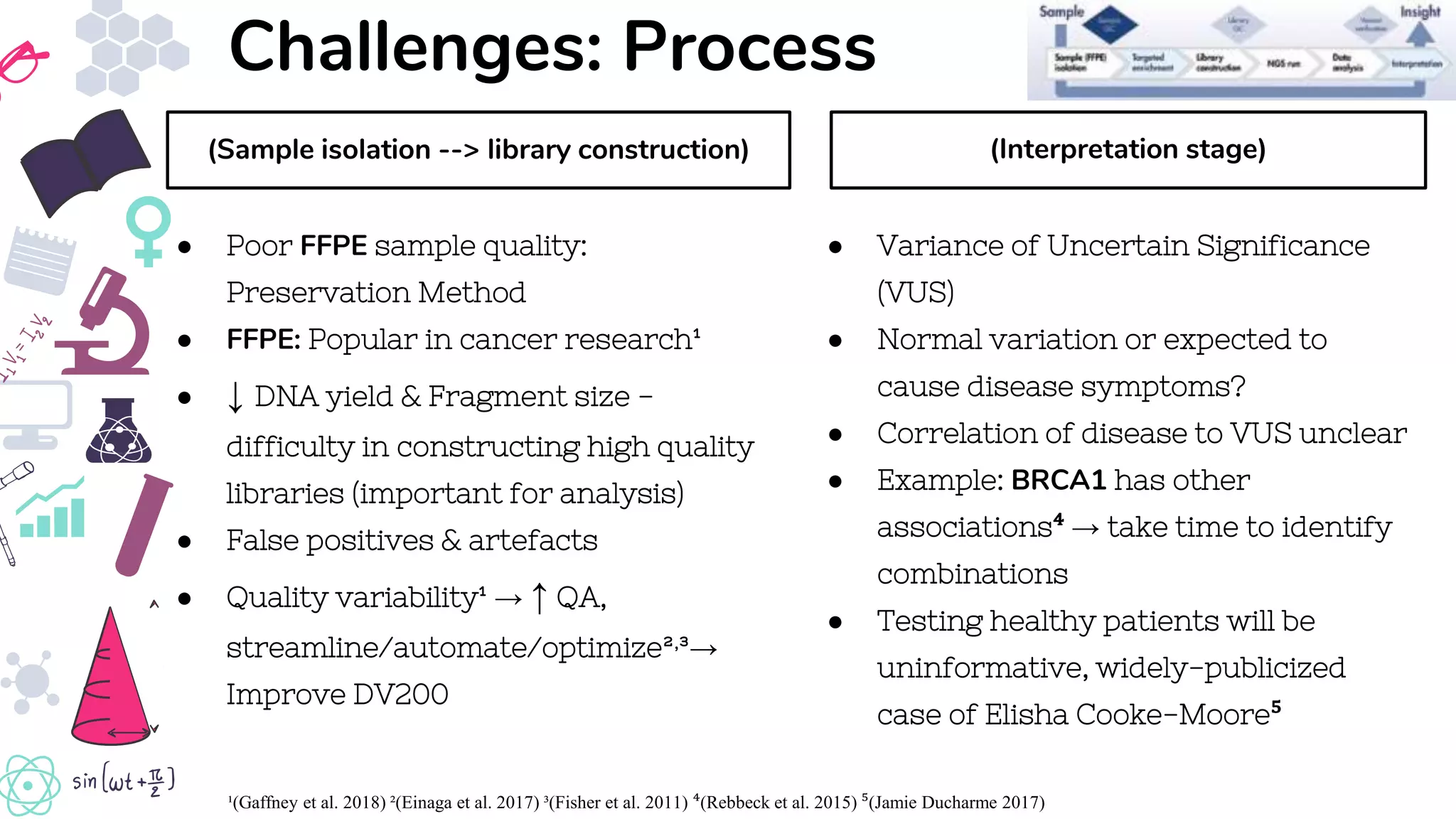
Challenges: Process
● Poor FFPE sample quality:
Preservation Method
● FFPE: Popular in cancer research¹
● ↓ DNA yield & Fragment size -
difficulty in constructing high quality
libraries (important for analysis)
● False positives & artefacts
● Quality variability¹ → ↑ QA,
streamline/automate/optimize²,³→
Improve DV200
(Sample isolation --> library construction)
● Variance of Uncertain Significance
(VUS)
● Normal variation or expected to
cause disease symptoms?
● Correlation of disease to VUS unclear
● Example: BRCA1 has other
associations⁴ → take time to identify
combinations
● Testing healthy patients will be
uninformative, widely-publicized
case of Elisha Cooke-Moore⁵
(Interpretation stage)
¹(Gaffney et al. 2018) ²(Einaga et al. 2017) ³(Fisher et al. 2011) ⁴(Rebbeck et al. 2015) ⁵(Jamie Ducharme 2017)
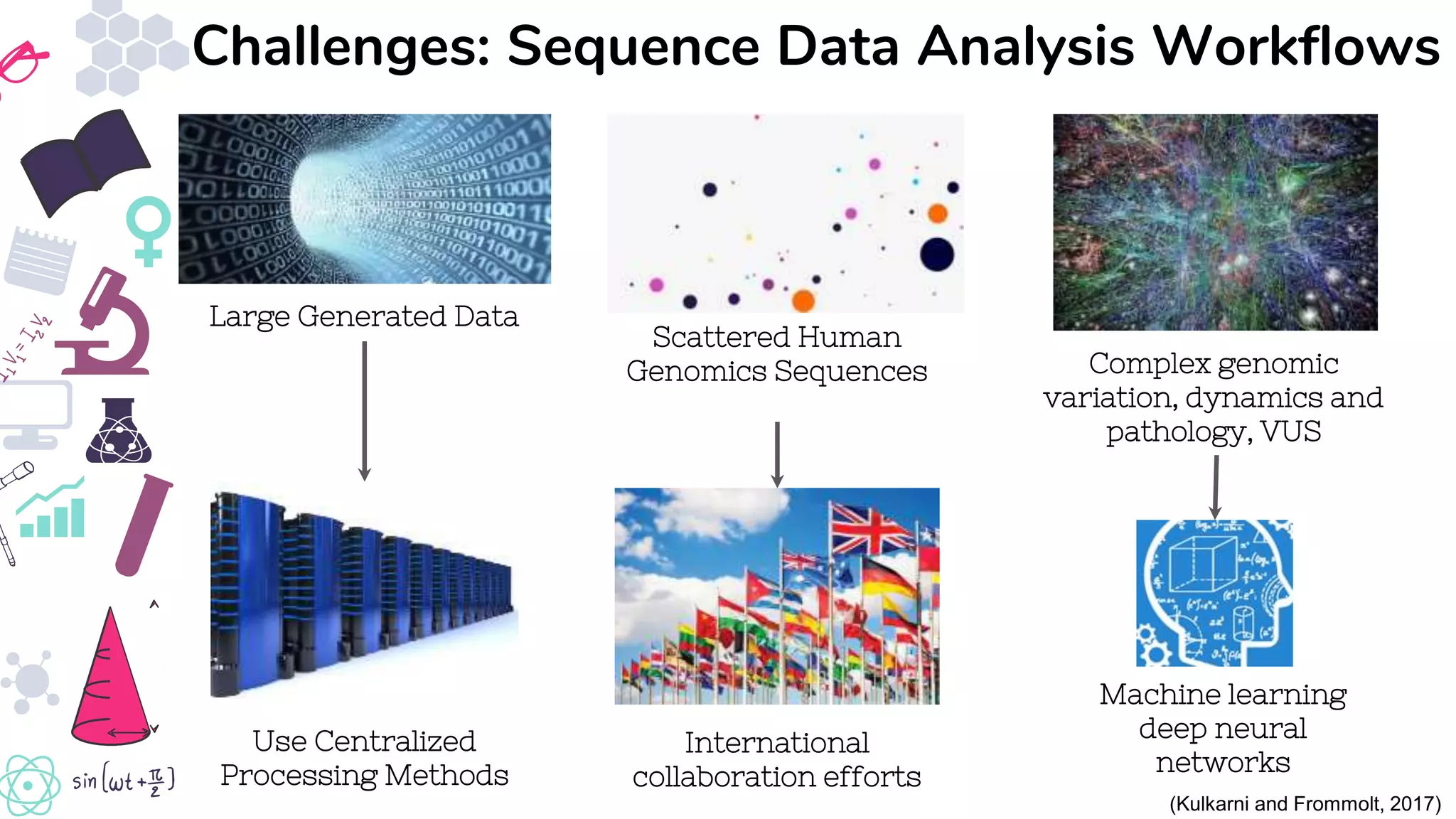
Challenges: Sequence Data Analysis Workflows
(Kulkarni and Frommolt, 2017)
Large Generated Data
Use Centralized
Processing Methods
Scattered Human
Genomics Sequences
International
collaboration efforts
Complex genomic
variation, dynamics and
pathology, VUS
Machine learning
deep neural
networks
- NGS helps to conquer the
challenges of low tumour
quality, heterogeneity of
tumour. (Meyerson, Gabriel & Getz 2010)
- In future, smaller samples are
likely to be diagnosed by using
NGS (Meyerson, Gabriel & Getz 2010)
Render remarkable impact in
cancer treatment
Conclusion - NGS
- Able to run multiple
samples at the same time
- High sensitivity and
detection rate
- Cost-effective
- Provide comprehensive
genomic information
(Arsenic et al. 2015)
Effective method to
detect mutation
● ABM. n.d. Next Generation Sequencing (NGS) - An Introduction, viewed 25 May 2019,
<https://www.abmgood.com/marketing/knowledge_base/next_generation_sequencing_introduction.php>
● Ambardar, S., Gupta, R., Trakroo, D., Lal, R. and Vakhlu, J. 2016. ‘High Throughput Sequencing: An Overview of Sequencing
Chemistry. Indian Journal of Microbiology’, [online] 56(4), pp.394-404. Available at:
https://www.ncbi.nlm.nih.gov/pmc/articles/PMC5061697/ [Accessed 27 May 2019].
● Arsenic, R, Treue, D, Lehmann, A, Hummel, M, Dietel, M, Denkert, C & Budczies, Jan 2015, ‘Comparison of targeted next-
generation sequencing and Sanger sequencing for the detection of PIK3CA mutations in breast cancer’, BMC clinical
pathology, vol. 15, no. 20, viewed 28 May 2019, <https://www.ncbi.nlm.nih.gov/pmc/articles/PMC4652376/>
● Barba, M., Czosnek, H. and Hadidi, A. 2014. ‘Historical Perspective, Development and Applications of Next-Generation
Sequencing in Plant Virology’. Viruses, [online] 6(1), pp.106-136. Available at:
https://www.ncbi.nlm.nih.gov/pmc/articles/PMC3917434/ [Accessed 27 May 2019].
● Einaga, N, Yoshida, A, Noda, H, Suemitsu, M, Nakayama, Y, Sakurada, A, Kawaji, Y, Yamaguchi, H, Sasaki, Y, Tokino, T &
Esumi, M 2017, ‘Assessment of the quality of DNA from various formalin-fixed paraffin-embedded (FFPE) tissues and the
use of this DNA for next-generation sequencing (NGS) with no artifactual mutation’ ed.AWI Lo., PLOS ONE, vol. 12, no. 5,
p.e0176280. Available from: https://dx.plos.org/10.1371/journal.pone.0176280. [27 May 2019].
● Fisher, S, Barry, A, Abreu, J, Minie, B, Nolan, J, Delorey, TM, Young, G, Fennell, TJ, Allen, A, Ambrogio, L, Berlin, AM,
Blumenstiel, B, Cibulskis, K, Friedrich, D, Johnson, R, Juhn, F, Reilly, B, Shammas, R, Stalker, J, Sykes, SM, Thompson, J,
Walsh, J, Zimmer, A, Zwirko, Z, Gabriel, S, Nicol, R & Nusbaum, C 2011, ‘A scalable, fully automated process for construction
of sequence-ready human exome targeted capture libraries’., Genome Biology, vol. 12, no. 1, p.R1. Available from:
http://genomebiology.biomedcentral.com/articles/10.1186/gb-2011-12-1-r1. [28 May 2019].
● Gaffney, E, Riegman, P, Grizzle, W & Watson, P 2018, ‘Factors that drive the increasing use of FFPE tissue in basic and
translational cancer research’., Biotechnic & Histochemistry, vol. 93, no. 5, pp.373–386. Available from:
https://www.tandfonline.com/doi/full/10.1080/10520295.2018.1446101. [27 May 2019].
● Giannapoulou, E, Katsila, T, Mitropoulou, C, Tsermpini, EE & Patrinos, GP 2019, ‘Integrating next generation sequencing in
the clinical pharmacogenomins workflow’, Frontiers in Pharmacology, viewed 27 May 2019,
<https://doi.org/10.3389/fphar.2019.00384>
● Heather, J. and Chain, B. 2016. ‘The sequence of sequencers: The history of sequencing DNA’. Genomics, [online] 107(1),
pp.1-8. Available at: https://www.sciencedirect.com/science/article/pii/S0888754315300410 [Accessed 27 May 2019].
● Illumina, n.d., An introduction to next generation sequencing for oncologist, viewed 27 May 2019,
<https://www.illumina.com/content/dam/illumina-marketing/documents/products/other/primer-ngs-oncology.pdf>
References
● Jamie Ducharme 2017, ‘Woman Sues After Unnecessary Mastectomy and Hysterectomy | Time’ Available from:
http://time.com/4994961/breast-cancer-uterus-surgery/. [27 May 2019].
● Kamps, R., Brandão, R., Bosch, B., Paulussen, A., Xanthoulea, S., Blok, M. and Romano, A. 2017. ‘Next-Generation
Sequencing in Oncology: Genetic Diagnosis, Risk Prediction and Cancer Classification. International Journal of Molecular
Sciences’, [online] 18(2), p.308. Available at: https://www.ncbi.nlm.nih.gov/pmc/articles/PMC5343844/ [Accessed 27 May
2019].
● Kulski, J. 2016. ‘Next-Generation Sequencing — An Overview of the History, Tools, and “Omic” Applications. Next
Generation Sequencing - Advances, Applications and Challenges’. [online] Available at:
https://www.intechopen.com/books/next-generation-sequencing-advances-applications-and-challenges/next-generation-
sequencing-an-overview-of-the-history-tools-and-omic-applications [Accessed 27 May 2019].
● Kulkarni, P. and Frommolt, P. (2017) ‘Challenges in the Setup of Large-scale Next-Generation Sequencing Analysis
Workflows.’, Computational and structural biotechnology journal. Research Network of Computational and Structural
Biotechnology, 15, pp. 471–477. doi: 10.1016/j.csbj.2017.10.001.
● Nagahashi, M, Shimada, Y, Ichikawa, H, Nakagawa, S, Sato, N, Kaneko, K, Homma, K, Kawasaki, T, Kodama, K, Lyle, S,
Takabe, K Wakai, T 2017, ‘Formalin Fixed paraffin-embedded sample conditions for deep next generation sequencing’,
Journal of Surgical Research, vol, 220, no. 2017, pp. 125-132
● New England BioLabs, n.d., FFPE DNA, viewed 27 May 2019, <https://www.neb.com/products/sample-preparation-for-
next-generation-sequencing/ffpe-dna/ffpe-dna>
● Ozsolak, F. 2012. ‘Third-generation sequencing techniques and applications to drug discovery. Expert Opinion on Drug
Discovery’, [online] 7(3), pp.231-243. Available at:
https://www.ncbi.nlm.nih.gov/pmc/articles/PMC3319653/pdf/nihms352467.pdf [Accessed 27 May 2019].
● Płoski, R. 2016. ‘Next Generation Sequencing—General Information about the Technology, Possibilities, and Limitations.
Clinical Applications for Next-Generation Sequencing’ [online] pp.1-18. Available at:
https://www.sciencedirect.com/science/article/pii/B9780128017395000015 [Accessed 27 May 2019].
References
References
● Rebbeck, TR, Mitra, N, Wan, F, Sinilnikova, OM, Healey, S, McGuffog, L, Mazoyer, S, Chenevix-Trench, G, Easton, DF, Antoniou, AC, Nathanson, KL, Laitman, Y,
Kushnir, A, Paluch-Shimon, S, Berger, R, Zidan, J, Friedman, E, Ehrencrona, H, Stenmark-Askmalm, M, Einbeigi, Z, Loman, N, Harbst, K, Rantala, J, Melin, B, Huo, D,
Olopade, OI, Seldon, J, Ganz, PA, Nussbaum, RL, Chan, SB, Odunsi, K, Gayther, SA, Domchek, SM, Arun, BK, Lu, KH, Mitchell, G, Karlan, BY, Walsh, C, Lester, J,
Godwin, AK, Pathak, H, Ross, E, Daly, MB, Whittemore, AS, John, EM, Miron, A, Terry, MB, Chung, WK, Goldgar, DE, Buys, SS, Janavicius, R, Tihomirova, L, Tung, N,
Dorfling, CM, van Rensburg, EJ, Steele, L, Neuhausen, SL, Ding, YC, Ejlertsen, B, Gerdes, A-M, Hansen, T v. O, Ramón y Cajal, T, Osorio, A, Benitez, J, Godino, J,
Tejada, M-I, Duran, M, Weitzel, JN, Bobolis, KA, Sand, SR, Fontaine, A, Savarese, A, Pasini, B, Peissel, B, Bonanni, B, Zaffaroni, D, Vignolo-Lutati, F, Scuvera, G,
Giannini, G, Bernard, L, Genuardi, M, Radice, P, Dolcetti, R, Manoukian, S, Pensotti, V, Gismondi, V, Yannoukakos, D, Fostira, F, Garber, J, Torres, D, Rashid, MU,
Hamann, U, Peock, S, Frost, D, Platte, R, Evans, DG, Eeles, R, Davidson, R, Eccles, D, Cole, T, Cook, J, Brewer, C, Hodgson, S, Morrison, PJ, Walker, L, Porteous, ME,
Kennedy, MJ, Izatt, L, Adlard, J, Donaldson, A, Ellis, S, Sharma, P, Schmutzler, RK, Wappenschmidt, B, Becker, A, Rhiem, K, Hahnen, E, Engel, C, Meindl, A, Engert, S,
Ditsch, N, Arnold, N, Plendl, HJ, Mundhenke, C, Niederacher, D, Fleisch, M, Sutter, C, Bartram, CR, Dikow, N, Wang-Gohrke, S, Gadzicki, D, Steinemann, D, Kast, K,
Beer, M, Varon-Mateeva, R, Gehrig, A, Weber, BH, Stoppa-Lyonnet, D, Sinilnikova, OM, Mazoyer, S, Houdayer, C, Belotti, M, Gauthier-Villars, M, Damiola, F, Boutry-
Kryza, N, Lasset, C, Sobol, H, Peyrat, J-P, Muller, D, Fricker, J-P, Collonge-Rame, M-A, Mortemousque, I, Nogues, C, Rouleau, E, Isaacs, C, De Paepe, A, Poppe, B,
Claes, K, De Leeneer, K, Piedmonte, M, Rodriguez, G, Wakely, K, Boggess, J, Blank, S V., Basil, J, Azodi, M, Phillips, K-A, Caldes, T, de la Hoya, M, Romero, A,
Nevanlinna, H, Aittomäki, K, van der Hout, AH, Hogervorst, FBL, Verhoef, S, Collée, JM, Seynaeve, C, Oosterwijk, JC, Gille, JJP, Wijnen, JT, Garcia, EBG, Kets, CM,
Ausems, MGEM, Aalfs, CM, Devilee, P, Mensenkamp, AR, Kwong, A, Olah, E, Papp, J, Diez, O, Lazaro, C, Darder, E, Blanco, I, Salinas, M, Jakubowska, A, Lubinski, J,
Gronwald, J, Jaworska-Bieniek, K, Durda, K, Sukiennicki, G, Huzarski, T, Byrski, T, Cybulski, C, Toloczko-Grabarek, A, Zlowocka-Perlowska, E, Menkiszak, J, Arason, A,
Barkardottir, RB, Simard, J, Laframboise, R, Montagna, M, Agata, S, Alducci, E, Peixoto, A, Teixeira, MR, Spurdle, AB, Lee, MH, Park, SK, Kim, S-W, Friebel, TM,
Couch, FJ, Lindor, NM, Pankratz, VS, Guidugli, L, Wang, X, Tischkowitz, M, Foretova, L, Vijai, J, Offit, K, Robson, M, Rau-Murthy, R, Kauff, N, Fink-Retter, A, Singer,
CF, Rappaport, C, Gschwantler-Kaulich, D, Pfeiler, G, Tea, M-K, Berger, A, Greene, MH, Mai, PL, Imyanitov, EN, Toland, AE, Senter, L, Bojesen, A, Pedersen, IS,
Skytte, A-B, Sunde, L, Thomassen, M, Moeller, ST, Kruse, TA, Jensen, UB, Caligo, MA, Aretini, P, Teo, S-H, Selkirk, CG, Hulick, PJ, Andrulis, I & Andrulis, I 2015,
‘Association of Type and Location of BRCA1 and BRCA2 Mutations With Risk of Breast and Ovarian Cancer’., JAMA, vol. 313, no. 13, p.1347. Available from:
http://www.ncbi.nlm.nih.gov/pubmed/25849179. [27 May 2019].
● Serrati, S, Summa, SD, Pilato, B, Patriella, D, Lacalamita, S, Tommasi, S & Pinto, R 2016, ‘Next-generation sequencing:
advances and applications in cancer diagnosis’, OncoTargets and Therapy, no.9, pp. 7355-7365, viewed 28 May 2019,
<https://www.ncbi.nlm.nih.gov/pmc/articles/PMC5144906/>
● Totomoch-Serra, A., Marquez, M. and Cervantes-Barragán, D. 2017. ‘Sanger sequencing as a first-line approach for
molecular diagnosis of Andersen-Tawil syndrome’. F1000Research, [online] 6, p.1016. Available at:
https://www.ncbi.nlm.nih.gov/pmc/articles/PMC5635448/pdf/f1000research-6-12541.pdf [Accessed 27 May 2019].
● Meyerson, M, Gabriel, S & Getz, G 2010, ‘Advances in understanding cancer genomes through second-generation
sequencing’, Nature Reviews Genetics, vol.11, no. 10, pp. 685-696, viewed 28 May 2019,
<http://ccsb.stanford.edu/content/dam/sm/ccsb/documents/education/cbio243course/2010_Meyerson_CancerNGS_NRG.pdf
>
● Vecchio, FD, Mastroiaco, V, Marco, AD, Compagnoni, C, Capece, D, Zazzeroni, F, Capalbo, C, Alesse, E & Tessitore, A 2017,
‘Next generation sequencing: recent applications to the analysis of colorectal cancer’, Journal or Translational Medicine, vol.
15, no. 246. Available from: https://www.ncbi.nlm.nih.gov/pmc/articles/PMC5723063/ [28 May 2019]
References

Next Generation Sequencing

  • 1.
    Next Generation Sequencing Joshua LeeVoon Kai (0333356) Tee Zhong Ee (0327975) Sing (0328048) Cheong Pui Yi (0326329) Hsing Lu (0331441) Julian Tay (0328917)
  • 2.
    Second G.S. Sanger Sequencing First G.S. The Discoveryof Next Generation Sequencing (NGS) “to determine the sequence of a DNA molecule(s) with total size significantly larger than 1 million base pairs in a single experiment ” (Ploski, 2016). Third G.S. Discovered - 1977 - Frederick Sanger - Walter Gilbert Based on dideoxy technique Developed into chain- termination method, also known as Sanger sequencing. Derived from Sanger Sequencing - 1986 dNTP and ddNTP are used for electrophoresis technology. Created by implementing several new methods into FQS Eg. - Roche/454 platform in 2005 - Solexa/Illumina system in 2006, Launched - in 2000 - by Lynx Therapeutics (USA) Company. Launched by Helicos BioSciences Achieved due to advances in automated single molecule imaging and fluidics technologies Lower cost than Sanger sequencing. Highly time efficient. (Barba, Czosnek and Hadidi, 2014) (Heather and Chain, 2016) (Ambardar et al., 2016)(Totomoch-Serra, Marquez and Cervantes-Barragán, 2017) (Ozsolak, 2012)(Kamps et al., 2017)
  • 3.
    Type of protocols! Types of Sequencing Method Pyrosequencing Sequencing by synthesis Sequencing by ligation Ion semiconductor sequencing Template Preparation (Amplify) Emulsion PCR Bridge PCR Common steps 1. Template Preparation 2. Sequencing 3. Data Analysis Goal: Sequence thousands of DNA molecules simultaneously and get the exact sequence of genes Example: Roche/454 FLX, Illumina/ Solexa Genome Analyzer, Applied Biosystems (ABI) SOLiD Analyzer, Polonator G.007 and Helicos HeliScope (ABM, n.d.)
  • 4.
    Illumina Genome Analyzer ●Most widely used system ● Fast approach ● Run multiple sample simultaneously ● Incorporate 1 single nucleotide at a time (1 by 1) All nucleotide added. Only 1 will bind because of the terminator group Fluorescence molecule and terminator group cleaved and washed away Repeat until the sequencing reaction is complete Terminator group Fluorescence dye Fluorescence signal is read at each cluster and recorded ACGA………….. Sequencing by synthesis (ABM, n.d.) Model: Illumina Hi Seq 4000
  • 5.
    Massive parallel sequencing Detection ofsomatic cells’ genetic changes High sensitivity & detection rate - Allowing million of sequencing reactions to happen at the same time - Broad spectrum of mutation detection (Arsenic et al. 2015) - The heterogenous of tumour makes somatic cell mutation hard to be detected - NGS is able to overcome this conundrum (Arsenic et al. 2015) - Some tumours are attributed to mutations at low variant frequency alleles - NGS is able to detect mutation at low frequency alleles (Serrati et al. Key features of NGS in cancer research
  • 6.
    Sanger Sequencing (First GenerationSequencing) Next Generation Sequencing Efficacy was limited due to the inabilities of performing parallel investigation of multiple genes (Arsenic et al. 2015) Fast and efficient by performing massive parallel sequencing (Arsenic et al. 2015) Somatic cancer mutation can only be recognized with performing microdissection (Arsenic et al. 2015) Both somatic and germline mutation can be detected (Arsenic et al. 2015) Low sensitivity to mutation occuring at an allele frequency lower than 20% (Arsenic et al. 2015) High sensitivity and detection rate in spite of the low frequency allele (Arsenic et al. 2015) NGS vs Sanger in cancer research
  • 7.
    Assist in therapeutic decisionmaking Panitumumab treatment prolonged progression free survival in KRAS- WT patients compared to KRAS-mutant patient Chemotherapy applications Colorectal cancer (CRC) Affects colon and rectum Third most common type of cancer Great quantity of activating mutations CRC Fast high throughput and cost effective technology Can accurately identify mutation in known genes 9 genes from 320 samples NGS Detected mutations in KRAS, NRAS , BRAF, PI3KCA, PTEN, TP53, EGFR, AKT, CTNNB1 (Vecchio et al, 2017)
  • 8.
    ctDNA as anon-invasive method cancer biomarker real time cancer detection, screen for diseases, monitoring therapeutic responses NGS has high enough specificity and sensitivity Liquid biopsies Current development Prevent inherited cancer syndrome PGD and IVF used in combination to detect aberrations in blastomere NGS to detect chromosomal aberrations across entire genome Preimplantation genetic diagnosis Rare variants exerts detrimental effects drug metabolising enzymes NGS is capable of analysing high number of genes and identifying variants More useful than analyses single gene Pharmacogenetics (Kamps et al, 2017) (Giannopoulou et al, 2019) (Kamps et al, 2017) (Illumina, n.d.)
  • 9.
    Challenges: Process ● PoorFFPE sample quality: Preservation Method ● FFPE: Popular in cancer research¹ ● ↓ DNA yield & Fragment size - difficulty in constructing high quality libraries (important for analysis) ● False positives & artefacts ● Quality variability¹ → ↑ QA, streamline/automate/optimize²,³→ Improve DV200 (Sample isolation --> library construction) ● Variance of Uncertain Significance (VUS) ● Normal variation or expected to cause disease symptoms? ● Correlation of disease to VUS unclear ● Example: BRCA1 has other associations⁴ → take time to identify combinations ● Testing healthy patients will be uninformative, widely-publicized case of Elisha Cooke-Moore⁵ (Interpretation stage) ¹(Gaffney et al. 2018) ²(Einaga et al. 2017) ³(Fisher et al. 2011) ⁴(Rebbeck et al. 2015) ⁵(Jamie Ducharme 2017)
  • 10.
    Challenges: Sequence DataAnalysis Workflows (Kulkarni and Frommolt, 2017) Large Generated Data Use Centralized Processing Methods Scattered Human Genomics Sequences International collaboration efforts Complex genomic variation, dynamics and pathology, VUS Machine learning deep neural networks
  • 11.
    - NGS helpsto conquer the challenges of low tumour quality, heterogeneity of tumour. (Meyerson, Gabriel & Getz 2010) - In future, smaller samples are likely to be diagnosed by using NGS (Meyerson, Gabriel & Getz 2010) Render remarkable impact in cancer treatment Conclusion - NGS - Able to run multiple samples at the same time - High sensitivity and detection rate - Cost-effective - Provide comprehensive genomic information (Arsenic et al. 2015) Effective method to detect mutation
  • 12.
    ● ABM. n.d.Next Generation Sequencing (NGS) - An Introduction, viewed 25 May 2019, <https://www.abmgood.com/marketing/knowledge_base/next_generation_sequencing_introduction.php> ● Ambardar, S., Gupta, R., Trakroo, D., Lal, R. and Vakhlu, J. 2016. ‘High Throughput Sequencing: An Overview of Sequencing Chemistry. Indian Journal of Microbiology’, [online] 56(4), pp.394-404. Available at: https://www.ncbi.nlm.nih.gov/pmc/articles/PMC5061697/ [Accessed 27 May 2019]. ● Arsenic, R, Treue, D, Lehmann, A, Hummel, M, Dietel, M, Denkert, C & Budczies, Jan 2015, ‘Comparison of targeted next- generation sequencing and Sanger sequencing for the detection of PIK3CA mutations in breast cancer’, BMC clinical pathology, vol. 15, no. 20, viewed 28 May 2019, <https://www.ncbi.nlm.nih.gov/pmc/articles/PMC4652376/> ● Barba, M., Czosnek, H. and Hadidi, A. 2014. ‘Historical Perspective, Development and Applications of Next-Generation Sequencing in Plant Virology’. Viruses, [online] 6(1), pp.106-136. Available at: https://www.ncbi.nlm.nih.gov/pmc/articles/PMC3917434/ [Accessed 27 May 2019]. ● Einaga, N, Yoshida, A, Noda, H, Suemitsu, M, Nakayama, Y, Sakurada, A, Kawaji, Y, Yamaguchi, H, Sasaki, Y, Tokino, T & Esumi, M 2017, ‘Assessment of the quality of DNA from various formalin-fixed paraffin-embedded (FFPE) tissues and the use of this DNA for next-generation sequencing (NGS) with no artifactual mutation’ ed.AWI Lo., PLOS ONE, vol. 12, no. 5, p.e0176280. Available from: https://dx.plos.org/10.1371/journal.pone.0176280. [27 May 2019]. ● Fisher, S, Barry, A, Abreu, J, Minie, B, Nolan, J, Delorey, TM, Young, G, Fennell, TJ, Allen, A, Ambrogio, L, Berlin, AM, Blumenstiel, B, Cibulskis, K, Friedrich, D, Johnson, R, Juhn, F, Reilly, B, Shammas, R, Stalker, J, Sykes, SM, Thompson, J, Walsh, J, Zimmer, A, Zwirko, Z, Gabriel, S, Nicol, R & Nusbaum, C 2011, ‘A scalable, fully automated process for construction of sequence-ready human exome targeted capture libraries’., Genome Biology, vol. 12, no. 1, p.R1. Available from: http://genomebiology.biomedcentral.com/articles/10.1186/gb-2011-12-1-r1. [28 May 2019]. ● Gaffney, E, Riegman, P, Grizzle, W & Watson, P 2018, ‘Factors that drive the increasing use of FFPE tissue in basic and translational cancer research’., Biotechnic & Histochemistry, vol. 93, no. 5, pp.373–386. Available from: https://www.tandfonline.com/doi/full/10.1080/10520295.2018.1446101. [27 May 2019]. ● Giannapoulou, E, Katsila, T, Mitropoulou, C, Tsermpini, EE & Patrinos, GP 2019, ‘Integrating next generation sequencing in the clinical pharmacogenomins workflow’, Frontiers in Pharmacology, viewed 27 May 2019, <https://doi.org/10.3389/fphar.2019.00384> ● Heather, J. and Chain, B. 2016. ‘The sequence of sequencers: The history of sequencing DNA’. Genomics, [online] 107(1), pp.1-8. Available at: https://www.sciencedirect.com/science/article/pii/S0888754315300410 [Accessed 27 May 2019]. ● Illumina, n.d., An introduction to next generation sequencing for oncologist, viewed 27 May 2019, <https://www.illumina.com/content/dam/illumina-marketing/documents/products/other/primer-ngs-oncology.pdf> References
  • 13.
    ● Jamie Ducharme2017, ‘Woman Sues After Unnecessary Mastectomy and Hysterectomy | Time’ Available from: http://time.com/4994961/breast-cancer-uterus-surgery/. [27 May 2019]. ● Kamps, R., Brandão, R., Bosch, B., Paulussen, A., Xanthoulea, S., Blok, M. and Romano, A. 2017. ‘Next-Generation Sequencing in Oncology: Genetic Diagnosis, Risk Prediction and Cancer Classification. International Journal of Molecular Sciences’, [online] 18(2), p.308. Available at: https://www.ncbi.nlm.nih.gov/pmc/articles/PMC5343844/ [Accessed 27 May 2019]. ● Kulski, J. 2016. ‘Next-Generation Sequencing — An Overview of the History, Tools, and “Omic” Applications. Next Generation Sequencing - Advances, Applications and Challenges’. [online] Available at: https://www.intechopen.com/books/next-generation-sequencing-advances-applications-and-challenges/next-generation- sequencing-an-overview-of-the-history-tools-and-omic-applications [Accessed 27 May 2019]. ● Kulkarni, P. and Frommolt, P. (2017) ‘Challenges in the Setup of Large-scale Next-Generation Sequencing Analysis Workflows.’, Computational and structural biotechnology journal. Research Network of Computational and Structural Biotechnology, 15, pp. 471–477. doi: 10.1016/j.csbj.2017.10.001. ● Nagahashi, M, Shimada, Y, Ichikawa, H, Nakagawa, S, Sato, N, Kaneko, K, Homma, K, Kawasaki, T, Kodama, K, Lyle, S, Takabe, K Wakai, T 2017, ‘Formalin Fixed paraffin-embedded sample conditions for deep next generation sequencing’, Journal of Surgical Research, vol, 220, no. 2017, pp. 125-132 ● New England BioLabs, n.d., FFPE DNA, viewed 27 May 2019, <https://www.neb.com/products/sample-preparation-for- next-generation-sequencing/ffpe-dna/ffpe-dna> ● Ozsolak, F. 2012. ‘Third-generation sequencing techniques and applications to drug discovery. Expert Opinion on Drug Discovery’, [online] 7(3), pp.231-243. Available at: https://www.ncbi.nlm.nih.gov/pmc/articles/PMC3319653/pdf/nihms352467.pdf [Accessed 27 May 2019]. ● Płoski, R. 2016. ‘Next Generation Sequencing—General Information about the Technology, Possibilities, and Limitations. Clinical Applications for Next-Generation Sequencing’ [online] pp.1-18. Available at: https://www.sciencedirect.com/science/article/pii/B9780128017395000015 [Accessed 27 May 2019]. References
  • 14.
    References ● Rebbeck, TR,Mitra, N, Wan, F, Sinilnikova, OM, Healey, S, McGuffog, L, Mazoyer, S, Chenevix-Trench, G, Easton, DF, Antoniou, AC, Nathanson, KL, Laitman, Y, Kushnir, A, Paluch-Shimon, S, Berger, R, Zidan, J, Friedman, E, Ehrencrona, H, Stenmark-Askmalm, M, Einbeigi, Z, Loman, N, Harbst, K, Rantala, J, Melin, B, Huo, D, Olopade, OI, Seldon, J, Ganz, PA, Nussbaum, RL, Chan, SB, Odunsi, K, Gayther, SA, Domchek, SM, Arun, BK, Lu, KH, Mitchell, G, Karlan, BY, Walsh, C, Lester, J, Godwin, AK, Pathak, H, Ross, E, Daly, MB, Whittemore, AS, John, EM, Miron, A, Terry, MB, Chung, WK, Goldgar, DE, Buys, SS, Janavicius, R, Tihomirova, L, Tung, N, Dorfling, CM, van Rensburg, EJ, Steele, L, Neuhausen, SL, Ding, YC, Ejlertsen, B, Gerdes, A-M, Hansen, T v. O, Ramón y Cajal, T, Osorio, A, Benitez, J, Godino, J, Tejada, M-I, Duran, M, Weitzel, JN, Bobolis, KA, Sand, SR, Fontaine, A, Savarese, A, Pasini, B, Peissel, B, Bonanni, B, Zaffaroni, D, Vignolo-Lutati, F, Scuvera, G, Giannini, G, Bernard, L, Genuardi, M, Radice, P, Dolcetti, R, Manoukian, S, Pensotti, V, Gismondi, V, Yannoukakos, D, Fostira, F, Garber, J, Torres, D, Rashid, MU, Hamann, U, Peock, S, Frost, D, Platte, R, Evans, DG, Eeles, R, Davidson, R, Eccles, D, Cole, T, Cook, J, Brewer, C, Hodgson, S, Morrison, PJ, Walker, L, Porteous, ME, Kennedy, MJ, Izatt, L, Adlard, J, Donaldson, A, Ellis, S, Sharma, P, Schmutzler, RK, Wappenschmidt, B, Becker, A, Rhiem, K, Hahnen, E, Engel, C, Meindl, A, Engert, S, Ditsch, N, Arnold, N, Plendl, HJ, Mundhenke, C, Niederacher, D, Fleisch, M, Sutter, C, Bartram, CR, Dikow, N, Wang-Gohrke, S, Gadzicki, D, Steinemann, D, Kast, K, Beer, M, Varon-Mateeva, R, Gehrig, A, Weber, BH, Stoppa-Lyonnet, D, Sinilnikova, OM, Mazoyer, S, Houdayer, C, Belotti, M, Gauthier-Villars, M, Damiola, F, Boutry- Kryza, N, Lasset, C, Sobol, H, Peyrat, J-P, Muller, D, Fricker, J-P, Collonge-Rame, M-A, Mortemousque, I, Nogues, C, Rouleau, E, Isaacs, C, De Paepe, A, Poppe, B, Claes, K, De Leeneer, K, Piedmonte, M, Rodriguez, G, Wakely, K, Boggess, J, Blank, S V., Basil, J, Azodi, M, Phillips, K-A, Caldes, T, de la Hoya, M, Romero, A, Nevanlinna, H, Aittomäki, K, van der Hout, AH, Hogervorst, FBL, Verhoef, S, Collée, JM, Seynaeve, C, Oosterwijk, JC, Gille, JJP, Wijnen, JT, Garcia, EBG, Kets, CM, Ausems, MGEM, Aalfs, CM, Devilee, P, Mensenkamp, AR, Kwong, A, Olah, E, Papp, J, Diez, O, Lazaro, C, Darder, E, Blanco, I, Salinas, M, Jakubowska, A, Lubinski, J, Gronwald, J, Jaworska-Bieniek, K, Durda, K, Sukiennicki, G, Huzarski, T, Byrski, T, Cybulski, C, Toloczko-Grabarek, A, Zlowocka-Perlowska, E, Menkiszak, J, Arason, A, Barkardottir, RB, Simard, J, Laframboise, R, Montagna, M, Agata, S, Alducci, E, Peixoto, A, Teixeira, MR, Spurdle, AB, Lee, MH, Park, SK, Kim, S-W, Friebel, TM, Couch, FJ, Lindor, NM, Pankratz, VS, Guidugli, L, Wang, X, Tischkowitz, M, Foretova, L, Vijai, J, Offit, K, Robson, M, Rau-Murthy, R, Kauff, N, Fink-Retter, A, Singer, CF, Rappaport, C, Gschwantler-Kaulich, D, Pfeiler, G, Tea, M-K, Berger, A, Greene, MH, Mai, PL, Imyanitov, EN, Toland, AE, Senter, L, Bojesen, A, Pedersen, IS, Skytte, A-B, Sunde, L, Thomassen, M, Moeller, ST, Kruse, TA, Jensen, UB, Caligo, MA, Aretini, P, Teo, S-H, Selkirk, CG, Hulick, PJ, Andrulis, I & Andrulis, I 2015, ‘Association of Type and Location of BRCA1 and BRCA2 Mutations With Risk of Breast and Ovarian Cancer’., JAMA, vol. 313, no. 13, p.1347. Available from: http://www.ncbi.nlm.nih.gov/pubmed/25849179. [27 May 2019].
  • 15.
    ● Serrati, S,Summa, SD, Pilato, B, Patriella, D, Lacalamita, S, Tommasi, S & Pinto, R 2016, ‘Next-generation sequencing: advances and applications in cancer diagnosis’, OncoTargets and Therapy, no.9, pp. 7355-7365, viewed 28 May 2019, <https://www.ncbi.nlm.nih.gov/pmc/articles/PMC5144906/> ● Totomoch-Serra, A., Marquez, M. and Cervantes-Barragán, D. 2017. ‘Sanger sequencing as a first-line approach for molecular diagnosis of Andersen-Tawil syndrome’. F1000Research, [online] 6, p.1016. Available at: https://www.ncbi.nlm.nih.gov/pmc/articles/PMC5635448/pdf/f1000research-6-12541.pdf [Accessed 27 May 2019]. ● Meyerson, M, Gabriel, S & Getz, G 2010, ‘Advances in understanding cancer genomes through second-generation sequencing’, Nature Reviews Genetics, vol.11, no. 10, pp. 685-696, viewed 28 May 2019, <http://ccsb.stanford.edu/content/dam/sm/ccsb/documents/education/cbio243course/2010_Meyerson_CancerNGS_NRG.pdf > ● Vecchio, FD, Mastroiaco, V, Marco, AD, Compagnoni, C, Capece, D, Zazzeroni, F, Capalbo, C, Alesse, E & Tessitore, A 2017, ‘Next generation sequencing: recent applications to the analysis of colorectal cancer’, Journal or Translational Medicine, vol. 15, no. 246. Available from: https://www.ncbi.nlm.nih.gov/pmc/articles/PMC5723063/ [28 May 2019] References