Presented by – Abhishek Giri
Lecturer in the
Department of Aquaculture Management
Prabhat Kumar College, Contai
Purba Medinipur, 721401, West Bengal
Contents
 Introduction
 Causes of Neoplastic Disease
 Symptoms of Neoplastic Disease
 breast
 Lymph nodes
 skin
 Diagnosis of Neoplastic Disease
 When to see a doctor?
Introduction
A neoplasm is an abnormal growth of cells, also
known as a tumor.
Neoplastic diseases are conditions that cause tumor
growth — both benign and malignant.
Benign tumors are noncancerous growths. They
usually grow slowly and can’t spread to other tissues.
Malignant tumors are cancerous and can grow slowly
or quickly. Malignant tumors carry the risk
of metastasis, or spreading to multiple tissues and
organs.
Causes
 Exact causes of tumor growth are still being researched. In general, cancerous tumor
growth is triggered by DNA mutations within our cells. Our DNA contains genes
that tell cells how to operate, grow, and divide. When the DNA changes within our
cells, they don’t function properly. This disconnection is what causes cells to
become cancerous.
 There are a number of contributing factors that can cause your genes to mutate and
result in benign or malignant tumor growth. Some common factors include:
 genetics
 age
 hormones
 smoking
 drinking
 obesity
 sun overexposure
 immune disorders
 viruses
 overexposure to radiation
 chemical toxins
Symptoms
 Symptoms of neoplastic disease greatly depend on where the
neoplasm is located.
 Regardless of type, there are some common symptoms of neoplastic
disease:
 anemia
 shortness of breath
 abdominal pain
 persistent fatigue
 loss of appetite
 chills
 diarrhea
 fever
 bloody stools
 lesions
 skin masses
Breast
 The most common symptom of breast cancer is a mass or
lump. If you find a mass on your breast, don’t self-
diagnose. Not all masses are cancerous.
 If your breast neoplasm is cancerous, you may experience
symptoms such as:
 tenderness
 pain
 swelling
 redness or irritation
 change in breast shape
 discharge
Lymph nodes
 If you develop a tumor in your lymph nodes or tissues, you
may notice swelling or a mass in the affected area. A
cancerous neoplasm in your lymph tissues is referred to
as lymphoma.
 Other symptoms of lymphoma include:
 increased swelling in your neck, armpits, or groin
 weight loss
 fever
 fatigue
 night sweats
Skin
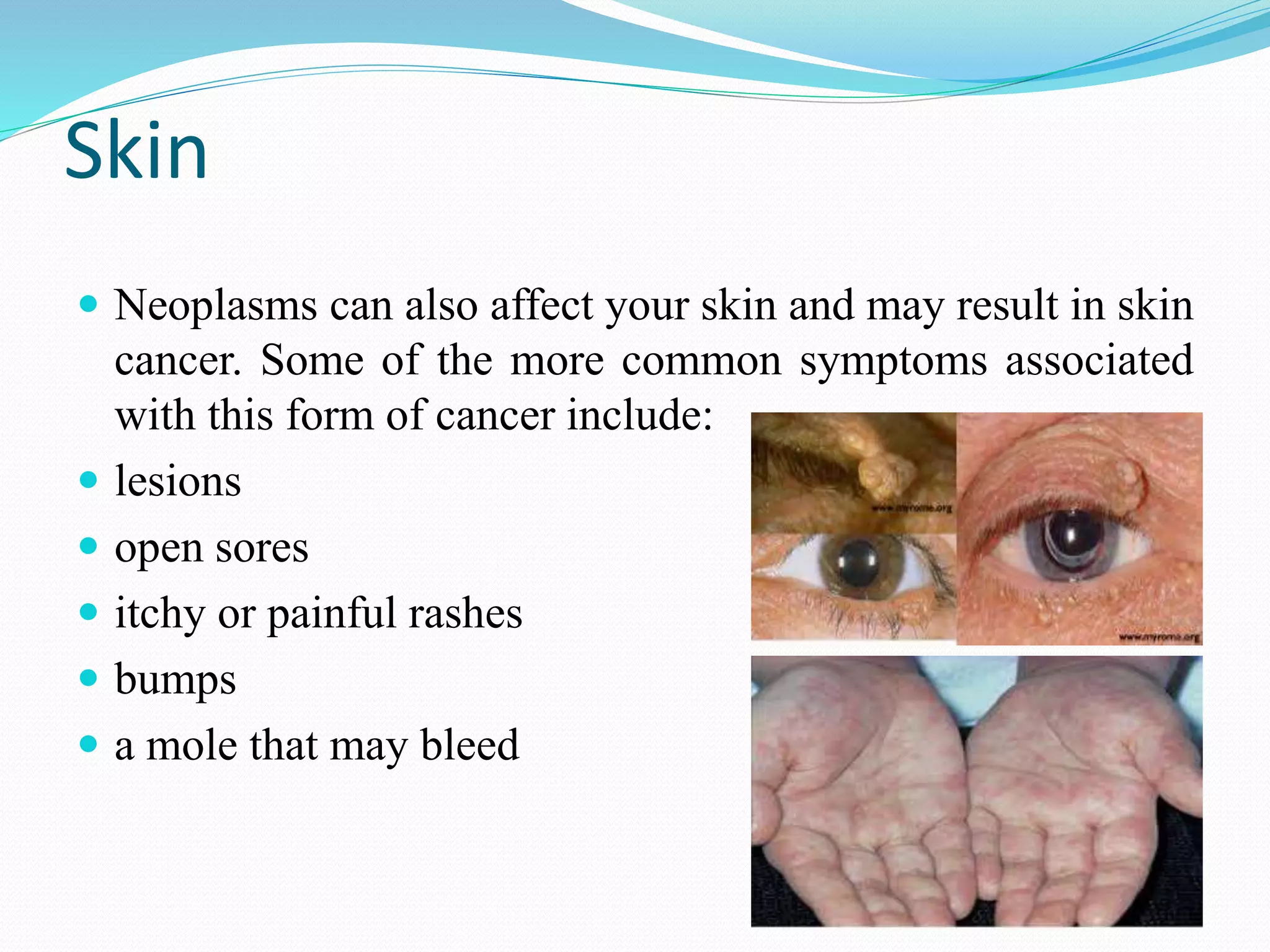
 Neoplasms can also affect your skin and may result in skin
cancer. Some of the more common symptoms associated
with this form of cancer include:
 lesions
 open sores
 itchy or painful rashes
 bumps
 a mole that may bleed
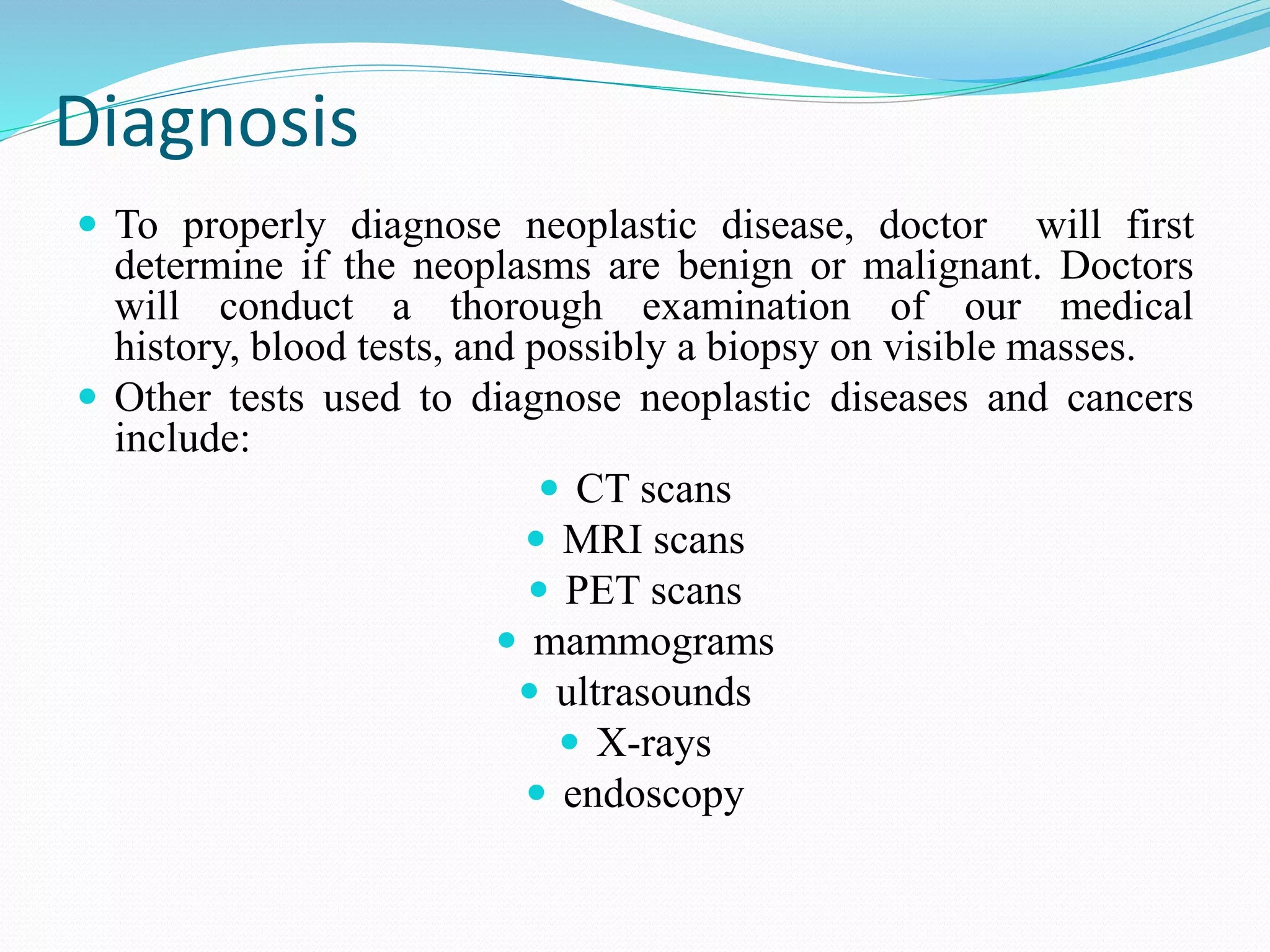
Diagnosis
 To properly diagnose neoplastic disease, doctor will first
determine if the neoplasms are benign or malignant. Doctors
will conduct a thorough examination of our medical
history, blood tests, and possibly a biopsy on visible masses.
 Other tests used to diagnose neoplastic diseases and cancers
include:
 CT scans
 MRI scans
 PET scans
 mammograms
 ultrasounds
 X-rays
 endoscopy
When to see a doctor
 If we notice any unusual growths, moles, or skin rashes,
schedule a visit with your doctor. Don’t self-diagnose
tumors.
 If we’ve been diagnosed with a benign neoplasm, your
doctor may want to monitor your symptoms to detect any
unusual activity. If it grows, you should contact your
doctor. Benign tumors can become cancerous over time.
 If we’ve been diagnosed with a malignant neoplastic
disease like cancer, you should consult with your doctor
about treatment options.
 Early diagnosis will give you the best treatment options
for your condition.

Neoplastic disease

  • 1.
    Presented by –Abhishek Giri Lecturer in the Department of Aquaculture Management Prabhat Kumar College, Contai Purba Medinipur, 721401, West Bengal
  • 2.
    Contents  Introduction  Causesof Neoplastic Disease  Symptoms of Neoplastic Disease  breast  Lymph nodes  skin  Diagnosis of Neoplastic Disease  When to see a doctor?
  • 3.
    Introduction A neoplasm isan abnormal growth of cells, also known as a tumor. Neoplastic diseases are conditions that cause tumor growth — both benign and malignant. Benign tumors are noncancerous growths. They usually grow slowly and can’t spread to other tissues. Malignant tumors are cancerous and can grow slowly or quickly. Malignant tumors carry the risk of metastasis, or spreading to multiple tissues and organs.
  • 4.
    Causes  Exact causesof tumor growth are still being researched. In general, cancerous tumor growth is triggered by DNA mutations within our cells. Our DNA contains genes that tell cells how to operate, grow, and divide. When the DNA changes within our cells, they don’t function properly. This disconnection is what causes cells to become cancerous.  There are a number of contributing factors that can cause your genes to mutate and result in benign or malignant tumor growth. Some common factors include:  genetics  age  hormones  smoking  drinking  obesity  sun overexposure  immune disorders  viruses  overexposure to radiation  chemical toxins
  • 5.
    Symptoms  Symptoms ofneoplastic disease greatly depend on where the neoplasm is located.  Regardless of type, there are some common symptoms of neoplastic disease:  anemia  shortness of breath  abdominal pain  persistent fatigue  loss of appetite  chills  diarrhea  fever  bloody stools  lesions  skin masses
  • 6.
    Breast  The mostcommon symptom of breast cancer is a mass or lump. If you find a mass on your breast, don’t self- diagnose. Not all masses are cancerous.  If your breast neoplasm is cancerous, you may experience symptoms such as:  tenderness  pain  swelling  redness or irritation  change in breast shape  discharge
  • 7.
    Lymph nodes  Ifyou develop a tumor in your lymph nodes or tissues, you may notice swelling or a mass in the affected area. A cancerous neoplasm in your lymph tissues is referred to as lymphoma.  Other symptoms of lymphoma include:  increased swelling in your neck, armpits, or groin  weight loss  fever  fatigue  night sweats
  • 8.
    Skin  Neoplasms canalso affect your skin and may result in skin cancer. Some of the more common symptoms associated with this form of cancer include:  lesions  open sores  itchy or painful rashes  bumps  a mole that may bleed
  • 9.
    Diagnosis  To properlydiagnose neoplastic disease, doctor will first determine if the neoplasms are benign or malignant. Doctors will conduct a thorough examination of our medical history, blood tests, and possibly a biopsy on visible masses.  Other tests used to diagnose neoplastic diseases and cancers include:  CT scans  MRI scans  PET scans  mammograms  ultrasounds  X-rays  endoscopy
  • 10.
    When to seea doctor  If we notice any unusual growths, moles, or skin rashes, schedule a visit with your doctor. Don’t self-diagnose tumors.  If we’ve been diagnosed with a benign neoplasm, your doctor may want to monitor your symptoms to detect any unusual activity. If it grows, you should contact your doctor. Benign tumors can become cancerous over time.  If we’ve been diagnosed with a malignant neoplastic disease like cancer, you should consult with your doctor about treatment options.  Early diagnosis will give you the best treatment options for your condition.