THE NATIONAL SOLID WASTE
MANAGEMENT STRATEGY
BY
IMMACULATE SIMIYU
SENIOR COMPLIANCE AND ENFORCEMENT OFFICER-
WASTE MANAGEMENT SECTION
21/05/2015
Presentation Profile
• Introduction – Strategy
• Current situation
• Preferred state
• How do we get there.
• Strategy objectives.
• Implementation Approaches
• Implementation Plan
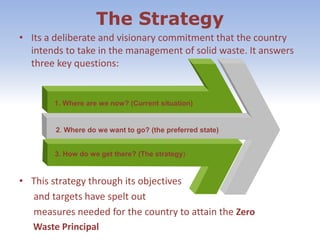
The Strategy
• Its a deliberate and visionary commitment that the country
intends to take in the management of solid waste. It answers
three key questions:
• This strategy through its objectives
and targets have spelt out
measures needed for the country to attain the Zero
Waste Principal
1. Where are we now? (Current situation)
2. Where do we want to go? (the preferred state)
3. How do we get there? (The strategy)
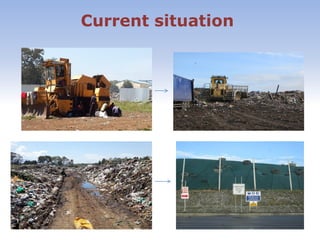
1. Where are we now? (Current situation)
• Kisumu, Nakuru, Eldoret, Thika and Mombasa
• Current Waste Management Practices in these municipalities
were;
• Waste operation areas are zoned
• Only dumpsites exist – manned during the day
• Partially fenced with only one un serviced machinery,
motorable roads
• No segregation of waste – only done at disposal site; Poor
collection systems
Current situation
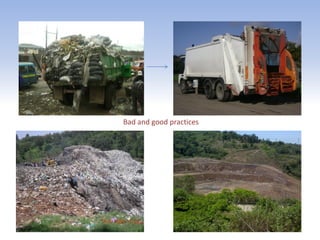
Bad and good practices
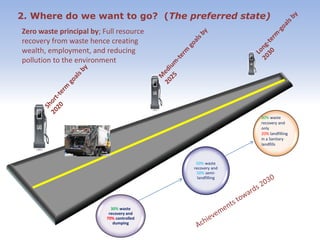
2. Where do we want to go? (The preferred state)
80% waste
recovery and
only
20% landfilling
in a Sanitary
landfills
50% waste
recovery and
50% semi-
landfilling
30% waste
recovery and
70% controlled
dumping
Zero waste principal by; Full resource
recovery from waste hence creating
wealth, employment, and reducing
pollution to the environment
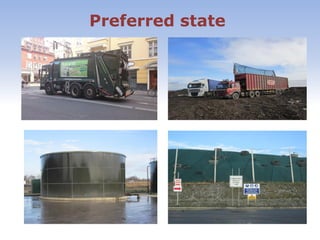
Preferred state
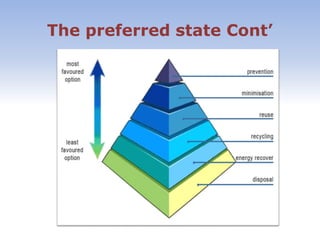
The preferred state Cont’
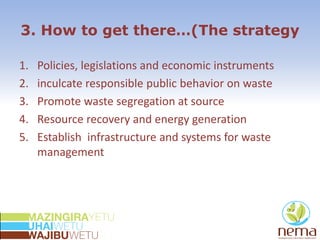
3. How to get there…(The strategy
1. Policies, legislations and economic instruments
2. inculcate responsible public behavior on waste
3. Promote waste segregation at source
4. Resource recovery and energy generation
5. Establish infrastructure and systems for waste
management
Objective 1: Formulate Policies, legislations
and economic instruments
• Develop and harmonize county legislations on
waste management
• Develop and implement policies on economic
instruments
• Benchmark on appropriate technologies
• Enforcement of waste management standards
and legislations
Objective 2: Public behavior
• Sensitize the public on responsible waste
management
• Create awareness on suitable waste management
options
• Educate the public on integrated waste management
• Undertake monthly clean-ups
• Develop sensitization materials
Objective 3: Waste Segregation
• Intensified waste segregation campaigns
• Pilot waste segregation
• Provision of equipments for waste segregation
• Provision of segregated waste transport
systems
• Promote PPP in waste management
Objective 4:Promote Resource Recovery
• Enhance modern technologies for recycling
and composting of waste
• Explore market opportunities for recovered
materials
• Develop promotion programs for use of
recovered materials
• Enhance collaboration with stakeholders on
recycling
Objective 5: Waste for Wealth Creation
• Explore market opportunities for the recovered and
recycling materials
• Promote the use of recycled and recovered materials
• Promote modern technologies on recovery and
recycling
• Promote Public Private Partnership in waste
management
Objective 6: Energy Generation
•Promote energy recovery plants
•Enhance waste to energy resources
•Enhance collaboration with stakeholders on
energy recovery
Objective 7: Waste Infrastructure
• Install and Improve waste management facilities
• Provision of adequate and appropriate collection
facilities and services
• Provision of adequate and appropriate transport
systems for segregated waste
• Build transfer stations and standard incinerators with
energy recovery facilities.
• Establish compost facilities, recycling facilities,
sanitary landfills.
Approaches to Implementing the
Strategy
• Strategic alignment and recognition of partners
through a PPP
• Introduction of incentives in the waste management
cycle
• Introduction of EPR and public awareness campaigns
• Establishment of efficiency and value addition in the
waste management cycle
Approaches to Implementing the
Strategy …
• Compliment the input from CBO’s and other private
public activities.
• Phase out waste burning
• Establish waste operational zones
• Upscale the activities of the informal sector to link up
with the existing formal recycling industries.
• Establishment of modern infrastructure through a
stepwise phasing out of illegal dumpsites
Implementation Plan
1. NEMA officers in collaboration with the
County government develop an action plan
on waste management
2. The CEC solicits funds allocation for the
Strategy implementation
3. Implement the action plan
4. All stakeholders to monitor implementation
annually
THANK YOU

NEMA: National Solid Waste Management Strategy - Kenya

  • 1.
    THE NATIONAL SOLIDWASTE MANAGEMENT STRATEGY BY IMMACULATE SIMIYU SENIOR COMPLIANCE AND ENFORCEMENT OFFICER- WASTE MANAGEMENT SECTION 21/05/2015
  • 2.
    Presentation Profile • Introduction– Strategy • Current situation • Preferred state • How do we get there. • Strategy objectives. • Implementation Approaches • Implementation Plan
  • 3.
    The Strategy • Itsa deliberate and visionary commitment that the country intends to take in the management of solid waste. It answers three key questions: • This strategy through its objectives and targets have spelt out measures needed for the country to attain the Zero Waste Principal 1. Where are we now? (Current situation) 2. Where do we want to go? (the preferred state) 3. How do we get there? (The strategy)
  • 4.
    1. Where arewe now? (Current situation) • Kisumu, Nakuru, Eldoret, Thika and Mombasa • Current Waste Management Practices in these municipalities were; • Waste operation areas are zoned • Only dumpsites exist – manned during the day • Partially fenced with only one un serviced machinery, motorable roads • No segregation of waste – only done at disposal site; Poor collection systems
  • 5.
  • 6.
    Bad and goodpractices
  • 7.
    2. Where dowe want to go? (The preferred state) 80% waste recovery and only 20% landfilling in a Sanitary landfills 50% waste recovery and 50% semi- landfilling 30% waste recovery and 70% controlled dumping Zero waste principal by; Full resource recovery from waste hence creating wealth, employment, and reducing pollution to the environment
  • 8.
  • 9.
  • 10.
    3. How toget there…(The strategy 1. Policies, legislations and economic instruments 2. inculcate responsible public behavior on waste 3. Promote waste segregation at source 4. Resource recovery and energy generation 5. Establish infrastructure and systems for waste management
  • 11.
    Objective 1: FormulatePolicies, legislations and economic instruments • Develop and harmonize county legislations on waste management • Develop and implement policies on economic instruments • Benchmark on appropriate technologies • Enforcement of waste management standards and legislations
  • 12.
    Objective 2: Publicbehavior • Sensitize the public on responsible waste management • Create awareness on suitable waste management options • Educate the public on integrated waste management • Undertake monthly clean-ups • Develop sensitization materials
  • 13.
    Objective 3: WasteSegregation • Intensified waste segregation campaigns • Pilot waste segregation • Provision of equipments for waste segregation • Provision of segregated waste transport systems • Promote PPP in waste management
  • 14.
    Objective 4:Promote ResourceRecovery • Enhance modern technologies for recycling and composting of waste • Explore market opportunities for recovered materials • Develop promotion programs for use of recovered materials • Enhance collaboration with stakeholders on recycling
  • 15.
    Objective 5: Wastefor Wealth Creation • Explore market opportunities for the recovered and recycling materials • Promote the use of recycled and recovered materials • Promote modern technologies on recovery and recycling • Promote Public Private Partnership in waste management
  • 16.
    Objective 6: EnergyGeneration •Promote energy recovery plants •Enhance waste to energy resources •Enhance collaboration with stakeholders on energy recovery
  • 17.
    Objective 7: WasteInfrastructure • Install and Improve waste management facilities • Provision of adequate and appropriate collection facilities and services • Provision of adequate and appropriate transport systems for segregated waste • Build transfer stations and standard incinerators with energy recovery facilities. • Establish compost facilities, recycling facilities, sanitary landfills.
  • 18.
    Approaches to Implementingthe Strategy • Strategic alignment and recognition of partners through a PPP • Introduction of incentives in the waste management cycle • Introduction of EPR and public awareness campaigns • Establishment of efficiency and value addition in the waste management cycle
  • 19.
    Approaches to Implementingthe Strategy … • Compliment the input from CBO’s and other private public activities. • Phase out waste burning • Establish waste operational zones • Upscale the activities of the informal sector to link up with the existing formal recycling industries. • Establishment of modern infrastructure through a stepwise phasing out of illegal dumpsites
  • 20.
    Implementation Plan 1. NEMAofficers in collaboration with the County government develop an action plan on waste management 2. The CEC solicits funds allocation for the Strategy implementation 3. Implement the action plan 4. All stakeholders to monitor implementation annually
  • 21.