Clean Development Mechanism 
Presenters: 
Nitin Sharma 
& 
Ribhu Vashishtha
What is the clean development 
mechanism? 
• The CDM allows emission-reduction projects in developing countries to 
earn certified emission reduction (CER) credits, each equivalent to one 
tonne of CO2. 
• These CERs can be traded and sold, and used by industrialized countries to 
meet a part of their emission reduction targets under the Kyoto Protocol. 
• The mechanism stimulates sustainable development and emission 
reductions, while giving industrialized countries some flexibility in how 
they meet their emission reduction limitation targets. 
• The CDM is the main source of income for the UNFCCC Adaptation Fund, 
which was established to finance adaptation projects and programmes in 
developing country parties to the Kyoto Protocol that are particularly 
vulnerable to the adverse effects of climate change. The Adaptation Fund 
is financed by a 2% levy on CERs issued by the CDM.
More about CDM 
• The mechanism is seen by many as a trailblazer. It is the first global, 
environmental investment and credit scheme of its kind, providing a 
standardized emissions offset instrument, CERs. 
• A CDM project activity might involve, for example, a rural 
electrification project using solar panels or the installation of more 
energy-efficient boilers. 
• The mechanism stimulates sustainable development and emission 
reductions, while giving industrialized countries some flexibility in 
how they meet their emission reduction or limitation targets.
1. CDM Executive Board 
2. Designated National Authority (DNA) 
3. Designated Operational Entity (DOE)
What is innovative about the CDM? 
• Provides market-oriented means to promote 
sustainable development (SD) while reducing 
GHG emissions below what they would have 
otherwise been. 
• Promotes private sector investment in SD. 
• Involves public scrutiny.
Benefits 
• Global reduction of greenhouse gases. 
• Lesser cost of climate change mitigation. 
• Additional benefits through reduction of other 
pollutants besides GHGs. 
• Opening a market for carbon investment. 
• Focus on sustainable development. 
• Scope for cooperation at various levels 
(national, regional, and global).
Beneficiaries 
• Developed countries. 
• Countries with economy in transition. 
• Developing countries. 
• Small inland countries. 
• Public sector. 
• Private sector.
Tata Mundra Ultra Mega Power Project 
• Owned by Coastal Gujarat 
Power Limited (CGPL), a wholly 
owned subsidiary of Tata Power. 
• Location: South of Tunda Wand 
village, Kutch district of Gujarat, 
India. 
• The power station is one of 
nine Ultra Mega Power 
Projects the Indian government 
wants to be built by private 
sector companies before 2017.
METHODOLOGIES FOR LARGE-SCALE 
CDM PROJECT ACTIVITIES
Power would be produced with the least cost fuel (usually fossil fuels) in the absence 
of the project. 
Use of renewable biomass for power generation avoids the use of fossil fuel.
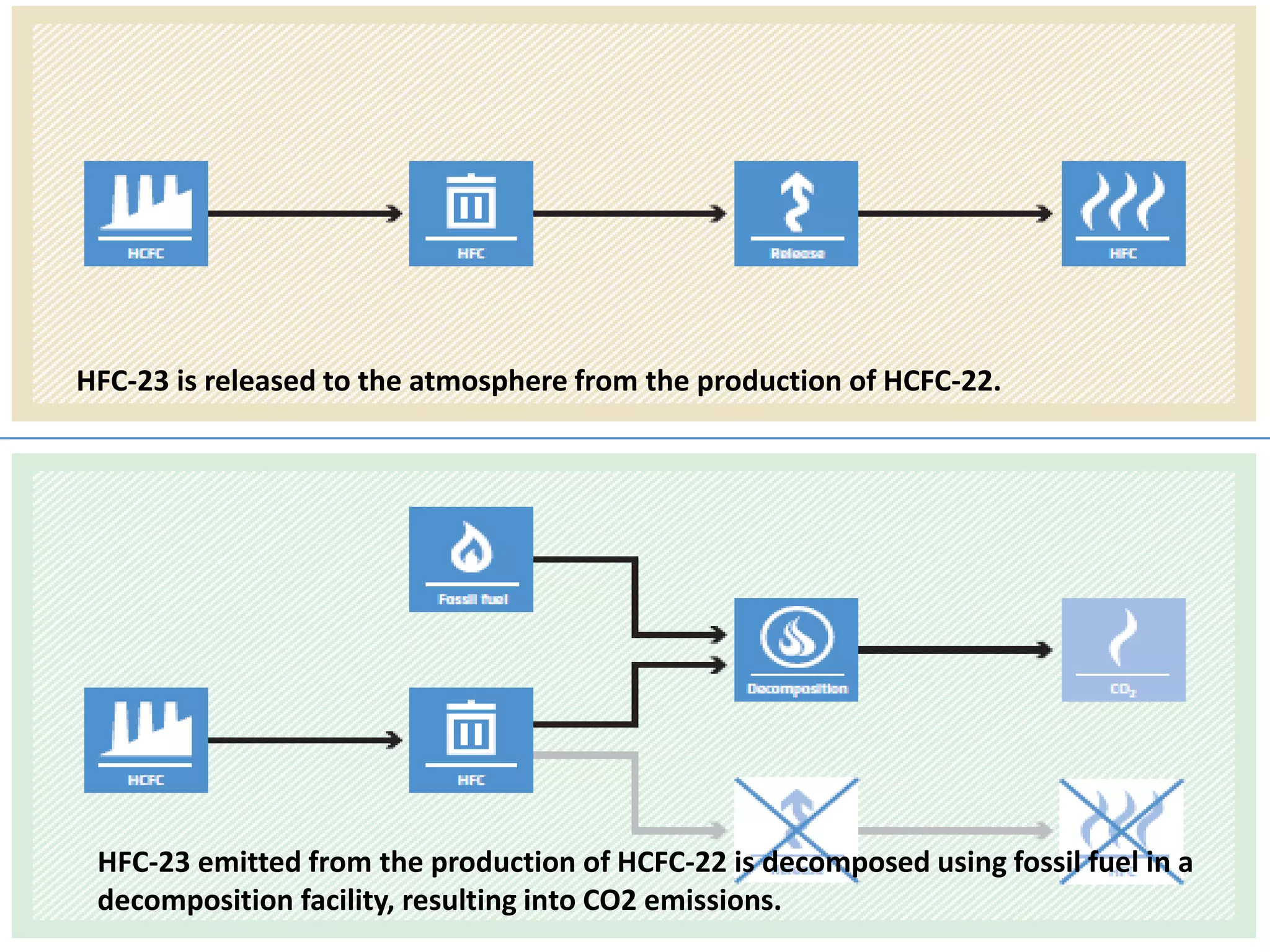
HFC-23 is released to the atmosphere from the production of HCFC-22. 
HFC-23 emitted from the production of HCFC-22 is decomposed using fossil fuel in a 
decomposition facility, resulting into CO2 emissions.
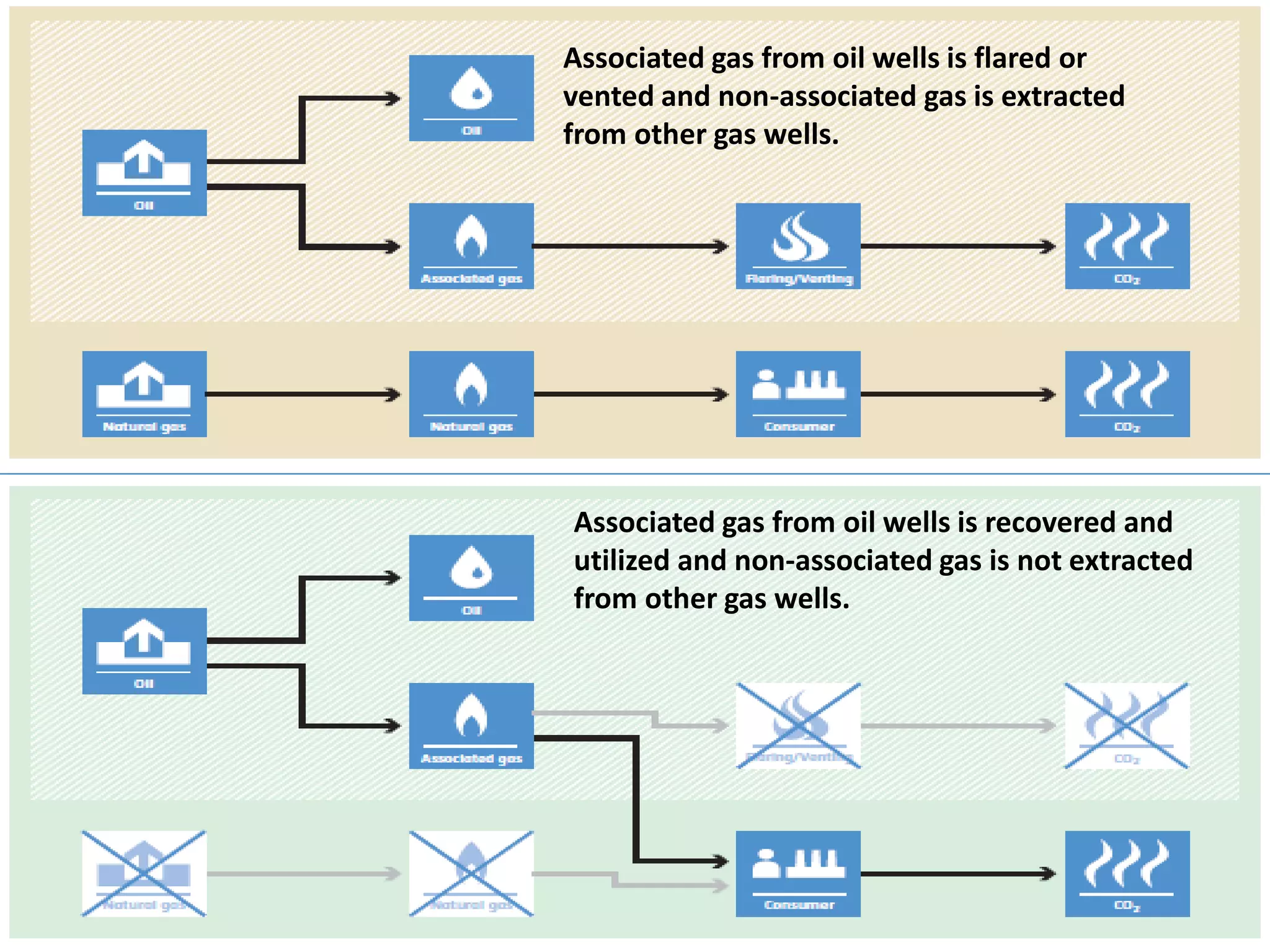
Associated gas from oil wells is flared or 
vented and non-associated gas is extracted 
from other gas wells. 
Associated gas from oil wells is recovered and 
utilized and non-associated gas is not extracted 
from other gas wells.
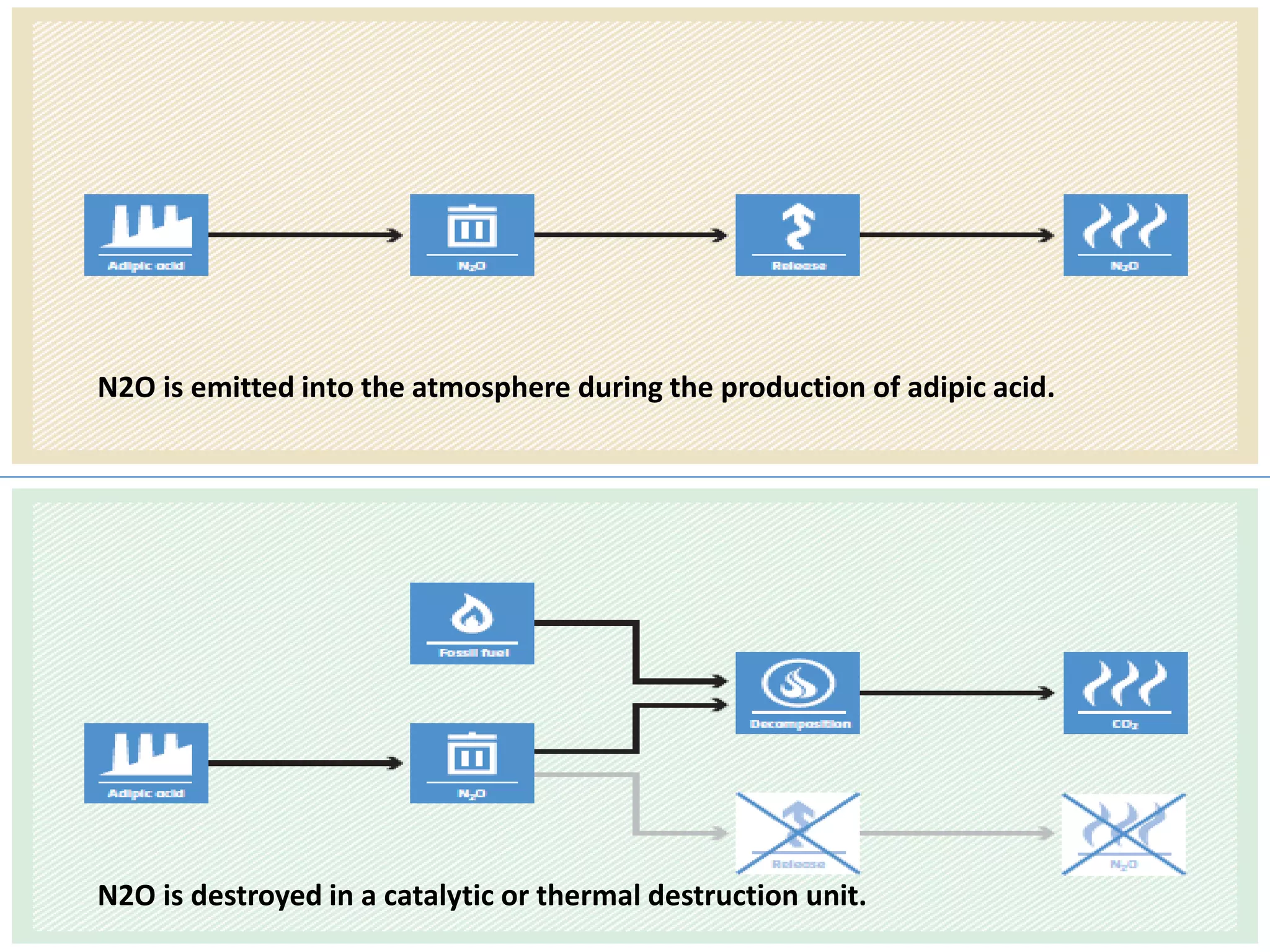
N2O is emitted into the atmosphere during the production of adipic acid. 
N2O is destroyed in a catalytic or thermal destruction unit.
Lands are degraded agricultural or grasslands with decreasing intensity of 
agricultural or grazing activities. 
Forests are planted on lands. Animal grazing is not allowed.
Lands are degraded grasslands. 
Forests are planted on lands.
Lands are unmanaged, not severely degraded grasslands in reserves or protected 
areas. Fuelwood collection is not allowed. 
Forests are planted on lands. Fuelwood collection or any other human activities 
such as harvesting or agricultural activities are not allowed.
References 
1. Implementation of the clean development mechanism in 
Asia and the pacific-issues, challenges and opportunities; 
UN 2003 Report 
2. Building international public-private partnerships under 
the Kyoto Protocol; UN 2000 
3. CDM Methodology Booklet; UNFCC 2002 
4. Measuring the Clean Development Mechanism’s 
Performance and Potential; Program on Energy and 
Sustainable Development, Stanford University 2006
Clean development mechanism

Clean development mechanism

  • 1.
    Clean Development Mechanism Presenters: Nitin Sharma & Ribhu Vashishtha
  • 2.
    What is theclean development mechanism? • The CDM allows emission-reduction projects in developing countries to earn certified emission reduction (CER) credits, each equivalent to one tonne of CO2. • These CERs can be traded and sold, and used by industrialized countries to meet a part of their emission reduction targets under the Kyoto Protocol. • The mechanism stimulates sustainable development and emission reductions, while giving industrialized countries some flexibility in how they meet their emission reduction limitation targets. • The CDM is the main source of income for the UNFCCC Adaptation Fund, which was established to finance adaptation projects and programmes in developing country parties to the Kyoto Protocol that are particularly vulnerable to the adverse effects of climate change. The Adaptation Fund is financed by a 2% levy on CERs issued by the CDM.
  • 3.
    More about CDM • The mechanism is seen by many as a trailblazer. It is the first global, environmental investment and credit scheme of its kind, providing a standardized emissions offset instrument, CERs. • A CDM project activity might involve, for example, a rural electrification project using solar panels or the installation of more energy-efficient boilers. • The mechanism stimulates sustainable development and emission reductions, while giving industrialized countries some flexibility in how they meet their emission reduction or limitation targets.
  • 4.
    1. CDM ExecutiveBoard 2. Designated National Authority (DNA) 3. Designated Operational Entity (DOE)
  • 5.
    What is innovativeabout the CDM? • Provides market-oriented means to promote sustainable development (SD) while reducing GHG emissions below what they would have otherwise been. • Promotes private sector investment in SD. • Involves public scrutiny.
  • 6.
    Benefits • Globalreduction of greenhouse gases. • Lesser cost of climate change mitigation. • Additional benefits through reduction of other pollutants besides GHGs. • Opening a market for carbon investment. • Focus on sustainable development. • Scope for cooperation at various levels (national, regional, and global).
  • 7.
    Beneficiaries • Developedcountries. • Countries with economy in transition. • Developing countries. • Small inland countries. • Public sector. • Private sector.
  • 9.
    Tata Mundra UltraMega Power Project • Owned by Coastal Gujarat Power Limited (CGPL), a wholly owned subsidiary of Tata Power. • Location: South of Tunda Wand village, Kutch district of Gujarat, India. • The power station is one of nine Ultra Mega Power Projects the Indian government wants to be built by private sector companies before 2017.
  • 10.
    METHODOLOGIES FOR LARGE-SCALE CDM PROJECT ACTIVITIES
  • 11.
    Power would beproduced with the least cost fuel (usually fossil fuels) in the absence of the project. Use of renewable biomass for power generation avoids the use of fossil fuel.
  • 12.
    HFC-23 is releasedto the atmosphere from the production of HCFC-22. HFC-23 emitted from the production of HCFC-22 is decomposed using fossil fuel in a decomposition facility, resulting into CO2 emissions.
  • 13.
    Associated gas fromoil wells is flared or vented and non-associated gas is extracted from other gas wells. Associated gas from oil wells is recovered and utilized and non-associated gas is not extracted from other gas wells.
  • 14.
    N2O is emittedinto the atmosphere during the production of adipic acid. N2O is destroyed in a catalytic or thermal destruction unit.
  • 15.
    Lands are degradedagricultural or grasslands with decreasing intensity of agricultural or grazing activities. Forests are planted on lands. Animal grazing is not allowed.
  • 16.
    Lands are degradedgrasslands. Forests are planted on lands.
  • 17.
    Lands are unmanaged,not severely degraded grasslands in reserves or protected areas. Fuelwood collection is not allowed. Forests are planted on lands. Fuelwood collection or any other human activities such as harvesting or agricultural activities are not allowed.
  • 18.
    References 1. Implementationof the clean development mechanism in Asia and the pacific-issues, challenges and opportunities; UN 2003 Report 2. Building international public-private partnerships under the Kyoto Protocol; UN 2000 3. CDM Methodology Booklet; UNFCC 2002 4. Measuring the Clean Development Mechanism’s Performance and Potential; Program on Energy and Sustainable Development, Stanford University 2006

Editor's Notes

  • #5 Project participant prepares project design document, making use of approved emissions baseline and monitoring methodology. Project participant secures letter of approval from Party. The Designated National Authority (DNA) of a Party involved in a proposed CDM project activity shall submit a letter indicating the following: That the country has ratified the Kyoto Protocol. That participation is voluntary. And, from host parties, a statement that the proposed CDM project activity contributes to sustainable development  Project design document is validated by accredited designated operational entity, private third-party certifier. Validation is the process of independent evaluation of a project activity by a designated operational entity against the requirements of the CDM as set out in CDM modalities and procedures and relevant decisions of the Kyoto Protocol Parties and the CDM Executive Board, on the basis of the project design document. Valid project submitted by DOE to CDM Executive Board with request for registration. Registration is the formal acceptance by the Executive Board of a validated project as a CDM project activity. Registration is the prerequisite for the verification, certification and issuance of CERs related to that project activity. Project participant responsible for monitoring actual emissions according to approved methodology. Designated operational entity verifies that emission reductions took place, in the amount claimed, according to approved monitoring plan. Verification is the independent review and ex-post determination by the designated operational entity of the monitored reductions in anthropogenic emissions by sources of greenhouse gases that have occurred as a result of a registered CDM project activity during the verification period. Certification is the written assurance by the designated operational entity that, during the specified period, the project activity achieved the emission reductions as verified. Designated operational entity submits verification report with request for issuance to CDM Executive Board. CER ISSUANCE STEP IN DETAIL Completeness check by secretariat Vetting by secretariat Vetting by Executive Board If a Party or three members of Executive Board request review, issuance request undergoes review, otherwise proceeds to issuance