NEAR FIELD
COMMUNICATION
What is NFC???
• A short range, high frequency, low bandwidth and wireless
communication technology between two devices.
• Based on RFID(Radio Frequency Identification Service)
Technology.
• Mainly aimed for mobile & handheld devices.
Evolution of NFC
• 2002- The technology was jointly developed by
Philips & Sony.
• 2004- Nokia, Philips and Sony established the NFC
Forum.
• 2006- Initial specifications for NFC tags were given.
• 2006- Nokia 6131 was the first NFC enabled Phone.
• 2010- Samsung Nexus S was the first Android NFC
enabled Phone.
Working Principle
• NFC works on the principle of RFID (Radio Frequency
Identification).
• Types of Coupling in RFID:
 BackScatter Coupling
 Capacitive Coupling
 Inductive Coupling.
Operation Of NFC
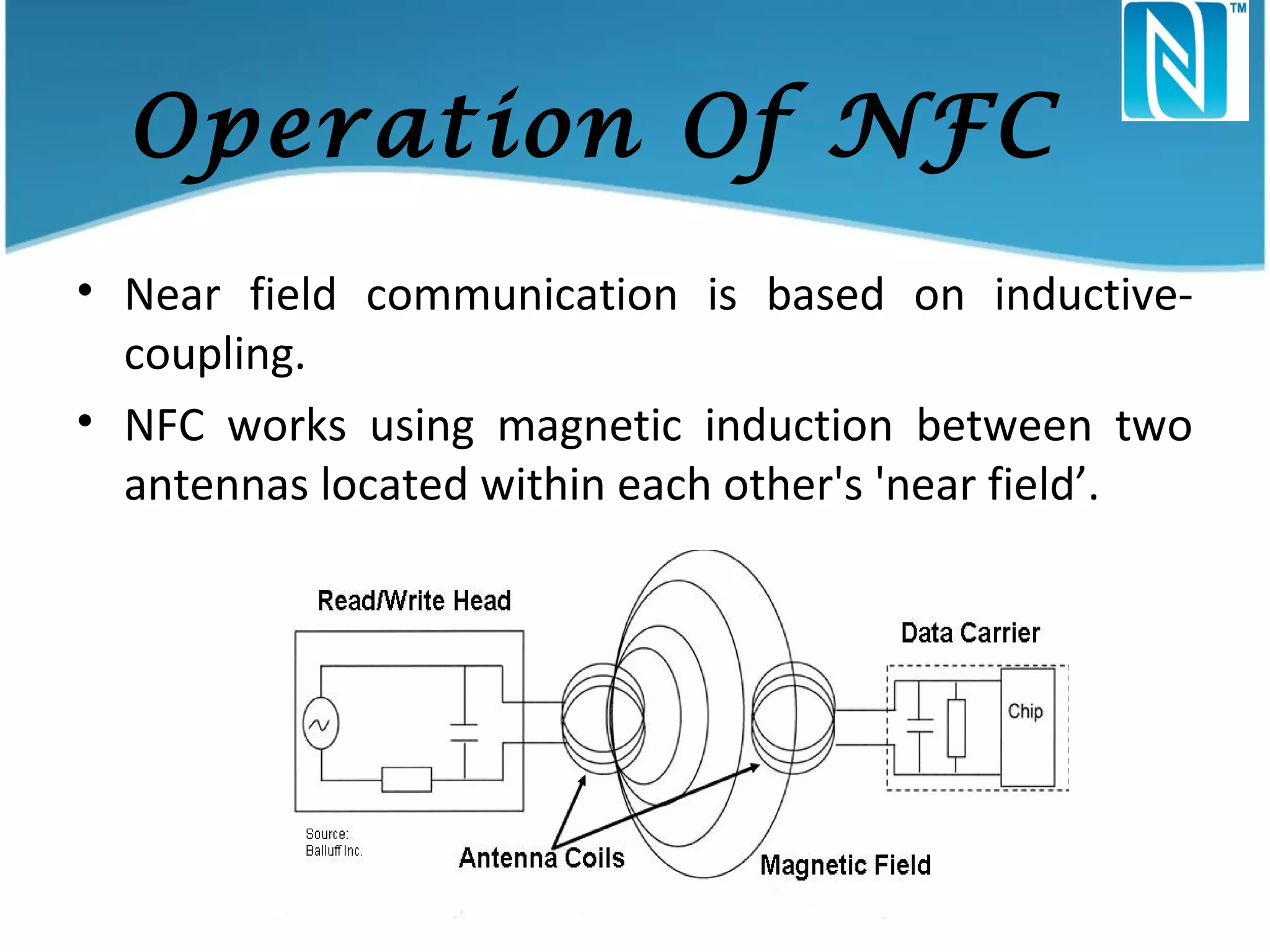
• Near field communication is based on inductivecoupling.
• NFC works using magnetic induction between two
antennas located within each other's 'near field’.
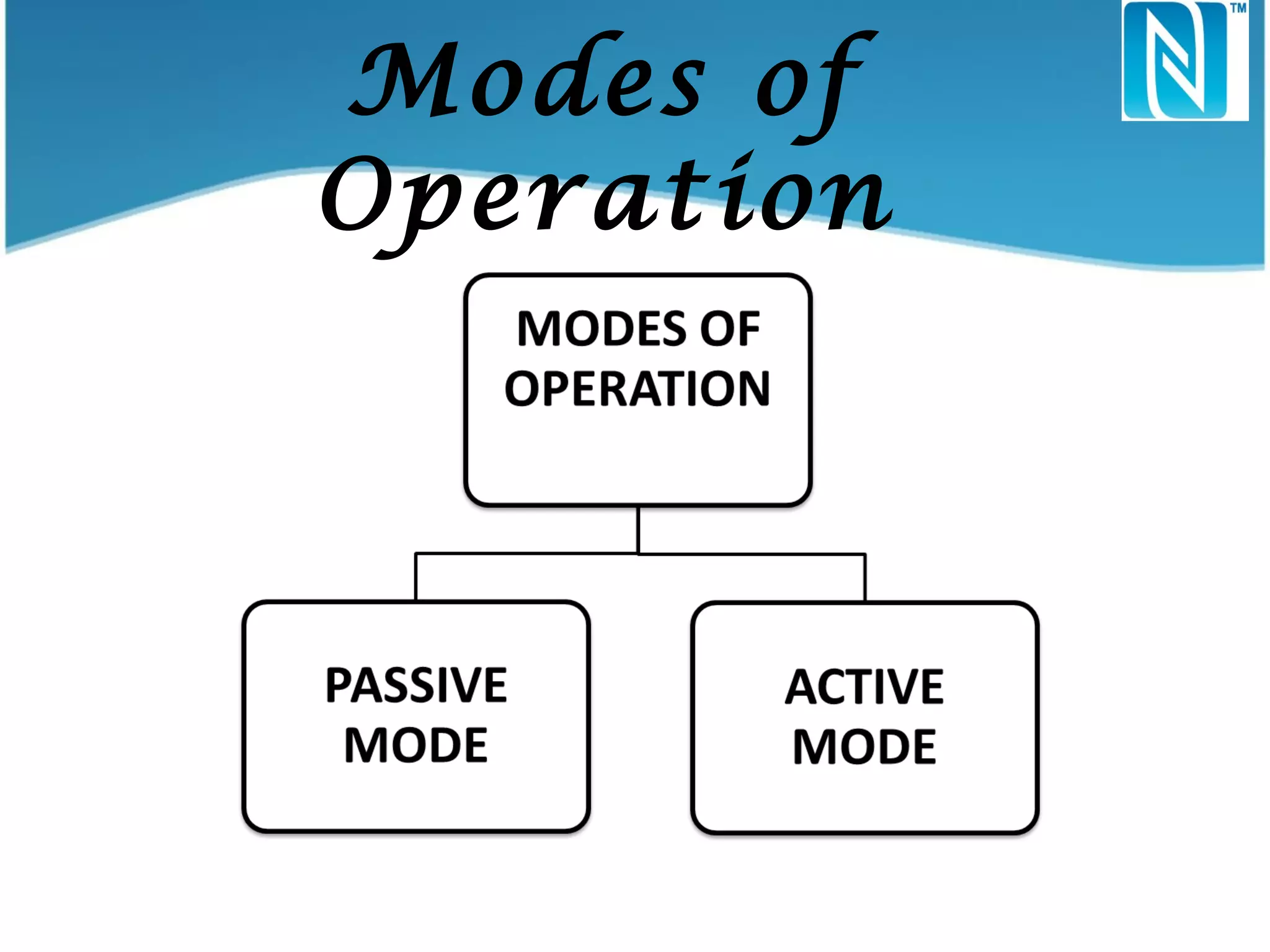
Modes of
Operation
Modes Of
Operation
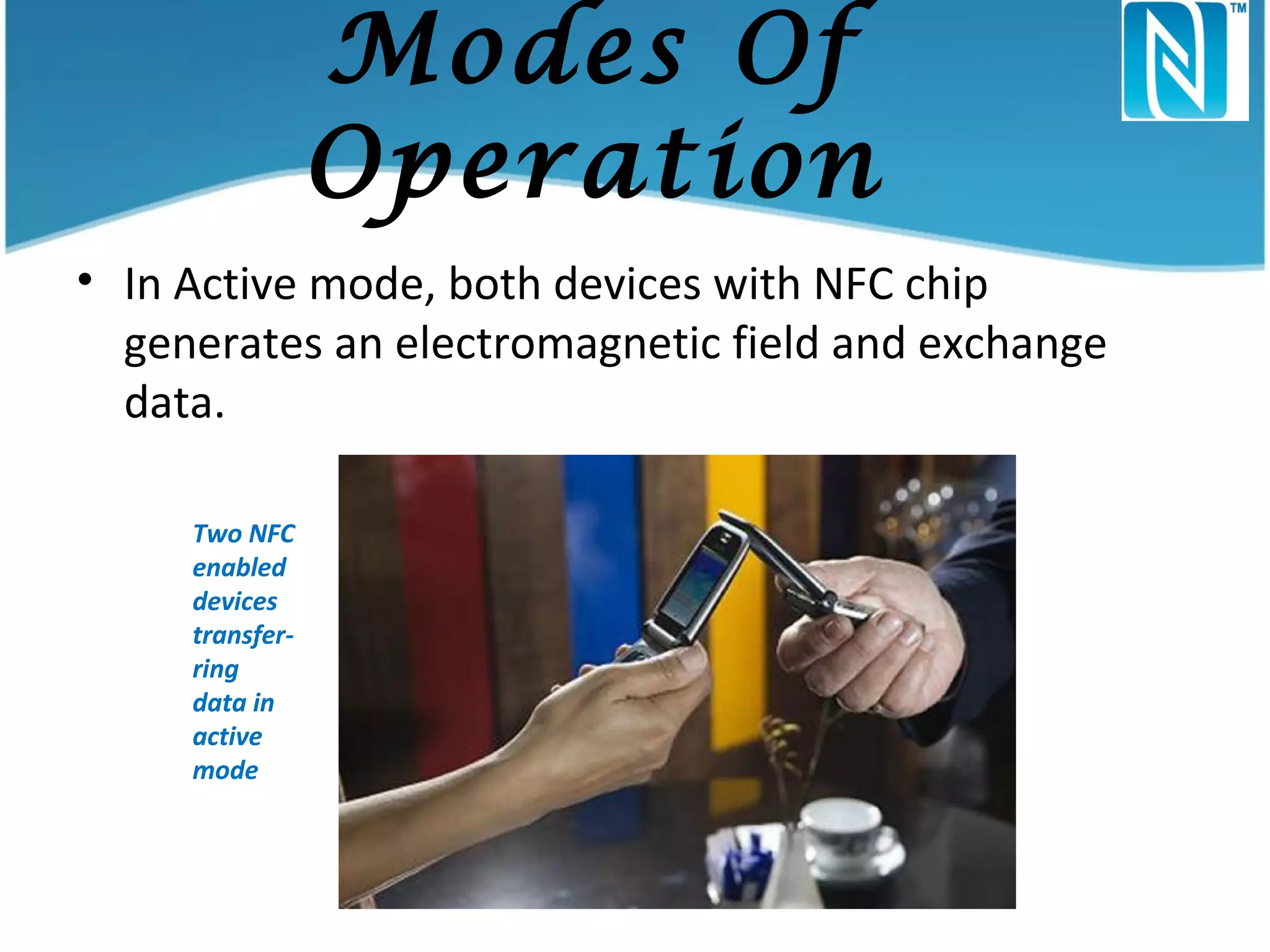
• In Active mode, both devices with NFC chip
generates an electromagnetic field and exchange
data.
Two NFC
enabled
devices
transferring
data in
active
mode
Modes of
Operation

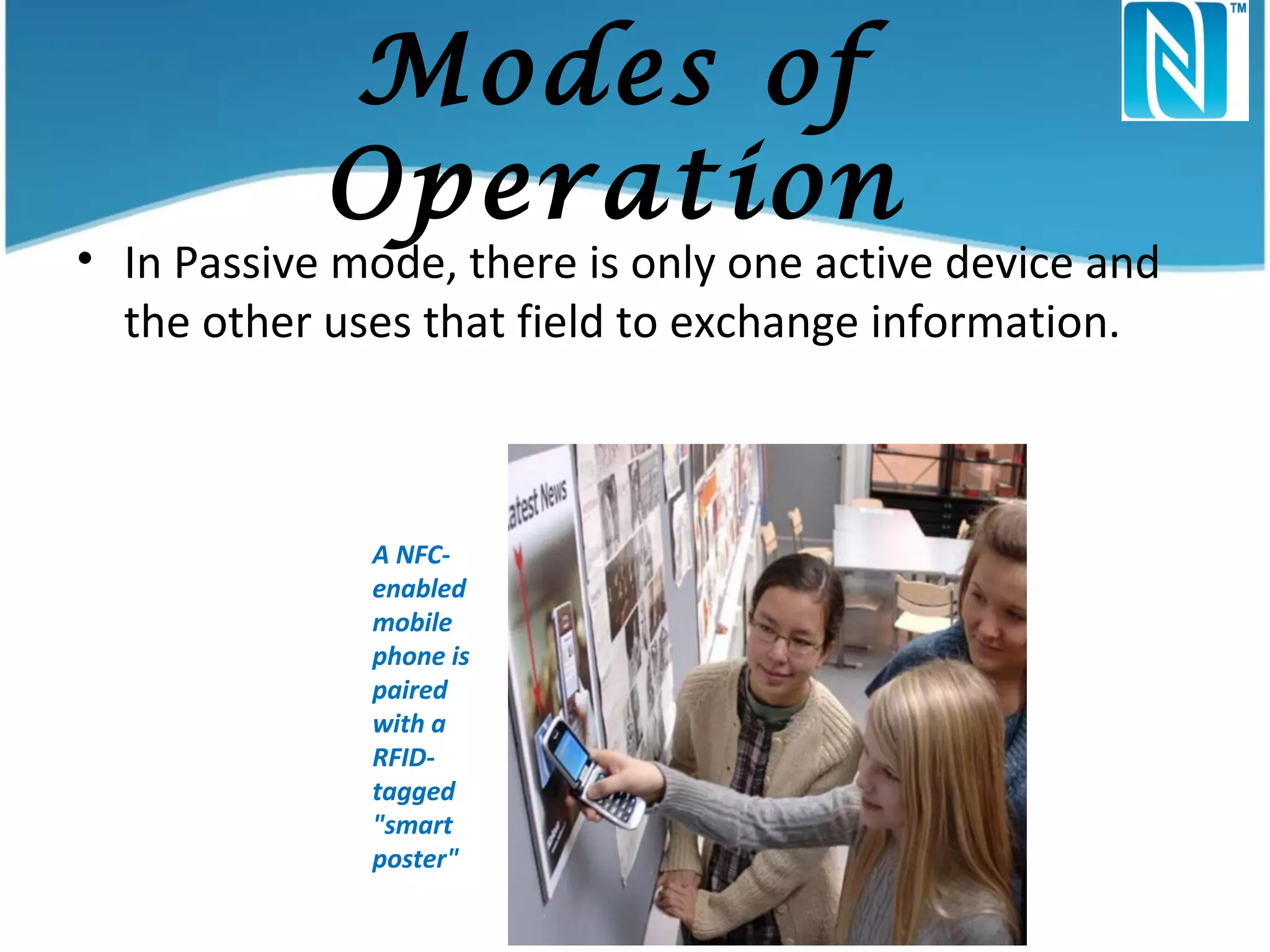
• In Passive mode, there is only one active device and
the other uses that field to exchange information.

A NFCenabled
mobile
phone is
paired
with a
RFIDtagged
"smart
poster"
Applications of
NFC
• NFC applications can be split into the following three
basic categories:
Touch and Go
Touch and Confirm
Touch and Connect
Applications Of
NFC

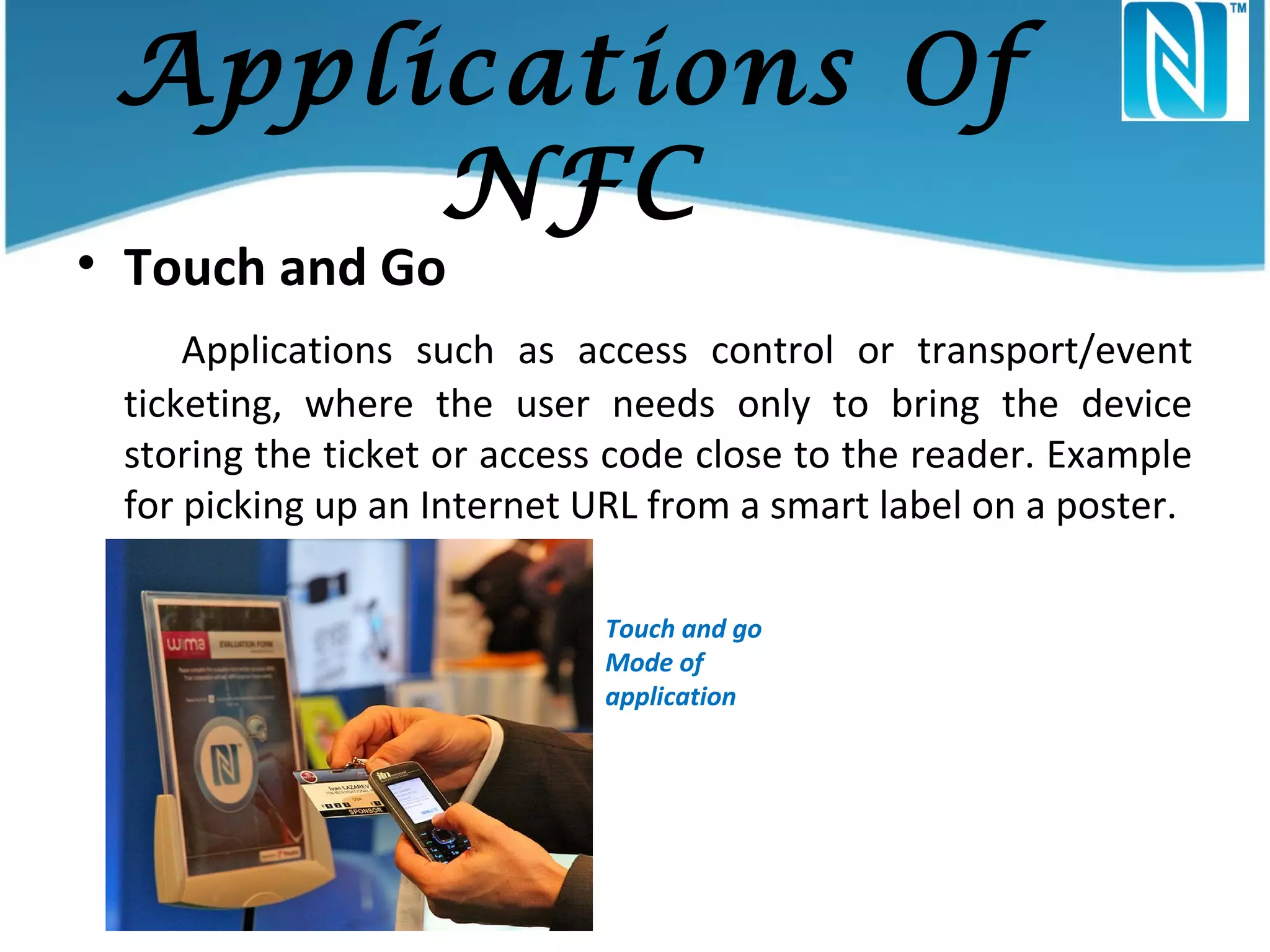
• Touch and Go

Applications such as access control or transport/event
ticketing, where the user needs only to bring the device
storing the ticket or access code close to the reader. Example
for picking up an Internet URL from a smart label on a poster.
Touch and go
Mode of
application
Applications Of
NFC

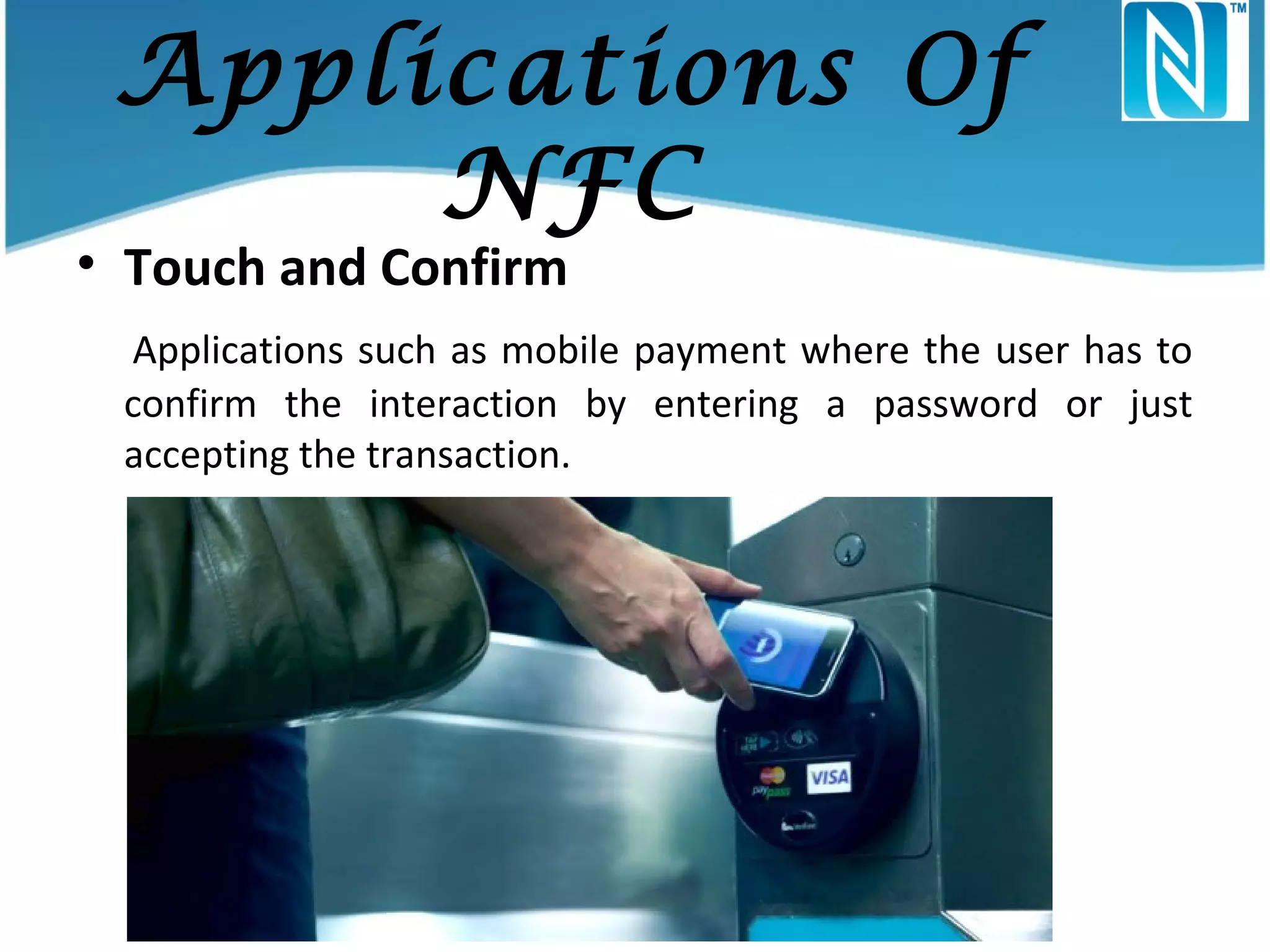
• Touch and Confirm

Applications such as mobile payment where the user has to
confirm the interaction by entering a password or just
accepting the transaction.
Applications Of
NFC

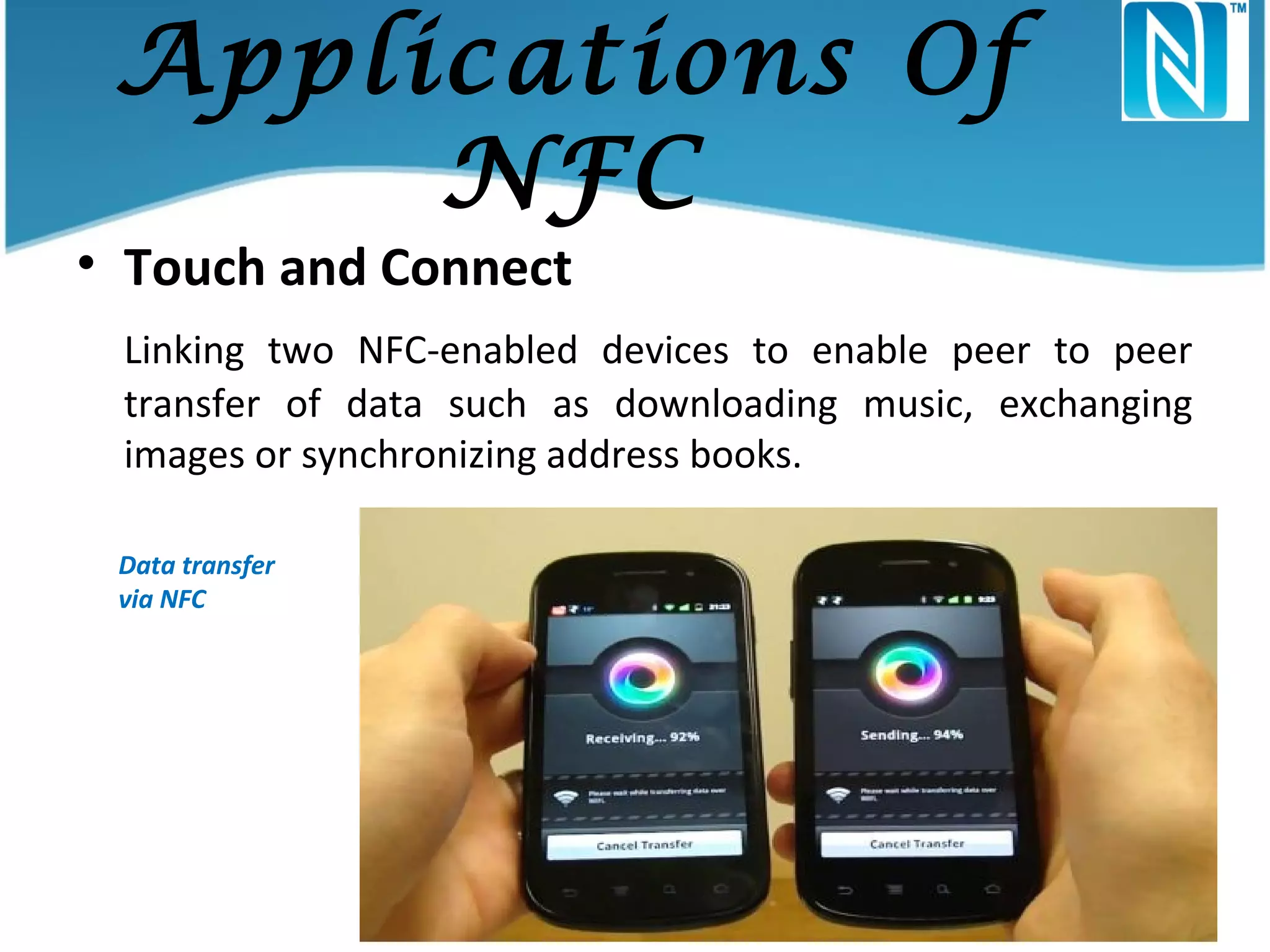
• Touch and Connect

Linking two NFC-enabled devices to enable peer to peer
transfer of data such as downloading music, exchanging
images or synchronizing address books.
Data transfer
via NFC
NFC Specifications
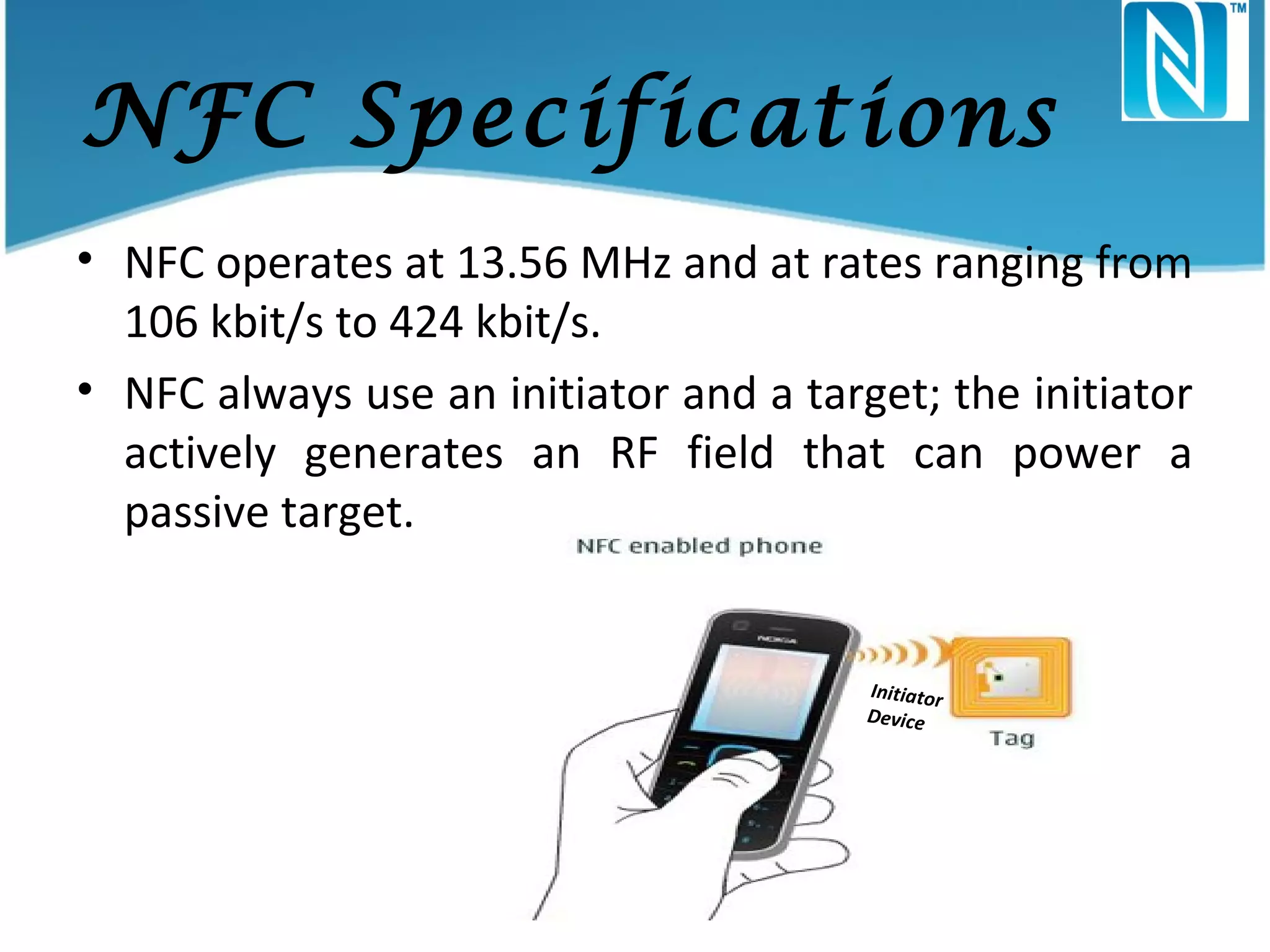
• NFC operates at 13.56 MHz and at rates ranging from
106 kbit/s to 424 kbit/s.
• NFC always use an initiator and a target; the initiator
actively generates an RF field that can power a
passive target.

Initiator
Device

Target
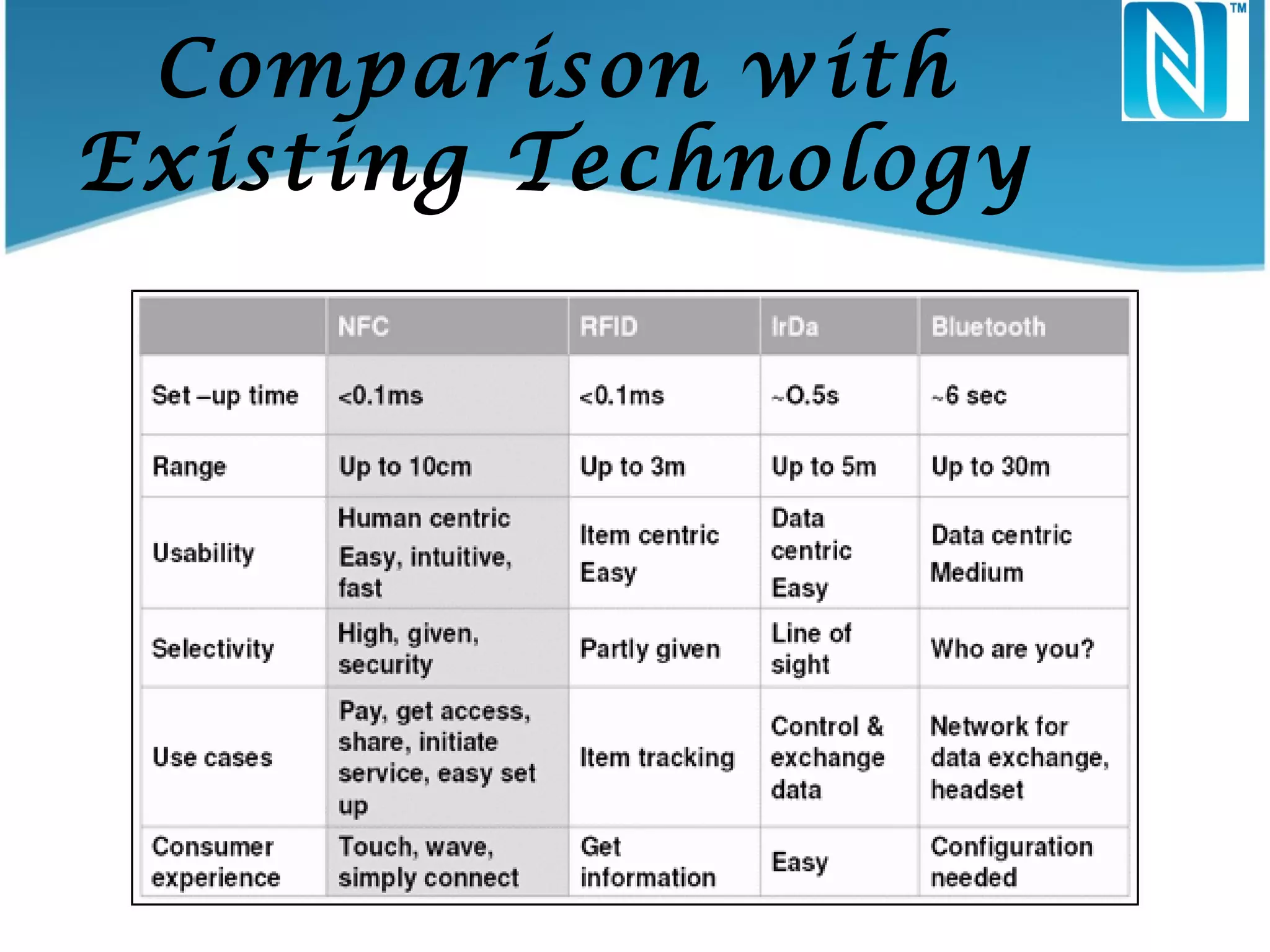
Comparison with
Existing Technology
Advantages Of
NFC
• High convenience to the user, because the data
exchange is done by bringing two mobiles together.
• Secure communication.
• No special software.
• No manual configuration and settings.
• No search and pair procedure.
Limitations Of
NFC
• The system has the limitation that it can be
operated only with devices under a short
range i.e around 10 cm.
• The data transfer rate is very less at about
106kbps, 212 kbps and 424kbps.
•
•
•
•
•
•
•

Some Devices using
NFC Technology

Nexus S
Google Nexus S 4G
Samsung Galaxy S II
Samsung Galaxy Note
Galaxy Nexus
Nokia 6212 Classic
Nokia 6131 NFC
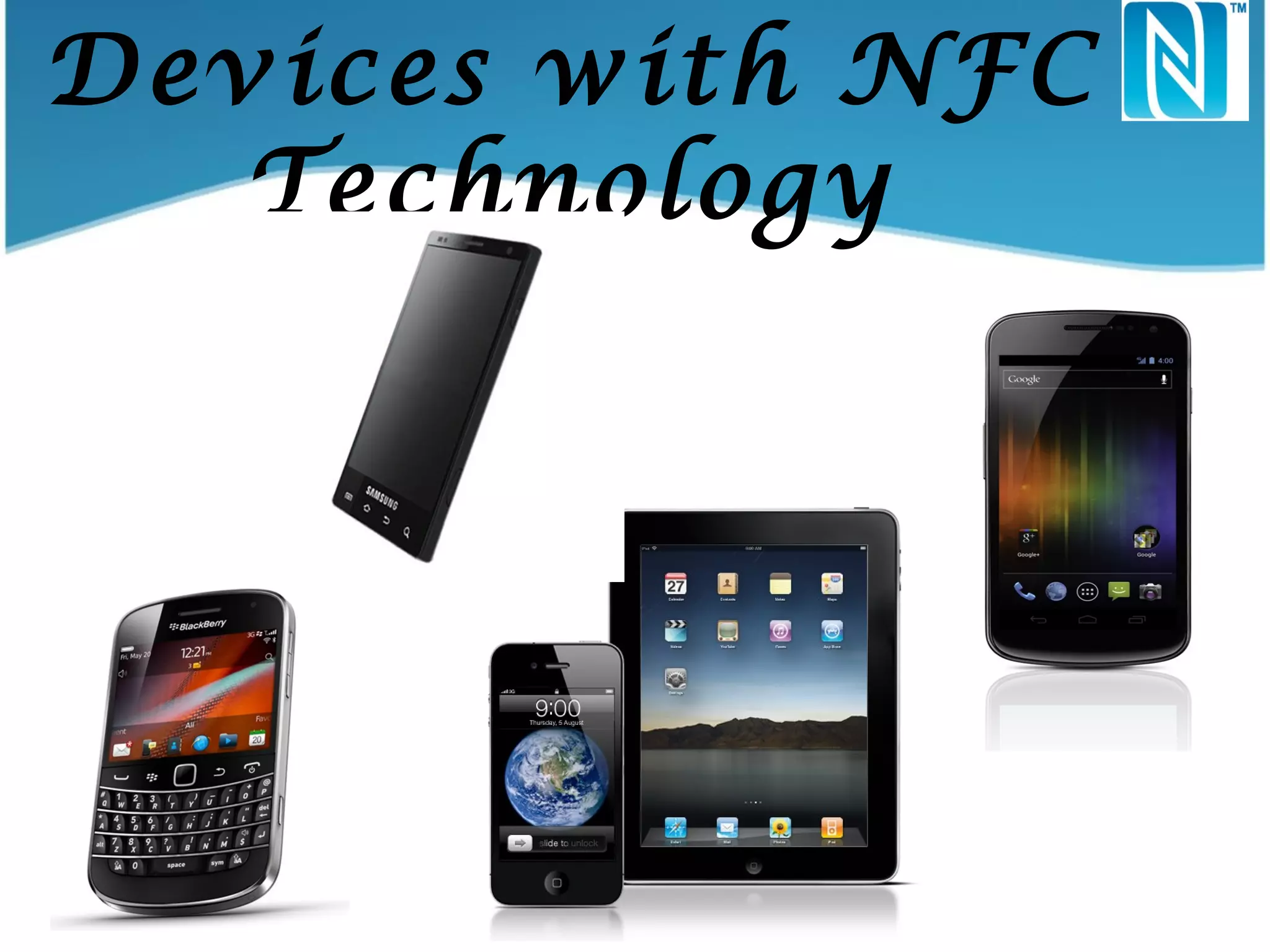
Devices with NFC
Technology
Future of NFC
• New generations of iPhone, iPod and iPad products
would reportedly be equipped with NFC capability
which would enable small-scale monetary
transactions.
• Recently, Microsoft announced that all Windows 8
Phone devices will make use of the NFC technology.

Near field communication - Data transmission

  • 1.
  • 2.
    What is NFC??? •A short range, high frequency, low bandwidth and wireless communication technology between two devices. • Based on RFID(Radio Frequency Identification Service) Technology. • Mainly aimed for mobile & handheld devices.
  • 3.
    Evolution of NFC •2002- The technology was jointly developed by Philips & Sony. • 2004- Nokia, Philips and Sony established the NFC Forum. • 2006- Initial specifications for NFC tags were given. • 2006- Nokia 6131 was the first NFC enabled Phone. • 2010- Samsung Nexus S was the first Android NFC enabled Phone.
  • 4.
    Working Principle • NFCworks on the principle of RFID (Radio Frequency Identification). • Types of Coupling in RFID:  BackScatter Coupling  Capacitive Coupling  Inductive Coupling.
  • 5.
    Operation Of NFC •Near field communication is based on inductivecoupling. • NFC works using magnetic induction between two antennas located within each other's 'near field’.
  • 6.
  • 7.
    Modes Of Operation • InActive mode, both devices with NFC chip generates an electromagnetic field and exchange data. Two NFC enabled devices transferring data in active mode
  • 8.
    Modes of Operation • InPassive mode, there is only one active device and the other uses that field to exchange information. A NFCenabled mobile phone is paired with a RFIDtagged "smart poster"
  • 9.
    Applications of NFC • NFCapplications can be split into the following three basic categories: Touch and Go Touch and Confirm Touch and Connect
  • 10.
    Applications Of NFC • Touchand Go Applications such as access control or transport/event ticketing, where the user needs only to bring the device storing the ticket or access code close to the reader. Example for picking up an Internet URL from a smart label on a poster. Touch and go Mode of application
  • 11.
    Applications Of NFC • Touchand Confirm Applications such as mobile payment where the user has to confirm the interaction by entering a password or just accepting the transaction.
  • 12.
    Applications Of NFC • Touchand Connect Linking two NFC-enabled devices to enable peer to peer transfer of data such as downloading music, exchanging images or synchronizing address books. Data transfer via NFC
  • 13.
    NFC Specifications • NFCoperates at 13.56 MHz and at rates ranging from 106 kbit/s to 424 kbit/s. • NFC always use an initiator and a target; the initiator actively generates an RF field that can power a passive target. Initiator Device Target
  • 14.
  • 15.
    Advantages Of NFC • Highconvenience to the user, because the data exchange is done by bringing two mobiles together. • Secure communication. • No special software. • No manual configuration and settings. • No search and pair procedure.
  • 16.
    Limitations Of NFC • Thesystem has the limitation that it can be operated only with devices under a short range i.e around 10 cm. • The data transfer rate is very less at about 106kbps, 212 kbps and 424kbps.
  • 17.
    • • • • • • • Some Devices using NFCTechnology Nexus S Google Nexus S 4G Samsung Galaxy S II Samsung Galaxy Note Galaxy Nexus Nokia 6212 Classic Nokia 6131 NFC
  • 18.
  • 19.
    Future of NFC •New generations of iPhone, iPod and iPad products would reportedly be equipped with NFC capability which would enable small-scale monetary transactions. • Recently, Microsoft announced that all Windows 8 Phone devices will make use of the NFC technology.