NEAR FIELD
COMMUNICATION
PREPARED BY:
CHITRA BENGANI (12417)
WHAT IS NFC?
Wireless communication technology
Enables data transfer between machines
Uses the concept of Radio Frequency
Identification (RFID)
RFID is a technology that does communication
through radio waves, that exchanges data
between an electronic tag put on an object and a
reader
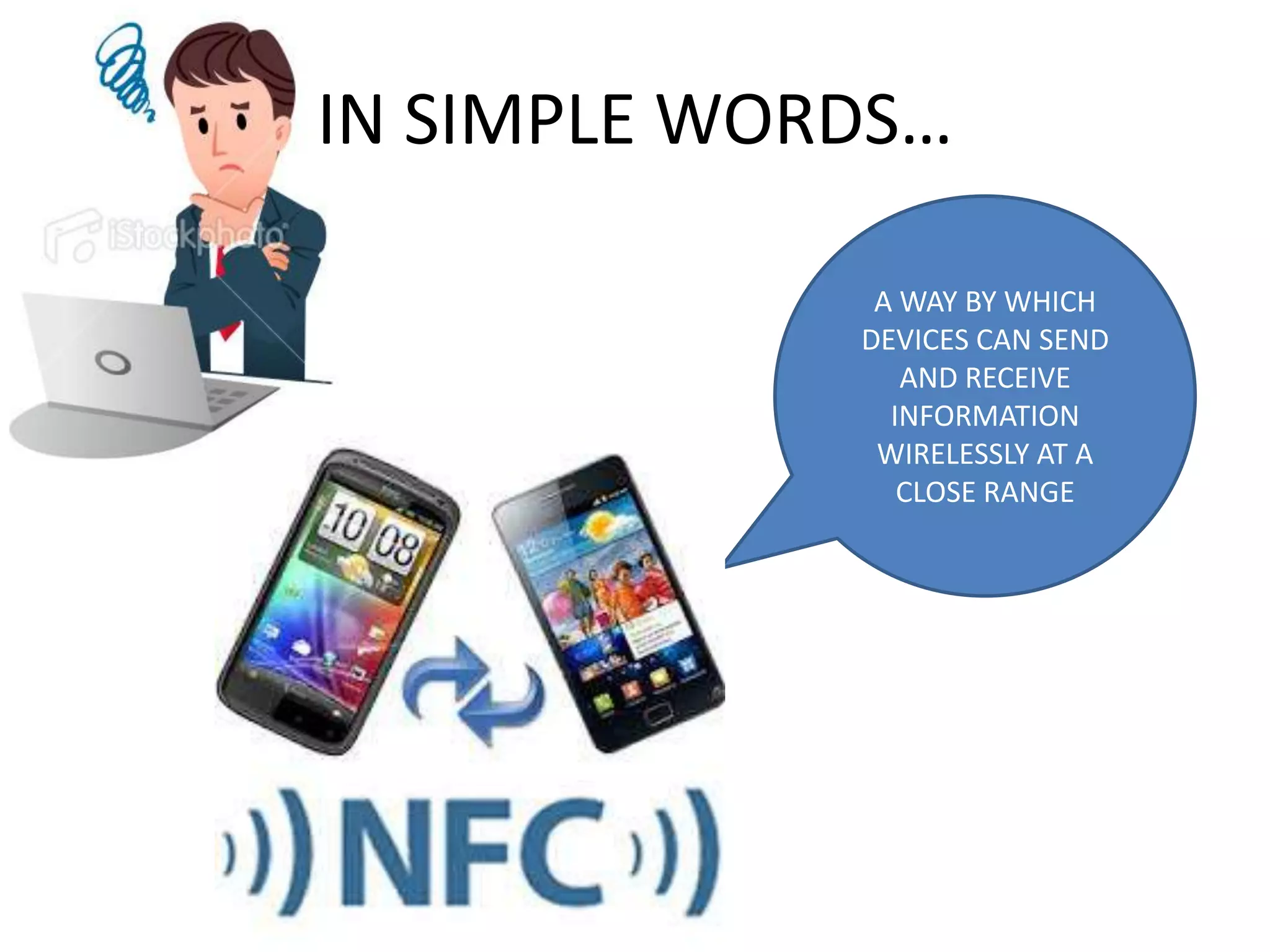
IN SIMPLE WORDS…
A WAY BY WHICH
DEVICES CAN SEND
AND RECEIVE
INFORMATION
WIRELESSLY AT A
CLOSE RANGE
WHO DEVELOPED NFC AND WHY?
NFC technology was developed by a joint
venture of Nokia, Phillips, and Sony
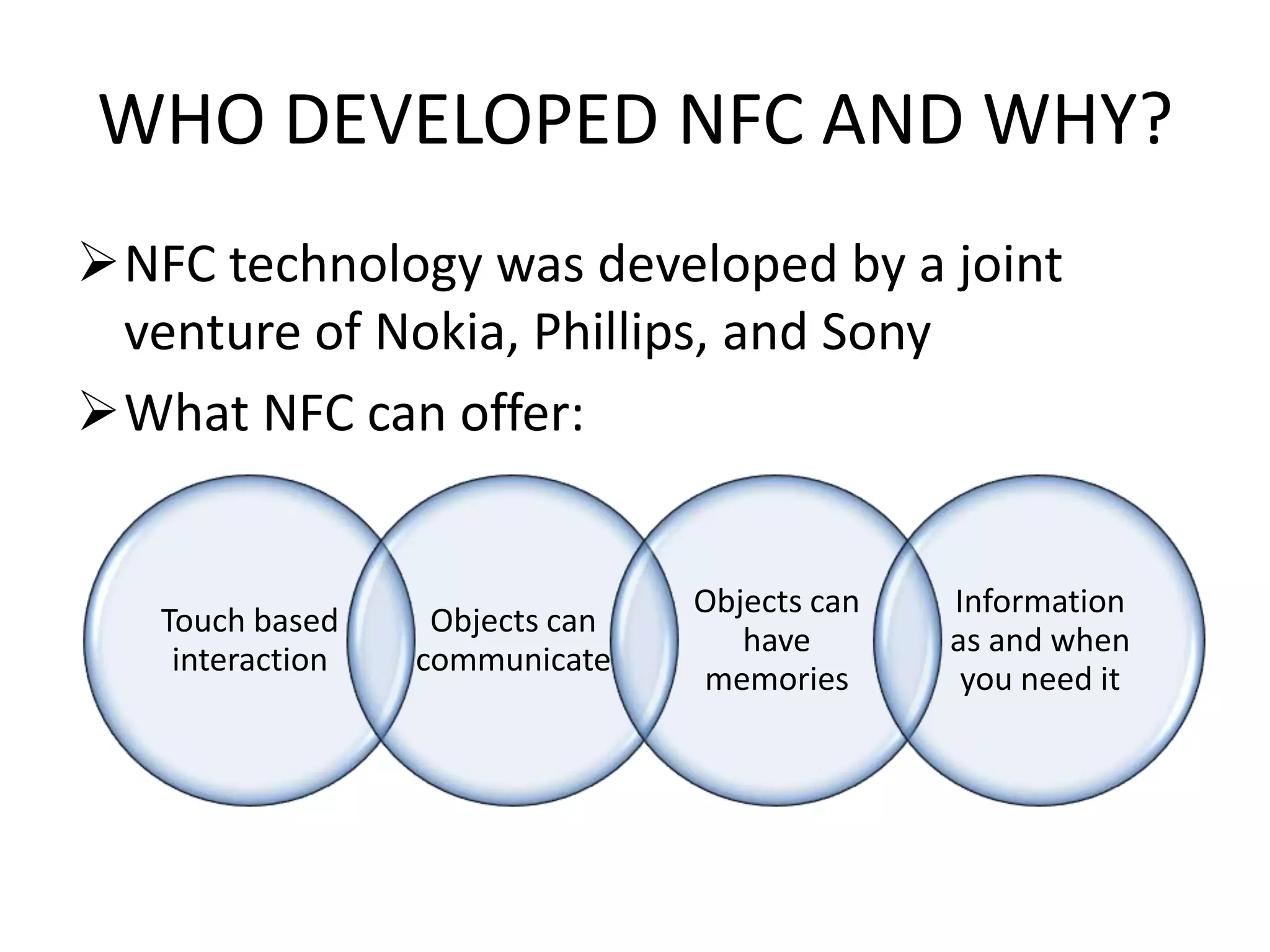
What NFC can offer:

Touch based
interaction

Objects can
communicate

Objects can
have
memories

Information
as and when
you need it
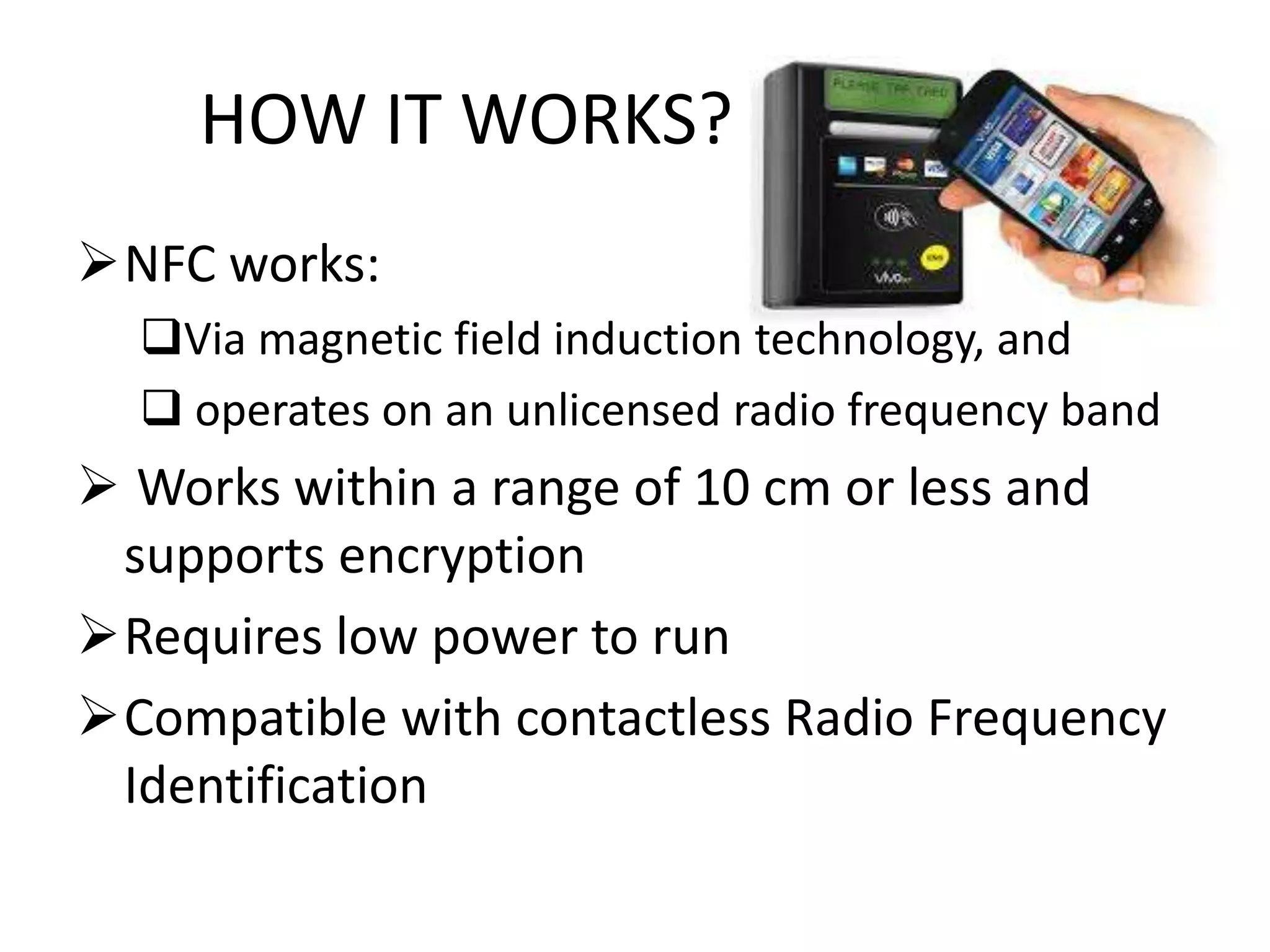
HOW IT WORKS?
NFC works:
Via magnetic field induction technology, and
 operates on an unlicensed radio frequency band

 Works within a range of 10 cm or less and
supports encryption
Requires low power to run
Compatible with contactless Radio Frequency
Identification
NFC’S STAGE IN THE HYPE CYCLE
• Gartner’s hype cycle places NFC at the trough
of disillusionment with mainstream adoption
taking 2-5 years
• Reason behind this prediction may be the fact
that payment methods cannot be changed
over night, and users need to be educated
regarding its usage
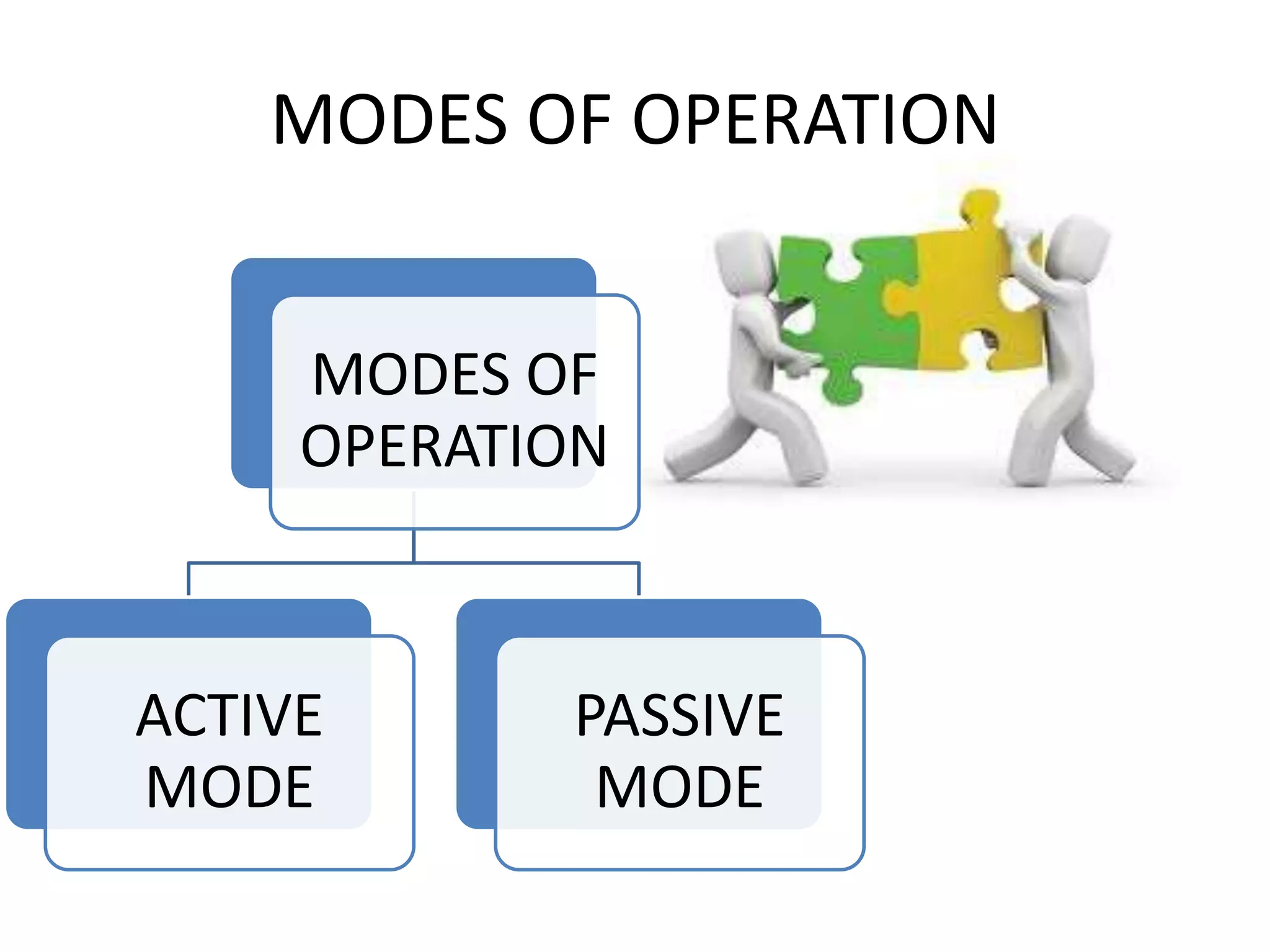
MODES OF OPERATION
MODES OF
OPERATION

ACTIVE
MODE

PASSIVE
MODE
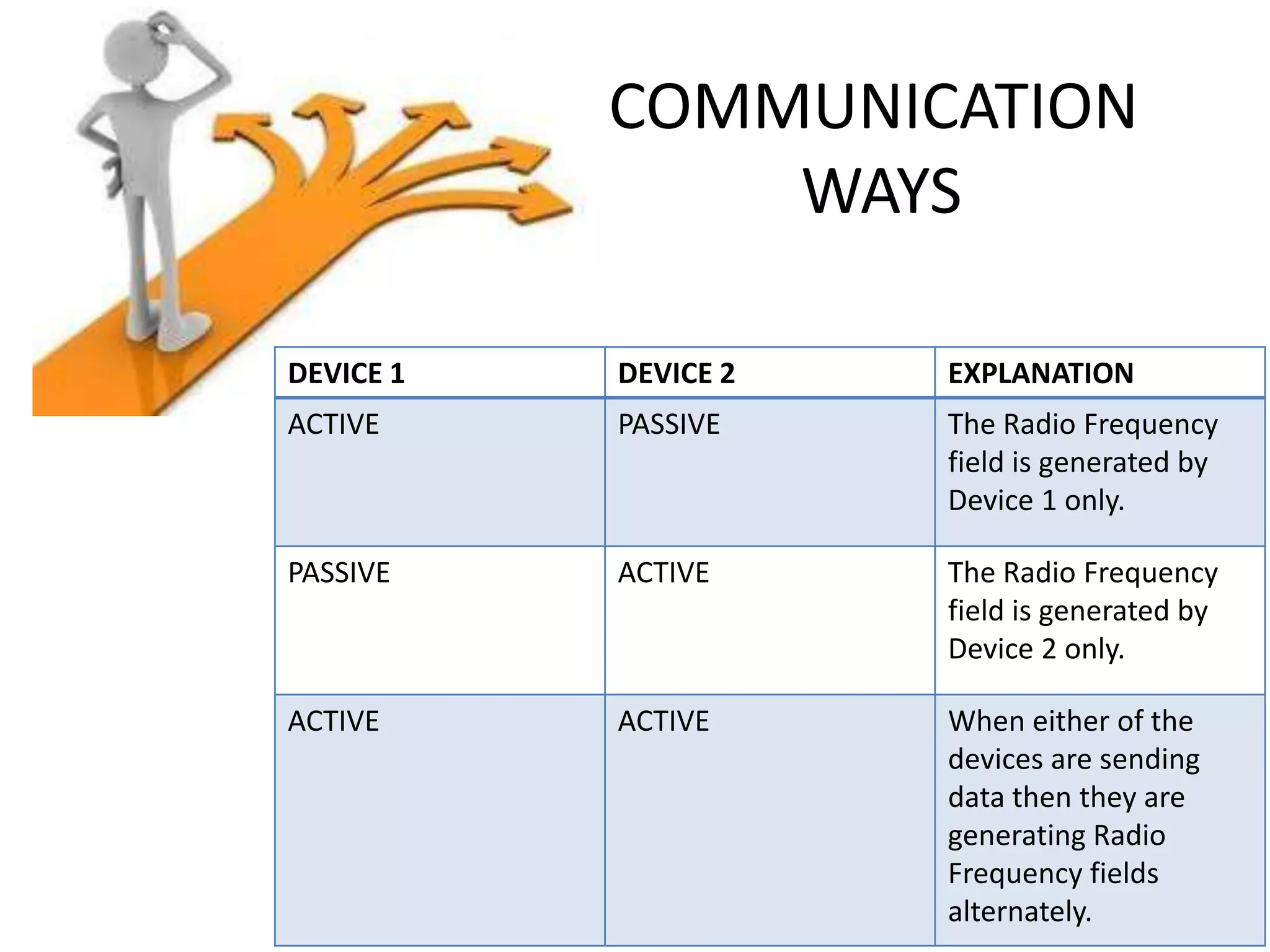
COMMUNICATION
WAYS
DEVICE 1

DEVICE 2

EXPLANATION

ACTIVE

PASSIVE

The Radio Frequency
field is generated by
Device 1 only.

PASSIVE

ACTIVE

The Radio Frequency
field is generated by
Device 2 only.

ACTIVE

ACTIVE

When either of the
devices are sending
data then they are
generating Radio
Frequency fields
alternately.
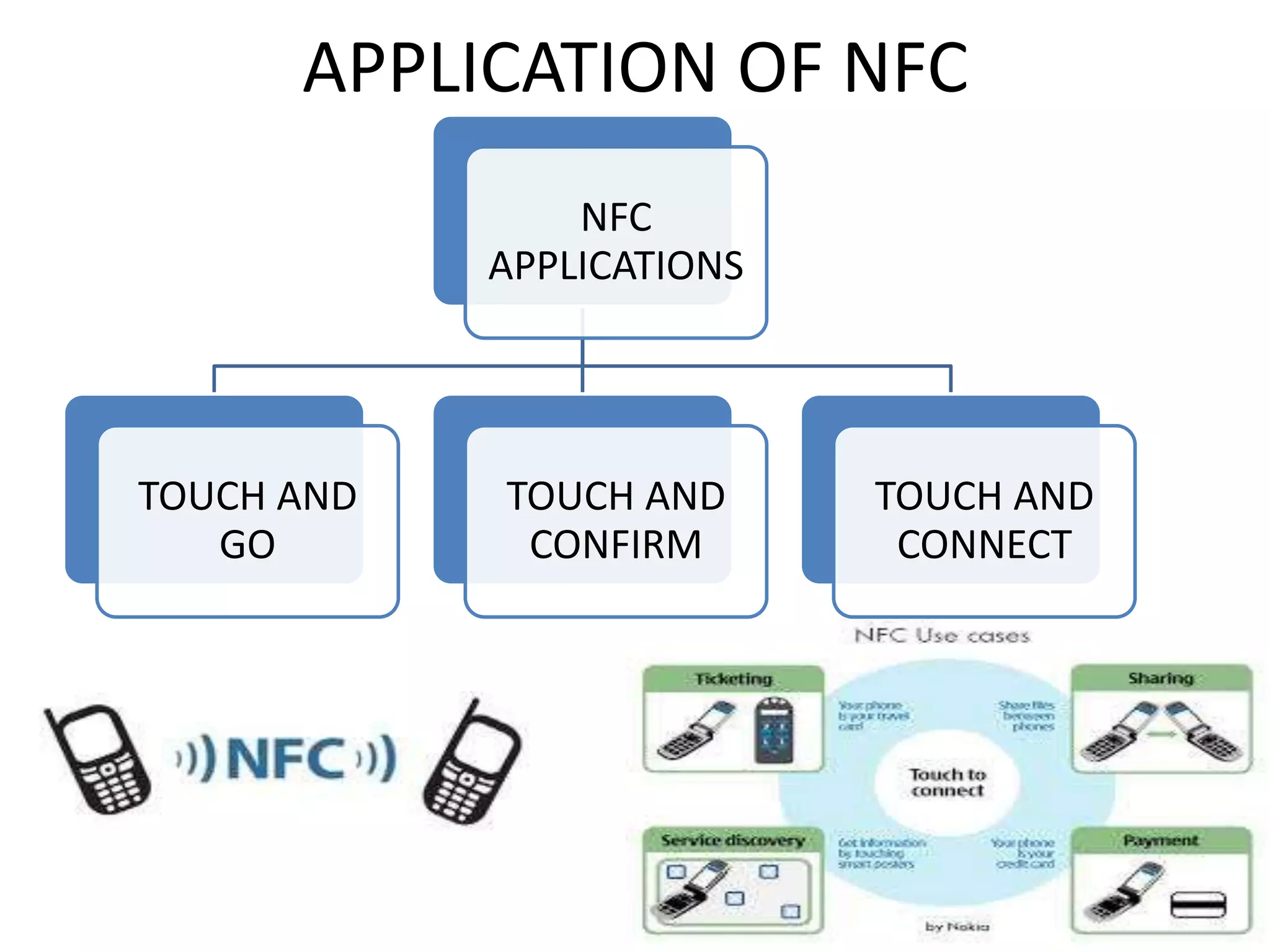
APPLICATION OF NFC
NFC
APPLICATIONS

TOUCH AND
GO

TOUCH AND
CONFIRM

TOUCH AND
CONNECT
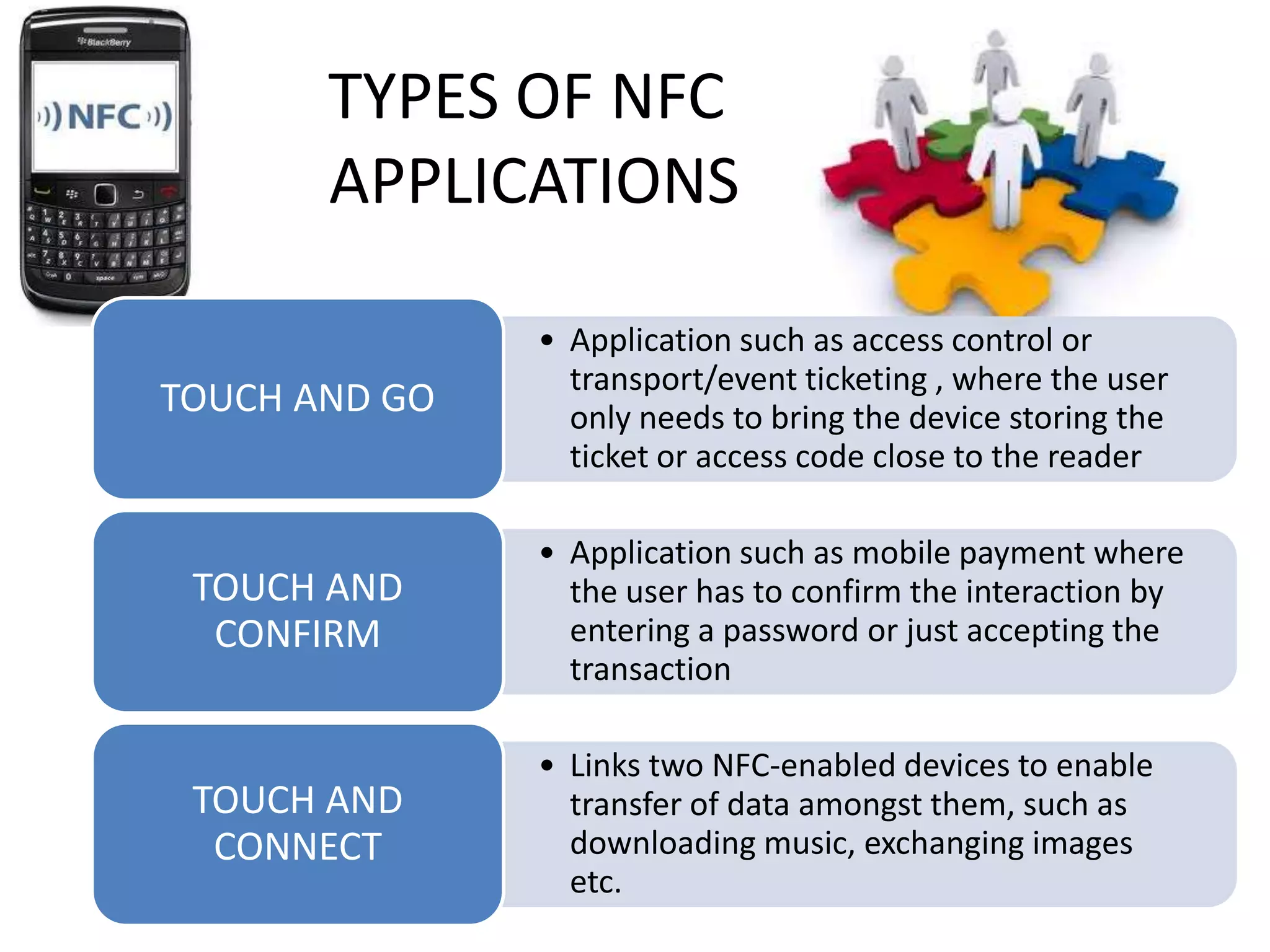
TYPES OF NFC
APPLICATIONS
TOUCH AND GO

• Application such as access control or
transport/event ticketing , where the user
only needs to bring the device storing the
ticket or access code close to the reader

TOUCH AND
CONFIRM

• Application such as mobile payment where
the user has to confirm the interaction by
entering a password or just accepting the
transaction

TOUCH AND
CONNECT

• Links two NFC-enabled devices to enable
transfer of data amongst them, such as
downloading music, exchanging images
etc.
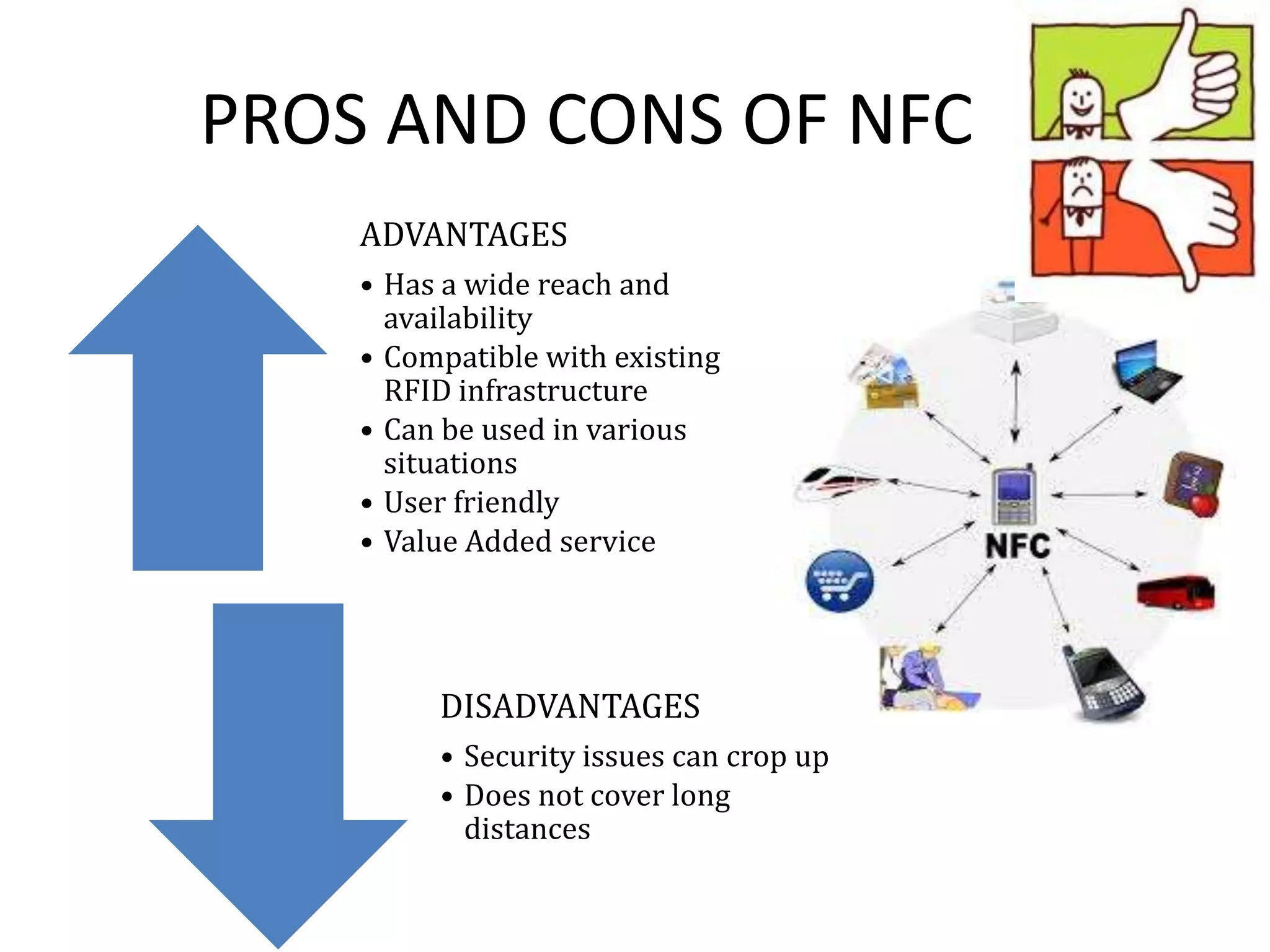
PROS AND CONS OF NFC
ADVANTAGES
• Has a wide reach and
availability
• Compatible with existing
RFID infrastructure
• Can be used in various
situations
• User friendly
• Value Added service

DISADVANTAGES
• Security issues can crop up
• Does not cover long
distances
FUTURE OF NFC
• Nokia began promoting NFC since 2004
• Philips and Sony are also in line and trying to
bring it in their handsets as well
• Currently, the global membership of NFC in its
forum has exceeded 150 organisations
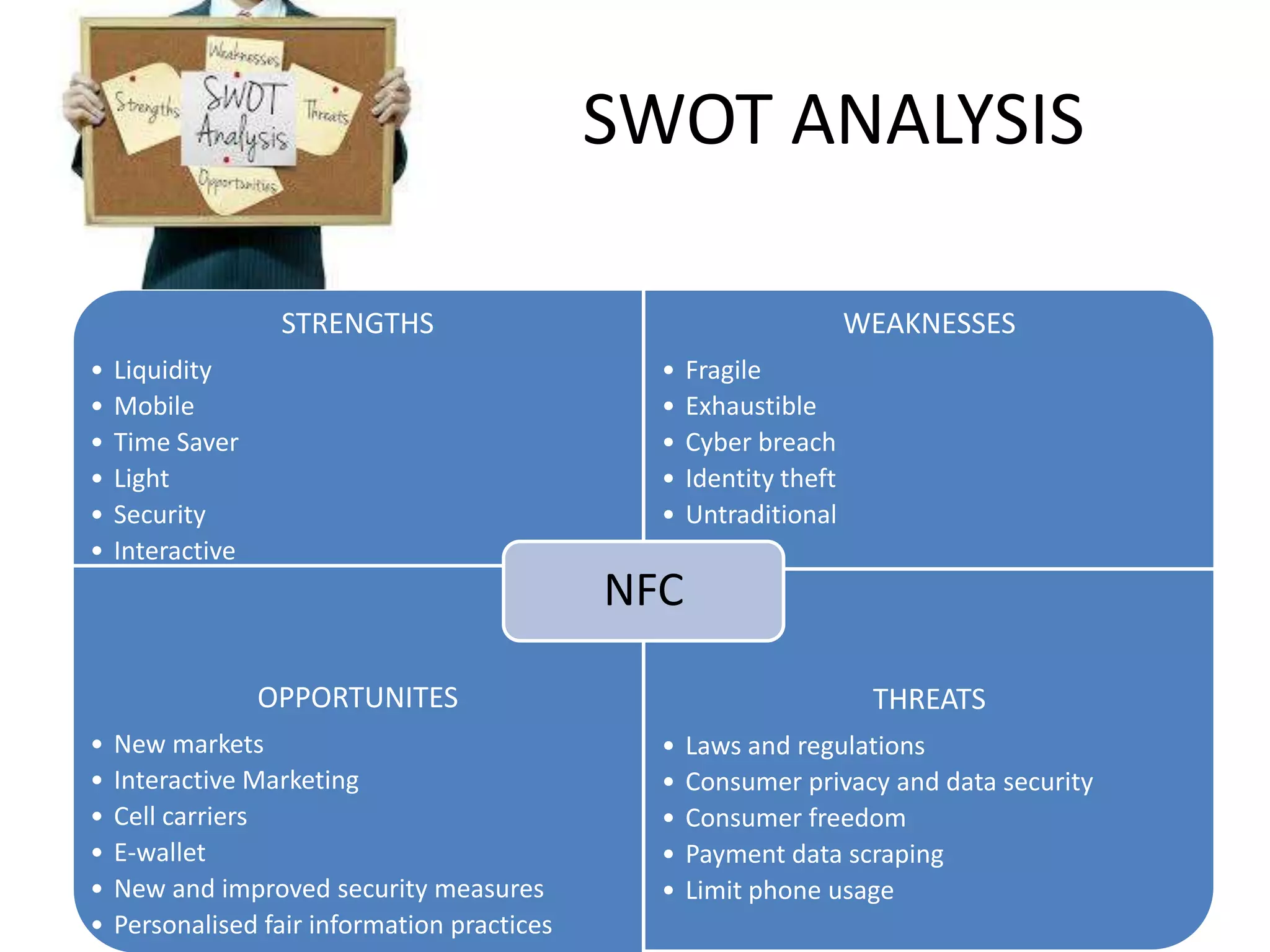
SWOT ANALYSIS
STRENGTHS
•
•
•
•
•
•

Liquidity
Mobile
Time Saver
Light
Security
Interactive

WEAKNESSES
•
•
•
•
•

Fragile
Exhaustible
Cyber breach
Identity theft
Untraditional

NFC
OPPORTUNITES
•
•
•
•
•
•

New markets
Interactive Marketing
Cell carriers
E-wallet
New and improved security measures
Personalised fair information practices

THREATS
•
•
•
•
•

Laws and regulations
Consumer privacy and data security
Consumer freedom
Payment data scraping
Limit phone usage
ANY QUESTIONS?

near field communication

  • 1.
  • 2.
    WHAT IS NFC? Wirelesscommunication technology Enables data transfer between machines Uses the concept of Radio Frequency Identification (RFID) RFID is a technology that does communication through radio waves, that exchanges data between an electronic tag put on an object and a reader
  • 3.
    IN SIMPLE WORDS… AWAY BY WHICH DEVICES CAN SEND AND RECEIVE INFORMATION WIRELESSLY AT A CLOSE RANGE
  • 4.
    WHO DEVELOPED NFCAND WHY? NFC technology was developed by a joint venture of Nokia, Phillips, and Sony What NFC can offer: Touch based interaction Objects can communicate Objects can have memories Information as and when you need it
  • 5.
    HOW IT WORKS? NFCworks: Via magnetic field induction technology, and  operates on an unlicensed radio frequency band  Works within a range of 10 cm or less and supports encryption Requires low power to run Compatible with contactless Radio Frequency Identification
  • 6.
    NFC’S STAGE INTHE HYPE CYCLE • Gartner’s hype cycle places NFC at the trough of disillusionment with mainstream adoption taking 2-5 years • Reason behind this prediction may be the fact that payment methods cannot be changed over night, and users need to be educated regarding its usage
  • 7.
    MODES OF OPERATION MODESOF OPERATION ACTIVE MODE PASSIVE MODE
  • 8.
    COMMUNICATION WAYS DEVICE 1 DEVICE 2 EXPLANATION ACTIVE PASSIVE TheRadio Frequency field is generated by Device 1 only. PASSIVE ACTIVE The Radio Frequency field is generated by Device 2 only. ACTIVE ACTIVE When either of the devices are sending data then they are generating Radio Frequency fields alternately.
  • 9.
    APPLICATION OF NFC NFC APPLICATIONS TOUCHAND GO TOUCH AND CONFIRM TOUCH AND CONNECT
  • 10.
    TYPES OF NFC APPLICATIONS TOUCHAND GO • Application such as access control or transport/event ticketing , where the user only needs to bring the device storing the ticket or access code close to the reader TOUCH AND CONFIRM • Application such as mobile payment where the user has to confirm the interaction by entering a password or just accepting the transaction TOUCH AND CONNECT • Links two NFC-enabled devices to enable transfer of data amongst them, such as downloading music, exchanging images etc.
  • 11.
    PROS AND CONSOF NFC ADVANTAGES • Has a wide reach and availability • Compatible with existing RFID infrastructure • Can be used in various situations • User friendly • Value Added service DISADVANTAGES • Security issues can crop up • Does not cover long distances
  • 12.
    FUTURE OF NFC •Nokia began promoting NFC since 2004 • Philips and Sony are also in line and trying to bring it in their handsets as well • Currently, the global membership of NFC in its forum has exceeded 150 organisations
  • 13.
    SWOT ANALYSIS STRENGTHS • • • • • • Liquidity Mobile Time Saver Light Security Interactive WEAKNESSES • • • • • Fragile Exhaustible Cyberbreach Identity theft Untraditional NFC OPPORTUNITES • • • • • • New markets Interactive Marketing Cell carriers E-wallet New and improved security measures Personalised fair information practices THREATS • • • • • Laws and regulations Consumer privacy and data security Consumer freedom Payment data scraping Limit phone usage
  • 14.