

Bed Bug Biology
Opportunistic. Secretive. Bloodsuckers
Dr. Jody Green
Urban Entomologist
jgreen17@unl.edu
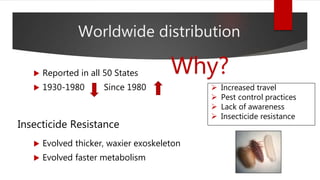
Worldwide distribution
 Reported in all 50 States
 1930-1980 Since 1980
 Evolved thicker, waxier exoskeleton
 Evolved faster metabolism
Insecticide Resistance
 Increased travel
 Pest control practices
 Lack of awareness
 Insecticide resistance
Why?
J.Green,NebraskaExtensioninLancasterCounty
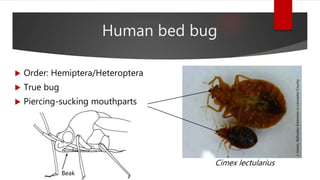
Human bed bug
 Order: Hemiptera/Heteroptera
 True bug
 Piercing-sucking mouthparts
Cimex lectularius
Beak
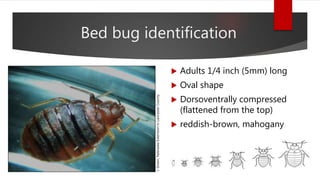
Bed bug identification
 Adults 1/4 inch (5mm) long
 Oval shape
 Dorsoventrally compressed
(flattened from the top)
 reddish-brown, mahogany
J.Green,NebraskaExtensioninLancasterCounty
Photos:NebraskaExtensioninLancasterCounty
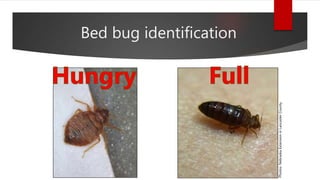
Bed bug identification
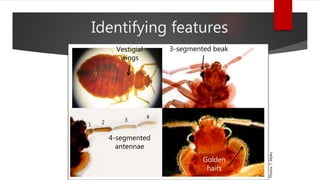
Identifying features
Vestigial
wings
Golden
hairs
3-segmented beak
4-segmented
antennae
Photos:T.Myles
1 2 3
4
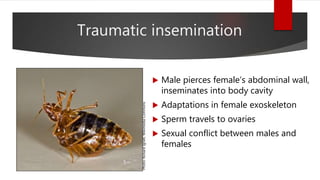
Traumatic insemination
 Male pierces female’s abdominal wall,
inseminates into body cavity
 Adaptations in female exoskeleton
 Sperm travels to ovaries
 Sexual conflict between males and
femalesPhoto:RickardIgnell,WikimediaCommons
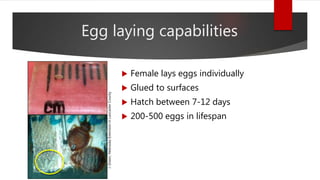
Egg laying capabilities
 Female lays eggs individually
 Glued to surfaces
 Hatch between 7-12 days
 200-500 eggs in lifespan
J.Green,NebraskaExtensioninLancasterCounty
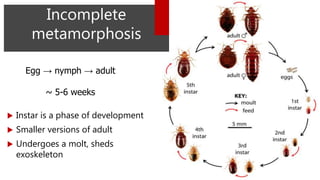
Incomplete
metamorphosis
Egg → nymph → adult
~ 5-6 weeks
 Instar is a phase of development
 Smaller versions of adult
 Undergoes a molt, sheds
exoskeleton
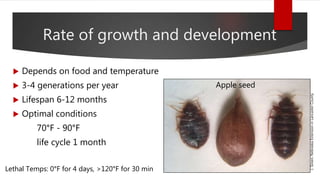
Rate of growth and development
 Depends on food and temperature
 3-4 generations per year
 Lifespan 6-12 months
 Optimal conditions
70°F - 90°F
life cycle 1 month
Apple seed
Lethal Temps: 0°F for 4 days, >120°F for 30 min
J.Green,NebraskaExtensioninLancasterCounty
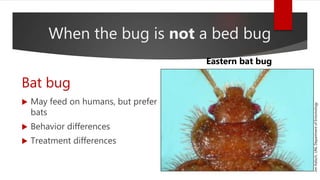
When the bug is not a bed bug
Bat bug
 May feed on humans, but prefer
bats
 Behavior differences
 Treatment differences
Eastern bat bug
JimKalisch,UNLDepartmentofEntomology
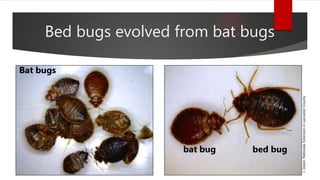
Bed bugs evolved from bat bugs
bat bug bed bug
Bat bugs
J.Green,NebraskaExtensioninLancasterCounty
Photos:WhitneyCranshaw
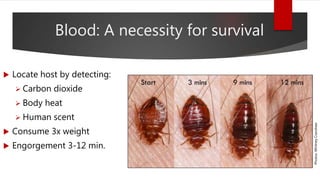
Blood: A necessity for survival
 Locate host by detecting:
 Carbon dioxide
 Body heat
 Human scent
 Consume 3x weight
 Engorgement 3-12 min.
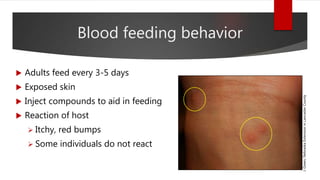
Blood feeding behavior
 Adults feed every 3-5 days
 Exposed skin
 Inject compounds to aid in feeding
 Reaction of host
 Itchy, red bumps
 Some individuals do not react
J.Green,NebraskaExtensioninLancasterCounty
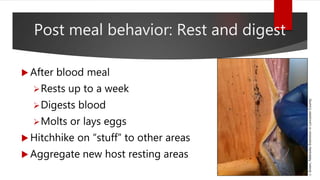
Post meal behavior: Rest and digest
 After blood meal
Rests up to a week
Digests blood
Molts or lays eggs
 Hitchhike on “stuff” to other areas
 Aggregate new host resting areas
J.Green,NebraskaExtensioninLancasterCounty
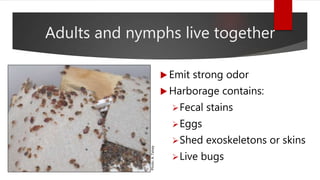
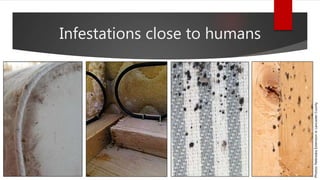
Adults and nymphs live together
 Emit strong odor
 Harborage contains:
Fecal stains
Eggs
Shed exoskeletons or skins
Live bugs
Photo:A.Taisey
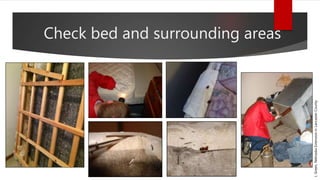
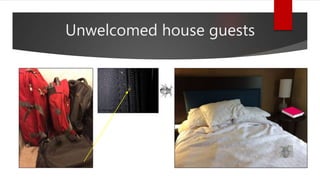
Check bed and surrounding areas
J.Green,NebraskaExtensioninLancasterCounty
Infestations close to humans
Photos:NebraskaExtensioninLancasterCounty
Unwelcomed house guests
Photo:JimKalisch
Now the library is involved
Photo:JimKalisch

NCompass Live: Bed Bug Biology

Editor's Notes

  • #6 Adults 1/4 –inch (5mm) long Reddish-brown color Deep dull red when feeding Dorsoventrally compressed Oval shape Unless recently fed then elongated and raised
  • #11 Sizes of bed bugs: egg (1mm), 1st instar (1.5mm), 2nd instar (2mm), 3rd instar (2.5mm), 4th instar (3mm), 5th instar (4.5mm), Adult (5mm-5.5mm), Engorged female (6.5.7mm) Temperature and Time Requirements for Controlling Bed Bugs: file:///C:/Users/jgreen17/AppData/Local/Temp/insects-02-00412.pdf 120 °F = 48.8 °C, Home dryers: ~120-155°F
  • #14 BBC: A Bed Bug’s Bite https://youtu.be/ObVqT9daRuc Painless and takes 3- 12 minutes