UNIT II – PLANNING
R.ArunKumar,AP/Mech,RIT
SYLLABUS
Nature and purpose of planning – planning process – types of
planning – objectives – setting objectives – policies – Planning
premises – Strategic Management – Planning Tools and Techniques
– Decision making steps and process.
R.ArunKumar,AP/Mech,RIT
Objective:
 To study different types of planning, its tools and techniques.
Outcome:
 The student will be able to explain the different types of
planning process and tools used for planning.
R.ArunKumar,AP/Mech,RIT
NATURE AND PURPOSE OF PLANNING:
 Planning is the most basic form of all management functions.
 Everyone used to plan in our day to day activities.
 We plan to execute our official work, improvise career, plan our
investment, etc.
R.ArunKumar,AP/Mech,RIT
BOEING 787 AIRCRAFT
R.ArunKumar,AP/Mech,RIT
 Planning involves defining the organizations' goals,
establishing strategies for achieving those goals and
developing plans to integrate and coordinate work
activities.
R.ArunKumar,AP/Mech,RIT
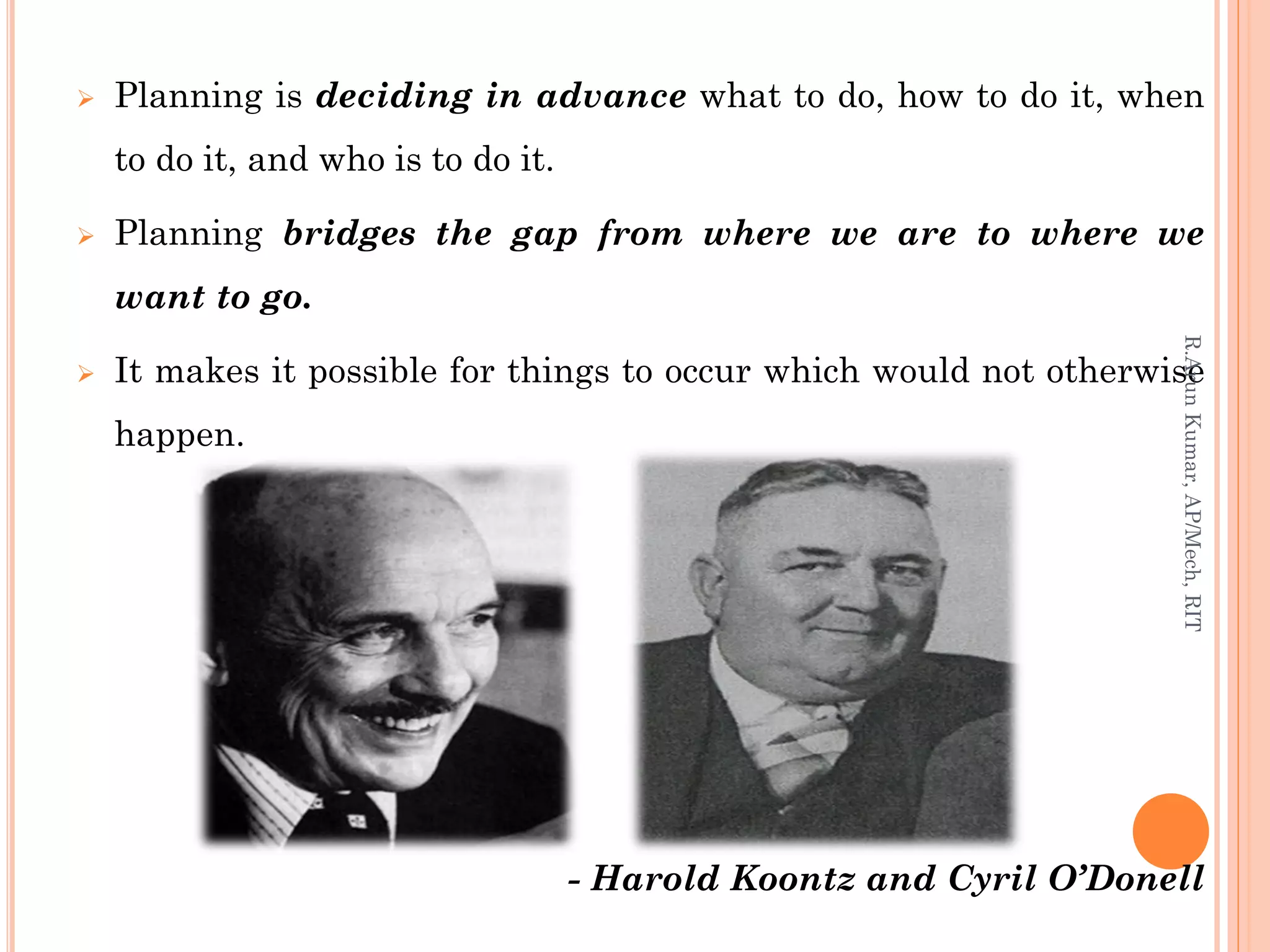
 Planning is deciding in advance what to do, how to do it, when
to do it, and who is to do it.
 Planning bridges the gap from where we are to where we
want to go.
 It makes it possible for things to occur which would not otherwise
happen.
- Harold Koontz and Cyril O’Donell
R.ArunKumar,AP/Mech,RIT
 In formal planning, specific goals covering a specific period of
time are defined.
 Shared among all the members of an organization to reduce
uncertainty and create common understanding about what need
to be done.
R.ArunKumar,AP/Mech,RIT
NATURE OF PLANNING:
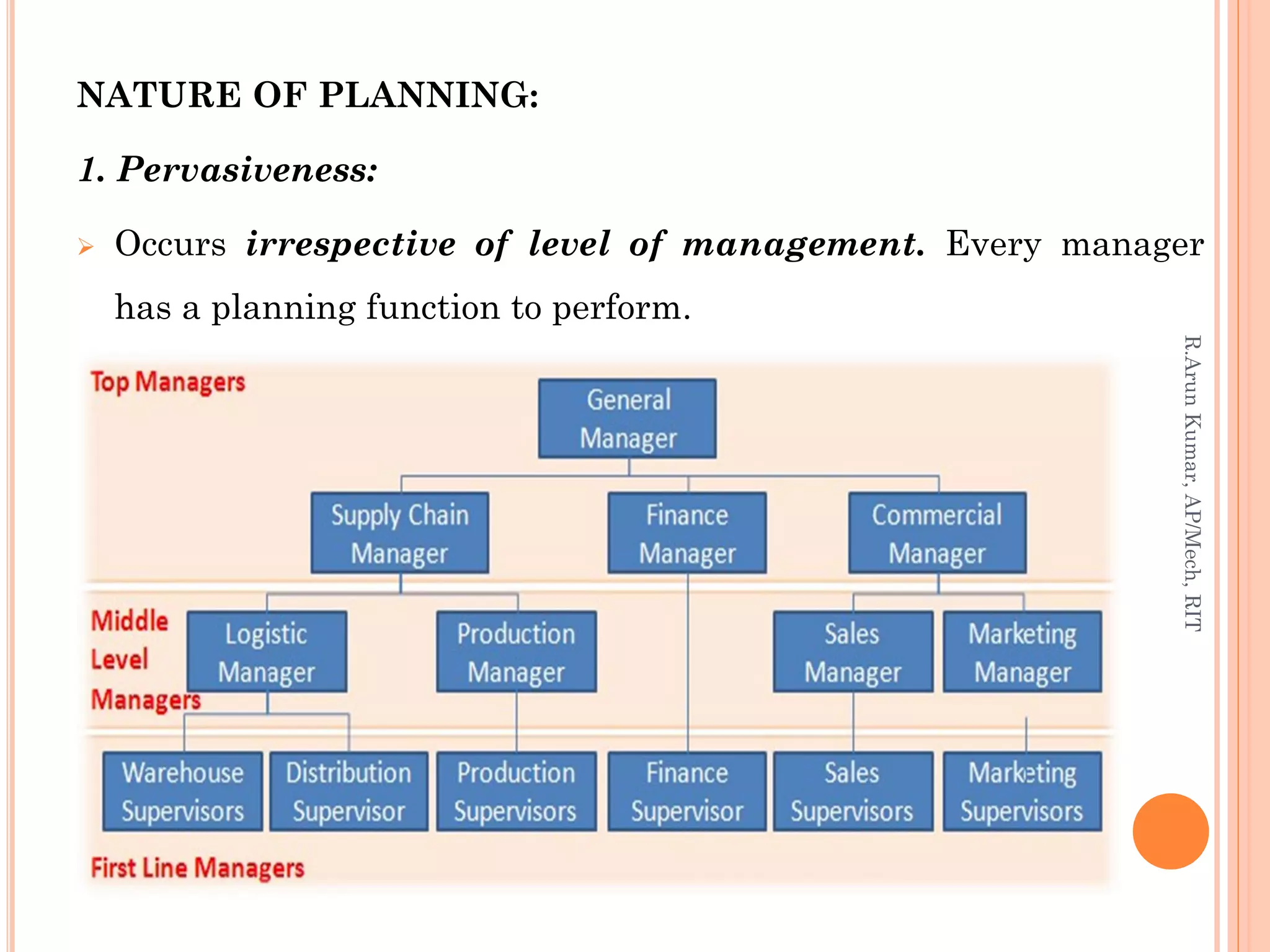
1. Pervasiveness:
 Occurs irrespective of level of management. Every manager
has a planning function to perform.
R.ArunKumar,AP/Mech,RIT
NATURE OF PLANNING:
2. Primary in nature:
 Precedes other functions of an organization.
 Without planning other functions of an organization becomes
meaningless.
R.ArunKumar,AP/Mech,RIT
NATURE OF PLANNING:
3. Continuous in nature:
 Never ending activity.
R.ArunKumar,AP/Mech,RIT
NATURE OF PLANNING:
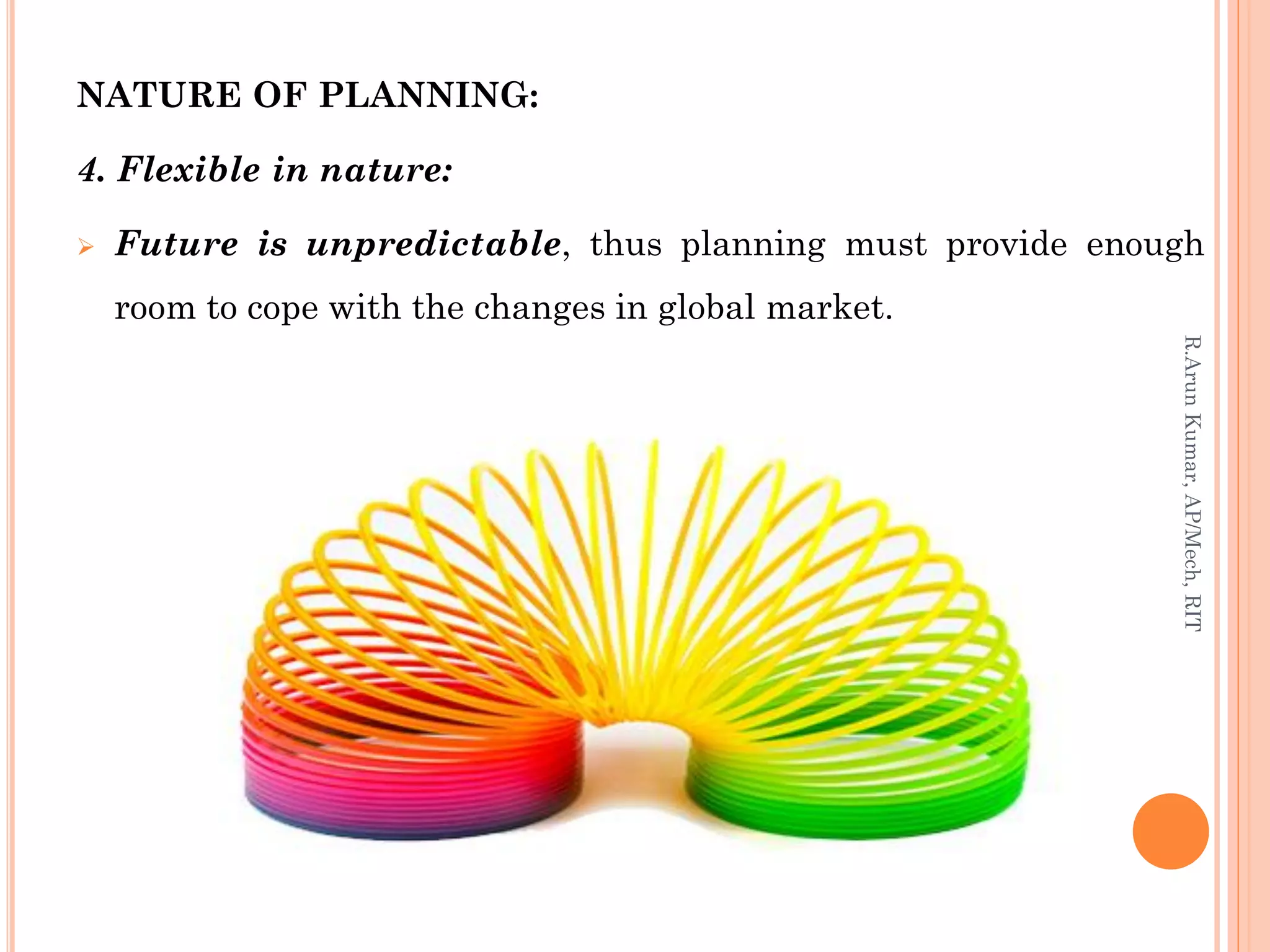
4. Flexible in nature:
 Future is unpredictable, thus planning must provide enough
room to cope with the changes in global market.
R.ArunKumar,AP/Mech,RIT
NATURE OF PLANNING:
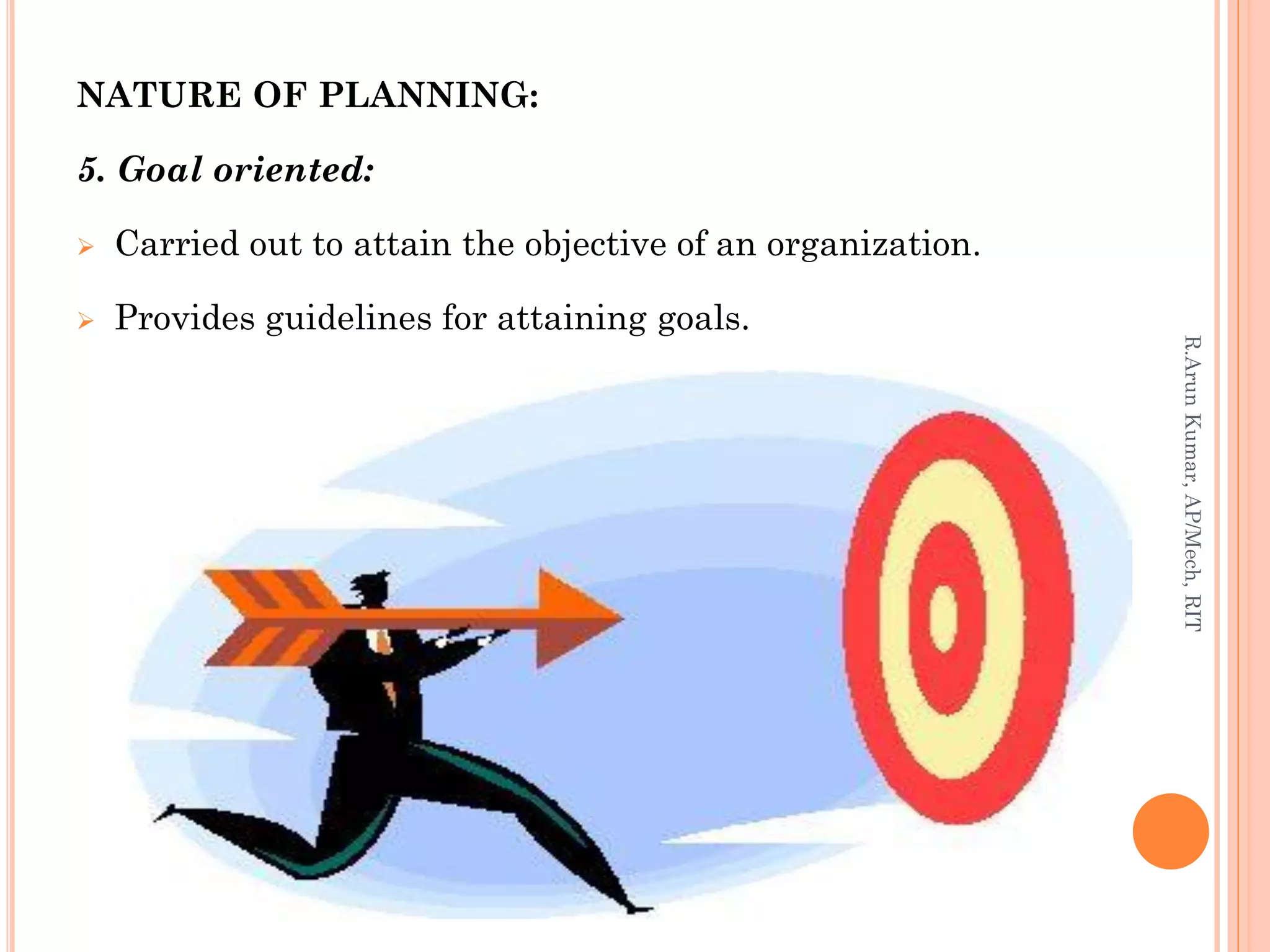
5. Goal oriented:
 Carried out to attain the objective of an organization.
 Provides guidelines for attaining goals.
R.ArunKumar,AP/Mech,RIT
NATURE OF PLANNING:
6. Integrated process:
 Integrates the plans and actions of a manager.
R.ArunKumar,AP/Mech,RIT
NATURE OF PLANNING:
7. Forward looking:
 Without planning, business become random in nature.
R.ArunKumar,AP/Mech,RIT
NATURE OF PLANNING:
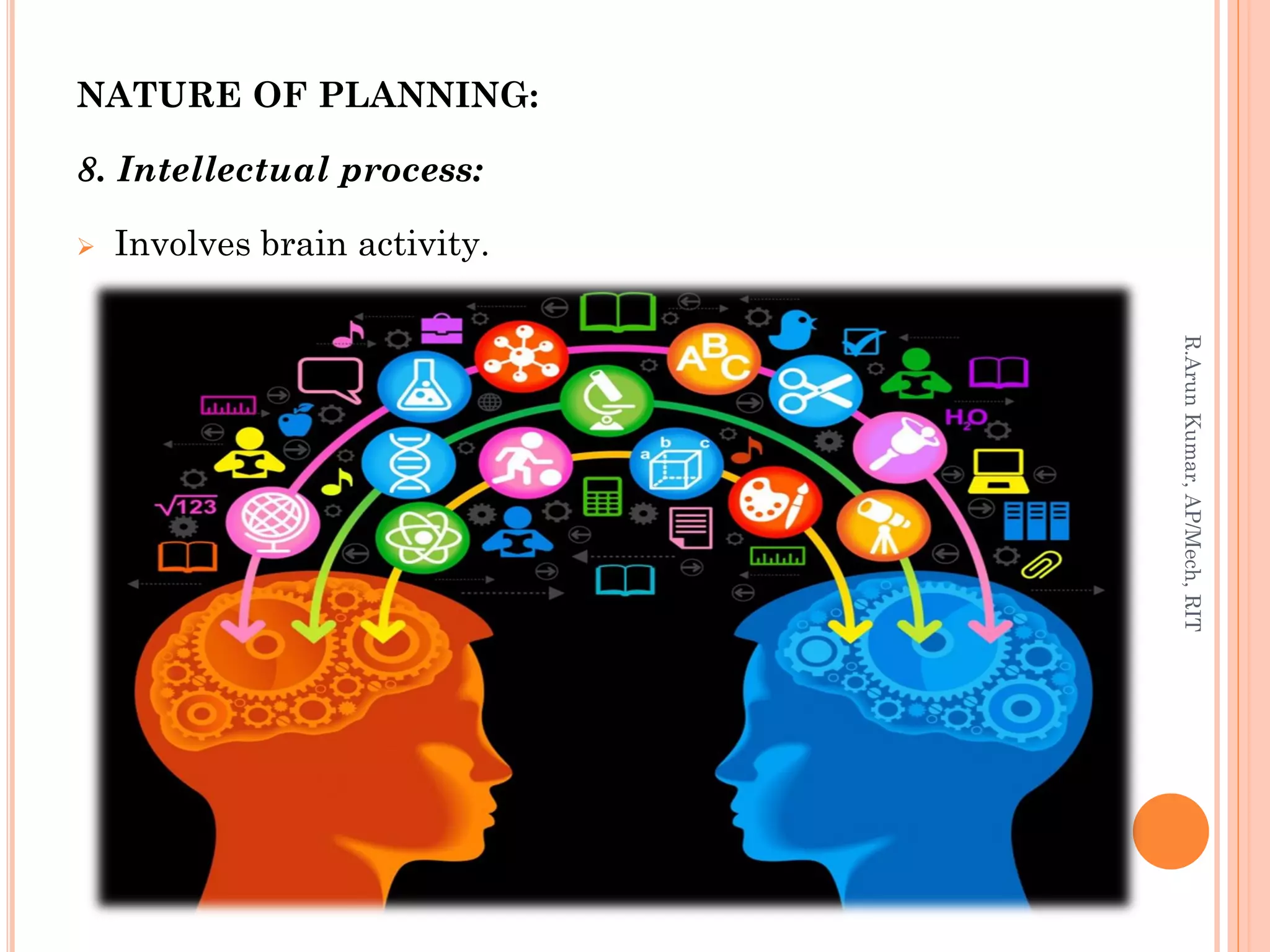
8. Intellectual process:
 Involves brain activity.
R.ArunKumar,AP/Mech,RIT
NATURE OF PLANNING:
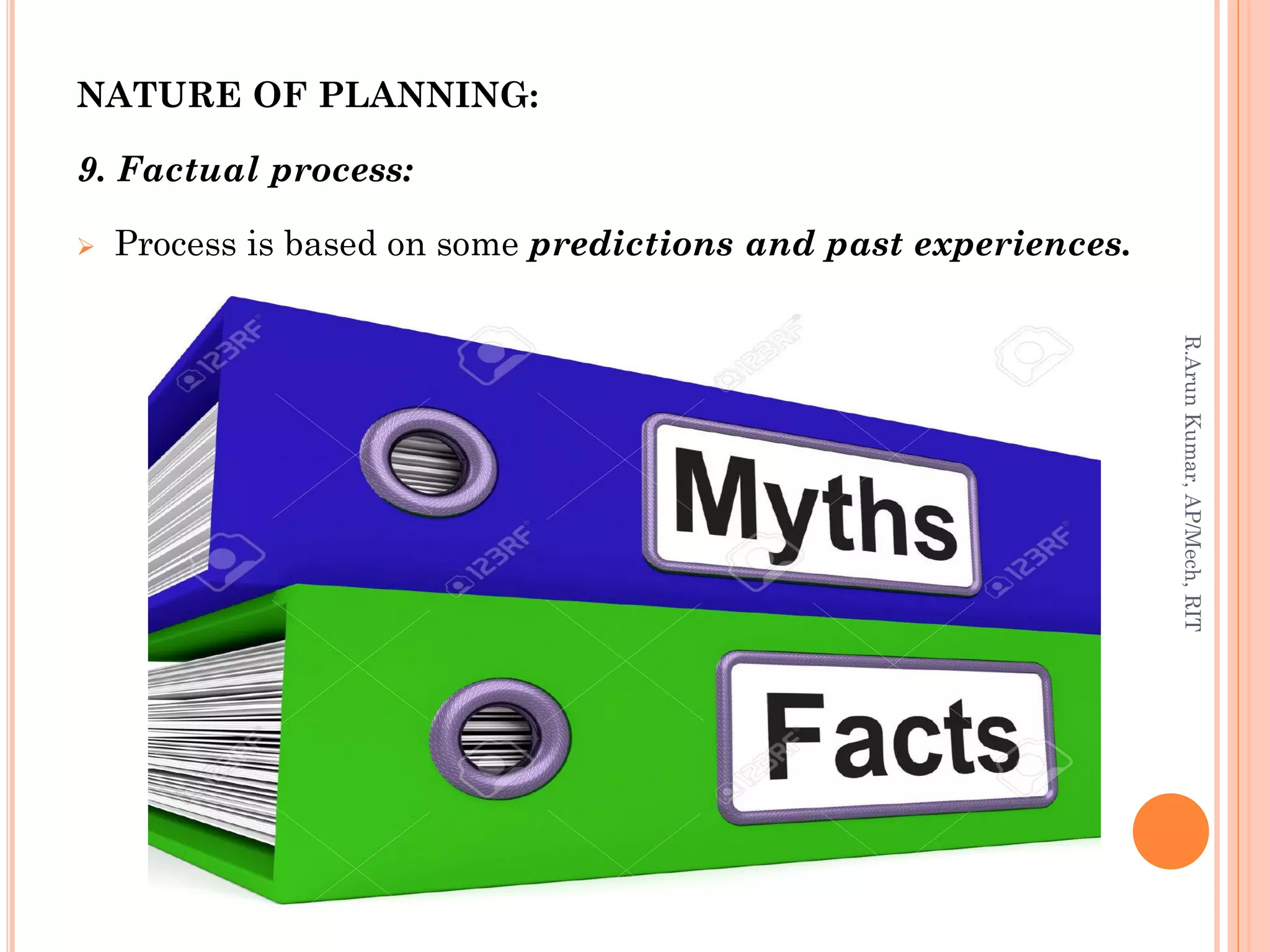
9. Factual process:
 Process is based on some predictions and past experiences.
R.ArunKumar,AP/Mech,RIT
NATURE OF PLANNING:
10. Effective and efficient process:
R.ArunKumar,AP/Mech,RIT
PURPOSE OF PLANNING:
1. Provides direction:
R.ArunKumar,AP/Mech,RIT
PURPOSE OF PLANNING:
2. Reduces uncertainty:
R.ArunKumar,AP/Mech,RIT
PURPOSE OF PLANNING:
3. Minimizes waste and redundancy:
R.ArunKumar,AP/Mech,RIT
PURPOSE OF PLANNING:
4. Set standards for controlling:
R.ArunKumar,AP/Mech,RIT
PURPOSE OF PLANNING:
5. Provides basis for team work:
R.ArunKumar,AP/Mech,RIT
PURPOSE OF PLANNING:
6. Adaption to change in work environment:
R.ArunKumar,AP/Mech,RIT
PURPOSE OF PLANNING:
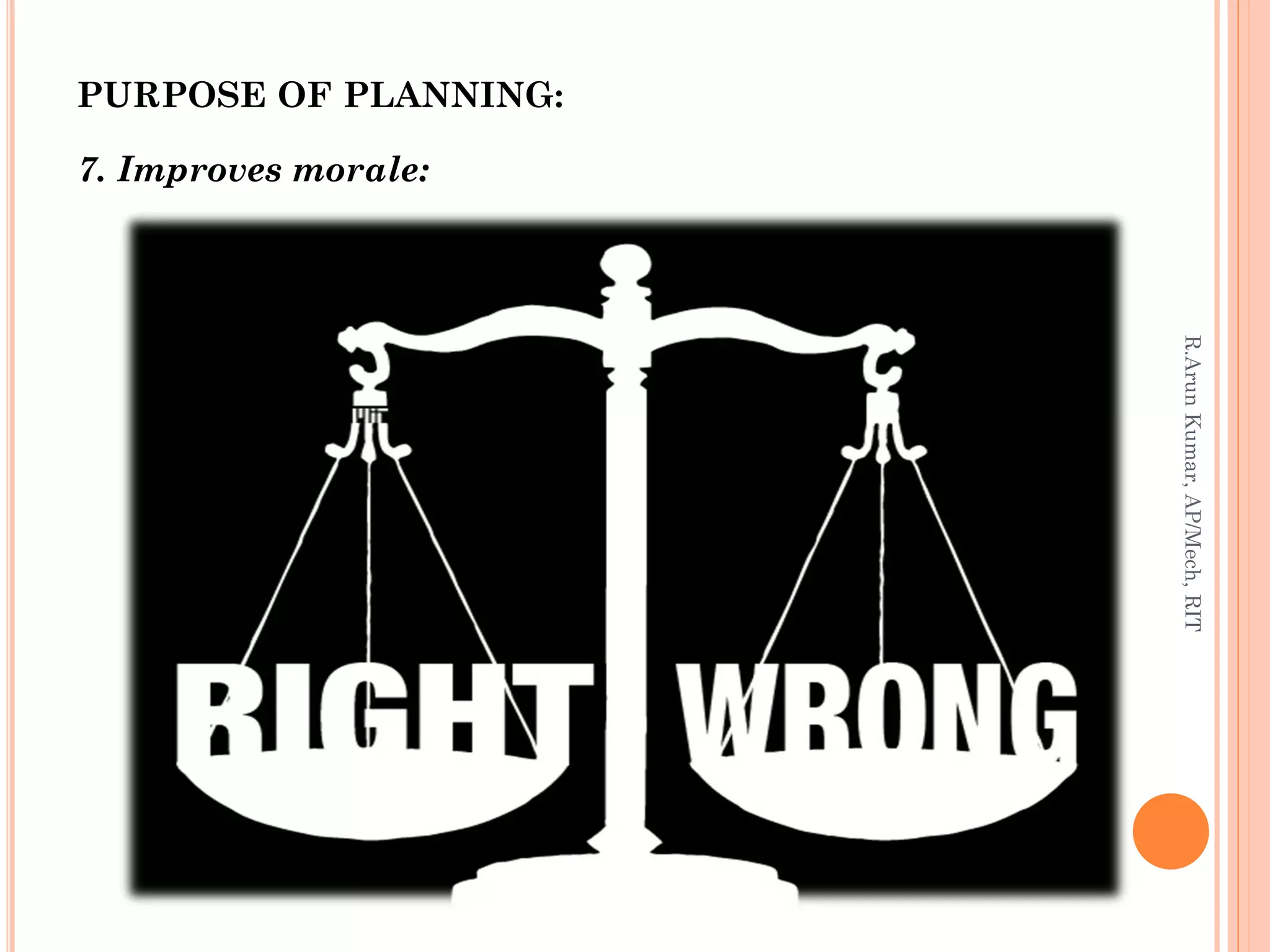
7. Improves morale:
R.ArunKumar,AP/Mech,RIT
PURPOSE OF PLANNING:
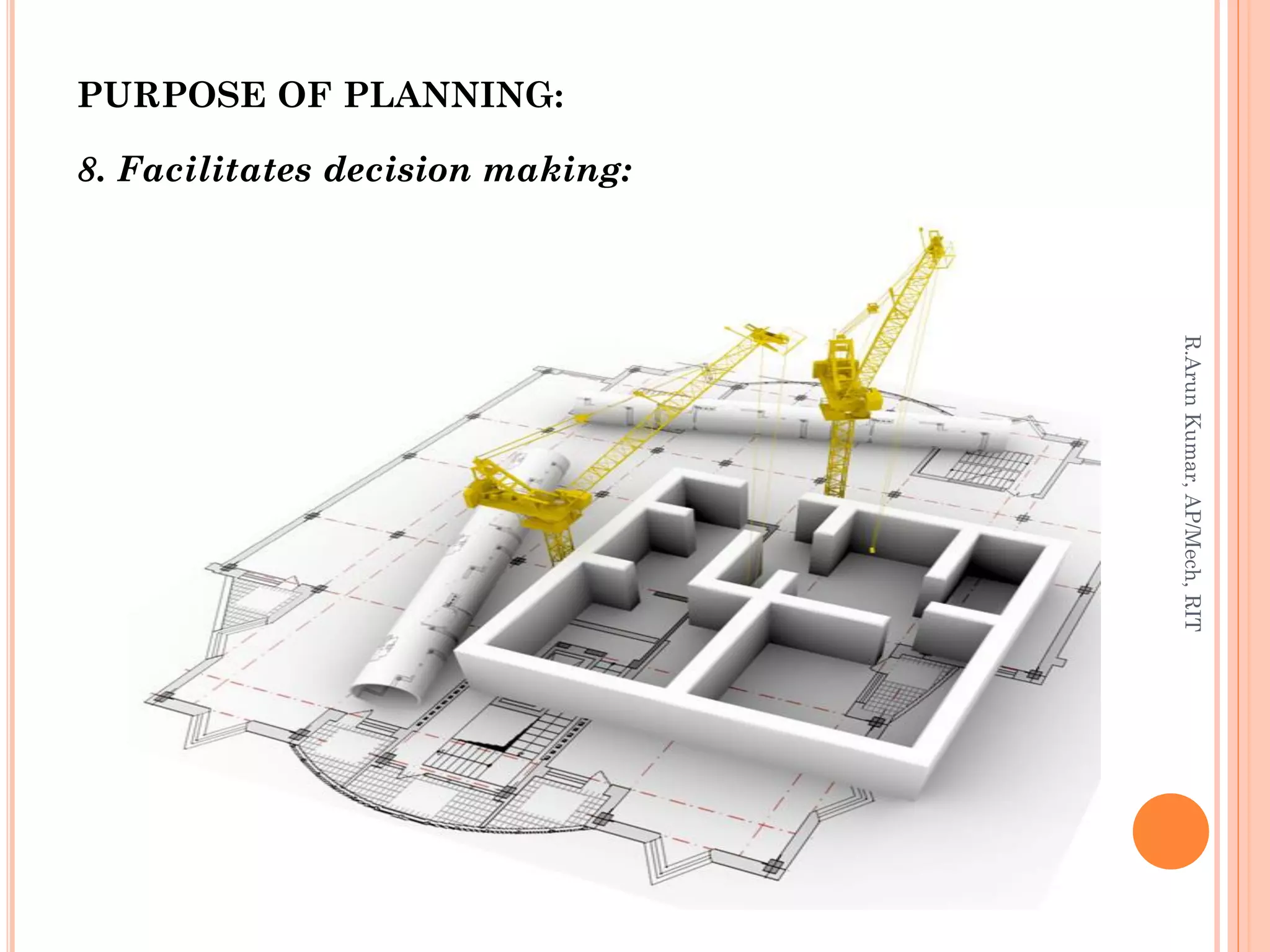
8. Facilitates decision making:
R.ArunKumar,AP/Mech,RIT

Nature and purpose of planning

  • 1.
    UNIT II –PLANNING R.ArunKumar,AP/Mech,RIT
  • 2.
    SYLLABUS Nature and purposeof planning – planning process – types of planning – objectives – setting objectives – policies – Planning premises – Strategic Management – Planning Tools and Techniques – Decision making steps and process. R.ArunKumar,AP/Mech,RIT
  • 3.
    Objective:  To studydifferent types of planning, its tools and techniques. Outcome:  The student will be able to explain the different types of planning process and tools used for planning. R.ArunKumar,AP/Mech,RIT
  • 4.
    NATURE AND PURPOSEOF PLANNING:  Planning is the most basic form of all management functions.  Everyone used to plan in our day to day activities.  We plan to execute our official work, improvise career, plan our investment, etc. R.ArunKumar,AP/Mech,RIT
  • 5.
  • 6.
     Planning involvesdefining the organizations' goals, establishing strategies for achieving those goals and developing plans to integrate and coordinate work activities. R.ArunKumar,AP/Mech,RIT
  • 7.
     Planning isdeciding in advance what to do, how to do it, when to do it, and who is to do it.  Planning bridges the gap from where we are to where we want to go.  It makes it possible for things to occur which would not otherwise happen. - Harold Koontz and Cyril O’Donell R.ArunKumar,AP/Mech,RIT
  • 8.
     In formalplanning, specific goals covering a specific period of time are defined.  Shared among all the members of an organization to reduce uncertainty and create common understanding about what need to be done. R.ArunKumar,AP/Mech,RIT
  • 9.
    NATURE OF PLANNING: 1.Pervasiveness:  Occurs irrespective of level of management. Every manager has a planning function to perform. R.ArunKumar,AP/Mech,RIT
  • 10.
    NATURE OF PLANNING: 2.Primary in nature:  Precedes other functions of an organization.  Without planning other functions of an organization becomes meaningless. R.ArunKumar,AP/Mech,RIT
  • 11.
    NATURE OF PLANNING: 3.Continuous in nature:  Never ending activity. R.ArunKumar,AP/Mech,RIT
  • 12.
    NATURE OF PLANNING: 4.Flexible in nature:  Future is unpredictable, thus planning must provide enough room to cope with the changes in global market. R.ArunKumar,AP/Mech,RIT
  • 13.
    NATURE OF PLANNING: 5.Goal oriented:  Carried out to attain the objective of an organization.  Provides guidelines for attaining goals. R.ArunKumar,AP/Mech,RIT
  • 14.
    NATURE OF PLANNING: 6.Integrated process:  Integrates the plans and actions of a manager. R.ArunKumar,AP/Mech,RIT
  • 15.
    NATURE OF PLANNING: 7.Forward looking:  Without planning, business become random in nature. R.ArunKumar,AP/Mech,RIT
  • 16.
    NATURE OF PLANNING: 8.Intellectual process:  Involves brain activity. R.ArunKumar,AP/Mech,RIT
  • 17.
    NATURE OF PLANNING: 9.Factual process:  Process is based on some predictions and past experiences. R.ArunKumar,AP/Mech,RIT
  • 18.
    NATURE OF PLANNING: 10.Effective and efficient process: R.ArunKumar,AP/Mech,RIT
  • 19.
    PURPOSE OF PLANNING: 1.Provides direction: R.ArunKumar,AP/Mech,RIT
  • 20.
    PURPOSE OF PLANNING: 2.Reduces uncertainty: R.ArunKumar,AP/Mech,RIT
  • 21.
    PURPOSE OF PLANNING: 3.Minimizes waste and redundancy: R.ArunKumar,AP/Mech,RIT
  • 22.
    PURPOSE OF PLANNING: 4.Set standards for controlling: R.ArunKumar,AP/Mech,RIT
  • 23.
    PURPOSE OF PLANNING: 5.Provides basis for team work: R.ArunKumar,AP/Mech,RIT
  • 24.
    PURPOSE OF PLANNING: 6.Adaption to change in work environment: R.ArunKumar,AP/Mech,RIT
  • 25.
    PURPOSE OF PLANNING: 7.Improves morale: R.ArunKumar,AP/Mech,RIT
  • 26.
    PURPOSE OF PLANNING: 8.Facilitates decision making: R.ArunKumar,AP/Mech,RIT