






Nanotechnology
Krushnal (15BIT023)
Saharsh (15BIT050)
A revolutionary small thing
The
Applications...
Digging to micro...
Present
Electronic
Industries
Found around the house!
SoCs (System on Chips)
Display Industries
Memory storage
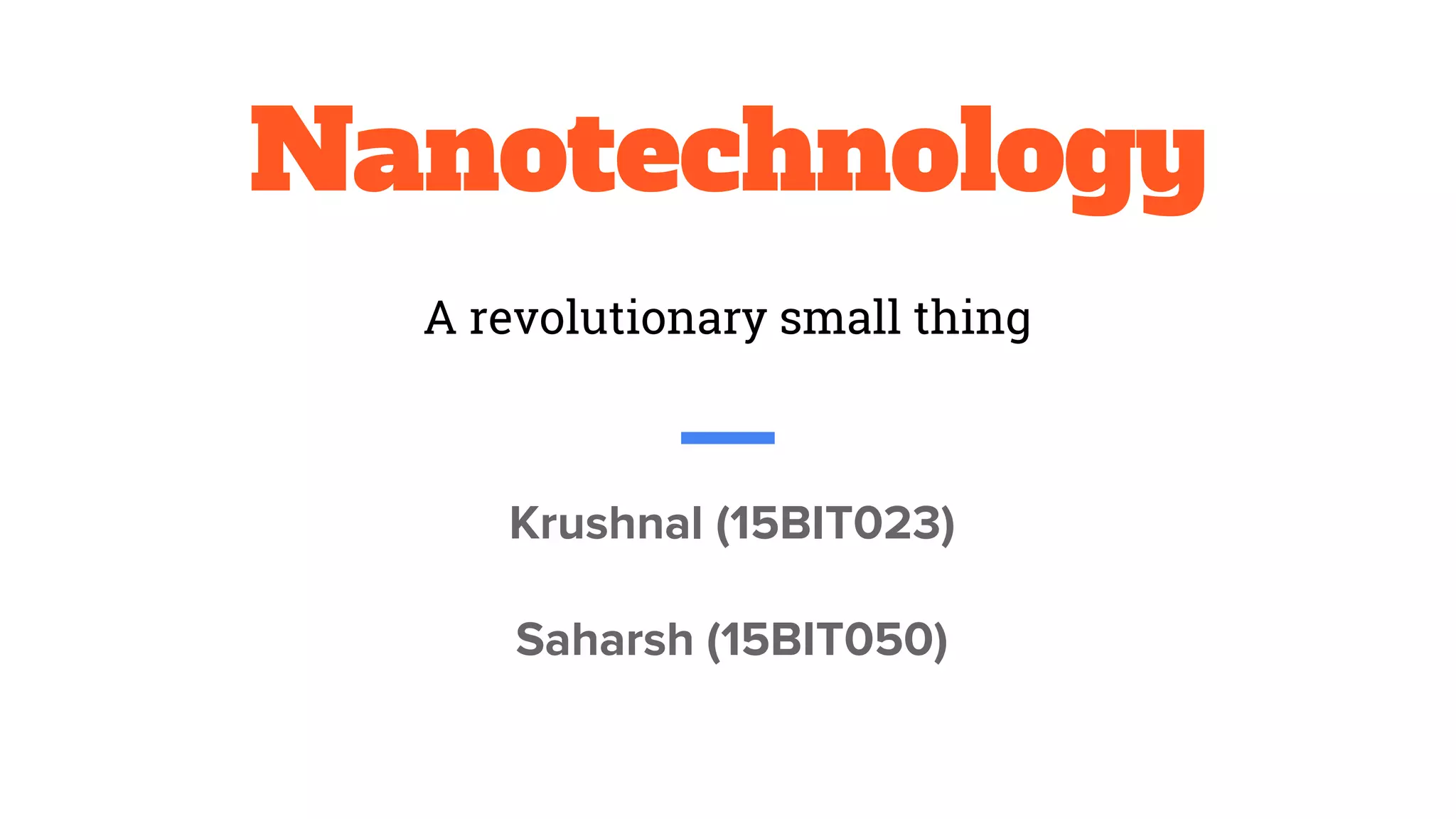
System on Chips
Nanoelectronics holds the promise of
making computer processors more
powerful than are possible with
conventional semiconductor
fabrication techniques.
So here is a caption of Intel's Future
Plan!
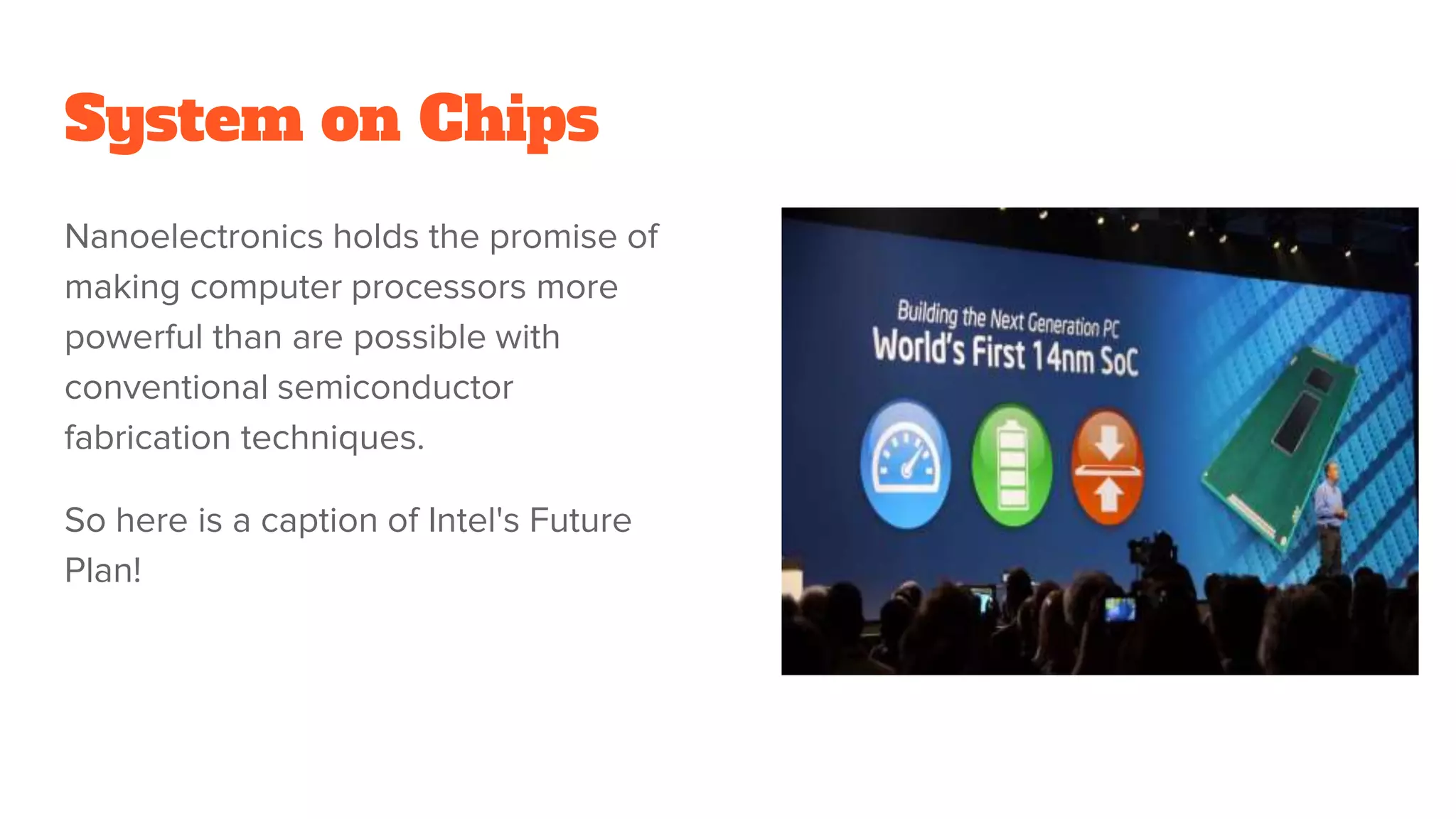
Display Industries
A quantum dot display is an experimental
type of display technology.
Think of quantum dots as ultra-tiny
particles that will make their own light if
electricity is applied to them, or if light is
shone on them.
That color is directly related to their size,
and their color production is extremely
stable.
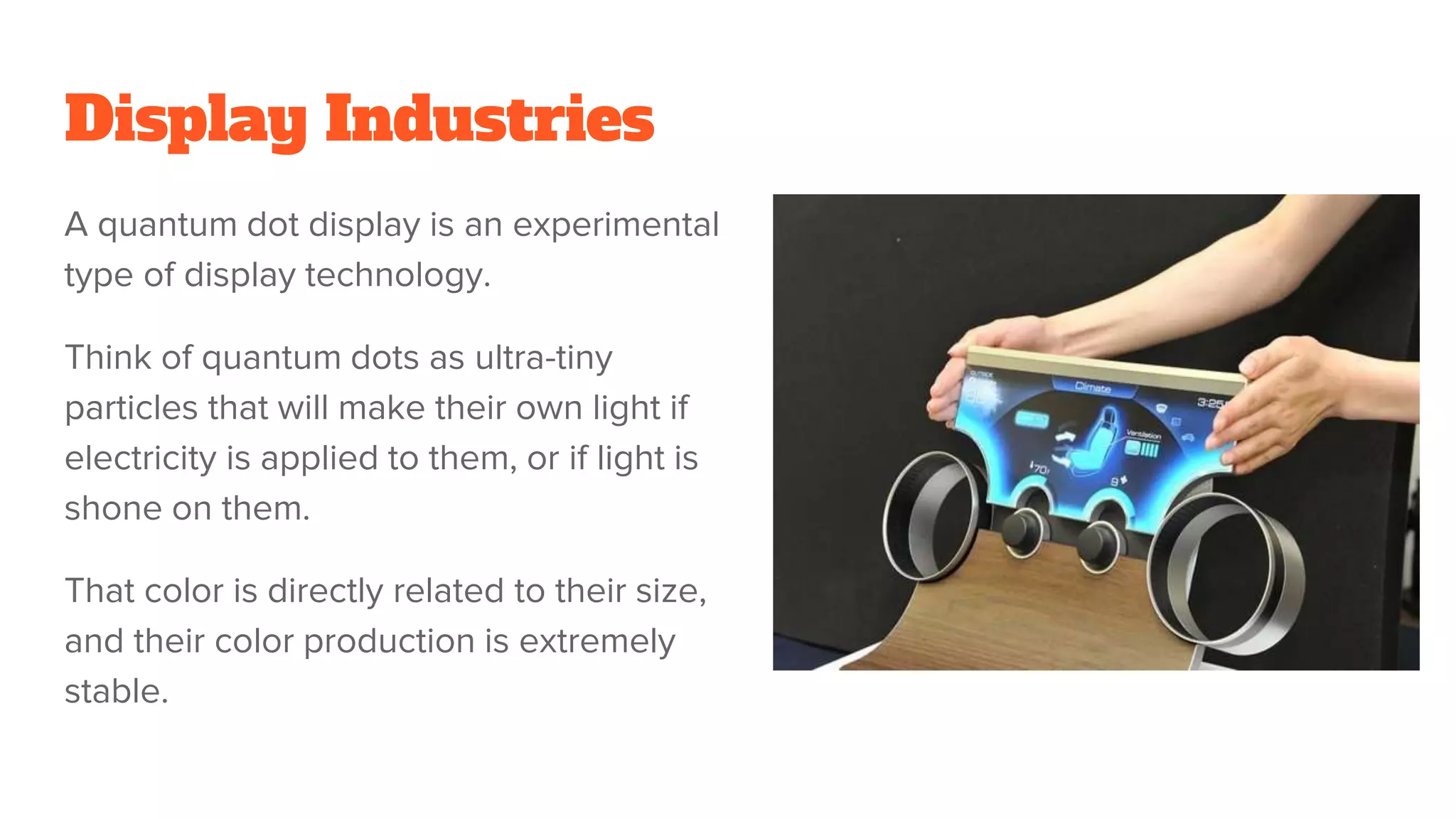
Memory Storage
Electronic memory designs in the
past have largely relied on the
formation of transistors.
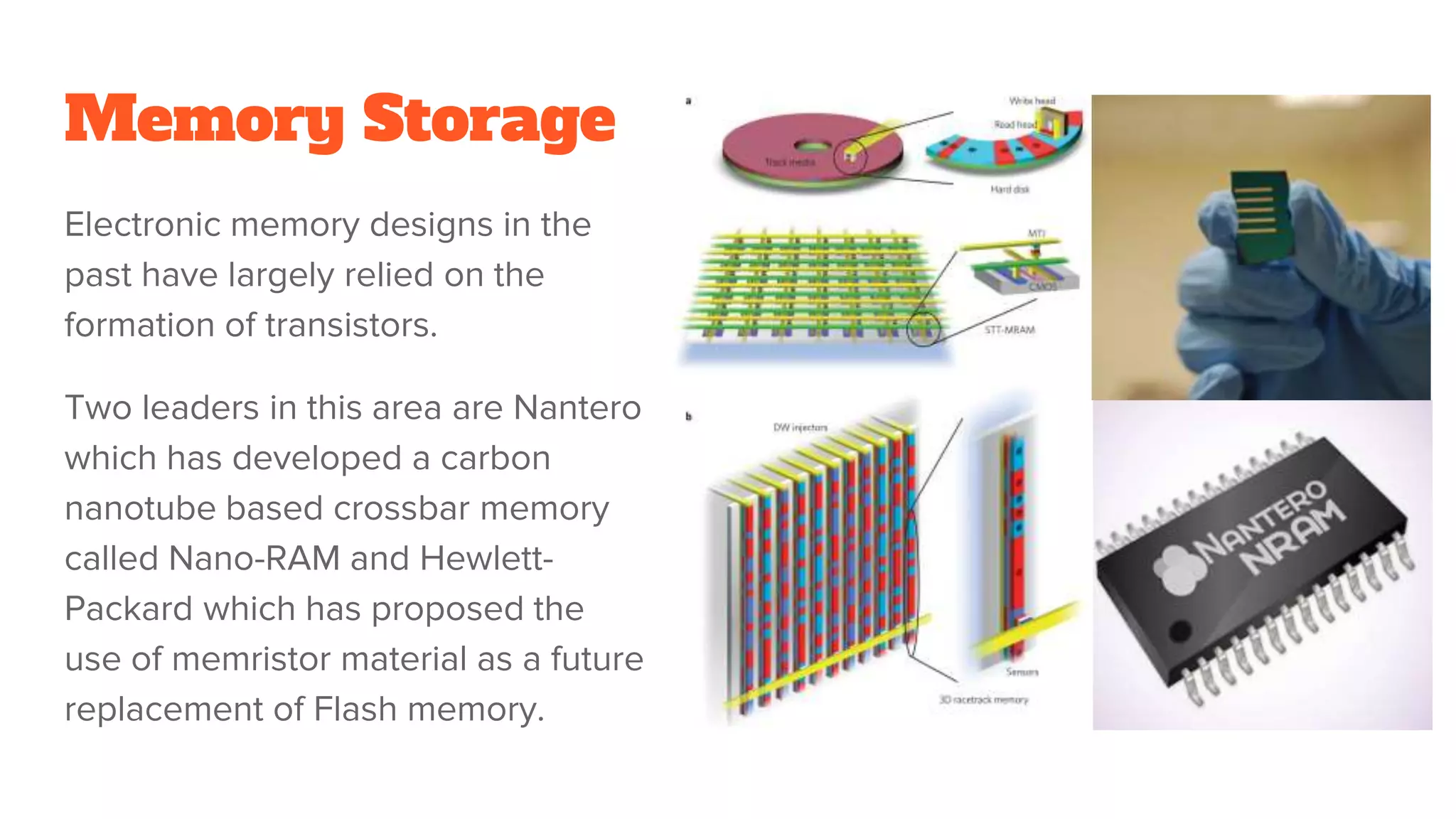
Two leaders in this area are Nantero
which has developed a carbon
nanotube based crossbar memory
called Nano-RAM and Hewlett-
Packard which has proposed the
use of memristor material as a future
replacement of Flash memory.
Nano
Biotechnology
Brain-Machine Interface
Study of DNA
Targeting Cancer
Nano Medicine
Brain-Machine Interface
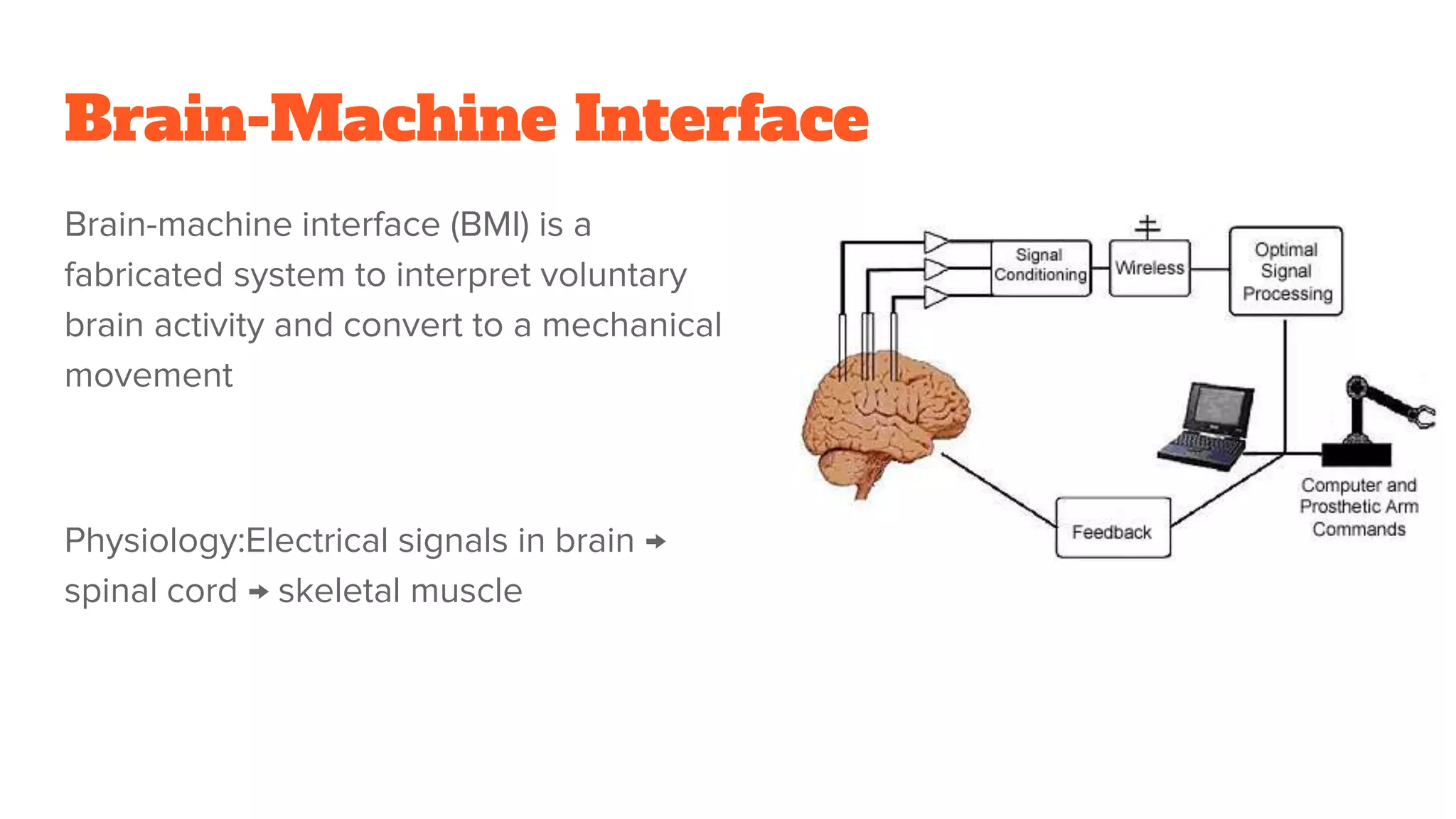
Brain-machine interface (BMI) is a
fabricated system to interpret voluntary
brain activity and convert to a mechanical
movement
Physiology:Electrical signals in brain →
spinal cord → skeletal muscle
DNA Study
DNA molecules, under the influence of an
electric field, are forced through nano-scale
channels (100 nm) on a “gel biochip”. The
molecules deform and stretch to pass through
the small channels.
This process separates DNA fragments by
length. This is part of the method used to
sequence the DNA in the human genome and
in identifying a unique DNA “fingerprint”.
Nanomedicine
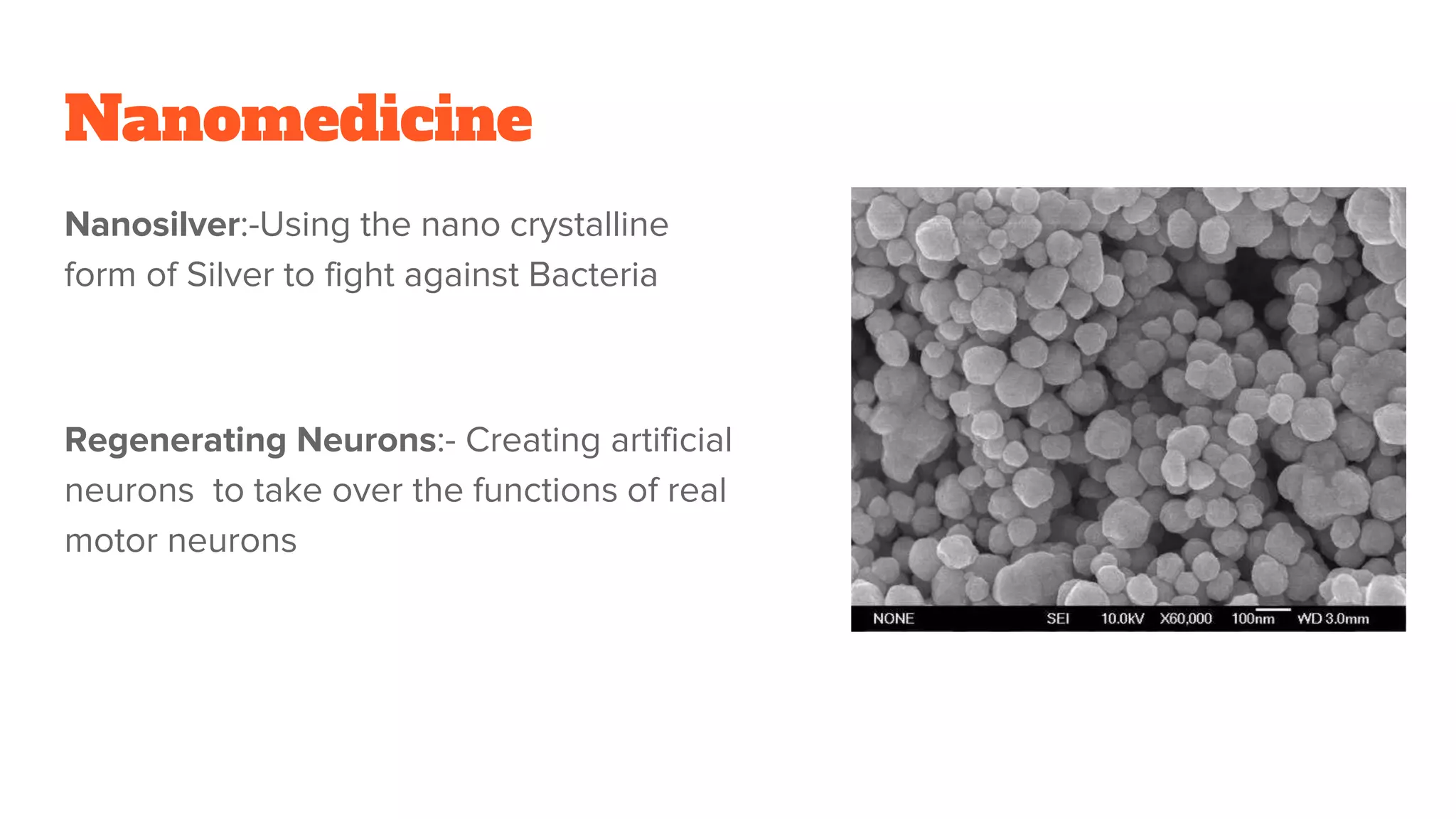
Nanosilver:-Using the nano crystalline
form of Silver to fight against Bacteria
Regenerating Neurons:- Creating artificial
neurons to take over the functions of real
motor neurons
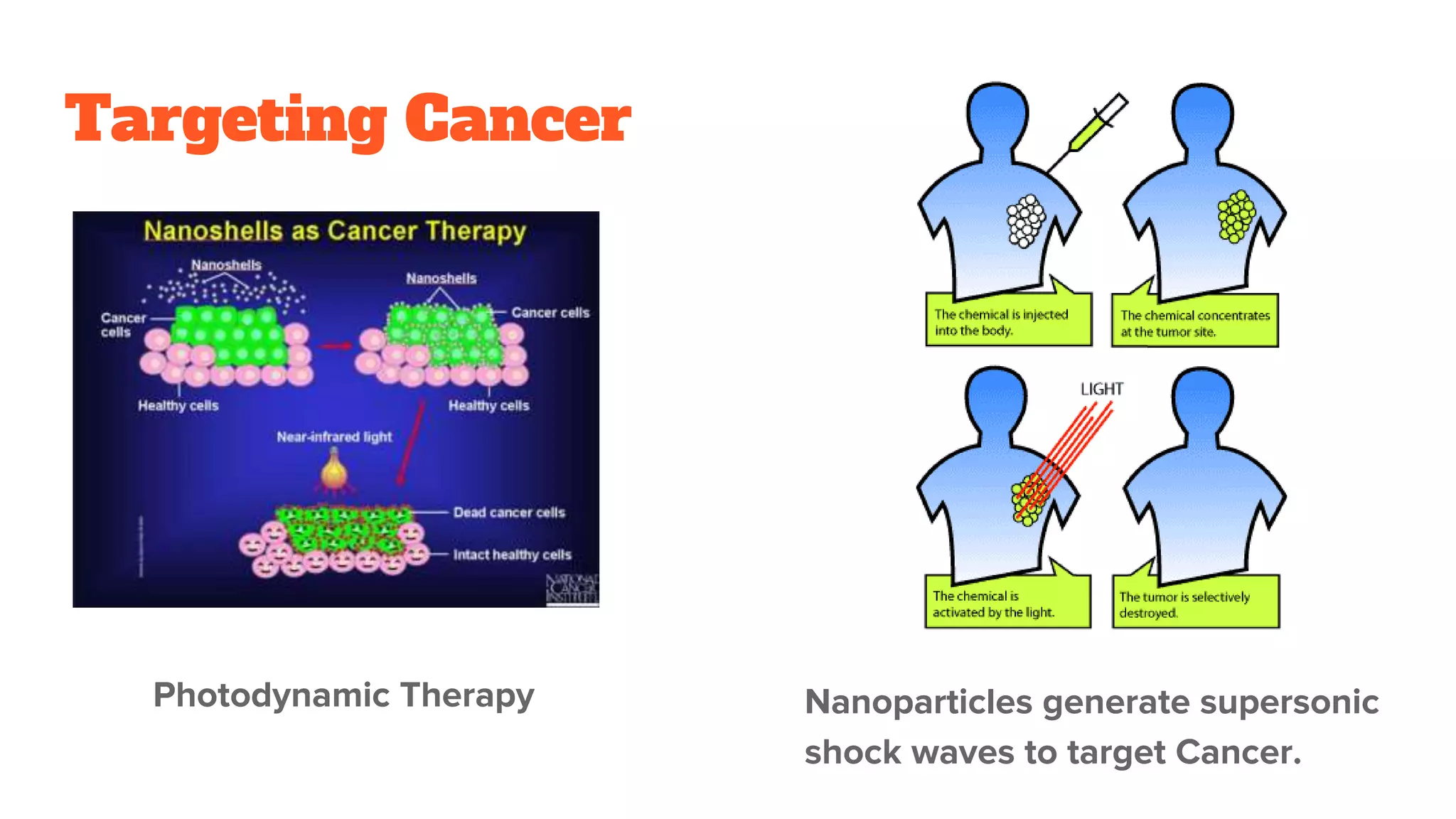
Targeting Cancer
Photodynamic Therapy Nanoparticles generate supersonic
shock waves to target Cancer.
The Future
Golden sniffers
Gold nanoparticles are used in a
variety of new "sniffers" for cancer
and other diseases. As cancerous
cells grow, genes and proteins
within cells change, and this process
emits volatile organic compounds
that can be detected--this is why
some dogs can be trained to "smell"
cancer. Nanoparticles can smell it,
too, and in tiny concentrations.
Nano-Art
The promising development of
nanotechnology has earned a great
deal of admiration from the scientific
community. Nevertheless,
breakthroughs in nanotechnology
are no longer confined to medicine,
biology, and engineering. Nano art
is an emerging field that allows us to
view the tiny world under the
microscope from an entirely new
perspective.
Color
Changing
Paint
While experimenting on strings of
gold nanoparticles, scientists at the
University of California have
stumbled upon an astonishing
observation. They’ve noticed that
the color of gold changes when a
string of its particles is stretched or
retracted, producing what one of the
scientists described as a beautiful
bright blue that morphs into purple
and then red. The finding has
inspired the scientists to create
sensors out of gold nanoparticles
that change colors when pressure is
applied to them.
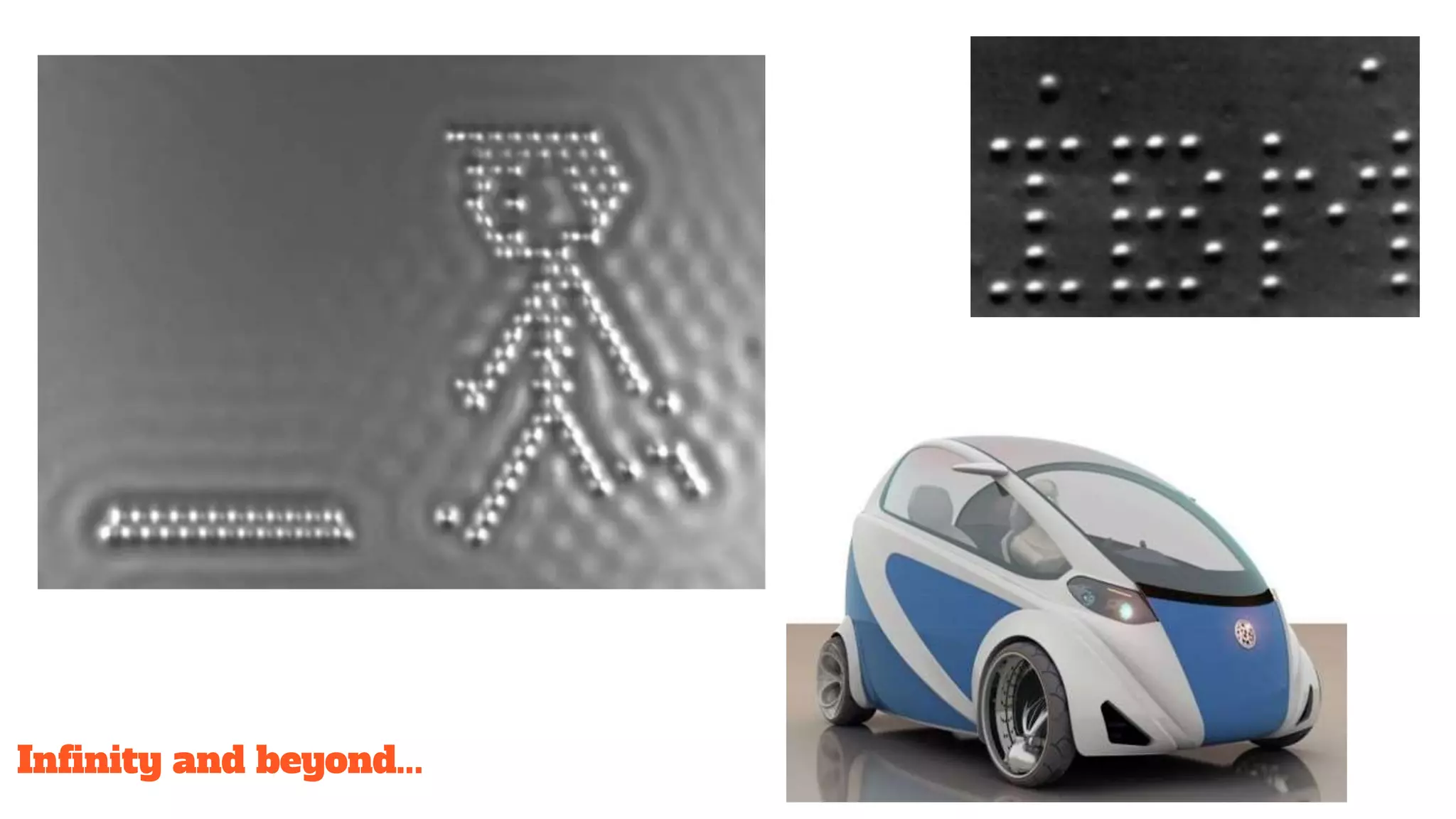
There is still more
that we can expect
to happen...
Infinity and beyond...

Nanotechnology Application (Physics)

  • 1.
  • 2.
  • 3.
  • 4.
    Electronic Industries Found around thehouse! SoCs (System on Chips) Display Industries Memory storage
  • 5.
    System on Chips Nanoelectronicsholds the promise of making computer processors more powerful than are possible with conventional semiconductor fabrication techniques. So here is a caption of Intel's Future Plan!
  • 6.
    Display Industries A quantumdot display is an experimental type of display technology. Think of quantum dots as ultra-tiny particles that will make their own light if electricity is applied to them, or if light is shone on them. That color is directly related to their size, and their color production is extremely stable.
  • 7.
    Memory Storage Electronic memorydesigns in the past have largely relied on the formation of transistors. Two leaders in this area are Nantero which has developed a carbon nanotube based crossbar memory called Nano-RAM and Hewlett- Packard which has proposed the use of memristor material as a future replacement of Flash memory.
  • 8.
    Nano Biotechnology Brain-Machine Interface Study ofDNA Targeting Cancer Nano Medicine
  • 9.
    Brain-Machine Interface Brain-machine interface(BMI) is a fabricated system to interpret voluntary brain activity and convert to a mechanical movement Physiology:Electrical signals in brain → spinal cord → skeletal muscle
  • 10.
    DNA Study DNA molecules,under the influence of an electric field, are forced through nano-scale channels (100 nm) on a “gel biochip”. The molecules deform and stretch to pass through the small channels. This process separates DNA fragments by length. This is part of the method used to sequence the DNA in the human genome and in identifying a unique DNA “fingerprint”.
  • 12.
    Nanomedicine Nanosilver:-Using the nanocrystalline form of Silver to fight against Bacteria Regenerating Neurons:- Creating artificial neurons to take over the functions of real motor neurons
  • 13.
    Targeting Cancer Photodynamic TherapyNanoparticles generate supersonic shock waves to target Cancer.
  • 14.
  • 15.
    Golden sniffers Gold nanoparticlesare used in a variety of new "sniffers" for cancer and other diseases. As cancerous cells grow, genes and proteins within cells change, and this process emits volatile organic compounds that can be detected--this is why some dogs can be trained to "smell" cancer. Nanoparticles can smell it, too, and in tiny concentrations.
  • 16.
    Nano-Art The promising developmentof nanotechnology has earned a great deal of admiration from the scientific community. Nevertheless, breakthroughs in nanotechnology are no longer confined to medicine, biology, and engineering. Nano art is an emerging field that allows us to view the tiny world under the microscope from an entirely new perspective.
  • 18.
    Color Changing Paint While experimenting onstrings of gold nanoparticles, scientists at the University of California have stumbled upon an astonishing observation. They’ve noticed that the color of gold changes when a string of its particles is stretched or retracted, producing what one of the scientists described as a beautiful bright blue that morphs into purple and then red. The finding has inspired the scientists to create sensors out of gold nanoparticles that change colors when pressure is applied to them.
  • 19.
    There is stillmore that we can expect to happen...
  • 20.