1
BY: S. MAROOF
2016
2
Using of Nanotechnology in
Bioremediation
Contents
3
 Introduction
 Nanotechnology
 Nanotechnology Tools
 Nanotechnology in Industry
 Conclusion
Introduction
4
Remediation
5
 The field of study that focuses on investigating the clean up or removal
of contaminants from the environment is called “environmental
remediation”.
 Environmental remediation techniques use various methods to remove
and/or break-down (degrade) environmental contaminants in polluted
soils, surface waters, groundwater, as well as in sediments.
D.Griege K. et al(2015) “ Nano-remediation: Tiny particles cleaning up big environmental problems” Blog
entry for inuc
Choosing the best methods
6
Nature of contaminant
Performance
Cost
Environmental impacts
D.Griege K. et al(2015) “ Nano-remediation: Tiny particles cleaning up big environmental problems” Blog entry for
inuc
Remediation methods
7
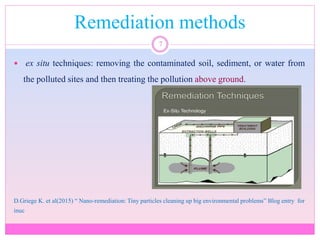
 ex situ techniques: removing the contaminated soil, sediment, or water from
the polluted sites and then treating the pollution above ground.
D.Griege K. et al(2015) “ Nano-remediation: Tiny particles cleaning up big environmental problems” Blog entry for
inuc
Remediation methods
8
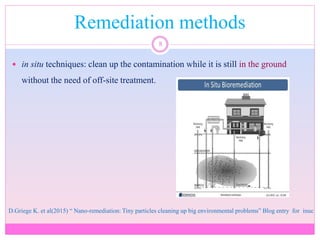
 in situ techniques: clean up the contamination while it is still in the ground
without the need of off-site treatment.
D.Griege K. et al(2015) “ Nano-remediation: Tiny particles cleaning up big environmental problems” Blog entry for inuc
Bioremediation
9
 Bioremediation is a pollution control technology that uses biological system to
catalyze the degradation or transformation of various toxic chemicals to less
toxic forms.
 Bioremediation provides a good clean-up strategy for some types of waste, but
as it is expected, it will not be useful for all.
Shirvastavana J.N.2012”Laboratory scale Bioremediation of ….” Bioremediation & Biodegradation
Rizwan Md. 2014 “ Ecofriendly application of nanomaterial: Nano bioremediation” Journal of Nanoparticles
Bioremediation tools
10
 Various substances such as the right temperature, nutrients, and amount
of oxygen are used to enhance the growth of whatever pollution-eating
microbes (indigenous microorganisms) might already be living at the
contaminated site.
 In the second, less common case, specialized microbes
 (exogenous microorganisms) are added to degrade the contaminants.
. Rizwan Md. 2014 “ Ecofriendly application of nanomaterial: Nano bioremediation” Journal of
Nanoparticles
Bioremediation tools
11
.Shirvastavana J.N.2012”Laboratory scale Bioremediation of ….” Bioremediation & Biodegradation
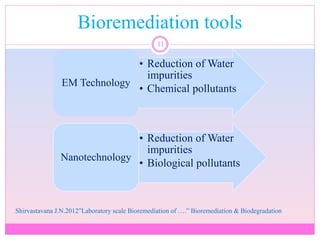
• Reduction of Water
impurities
• Chemical pollutants
EM Technology
• Reduction of Water
impurities
• Biological pollutants
Nanotechnology
Nanotechnology
12
Nanotechnology
13
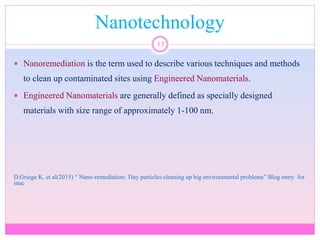
 Nanoremediation is the term used to describe various techniques and methods
to clean up contaminated sites using Engineered Nanomaterials.
 Engineered Nanomaterials are generally defined as specially designed
materials with size range of approximately 1-100 nm.
D.Griege K. et al(2015) “ Nano-remediation: Tiny particles cleaning up big environmental problems” Blog entry for
inuc
Potential of Nanotechnology
14
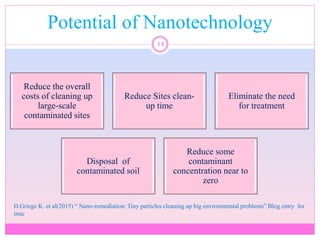
Reduce the overall
costs of cleaning up
large-scale
contaminated sites
Reduce Sites clean-
up time
Eliminate the need
for treatment
Disposal of
contaminated soil
Reduce some
contaminant
concentration near to
zero
D.Griege K. et al(2015) “ Nano-remediation: Tiny particles cleaning up big environmental problems” Blog entry for
inuc
Industry Overview
15
1997
• $432
millions
2005
• $ 4.1
millions
2015
• $1 trillion
“Current Strategies for engineering controls in nanomaterials production….”2013
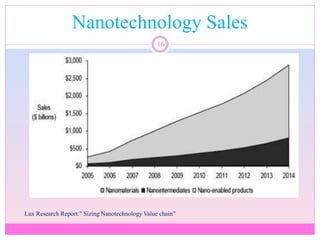
Nanotechnology Sales
16
Lux Research Report:” Sizing Nanotechnology Value chain”
Bioremediation in industry
17
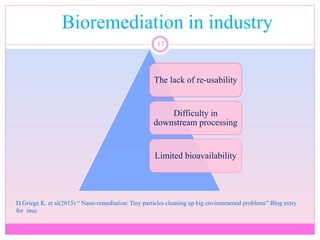
The lack of re-usability
Difficulty in
downstream processing
Limited bioavailability
D.Griege K. et al(2015) “ Nano-remediation: Tiny particles cleaning up big environmental problems” Blog entry
for inuc
Why We Use Nanotechnology?
18
D.Griege K. et al(2015) “ Nano-remediation: Tiny particles cleaning up big environmental problems”
Blog entry for inuc
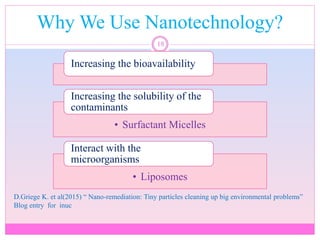
Increasing the bioavailability
• Surfactant Micelles
Increasing the solubility of the
contaminants
• Liposomes
Interact with the
microorganisms
Nanotechnology Tools
19
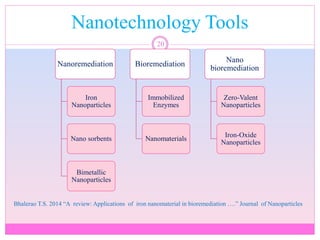
Nanotechnology Tools
20
Bhalerao T.S. 2014 “A review: Applications of iron nanomaterial in bioremediation ….” Journal of Nanoparticles
Nanoremediation
Iron
Nanoparticles
Nano sorbents
Bimetallic
Nanoparticles
Bioremediation
Immobilized
Enzymes
Nanomaterials
Nano
bioremediation
Zero-Valent
Nanoparticles
Iron-Oxide
Nanoparticles
Nanotechnology Tools:
Iron Nanoparticles
21
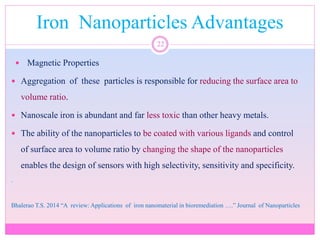
Iron Nanoparticles Advantages
22
 Magnetic Properties
 Aggregation of these particles is responsible for reducing the surface area to
volume ratio.
 Nanoscale iron is abundant and far less toxic than other heavy metals.
 The ability of the nanoparticles to be coated with various ligands and control
of surface area to volume ratio by changing the shape of the nanoparticles
enables the design of sensors with high selectivity, sensitivity and specificity.
.
Bhalerao T.S. 2014 “A review: Applications of iron nanomaterial in bioremediation ….” Journal of Nanoparticles
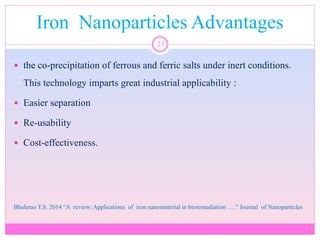
Iron Nanoparticles Advantages
23
 the co-precipitation of ferrous and ferric salts under inert conditions.
This technology imparts great industrial applicability :
 Easier separation
 Re-usability
 Cost-effectiveness.
Bhalerao T.S. 2014 “A review: Applications of iron nanomaterial in bioremediation ….” Journal of Nanoparticles
Iron Nanoparticles Disadvantages
24
 Iron rusts when combines with oxygen to form iron oxide, But polymer
coating or other entrapping materials protects the iron surface from rusting in
the presence of water.
 Iron nanoparticles may migrate only a few inches to a few feet from the point
of injection.
 The mobility of nanoparticles in the subsurface environment depends on the
particle size, solution pH, ionic strength, soil composition, ground water flow
velocity and so on.
D.Griege K. et al(2015) “ Nano-remediation: Tiny particles cleaning up big environmental problems” Blog entry for inuc
Bhalerao T.S. 2014 “A review: Applications of iron nanomaterial in bioremediation ….” Journal of Nanoparticles
Iron Nanoparticles Applications
25
Rizwan Md. 2014 “ Ecofriendly application of nanomaterial: Nano bioremediation” Journal of Nanoparticles
Mehndirata P. 2013”Environmental pollution and Nanotechnology” Environmental and Pollution
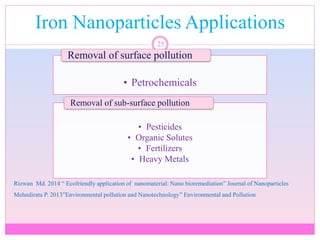
• Petrochemicals
Removal of surface pollution
• Pesticides
• Organic Solutes
• Fertilizers
• Heavy Metals
Removal of sub-surface pollution
Iron Nanoparticles Applications
26
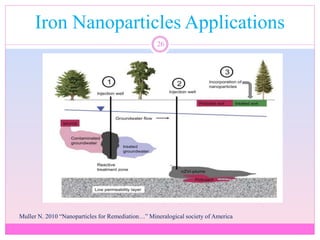
Muller N. 2010 “Nanoparticles for Remediation…” Mineralogical society of America
27
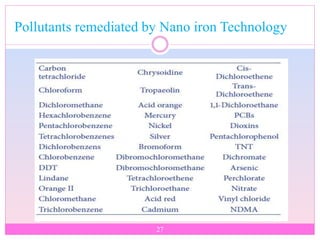
Pollutants remediated by Nano iron Technology
28
Nanotechnology Tools
Nano sorbents
Nano sorbents
29
Savage N.2005 “Nanomaterials and water purification: Opportunities and challenges: Journal of nanoparticle
research.
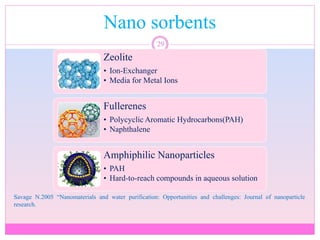
Zeolite
• Ion-Exchanger
• Media for Metal Ions
Fullerenes
• Polycyclic Aromatic Hydrocarbons(PAH)
• Naphthalene
Amphiphilic Nanoparticles
• PAH
• Hard-to-reach compounds in aqueous solution
Nanotechnology Tools
Single-Enzyme Nanoparticles
30
Enzyme Disadvantages
31
Rizwan Md. 2014 “ Ecofriendly application of nanomaterial: Nano bioremediation” Journal of Nanoparticles
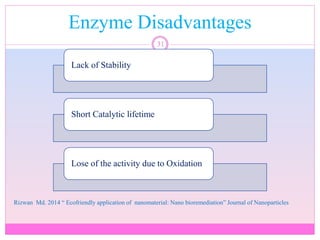
Lack of Stability
Short Catalytic lifetime
Lose of the activity due to Oxidation
Single-Enzyme Nanoparticles
32
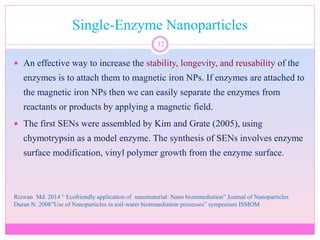
 An effective way to increase the stability, longevity, and reusability of the
enzymes is to attach them to magnetic iron NPs. If enzymes are attached to
the magnetic iron NPs then we can easily separate the enzymes from
reactants or products by applying a magnetic field.
 The first SENs were assembled by Kim and Grate (2005), using
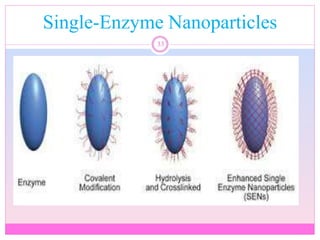
chymotrypsin as a model enzyme. The synthesis of SENs involves enzyme
surface modification, vinyl polymer growth from the enzyme surface.
Rizwan Md. 2014 “ Ecofriendly application of nanomaterial: Nano bioremediation” Journal of Nanoparticles
Duran N. 2008”Use of Nanoparticles in soil-water bioremediation processes” symposium ISMOM
Single-Enzyme Nanoparticles
33
Nanotechnology Tools:
Zero-Valent Iron Nanoparticles
34
Zero-Valent Iron Nanoparticles
35
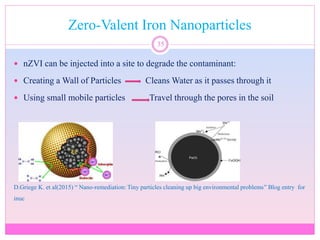
 nZVI can be injected into a site to degrade the contaminant:
 Creating a Wall of Particles Cleans Water as it passes through it
 Using small mobile particles Travel through the pores in the soil
D.Griege K. et al(2015) “ Nano-remediation: Tiny particles cleaning up big environmental problems” Blog entry for
inuc
nzVI Iron Nanoparticles advantages
36
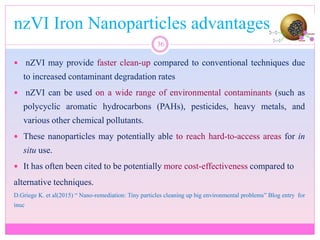
 nZVI may provide faster clean-up compared to conventional techniques due
to increased contaminant degradation rates
 nZVI can be used on a wide range of environmental contaminants (such as
polycyclic aromatic hydrocarbons (PAHs), pesticides, heavy metals, and
various other chemical pollutants.
 These nanoparticles may potentially able to reach hard-to-access areas for in
situ use.
 It has often been cited to be potentially more cost-effectiveness compared to
alternative techniques.
D.Griege K. et al(2015) “ Nano-remediation: Tiny particles cleaning up big environmental problems” Blog entry for
inuc
nzVI Iron Nanoparticles risks
37
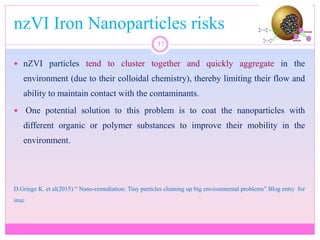
 nZVI particles tend to cluster together and quickly aggregate in the
environment (due to their colloidal chemistry), thereby limiting their flow and
ability to maintain contact with the contaminants.
 One potential solution to this problem is to coat the nanoparticles with
different organic or polymer substances to improve their mobility in the
environment.
D.Griege K. et al(2015) “ Nano-remediation: Tiny particles cleaning up big environmental problems” Blog entry for
inuc
nzVI Iron Nanoparticles risks
38
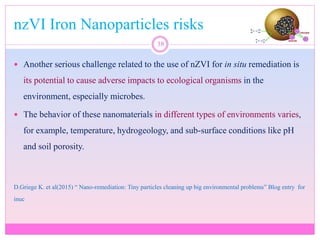
 Another serious challenge related to the use of nZVI for in situ remediation is
its potential to cause adverse impacts to ecological organisms in the
environment, especially microbes.
 The behavior of these nanomaterials in different types of environments varies,
for example, temperature, hydrogeology, and sub-surface conditions like pH
and soil porosity.
D.Griege K. et al(2015) “ Nano-remediation: Tiny particles cleaning up big environmental problems” Blog entry for
inuc
Challenges about nzVI migration
39
There are some questions about the migration of nanoparticles:
 How mobile are the particles?
 Do they have the capacity to carry pollution into a new,
unintended, environmental compartment?
 What exposure level is considered safe?
.
D.Griege K. et al(2015) “ Nano-remediation: Tiny particles cleaning up big environmental problems” Blog entry for
inuc
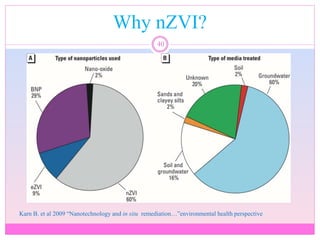
Why nZVI?
40
Karn B. et al 2009 “Nanotechnology and in situ remediation…”environmental health perspective
Nanotechnology Tools:
Nanomaterials
41
Nanomaterials
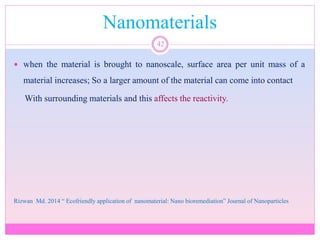
42
 when the material is brought to nanoscale, surface area per unit mass of a
material increases; So a larger amount of the material can come into contact
With surrounding materials and this affects the reactivity.
Rizwan Md. 2014 “ Ecofriendly application of nanomaterial: Nano bioremediation” Journal of Nanoparticles
43
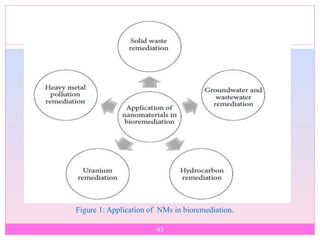
Figure 1: Application of NMs in bioremediation.
44
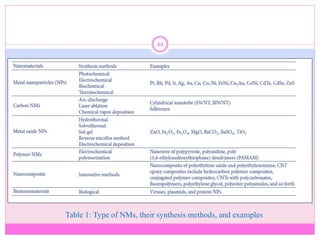
Table 1: Type of NMs, their synthesis methods, and examples
Other Nanostructures
45
Dendrimers
46
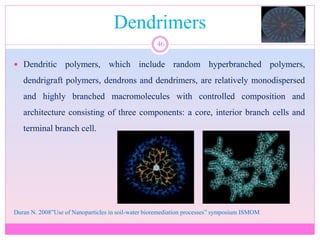
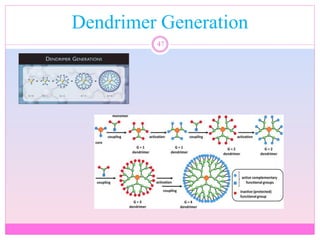
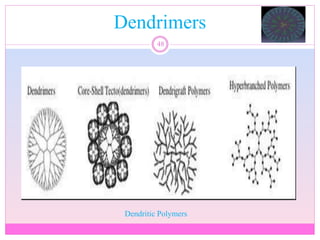
 Dendritic polymers, which include random hyperbranched polymers,
dendrigraft polymers, dendrons and dendrimers, are relatively monodispersed
and highly branched macromolecules with controlled composition and
architecture consisting of three components: a core, interior branch cells and
terminal branch cell.
Duran N. 2008”Use of Nanoparticles in soil-water bioremediation processes” symposium ISMOM
Dendrimer Generation
47
Dendrimers
48
Dendritic Polymers
Dendrimer Applications
49
 Utilizing titanium dioxide (TiO2) porous ceramic filters of which the
pores were impregnated with an alkylated poly(propylene imine)
dendrimer, poly(ethylene imine) hyperbranched polymer or β-
cyclodextrin, thus resulting in hybrid organic/inorganic filter modules
of high mechanical strength and high surface area.
Duran N. 2008”Use of Nanoparticles in soil-water bioremediation processes” symposium ISMOM
Nano structures
50
Rizwan Md. 2014 “ Ecofriendly application of nanomaterial: Nano bioremediation” Journal of Nanoparticles
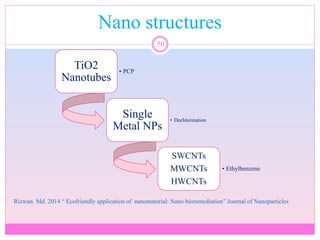
TiO2
Nanotubes
• PCP
Single
Metal NPs
• Dechlorination
SWCNTs
MWCNTs
HWCNTs
• Ethylbenzene
Nanostructure
51
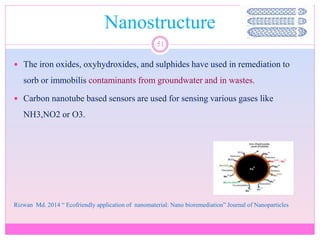
 The iron oxides, oxyhydroxides, and sulphides have used in remediation to
sorb or immobilis contaminants from groundwater and in wastes.
 Carbon nanotube based sensors are used for sensing various gases like
NH3,NO2 or O3.
Rizwan Md. 2014 “ Ecofriendly application of nanomaterial: Nano bioremediation” Journal of Nanoparticles
Nanotechnology in Industry
52
Nanotechnology in Industry
53
 Treatment/ Remediation
 Sensing/Detection
 Pollution/Prevention
Bhalerao T.S. 2014 “A review: Applications of iron nanomaterial in bioremediation ….” Journal of
Nanoparticles
Prevention
54
 Pollution prevention is defined as the reduction of pollutants at the source
 Metal oxide Nano catalysts, chiefly gold Nano catalyst, show promising results
for preventing or reducing the pollution at the source.
Mehndiratta P. 2013”Environmental pollution and Nanotechnology” Environmental and pollution
Remediation
55
 Nanoparticles can easily remediate or degrade contaminants of underground water
because they can quickly move by the flow.
 They stay active for a long period of time
 They have high enzymatic activity because of high surface to volume ratio
 Nanoparticles can attach to the solid surfaces when they use in an free state, so they
widely use for wastewater treatment of as a filter for gases.
Mehndiratta P. 2013”Environmental pollution and Nanotechnology” Environmental and pollution
Sensing
56
 Nanotechnology has great potential for making a sensor for monitoring pollutions:
 the ability of the nanoparticles to be coated with wide range of chemical and biological
ligands helps in imparting the specificity to the sensor.
 the surface to volume ratio of the nanoparticles can be easily controlled by varying the
size and shape of the nanoparticles thus imparting control over the interaction quality
with the analyte molecule.
Mehndiratta P. 2013”Environmental pollution and Nanotechnology” Environmental and pollution
Sensing
57
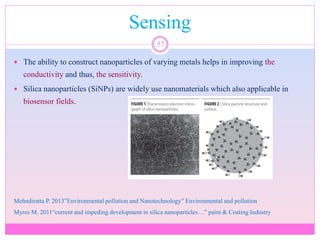
 The ability to construct nanoparticles of varying metals helps in improving the
conductivity and thus, the sensitivity.
 Silica nanoparticles (SiNPs) are widely use nanomaterials which also applicable in
biosensor fields.
Mehndiratta P. 2013”Environmental pollution and Nanotechnology” Environmental and pollution
Myres M. 2011“current and impeding development in silica nanoparticles…” paint & Coating Industry
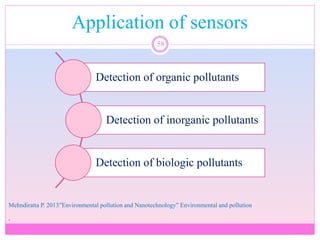
Application of sensors
58
Mehndiratta P. 2013”Environmental pollution and Nanotechnology” Environmental and pollution

Detection of organic pollutants
Detection of inorganic pollutants
Detection of biologic pollutants
Using of nanoparticle sensors for detection of organic pollutions
59
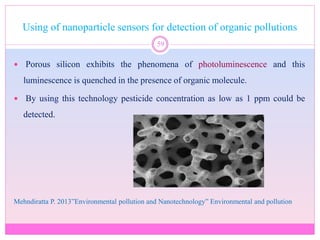
 Porous silicon exhibits the phenomena of photoluminescence and this
luminescence is quenched in the presence of organic molecule.
 By using this technology pesticide concentration as low as 1 ppm could be
detected.
Mehndiratta P. 2013”Environmental pollution and Nanotechnology” Environmental and pollution
Using of sensors for detection of inorganic pollutions
60
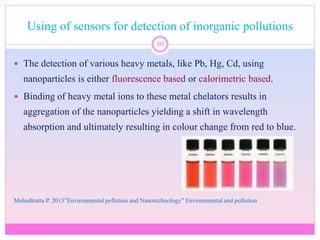
 The detection of various heavy metals, like Pb, Hg, Cd, using
nanoparticles is either fluorescence based or calorimetric based.
 Binding of heavy metal ions to these metal chelators results in
aggregation of the nanoparticles yielding a shift in wavelength
absorption and ultimately resulting in colour change from red to blue.
Mehndiratta P. 2013”Environmental pollution and Nanotechnology” Environmental and pollution
Using of sensors for detection of biological pollutions
61
 Biological contaminants include living organisms (generally bacteria) or their
by-products that can be toxic to human health.
 The major bacterial pollutant belongs to enterobacteriaceae family.
 Coated gold nanoparticles with IgG proved successful for sensing S. aureus
and S. saprophyticus.
 Quantum dots (QD) are also used as a fluorescent labeling system for detection
of microorganisms like Giardia.
Mehndiratta P. 2013”Environmental pollution and Nanotechnology” Environmental and pollution
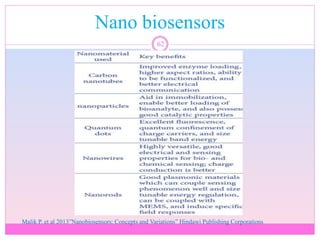
Nano biosensors
62
Malik P. et al 2013”Nanobiosensors: Concepts and Variations” Hindawi Publishing Corporations
Nanotechnology-based Biosensors
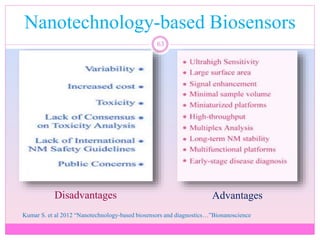
63
Disadvantages Advantages
Kumar S. et al 2012 “Nanotechnology-based biosensors and diagnostics…”Bionanoscience
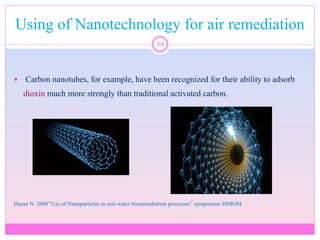
Using of Nanotechnology for air remediation
64
 Carbon nanotubes, for example, have been recognized for their ability to adsorb
dioxin much more strongly than traditional activated carbon.
Duran N. 2008”Use of Nanoparticles in soil-water bioremediation processes” symposium ISMOM
Conclusion
65
 Advances in Nano scale science and engineering suggest that many of the
current problems involving water quality could be resolved or greatly
ameliorated using Nano sorbents , Nano catalysts , bioactive nanoparticles ,
nanostructured catalytic membranes and nanoparticle enhanced filtration
among other products and processes resulting from the development of
nanotechnology.
Duran N. 2008”Use of Nanoparticles in soil-water bioremediation processes” symposium ISMOM
Conclusion
66
 The use of engineered nanomaterials for environmental remediation
necessitates the careful balancing of the potential benefits as well as
risks and uncertainties together with site characteristics in order to
decide upon the best treatment option for a given site.
D.Griege K. et al(2015) “ Nano-remediation: Tiny particles cleaning up big environmental problems” Blog entry for
inuc
Thank You!
67

Nanotechnology

  • 1.
  • 2.
    BY: S. MAROOF 2016 2 Usingof Nanotechnology in Bioremediation
  • 3.
    Contents 3  Introduction  Nanotechnology Nanotechnology Tools  Nanotechnology in Industry  Conclusion
  • 4.
  • 5.
    Remediation 5  The fieldof study that focuses on investigating the clean up or removal of contaminants from the environment is called “environmental remediation”.  Environmental remediation techniques use various methods to remove and/or break-down (degrade) environmental contaminants in polluted soils, surface waters, groundwater, as well as in sediments. D.Griege K. et al(2015) “ Nano-remediation: Tiny particles cleaning up big environmental problems” Blog entry for inuc
  • 6.
    Choosing the bestmethods 6 Nature of contaminant Performance Cost Environmental impacts D.Griege K. et al(2015) “ Nano-remediation: Tiny particles cleaning up big environmental problems” Blog entry for inuc
  • 7.
    Remediation methods 7  exsitu techniques: removing the contaminated soil, sediment, or water from the polluted sites and then treating the pollution above ground. D.Griege K. et al(2015) “ Nano-remediation: Tiny particles cleaning up big environmental problems” Blog entry for inuc
  • 8.
    Remediation methods 8  insitu techniques: clean up the contamination while it is still in the ground without the need of off-site treatment. D.Griege K. et al(2015) “ Nano-remediation: Tiny particles cleaning up big environmental problems” Blog entry for inuc
  • 9.
    Bioremediation 9  Bioremediation isa pollution control technology that uses biological system to catalyze the degradation or transformation of various toxic chemicals to less toxic forms.  Bioremediation provides a good clean-up strategy for some types of waste, but as it is expected, it will not be useful for all. Shirvastavana J.N.2012”Laboratory scale Bioremediation of ….” Bioremediation & Biodegradation Rizwan Md. 2014 “ Ecofriendly application of nanomaterial: Nano bioremediation” Journal of Nanoparticles
  • 10.
    Bioremediation tools 10  Varioussubstances such as the right temperature, nutrients, and amount of oxygen are used to enhance the growth of whatever pollution-eating microbes (indigenous microorganisms) might already be living at the contaminated site.  In the second, less common case, specialized microbes  (exogenous microorganisms) are added to degrade the contaminants. . Rizwan Md. 2014 “ Ecofriendly application of nanomaterial: Nano bioremediation” Journal of Nanoparticles
  • 11.
    Bioremediation tools 11 .Shirvastavana J.N.2012”Laboratoryscale Bioremediation of ….” Bioremediation & Biodegradation • Reduction of Water impurities • Chemical pollutants EM Technology • Reduction of Water impurities • Biological pollutants Nanotechnology
  • 12.
  • 13.
    Nanotechnology 13  Nanoremediation isthe term used to describe various techniques and methods to clean up contaminated sites using Engineered Nanomaterials.  Engineered Nanomaterials are generally defined as specially designed materials with size range of approximately 1-100 nm. D.Griege K. et al(2015) “ Nano-remediation: Tiny particles cleaning up big environmental problems” Blog entry for inuc
  • 14.
    Potential of Nanotechnology 14 Reducethe overall costs of cleaning up large-scale contaminated sites Reduce Sites clean- up time Eliminate the need for treatment Disposal of contaminated soil Reduce some contaminant concentration near to zero D.Griege K. et al(2015) “ Nano-remediation: Tiny particles cleaning up big environmental problems” Blog entry for inuc
  • 15.
    Industry Overview 15 1997 • $432 millions 2005 •$ 4.1 millions 2015 • $1 trillion “Current Strategies for engineering controls in nanomaterials production….”2013
  • 16.
    Nanotechnology Sales 16 Lux ResearchReport:” Sizing Nanotechnology Value chain”
  • 17.
    Bioremediation in industry 17 Thelack of re-usability Difficulty in downstream processing Limited bioavailability D.Griege K. et al(2015) “ Nano-remediation: Tiny particles cleaning up big environmental problems” Blog entry for inuc
  • 18.
    Why We UseNanotechnology? 18 D.Griege K. et al(2015) “ Nano-remediation: Tiny particles cleaning up big environmental problems” Blog entry for inuc Increasing the bioavailability • Surfactant Micelles Increasing the solubility of the contaminants • Liposomes Interact with the microorganisms
  • 19.
  • 20.
    Nanotechnology Tools 20 Bhalerao T.S.2014 “A review: Applications of iron nanomaterial in bioremediation ….” Journal of Nanoparticles Nanoremediation Iron Nanoparticles Nano sorbents Bimetallic Nanoparticles Bioremediation Immobilized Enzymes Nanomaterials Nano bioremediation Zero-Valent Nanoparticles Iron-Oxide Nanoparticles
  • 21.
  • 22.
    Iron Nanoparticles Advantages 22 Magnetic Properties  Aggregation of these particles is responsible for reducing the surface area to volume ratio.  Nanoscale iron is abundant and far less toxic than other heavy metals.  The ability of the nanoparticles to be coated with various ligands and control of surface area to volume ratio by changing the shape of the nanoparticles enables the design of sensors with high selectivity, sensitivity and specificity. . Bhalerao T.S. 2014 “A review: Applications of iron nanomaterial in bioremediation ….” Journal of Nanoparticles
  • 23.
    Iron Nanoparticles Advantages 23 the co-precipitation of ferrous and ferric salts under inert conditions. This technology imparts great industrial applicability :  Easier separation  Re-usability  Cost-effectiveness. Bhalerao T.S. 2014 “A review: Applications of iron nanomaterial in bioremediation ….” Journal of Nanoparticles
  • 24.
    Iron Nanoparticles Disadvantages 24 Iron rusts when combines with oxygen to form iron oxide, But polymer coating or other entrapping materials protects the iron surface from rusting in the presence of water.  Iron nanoparticles may migrate only a few inches to a few feet from the point of injection.  The mobility of nanoparticles in the subsurface environment depends on the particle size, solution pH, ionic strength, soil composition, ground water flow velocity and so on. D.Griege K. et al(2015) “ Nano-remediation: Tiny particles cleaning up big environmental problems” Blog entry for inuc Bhalerao T.S. 2014 “A review: Applications of iron nanomaterial in bioremediation ….” Journal of Nanoparticles
  • 25.
    Iron Nanoparticles Applications 25 RizwanMd. 2014 “ Ecofriendly application of nanomaterial: Nano bioremediation” Journal of Nanoparticles Mehndirata P. 2013”Environmental pollution and Nanotechnology” Environmental and Pollution • Petrochemicals Removal of surface pollution • Pesticides • Organic Solutes • Fertilizers • Heavy Metals Removal of sub-surface pollution
  • 26.
    Iron Nanoparticles Applications 26 MullerN. 2010 “Nanoparticles for Remediation…” Mineralogical society of America
  • 27.
    27 Pollutants remediated byNano iron Technology
  • 28.
  • 29.
    Nano sorbents 29 Savage N.2005“Nanomaterials and water purification: Opportunities and challenges: Journal of nanoparticle research. Zeolite • Ion-Exchanger • Media for Metal Ions Fullerenes • Polycyclic Aromatic Hydrocarbons(PAH) • Naphthalene Amphiphilic Nanoparticles • PAH • Hard-to-reach compounds in aqueous solution
  • 30.
  • 31.
    Enzyme Disadvantages 31 Rizwan Md.2014 “ Ecofriendly application of nanomaterial: Nano bioremediation” Journal of Nanoparticles Lack of Stability Short Catalytic lifetime Lose of the activity due to Oxidation
  • 32.
    Single-Enzyme Nanoparticles 32  Aneffective way to increase the stability, longevity, and reusability of the enzymes is to attach them to magnetic iron NPs. If enzymes are attached to the magnetic iron NPs then we can easily separate the enzymes from reactants or products by applying a magnetic field.  The first SENs were assembled by Kim and Grate (2005), using chymotrypsin as a model enzyme. The synthesis of SENs involves enzyme surface modification, vinyl polymer growth from the enzyme surface. Rizwan Md. 2014 “ Ecofriendly application of nanomaterial: Nano bioremediation” Journal of Nanoparticles Duran N. 2008”Use of Nanoparticles in soil-water bioremediation processes” symposium ISMOM
  • 33.
  • 34.
  • 35.
    Zero-Valent Iron Nanoparticles 35 nZVI can be injected into a site to degrade the contaminant:  Creating a Wall of Particles Cleans Water as it passes through it  Using small mobile particles Travel through the pores in the soil D.Griege K. et al(2015) “ Nano-remediation: Tiny particles cleaning up big environmental problems” Blog entry for inuc
  • 36.
    nzVI Iron Nanoparticlesadvantages 36  nZVI may provide faster clean-up compared to conventional techniques due to increased contaminant degradation rates  nZVI can be used on a wide range of environmental contaminants (such as polycyclic aromatic hydrocarbons (PAHs), pesticides, heavy metals, and various other chemical pollutants.  These nanoparticles may potentially able to reach hard-to-access areas for in situ use.  It has often been cited to be potentially more cost-effectiveness compared to alternative techniques. D.Griege K. et al(2015) “ Nano-remediation: Tiny particles cleaning up big environmental problems” Blog entry for inuc
  • 37.
    nzVI Iron Nanoparticlesrisks 37  nZVI particles tend to cluster together and quickly aggregate in the environment (due to their colloidal chemistry), thereby limiting their flow and ability to maintain contact with the contaminants.  One potential solution to this problem is to coat the nanoparticles with different organic or polymer substances to improve their mobility in the environment. D.Griege K. et al(2015) “ Nano-remediation: Tiny particles cleaning up big environmental problems” Blog entry for inuc
  • 38.
    nzVI Iron Nanoparticlesrisks 38  Another serious challenge related to the use of nZVI for in situ remediation is its potential to cause adverse impacts to ecological organisms in the environment, especially microbes.  The behavior of these nanomaterials in different types of environments varies, for example, temperature, hydrogeology, and sub-surface conditions like pH and soil porosity. D.Griege K. et al(2015) “ Nano-remediation: Tiny particles cleaning up big environmental problems” Blog entry for inuc
  • 39.
    Challenges about nzVImigration 39 There are some questions about the migration of nanoparticles:  How mobile are the particles?  Do they have the capacity to carry pollution into a new, unintended, environmental compartment?  What exposure level is considered safe? . D.Griege K. et al(2015) “ Nano-remediation: Tiny particles cleaning up big environmental problems” Blog entry for inuc
  • 40.
    Why nZVI? 40 Karn B.et al 2009 “Nanotechnology and in situ remediation…”environmental health perspective
  • 41.
  • 42.
    Nanomaterials 42  when thematerial is brought to nanoscale, surface area per unit mass of a material increases; So a larger amount of the material can come into contact With surrounding materials and this affects the reactivity. Rizwan Md. 2014 “ Ecofriendly application of nanomaterial: Nano bioremediation” Journal of Nanoparticles
  • 43.
    43 Figure 1: Applicationof NMs in bioremediation.
  • 44.
    44 Table 1: Typeof NMs, their synthesis methods, and examples
  • 45.
  • 46.
    Dendrimers 46  Dendritic polymers,which include random hyperbranched polymers, dendrigraft polymers, dendrons and dendrimers, are relatively monodispersed and highly branched macromolecules with controlled composition and architecture consisting of three components: a core, interior branch cells and terminal branch cell. Duran N. 2008”Use of Nanoparticles in soil-water bioremediation processes” symposium ISMOM
  • 47.
  • 48.
  • 49.
    Dendrimer Applications 49  Utilizingtitanium dioxide (TiO2) porous ceramic filters of which the pores were impregnated with an alkylated poly(propylene imine) dendrimer, poly(ethylene imine) hyperbranched polymer or β- cyclodextrin, thus resulting in hybrid organic/inorganic filter modules of high mechanical strength and high surface area. Duran N. 2008”Use of Nanoparticles in soil-water bioremediation processes” symposium ISMOM
  • 50.
    Nano structures 50 Rizwan Md.2014 “ Ecofriendly application of nanomaterial: Nano bioremediation” Journal of Nanoparticles TiO2 Nanotubes • PCP Single Metal NPs • Dechlorination SWCNTs MWCNTs HWCNTs • Ethylbenzene
  • 51.
    Nanostructure 51  The ironoxides, oxyhydroxides, and sulphides have used in remediation to sorb or immobilis contaminants from groundwater and in wastes.  Carbon nanotube based sensors are used for sensing various gases like NH3,NO2 or O3. Rizwan Md. 2014 “ Ecofriendly application of nanomaterial: Nano bioremediation” Journal of Nanoparticles
  • 52.
  • 53.
    Nanotechnology in Industry 53 Treatment/ Remediation  Sensing/Detection  Pollution/Prevention Bhalerao T.S. 2014 “A review: Applications of iron nanomaterial in bioremediation ….” Journal of Nanoparticles
  • 54.
    Prevention 54  Pollution preventionis defined as the reduction of pollutants at the source  Metal oxide Nano catalysts, chiefly gold Nano catalyst, show promising results for preventing or reducing the pollution at the source. Mehndiratta P. 2013”Environmental pollution and Nanotechnology” Environmental and pollution
  • 55.
    Remediation 55  Nanoparticles caneasily remediate or degrade contaminants of underground water because they can quickly move by the flow.  They stay active for a long period of time  They have high enzymatic activity because of high surface to volume ratio  Nanoparticles can attach to the solid surfaces when they use in an free state, so they widely use for wastewater treatment of as a filter for gases. Mehndiratta P. 2013”Environmental pollution and Nanotechnology” Environmental and pollution
  • 56.
    Sensing 56  Nanotechnology hasgreat potential for making a sensor for monitoring pollutions:  the ability of the nanoparticles to be coated with wide range of chemical and biological ligands helps in imparting the specificity to the sensor.  the surface to volume ratio of the nanoparticles can be easily controlled by varying the size and shape of the nanoparticles thus imparting control over the interaction quality with the analyte molecule. Mehndiratta P. 2013”Environmental pollution and Nanotechnology” Environmental and pollution
  • 57.
    Sensing 57  The abilityto construct nanoparticles of varying metals helps in improving the conductivity and thus, the sensitivity.  Silica nanoparticles (SiNPs) are widely use nanomaterials which also applicable in biosensor fields. Mehndiratta P. 2013”Environmental pollution and Nanotechnology” Environmental and pollution Myres M. 2011“current and impeding development in silica nanoparticles…” paint & Coating Industry
  • 58.
    Application of sensors 58 MehndirattaP. 2013”Environmental pollution and Nanotechnology” Environmental and pollution  Detection of organic pollutants Detection of inorganic pollutants Detection of biologic pollutants
  • 59.
    Using of nanoparticlesensors for detection of organic pollutions 59  Porous silicon exhibits the phenomena of photoluminescence and this luminescence is quenched in the presence of organic molecule.  By using this technology pesticide concentration as low as 1 ppm could be detected. Mehndiratta P. 2013”Environmental pollution and Nanotechnology” Environmental and pollution
  • 60.
    Using of sensorsfor detection of inorganic pollutions 60  The detection of various heavy metals, like Pb, Hg, Cd, using nanoparticles is either fluorescence based or calorimetric based.  Binding of heavy metal ions to these metal chelators results in aggregation of the nanoparticles yielding a shift in wavelength absorption and ultimately resulting in colour change from red to blue. Mehndiratta P. 2013”Environmental pollution and Nanotechnology” Environmental and pollution
  • 61.
    Using of sensorsfor detection of biological pollutions 61  Biological contaminants include living organisms (generally bacteria) or their by-products that can be toxic to human health.  The major bacterial pollutant belongs to enterobacteriaceae family.  Coated gold nanoparticles with IgG proved successful for sensing S. aureus and S. saprophyticus.  Quantum dots (QD) are also used as a fluorescent labeling system for detection of microorganisms like Giardia. Mehndiratta P. 2013”Environmental pollution and Nanotechnology” Environmental and pollution
  • 62.
    Nano biosensors 62 Malik P.et al 2013”Nanobiosensors: Concepts and Variations” Hindawi Publishing Corporations
  • 63.
    Nanotechnology-based Biosensors 63 Disadvantages Advantages KumarS. et al 2012 “Nanotechnology-based biosensors and diagnostics…”Bionanoscience
  • 64.
    Using of Nanotechnologyfor air remediation 64  Carbon nanotubes, for example, have been recognized for their ability to adsorb dioxin much more strongly than traditional activated carbon. Duran N. 2008”Use of Nanoparticles in soil-water bioremediation processes” symposium ISMOM
  • 65.
    Conclusion 65  Advances inNano scale science and engineering suggest that many of the current problems involving water quality could be resolved or greatly ameliorated using Nano sorbents , Nano catalysts , bioactive nanoparticles , nanostructured catalytic membranes and nanoparticle enhanced filtration among other products and processes resulting from the development of nanotechnology. Duran N. 2008”Use of Nanoparticles in soil-water bioremediation processes” symposium ISMOM
  • 66.
    Conclusion 66  The useof engineered nanomaterials for environmental remediation necessitates the careful balancing of the potential benefits as well as risks and uncertainties together with site characteristics in order to decide upon the best treatment option for a given site. D.Griege K. et al(2015) “ Nano-remediation: Tiny particles cleaning up big environmental problems” Blog entry for inuc
  • 67.