By:
J. Jenson Samraj
Integrated MSc II Year
Environmental Sciences
MSU
Alwarkurichi - 627 412
Introduction
Product Characteristics
Tools used in Nanotechnology
Natural Nanomaterials
Applications
Conclusion
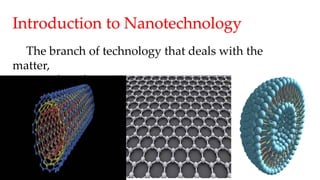
Introduction to Nanotechnology
The branch of technology that deals with the
matter,
ranging less than 100 nanometers.
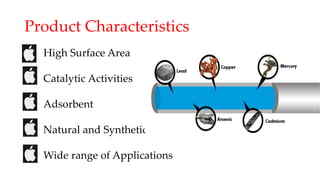
Product Characteristics
High Surface Area
Catalytic Activities
Adsorbent
Natural and Synthetic
Wide range of Applications
Tools in Nanotechnology
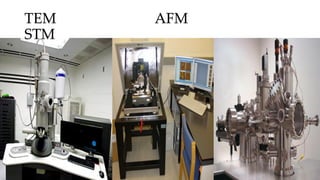
TEM AFM
STM
Natural Nanomaterials
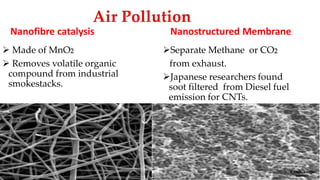
Air Pollution
Nanofibre catalysis
➢ Made of MnO2
➢ Removes volatile organic
compound from industrial
smokestacks.
Nanostructured Membrane
➢Separate Methane or CO2
from exhaust.
➢Japanese researchers found
soot filtered from Diesel fuel
emission for CNTs.
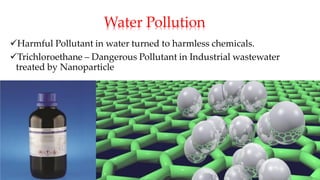
Water Pollution
✓Harmful Pollutant in water turned to harmless chemicals.
✓Trichloroethane – Dangerous Pollutant in Industrial wastewater
treated by Nanoparticle
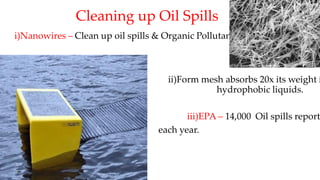
Cleaning up Oil Spills
i)Nanowires – Clean up oil spills & Organic Pollutant.
ii)Form mesh absorbs 20x its weight i
hydrophobic liquids.
iii)EPA – 14,000 Oil spills report
each year.
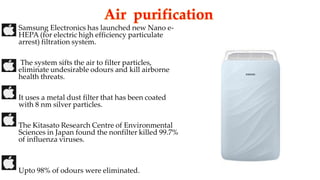
Samsung Electronics has launched new Nano e-
HEPA (for electric high efficiency particulate
arrest) filtration system.
The system sifts the air to filter particles,
eliminate undesirable odours and kill airborne
health threats.
It uses a metal dust filter that has been coated
with 8 nm silver particles.
The Kitasato Research Centre of Environmental
Sciences in Japan found the nonfilter killed 99.7%
of influenza viruses.
Upto 98% of odours were eliminated.
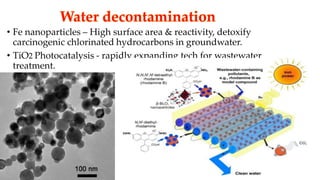
• Fe nanoparticles – High surface area & reactivity, detoxify
carcinogenic chlorinated hydrocarbons in groundwater.
• TiO2 Photocatalysis - rapidly expanding tech for wastewater
treatment.
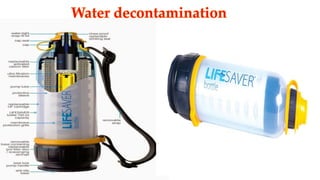
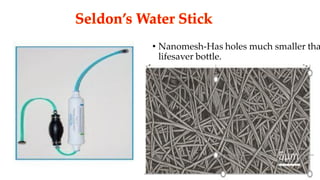
• Nanomesh-Has holes much smaller tha
lifesaver bottle.
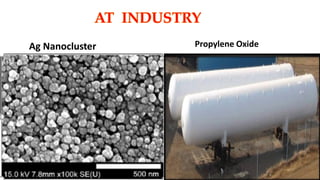
Ag Nanocluster Propylene Oxide
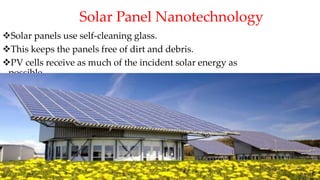
Solar Panel Nanotechnology
❖Solar panels use self-cleaning glass.
❖This keeps the panels free of dirt and debris.
❖PV cells receive as much of the incident solar energy as
possible.
Self-cleaning materials
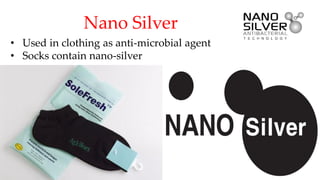
• Used in clothing as anti-microbial agent
• Socks contain nano-silver
Nano Silver
Conclusion
• Nanotechnology is growing fast.
• Funding in environmental impacts and toxicity is still low
comparing with funding to nanotech development.
• There are great potentials for environmental engineering
application and cleaner energy generation.
"Nanotechnology is a curse or blessing to human civilization,
all depends on how we manage it.”
- J. Jenson
Reference
A Textbook of ENVIRONMENTAL NANOTECHNOLOGY by
M.H. Fulekar Bhawana Pathak.
http://www.slideshare.net/SumerPankaj1/environmental-
nanotechnology.

ENVIRONMENTAL NANOTECHNOLOGY

  • 1.
    By: J. Jenson Samraj IntegratedMSc II Year Environmental Sciences MSU Alwarkurichi - 627 412
  • 2.
    Introduction Product Characteristics Tools usedin Nanotechnology Natural Nanomaterials Applications Conclusion
  • 3.
    Introduction to Nanotechnology Thebranch of technology that deals with the matter, ranging less than 100 nanometers.
  • 4.
    Product Characteristics High SurfaceArea Catalytic Activities Adsorbent Natural and Synthetic Wide range of Applications
  • 5.
  • 6.
  • 7.
  • 12.
    Air Pollution Nanofibre catalysis ➢Made of MnO2 ➢ Removes volatile organic compound from industrial smokestacks. Nanostructured Membrane ➢Separate Methane or CO2 from exhaust. ➢Japanese researchers found soot filtered from Diesel fuel emission for CNTs.
  • 13.
    Water Pollution ✓Harmful Pollutantin water turned to harmless chemicals. ✓Trichloroethane – Dangerous Pollutant in Industrial wastewater treated by Nanoparticle
  • 14.
    Cleaning up OilSpills i)Nanowires – Clean up oil spills & Organic Pollutant. ii)Form mesh absorbs 20x its weight i hydrophobic liquids. iii)EPA – 14,000 Oil spills report each year.
  • 15.
    Samsung Electronics haslaunched new Nano e- HEPA (for electric high efficiency particulate arrest) filtration system. The system sifts the air to filter particles, eliminate undesirable odours and kill airborne health threats. It uses a metal dust filter that has been coated with 8 nm silver particles. The Kitasato Research Centre of Environmental Sciences in Japan found the nonfilter killed 99.7% of influenza viruses. Upto 98% of odours were eliminated.
  • 18.
    • Fe nanoparticles– High surface area & reactivity, detoxify carcinogenic chlorinated hydrocarbons in groundwater. • TiO2 Photocatalysis - rapidly expanding tech for wastewater treatment.
  • 19.
    • Nanomesh-Has holesmuch smaller tha lifesaver bottle.
  • 21.
  • 22.
    Solar Panel Nanotechnology ❖Solarpanels use self-cleaning glass. ❖This keeps the panels free of dirt and debris. ❖PV cells receive as much of the incident solar energy as possible.
  • 23.
  • 24.
    • Used inclothing as anti-microbial agent • Socks contain nano-silver Nano Silver
  • 25.
    Conclusion • Nanotechnology isgrowing fast. • Funding in environmental impacts and toxicity is still low comparing with funding to nanotech development. • There are great potentials for environmental engineering application and cleaner energy generation.
  • 26.
    "Nanotechnology is acurse or blessing to human civilization, all depends on how we manage it.” - J. Jenson
  • 27.
    Reference A Textbook ofENVIRONMENTAL NANOTECHNOLOGY by M.H. Fulekar Bhawana Pathak. http://www.slideshare.net/SumerPankaj1/environmental- nanotechnology.