Presented By- Chetan Vishwanath Pawar
M. Pharmacy Sem – II
Guided By- Mrs. S. MUTHA
Department of Pharmaceutics
PDEA’s S.G.R.S. College of Pharmacy Saswad.
1
 INTRODUCTION
 CLASSIFICATION OF NANOPARTICLES
 ADVANTAGES AND DISADVANTAGEF
 IDEAL CHARACTERISTICS
 METHOD OF PREPARATION
 EVALUATION PARAMETER OF NANOPARTICLES
 APPLICATION OF NANOPARTICLES :
 REFERENCES
 DEFINATION –
Nanoparticles are defined as particulate
dispersions or solid particles with a size in the
range of 10-1000nm.
OR
Nanoparticles are sub-nanosized colloidal
structures composed of synthetic or semi-
synthetic polymers.”
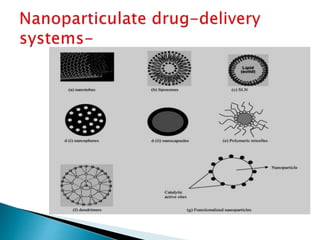
 Based On Method Of Preparation:
Nanocapsules:-
drug is confined to a cavity surrounded by
a unique polymer membrane.
Nanospheres:-
the drug is physically and uniformly dispersed.
 Solid Lipid Nanoparticles
 Polymeric Nanoparticles
 Ceramic Nanoparticles
 Hydrogel Nanoparticles
 Copolymerized Peptide Nanoparticles
 Nanocrystals and Nanosuspensions
 Solid Lipid Nanoparticles:
• New type of colloidal drug carrier system for i.v.
• Consists of spherical solid lipid particles in the
nm range, dispersed in water or in aqueous
surfactant solution.
 Polymeric nanoparticles (PNPs) - are defined as
particulate dispersions or solid particles with size
in the range of 10-1000nm.
• Biodegradable polymeric nanoparticles
Polylactic acid (PLA), polyglycolic acid (PGA),
Polylactic - glycolic acid (PLGA)
 Ceramic Nanoparticles:
These are the nanoparticles made up of
inorganic(ceramic) compounds silica, Exist in
size less than 50 nm, which helps them in
evading deeper parts of the body.
 Hydrogel nanoparticles:
Polymeric system involving the self-
assembly and self aggregation of natural
polymer cholesterol dextran and agarose
cholesterol groups provide cross linking
points.
 Copolymerized Peptide Nanoparticles:
Drug moiety is covalently bound to the
carrier instead of being physically entrapped.
 Nanocrystals And Nanosuspensions:
Pure drug coated with surfactant,
Aggregation of these particles in crystalline
form .Drug powder dispersed in aqueous
surfactant solution.
 1) They are suitable for different routes of
administration.
 2) Carrying capacity of nanoparticles is high.
 3) Shelf-stability of drug increases.
 4) Ability to sustain and control drug release
patterns.
 5) Suitable for combination therapy where two or
more drug can be co-delivered.
 1) High cost
 2)Productivity more difficult
 3) Reduced ability to adjust the dose
 4) Highly sophisticated technology
 5) Requires skills to manufacture
 It should be biochemical inert , non toxic .
 It should be stable both physically and
chemically in In vivo & in vitro conditions.
 Specific Therapeutic amount of drug release
must be possessed .
 The preparation of the delivery system should
be easy.
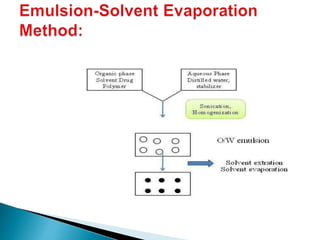
 Emulsion-Solvent Evaporation Method:
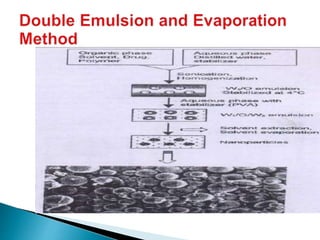
 Double Emulsion and Evaporation Method:
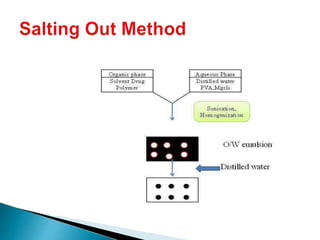
 Salting Out Method:
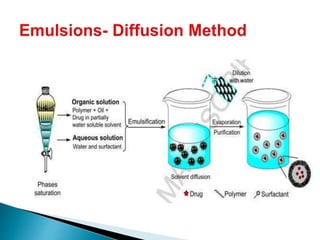
 Emulsions- Diffusion Method
 Solvent Displacement / Precipitation method:
 1. Particle size
 2. Density
 3. Molecular weight
 4. Structure and crystallinity
 5. Specific surface area
 6. Surface charge & electronic mobility
 7. Surface hydrophobicity
 8. In vitro release
 Targeting drug delivery by encapsulation .
 Nanoparticles for drug delivery into the brain.
 Nanoparticle for ophthalmic delivery.
 Topical formulation.
 Nanoparticles for oral delivery of peptides &
portions .
 JAPS Nanoparticle: An overview of preparation
and Characterization BY Sovan Lal Pal, Utpal
Jana, P. K. Manna, G. P. Mohanta, R.
Manavalan
 Pelagia Research Library Formulation,
Characterization and Application on
Nanoparticle: A Review Abhishek Garg*,
Sharad Visht, Nitin Kumar
 Tropical Journal of Pharmaceutical Research,
June 2006; 5 (1): 561-573Nanoparticles – A
Review VJ Mohanraj* and Y Chen
Nanoparticles

Nanoparticles

  • 1.
    Presented By- ChetanVishwanath Pawar M. Pharmacy Sem – II Guided By- Mrs. S. MUTHA Department of Pharmaceutics PDEA’s S.G.R.S. College of Pharmacy Saswad. 1
  • 2.
     INTRODUCTION  CLASSIFICATIONOF NANOPARTICLES  ADVANTAGES AND DISADVANTAGEF  IDEAL CHARACTERISTICS  METHOD OF PREPARATION  EVALUATION PARAMETER OF NANOPARTICLES  APPLICATION OF NANOPARTICLES :  REFERENCES
  • 3.
     DEFINATION – Nanoparticlesare defined as particulate dispersions or solid particles with a size in the range of 10-1000nm. OR Nanoparticles are sub-nanosized colloidal structures composed of synthetic or semi- synthetic polymers.”
  • 4.
     Based OnMethod Of Preparation: Nanocapsules:- drug is confined to a cavity surrounded by a unique polymer membrane. Nanospheres:- the drug is physically and uniformly dispersed.
  • 6.
     Solid LipidNanoparticles  Polymeric Nanoparticles  Ceramic Nanoparticles  Hydrogel Nanoparticles  Copolymerized Peptide Nanoparticles  Nanocrystals and Nanosuspensions
  • 7.
     Solid LipidNanoparticles: • New type of colloidal drug carrier system for i.v. • Consists of spherical solid lipid particles in the nm range, dispersed in water or in aqueous surfactant solution.  Polymeric nanoparticles (PNPs) - are defined as particulate dispersions or solid particles with size in the range of 10-1000nm. • Biodegradable polymeric nanoparticles Polylactic acid (PLA), polyglycolic acid (PGA), Polylactic - glycolic acid (PLGA)
  • 8.
     Ceramic Nanoparticles: Theseare the nanoparticles made up of inorganic(ceramic) compounds silica, Exist in size less than 50 nm, which helps them in evading deeper parts of the body.  Hydrogel nanoparticles: Polymeric system involving the self- assembly and self aggregation of natural polymer cholesterol dextran and agarose cholesterol groups provide cross linking points.
  • 9.
     Copolymerized PeptideNanoparticles: Drug moiety is covalently bound to the carrier instead of being physically entrapped.  Nanocrystals And Nanosuspensions: Pure drug coated with surfactant, Aggregation of these particles in crystalline form .Drug powder dispersed in aqueous surfactant solution.
  • 10.
     1) Theyare suitable for different routes of administration.  2) Carrying capacity of nanoparticles is high.  3) Shelf-stability of drug increases.  4) Ability to sustain and control drug release patterns.  5) Suitable for combination therapy where two or more drug can be co-delivered.
  • 11.
     1) Highcost  2)Productivity more difficult  3) Reduced ability to adjust the dose  4) Highly sophisticated technology  5) Requires skills to manufacture
  • 12.
     It shouldbe biochemical inert , non toxic .  It should be stable both physically and chemically in In vivo & in vitro conditions.  Specific Therapeutic amount of drug release must be possessed .  The preparation of the delivery system should be easy.
  • 13.
     Emulsion-Solvent EvaporationMethod:  Double Emulsion and Evaporation Method:  Salting Out Method:  Emulsions- Diffusion Method  Solvent Displacement / Precipitation method:
  • 19.
     1. Particlesize  2. Density  3. Molecular weight  4. Structure and crystallinity  5. Specific surface area  6. Surface charge & electronic mobility  7. Surface hydrophobicity  8. In vitro release
  • 20.
     Targeting drugdelivery by encapsulation .  Nanoparticles for drug delivery into the brain.  Nanoparticle for ophthalmic delivery.  Topical formulation.  Nanoparticles for oral delivery of peptides & portions .
  • 22.
     JAPS Nanoparticle:An overview of preparation and Characterization BY Sovan Lal Pal, Utpal Jana, P. K. Manna, G. P. Mohanta, R. Manavalan  Pelagia Research Library Formulation, Characterization and Application on Nanoparticle: A Review Abhishek Garg*, Sharad Visht, Nitin Kumar  Tropical Journal of Pharmaceutical Research, June 2006; 5 (1): 561-573Nanoparticles – A Review VJ Mohanraj* and Y Chen